Mastering Online Discussion Structures and Grading Criteria

Learn to design effective online discussions, develop engaging questions, set deadlines, and grade student interactions based on specific criteria. Dive into crafting discussable questions that foster critical thinking and participation. Enhance your online learning environment for better engagement and assessment outcomes.

Download Presentation

Please find below an Image/Link to download the presentation.
The content on the website is provided AS IS for your information and personal use only. It may not be sold, licensed, or shared on other websites without obtaining consent from the author.If you encounter any issues during the download, it is possible that the publisher has removed the file from their server.
You are allowed to download the files provided on this website for personal or commercial use, subject to the condition that they are used lawfully. All files are the property of their respective owners.
The content on the website is provided AS IS for your information and personal use only. It may not be sold, licensed, or shared on other websites without obtaining consent from the author.
E N D
Presentation Transcript
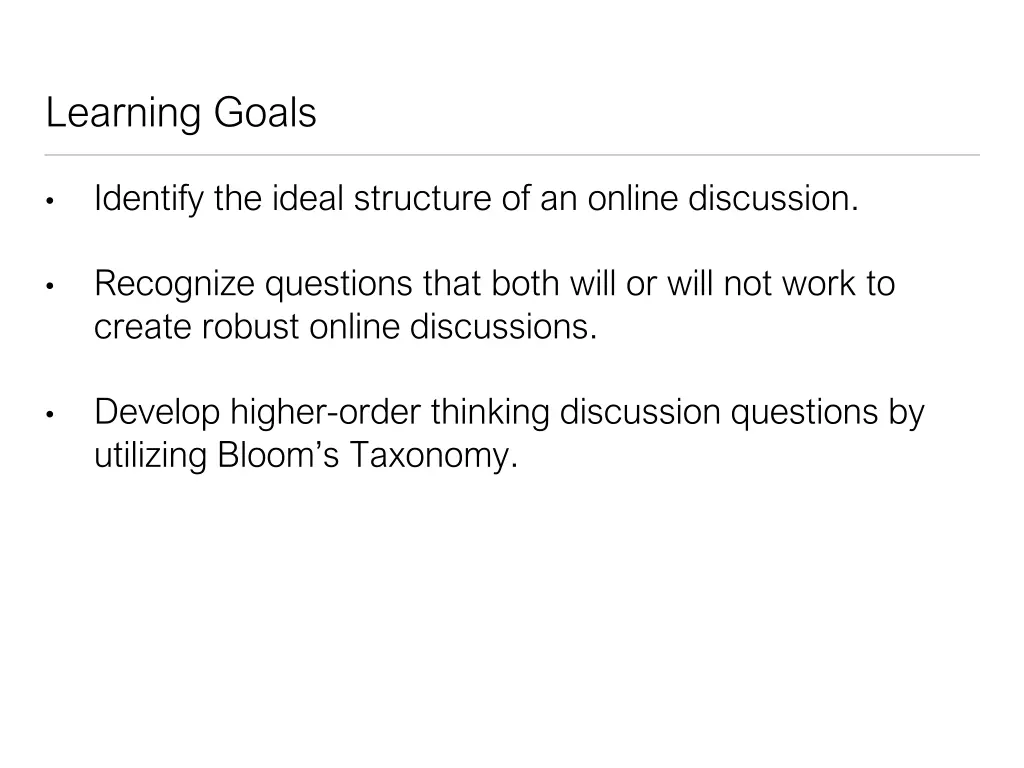
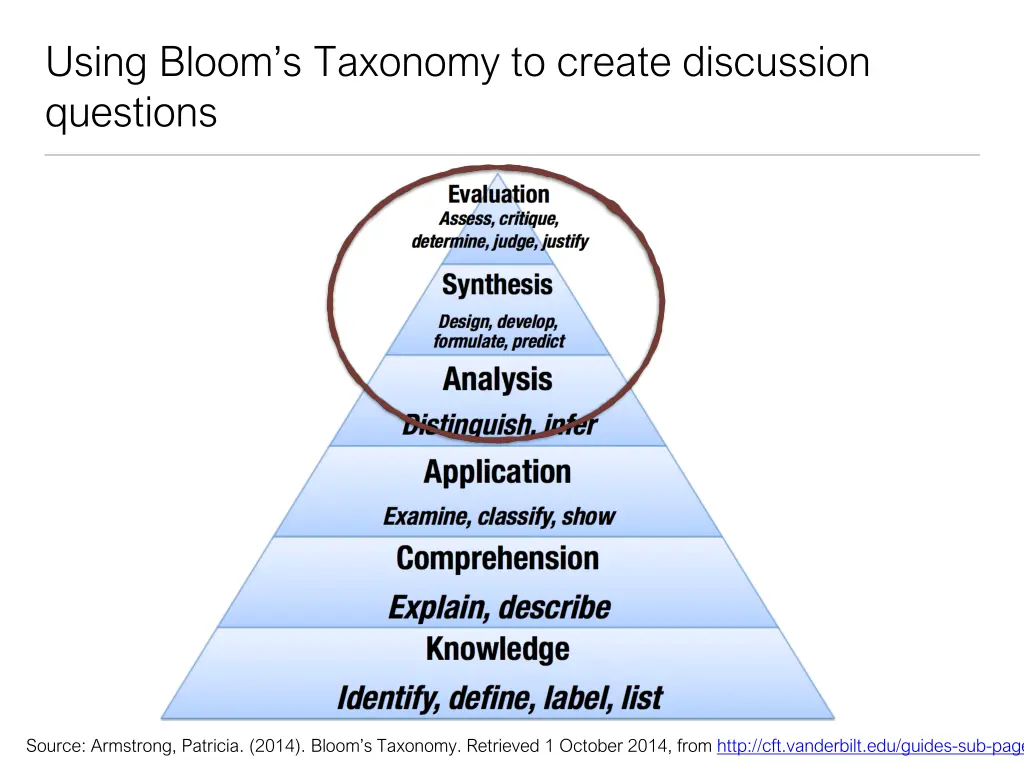
Learning Goals Identify the ideal structure of an online discussion. Recognize questions that both will or will not work to create robust online discussions. Develop higher-order thinking discussion questions by utilizing Bloom s Taxonomy.
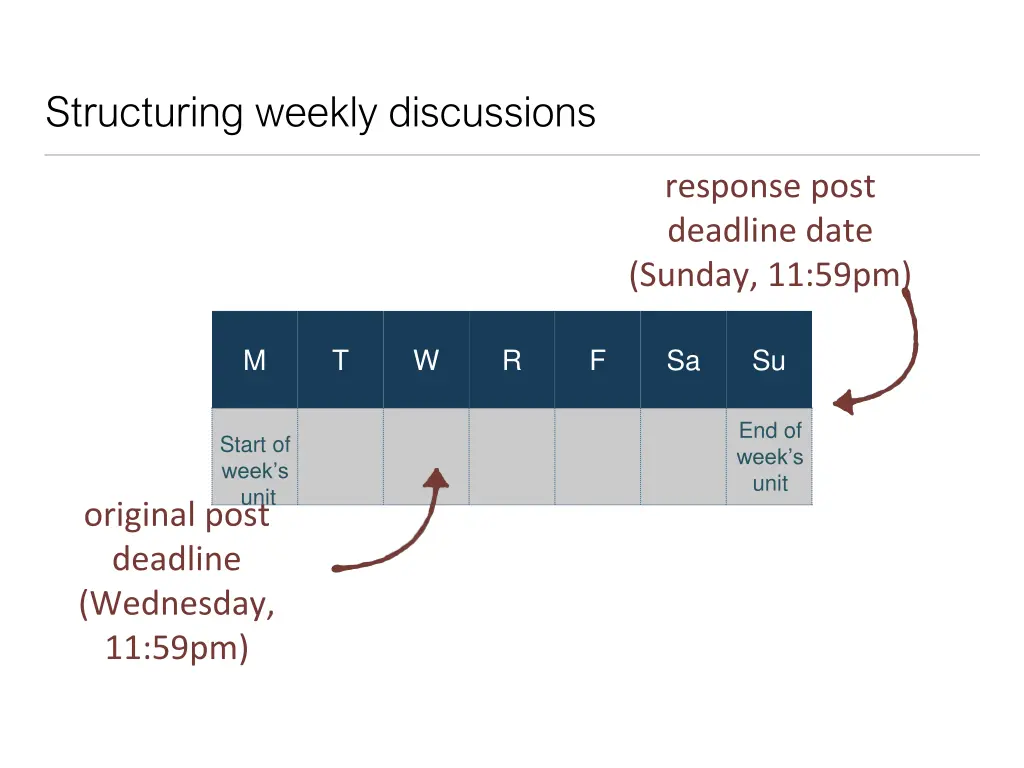
Structuring weekly discussions response post deadline date (Sunday, 11:59pm) M T W R F Sa Su End of week s unit Start of week s unit original post deadline (Wednesday, 11:59pm)
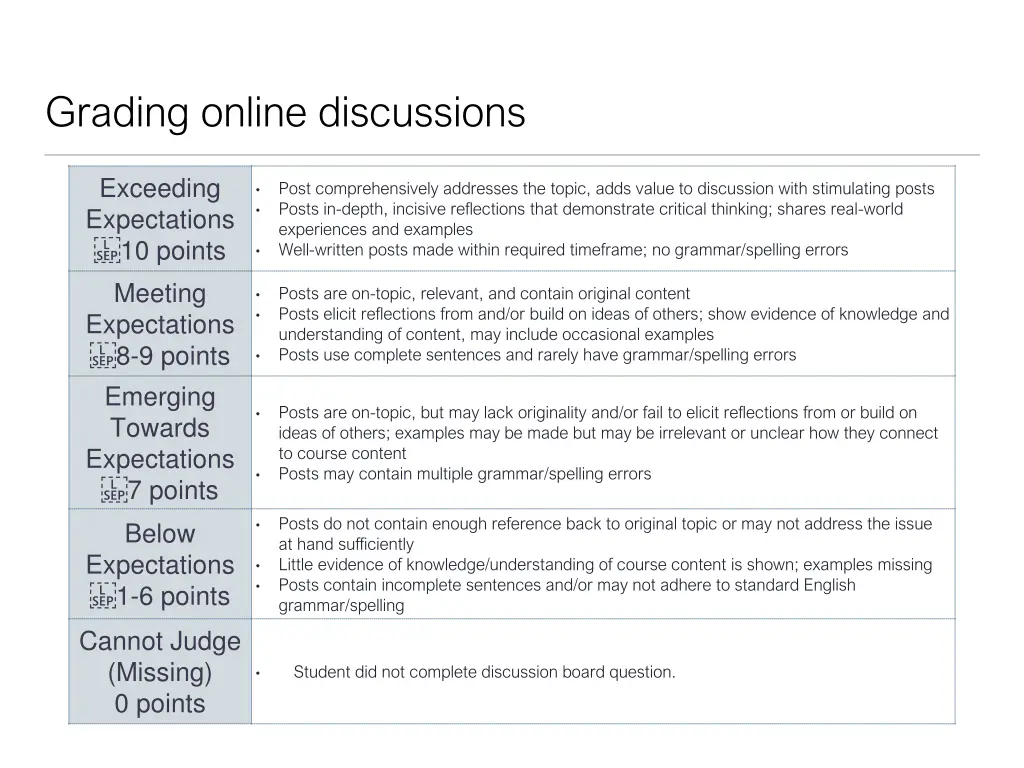
Grading online discussions Exceeding Expectations 10 points Meeting Expectations 8-9 points Emerging Towards Expectations 7 points Below Expectations 1-6 points Post comprehensively addresses the topic, adds value to discussion with stimulating posts Posts in-depth, incisive reflections that demonstrate critical thinking; shares real-world experiences and examples Well-written posts made within required timeframe; no grammar/spelling errors Posts are on-topic, relevant, and contain original content Posts elicit reflections from and/or build on ideas of others; show evidence of knowledge and understanding of content, may include occasional examples Posts use complete sentences and rarely have grammar/spelling errors Posts are on-topic, but may lack originality and/or fail to elicit reflections from or build on ideas of others; examples may be made but may be irrelevant or unclear how they connect to course content Posts may contain multiple grammar/spelling errors Posts do not contain enough reference back to original topic or may not address the issue at hand sufficiently Little evidence of knowledge/understanding of course content is shown; examples missing Posts contain incomplete sentences and/or may not adhere to standard English grammar/spelling Cannot Judge (Missing) 0 points Student did not complete discussion board question.
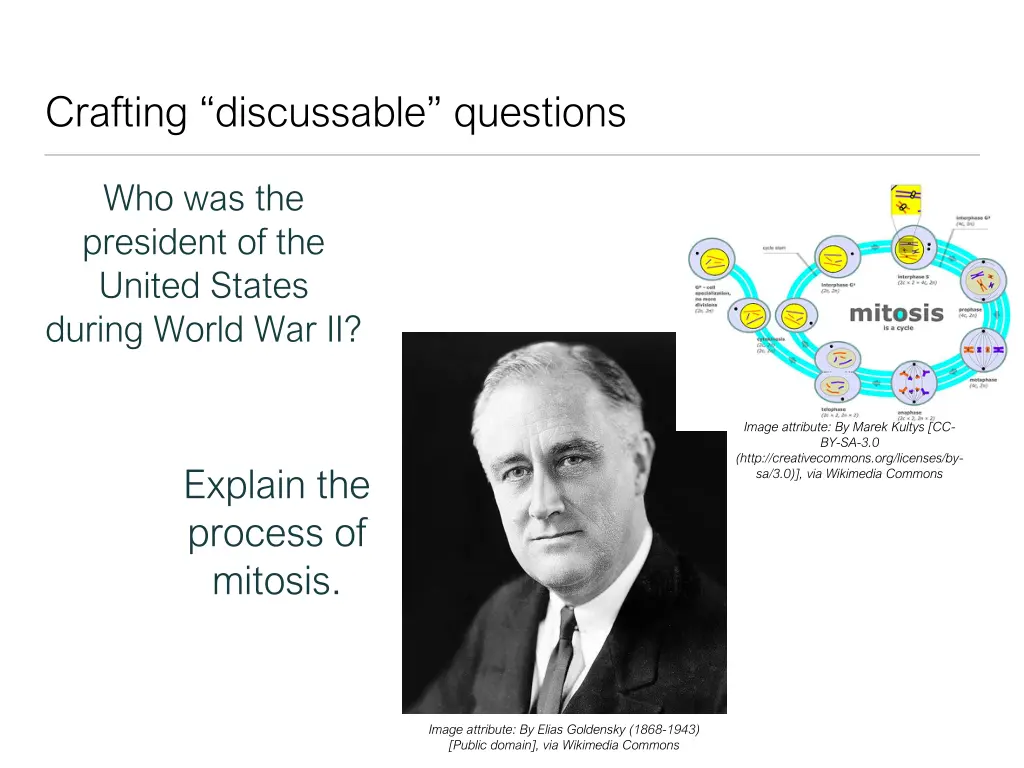
Crafting discussable questions Who was the president of the United States during World War II? Image attribute: By Marek Kultys [CC- BY-SA-3.0 (http://creativecommons.org/licenses/by- sa/3.0)], via Wikimedia Commons Explain the process of mitosis. Image attribute: By Elias Goldensky (1868-1943) [Public domain], via Wikimedia Commons
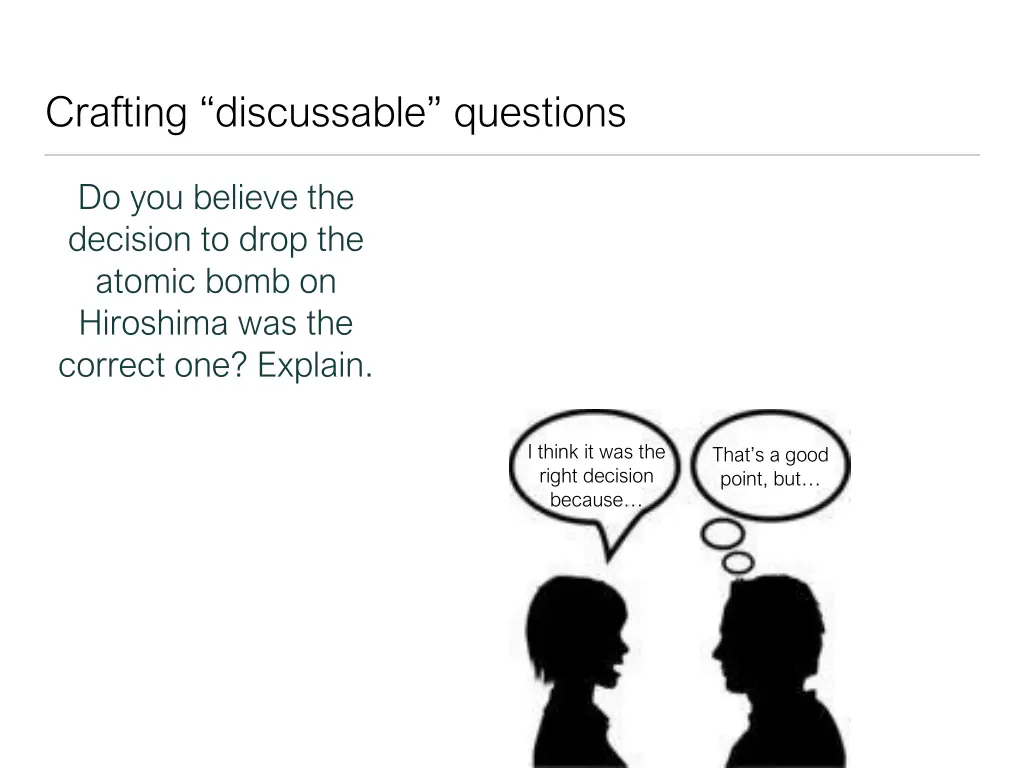
Crafting discussable questions Do you believe the decision to drop the atomic bomb on Hiroshima was the correct one? Explain. I think it was the right decision because That s a good point, but
Using Blooms Taxonomy to create discussion questions Source: Armstrong, Patricia. (2014). Bloom s Taxonomy. Retrieved 1 October 2014, from http://cft.vanderbilt.edu/guides-sub-pages/blooms