Mental Health in Adolescents
Explore the behaviors and challenges faced by adolescents with mental health issues like ADHD, depression, and more. Learn about the impact of mental health on daily life and factors contributing to these conditions.

Download Presentation

Please find below an Image/Link to download the presentation.
The content on the website is provided AS IS for your information and personal use only. It may not be sold, licensed, or shared on other websites without obtaining consent from the author. If you encounter any issues during the download, it is possible that the publisher has removed the file from their server.
You are allowed to download the files provided on this website for personal or commercial use, subject to the condition that they are used lawfully. All files are the property of their respective owners.
The content on the website is provided AS IS for your information and personal use only. It may not be sold, licensed, or shared on other websites without obtaining consent from the author.
E N D
Presentation Transcript
Mental Health & Behavior Kristin Hoefflin, MFT, BCBA September 11, 2013 Inclusive Education & Community Partnership (IECP)
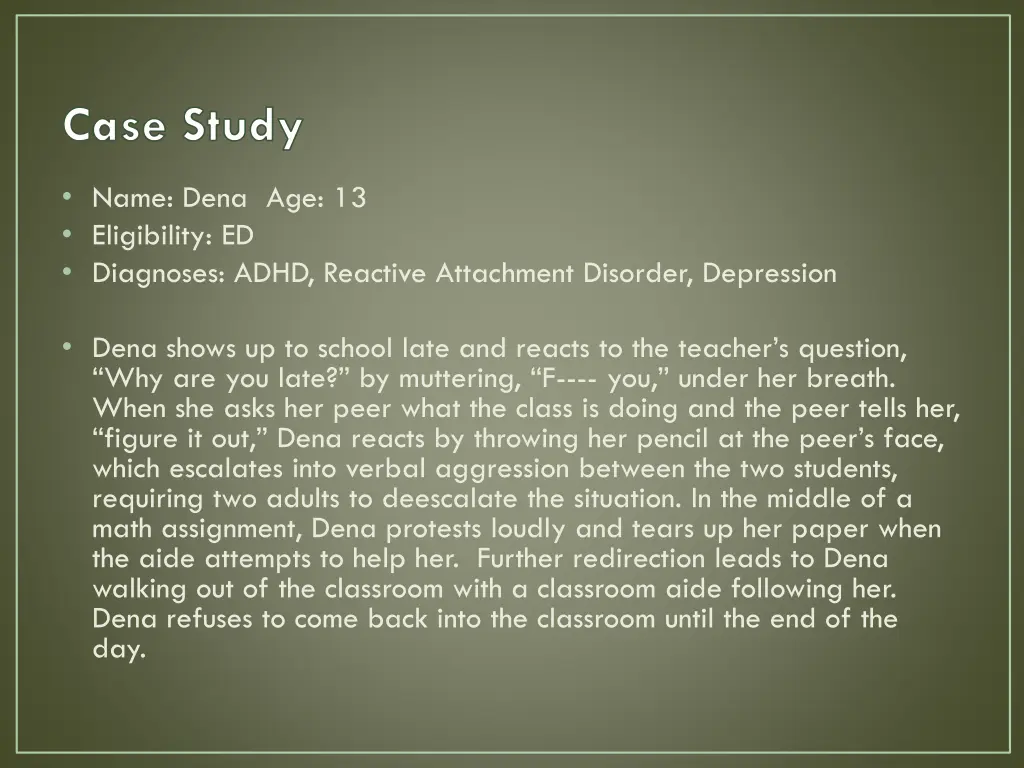
Case Study Name: Dena Age: 13 Eligibility: ED Diagnoses: ADHD, Reactive Attachment Disorder, Depression Dena shows up to school late and reacts to the teacher s question, Why are you late? by muttering, F---- you, under her breath. When she asks her peer what the class is doing and the peer tells her, figure it out, Dena reacts by throwing her pencil at the peer s face, which escalates into verbal aggression between the two students, requiring two adults to deescalate the situation. In the middle of a math assignment, Dena protests loudly and tears up her paper when the aide attempts to help her. Further redirection leads to Dena walking out of the classroom with a classroom aide following her. Dena refuses to come back into the classroom until the end of the day.
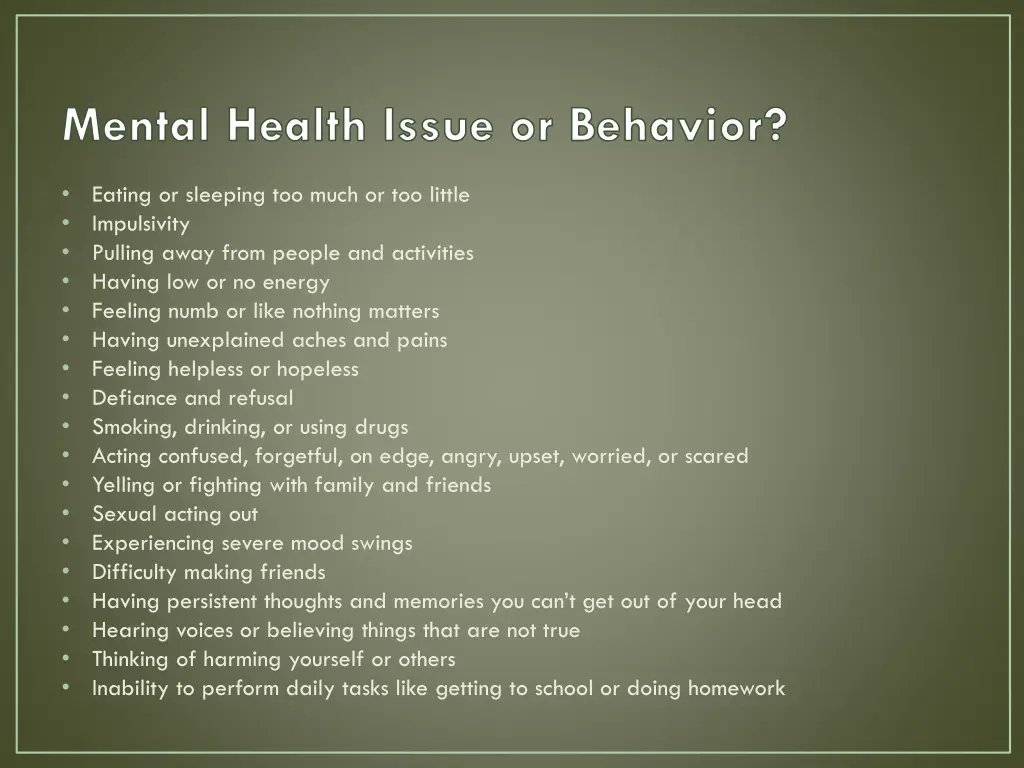
Mental Health Issue or Behavior? Eating or sleeping too much or too little Impulsivity Pulling away from people and activities Having low or no energy Feeling numb or like nothing matters Having unexplained aches and pains Feeling helpless or hopeless Defiance and refusal Smoking, drinking, or using drugs Acting confused, forgetful, on edge, angry, upset, worried, or scared Yelling or fighting with family and friends Sexual acting out Experiencing severe mood swings Difficulty making friends Having persistent thoughts and memories you can t get out of your head Hearing voices or believing things that are not true Thinking of harming yourself or others Inability to perform daily tasks like getting to school or doing homework
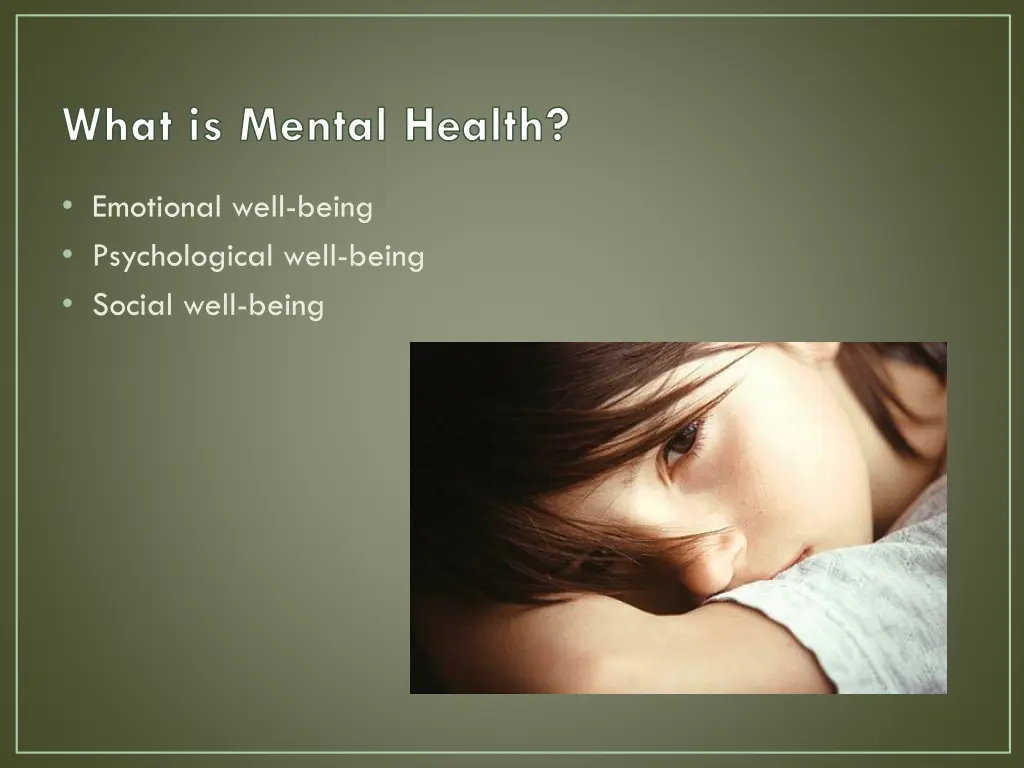
What is Mental Health? Emotional well-being Psychological well-being Social well-being
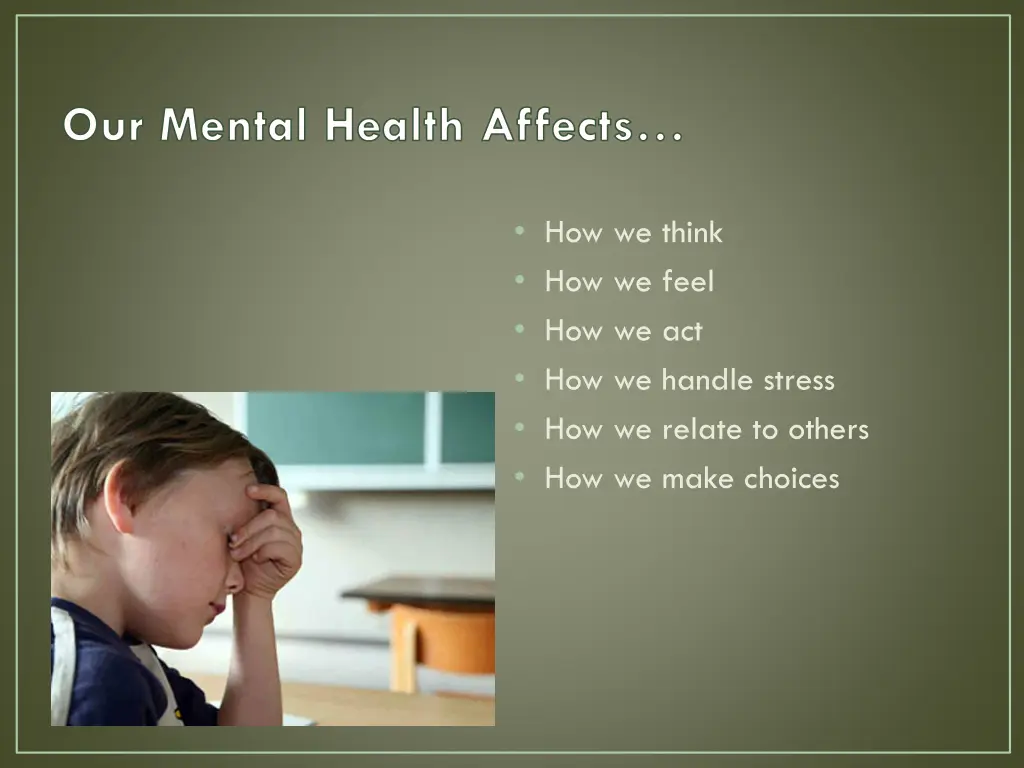
Our Mental Health Affects How we think How we feel How we act How we handle stress How we relate to others How we make choices
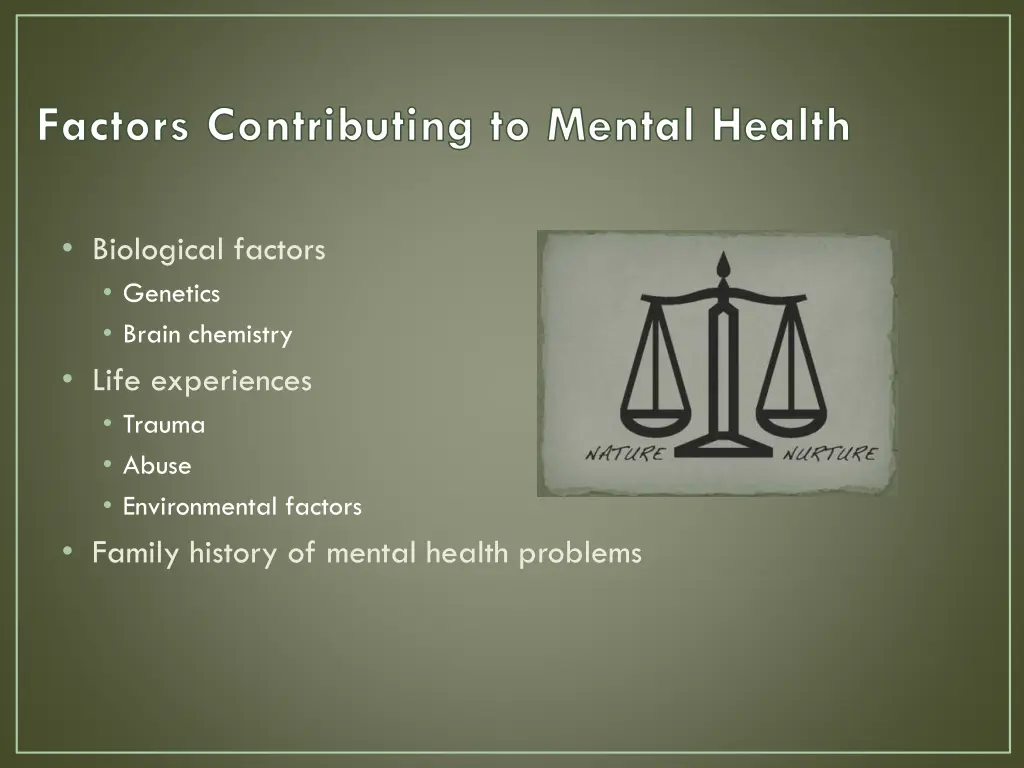
Factors Contributing to Mental Health Biological factors Genetics Brain chemistry Life experiences Trauma Abuse Environmental factors Family history of mental health problems
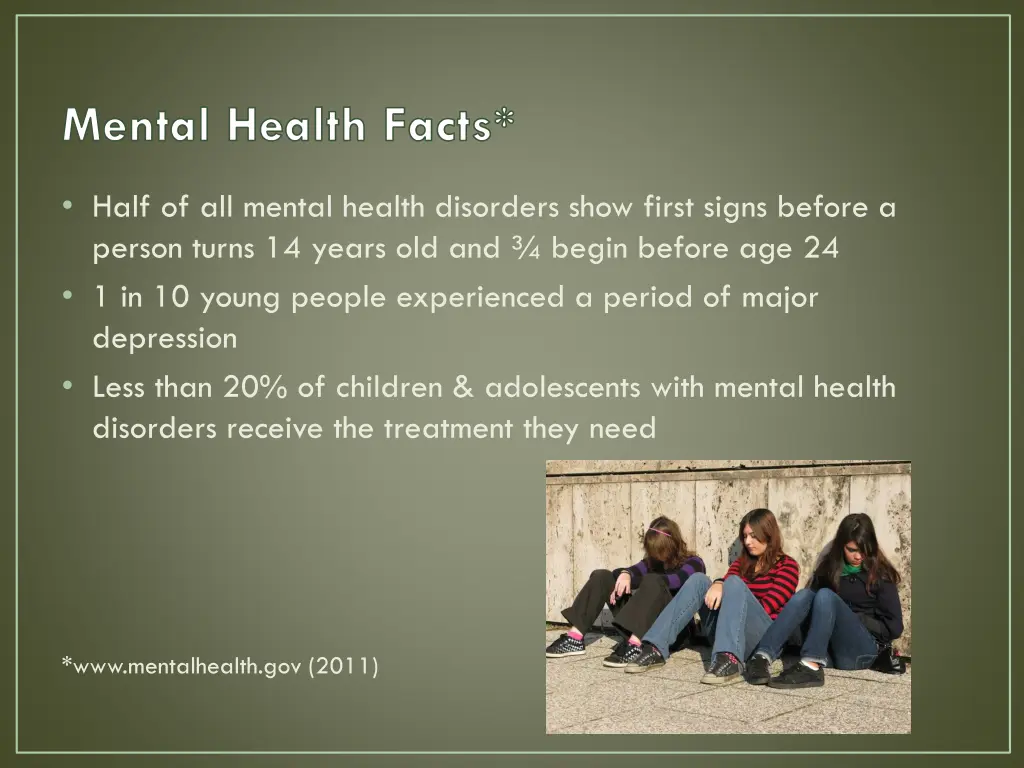
Mental Health Facts* Half of all mental health disorders show first signs before a person turns 14 years old and begin before age 24 1 in 10 young people experienced a period of major depression Less than 20% of children & adolescents with mental health disorders receive the treatment they need *www.mentalhealth.gov (2011)
Case Study Name: Ben Eligibility: ED Diagnoses: ??? Age: 17 Ben is on probation for stealing and vandalism. Ben has a high frequency of absences and, when he does show up to school, rarely participates in class discussions and usually puts his head down on the desk, often falling asleep. Ben is failing all of his classes, except History, where he appears engaged and interested, however often dominates the discussion with rants about world leaders and government. Ben has poor hygiene and often looks like he has not showered for several days.
Types of Mental Health Challenges Anxiety Depression Bipolar Disorder Psychotic Disorders
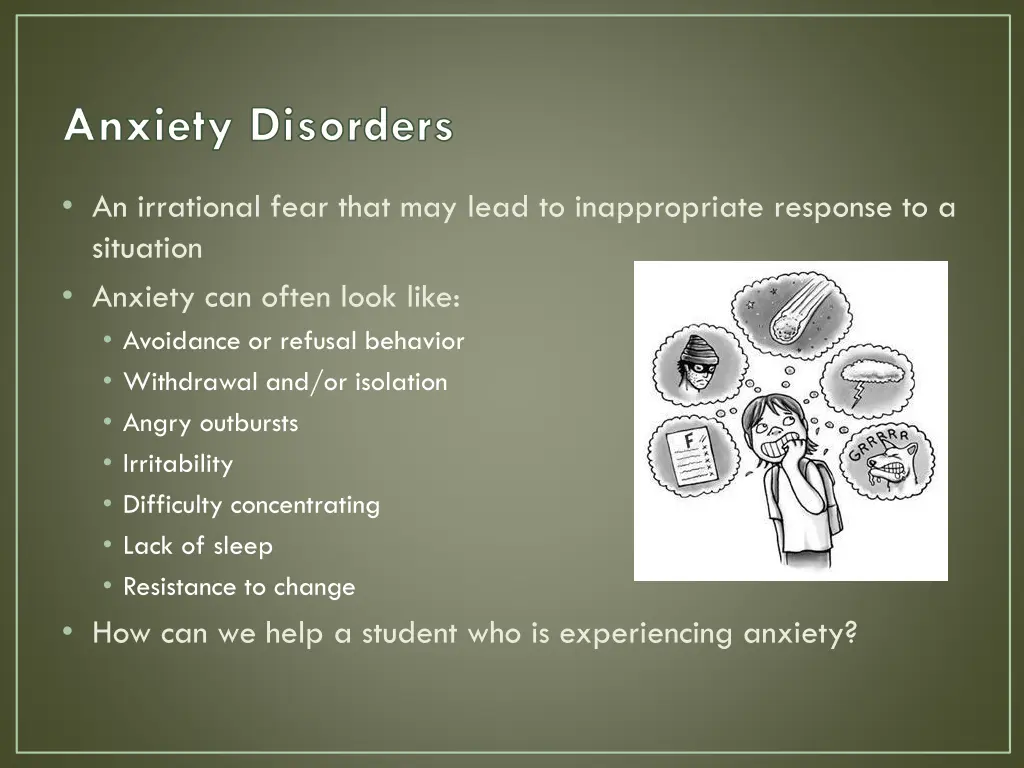
Anxiety Disorders An irrational fear that may lead to inappropriate response to a situation Anxiety can often look like: Avoidance or refusal behavior Withdrawal and/or isolation Angry outbursts Irritability Difficulty concentrating Lack of sleep Resistance to change How can we help a student who is experiencing anxiety?
Depression More than just being down in the dumps or a natural reaction to a life trigger Depression may look like: Sadness Irritability Feelings of worthlessness or hopelessness Difficulty sleeping or oversleeping Change in weight Loss of pleasure in activities that used to be pleasurable Thoughts of death or suicide Self-injurious behavior What can we do to help a student who may be struggling with depression?
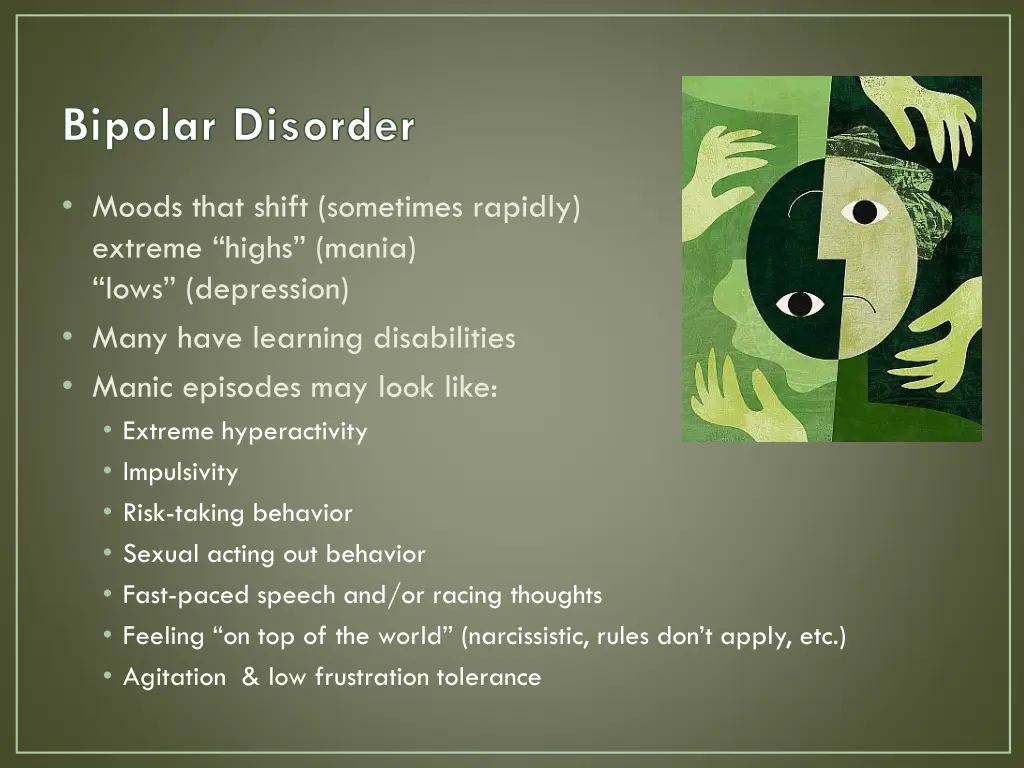
Bipolar Disorder Moods that shift (sometimes rapidly) between extreme highs (mania) and extreme lows (depression) Many have learning disabilities Manic episodes may look like: Extreme hyperactivity Impulsivity Risk-taking behavior Sexual acting out behavior Fast-paced speech and/or racing thoughts Feeling on top of the world (narcissistic, rules don t apply, etc.) Agitation & low frustration tolerance
Bipolar Disorder (cont.) How might the following skills as a teacher be important to work with a student with Bipolar Disorder? Flexibility Patience and the ability to remain calm Good conflict management skills The ability to laugh at oneself and at situations Students may benefit from stress-reducing accommodations such as: Consistent scheduling Seating with few distractions Shortened assignments and homework focusing on quality Prior notice of transitions or changes in routine Scheduling the student s most challenging tasks at a time of day when the child is best able to perform
Psychotic Disorders Loss of contact with reality May present with: Delusions believing things that are not true Hallucinations seeing, hearing, or feeling things that are not real Unusual thoughts or perceptions Difficulty speaking or expressing emotion Problems with attention, memory or organization Paranoia or thoughts that others are out to get them Best treatment involves medication combined with therapy The earlier psychotic disorders are identified, the better the prognosis
Mental Health & Attachment Disruptions in early (and/or ongoing) attachments may cause or exacerbate underlying mental health disorders Foster Care Youth Abuse and/or neglect Substance abusing parents Many times, this can present as: Difficulty forming and keeping relationships Fluctuations in mood Defiance and oppositional behavior Bullying Sexual acting out behavior Extreme attention-seeking behavior Others?
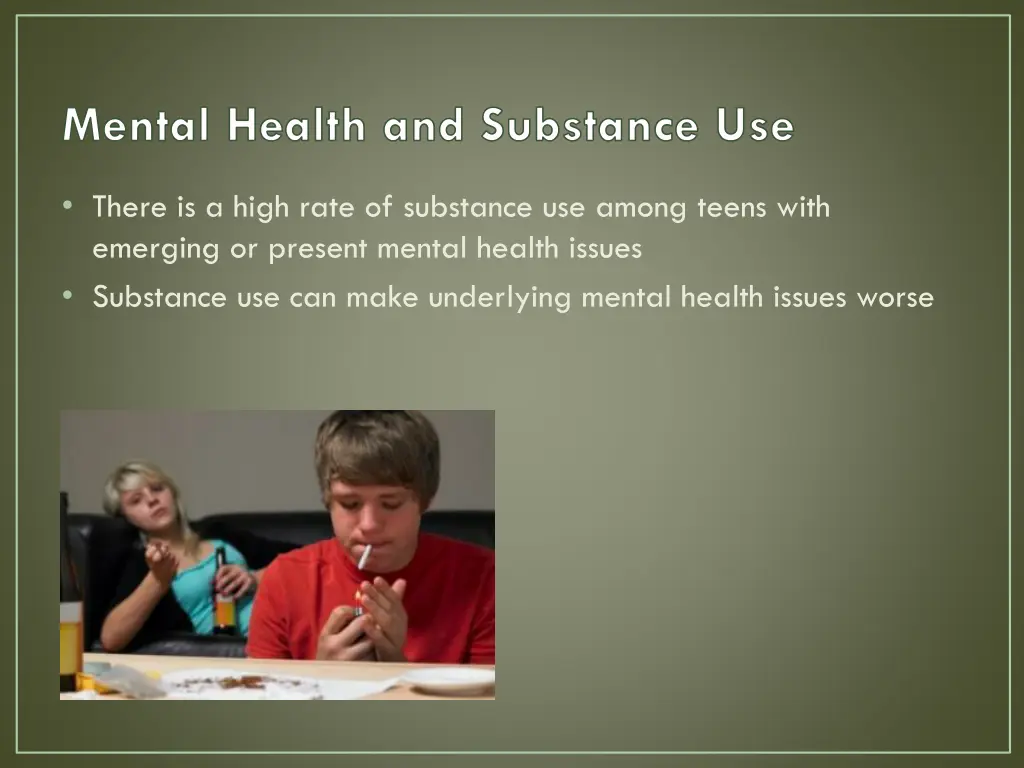
Mental Health and Substance Use There is a high rate of substance use among teens with emerging or present mental health issues Substance use can make underlying mental health issues worse
Building Resiliency Environmental supports can help combat the development or the progression of mental health issues Resiliency involves behaviors, thoughts and actions that can be built over time, including: Making connections Helping others Maintaining a daily routine Taking a break Learning self-care and self-management Working towards goals Nurturing a positive self-image Keeping things in perspective Looking for opportunities for self-discovery Accepting that change is part of living
Activity What Should Professionals Know About Mental Health Issues in Children & Adolescents?
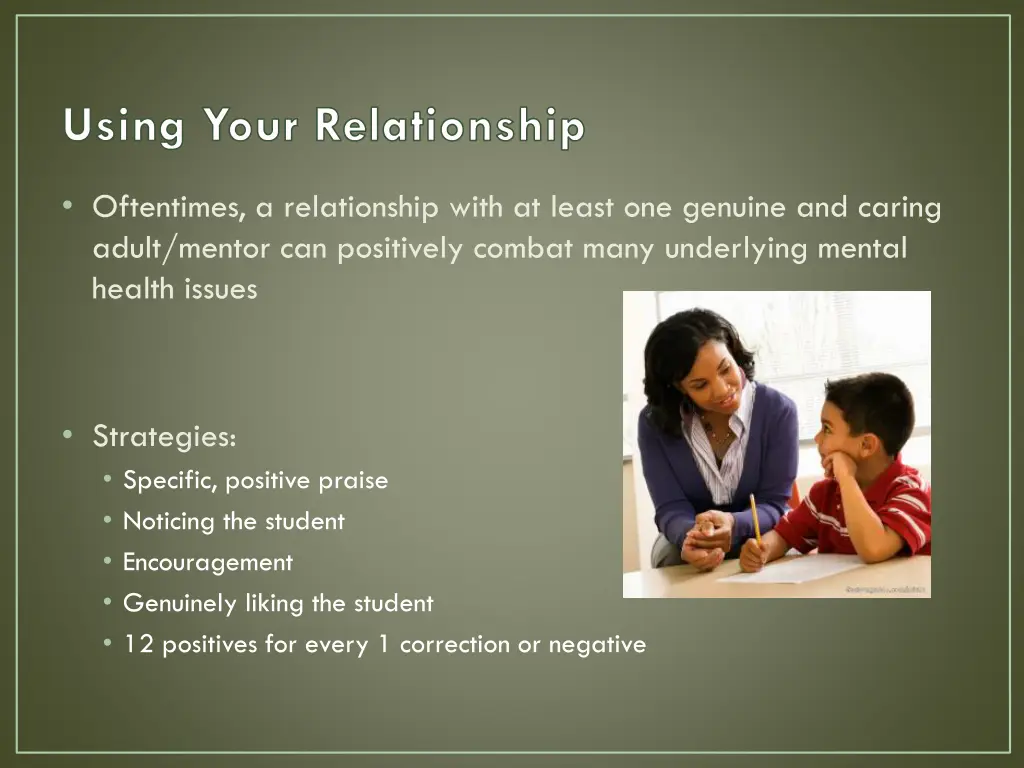
Using Your Relationship Oftentimes, a relationship with at least one genuine and caring adult/mentor can positively combat many underlying mental health issues Strategies: Specific, positive praise Noticing the student Encouragement Genuinely liking the student 12 positives for every 1 correction or negative