Microcontrollers vs. Microprocessors: Key Differences Explained
Learn about the differences between microcontrollers and microprocessors, including their functions, applications, and technical specifications. Discover how these integrated circuits are used in various devices and systems, from personal computers to digital cameras. Explore the essential characteristics of clock speed, RAM, ROM, peripherals, and more. Gain insights into the capabilities of microcontrollers and microprocessors in processing data and handling specific tasks efficiently.

Download Presentation

Please find below an Image/Link to download the presentation.
The content on the website is provided AS IS for your information and personal use only. It may not be sold, licensed, or shared on other websites without obtaining consent from the author. If you encounter any issues during the download, it is possible that the publisher has removed the file from their server.
You are allowed to download the files provided on this website for personal or commercial use, subject to the condition that they are used lawfully. All files are the property of their respective owners.
The content on the website is provided AS IS for your information and personal use only. It may not be sold, licensed, or shared on other websites without obtaining consent from the author.
E N D
Presentation Transcript
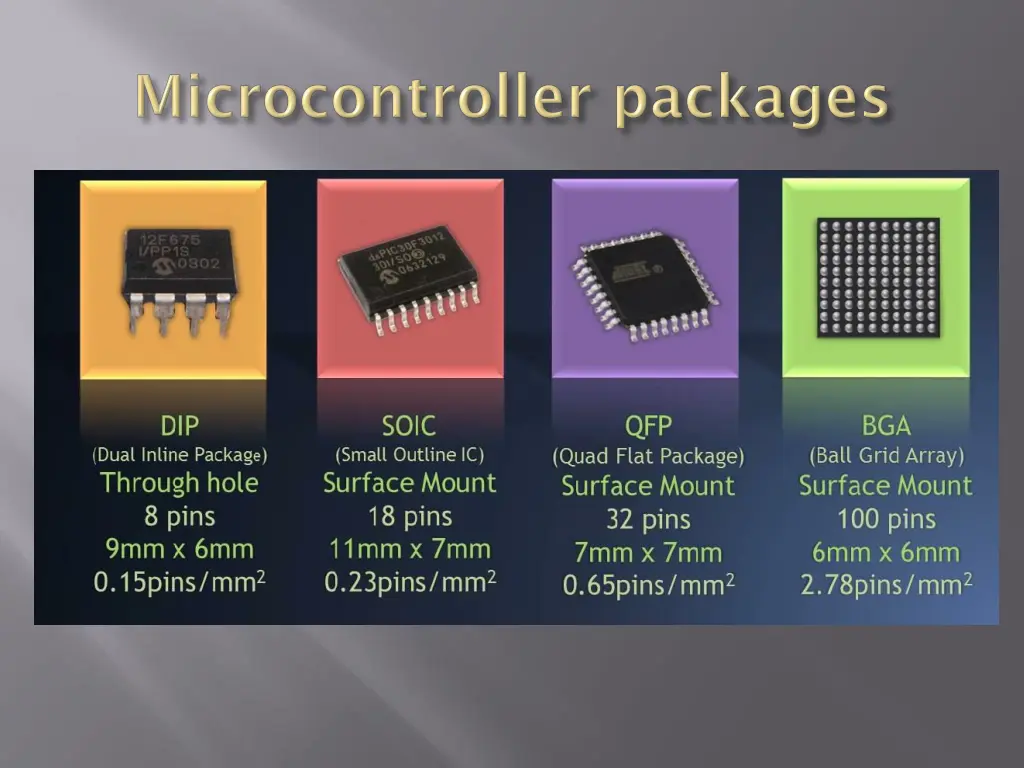
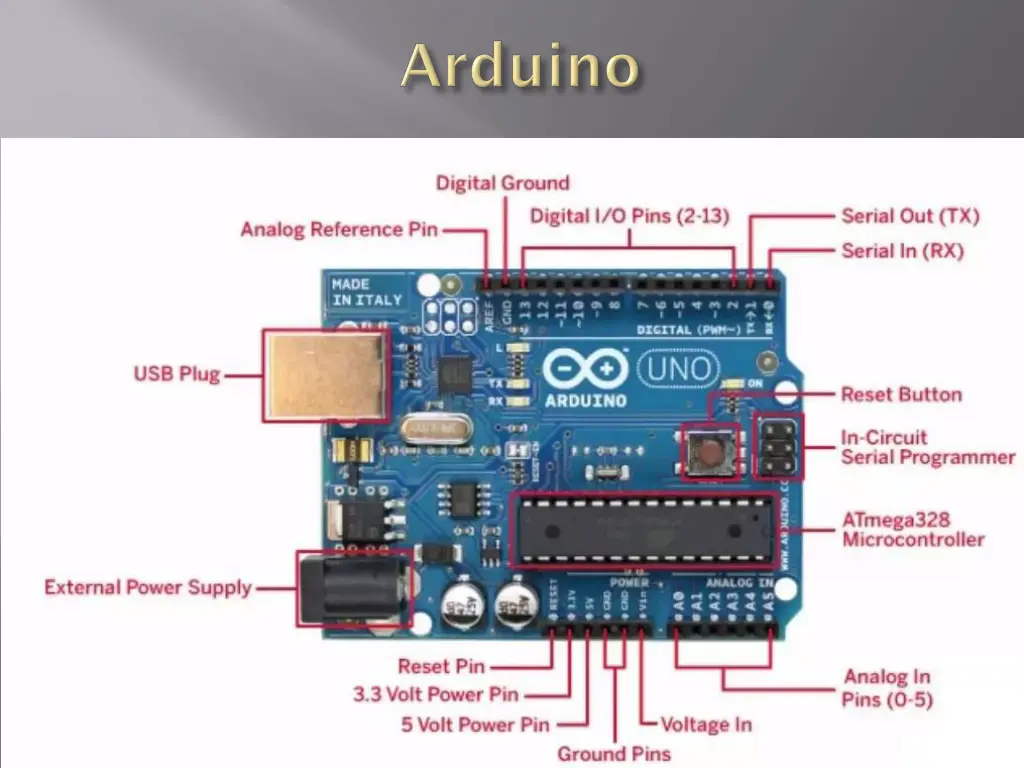
Microcontroller is an integrated circuit that is programmed by the developer for performing specific tasks. Microcontroller is actually a mini computer .
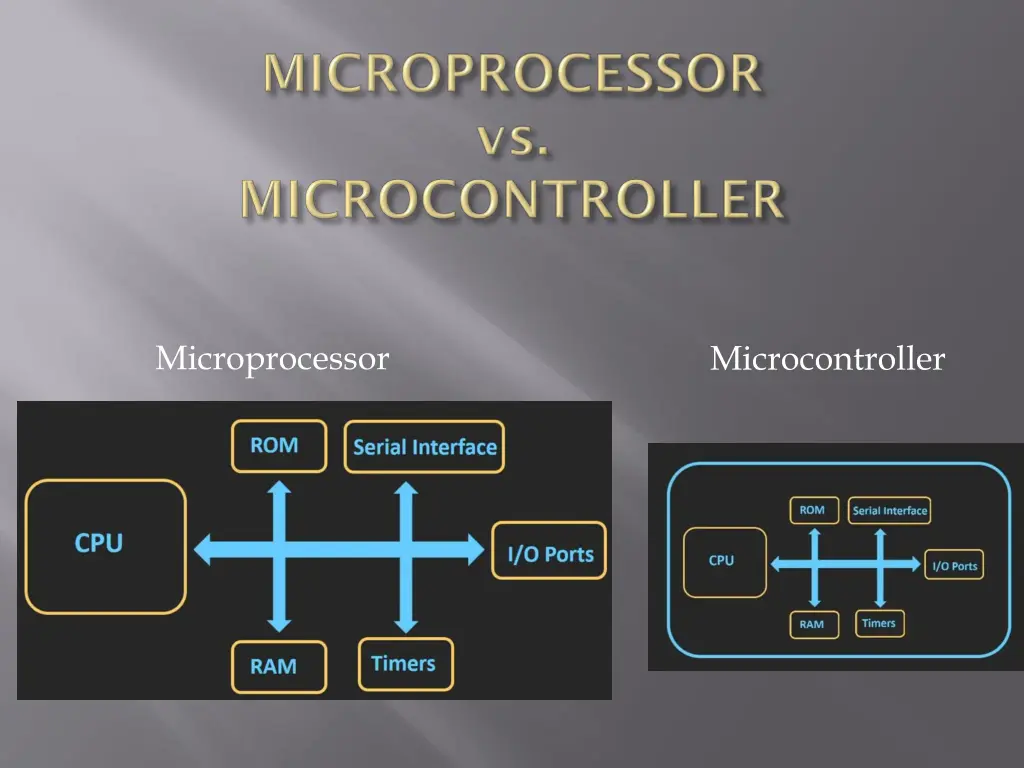
Microprocessor is used to perform arithmetic and logic operations. It is the most important aprt of personal computers and embedded system applications. Microprocessors do not have built-in periferials such as RAM, ROM, inputs/outputs, they separately according to the project. timers, counters, connected must be
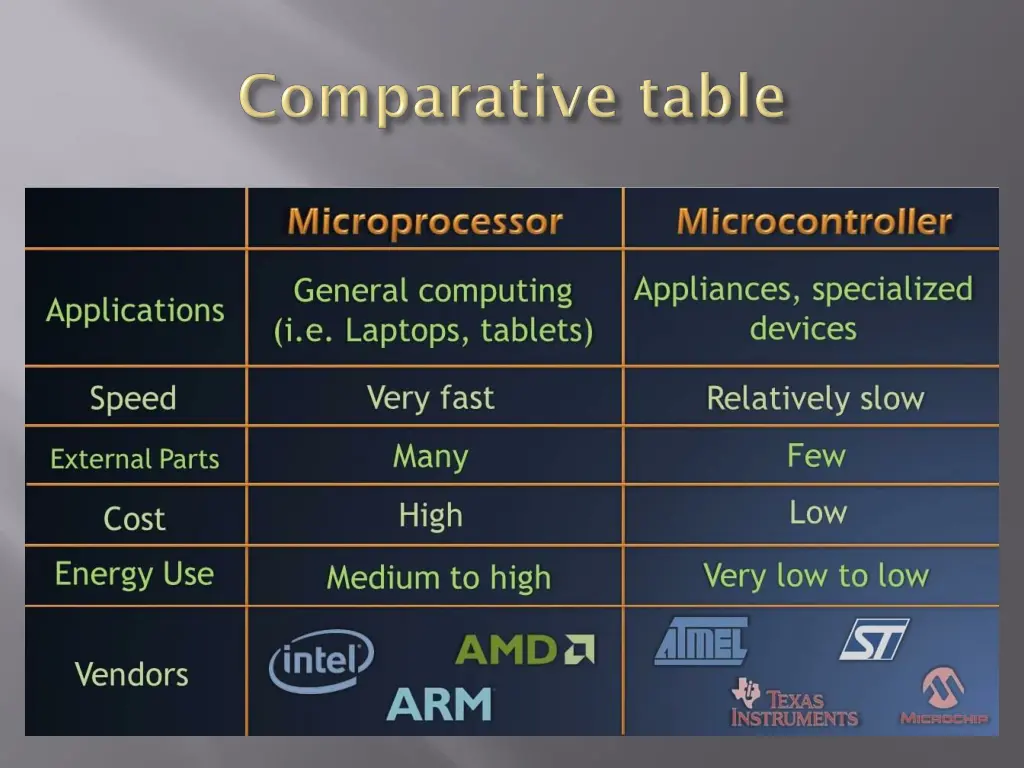
Microcontrollers have a fixed amount on on- chip RAM, ROM, input/output ports, timers and counters. Microcontrollers are useful for cheap applications where speed is not critical. Microcontrollers have low power consumption.
Microprocessor Microcontroller
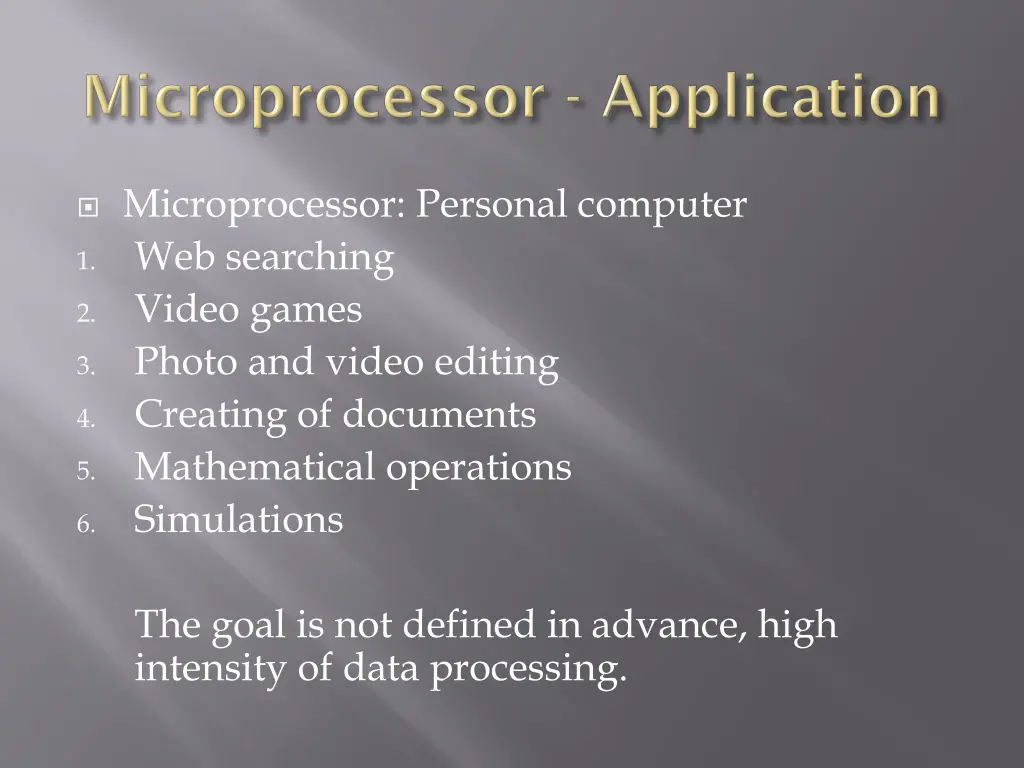
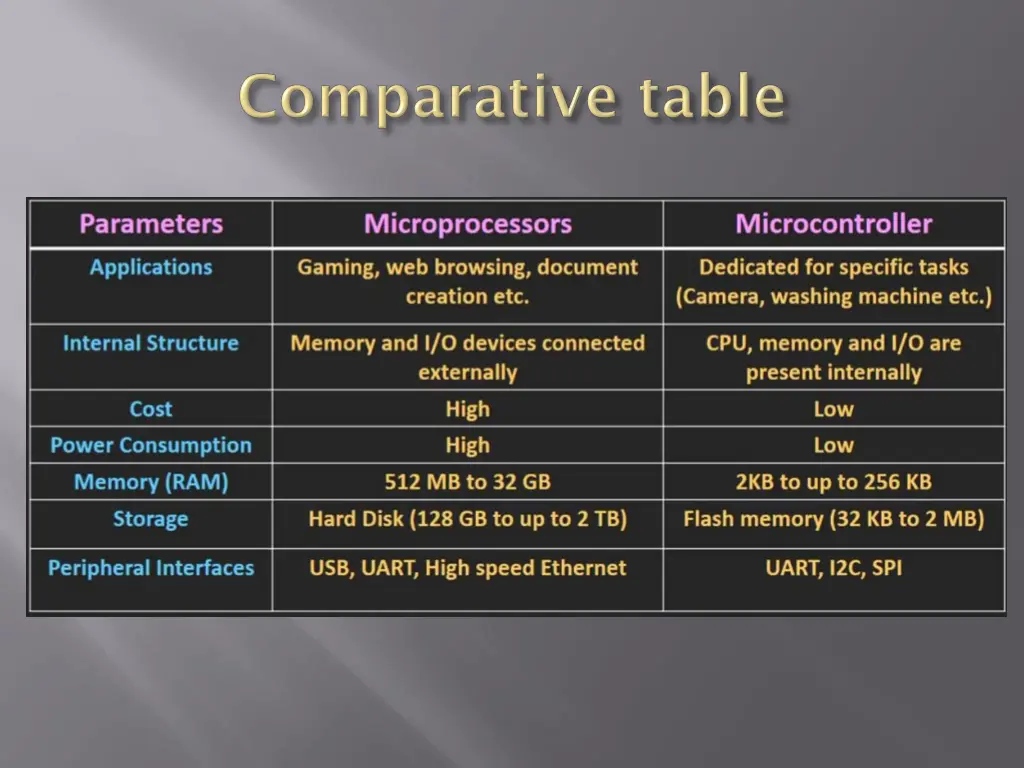
Microprocessor: Personal computer Web searching Video games Photo and video editing Creating of documents Mathematical operations Simulations 1. 2. 3. 4. 5. 6. The goal is not defined in advance, high intensity of data processing.
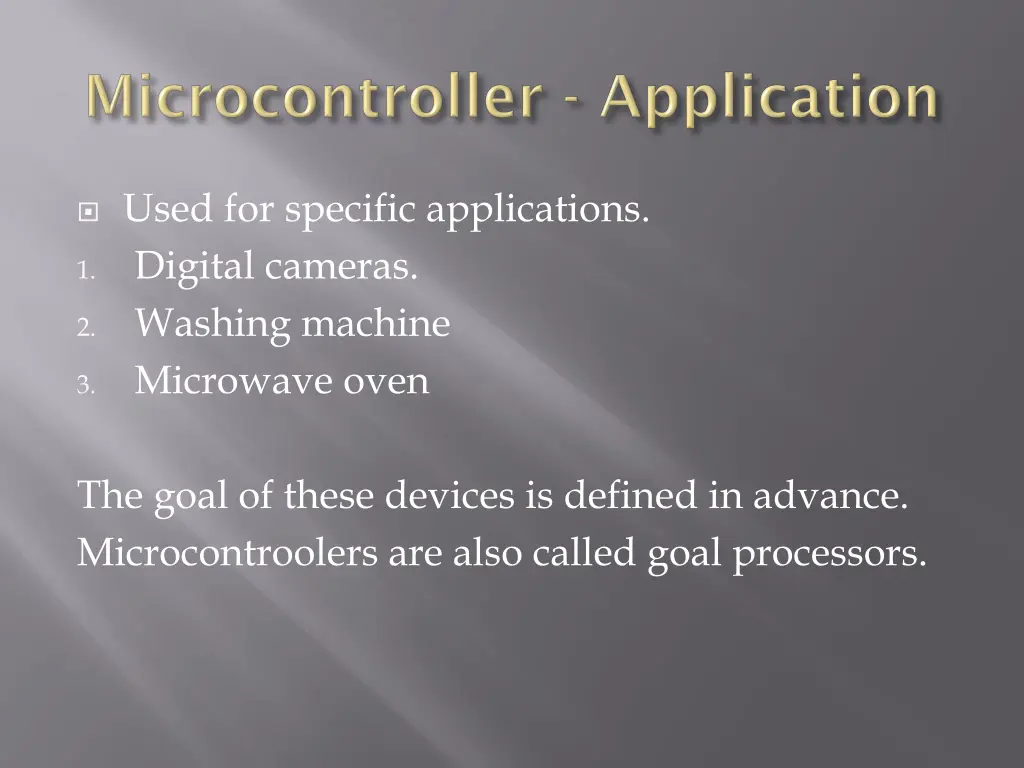
Used for specific applications. Digital cameras. Washing machine Microwave oven 1. 2. 3. The goal of these devices is defined in advance. Microcontroolers are also called goal processors.
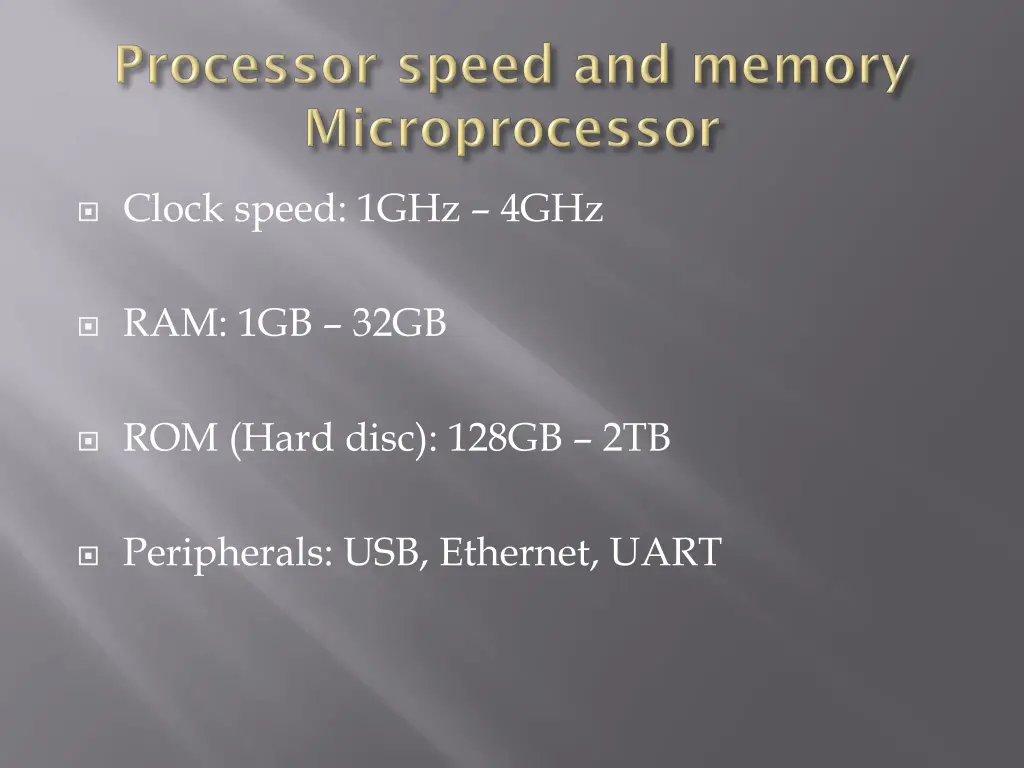
Clock speed: 1GHz 4GHz RAM: 1GB 32GB ROM (Hard disc): 128GB 2TB Peripherals: USB, Ethernet, UART
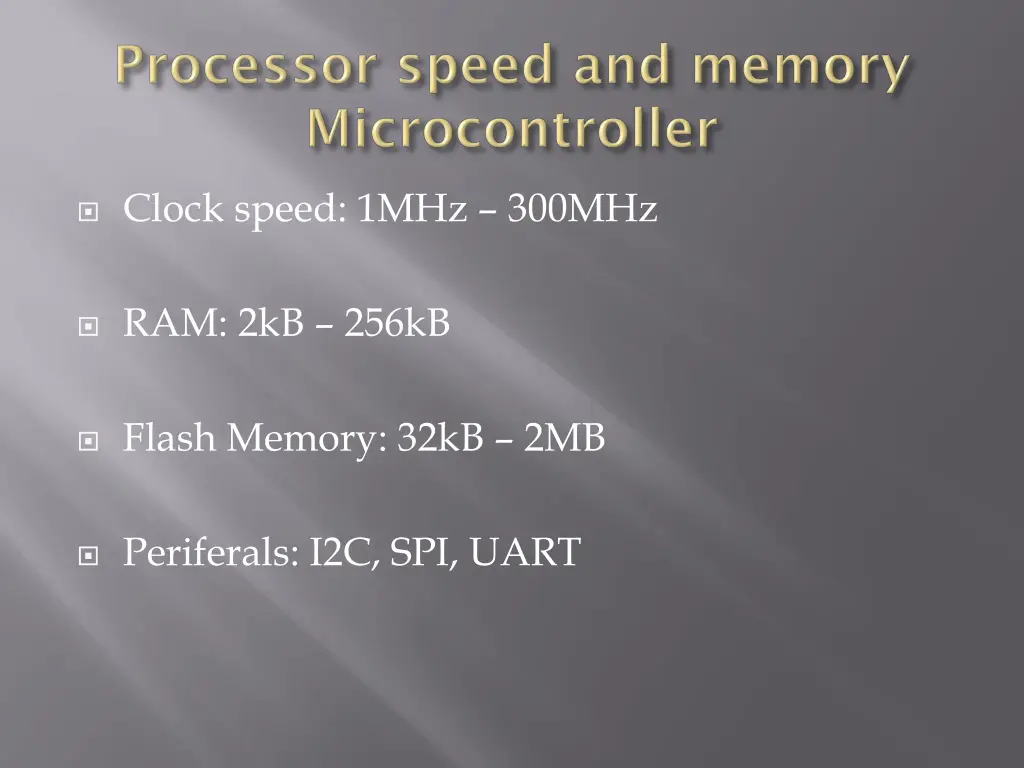
Clock speed: 1MHz 300MHz RAM: 2kB 256kB Flash Memory: 32kB 2MB Periferals: I2C, SPI, UART
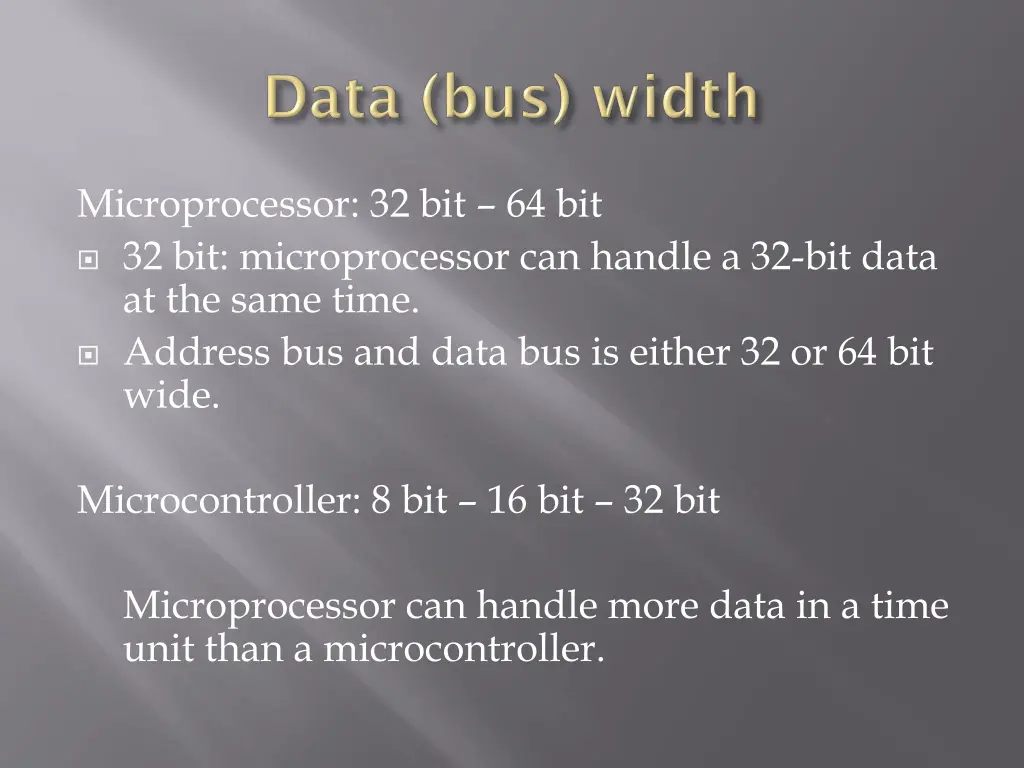
Microprocessor: 32 bit 64 bit 32 bit: microprocessor can handle a 32-bit data at the same time. Address bus and data bus is either 32 or 64 bit wide. Microcontroller: 8 bit 16 bit 32 bit Microprocessor can handle more data in a time unit than a microcontroller.
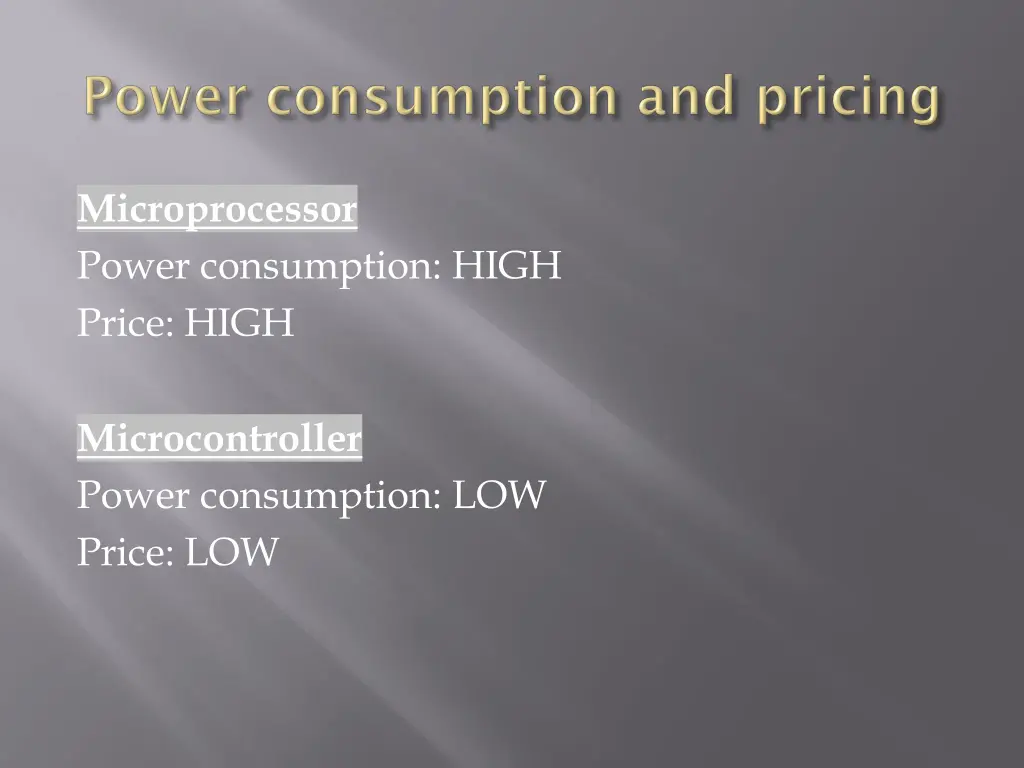
Microprocessor Power consumption: HIGH Price: HIGH Microcontroller Power consumption: LOW Price: LOW