Learn about mitigating spectrum sensing data falsification attacks in cognitive radio networks through techniques like cooperative spectrum sensing, majority voting, and reputation-based systems. Discover the challenges faced in detecting malicious users and the strategies to enhance the reliability of spectrum sensing results.
Please find below an Image/Link to download the presentation.
The content on the website is provided AS IS for your information and personal use only. It may not be sold, licensed, or shared on other websites without obtaining consent from the author. If you encounter any issues during the download, it is possible that the publisher has removed the file from their server.
You are allowed to download the files provided on this website for personal or commercial use, subject to the condition that they are used lawfully. All files are the property of their respective owners.
The content on the website is provided AS IS for your information and personal use only. It may not be sold, licensed, or shared on other websites without obtaining consent from the author.
E N D
Presentation Transcript
Mitigation of the Spectrum Sensing Data Falsifying Attack in Cognitive Radio Networks Rajorshi Biswas, Jie Wu, and Xiaojiang Du Dept. of Computer and Information Sciences Temple University
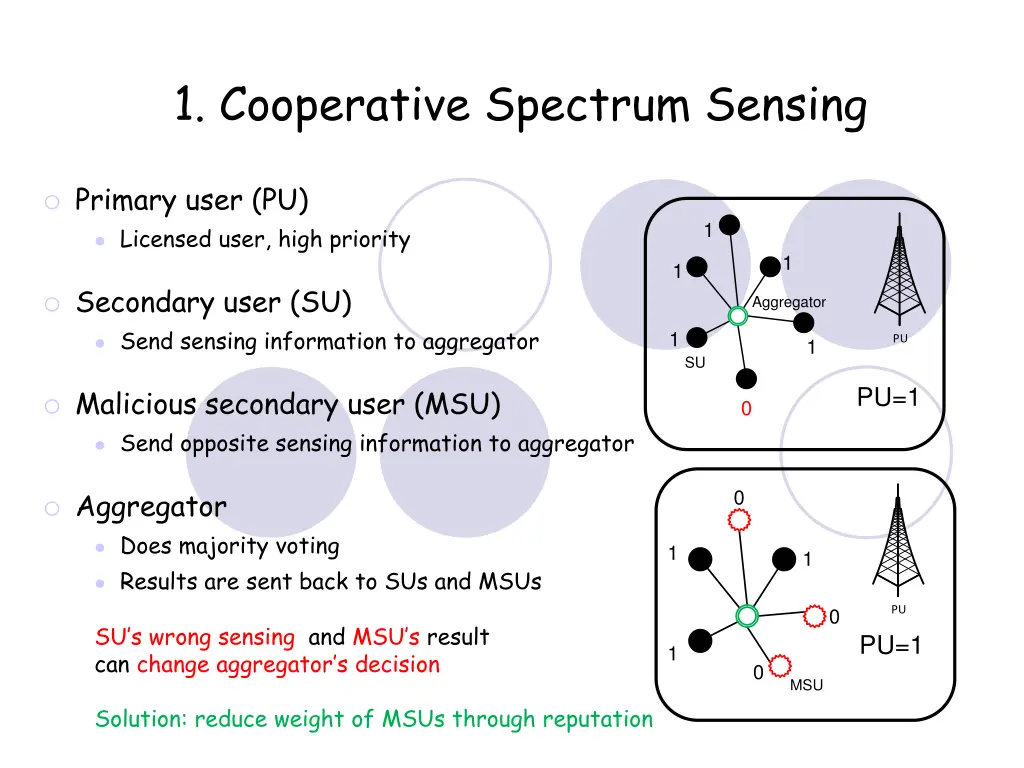
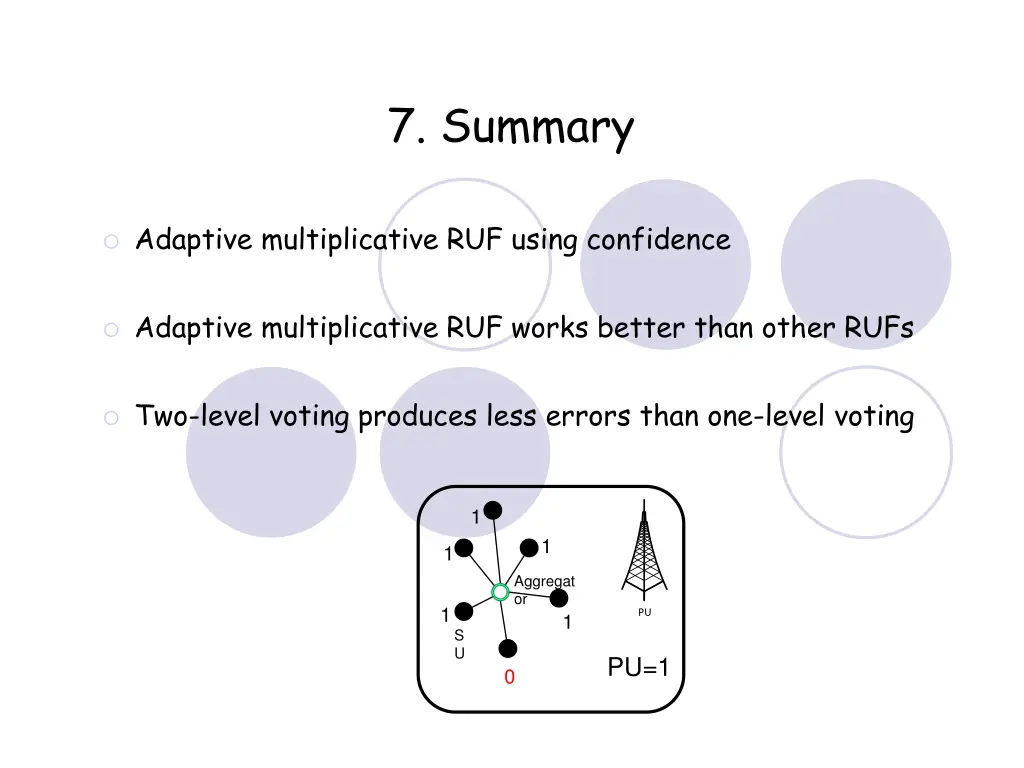
1. Cooperative Spectrum Sensing Primary user (PU) Licensed user, high priority 1 1 1 Secondary user (SU) Send sensing information to aggregator Aggregator 1 PU 1 SU PU=1 Malicious secondary user (MSU) Send opposite sensing information to aggregator 0 Aggregator Does majority voting Results are sent back to SUs and MSUs 0 1 1 PU 0 SU s wrong sensing and MSU s result can change aggregator s decision PU=1 1 0 MSU Solution: reduce weight of MSUs through reputation
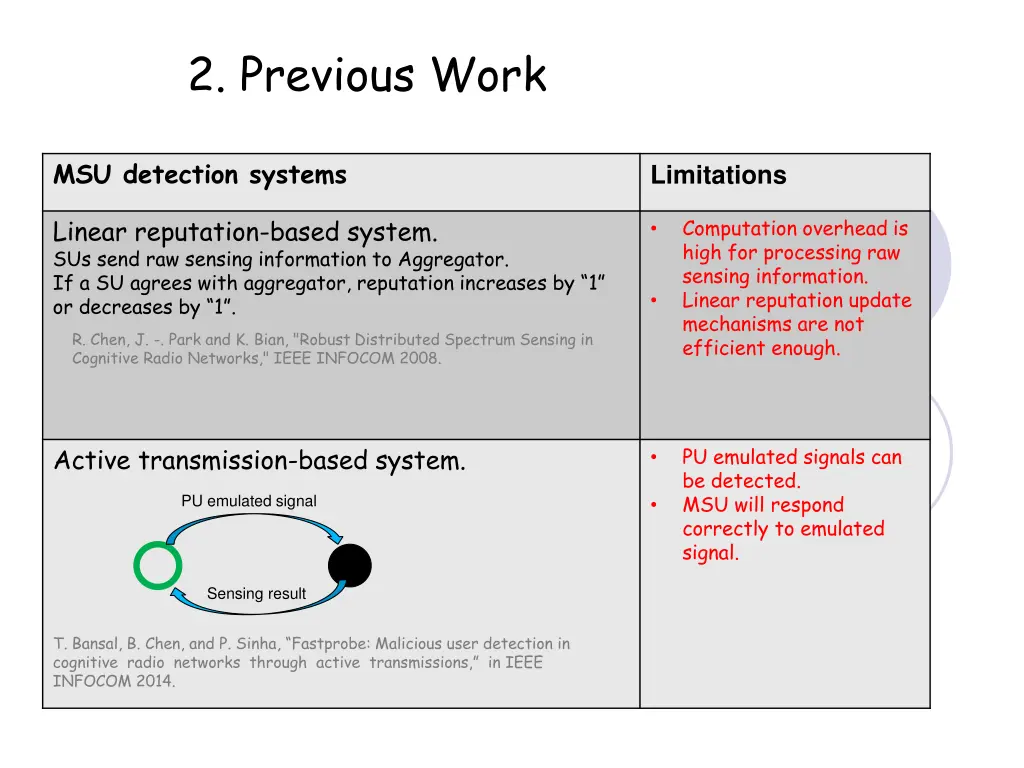
2. Previous Work MSU detection systems Limitations Linear reputation-based system. SUs send raw sensing information to Aggregator. If a SU agrees with aggregator, reputation increases by 1 or decreases by 1 . Computation overhead is high for processing raw sensing information. Linear reputation update mechanisms are not efficient enough. R. Chen, J. -. Park and K. Bian, "Robust Distributed Spectrum Sensing in Cognitive Radio Networks," IEEE INFOCOM 2008. Active transmission-based system. PU emulated signals can be detected. MSU will respond correctly to emulated signal. PU emulated signal Sensing result T. Bansal, B. Chen, and P. Sinha, Fastprobe: Malicious user detection in cognitive radio networks through active transmissions, in IEEE INFOCOM 2014.
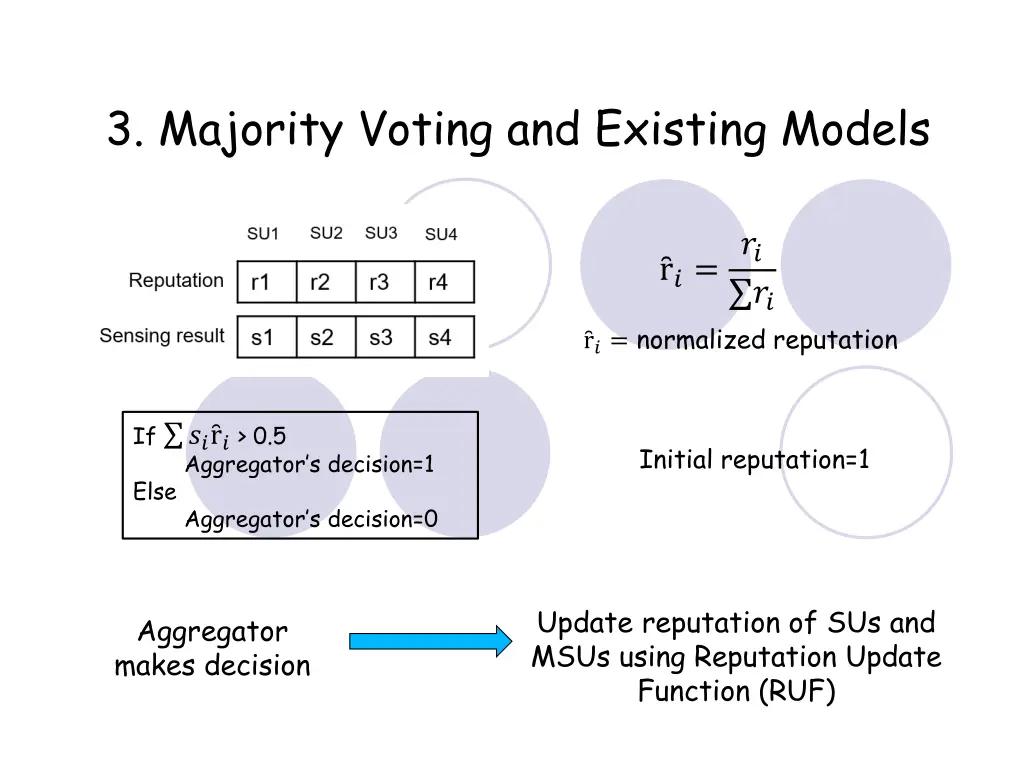
3. Majority Voting and Existing Models ?? ?= ?? ?= normalized reputation If ?? ? > 0.5 Aggregator s decision=1 Else Aggregator s decision=0 Initial reputation=1 Update reputation of SUs and MSUs using Reputation Update Function (RUF) Aggregator makes decision
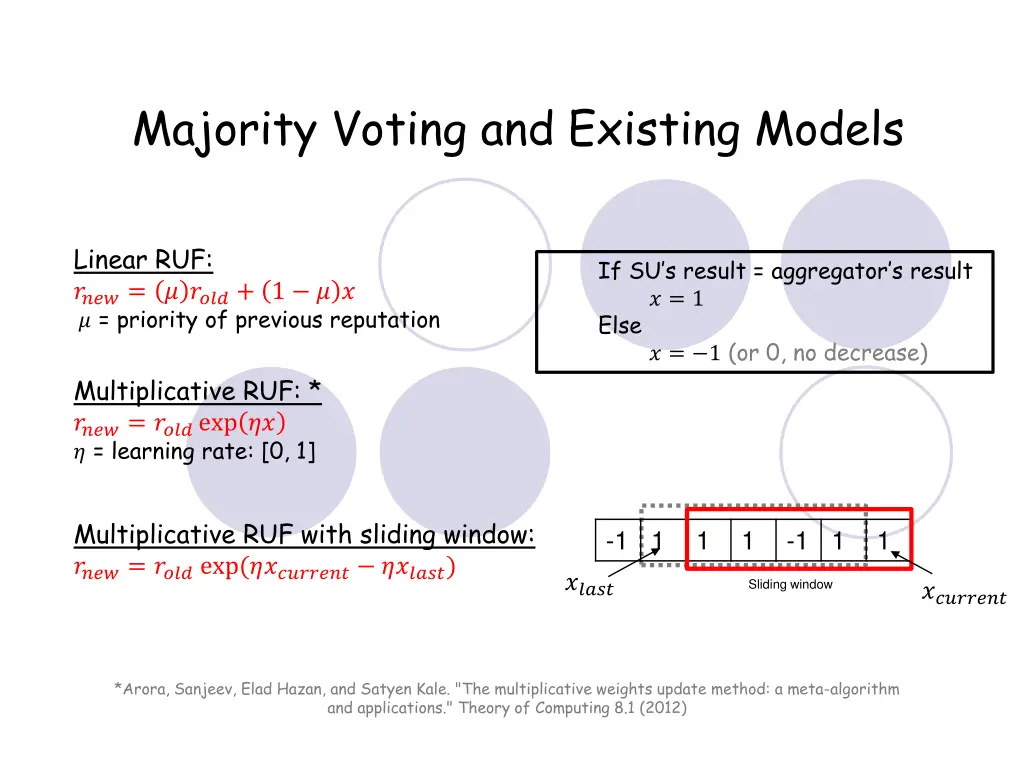
Majority Voting and Existing Models Linear RUF: ????= ? ????+ 1 ? ? ? = priority of previous reputation If SU s result = aggregator s result ? = 1 Else ? = 1 (or 0, no decrease) Multiplicative RUF: * ????= ????exp ?? ? = learning rate: [0, 1] Multiplicative RUF with sliding window: ????= ???? exp(????????? ??????) -1 1 1 1 -1 1 1 ????? Sliding window ???????? *Arora, Sanjeev, Elad Hazan, and Satyen Kale. "The multiplicative weights update method: a meta-algorithm and applications." Theory of Computing 8.1 (2012)
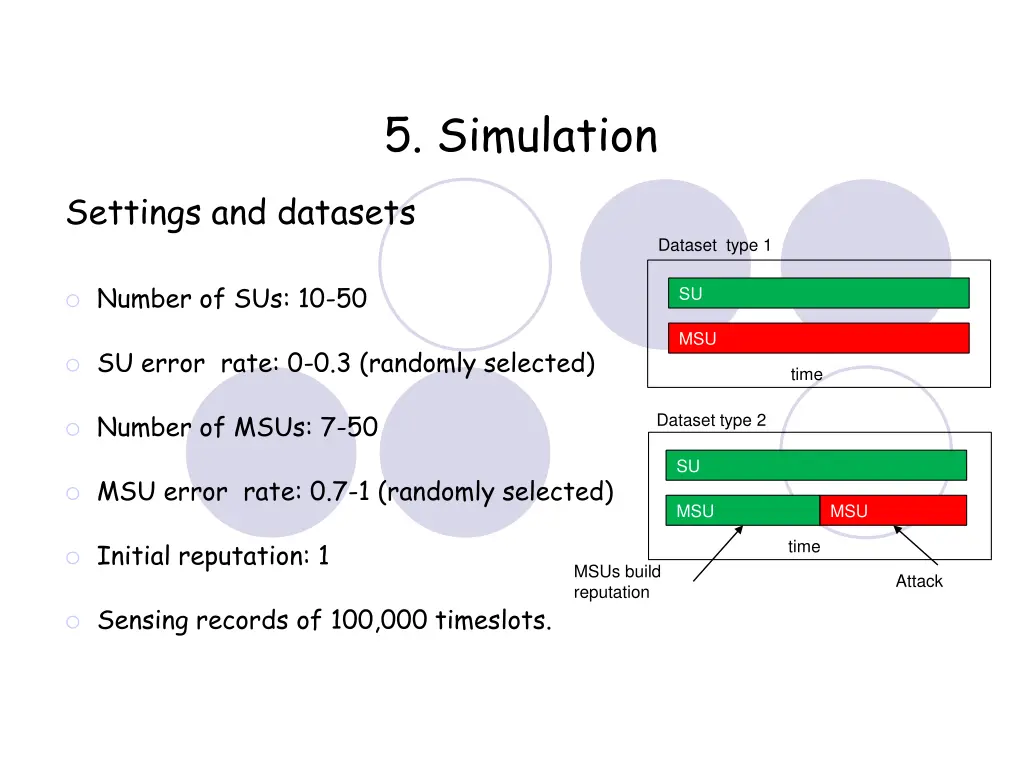
5. Simulation Settings and datasets Dataset type 1 Number of SUs: 10-50 SU MSU SU error rate: 0-0.3 (randomly selected) time Number of MSUs: 7-50 Dataset type 2 SU MSU error rate: 0.7-1 (randomly selected) MSU MSU time Initial reputation: 1 MSUs build reputation Attack Sensing records of 100,000 timeslots.
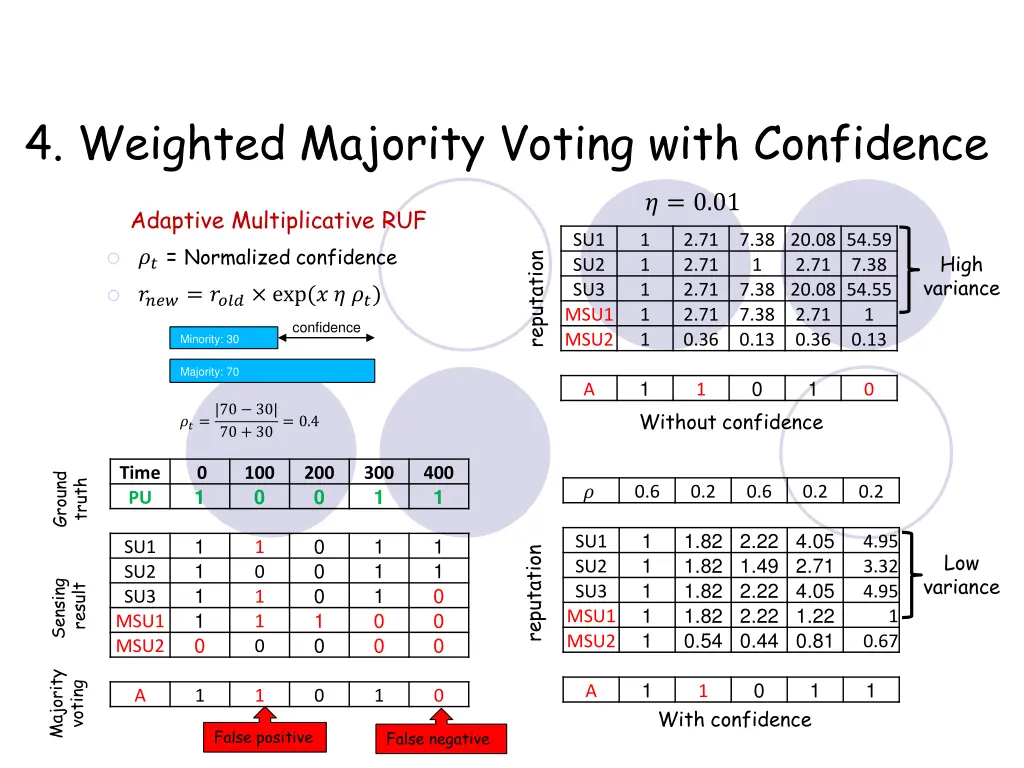
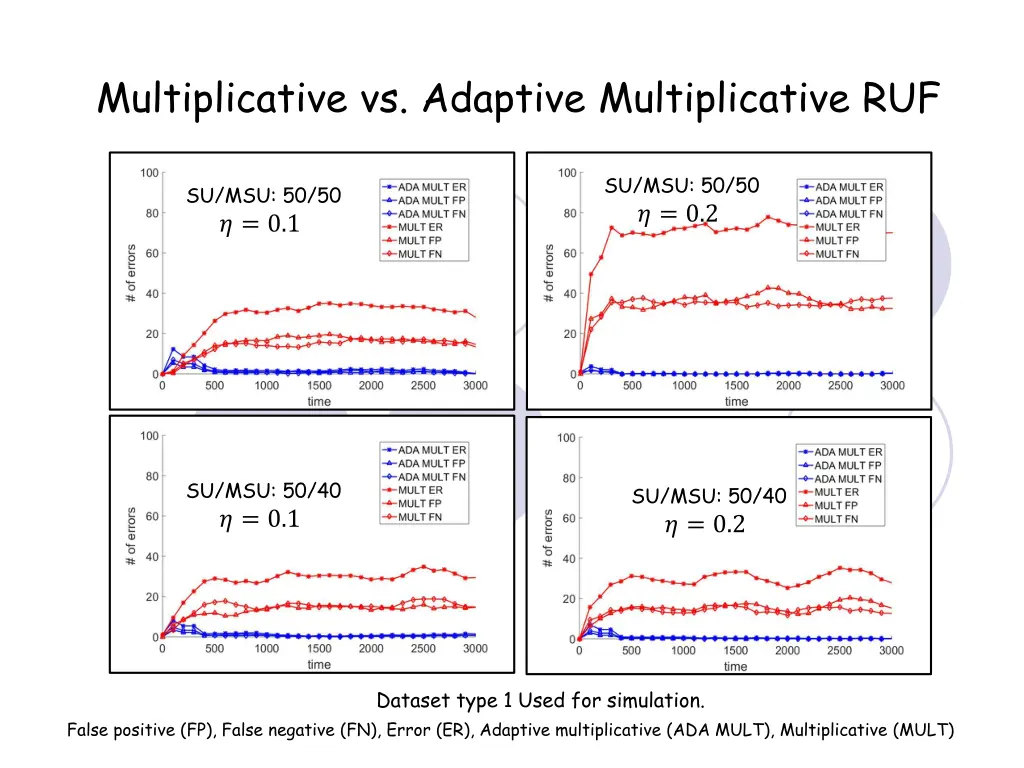
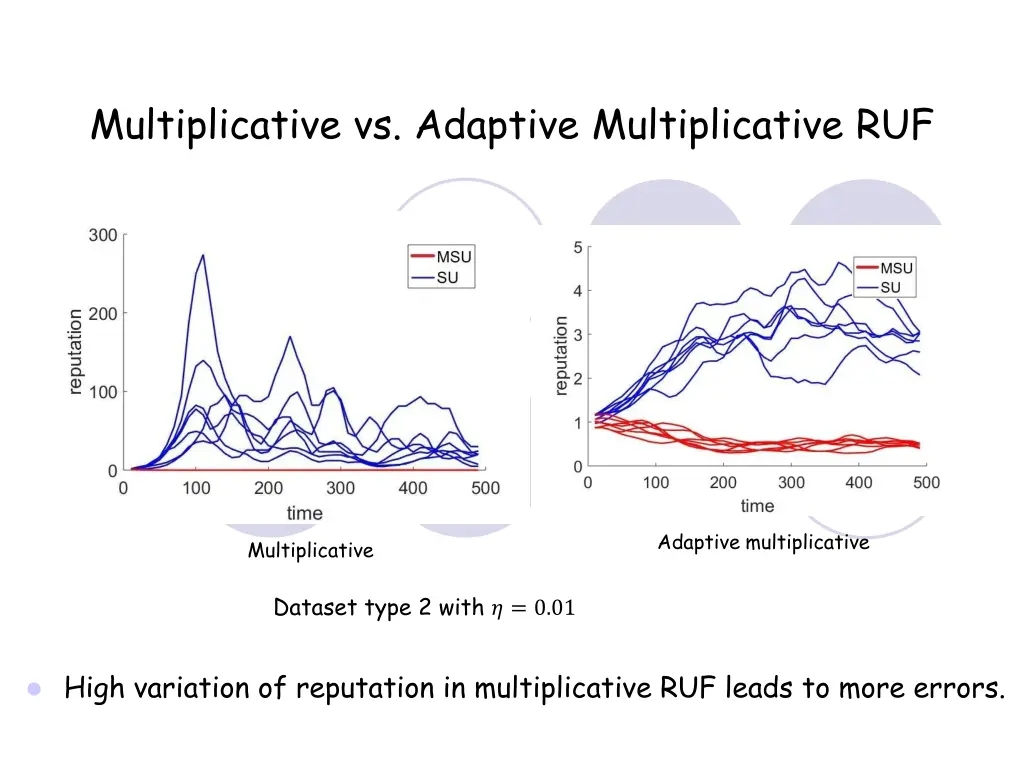
Multiplicative vs. Adaptive Multiplicative RUF Adaptive multiplicative Multiplicative Dataset type 2 with ? = 0.01 High variation of reputation in multiplicative RUF leads to more errors.
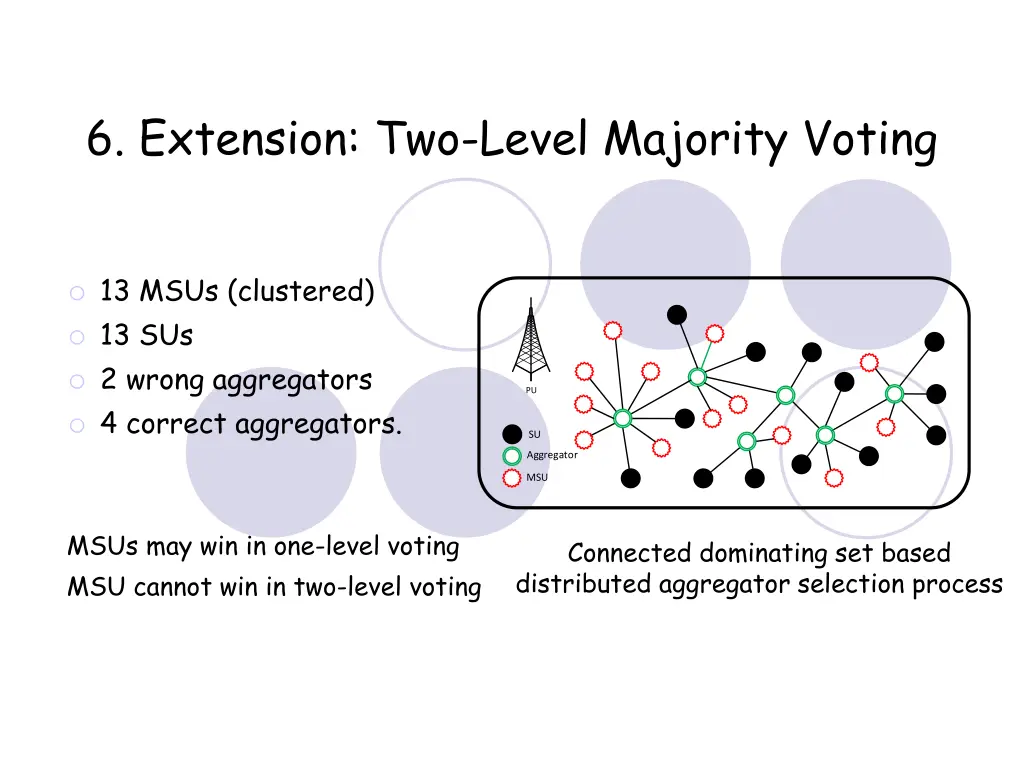
6. Extension: Two-Level Majority Voting 13 MSUs (clustered) 13 SUs 2 wrong aggregators 4 correct aggregators. PU SU Aggregator MSU MSUs may win in one-level voting MSU cannot win in two-level voting Connected dominating set based distributed aggregator selection process
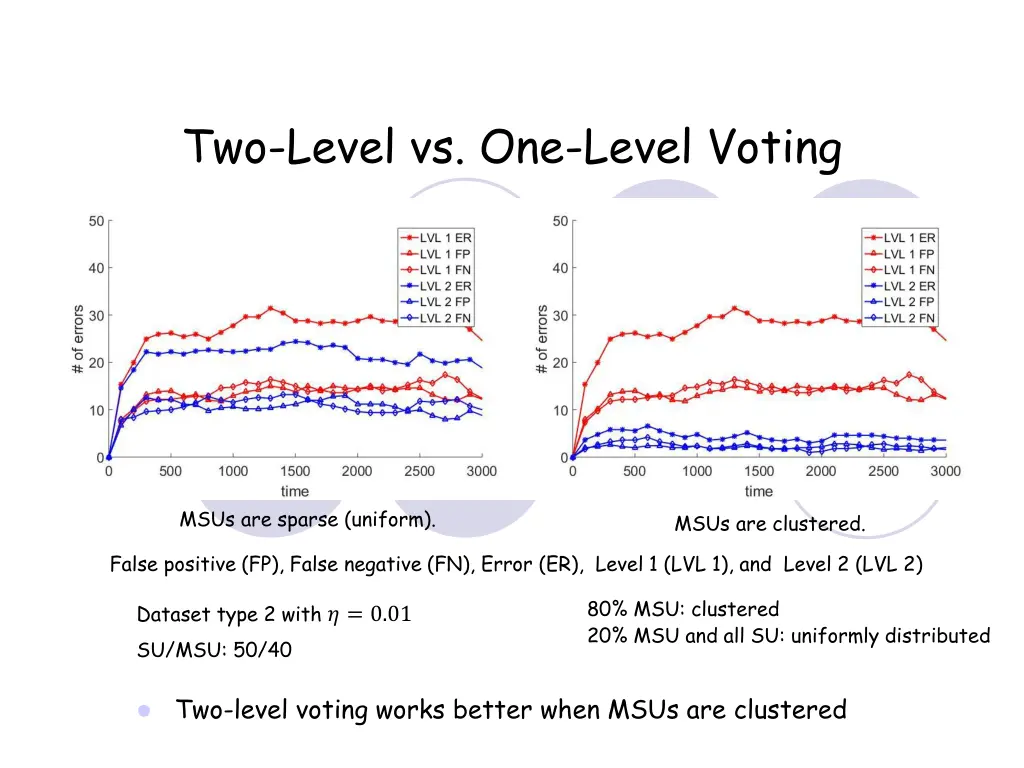
Two-Level vs. One-Level Voting MSUs are sparse (uniform). MSUs are clustered. False positive (FP), False negative (FN), Error (ER), Level 1 (LVL 1), and Level 2 (LVL 2) 80% MSU: clustered 20% MSU and all SU: uniformly distributed Dataset type 2 with ? = 0.01 SU/MSU: 50/40 Two-level voting works better when MSUs are clustered
7. Summary Adaptive multiplicative RUF using confidence Adaptive multiplicative RUF works better than other RUFs Two-level voting produces less errors than one-level voting 1 1 1 Aggregat or 1 PU 1 S U PU=1 0