Models of Innovation Framework and Types - Discussion and Analysis
Explore different models of innovation within an organization, including traditional top-down innovation, disruptive innovation, and discovery innovation. Learn about empowering innovation and efficiency innovation to optimize processes and outcomes. Discover strategies to engage creativity, invest wisely, and deliver impactful programs for scalable success.

Download Presentation

Please find below an Image/Link to download the presentation.
The content on the website is provided AS IS for your information and personal use only. It may not be sold, licensed, or shared on other websites without obtaining consent from the author. If you encounter any issues during the download, it is possible that the publisher has removed the file from their server.
You are allowed to download the files provided on this website for personal or commercial use, subject to the condition that they are used lawfully. All files are the property of their respective owners.
The content on the website is provided AS IS for your information and personal use only. It may not be sold, licensed, or shared on other websites without obtaining consent from the author.
E N D
Presentation Transcript
Innovation Framework Framework Innovation DRAFT FOR DISCUSSION Models of Innovation Edward G. Happ, Global CIO September 2013 www.ifrc.org www.ifrc.org Saving lives, changing minds. Saving lives, changing minds.
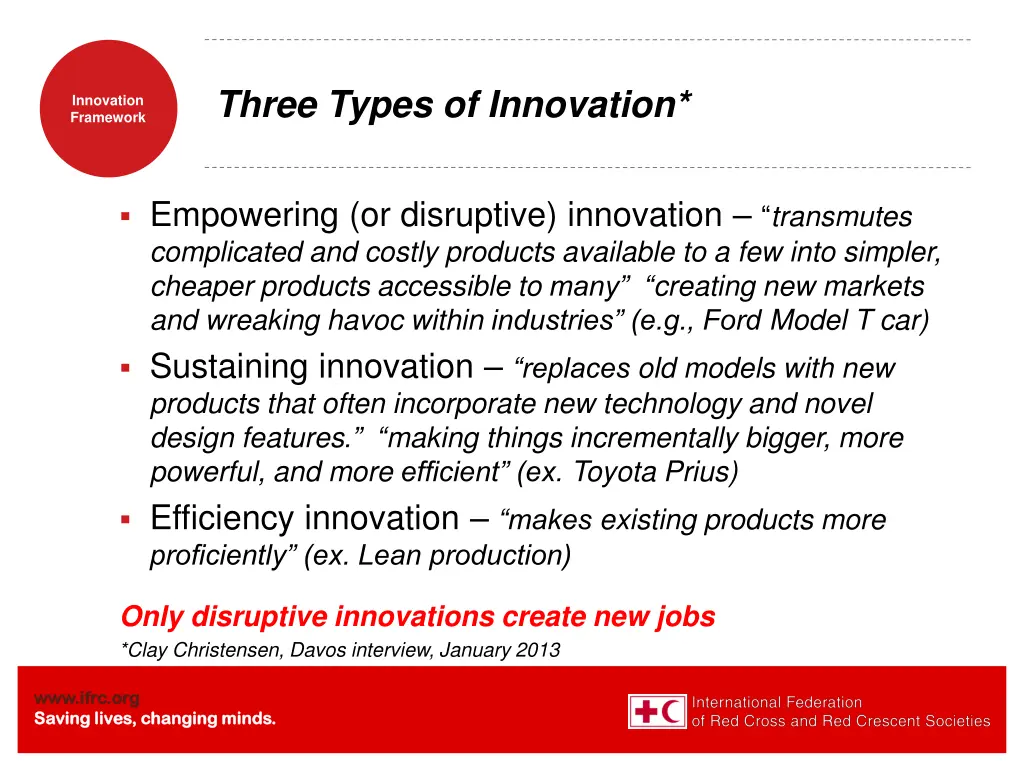
Three Types of Innovation* Innovation Framework Empowering (or disruptive) innovation transmutes complicated and costly products available to a few into simpler, cheaper products accessible to many creating new markets and wreaking havoc within industries (e.g., Ford Model T car) Sustaining innovation replaces old models with new products that often incorporate new technology and novel design features. making things incrementally bigger, more powerful, and more efficient (ex. Toyota Prius) Efficiency innovation makes existing products more proficiently (ex. Lean production) Only disruptive innovations create new jobs *Clay Christensen, Davos interview, January 2013 www.ifrc.org www.ifrc.org Saving lives, changing minds. Saving lives, changing minds.
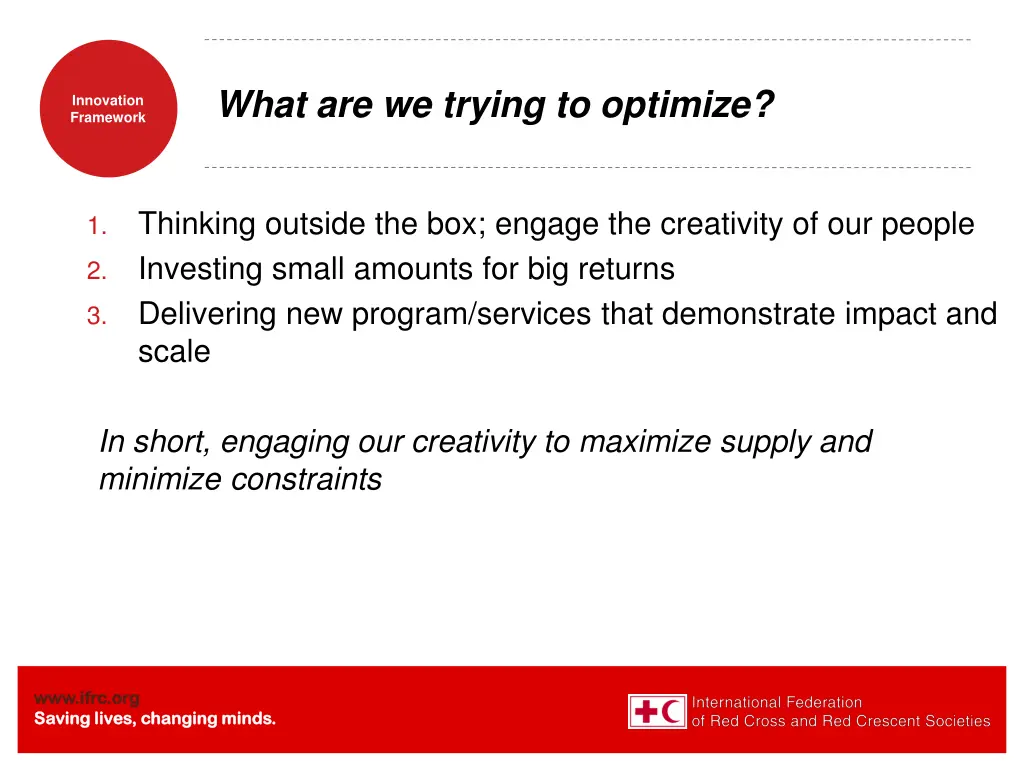
What are we trying to optimize? Innovation Framework Thinking outside the box; engage the creativity of our people Investing small amounts for big returns Delivering new program/services that demonstrate impact and scale 1. 2. 3. In short, engaging our creativity to maximize supply and minimize constraints www.ifrc.org www.ifrc.org Saving lives, changing minds. Saving lives, changing minds.
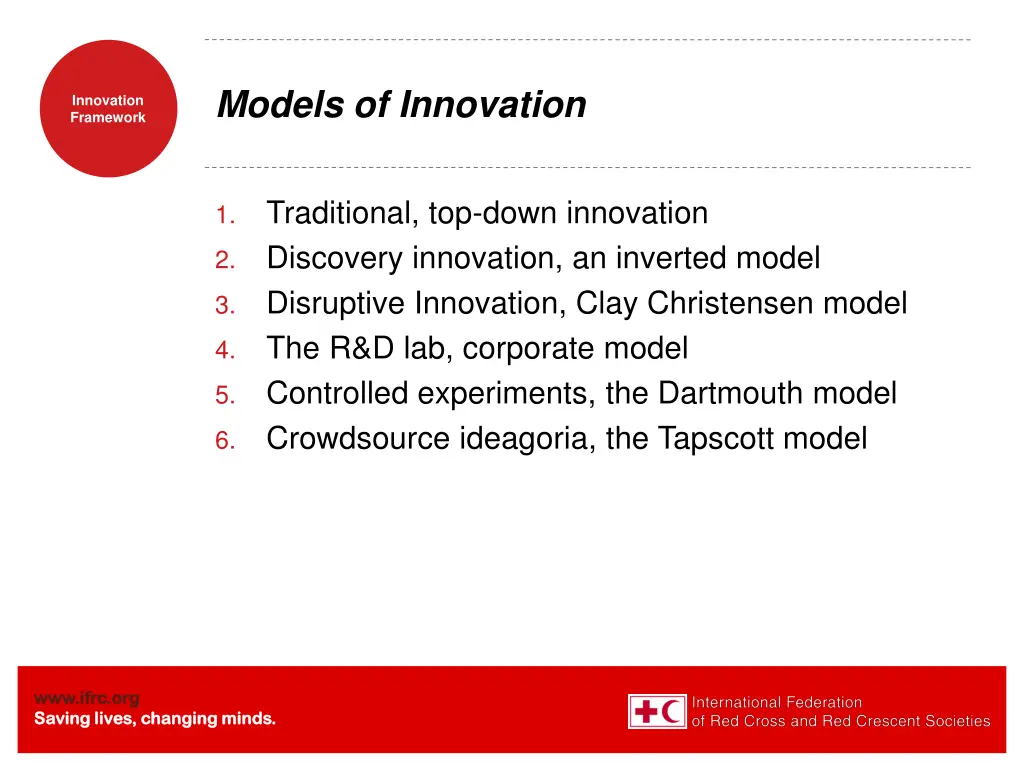
Models of Innovation Innovation Framework Traditional, top-down innovation Discovery innovation, an inverted model Disruptive Innovation, Clay Christensen model The R&D lab, corporate model Controlled experiments, the Dartmouth model Crowdsource ideagoria, the Tapscott model 1. 2. 3. 4. 5. 6. www.ifrc.org www.ifrc.org Saving lives, changing minds. Saving lives, changing minds.
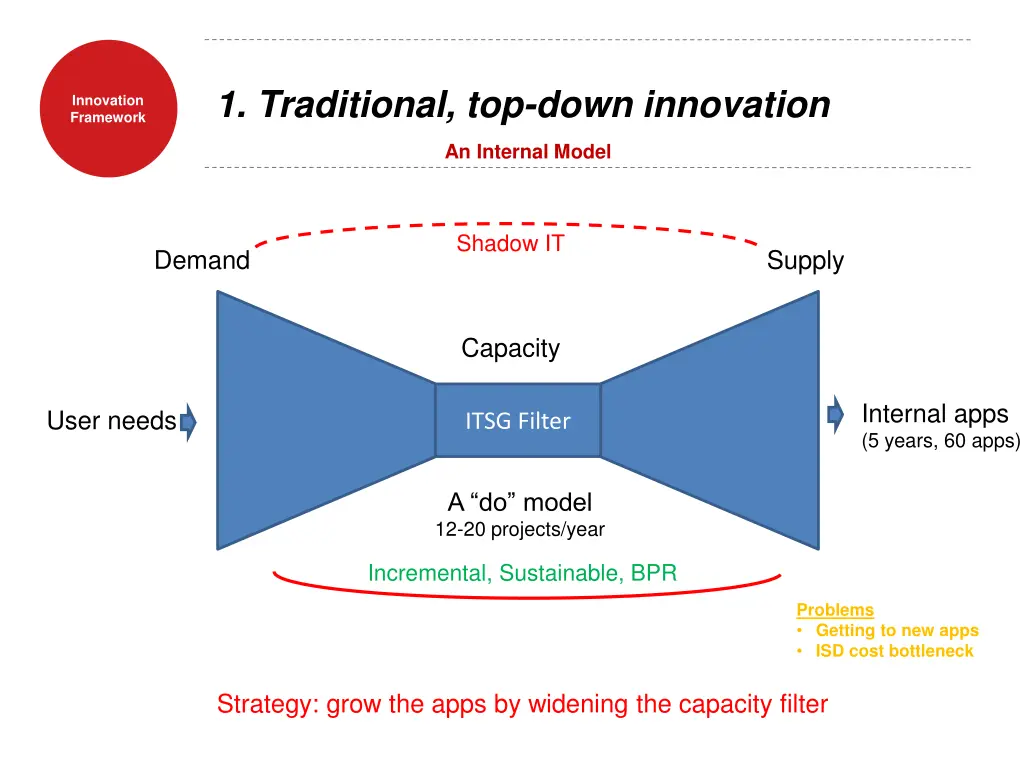
1. Traditional, top-down innovation Innovation Framework An Internal Model Shadow IT Demand Supply Capacity Internal apps (5 years, 60 apps) User needs ITSG Filter A do model 12-20 projects/year Incremental, Sustainable, BPR Problems Getting to new apps ISD cost bottleneck Strategy: grow the apps by widening the capacity filter
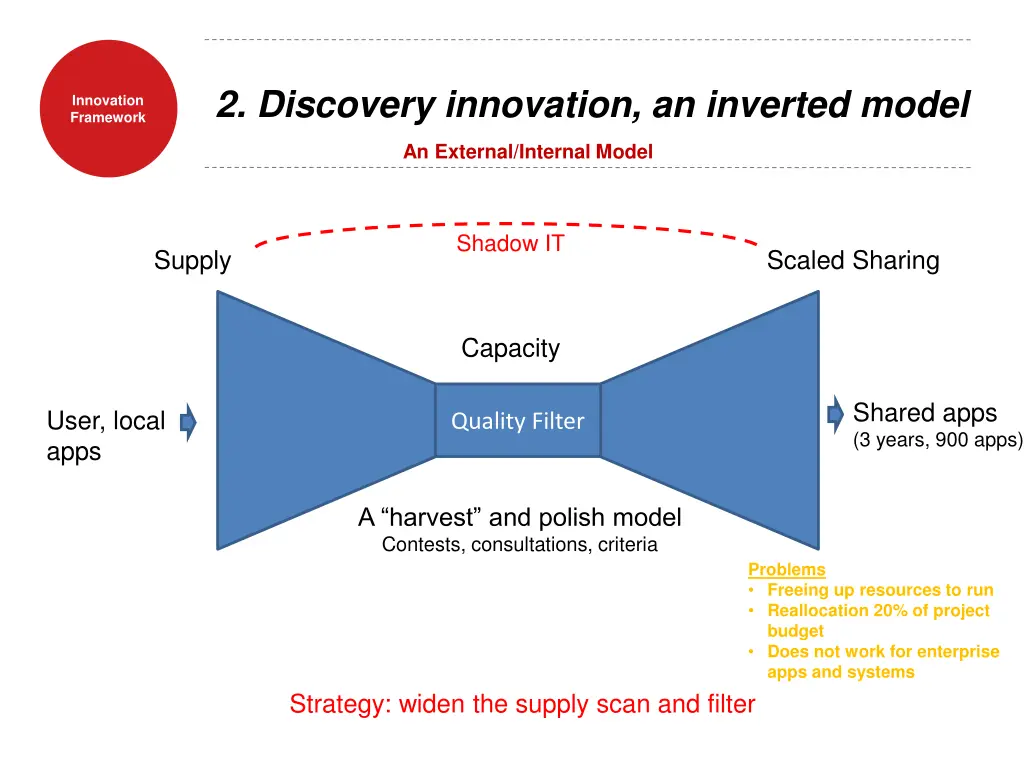
2. Discovery innovation, an inverted model Innovation Framework An External/Internal Model Shadow IT Supply Scaled Sharing Capacity Shared apps (3 years, 900 apps) User, local apps Quality Filter A harvest and polish model Contests, consultations, criteria Problems Freeing up resources to run Reallocation 20% of project budget Does not work for enterprise apps and systems Strategy: widen the supply scan and filter
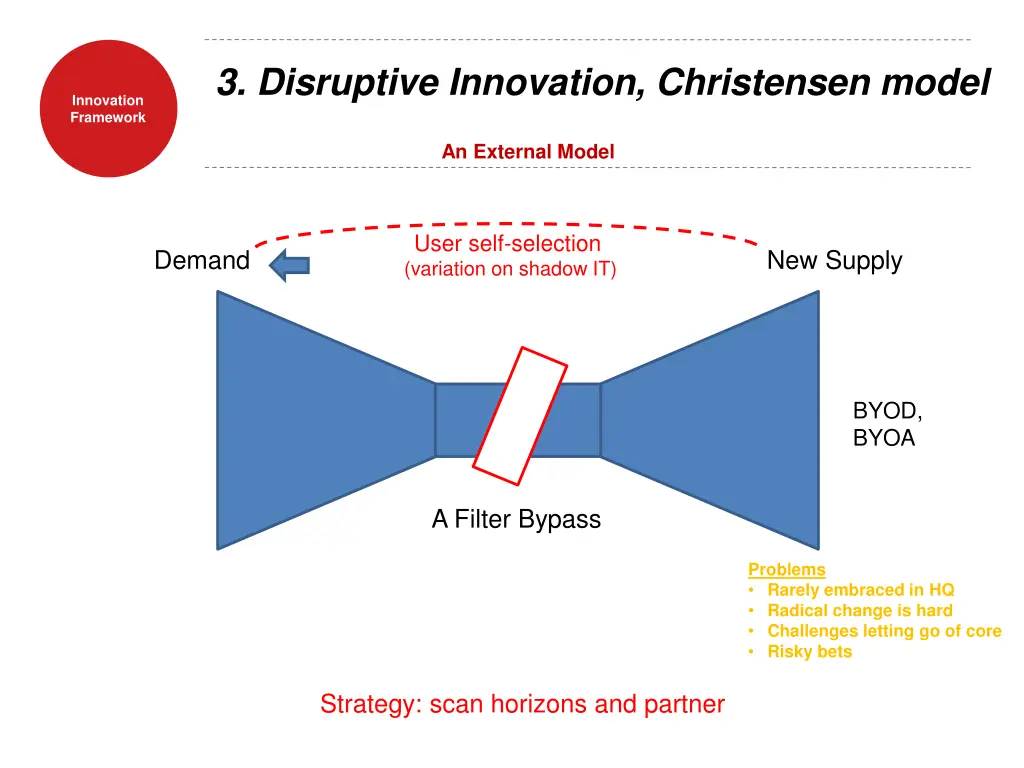
3. Disruptive Innovation, Christensen model Innovation Framework An External Model User self-selection (variation on shadow IT) Demand New Supply BYOD, BYOA A Filter Bypass Problems Rarely embraced in HQ Radical change is hard Challenges letting go of core Risky bets Strategy: scan horizons and partner
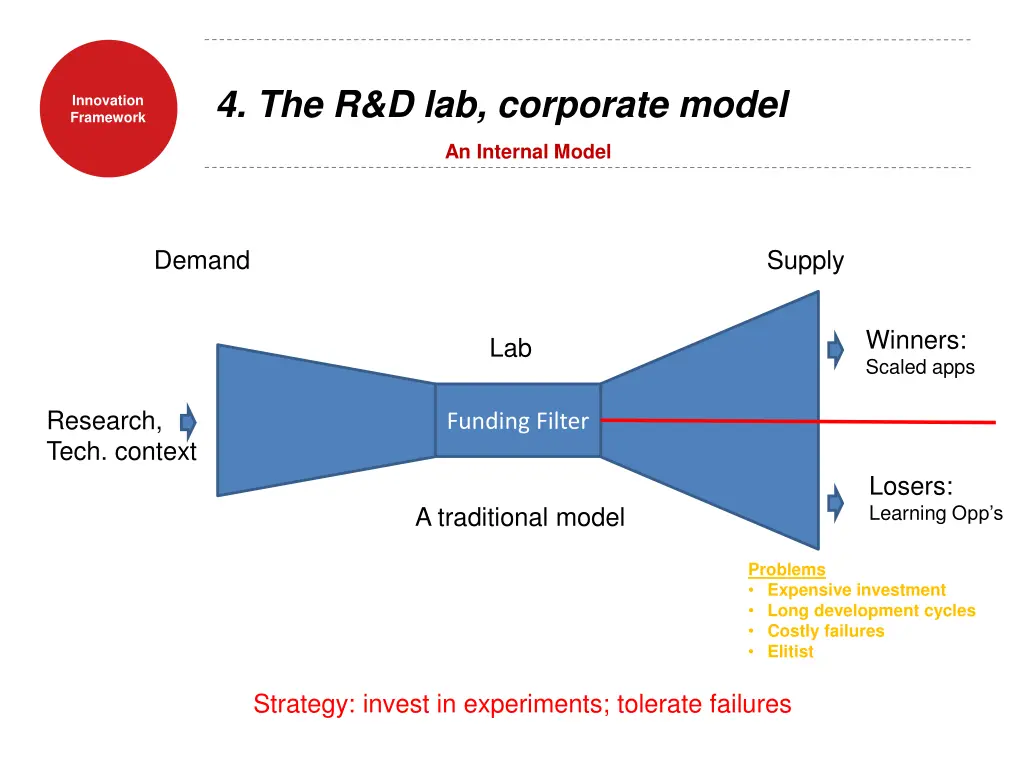
4. The R&D lab, corporate model Innovation Framework An Internal Model Demand Supply Winners: Scaled apps Lab Research, Tech. context Funding Filter Losers: Learning Opp s A traditional model Problems Expensive investment Long development cycles Costly failures Elitist Strategy: invest in experiments; tolerate failures
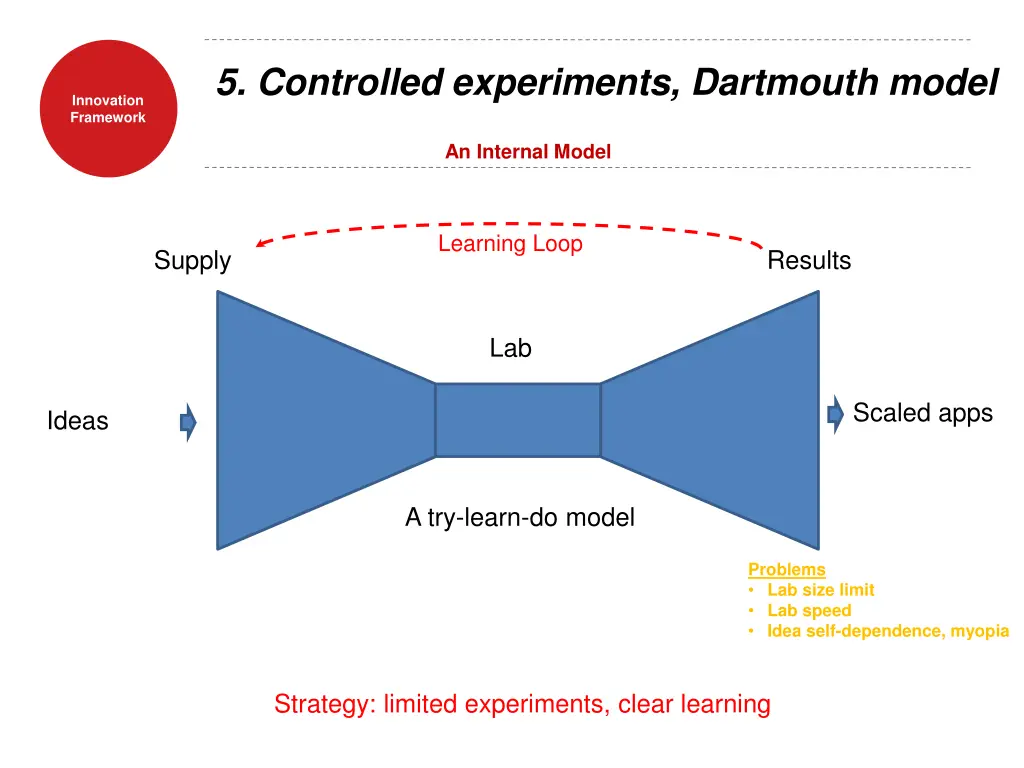
5. Controlled experiments, Dartmouth model Innovation Framework An Internal Model Learning Loop Supply Results Lab Scaled apps Ideas A try-learn-do model Problems Lab size limit Lab speed Idea self-dependence, myopia Strategy: limited experiments, clear learning
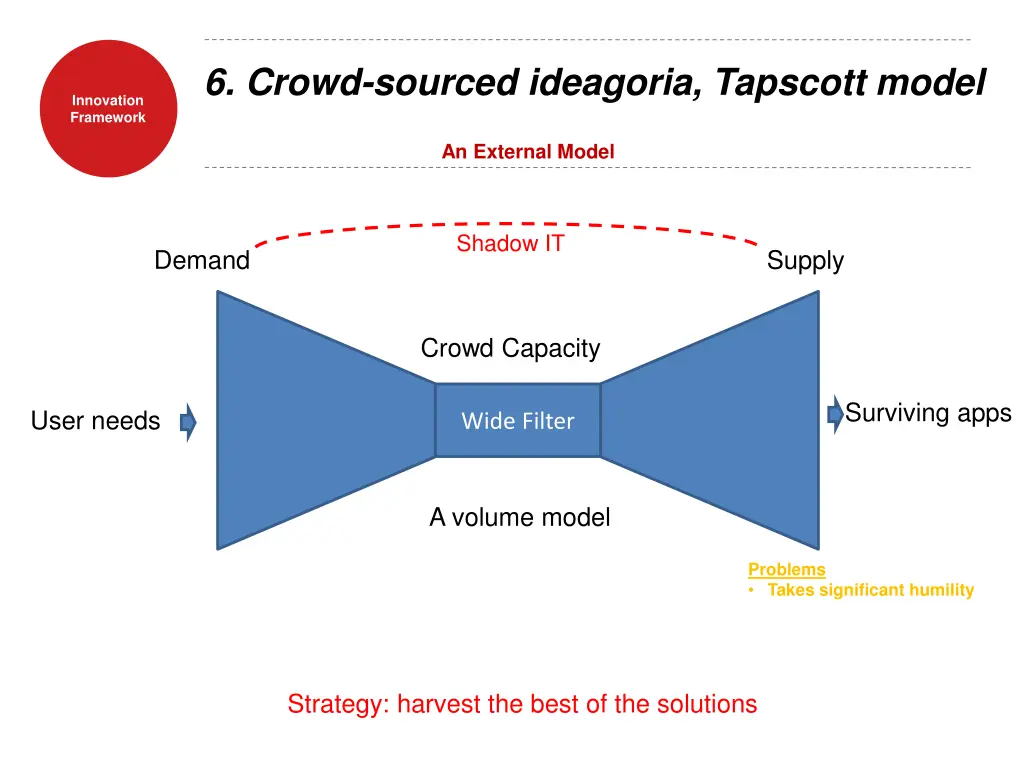
6. Crowd-sourced ideagoria, Tapscott model An External Model Innovation Framework Shadow IT Demand Supply Crowd Capacity Surviving apps User needs Wide Filter A volume model Problems Takes significant humility Strategy: harvest the best of the solutions
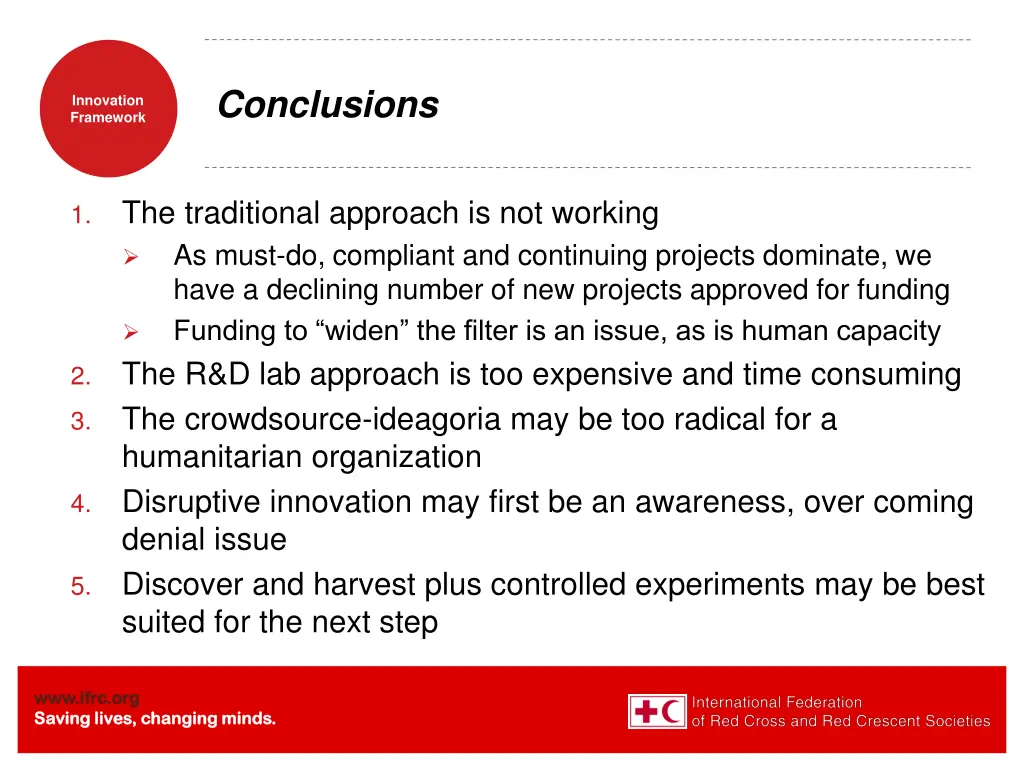
Conclusions Innovation Framework The traditional approach is not working As must-do, compliant and continuing projects dominate, we have a declining number of new projects approved for funding Funding to widen the filter is an issue, as is human capacity The R&D lab approach is too expensive and time consuming The crowdsource-ideagoria may be too radical for a humanitarian organization Disruptive innovation may first be an awareness, over coming denial issue Discover and harvest plus controlled experiments may be best suited for the next step 1. 2. 3. 4. 5. www.ifrc.org www.ifrc.org Saving lives, changing minds. Saving lives, changing minds.
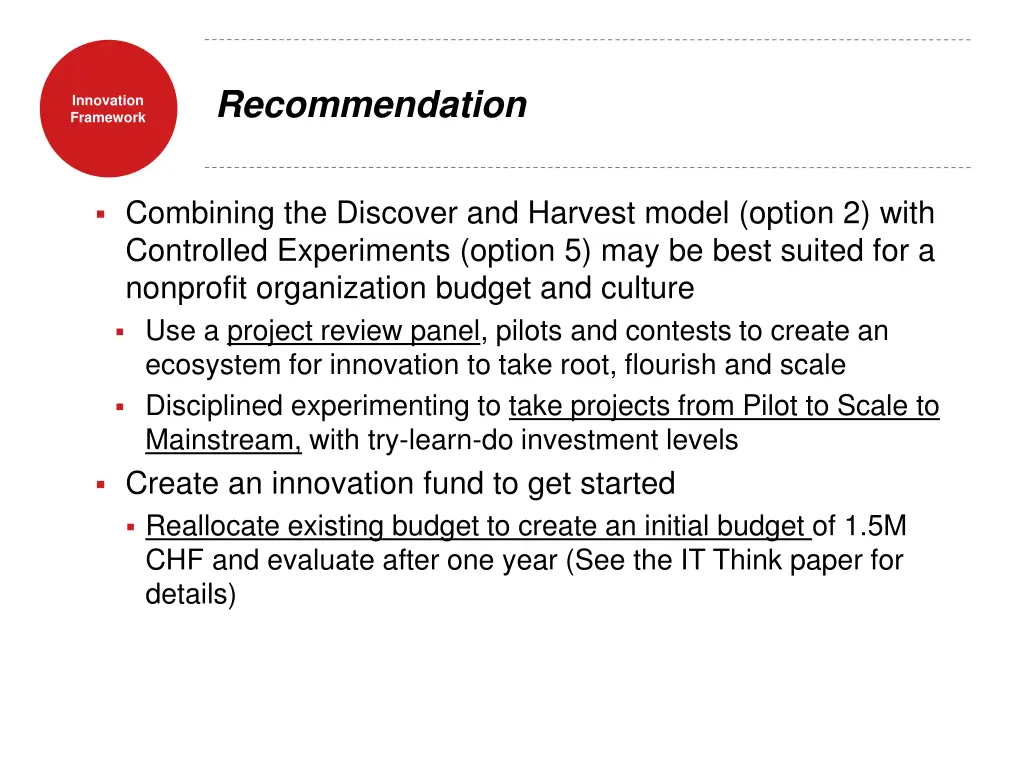
Recommendation Innovation Framework Combining the Discover and Harvest model (option 2) with Controlled Experiments (option 5) may be best suited for a nonprofit organization budget and culture Use a project review panel, pilots and contests to create an ecosystem for innovation to take root, flourish and scale Disciplined experimenting to take projects from Pilot to Scale to Mainstream, with try-learn-do investment levels Create an innovation fund to get started Reallocate existing budget to create an initial budget of 1.5M CHF and evaluate after one year (See the IT Think paper for details)
FOR FURTHER INFORMATION ON THE DIGITAL DIVIDE INITIATIVE, PLEASE CONTACT: IFRC INFORMATION SERVICESDEPARTMENT ED HAPP, HEAD OF ISD & GLOBAL CIO TEL. : +41 022 730 4365 EMAIL: edward.happ@ifrc.org THIS PRESENTATION IS PUBLISHED BY INTERNATIONAL FEDERATION OF RED CROSS AND RED CRESCENT SOCIETIES P.O. BOX 372 CH-1211 GENEVA 19 SWITZERLAND TEL.: +41 22 730 42 22 FAX.: +41 22 733 03 95
Appendix Innovation Framework www.ifrc.org www.ifrc.org Saving lives, changing minds. Saving lives, changing minds.
Model factors Innovation Framework Supply side the aggregation of solutions (apps, ideas) Demand side the aggregation of needs Capacity side the ability to deliver on needs and solutions www.ifrc.org www.ifrc.org Saving lives, changing minds. Saving lives, changing minds.
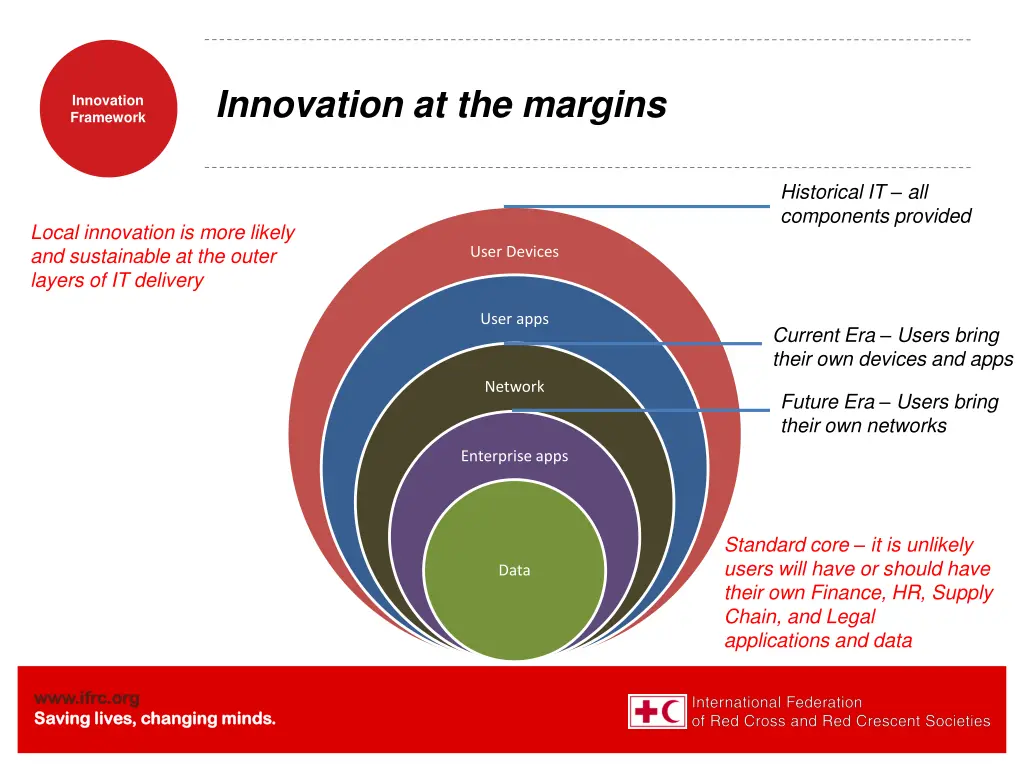
Innovation at the margins Innovation Framework Historical IT all components provided Local innovation is more likely and sustainable at the outer layers of IT delivery User Devices User apps Current Era Users bring their own devices and apps Network Future Era Users bring their own networks Enterprise apps Standard core it is unlikely users will have or should have their own Finance, HR, Supply Chain, and Legal applications and data Data www.ifrc.org www.ifrc.org Saving lives, changing minds. Saving lives, changing minds.