Explore the concept of motion maps and complicated motion patterns in science, understanding how to represent objects' positions, directions, and velocities using dots and arrows. Learn how to draw motion maps and analyze examples of accelerating and constant velocity motion scenarios.
Please find below an Image/Link to download the presentation.
The content on the website is provided AS IS for your information and personal use only. It may not be sold, licensed, or shared on other websites without obtaining consent from the author. If you encounter any issues during the download, it is possible that the publisher has removed the file from their server.
You are allowed to download the files provided on this website for personal or commercial use, subject to the condition that they are used lawfully. All files are the property of their respective owners.
The content on the website is provided AS IS for your information and personal use only. It may not be sold, licensed, or shared on other websites without obtaining consent from the author.
E N D
Presentation Transcript
Thursday, February 13, 2020 Day 1 Science Starters Sheet 1. Please have these Items on your desk. Buggy Lab Agenda 2- Science Start: 1. What 2 things have you learned from the Buggy Lab? 2. What specific things make an airplane an actual airplane?
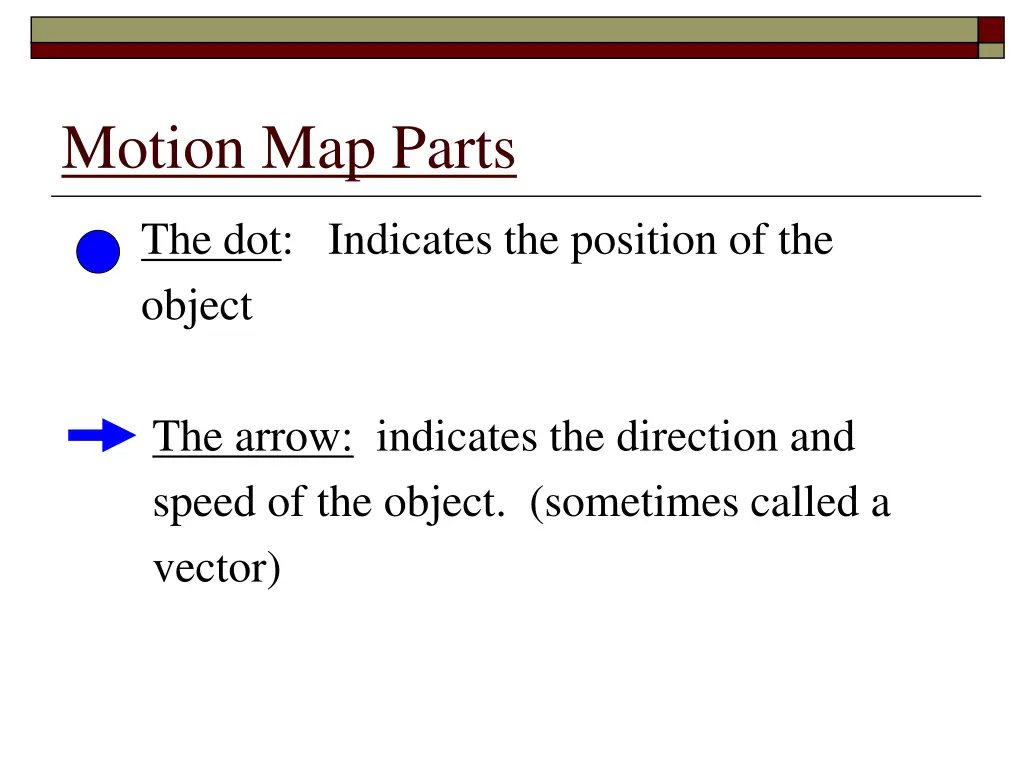
Motion Map Parts The dot: Indicates the position of the object The arrow: indicates the direction and speed of the object. (sometimes called a vector)
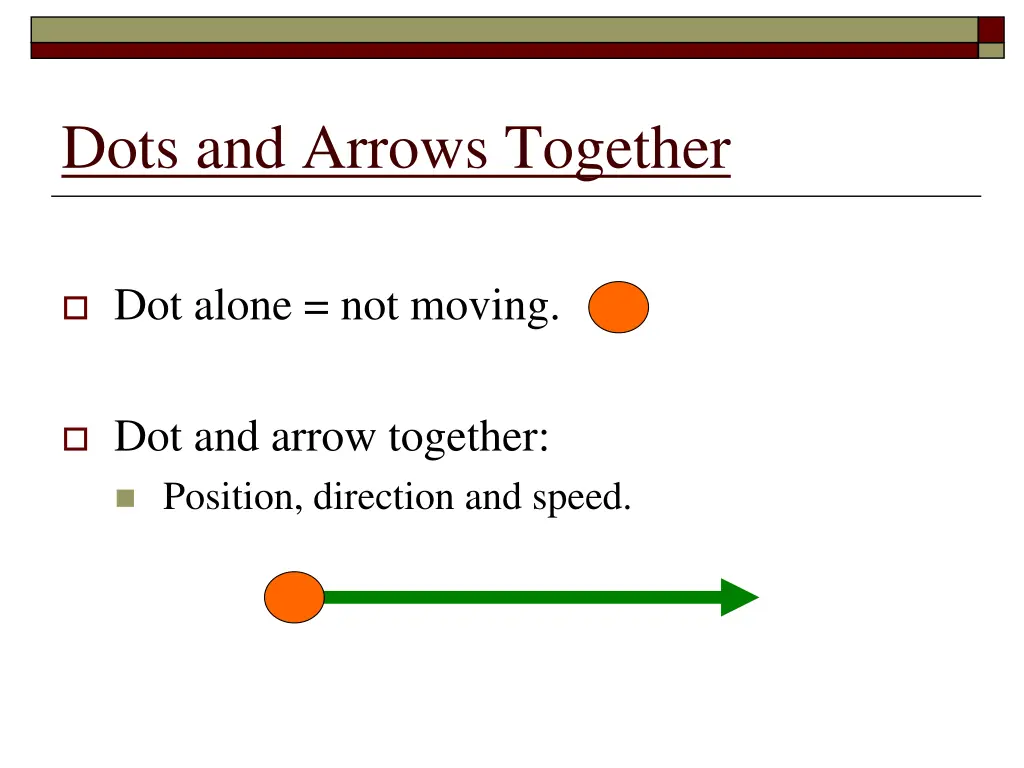
Dots and Arrows Together Dot alone = not moving. Dot and arrow together: Position, direction and speed.
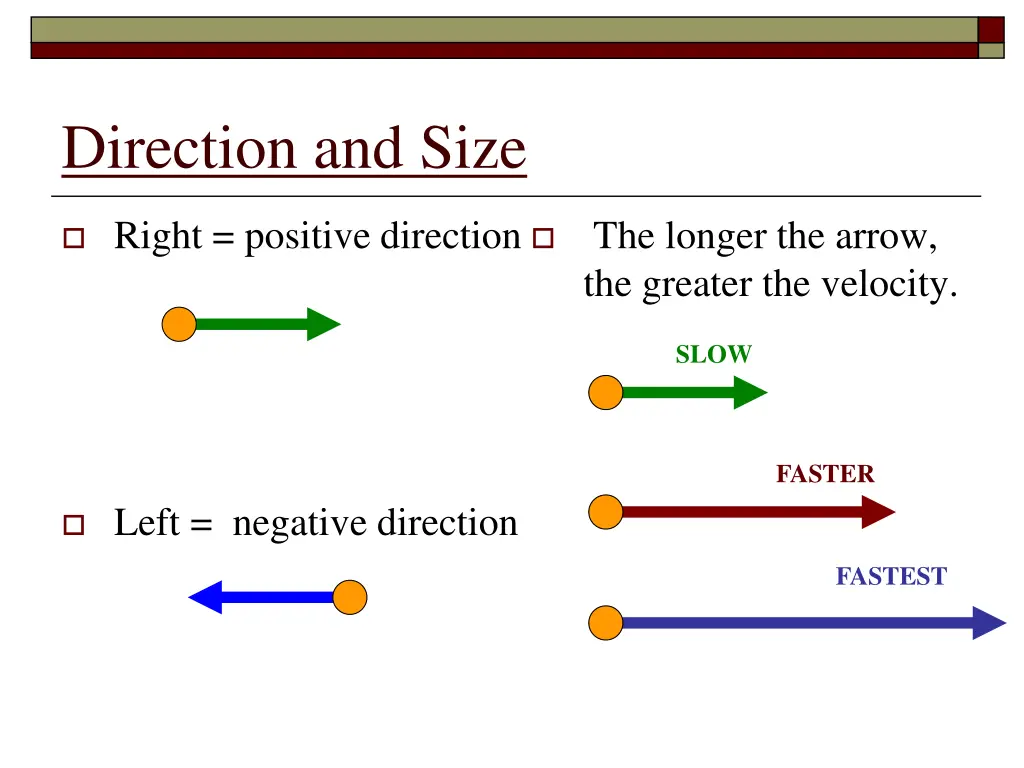
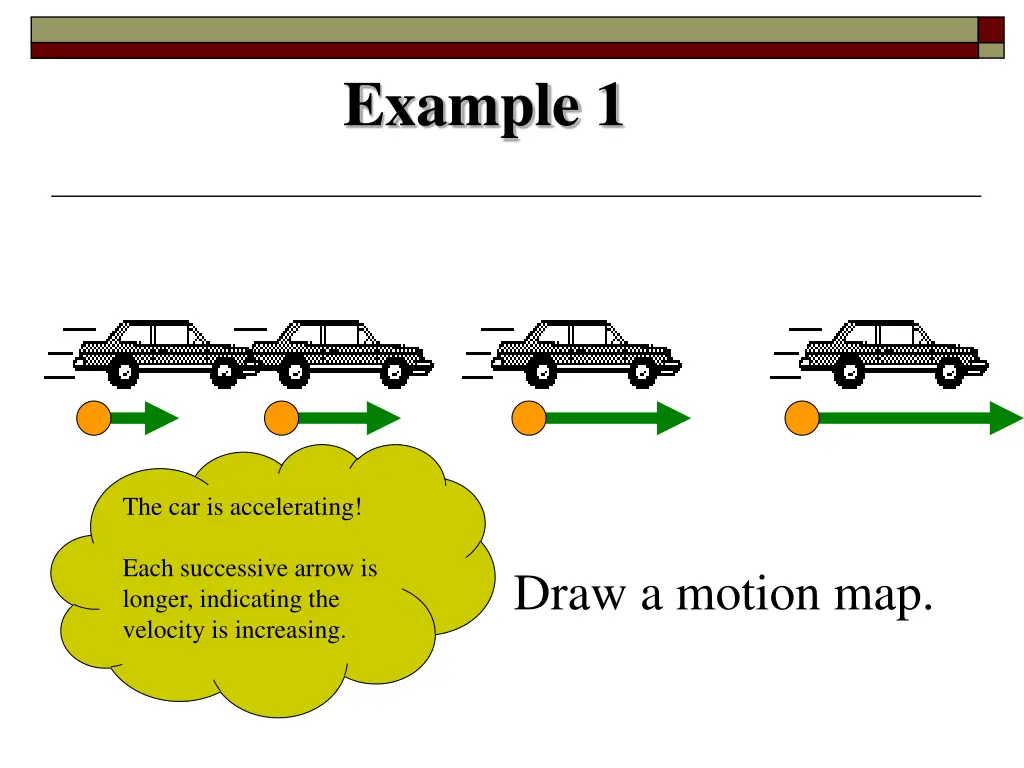
Direction and Size Right = positive direction The longer the arrow, the greater the velocity. SLOW FASTER Left = negative direction FASTEST
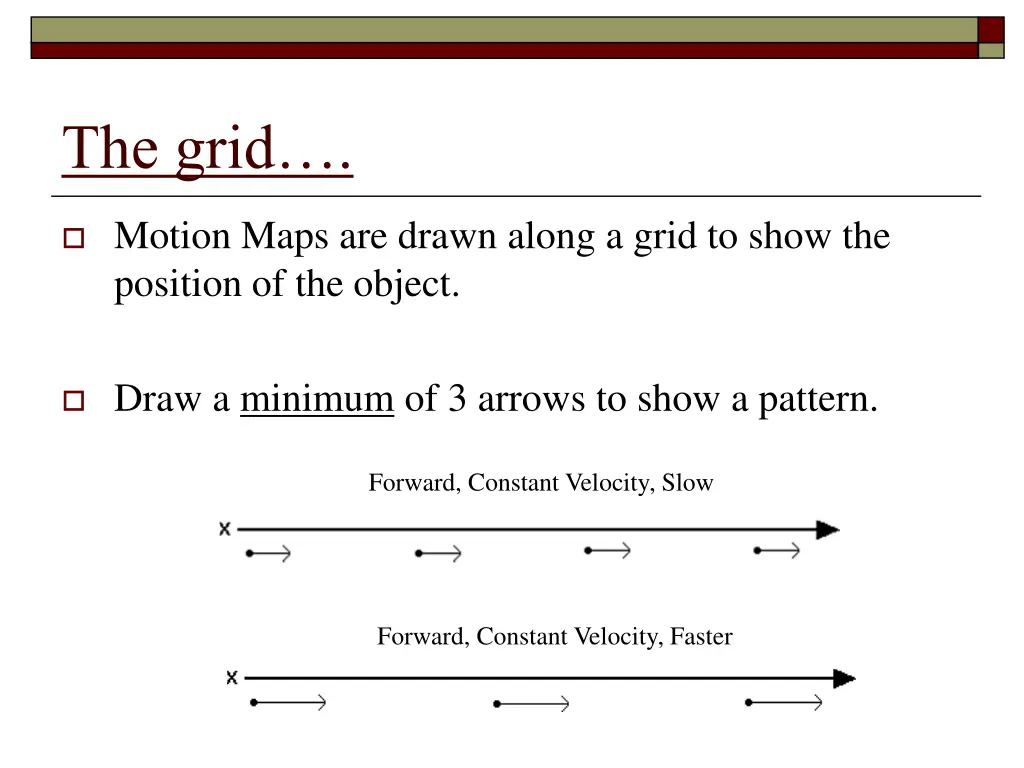
The grid. Motion Maps are drawn along a grid to show the position of the object. Draw a minimum of 3 arrows to show a pattern. Forward, Constant Velocity, Slow Forward, Constant Velocity, Faster
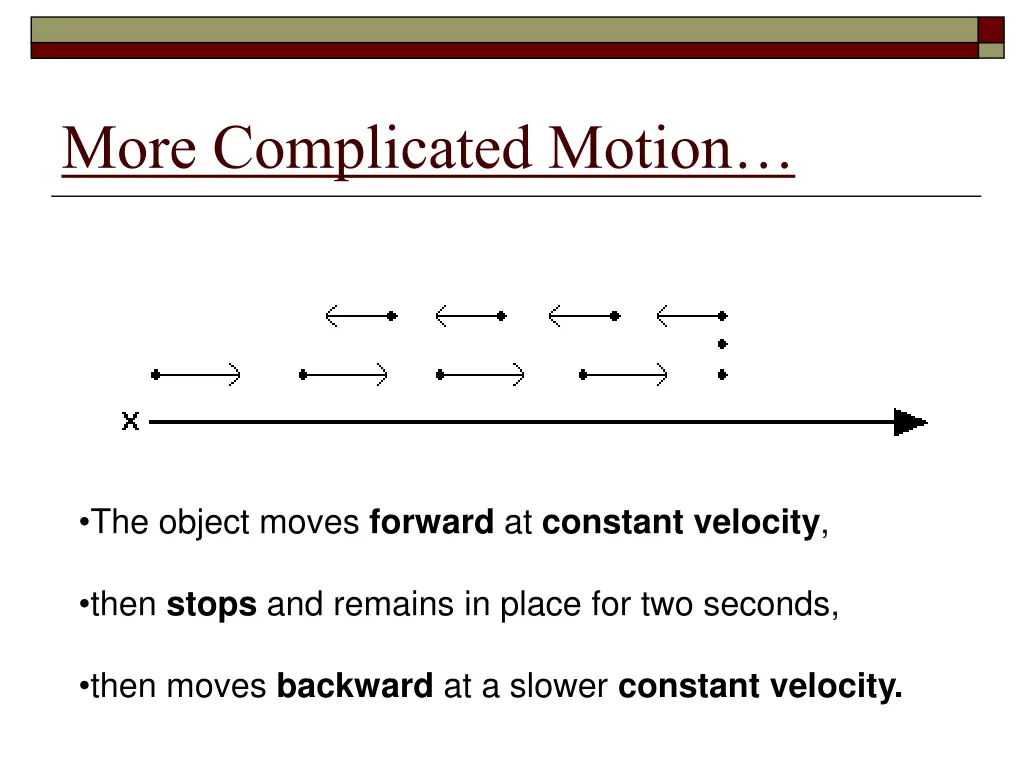
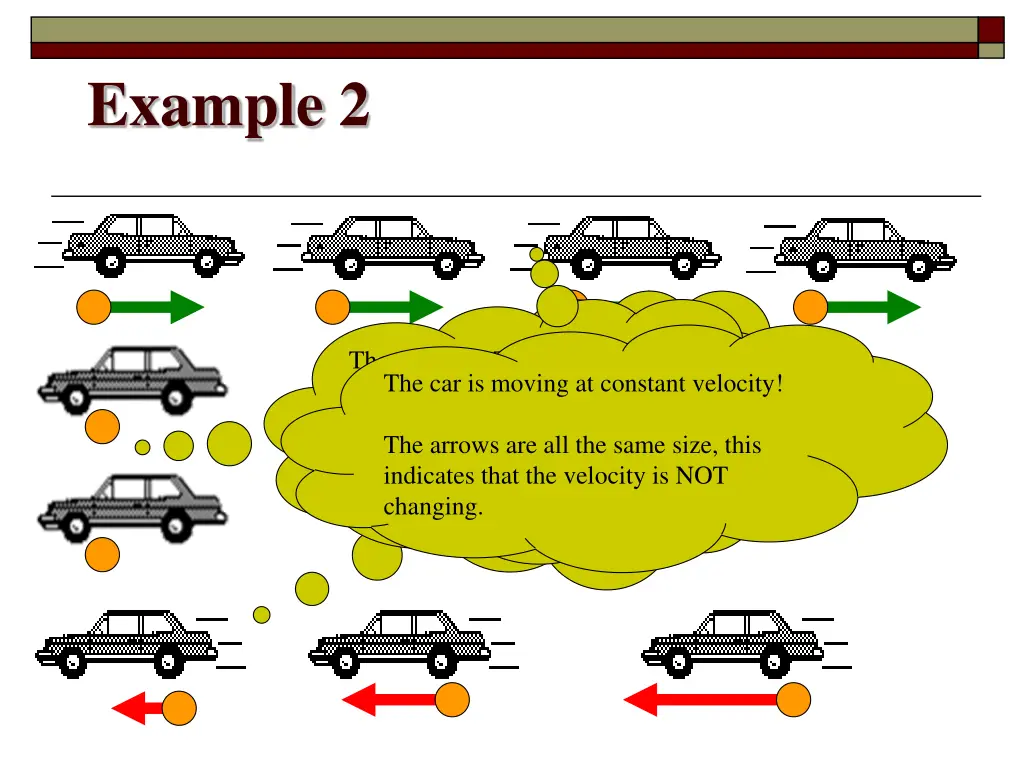
More Complicated Motion The object moves forward at constant velocity, then stops and remains in place for two seconds, then moves backward at a slower constant velocity.
Example 1 The car is accelerating! Each successive arrow is longer, indicating the velocity is increasing. Draw a motion map.
Example 2 The car is accelerating! The car is NOT moving. The car is moving at constant velocity! Each successive arrow is SMALLER, indicating the velocity is decreasing over time. changing. A dot indicates time is passing, but no arrow means no velocity. The arrows are all the same size, this indicates that the velocity is NOT