Navigating the Transition from School to Community
Explore the critical aspects of transitioning from school to community for individuals with disabilities, including responsibilities under IDEA, student involvement, resources, and vision planning. Learn how to work effectively with the school system and understand the importance of aligning perceptions and visions between parents, students, and schools.

Download Presentation

Please find below an Image/Link to download the presentation.
The content on the website is provided AS IS for your information and personal use only. It may not be sold, licensed, or shared on other websites without obtaining consent from the author.If you encounter any issues during the download, it is possible that the publisher has removed the file from their server.
You are allowed to download the files provided on this website for personal or commercial use, subject to the condition that they are used lawfully. All files are the property of their respective owners.
The content on the website is provided AS IS for your information and personal use only. It may not be sold, licensed, or shared on other websites without obtaining consent from the author.
E N D
Presentation Transcript
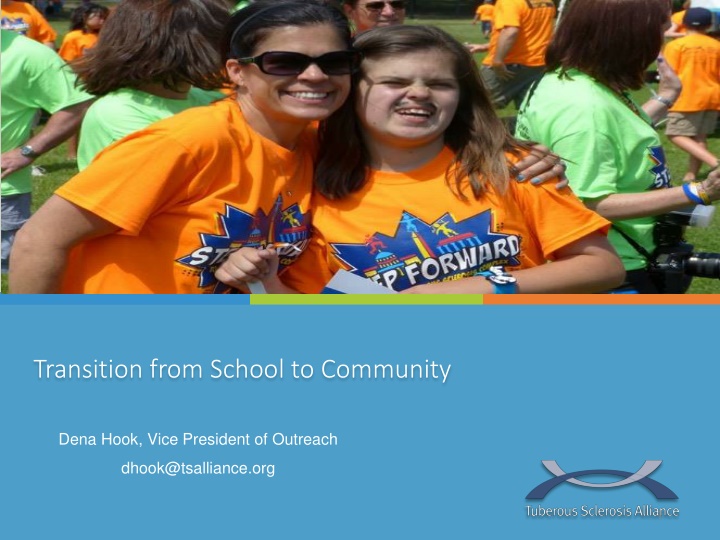
Transition from School to Community Dena Hook, Vice President of Outreach dhook@tsalliance.org 1
Transition from School to Community . . . Answers to the Following: What is Transition in IDEA? What is Your Responsibility? What is the School s Responsibility? Slide 2
Transition from School to Community . . . A Post on Inspire . . . My TSC daughter graduates next month (age 21). We are absolutely without a plan for the next step. Vocational Rehabilitation Services isn't going to do much. Might find her a meaningless job. No skills training. Anyone know of resources I should be tapping into? Ideas? Who Dropped the Ball? Slide 3
Transition from School to Community . . . Federal Law (IDEA) is Clear: Our national policy of ensuring equality of opportunity, full participation, independent living, and economic self-sufficiency for individuals with disabilities [20 U.C.C.1400(c)(1)] Preparing children with disabilities to lead productive and independent adult lives, to the maximum extent possible [20 U.S.C. 1400(c)(5)(A)(ii)] Slide 4
Transition from School to Community . . .IEP Transition Needs to be addressed at age 16 (or earlier if needed) Student Involvement http://www.selfadvocacyonline.org/learning/ Data from vocational, medical, psychological assessments A plan that includes functional and academic progress goals Results-oriented moving from school to post-school activities Multi agency involvement Vocation Rehabilitation Services Local The Arc DD Council (Case Worker) Independent Living Centers Slide 5
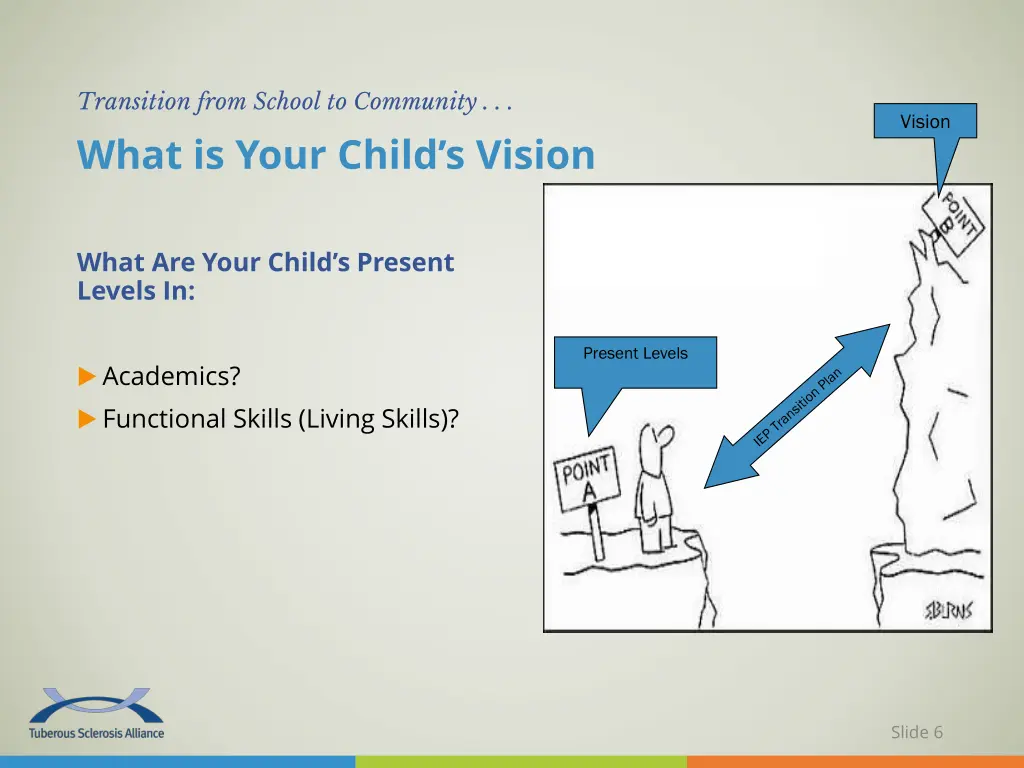
Transition from School to Community . . . What is Your Child s Vision Vision What Are Your Child s Present Levels In: Present Levels Academics? Functional Skills (Living Skills)? Slide 6
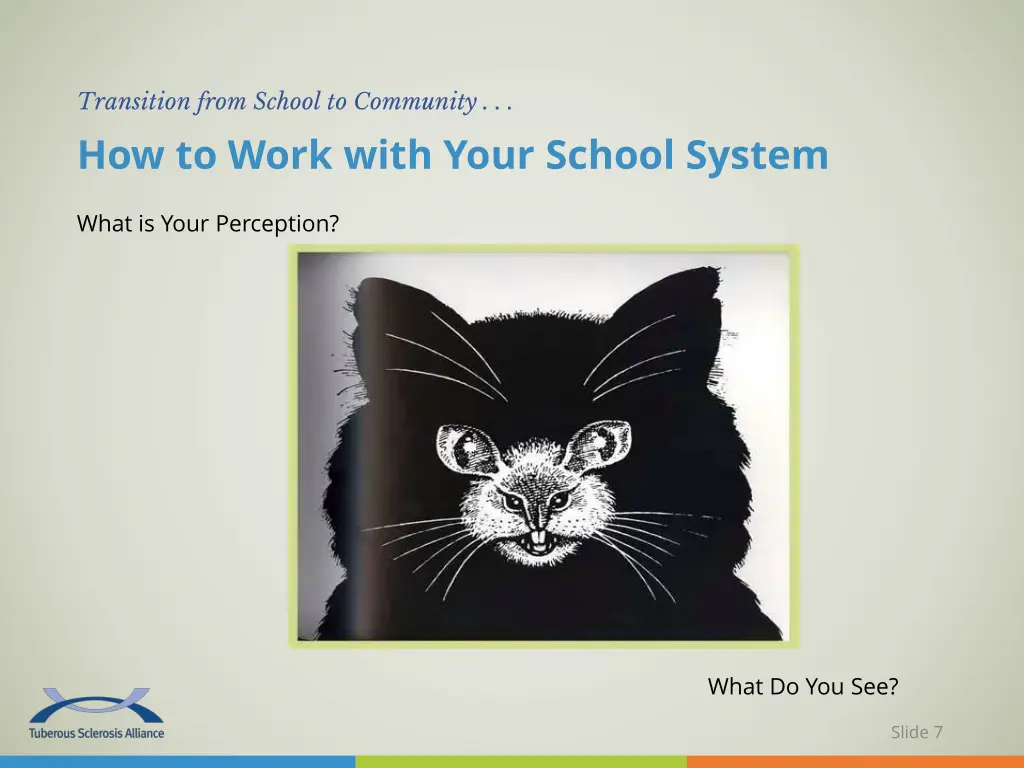
Transition from School to Community . . . How to Work with Your School System What is Your Perception? What Do You See? Slide 7
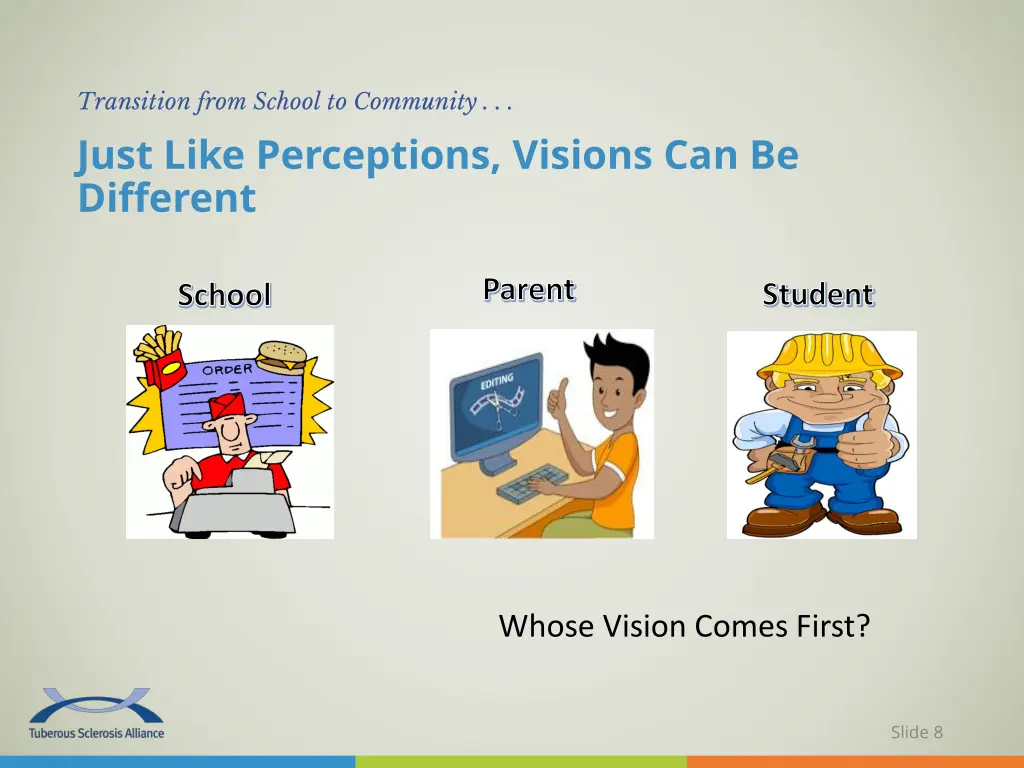
Transition from School to Community . . . Just Like Perceptions, Visions Can Be Different Parent Student School Whose Vision Comes First? Slide 8
Transition from School to Community . . . How to Work with Your School Aggressive communication is a method of expressing needs and desires that do not take in to account the welfare of others. Those who communicate in an aggressive manner are generally perceived as selfish and unwilling to compromise. Assertiveness is a form of communication in which needs or wishes are stated clearly with respect for oneself and the other person in the interaction. Slide 9
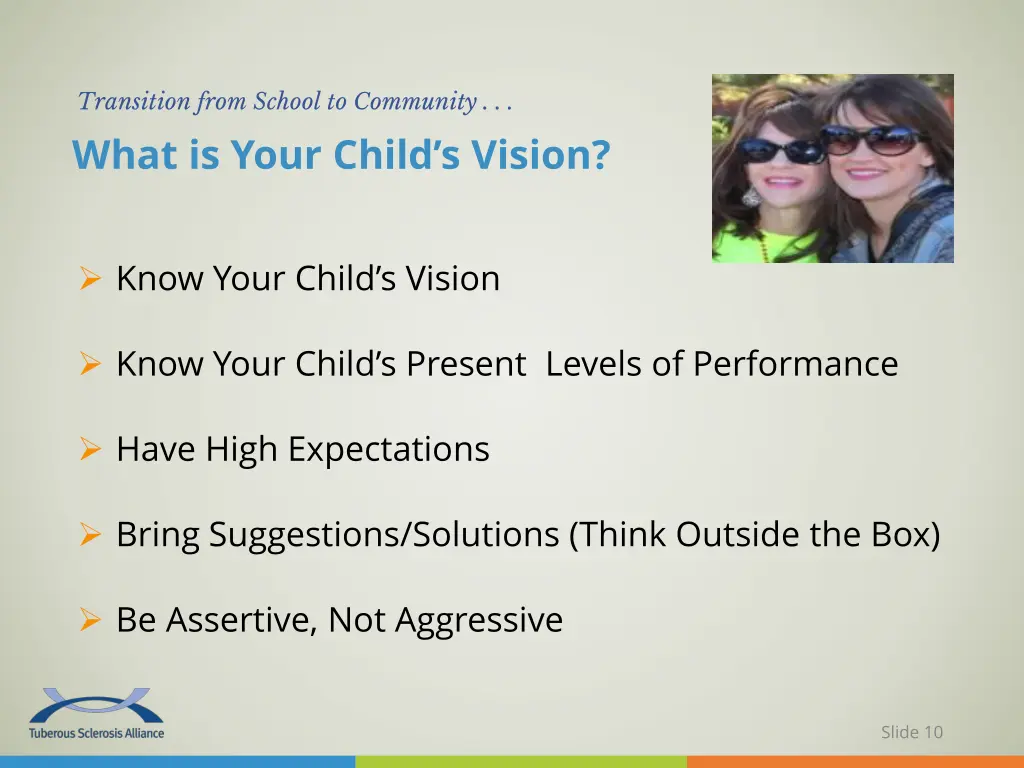
Transition from School to Community . . . What is Your Child s Vision? Know Your Child s Vision Know Your Child s Present Levels of Performance Have High Expectations Bring Suggestions/Solutions (Think Outside the Box) Be Assertive, Not Aggressive Slide 10