Neuronal Communication and Information Processing
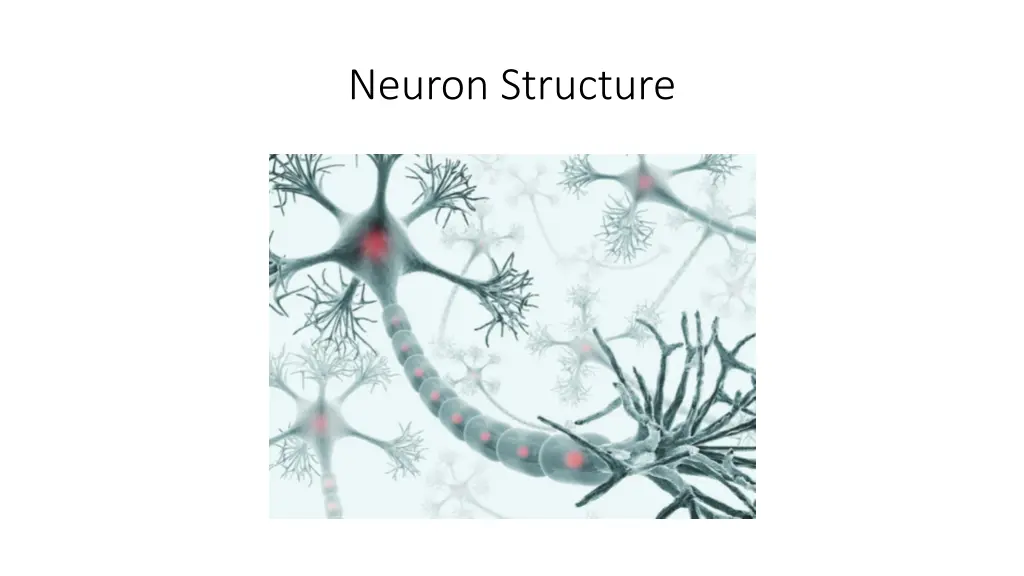
Explore the intricate mechanisms of neuronal communication, information pathways, and the processing of stimuli in neuroscience. Learn about neuron structure, activity, and the integrate-and-fire model. Discover how neurons form information pathways to create reliable responses to stimuli, shedding light on the universality of information pathways in the brain.

Download Presentation

Please find below an Image/Link to download the presentation.
The content on the website is provided AS IS for your information and personal use only. It may not be sold, licensed, or shared on other websites without obtaining consent from the author. If you encounter any issues during the download, it is possible that the publisher has removed the file from their server.
You are allowed to download the files provided on this website for personal or commercial use, subject to the condition that they are used lawfully. All files are the property of their respective owners.
The content on the website is provided AS IS for your information and personal use only. It may not be sold, licensed, or shared on other websites without obtaining consent from the author.
E N D
Presentation Transcript
Information Capacity and Learning in Neuroscience Ioannis Smyrnakis
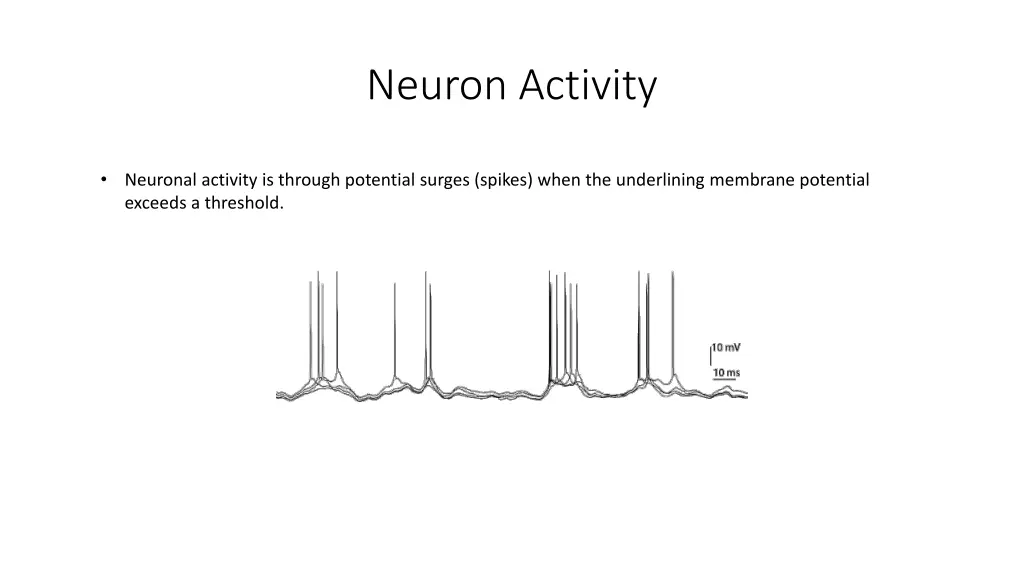
Neuron Activity Neuronal activity is through potential surges (spikes) when the underlining membrane potential exceeds a threshold.
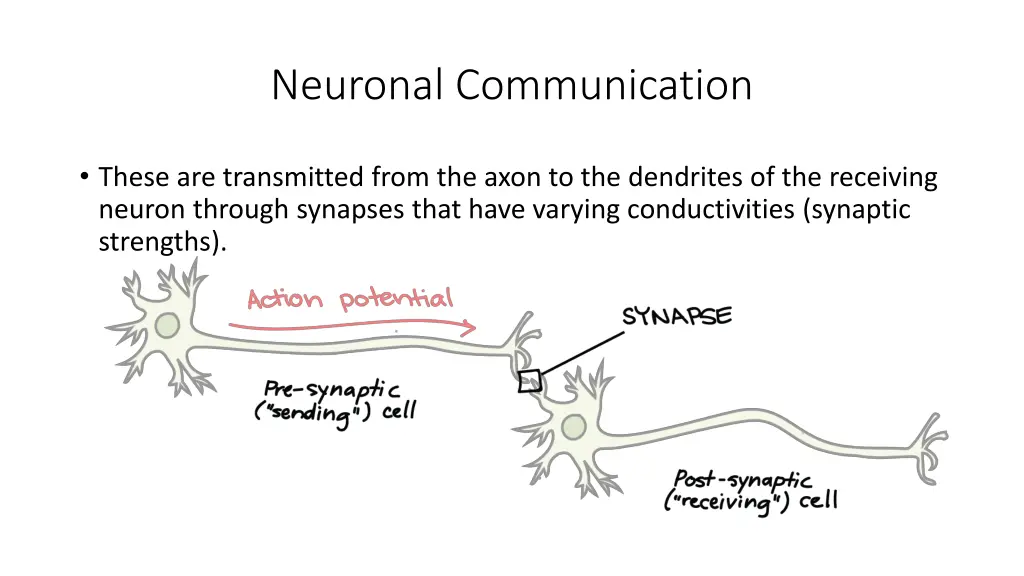
Neuronal Communication These are transmitted from the axon to the dendrites of the receiving neuron through synapses that have varying conductivities (synaptic strengths).
Integrate and Fire Model The receiving neuron receives input from a few thousand pre- synaptic neurons. This input is integrated by the receiving neuron and when the membrane potential increases a threshold a spike is fired. In general, there is also a membrane potential leakage, that eventually neutralizes slow input.
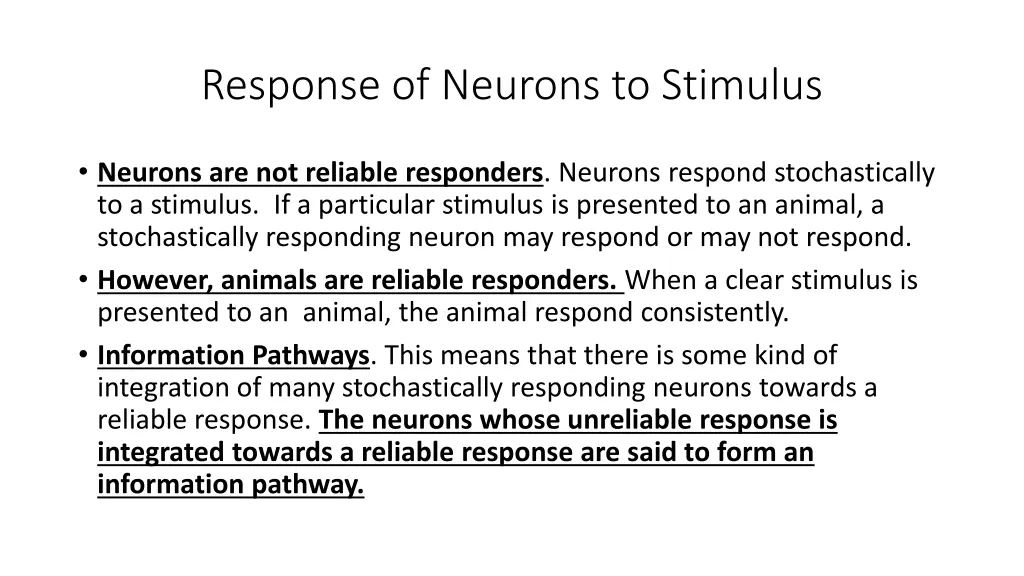
Response of Neurons to Stimulus Neurons are not reliable responders. Neurons respond stochastically to a stimulus. If a particular stimulus is presented to an animal, a stochastically responding neuron may respond or may not respond. However, animals are reliable responders. When a clear stimulus is presented to an animal, the animal respond consistently. Information Pathways. This means that there is some kind of integration of many stochastically responding neurons towards a reliable response. The neurons whose unreliable response is integrated towards a reliable response are said to form an information pathway.
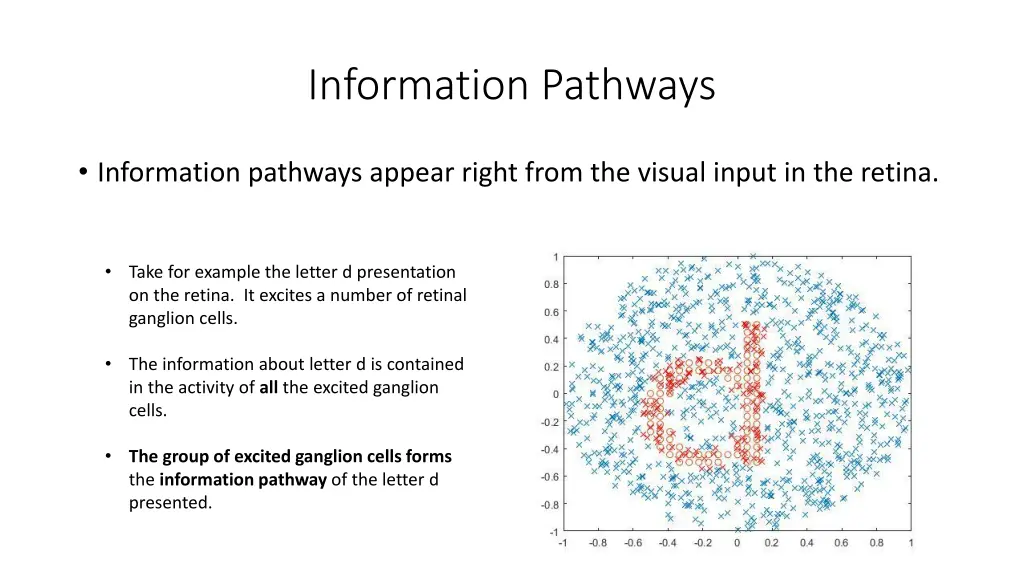
Information Pathways Information pathways appear right from the visual input in the retina. Take for example the letter d presentation on the retina. It excites a number of retinal ganglion cells. The information about letter d is contained in the activity of all the excited ganglion cells. The group of excited ganglion cells forms the information pathway of the letter d presented.
Universality of information pathways One of course could imagine that the appearance of information pathways is only at the input layer, however this is unlikely to be true. Suppose that one pathway feeds one reliably responding neuron, that responds to a particular letter (letter d). First of all, such neurons would have been detected by now, and this has not happened. Second, if we have to recognize the word diary letter by letter, then we still need all the reliable neurons responding to the letters of the word, and these would form an information pathway.
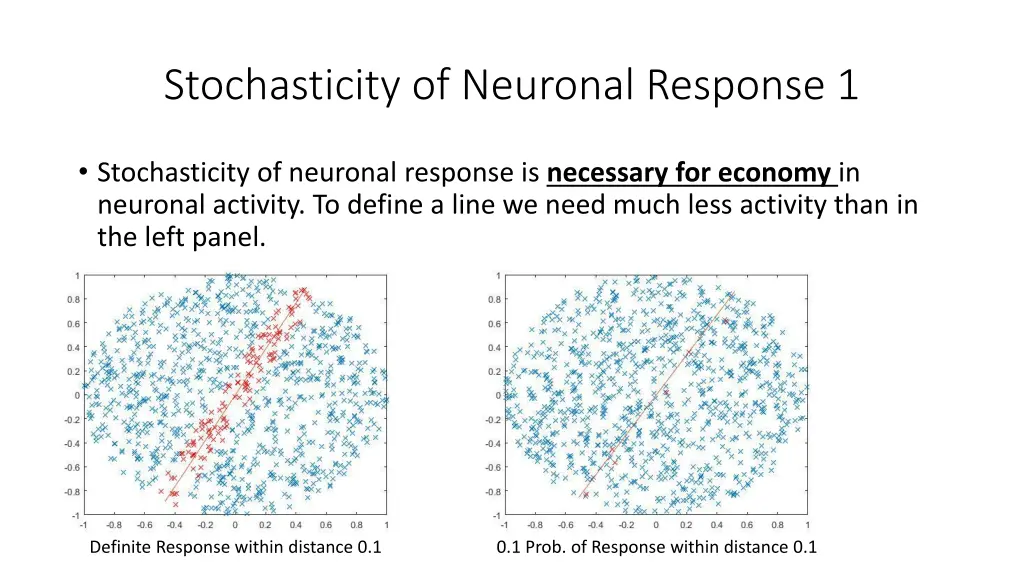
Stochasticity of Neuronal Response 1 Stochasticity of neuronal response is necessary for economy in neuronal activity. To define a line we need much less activity than in the left panel. Definite Response within distance 0.1 0.1 Prob. of Response within distance 0.1
Stochasticity of Neuronal Response 2 Stochasticity can help maintain stability of the neuronal network without loosing information. Too much activity Too much input Even more activity Too little activity Too little input Universal silence
Stochasticity of Neuronal Response 3 Stochasticity can allow greater flexibility of the neuronal network. Suppose for example that a neuron in the network dies and this neuron is a definite response neuron. Then the information it encodes is lost, unless there are more neurons responding to the same information. However these neurons may not be connected the right way along the line. However if the neuron that died is only part of a pathway with a small probability of response, then the network will continue to operate without any changes unless the pathway is in a limiting state.
The Information Capacity Question Suppose that definite response to a signal is done by a pathway of stochastically responding neurons, how many such pathways can an aggregate of N neurons support, so that a) The pathways responds to their corresponding signals with probability close to 1, b) The activity of one pathway does not interfere with the activity of another.
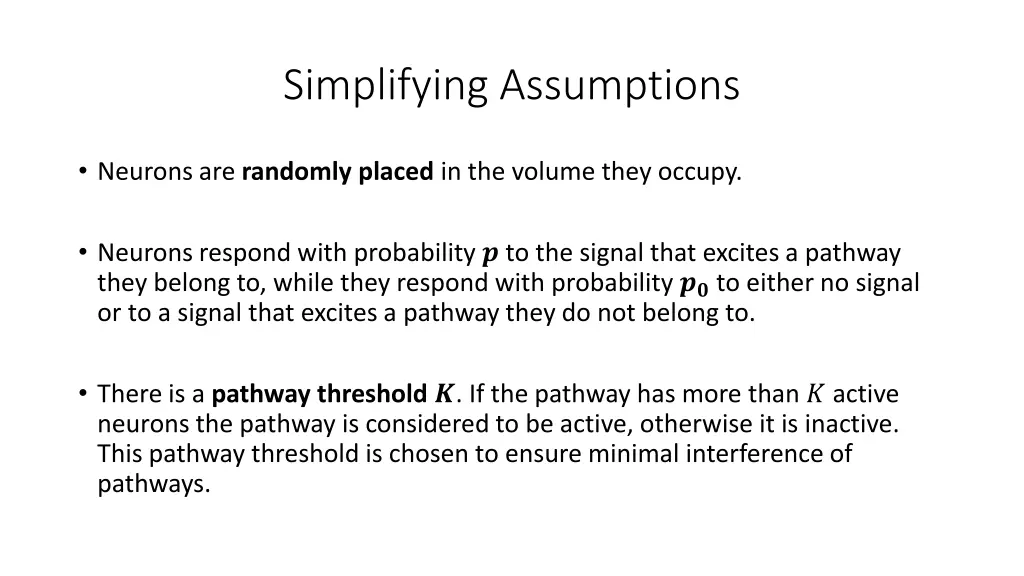
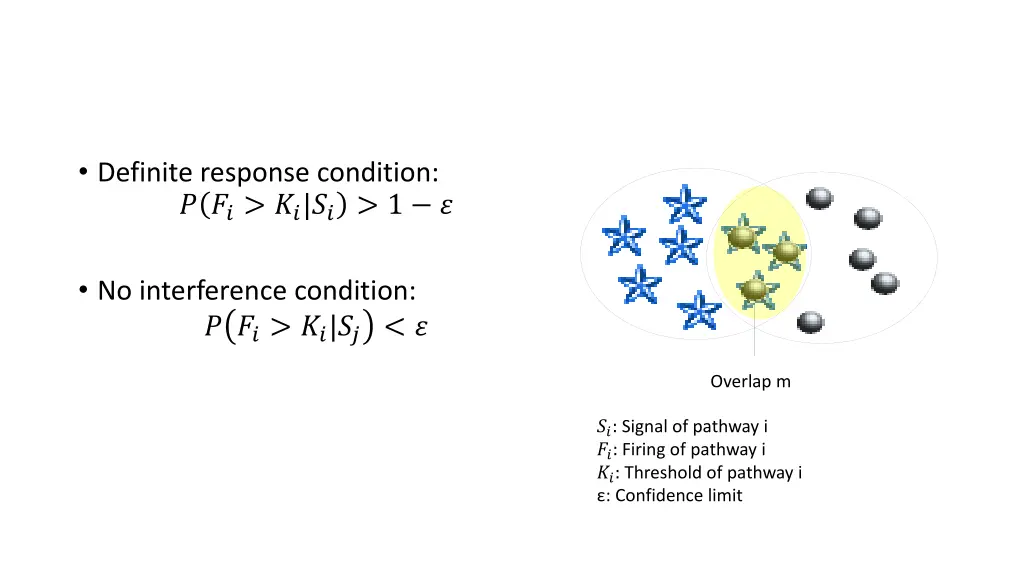
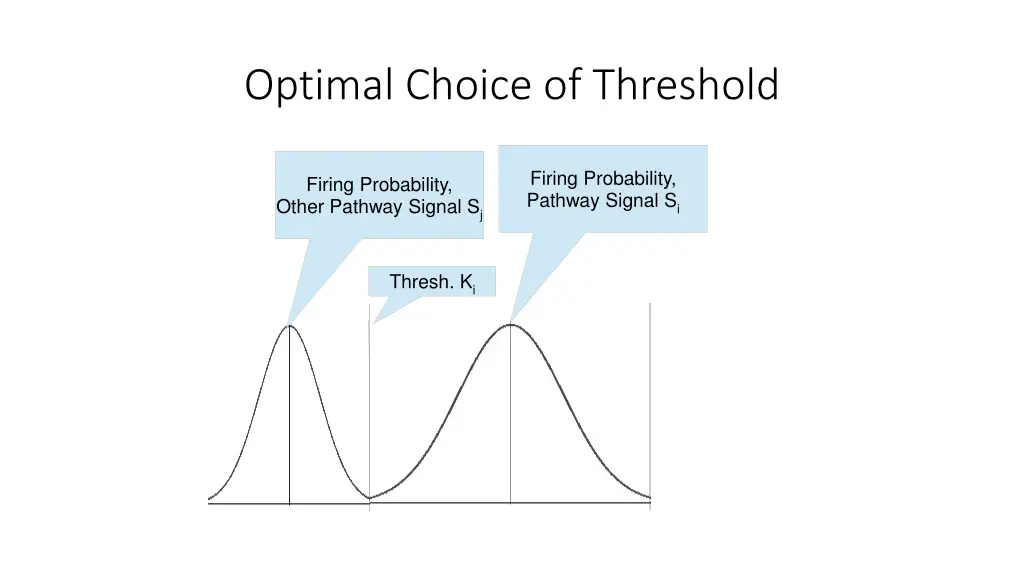
Simplifying Assumptions Neurons are randomly placed in the volume they occupy. Neurons respond with probability ? to the signal that excites a pathway they belong to, while they respond with probability ??to either no signal or to a signal that excites a pathway they do not belong to. There is a pathway threshold ?. If the pathway has more than ? active neurons the pathway is considered to be active, otherwise it is inactive. This pathway threshold is chosen to ensure minimal interference of pathways.
Definite response condition: ? ??> ??|?? > 1 ? No interference condition: ? ??> ??|?? < ? Overlap m ??: Signal of pathway i ??: Firing of pathway i ??: Threshold of pathway i : Confidence limit
Optimal Choice of Threshold Firing Probability, Pathway Signal Si Firing Probability, Other Pathway Signal Sj Thresh. Ki
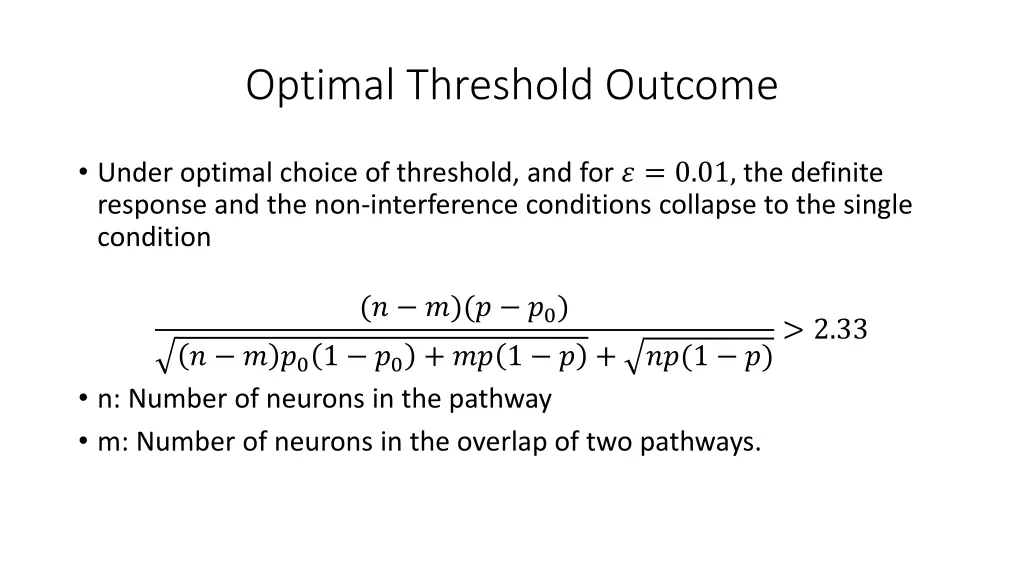
Optimal Threshold Outcome Under optimal choice of threshold, and for ? = 0.01, the definite response and the non-interference conditions collapse to the single condition (? ?)(? ?0) > 2.33 ? ? ?01 ?0 + ?? 1 ? + n: Number of neurons in the pathway m: Number of neurons in the overlap of two pathways. ??(1 ?)
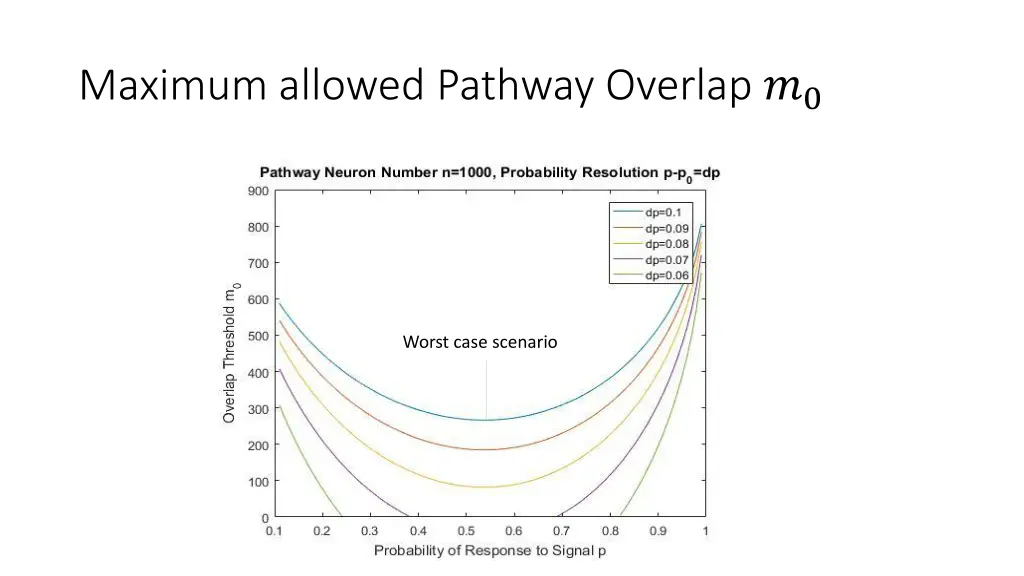
Maximum allowed Pathway Overlap ?0 Worst case scenario
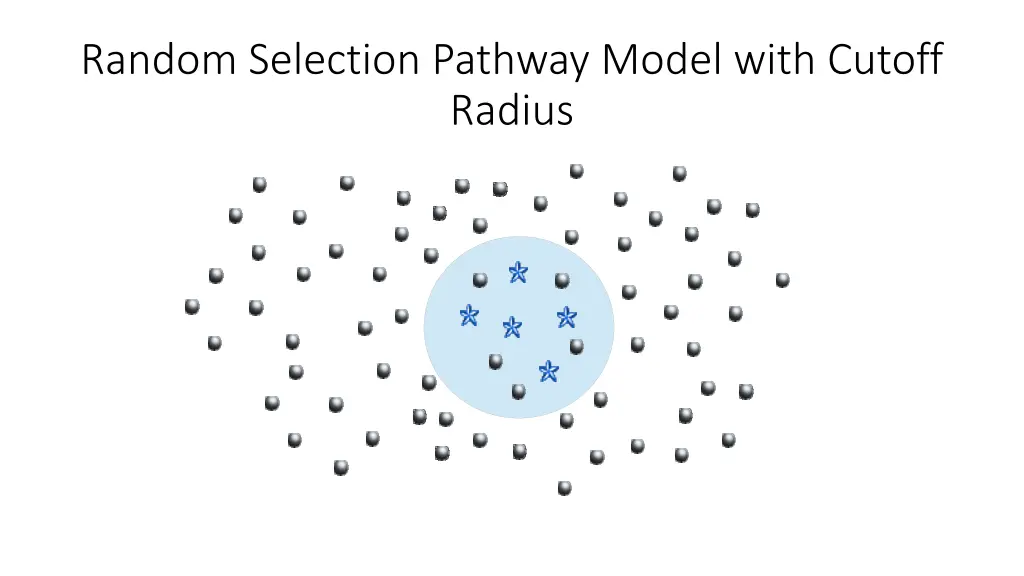
Pathway Packing Models Examined Nearest Neighbor Pathway Model, Random Selection Pathway Model, Random Selection Pathway Model with Cutoff Radius.
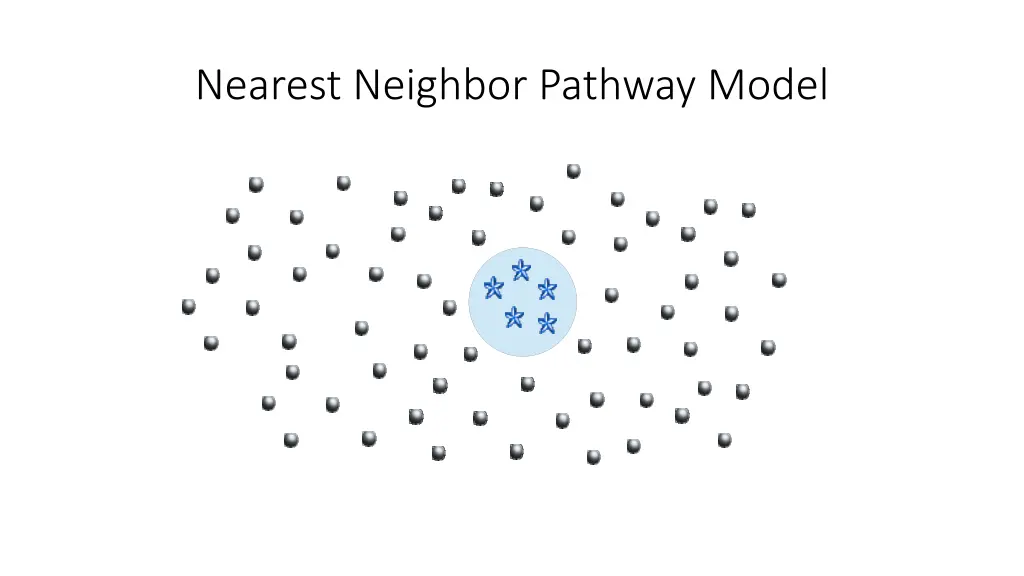
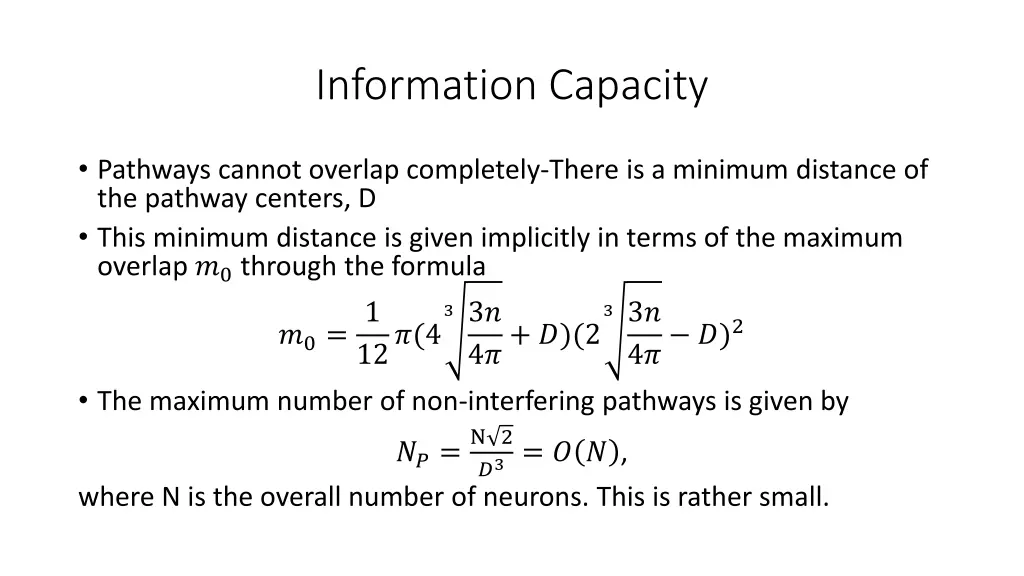
Information Capacity Pathways cannot overlap completely-There is a minimum distance of the pathway centers, D This minimum distance is given implicitly in terms of the maximum overlap ?0through the formula 1 12?(4 The maximum number of non-interfering pathways is given by ??=N 2 where N is the overall number of neurons. This is rather small. 33? 4?+ ?)(2 33? 4? ?)2 ?0= ?3= ? ? ,
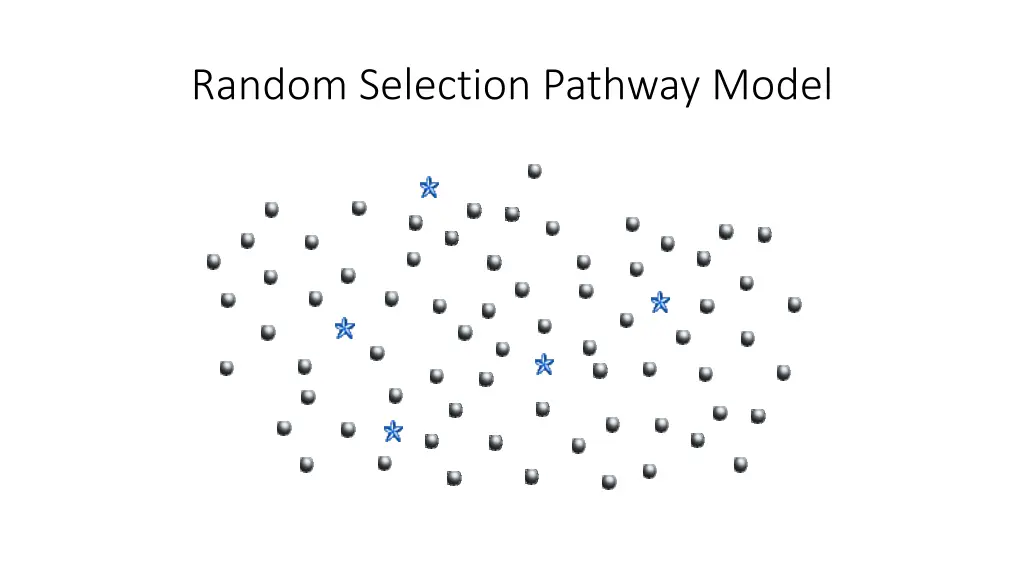
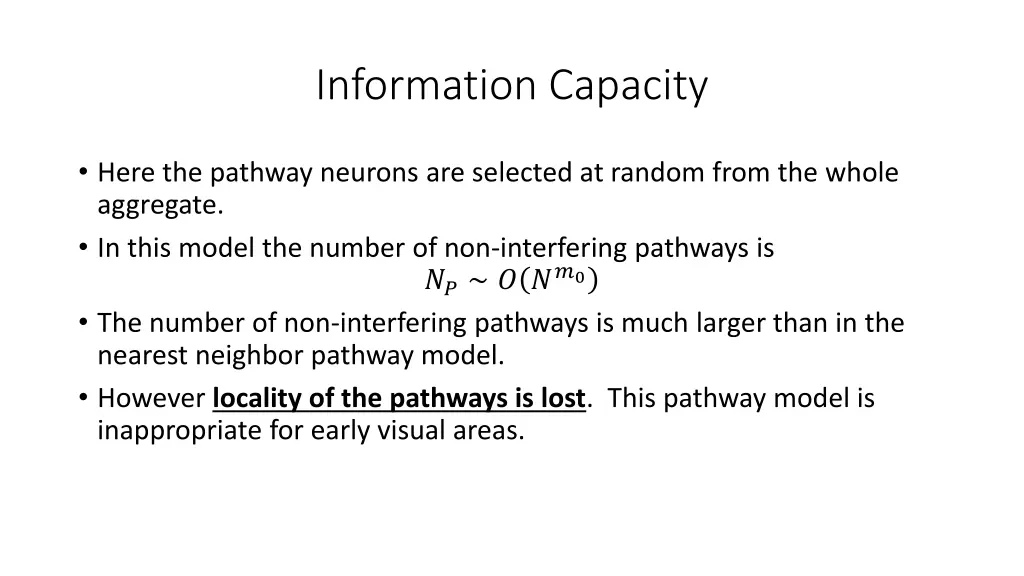
Information Capacity Here the pathway neurons are selected at random from the whole aggregate. In this model the number of non-interfering pathways is ?? ? ??0 The number of non-interfering pathways is much larger than in the nearest neighbor pathway model. However locality of the pathways is lost. This pathway model is inappropriate for early visual areas.
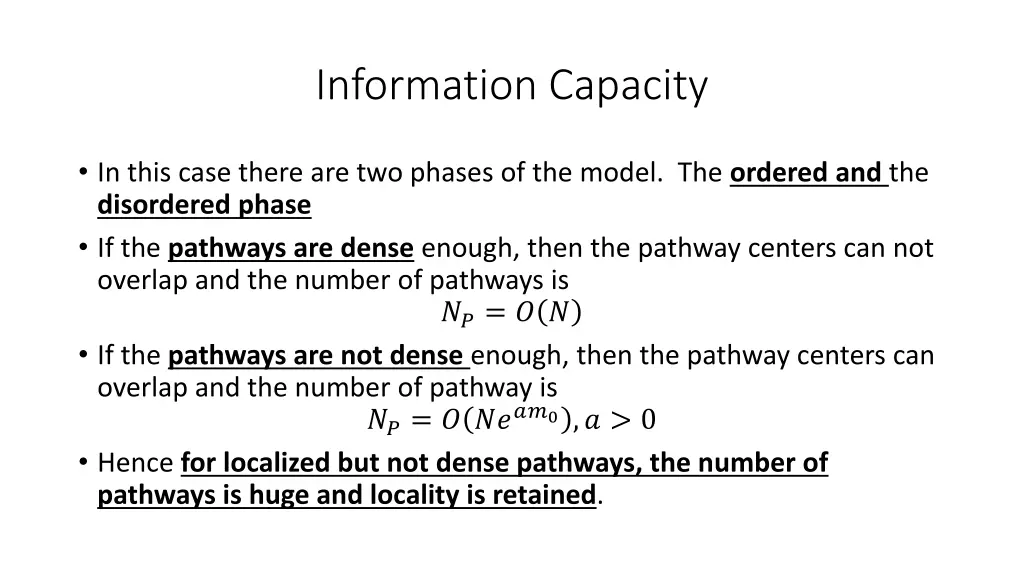
Information Capacity In this case there are two phases of the model. The ordered and the disordered phase If the pathways are dense enough, then the pathway centers can not overlap and the number of pathways is ??= ? ? If the pathways are not dense enough, then the pathway centers can overlap and the number of pathway is ??= ? ????0,? > 0 Hence for localized but not dense pathways, the number of pathways is huge and locality is retained.
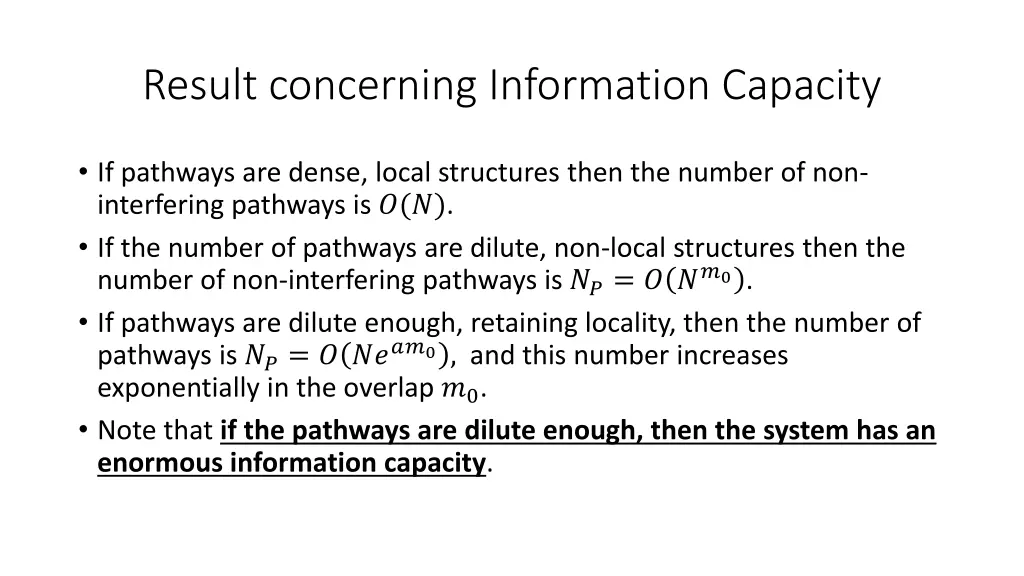
Result concerning Information Capacity If pathways are dense, local structures then the number of non- interfering pathways is ?(?). If the number of pathways are dilute, non-local structures then the number of non-interfering pathways is ??= ? ??0. If pathways are dilute enough, retaining locality, then the number of pathways is ??= ? ????0, and this number increases exponentially in the overlap ?0. Note that if the pathways are dilute enough, then the system has an enormous information capacity.
Input Structure for Early Visual Areas 1 It seems that frequently visual input meets a conglomerate of classifiers that respond when a signal (possibly an object) is recognized by the classifier. This recognition response is encoded in pathways that gets activated when the particular signal is present. These classifiers operate in parallel, and it is possible that there is a huge number of them. In this way a picture is split into objects. A famous unsolved problem is the precise way the brain splits a picture into objects.
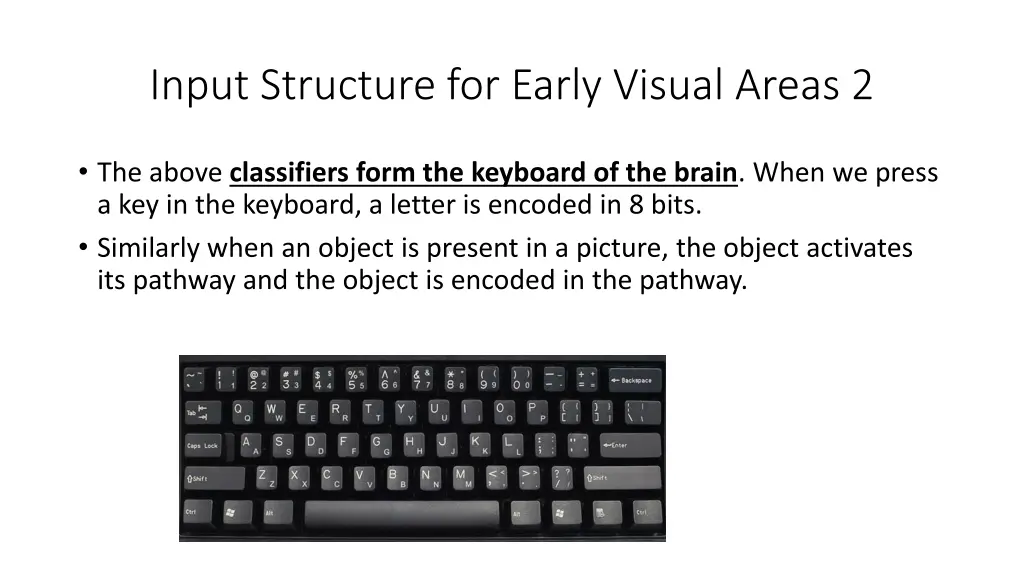
Input Structure for Early Visual Areas 2 The above classifiers form the keyboard of the brain. When we press a key in the keyboard, a letter is encoded in 8 bits. Similarly when an object is present in a picture, the object activates its pathway and the object is encoded in the pathway.
Formation of Classifiers in the Brain Classifiers are formed by learning rules. These are iterative processes that adjust synaptic strengths so that a group of neurons responds to a particular signal, forming a pathway. It is important to note that the pathways are the outcome of iterative processes, hence they can be complicated. Recall that iterative processes often lead to fractal structures, like the Mandelbrot set. Hence the key to understanding early visual area classifiers is not the search for the structure of particular classifiers, but rather the search for the right learning rules.
The Most Famous Learning Rule: Hebbian Learning When two joining cells fire simultaneously, the connection between them (synapse) strengthens. Verified experimentally by Lomo (1966) in the rabbit hippocampus, where he showed long term potentiation of chemical synapses initiated by a high frequency stimulus. The activity of the network is balanced by long term depression of synapses that receive low frequency input.
Winner Takes All technique in Learning Suppose that we have two layers of neurons, layer A and layer B. Furthermore suppose that somehow neurons in layer B are connected to a number of neurons in layer A. Winner takes all learning dictates that the most active B neuron (or maybe neurons) increases its synaptic strength with active A neurons. Less active B neurons may or may not decrease their synaptic strengths with active A neurons. Winner takes all technique is appropriate for unsupervised learning.
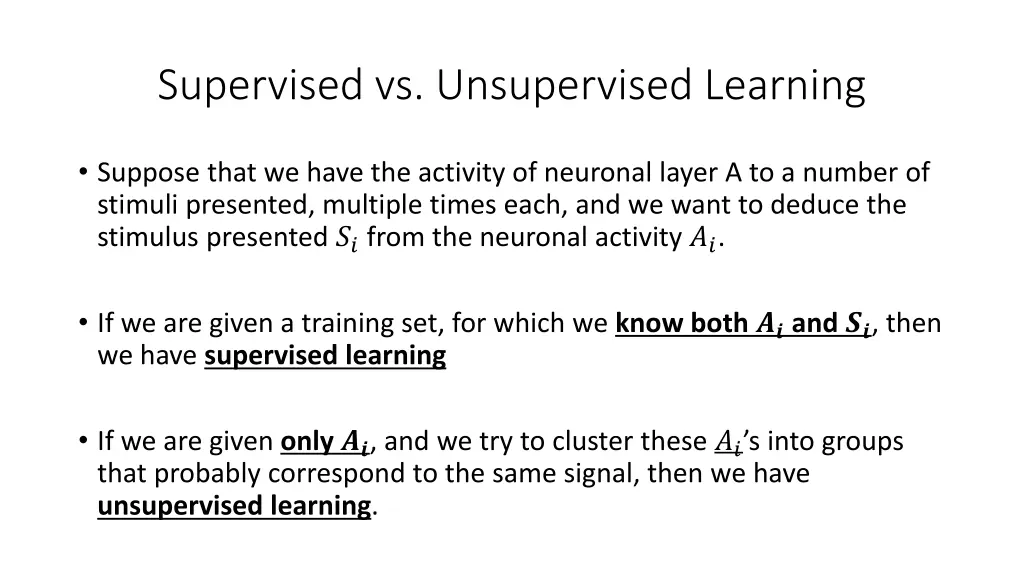
Supervised vs. Unsupervised Learning Suppose that we have the activity of neuronal layer A to a number of stimuli presented, multiple times each, and we want to deduce the stimulus presented ??from the neuronal activity ??. If we are given a training set, for which we know both ??and ??, then we have supervised learning If we are given only ??, and we try to cluster these ?? s into groups that probably correspond to the same signal, then we have unsupervised learning.
Top Down and Bottom Up Processing Bottom up processing in psychology is considered to be processing that occurs directly on the input without the interference of higher brain areas. In vision, such processing is the division of an image into objects, but not the identification of these objects. Bottom up learning is often unsupervised learning. Top down processing involves feedback from higher brain areas. Such processing is the identification of an object with the word that corresponds to it. Top down learning can be supervised.
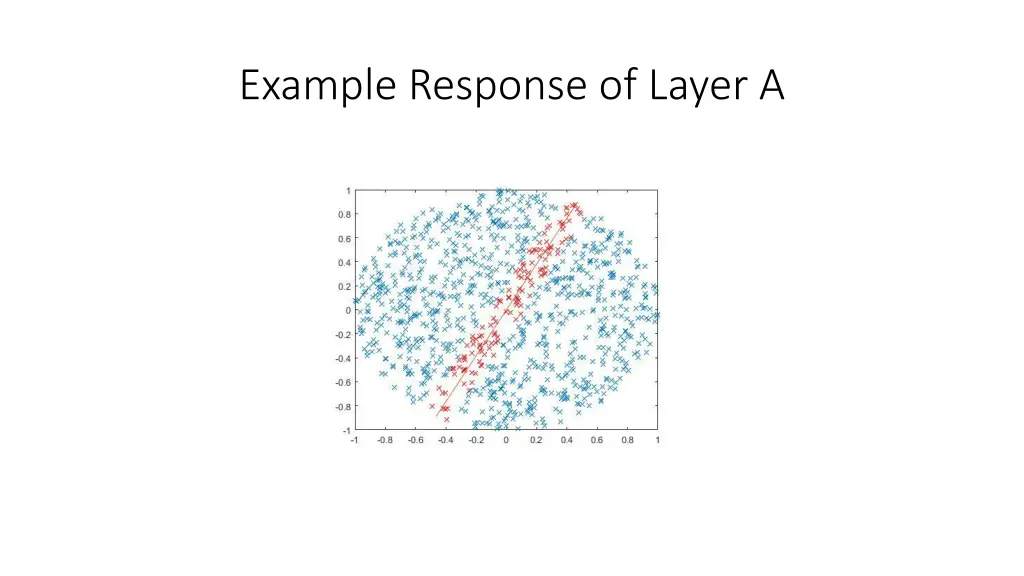
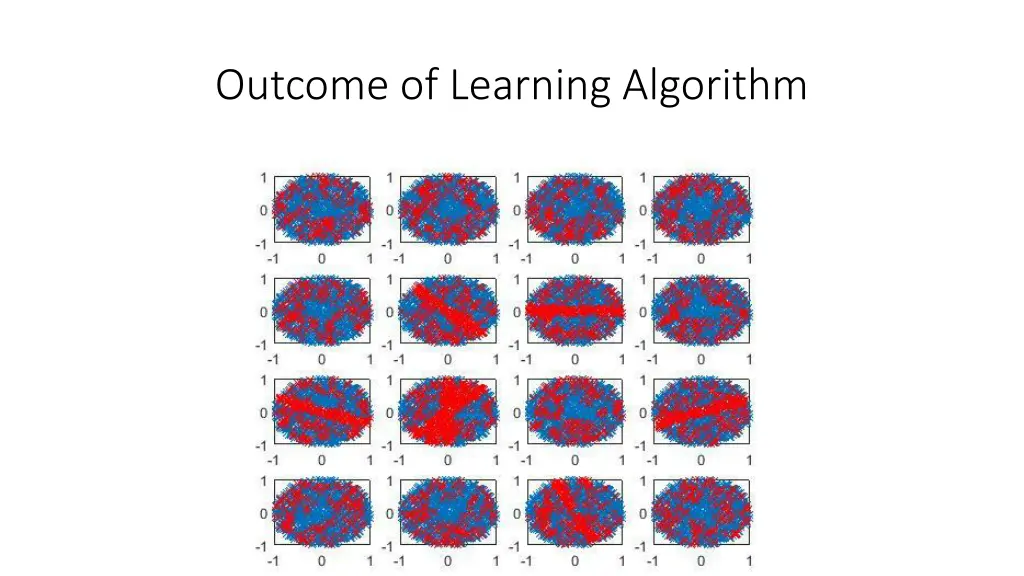
A Toy Model for Unsupervised Learning: The Connectivity Matrix Algorithm Two layers of neurons, detector layer A and output layer B Layer A has 1000 randomly placed neurons within a circle of radius 1 Layer B has 16 neurons, initially with 150 random connections with layer A The signal presented is one of 8 lines that pass through the center of the circle A neurons are activated if they are distance 0.1 from the line Input to B neurons is the sum of the synaptic activities of active A neurons connected to the particular B neuron (initially synaptic strengths are 0.5).
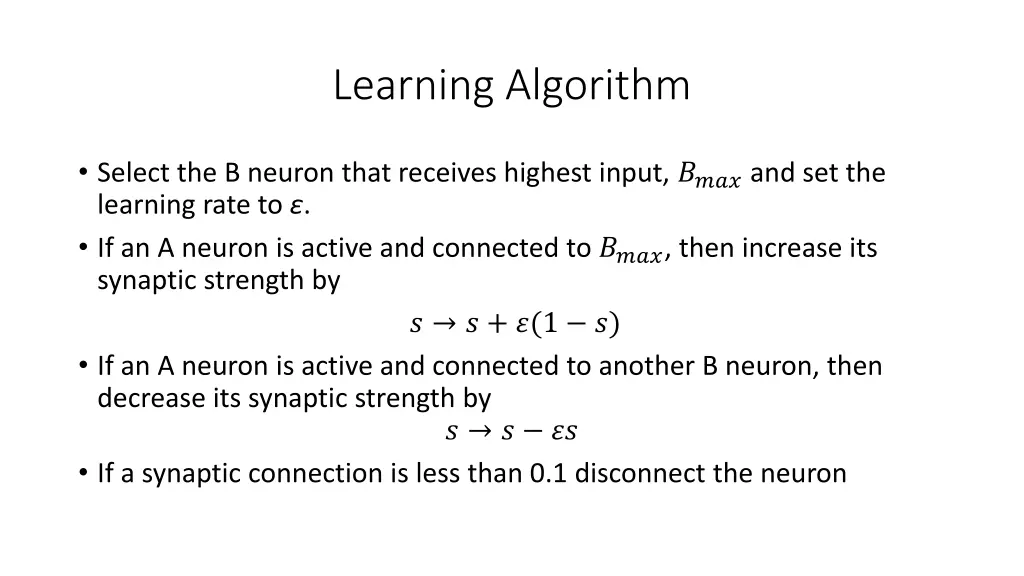
Learning Algorithm Select the B neuron that receives highest input, ????and set the learning rate to . If an A neuron is active and connected to ????, then increase its synaptic strength by ? ? + ?(1 ?) If an A neuron is active and connected to another B neuron, then decrease its synaptic strength by ? ? ?? If a synaptic connection is less than 0.1 disconnect the neuron
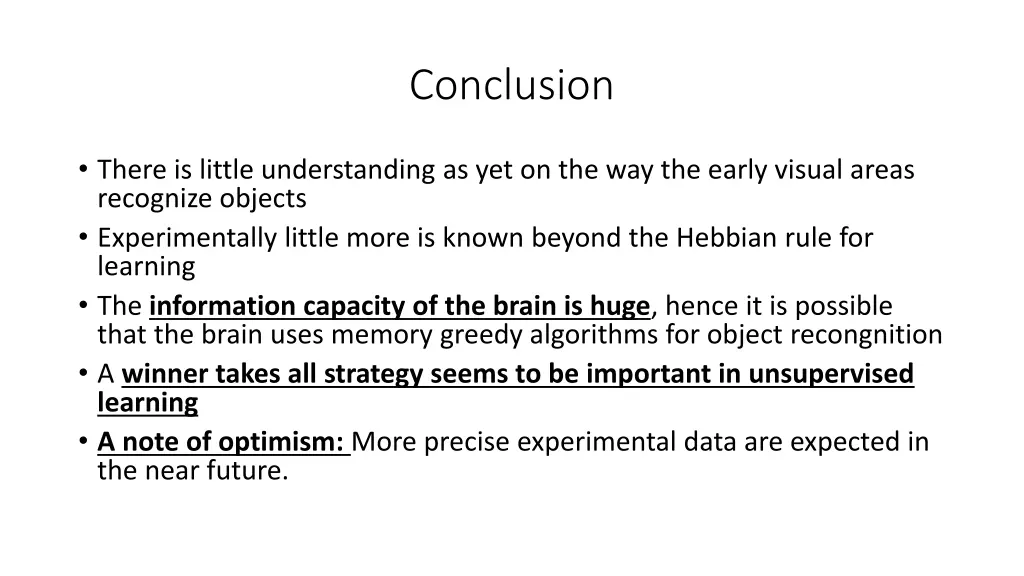
Conclusion There is little understanding as yet on the way the early visual areas recognize objects Experimentally little more is known beyond the Hebbian rule for learning The information capacity of the brain is huge, hence it is possible that the brain uses memory greedy algorithms for object recongnition A winner takes all strategy seems to be important in unsupervised learning A note of optimism: More precise experimental data are expected in the near future.