Normal Probability Calculations Using GDC for Coconut Milk Packets
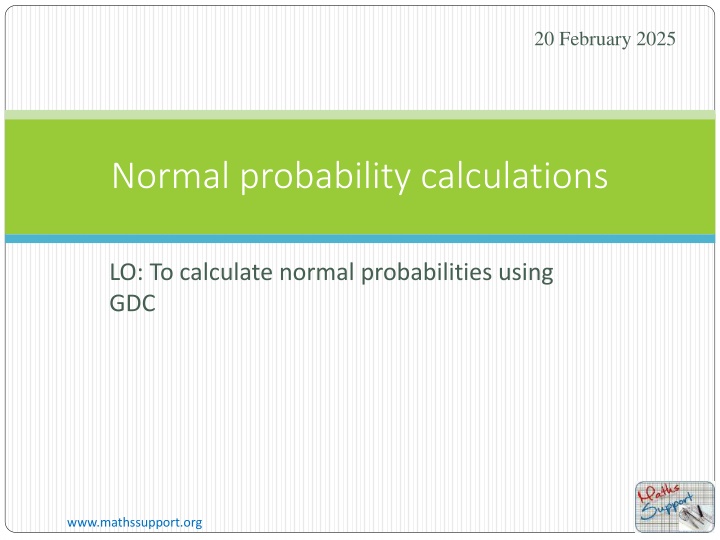
Example on using a Graphing Calculator to find the probability of coconut milk packets containing more than 250ml, given mean volume and standard deviation. Learn how to sketch a normal distribution diagram and enter values for accurate calculations.

Download Presentation

Please find below an Image/Link to download the presentation.
The content on the website is provided AS IS for your information and personal use only. It may not be sold, licensed, or shared on other websites without obtaining consent from the author.If you encounter any issues during the download, it is possible that the publisher has removed the file from their server.
You are allowed to download the files provided on this website for personal or commercial use, subject to the condition that they are used lawfully. All files are the property of their respective owners.
The content on the website is provided AS IS for your information and personal use only. It may not be sold, licensed, or shared on other websites without obtaining consent from the author.
E N D
Presentation Transcript
20 February 2025 Normal probability calculations LO: To calculate normal probabilities using GDC www.mathssupport.org
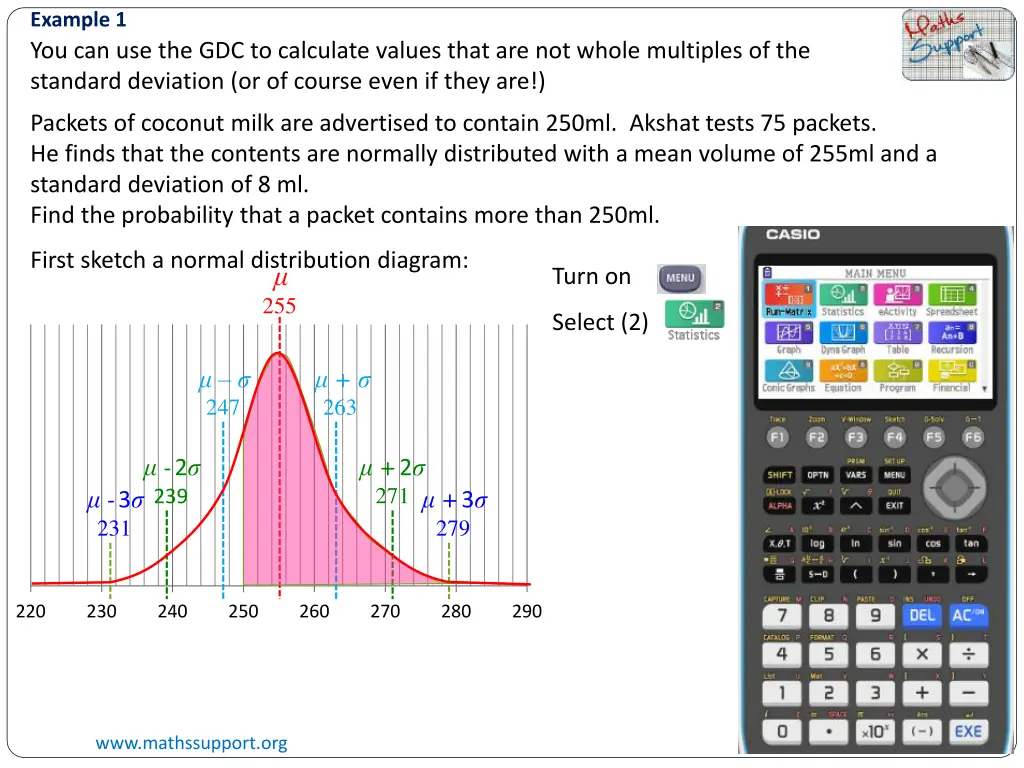
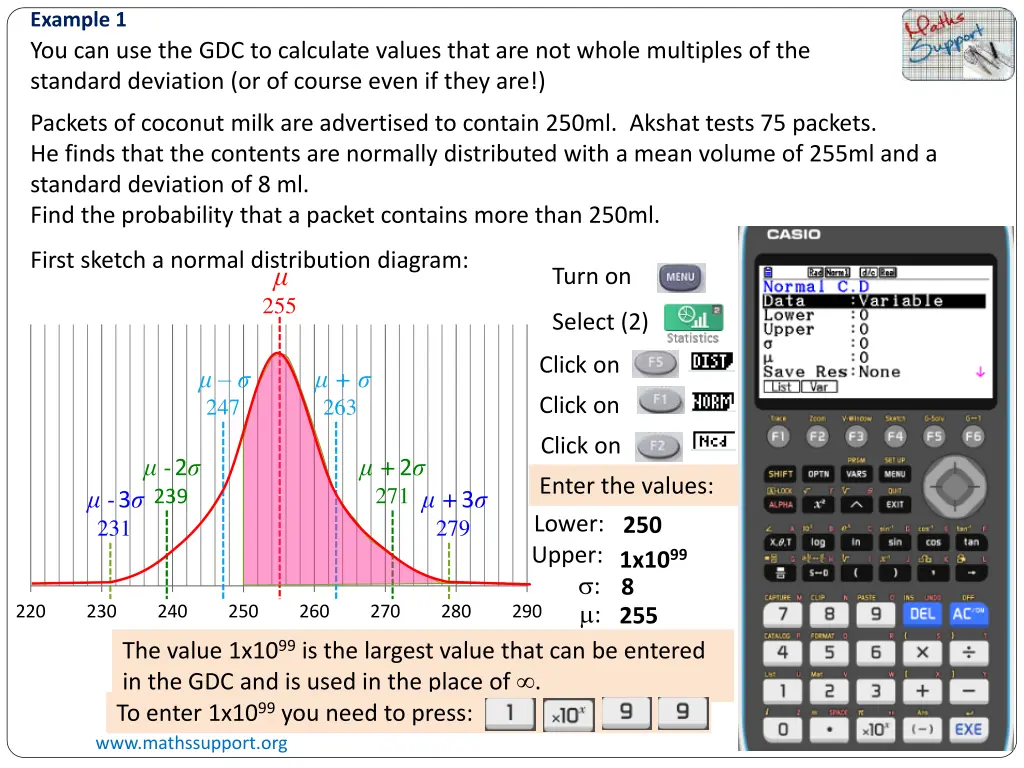
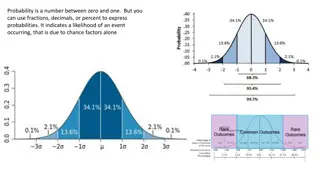
Example 1 You can use the GDC to calculate values that are not whole multiples of the standard deviation (or of course even if they are!) Packets of coconut milk are advertised to contain 250ml. Akshat tests 75 packets. He finds that the contents are normally distributed with a mean volume of 255ml and a standard deviation of 8 ml. Find the probability that a packet contains more than 250ml. First sketch a normal distribution diagram: Turn on 255 Select (2) 247 + 263 -2 239 +2 271 -3 231 +3 279 220 230 240 250 260 270 280 290 www.mathssupport.org
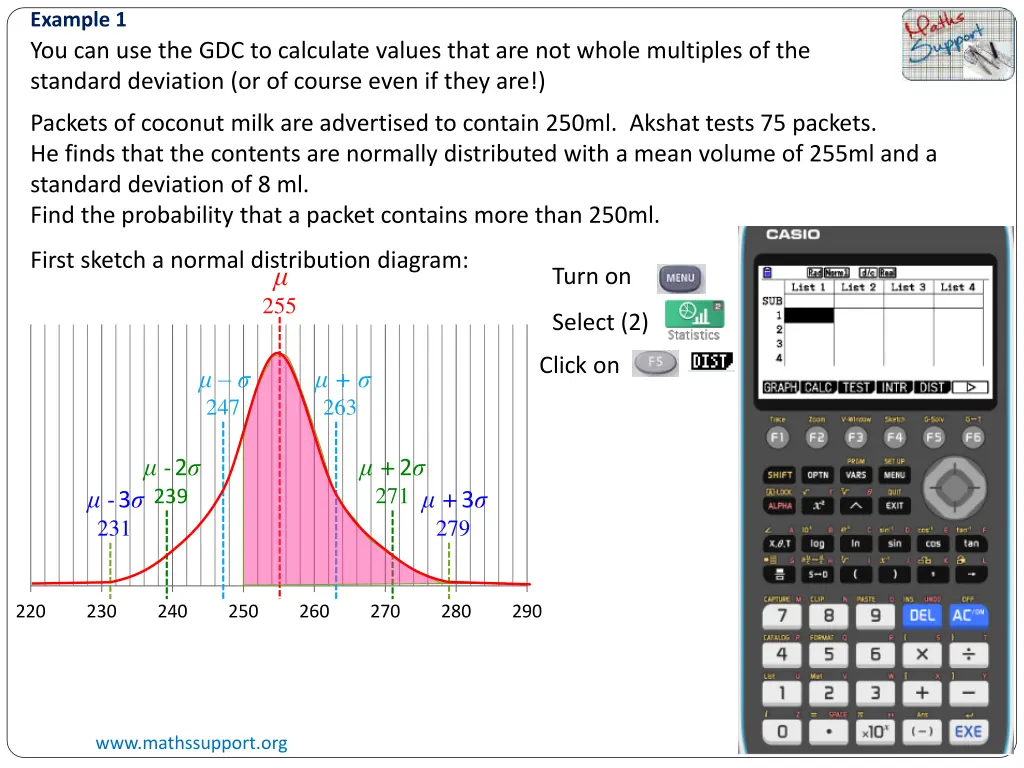
Example 1 You can use the GDC to calculate values that are not whole multiples of the standard deviation (or of course even if they are!) Packets of coconut milk are advertised to contain 250ml. Akshat tests 75 packets. He finds that the contents are normally distributed with a mean volume of 255ml and a standard deviation of 8 ml. Find the probability that a packet contains more than 250ml. First sketch a normal distribution diagram: Turn on 255 Select (2) Click on 247 + 263 -2 239 +2 271 -3 231 +3 279 220 230 240 250 260 270 280 290 www.mathssupport.org
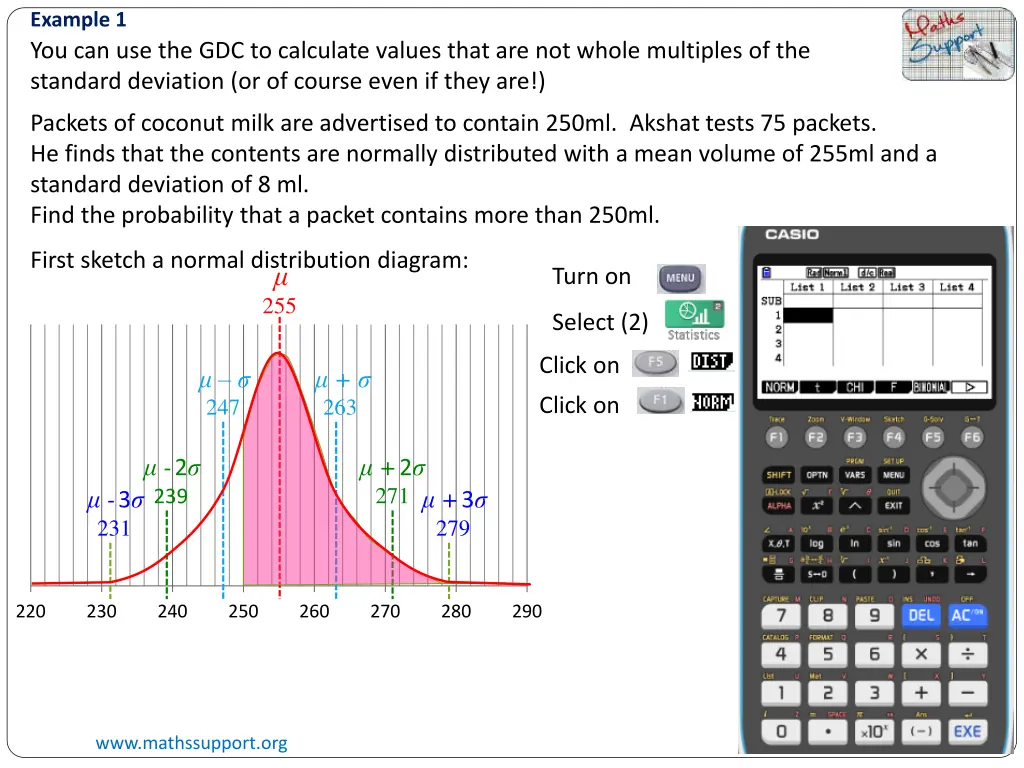
Example 1 You can use the GDC to calculate values that are not whole multiples of the standard deviation (or of course even if they are!) Packets of coconut milk are advertised to contain 250ml. Akshat tests 75 packets. He finds that the contents are normally distributed with a mean volume of 255ml and a standard deviation of 8 ml. Find the probability that a packet contains more than 250ml. First sketch a normal distribution diagram: Turn on 255 Select (2) Click on 247 + 263 Click on -2 239 +2 271 -3 231 +3 279 220 230 240 250 260 270 280 290 www.mathssupport.org
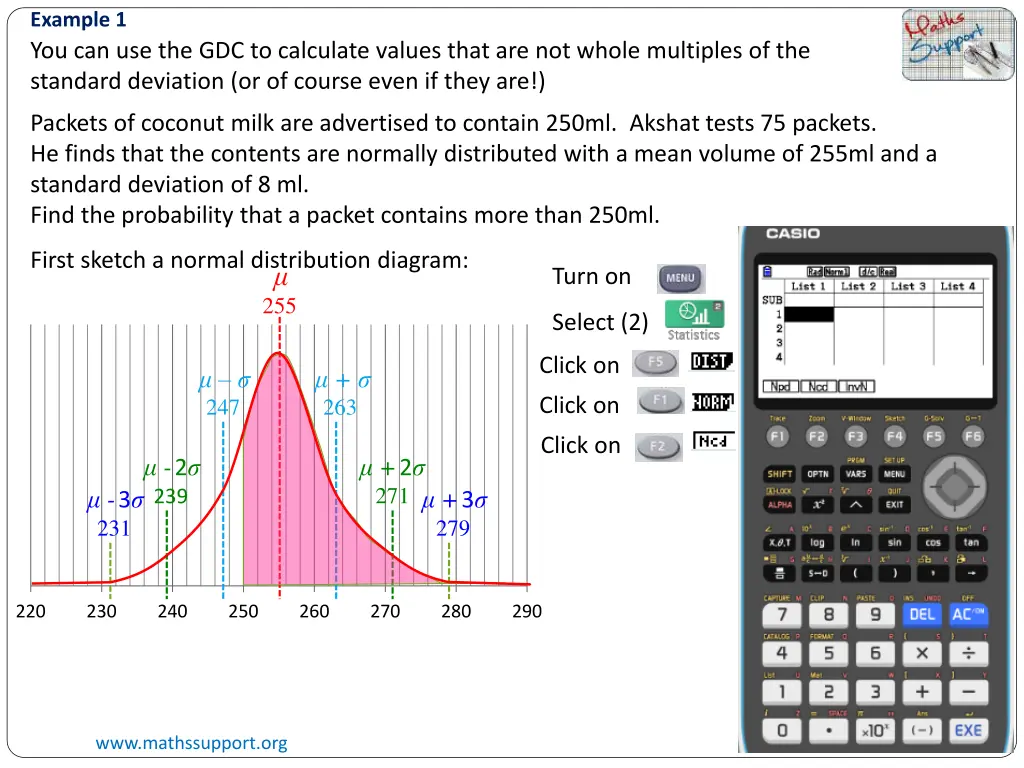
Example 1 You can use the GDC to calculate values that are not whole multiples of the standard deviation (or of course even if they are!) Packets of coconut milk are advertised to contain 250ml. Akshat tests 75 packets. He finds that the contents are normally distributed with a mean volume of 255ml and a standard deviation of 8 ml. Find the probability that a packet contains more than 250ml. First sketch a normal distribution diagram: Turn on 255 Select (2) Click on 247 + 263 Click on Click on -2 239 +2 271 -3 231 +3 279 220 230 240 250 260 270 280 290 www.mathssupport.org
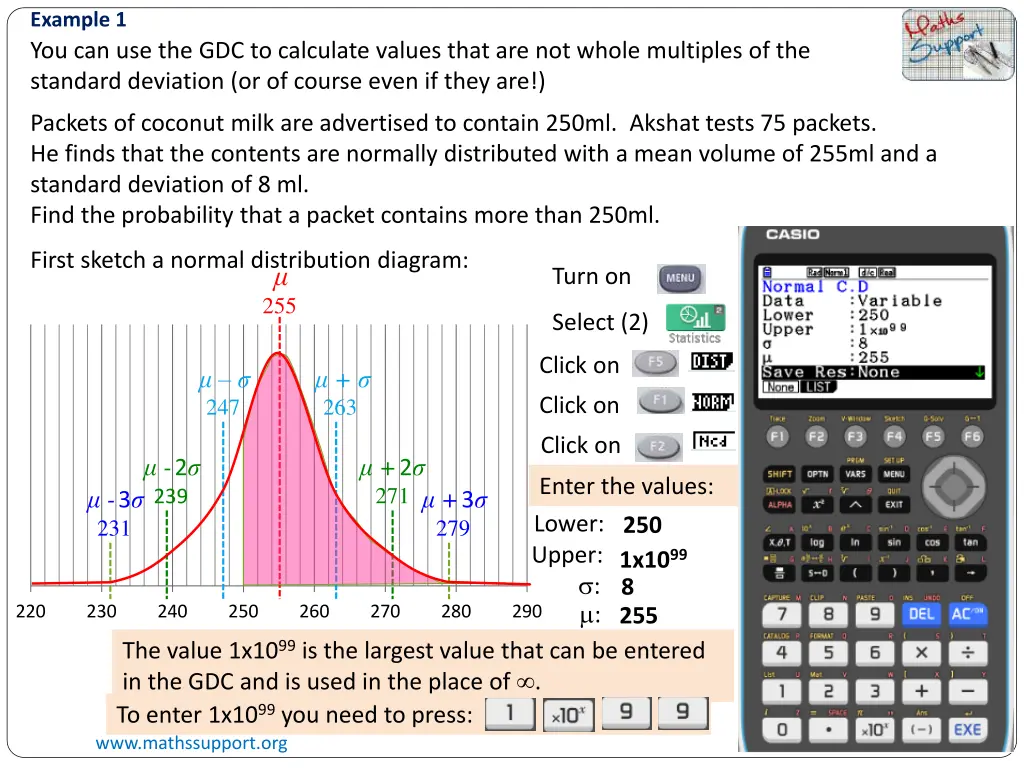
Example 1 You can use the GDC to calculate values that are not whole multiples of the standard deviation (or of course even if they are!) Packets of coconut milk are advertised to contain 250ml. Akshat tests 75 packets. He finds that the contents are normally distributed with a mean volume of 255ml and a standard deviation of 8 ml. Find the probability that a packet contains more than 250ml. First sketch a normal distribution diagram: Turn on 255 Select (2) Click on 247 + 263 Click on Click on -2 239 +2 271 Enter the values: Lower: Upper: : : 255 -3 231 +3 279 250 1x1099 8 220 230 240 250 260 270 280 290 The value 1x1099 is the largest value that can be entered in the GDC and is used in the place of . To enter 1x1099 you need to press: www.mathssupport.org
Example 1 You can use the GDC to calculate values that are not whole multiples of the standard deviation (or of course even if they are!) Packets of coconut milk are advertised to contain 250ml. Akshat tests 75 packets. He finds that the contents are normally distributed with a mean volume of 255ml and a standard deviation of 8 ml. Find the probability that a packet contains more than 250ml. First sketch a normal distribution diagram: Turn on 255 Select (2) Click on 247 + 263 Click on Click on -2 239 +2 271 Enter the values: Lower: Upper: : : 255 -3 231 +3 279 250 1x1099 8 220 230 240 250 260 270 280 290 The value 1x1099 is the largest value that can be entered in the GDC and is used in the place of . To enter 1x1099 you need to press: www.mathssupport.org
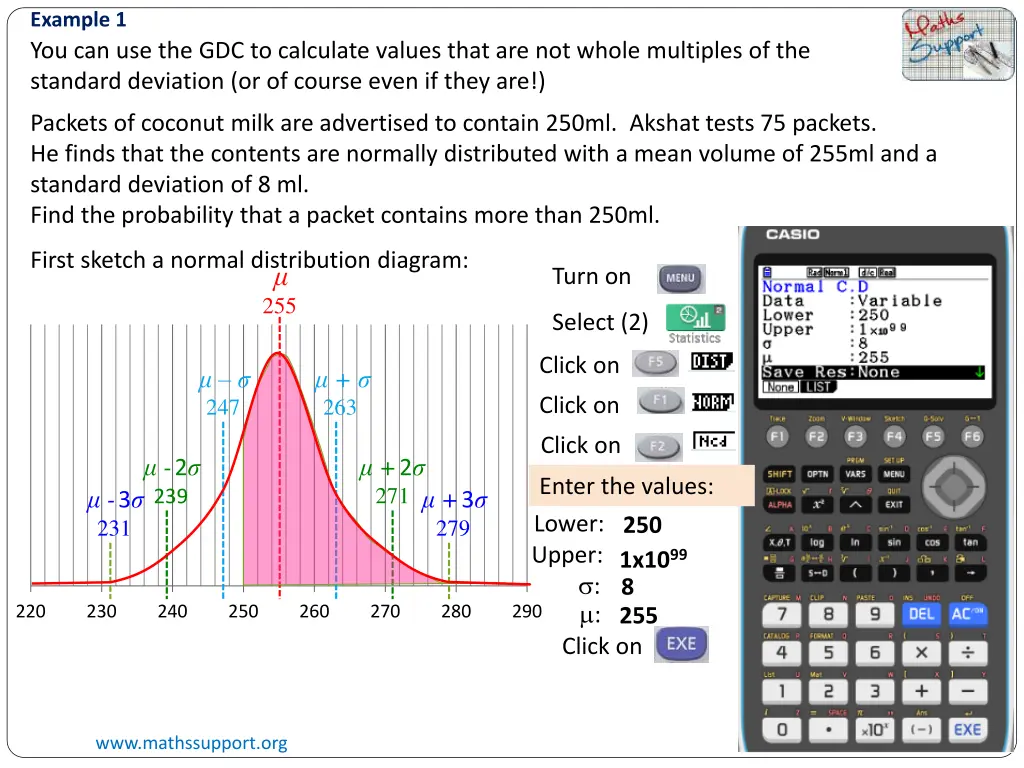
Example 1 You can use the GDC to calculate values that are not whole multiples of the standard deviation (or of course even if they are!) Packets of coconut milk are advertised to contain 250ml. Akshat tests 75 packets. He finds that the contents are normally distributed with a mean volume of 255ml and a standard deviation of 8 ml. Find the probability that a packet contains more than 250ml. First sketch a normal distribution diagram: Turn on 255 Select (2) Click on 247 + 263 Click on Click on -2 239 +2 271 Enter the values: Lower: Upper: : : 255 -3 231 +3 279 250 1x1099 8 220 230 240 250 260 270 280 290 Click on www.mathssupport.org
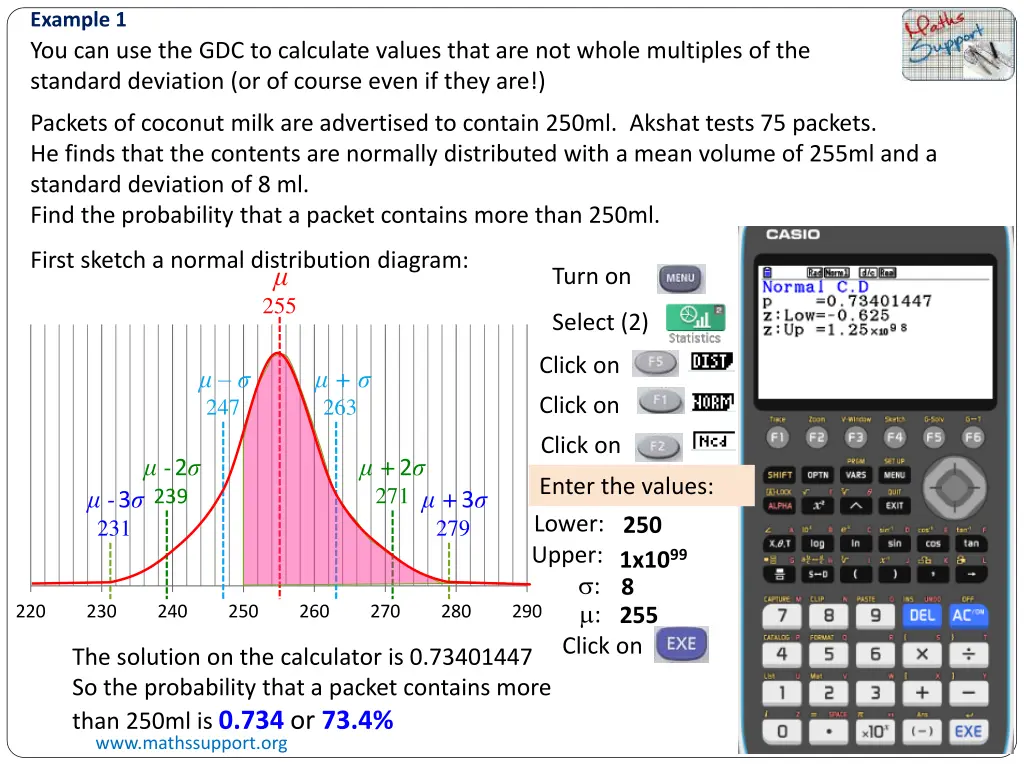
Example 1 You can use the GDC to calculate values that are not whole multiples of the standard deviation (or of course even if they are!) Packets of coconut milk are advertised to contain 250ml. Akshat tests 75 packets. He finds that the contents are normally distributed with a mean volume of 255ml and a standard deviation of 8 ml. Find the probability that a packet contains more than 250ml. First sketch a normal distribution diagram: Turn on 255 Select (2) Click on 247 + 263 Click on Click on -2 239 +2 271 Enter the values: Lower: Upper: : : 255 -3 231 +3 279 250 1x1099 8 220 230 240 250 260 270 280 290 Click on The solution on the calculator is 0.73401447 So the probability that a packet contains more than 250ml is 0.734 or 73.4% www.mathssupport.org
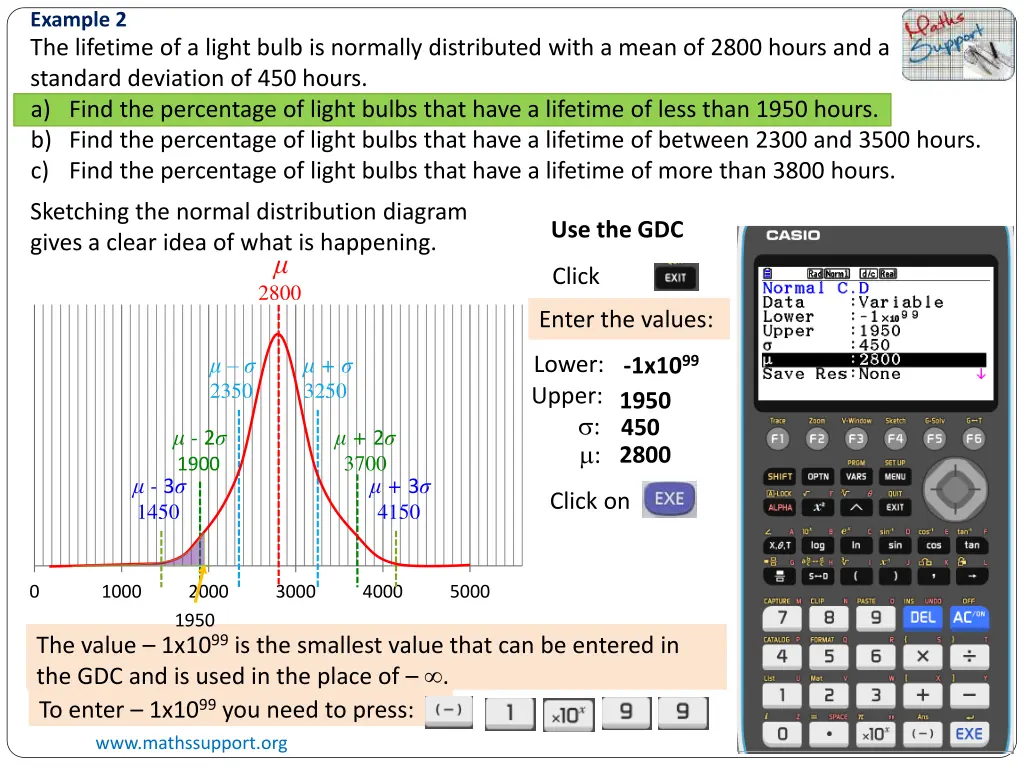
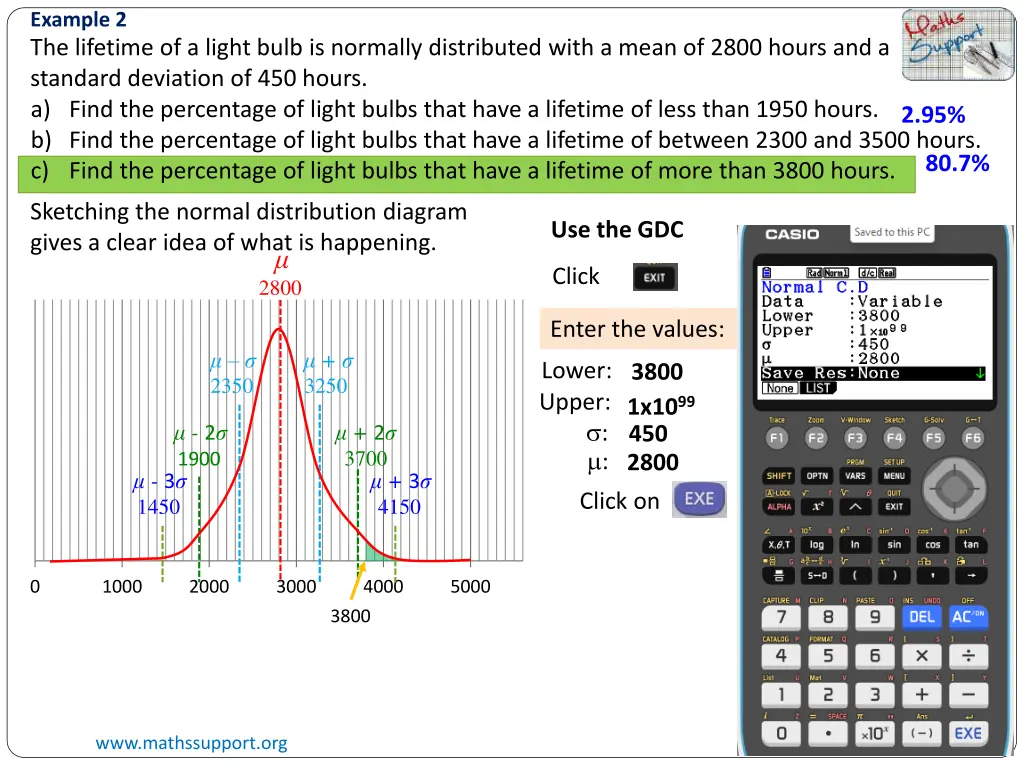
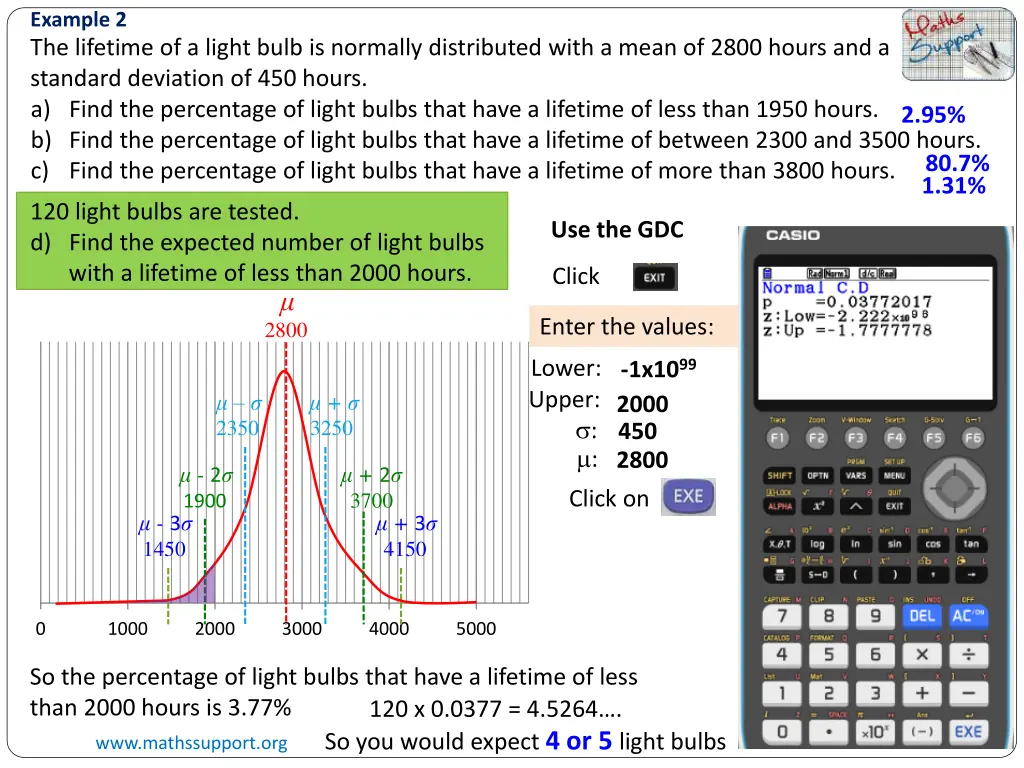
Example 2 The lifetime of a light bulb is normally distributed with a mean of 2800 hours and a standard deviation of 450 hours. a) Find the percentage of light bulbs that have a lifetime of less than 1950 hours. b) Find the percentage of light bulbs that have a lifetime of between 2300 and 3500 hours. c) Find the percentage of light bulbs that have a lifetime of more than 3800 hours. Sketching the normal distribution diagram gives a clear idea of what is happening. Use the GDC Click 2800 Enter the values: 2350 + 3250 Lower: Upper: -1x1099 1950 450 2800 : : - 2 1900 + 2 3700 - 3 1450 + 3 4150 Click on 0 1000 2000 1950 3000 4000 5000 The value 1x1099 is the smallest value that can be entered in the GDC and is used in the place of . To enter 1x1099 you need to press: www.mathssupport.org
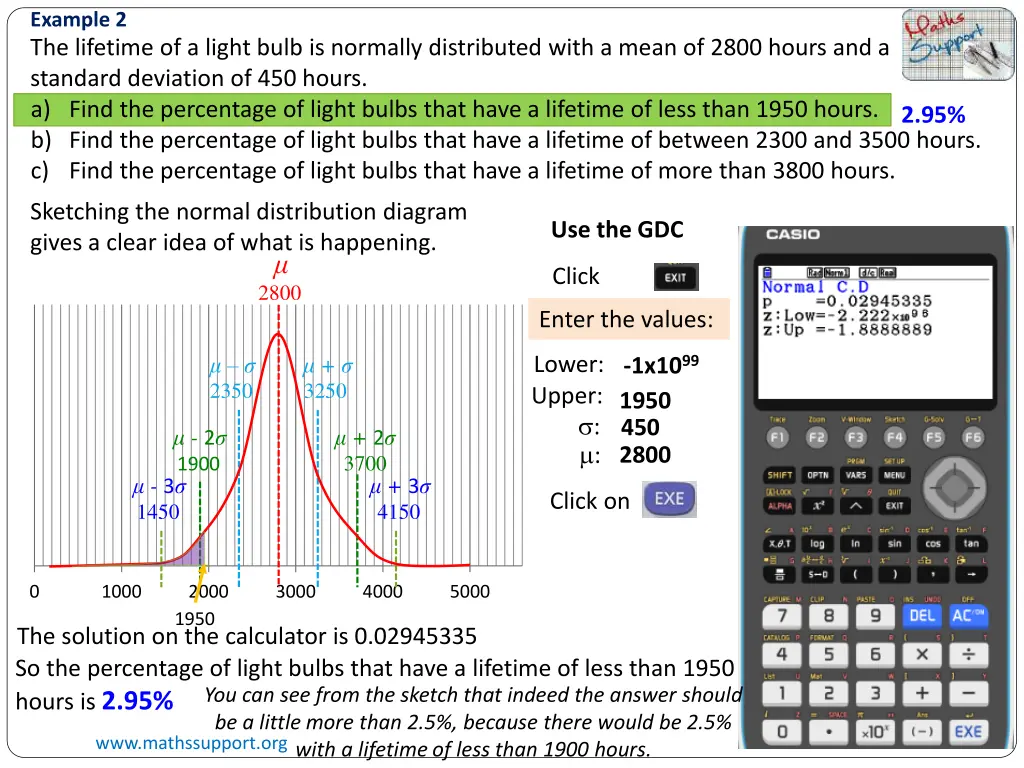
Example 2 The lifetime of a light bulb is normally distributed with a mean of 2800 hours and a standard deviation of 450 hours. a) Find the percentage of light bulbs that have a lifetime of less than 1950 hours. b) Find the percentage of light bulbs that have a lifetime of between 2300 and 3500 hours. c) Find the percentage of light bulbs that have a lifetime of more than 3800 hours. 2.95% Sketching the normal distribution diagram gives a clear idea of what is happening. Use the GDC Click 2800 Enter the values: 2350 + 3250 Lower: Upper: -1x1099 1950 450 2800 : : - 2 1900 + 2 3700 - 3 1450 + 3 4150 Click on 0 1000 2000 1950 3000 4000 5000 The solution on the calculator is 0.02945335 So the percentage of light bulbs that have a lifetime of less than 1950 hours is 2.95% You can see from the sketch that indeed the answer should be a little more than 2.5%, because there would be 2.5% with a lifetime of less than 1900 hours. www.mathssupport.org
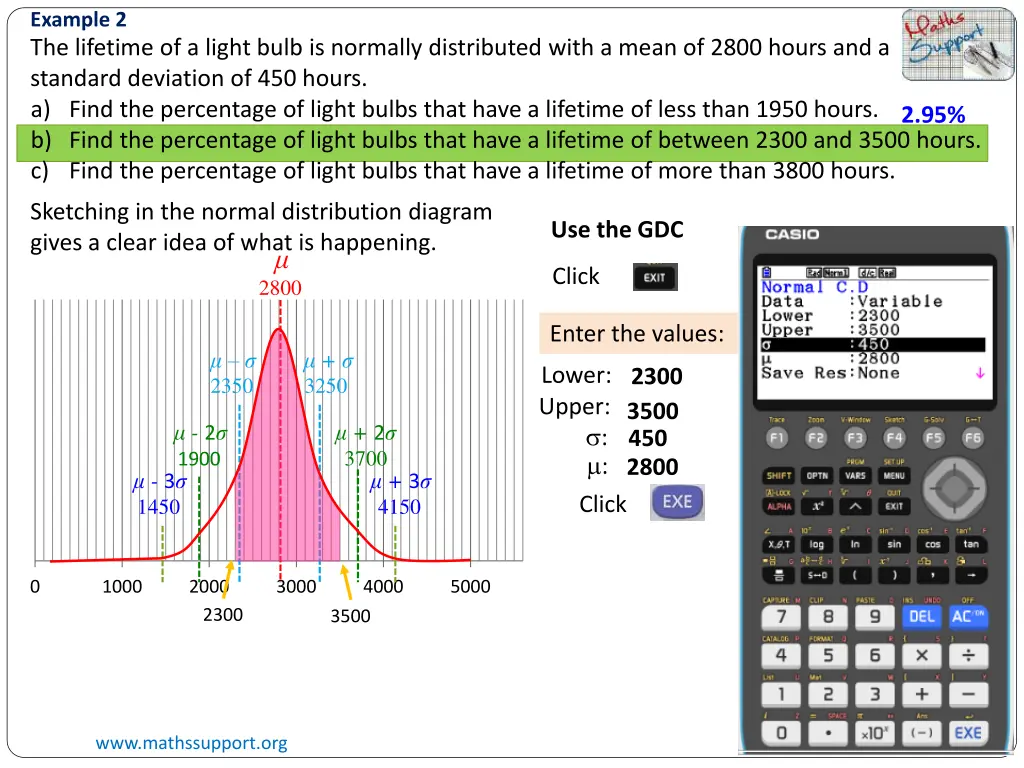
Example 2 The lifetime of a light bulb is normally distributed with a mean of 2800 hours and a standard deviation of 450 hours. a) Find the percentage of light bulbs that have a lifetime of less than 1950 hours. b) Find the percentage of light bulbs that have a lifetime of between 2300 and 3500 hours. c) Find the percentage of light bulbs that have a lifetime of more than 3800 hours. 2.95% Sketching in the normal distribution diagram gives a clear idea of what is happening. Use the GDC Click 2800 Enter the values: 2350 + 3250 Lower: Upper: 2300 3500 450 2800 - 2 1900 + 2 3700 : : Click - 3 1450 + 3 4150 0 1000 2000 2300 3000 4000 5000 3500 www.mathssupport.org
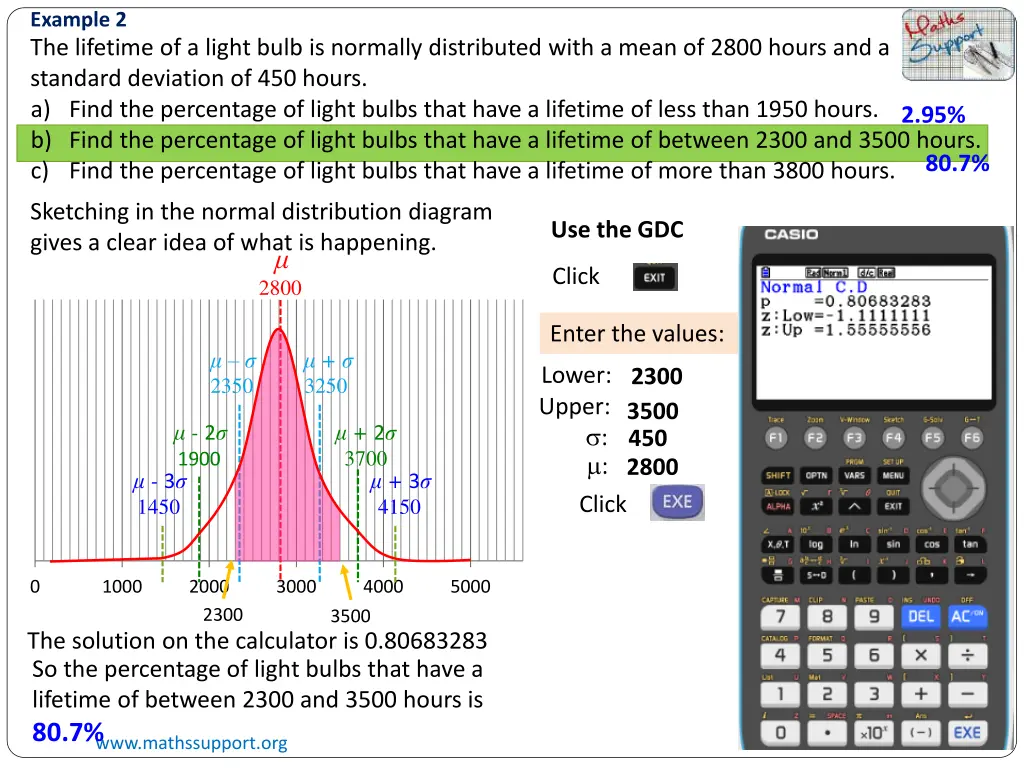
Example 2 The lifetime of a light bulb is normally distributed with a mean of 2800 hours and a standard deviation of 450 hours. a) Find the percentage of light bulbs that have a lifetime of less than 1950 hours. b) Find the percentage of light bulbs that have a lifetime of between 2300 and 3500 hours. c) Find the percentage of light bulbs that have a lifetime of more than 3800 hours. 2.95% 80.7% Sketching in the normal distribution diagram gives a clear idea of what is happening. Use the GDC Click 2800 Enter the values: 2350 + 3250 Lower: Upper: 2300 3500 450 2800 - 2 1900 + 2 3700 : : Click - 3 1450 + 3 4150 0 1000 2000 2300 3000 4000 5000 3500 The solution on the calculator is 0.80683283 So the percentage of light bulbs that have a lifetime of between 2300 and 3500 hours is www.mathssupport.org 80.7%
Example 2 The lifetime of a light bulb is normally distributed with a mean of 2800 hours and a standard deviation of 450 hours. a) Find the percentage of light bulbs that have a lifetime of less than 1950 hours. b) Find the percentage of light bulbs that have a lifetime of between 2300 and 3500 hours. c) Find the percentage of light bulbs that have a lifetime of more than 3800 hours. 2.95% 80.7% Sketching the normal distribution diagram gives a clear idea of what is happening. Use the GDC Click 2800 Enter the values: 2350 + 3250 Lower: Upper: 3800 1x1099 450 2800 : : - 2 1900 + 2 3700 - 3 1450 + 3 4150 Click on 0 1000 2000 3000 4000 5000 3800 www.mathssupport.org
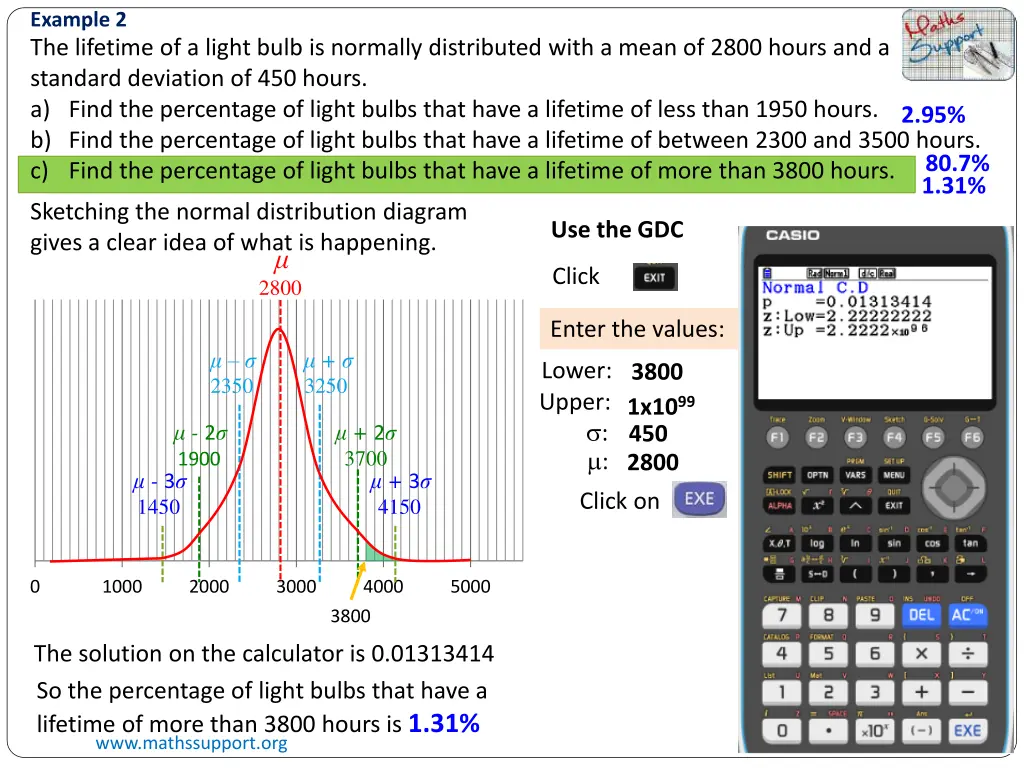
Example 2 The lifetime of a light bulb is normally distributed with a mean of 2800 hours and a standard deviation of 450 hours. a) Find the percentage of light bulbs that have a lifetime of less than 1950 hours. b) Find the percentage of light bulbs that have a lifetime of between 2300 and 3500 hours. c) Find the percentage of light bulbs that have a lifetime of more than 3800 hours. 2.95% 80.7% 1.31% Sketching the normal distribution diagram gives a clear idea of what is happening. Use the GDC Click 2800 Enter the values: 2350 + 3250 Lower: Upper: 3800 1x1099 450 2800 : : - 2 1900 + 2 3700 - 3 1450 + 3 4150 Click on 0 1000 2000 3000 4000 5000 3800 The solution on the calculator is 0.01313414 So the percentage of light bulbs that have a lifetime of more than 3800 hours is 1.31% www.mathssupport.org
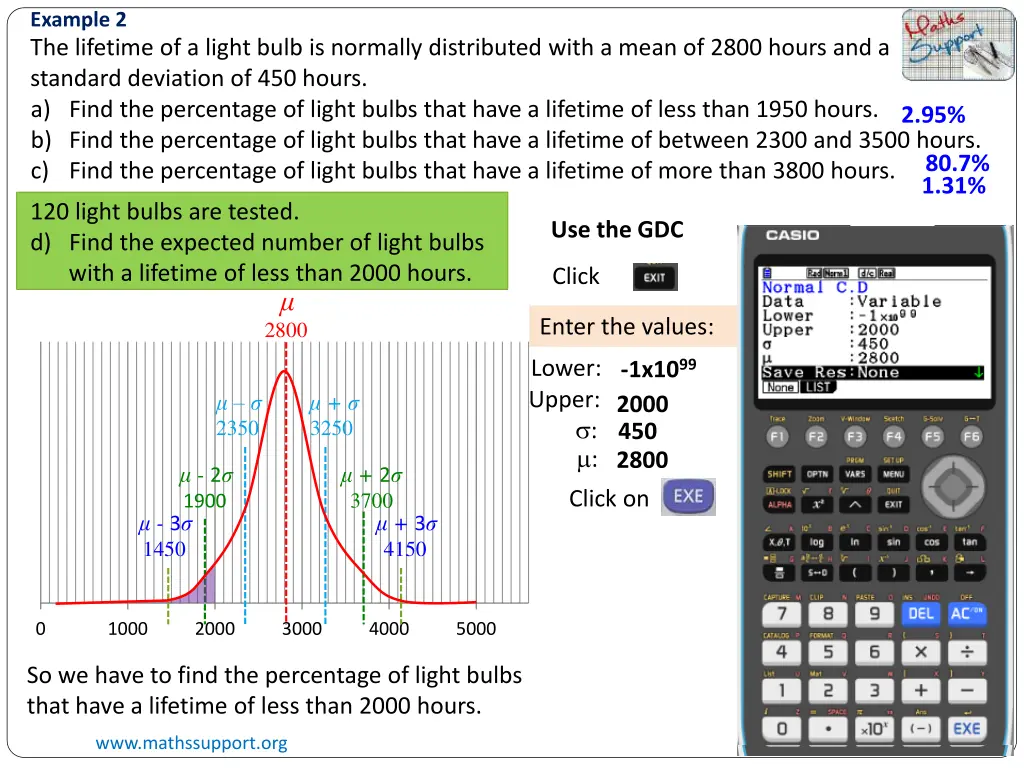
Example 2 The lifetime of a light bulb is normally distributed with a mean of 2800 hours and a standard deviation of 450 hours. a) Find the percentage of light bulbs that have a lifetime of less than 1950 hours. b) Find the percentage of light bulbs that have a lifetime of between 2300 and 3500 hours. c) Find the percentage of light bulbs that have a lifetime of more than 3800 hours. 2.95% 80.7% 1.31% 120 light bulbs are tested. d) Find the expected number of light bulbs with a lifetime of less than 2000 hours. Use the GDC Click Enter the values: 2800 Lower: Upper: -1x1099 2350 + 3250 2000 450 2800 : : - 2 1900 + 2 3700 Click on - 3 1450 + 3 4150 0 1000 2000 3000 4000 5000 So we have to find the percentage of light bulbs that have a lifetime of less than 2000 hours. www.mathssupport.org
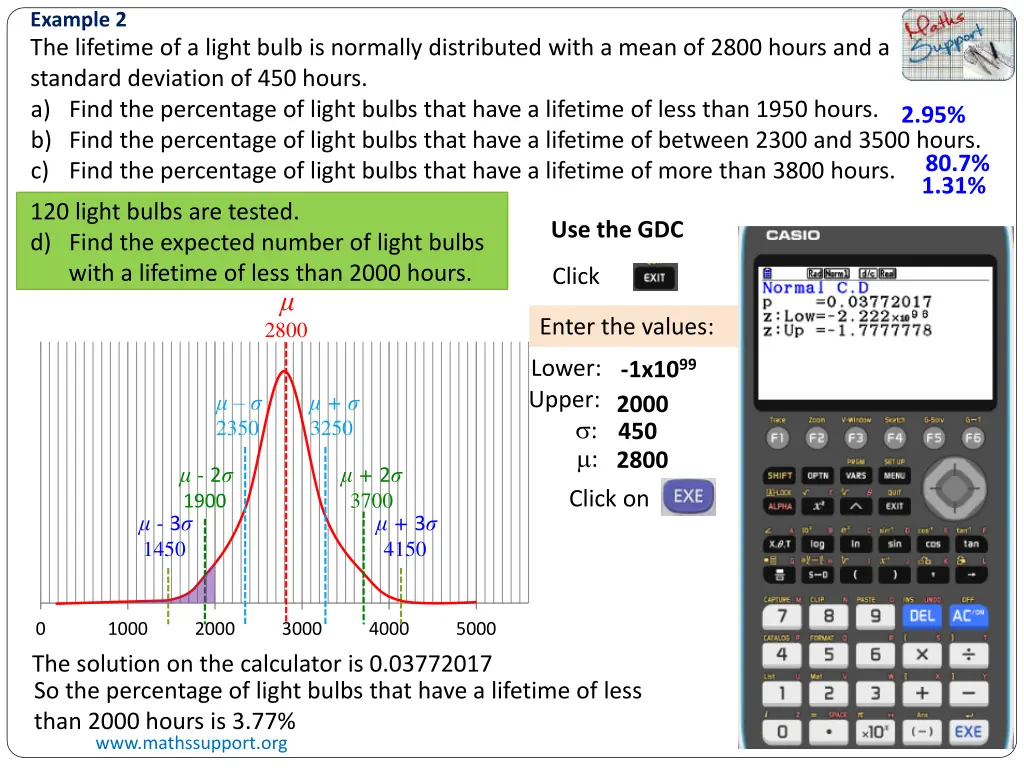
Example 2 The lifetime of a light bulb is normally distributed with a mean of 2800 hours and a standard deviation of 450 hours. a) Find the percentage of light bulbs that have a lifetime of less than 1950 hours. b) Find the percentage of light bulbs that have a lifetime of between 2300 and 3500 hours. c) Find the percentage of light bulbs that have a lifetime of more than 3800 hours. 2.95% 80.7% 1.31% 120 light bulbs are tested. d) Find the expected number of light bulbs with a lifetime of less than 2000 hours. Use the GDC Click Enter the values: 2800 Lower: Upper: -1x1099 2350 + 3250 2000 450 2800 : : - 2 1900 + 2 3700 Click on - 3 1450 + 3 4150 0 The solution on the calculator is 0.03772017 So the percentage of light bulbs that have a lifetime of less than 2000 hours is 3.77% 1000 2000 3000 4000 5000 www.mathssupport.org
Example 2 The lifetime of a light bulb is normally distributed with a mean of 2800 hours and a standard deviation of 450 hours. a) Find the percentage of light bulbs that have a lifetime of less than 1950 hours. b) Find the percentage of light bulbs that have a lifetime of between 2300 and 3500 hours. c) Find the percentage of light bulbs that have a lifetime of more than 3800 hours. 2.95% 80.7% 1.31% 120 light bulbs are tested. d) Find the expected number of light bulbs with a lifetime of less than 2000 hours. Use the GDC Click Enter the values: 2800 Lower: Upper: -1x1099 2350 + 3250 2000 450 2800 : : - 2 1900 + 2 3700 Click on - 3 1450 + 3 4150 0 1000 2000 3000 4000 5000 So the percentage of light bulbs that have a lifetime of less than 2000 hours is 3.77% So you would expect 4 or 5 light bulbs 120 x 0.0377 = 4.5264 . www.mathssupport.org
Thank you for using resources from A close up of a cage Description automatically generated For more resources visit our website https://www.mathssupport.org If you have a special request, drop us an email info@mathssupport.org www.mathssupport.org