NYSDEC Asset Management Program Levels of Service
This presentation provides an overview of the NYSDEC Asset Management Program's Levels of Service, focusing on identifying stakeholders, setting SMART goals, and measuring progress. It delves into defining Levels of Service, stakeholder expectations, creating SMART goals, and prioritizing tasks for successful asset management. The content emphasizes the importance of a Level of Service profile as a tool for communicating municipal commitments and tracking progress towards goals.

Download Presentation

Please find below an Image/Link to download the presentation.
The content on the website is provided AS IS for your information and personal use only. It may not be sold, licensed, or shared on other websites without obtaining consent from the author. If you encounter any issues during the download, it is possible that the publisher has removed the file from their server.
You are allowed to download the files provided on this website for personal or commercial use, subject to the condition that they are used lawfully. All files are the property of their respective owners.
The content on the website is provided AS IS for your information and personal use only. It may not be sold, licensed, or shared on other websites without obtaining consent from the author.
E N D
Presentation Transcript
1 NYSDEC Level of Service An overview for asset management programs December 2020
2 Content Overview This presentation is to accompany the NYSDEC Asset Management Reference Manual. This workshop gives the Asset Management Team the opportunity to learn about Level of Service, identify stakeholders and the expectations of those stakeholders, as well as create SMART goals as a group. What is Level of Service? Levels of Service Profile Service Categories Stakeholders and Expectations Creating SMART Goals Reporting Progress Setting Priorities
3 3 What is Level of Service?
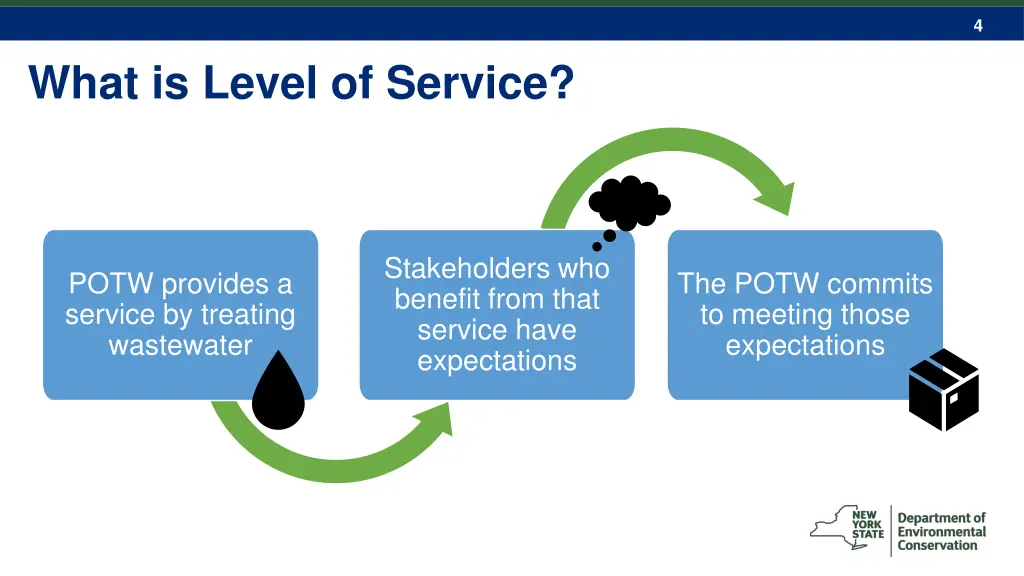
4 What is Level of Service? Stakeholders who benefit from that service have expectations POTW provides a service by treating wastewater The POTW commits to meeting those expectations
5 5 Level of Service Profile A tool for measuring success
6 Level of Service Profile An overview of the municipal commitments. The profile can be used a communication tool when reporting goals and progress to stakeholders. 1. Service Categories: Which services does the municipality prioritize? How are they ranked in order of importance? 2. Stakeholders: Who does the POTW serve? 3. Expectations: What do staff, businesses, and regulators expect? Which services do they value? 4. Goals: How do the stakeholder expectations translate into Specific, Measurable, Attainable, Relevant, and Time-bound (SMART) goals? What is the maximum performance level that is achievable? How is the POTW currently performing? 5. Progress: How are the goals tracked? Where is the information stored? Is the POTW on track to meet its goals? What feedback have the stakeholders provided? The Level of Service Toolbox contains a Level of Service Profile template for the Asset Management Team.
7 7 Level of Service Categories
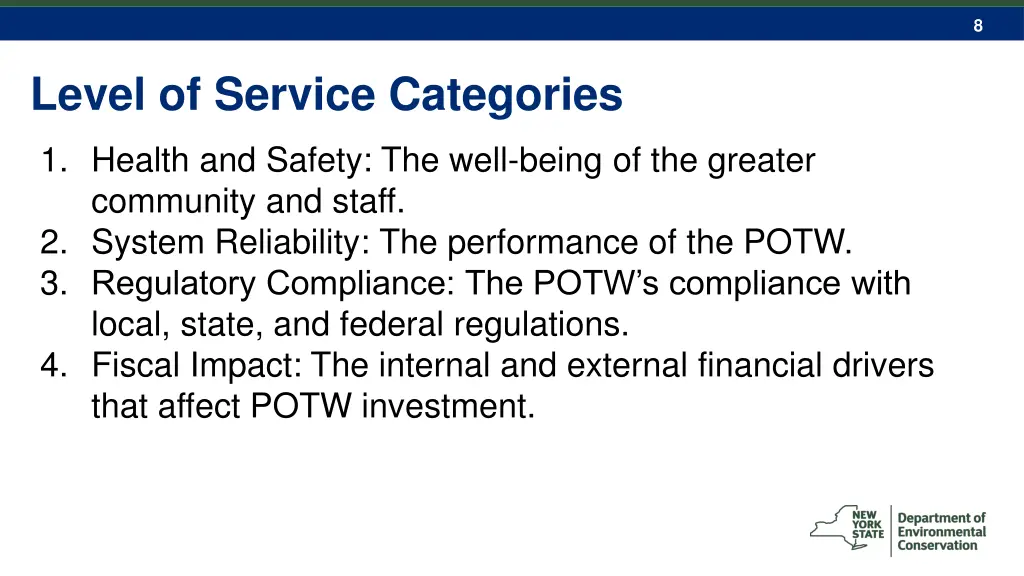
8 Level of Service Categories 1. Health and Safety: The well-being of the greater community and staff. 2. System Reliability: The performance of the POTW. 3. Regulatory Compliance: The POTW s compliance with local, state, and federal regulations. 4. Fiscal Impact: The internal and external financial drivers that affect POTW investment.
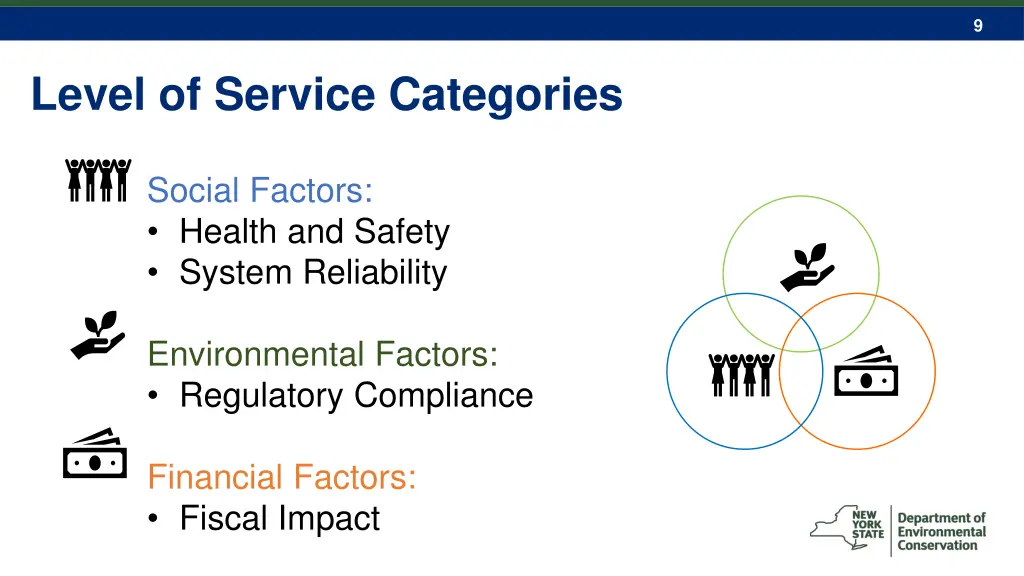
9 Level of Service Categories Social Factors: Health and Safety System Reliability Environmental Factors: Regulatory Compliance Financial Factors: Fiscal Impact
10 10 Stakeholders and Expectations
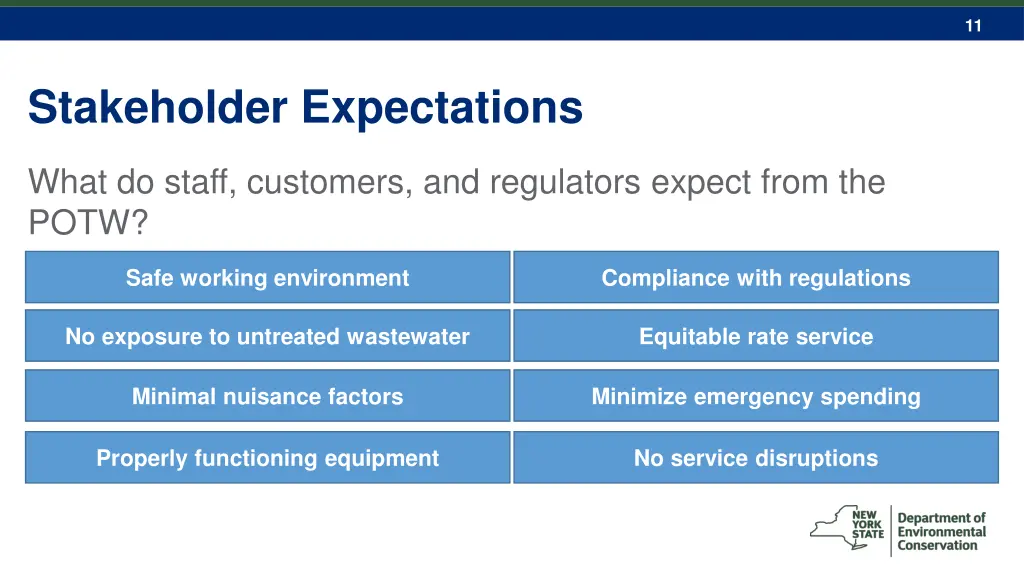
11 Stakeholder Expectations What do staff, customers, and regulators expect from the POTW? Safe working environment Compliance with regulations No exposure to untreated wastewater Equitable rate service Minimal nuisance factors Minimize emergency spending Properly functioning equipment No service disruptions
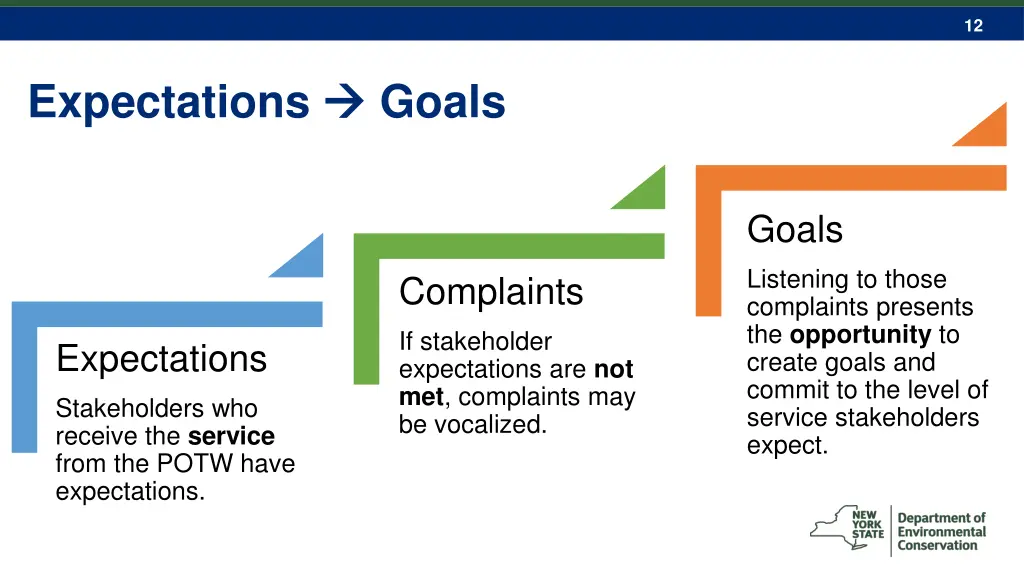
12 Expectations Goals Goals Listening to those complaints presents the opportunity to create goals and commit to the level of service stakeholders expect. Complaints If stakeholder expectations are not met, complaints may be vocalized. Expectations Stakeholders who receive the service from the POTW have expectations.
13 13 Creating SMART Goals
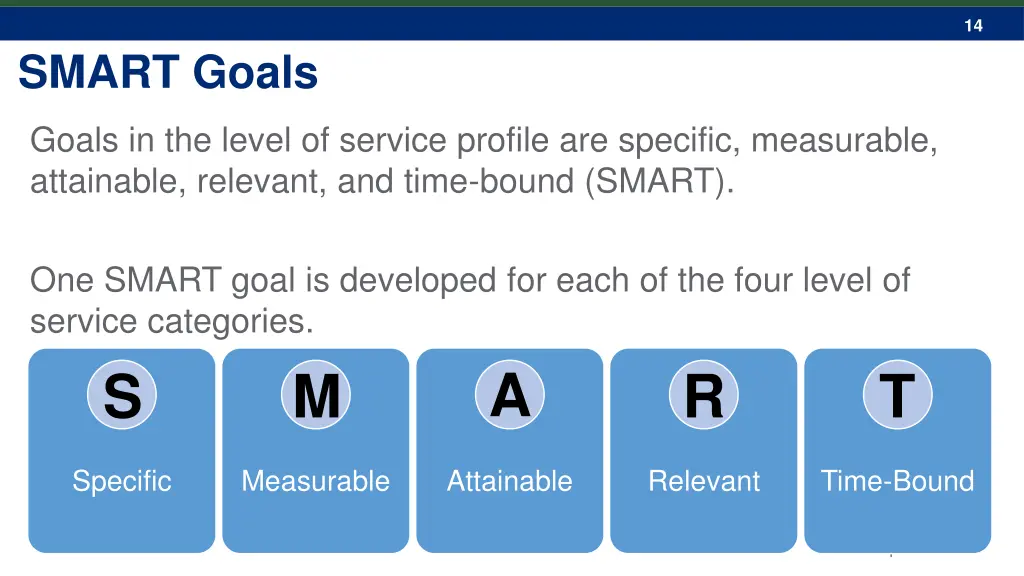
14 SMART Goals Goals in the level of service profile are specific, measurable, attainable, relevant, and time-bound (SMART). One SMART goal is developed for each of the four level of service categories. S M A R T Specific Measurable Attainable Relevant Time-Bound
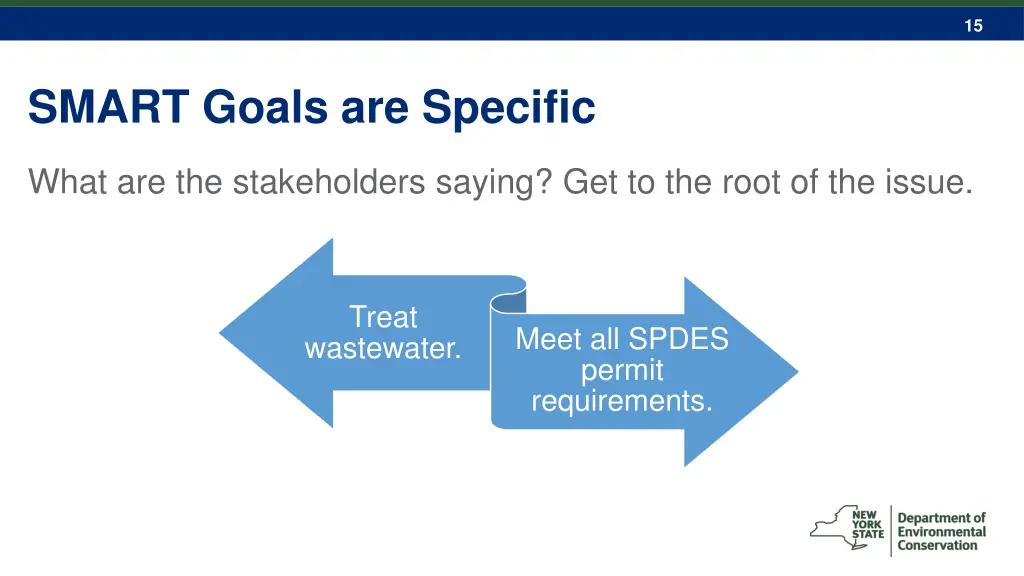
15 SMART Goals are Specific What are the stakeholders saying? Get to the root of the issue. Treat Meet all SPDES permit requirements. wastewater.
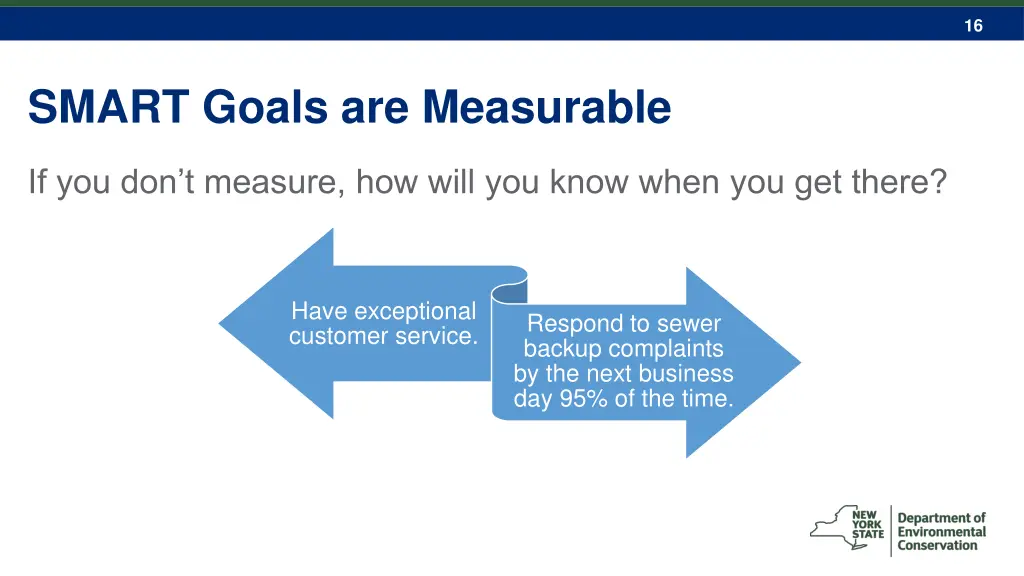
16 SMART Goals are Measurable If you don t measure, how will you know when you get there? Have exceptional customer service. Respond to sewer backup complaints by the next business day 95% of the time.
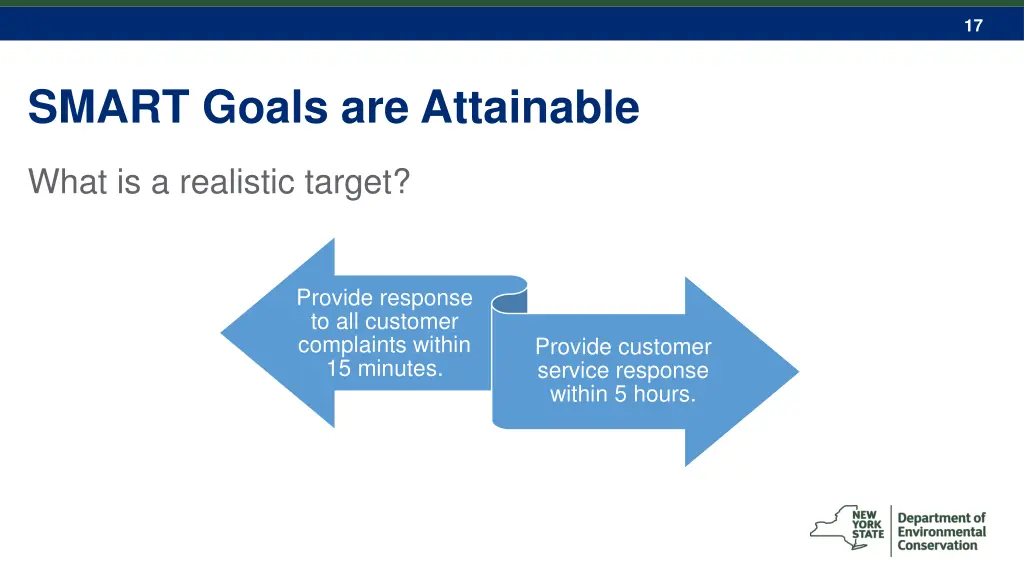
17 SMART Goals are Attainable What is a realistic target? Provide response to all customer complaints within 15 minutes. Provide customer service response within 5 hours.
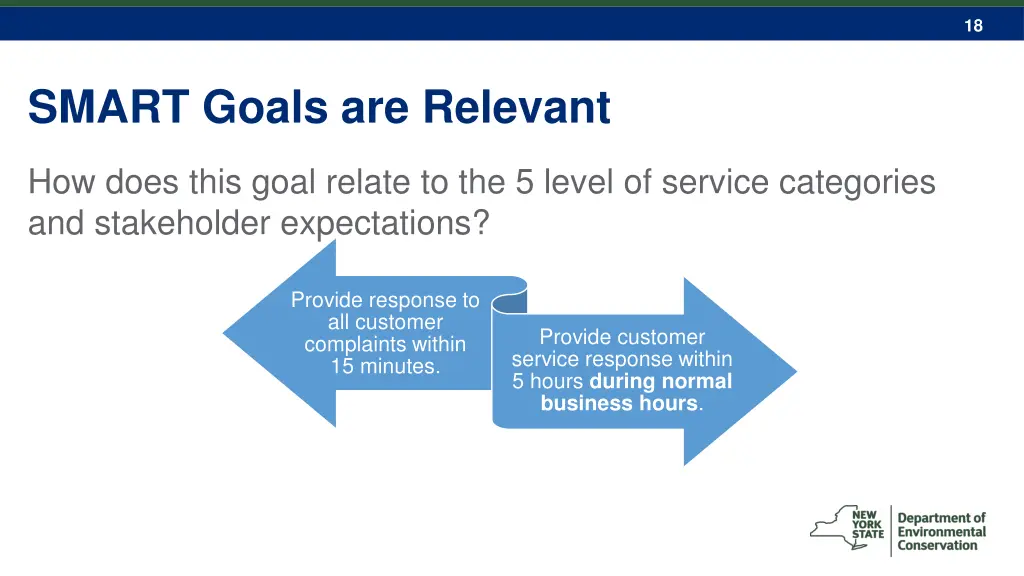
18 SMART Goals are Relevant How does this goal relate to the 5 level of service categories and stakeholder expectations? Provide response to all customer complaints within 15 minutes. Provide customer service response within 5 hours during normal business hours.
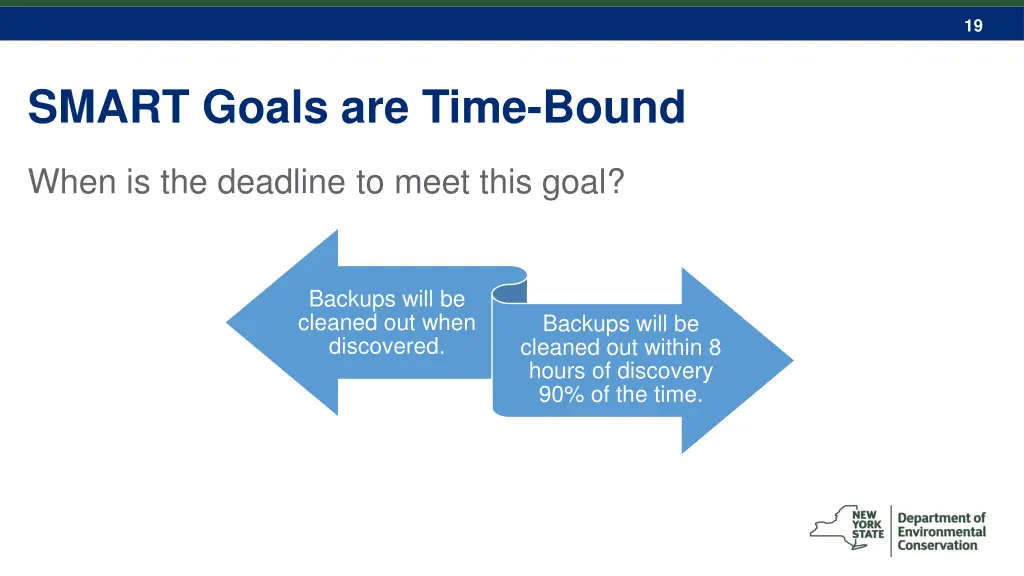
19 SMART Goals are Time-Bound When is the deadline to meet this goal? Backups will be cleaned out when discovered. Backups will be cleaned out within 8 hours of discovery 90% of the time.
20 Report Progress 1. What information needs to be tracked? 2. Where will this information be stored? How will it be accessed? 3. Who is responsible for gathering this information? 4. Who will be tracking goal performance? 5. Who will be reporting out goal performance? How often will progress be reported?
21 Setting Priorities Assign weightings to each of the service categories that reflect the municipality s priorities. These weightings will affect the way risk is assessed for each asset in the inventory. Weightings should reflect the areas of focus in the municipality (i.e., stakeholder expectations). This will help the Asset Management Team and ultimately, the municipality when planning capital improvement projects.
22 Results The SMART goals and priorities are also used during the risk assessment of the inventoried assets. Assets that affect the POTWs ability to meet its goals with have a higher risk and will drive improvement projects. This can help the municipality make informed financial decisions to better serve its stakeholders.
23 Next Steps As a team, complete the Level of Service Profile using the Level of Service Toolbox item and the knowledge gained in this workshop. NYSDEC Level of Service Workshop adapted from Hazen s NYSEFC & NYSDEC Municipal Sewage System Asset Management Pilot Program Levels of Service Workshop, September 2017.