Open Source Intelligence

Open Source Intelligence (OSINT) is used to gather data from public sources like media, newspapers, and business documents. It is a passive approach that never touches the target but can reveal much about an organization. The output from OSINT serves as input for subsequent steps in penetration testing and red teaming, incorporating methodologies like PTES, OWASP, and NIST SP 800-115. Understanding sources of OSINT enhances threat modeling and vulnerability analysis, forming a critical foundation for crafting effective attack plans.

Download Presentation

Please find below an Image/Link to download the presentation.
The content on the website is provided AS IS for your information and personal use only. It may not be sold, licensed, or shared on other websites without obtaining consent from the author.If you encounter any issues during the download, it is possible that the publisher has removed the file from their server.
You are allowed to download the files provided on this website for personal or commercial use, subject to the condition that they are used lawfully. All files are the property of their respective owners.
The content on the website is provided AS IS for your information and personal use only. It may not be sold, licensed, or shared on other websites without obtaining consent from the author.
E N D
Presentation Transcript
Open Source Intelligence Offensive Security
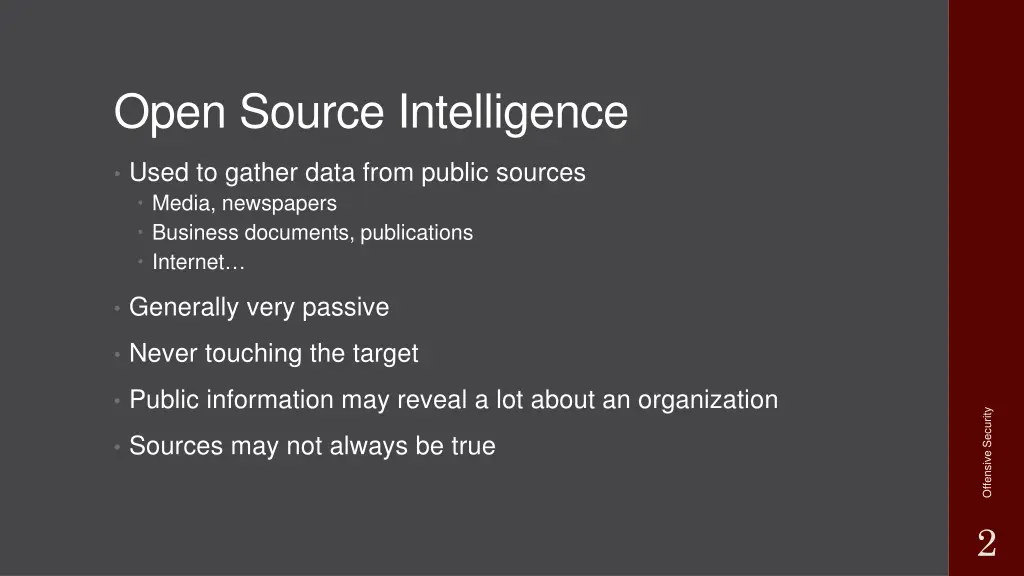
Open Source Intelligence Used to gather data from public sources Media, newspapers Business documents, publications Internet Generally very passive Never touching the target Public information may reveal a lot about an organization Offensive Security Sources may not always be true 2
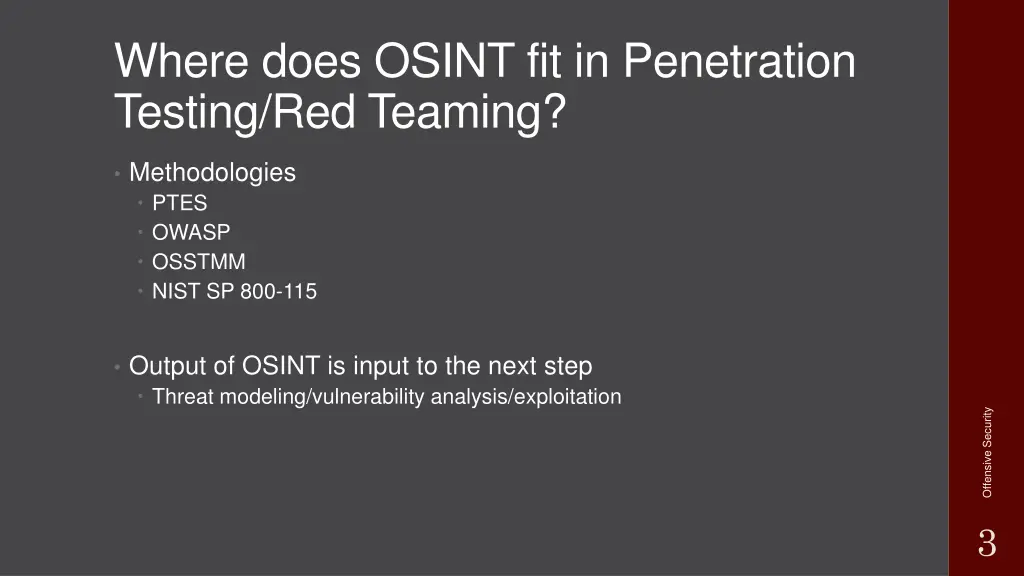
Where does OSINT fit in Penetration Testing/Red Teaming? Methodologies PTES OWASP OSSTMM NIST SP 800-115 Output of OSINT is input to the next step Threat modeling/vulnerability analysis/exploitation Offensive Security 3
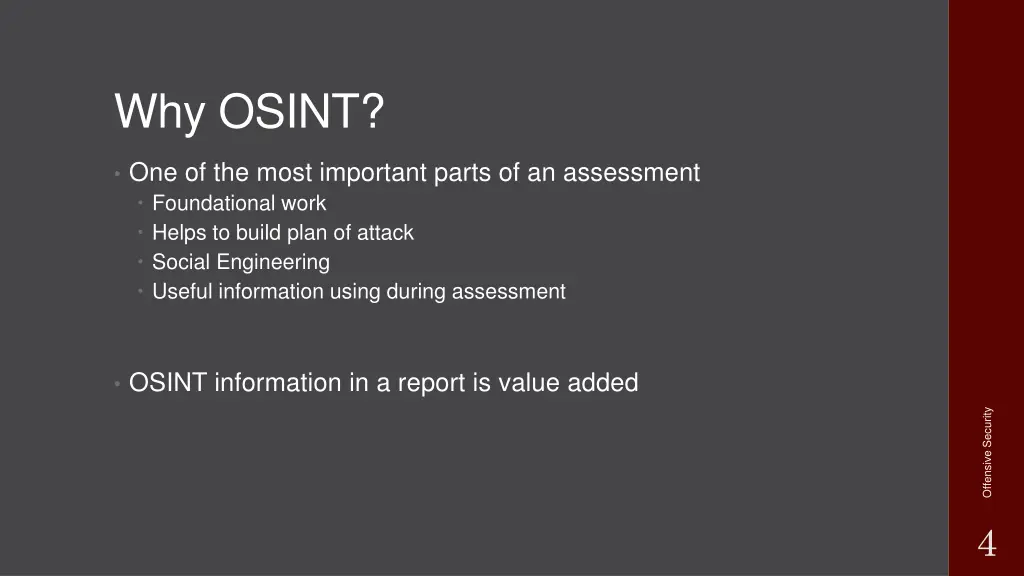
Why OSINT? One of the most important parts of an assessment Foundational work Helps to build plan of attack Social Engineering Useful information using during assessment OSINT information in a report is value added Offensive Security 4
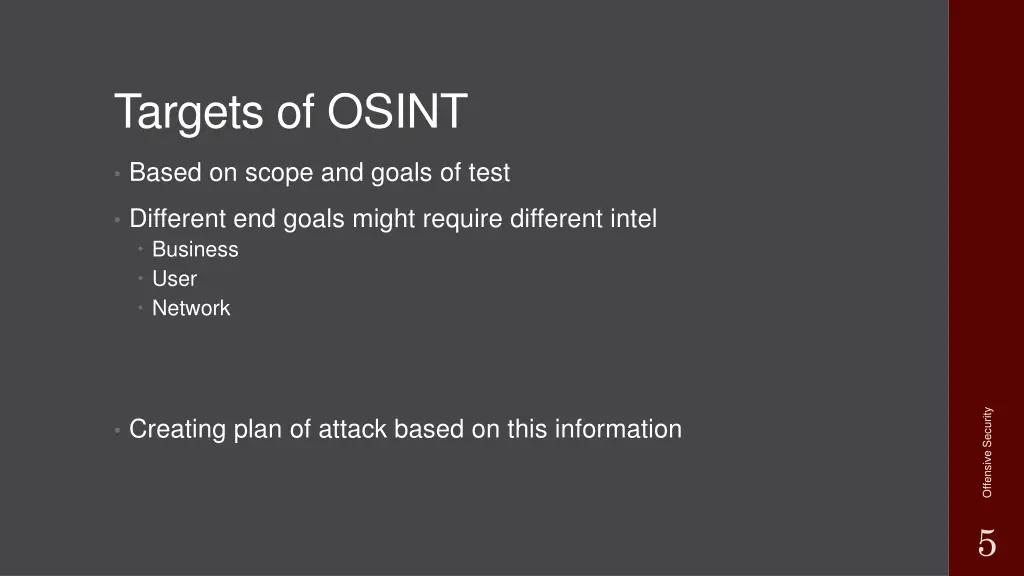
Targets of OSINT Based on scope and goals of test Different end goals might require different intel Business User Network Offensive Security Creating plan of attack based on this information 5
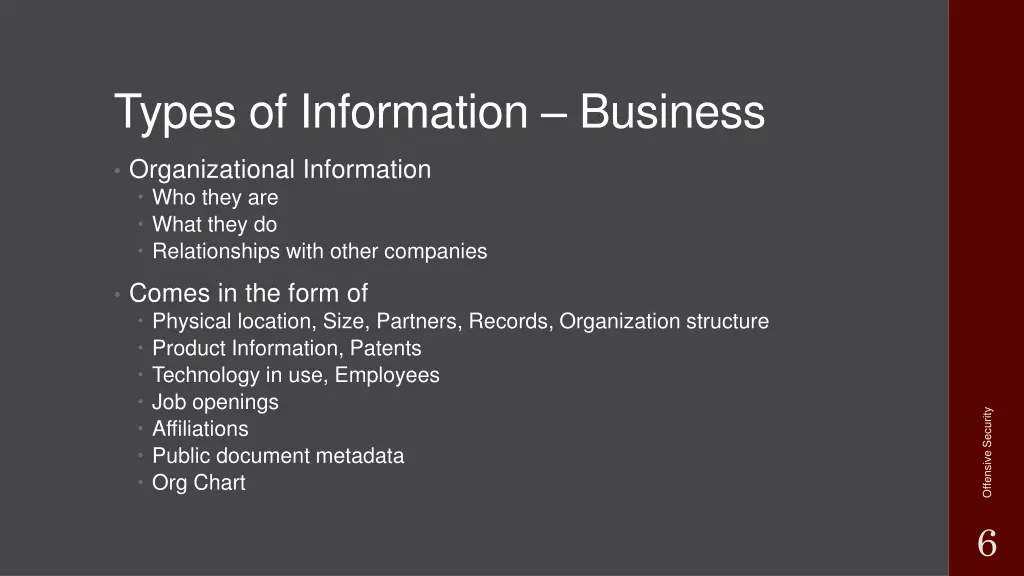
Types of Information Business Organizational Information Who they are What they do Relationships with other companies Comes in the form of Physical location, Size, Partners, Records, Organization structure Product Information, Patents Technology in use, Employees Job openings Affiliations Public document metadata Org Chart Offensive Security 6
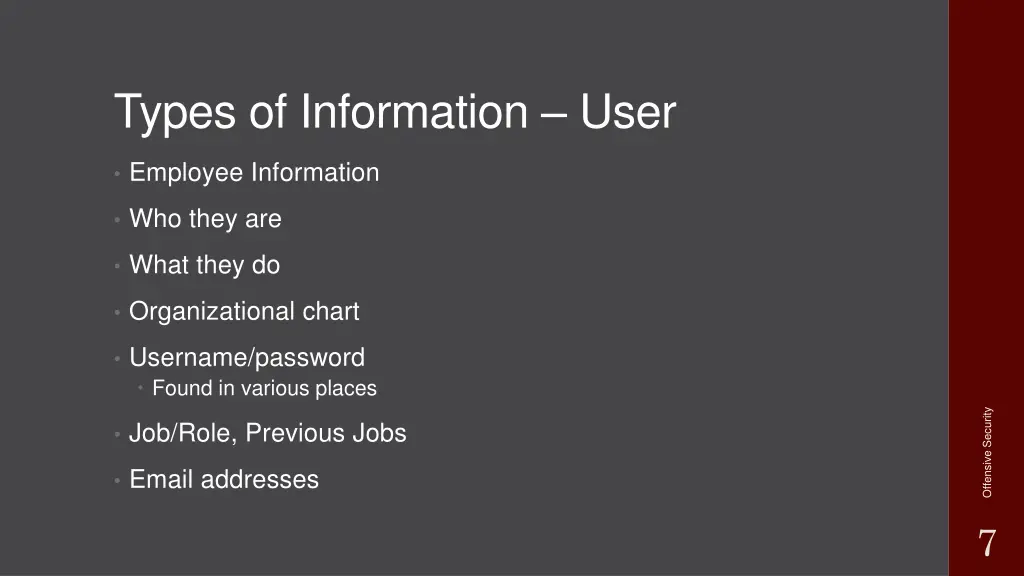
Types of Information User Employee Information Who they are What they do Organizational chart Username/password Found in various places Offensive Security Job/Role, Previous Jobs Email addresses 7
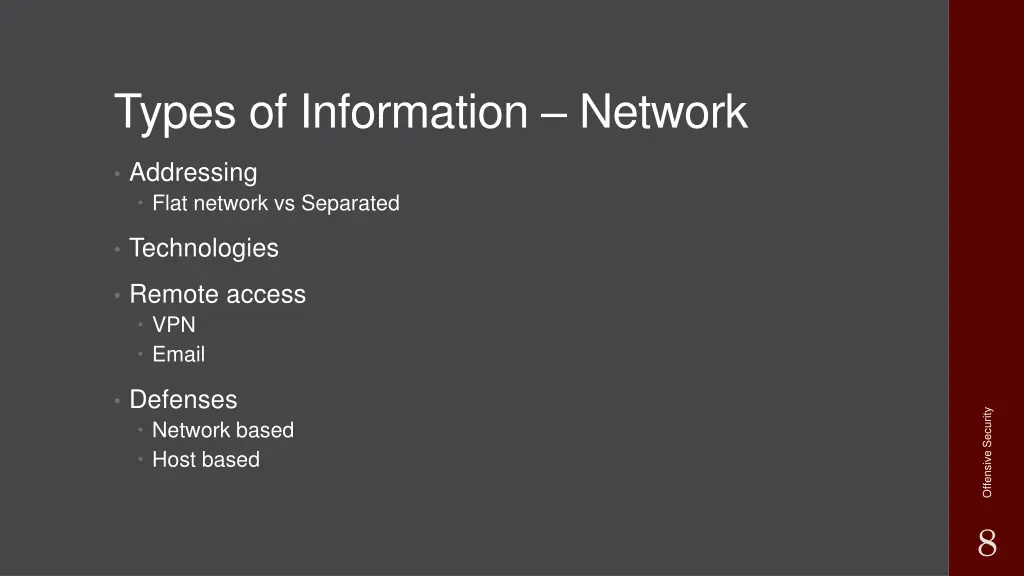
Types of Information Network Addressing Flat network vs Separated Technologies Remote access VPN Email Defenses Network based Host based Offensive Security 8
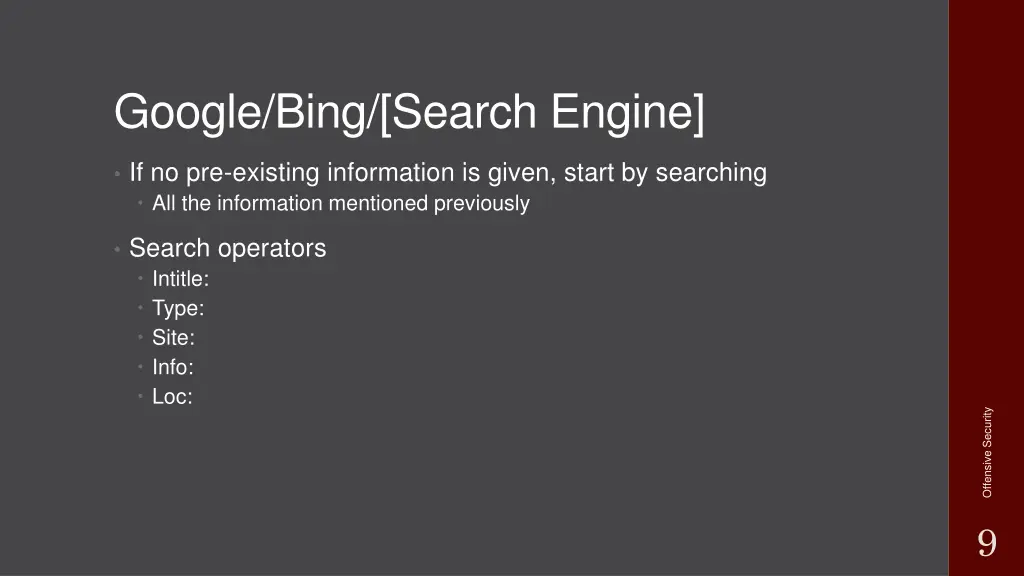
Google/Bing/[Search Engine] If no pre-existing information is given, start by searching All the information mentioned previously Search operators Intitle: Type: Site: Info: Loc: Offensive Security 9
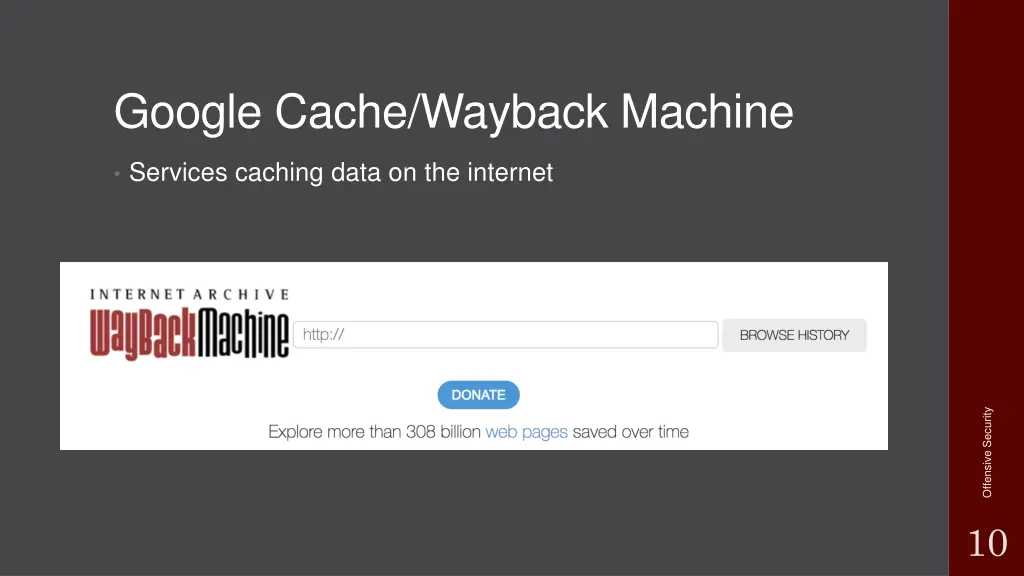
Google Cache/Wayback Machine Services caching data on the internet Offensive Security 10
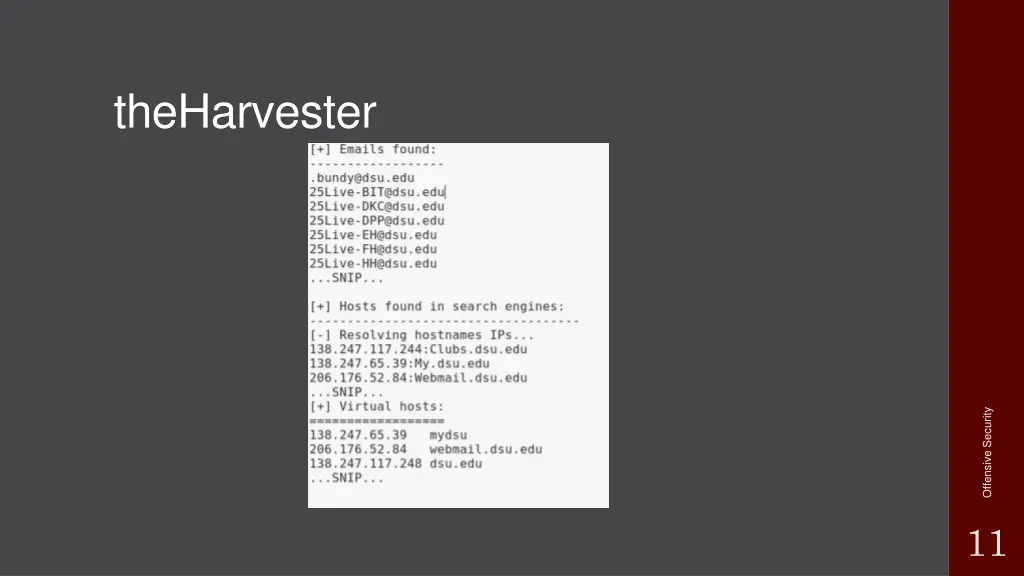
theHarvester Offensive Security 11
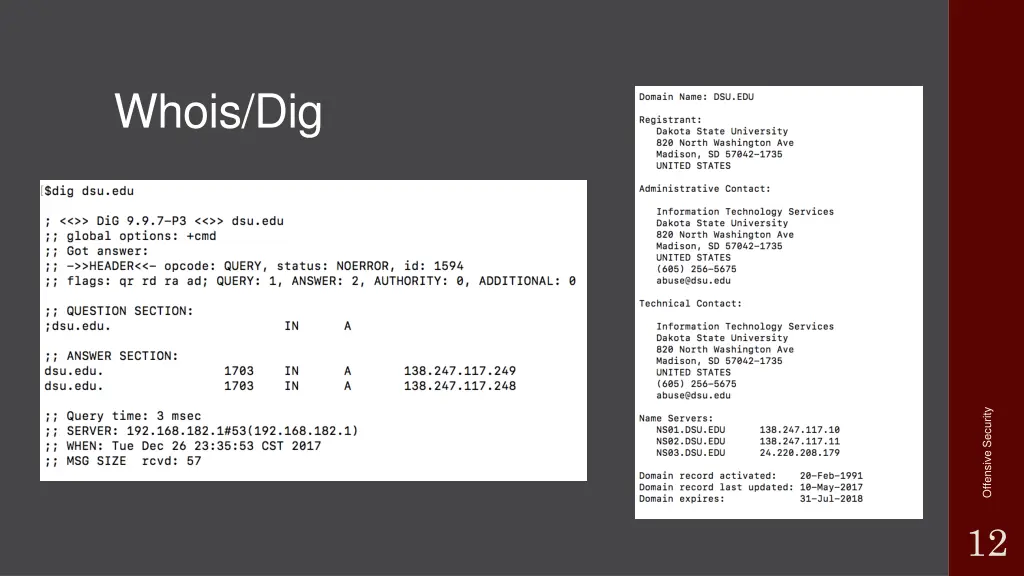
Whois/Dig Offensive Security 12
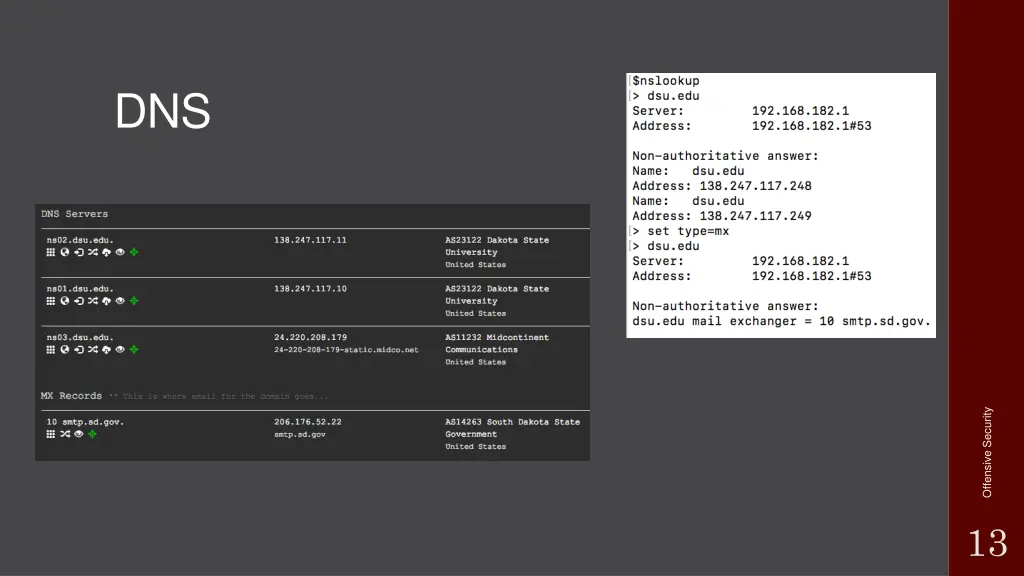
DNS Offensive Security 13
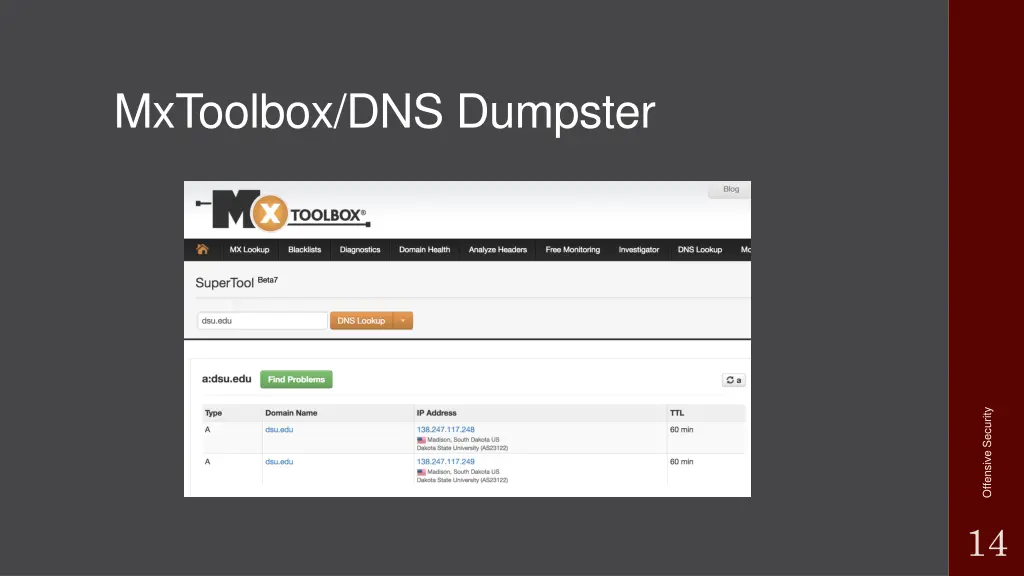
MxToolbox/DNS Dumpster Offensive Security 14
Discover Scripts https://github.com/leebaird/discover Recon Scanning Web Misc Offensive Security 15
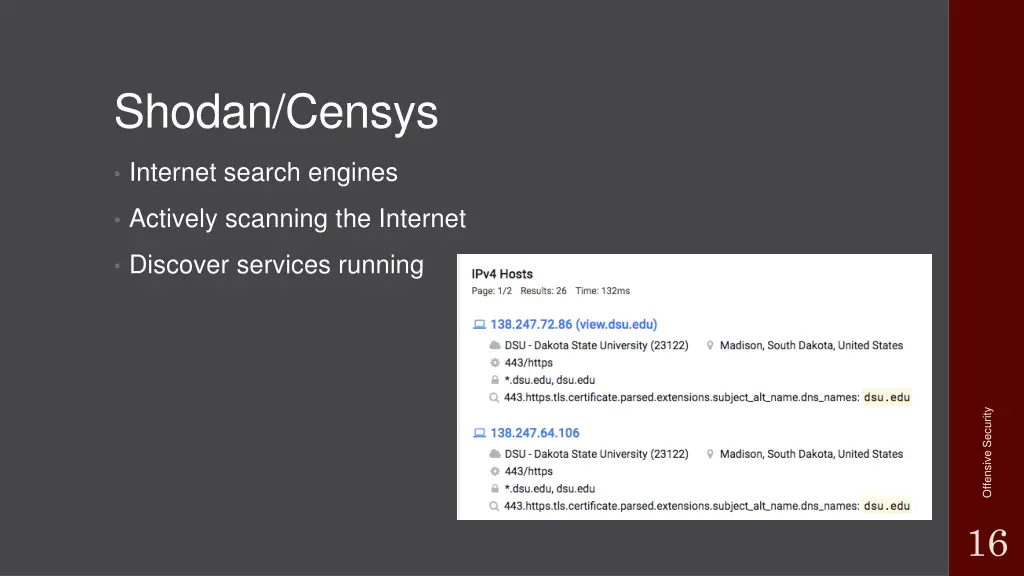
Shodan/Censys Internet search engines Actively scanning the Internet Discover services running Offensive Security 16
Employee Information Setting the stage for phishing Knowing about them gives information about an organization Social Media Other Search Engines Spokeo Offensive Security 17
Social Media LinkedIn Facebook Twitter Etc. Offensive Security 18
Recon-ng Demo Offensive Security 19
Other Tools OSINT Framework Metagoofil Maltego Etc Offensive Security 20