Open Source Software for Library Management and Discovery in Latin America
Explore the impact of open source software on library management in Latin America, highlighting trends, key projects such as Koha and FOLIO, and the evolving landscape of library technology. Learn from expert Marshall Breeding about the benefits of open source for libraries and the collaborative nature of the industry.

Download Presentation

Please find below an Image/Link to download the presentation.
The content on the website is provided AS IS for your information and personal use only. It may not be sold, licensed, or shared on other websites without obtaining consent from the author. If you encounter any issues during the download, it is possible that the publisher has removed the file from their server.
You are allowed to download the files provided on this website for personal or commercial use, subject to the condition that they are used lawfully. All files are the property of their respective owners.
The content on the website is provided AS IS for your information and personal use only. It may not be sold, licensed, or shared on other websites without obtaining consent from the author.
E N D
Presentation Transcript
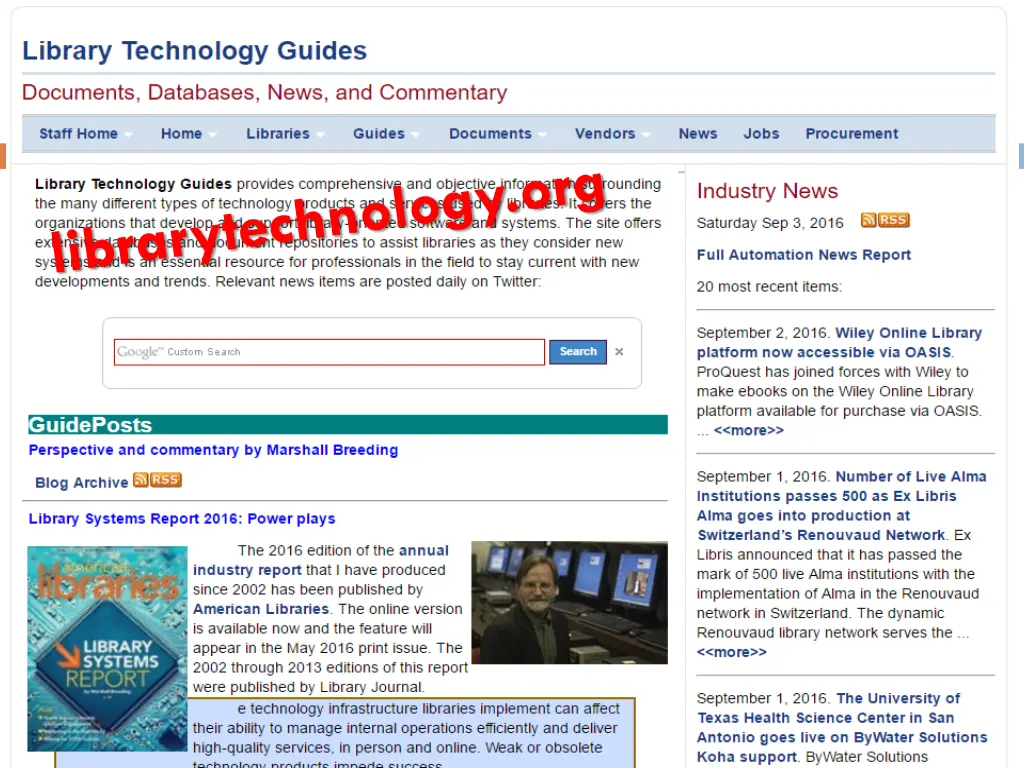
Open source software for library management and discovery: Overview and Latin American Context Software de c digo abierto para gesti n de bibliotecas y el descubrimiento de recursos Marshall Breeding Independent Consultant, Author, and Founder and Publisher, Library Technology Guides http://librarytechnology.org/ http://twitter.com/mbreeding 5 Aniversario Entre Pares 2016 06 Septiembre 2016
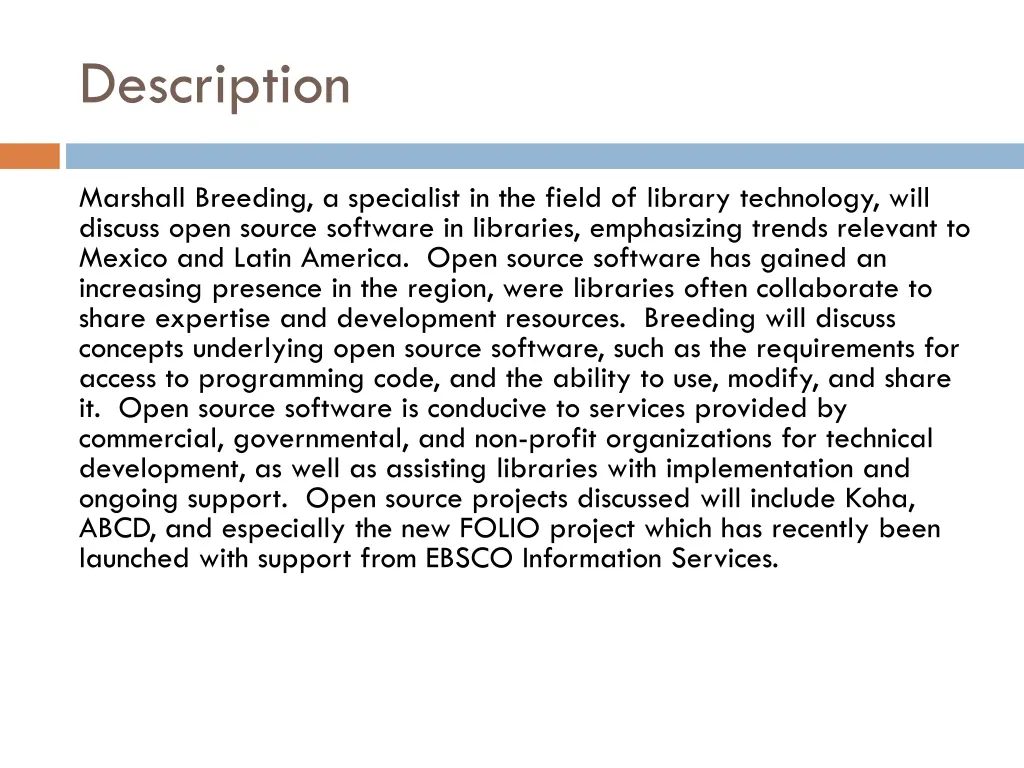
Description Marshall Breeding, a specialist in the field of library technology, will discuss open source software in libraries, emphasizing trends relevant to Mexico and Latin America. Open source software has gained an increasing presence in the region, were libraries often collaborate to share expertise and development resources. Breeding will discuss concepts underlying open source software, such as the requirements for access to programming code, and the ability to use, modify, and share it. Open source software is conducive to services provided by commercial, governmental, and non-profit organizations for technical development, as well as assisting libraries with implementation and ongoing support. Open source projects discussed will include Koha, ABCD, and especially the new FOLIO project which has recently been launched with support from EBSCO Information Services.
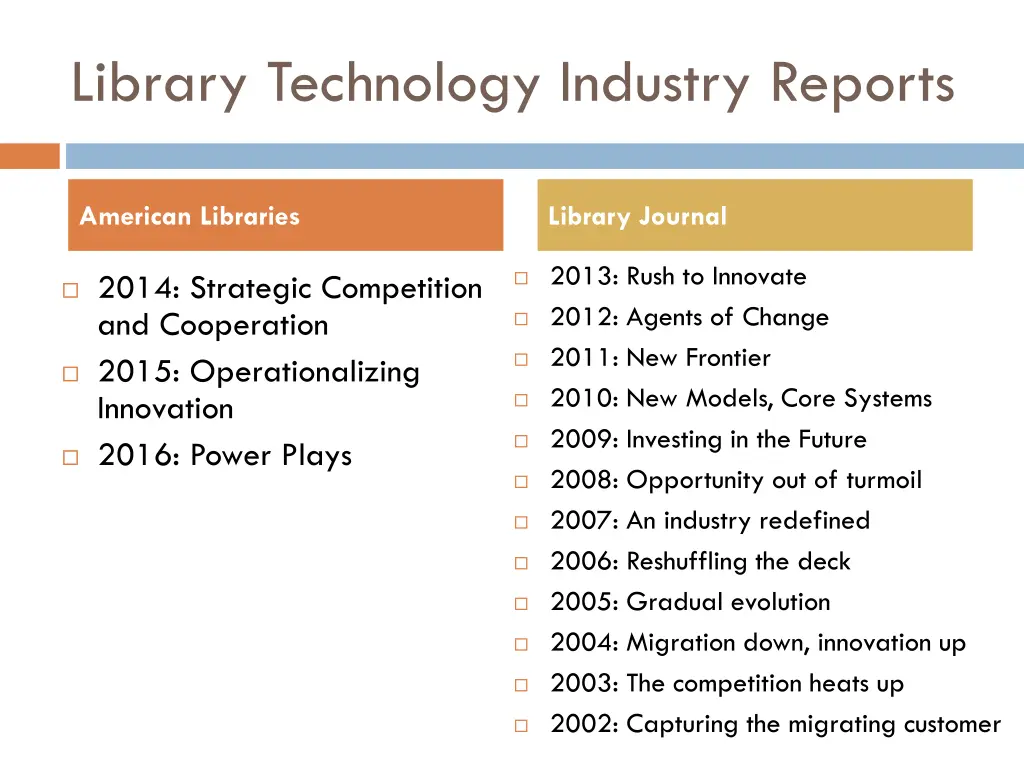
Library Technology Industry Reports American Libraries Library Journal 2013: Rush to Innovate 2014: Strategic Competition and Cooperation 2015: Operationalizing Innovation 2016: Power Plays 2012: Agents of Change 2011: New Frontier 2010: New Models, Core Systems 2009: Investing in the Future 2008: Opportunity out of turmoil 2007: An industry redefined 2006: Reshuffling the deck 2005: Gradual evolution 2004: Migration down, innovation up 2003: The competition heats up 2002: Capturing the migrating customer
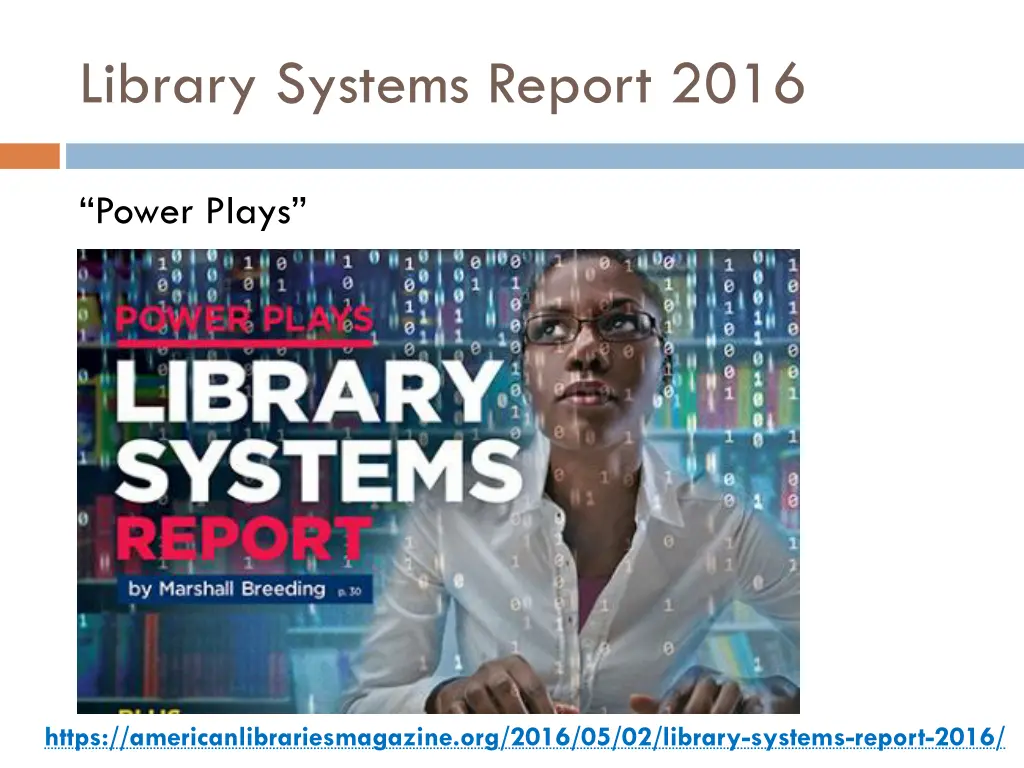
Library Systems Report 2016 Power Plays https://americanlibrariesmagazine.org/2016/05/02/library-systems-report-2016/
Power Plays The transitions seen in 2015 were not lateral changes of ownership among investors but strategic acquisitions that concentrated power among a smaller number of much larger companies and reassembled product portfolios. Libraries may resist consolidation, but this could enable the development of technology products and services that are less fragmented and better able to support libraries as they provide access to increasingly complex collections.
International Perceptions Report http://librarytechnology.org/perceptions/2015/ Based on a series of annual surveys addressed to libraries Probes levels of satisfaction with their automation systems 3,453 responses to 2015 survey 1,050 narrative comments Conducted since 2007: view trends over time Data collected Nov-Dec, published early the following year Linked to entries in libraries.org
Perspective Increasing divergence among library types regarding requirements for supporting technical infrastructure: Academic, Public, National, School, Special Approaches to library service vary according to international region Broad range of economic capacity or support across countries and regions and even within some countries. (especially United States)
Proprietary software business model Closed development Private ownership of the software Software License Fee Conversion, Installation, training Annual maintenance for upgrades, service, support (~15 percent) Hosting (optional)
Sharing Requirements Source code publicly available Anyone can: Download Use Modify Redistribute
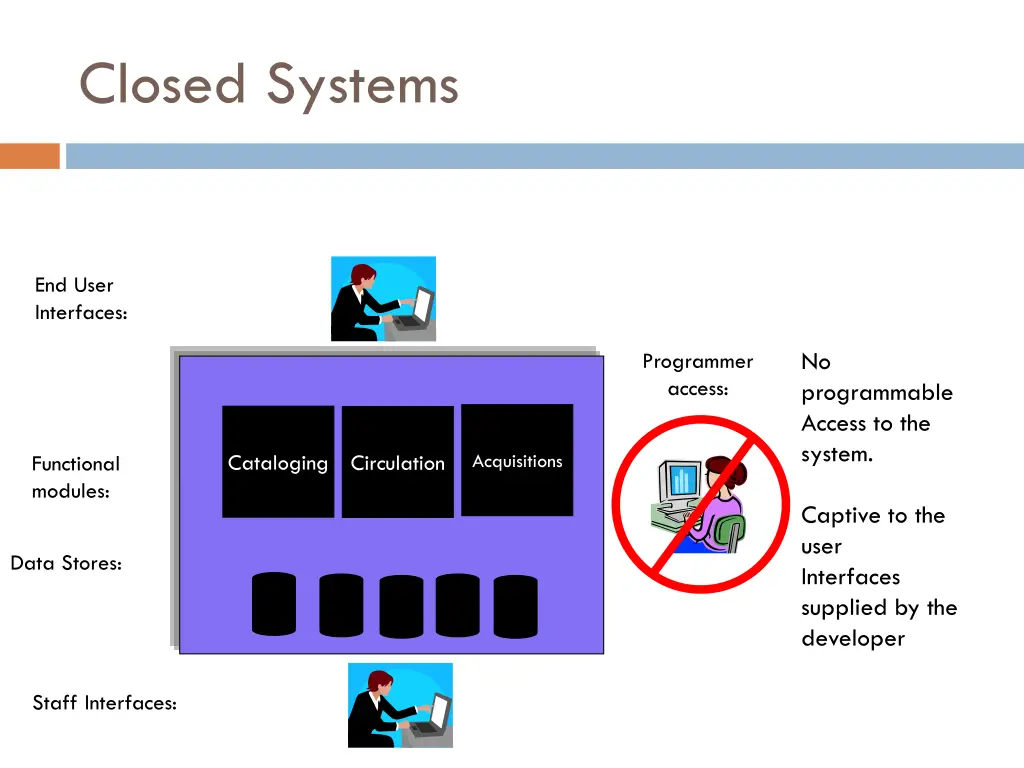
Closed Systems End User Interfaces: No programmable Access to the system. Programmer access: Acquisitions Cataloging Circulation Functional modules: Captive to the user Interfaces supplied by the developer Data Stores: Staff Interfaces:
Open Source Model End User Interfaces: Programmer access: All aspects of the system available to inspection and modification. Acquisitions Cataloging Circulation Functional modules: Data Stores: Staff Interfaces:
Open API Model End User Interfaces: Programmer access: Core application closed. Acquisitions Cataloging Circulation Functional modules: Third party developers code against the published APIs or RDBMS tables. Published APIs Data Stores: Staff Interfaces:
Open Source / Open API Model End User Interfaces: Programmer access: Core application closed. Acquisitions Cataloging Circulation Functional modules: Third party developers code against the published APIs or RDBMS tables. Published APIs Data Stores: Staff Interfaces:
Application API exposed to External Applications Reports Module Public Interface Staff Interface External applications Delivered Interfaces API abstraction layer Application Programming Interfaces Core Software Core Functionality / Business Logic RDMS API Data stores
Application API exposed to External Applications Reports Module Public Interface Staff Interface External applications Delivered Interfaces use proprietary programming Application Programming Interfaces Core Functionality / Business Logic Core Software RDMS API Data stores
License variants Differing details on use Apache GNU Public License Affero General Public License
Pros & Cons No license fees for use of software Can be modified to accommodate local needs Self-support (depends on local tech expertise) Community support (depends on developers and other users) Commercial Support (Fee for services)
Open source Community Viable open source projects have broad-based communities Resources (financial, personnel) Development (contribute to programming, quality control, documentation) Governance (decision making, intellectual property) Support (help for individuals and organizations using the software) Education (promotion, training)
Commercial Support for Open Source Many Commercial companies with interest in open source library automation products Revenue sources Conversion of data from incumbent system Installation / configuration Training Support / Help desk Hosting Sponsored Development
Open source in Latin America Commercial software often not affordable More reliance on Open source software Support by Governmental or Educational organizations Local or regional support communities
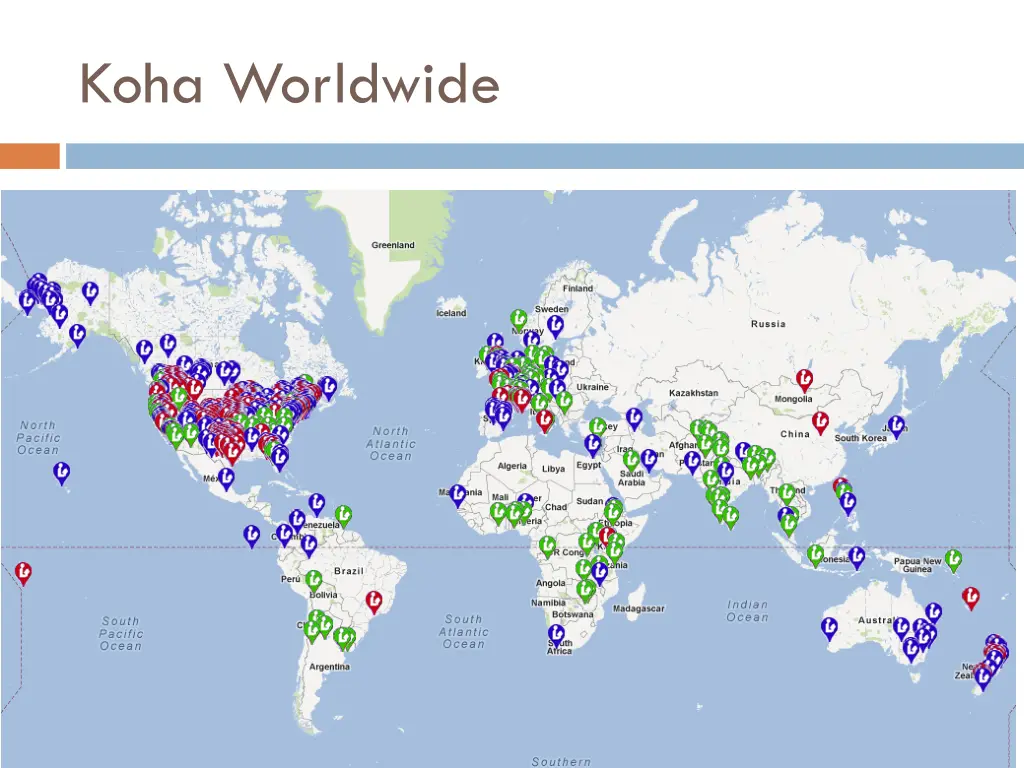
Koha Originally developed in 1999 for small group of libraries in New Zealand, Horowhenua Library Trust by Katipo Communications, production use by Jan 2000 Gained widespread use in the United States around 2004-05 and has seen steady growth in use Wide international adoption Used in many thousands of libraries. 1,573 represented in lib-web-cats, with many large groups not yet registered.
National Projects to deploy Koha Philippines: A systematic effort to install Koha in the public libraries sponsored by the state libraries Turkey: most public libraries supported by the Ministry of Culture and Tourism Spain: Koha-Kobli http://kobli.bage.es/ Argentina. CONABIP (Comisi n Nacional de Bibliotecas Populares) Customized version of Koha: DigiBepe http://www.conabip.gob.ar/faq/digibepe
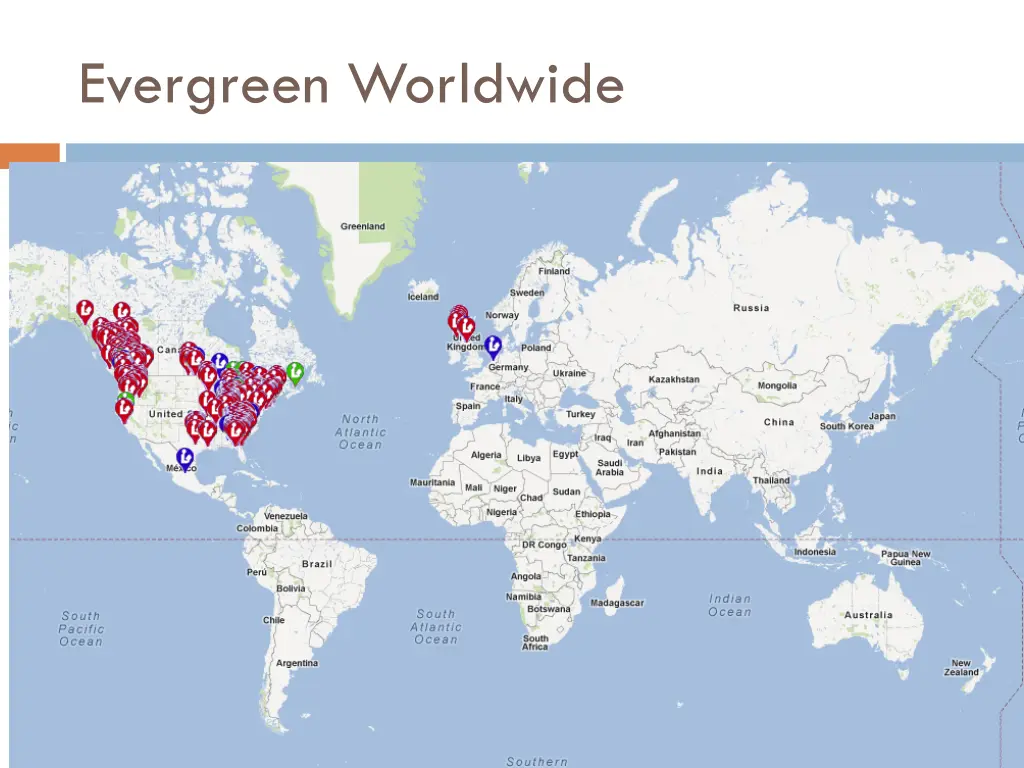
Evergreen Originally developed by the Georgia Public Library System for the PINES consortium of public libraries in Georgia PINES includes most of the small and mid-sized public libraries in Georgia, but not the largest urban areas (Atlanta, Cobb County, etc) Equinox Software, Inc. launched as a separate company in Feb 2007, including most of the team that originally created Evergreen within GPLS. Evergreen now used in over 1,000 libraries, primarily in the United States and Canada. Some recent international deployments
ABCD Automatizaci n de Bibliotecas y Centros de Documentaci n CDS/ISIS used extensively in developing nations CDS/ISIS: freeware initially developed by UNESCO Development led by BIRME in Brazil ABCD: New application based on CDS/ISIS tools ABCD developed as an open source integrated library system.
Open Source Discovery VuFind Originally developed at Villanova University Widely used by public and academic libraries Pika variant with e-book lending integration SOLR indexing; PHP programming framework Blacklight Aligned with Project Hydra Used by large Academic libraries SOLR indexing; Ruby on Rails framework
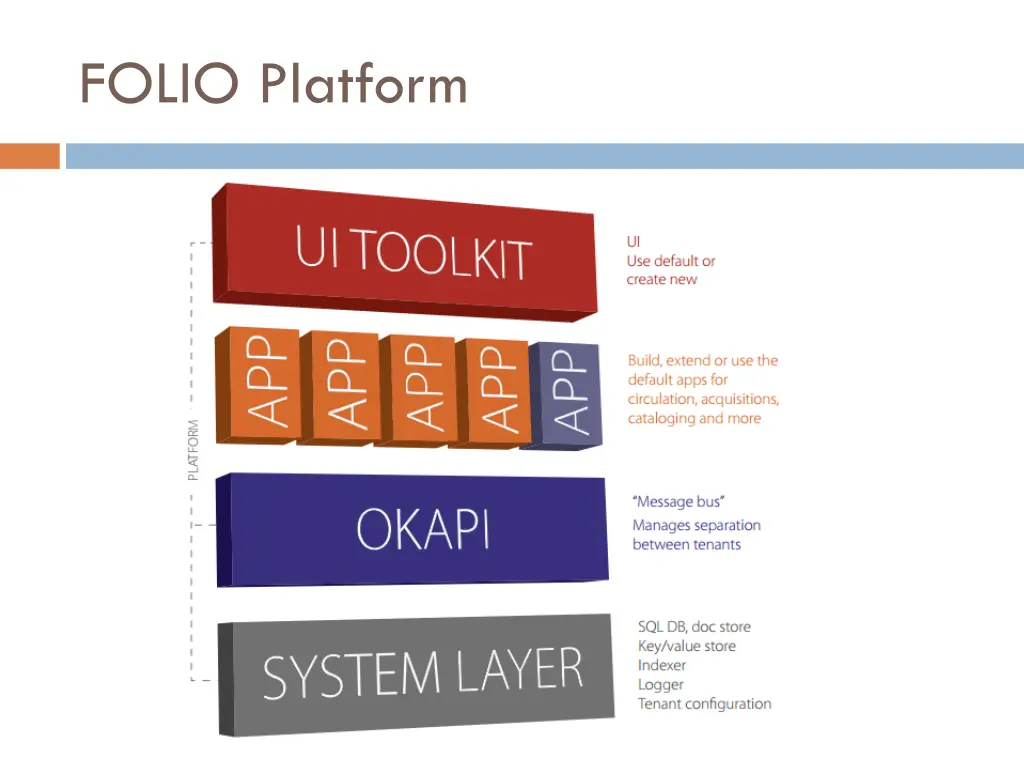
EBSCO Supports new Open Source Project FOLIO the Future of the Library is Open https://www.folio.org/ A community collaboration to develop an open source Library Services Platform designed for innovation. American Libraries feature: https://americanlibrariesmagazine.org/2016/04/22/ ebsco-kuali-open-source-project/
Presentando FOLIO Detailed press release in Spanish Una nueva colaboraci n que re ne a bibliotecas, proveedores de servicios y desarrolladores para acelerar la innovaci n y redefinir el futuro de la automatizaci n de la biblioteca http://librarytechnology.org/news/pr.pl?id=21847
Motivating factors Initially oriented to academic libraries Academic libraries interested in Library Services Platform Narrow options (Ex Libris Alma, OCLC WorldShare Management Services) Unbundle Discovery from Resource Management Choice for patron-facing services Alternative functional approach based on apps and modules
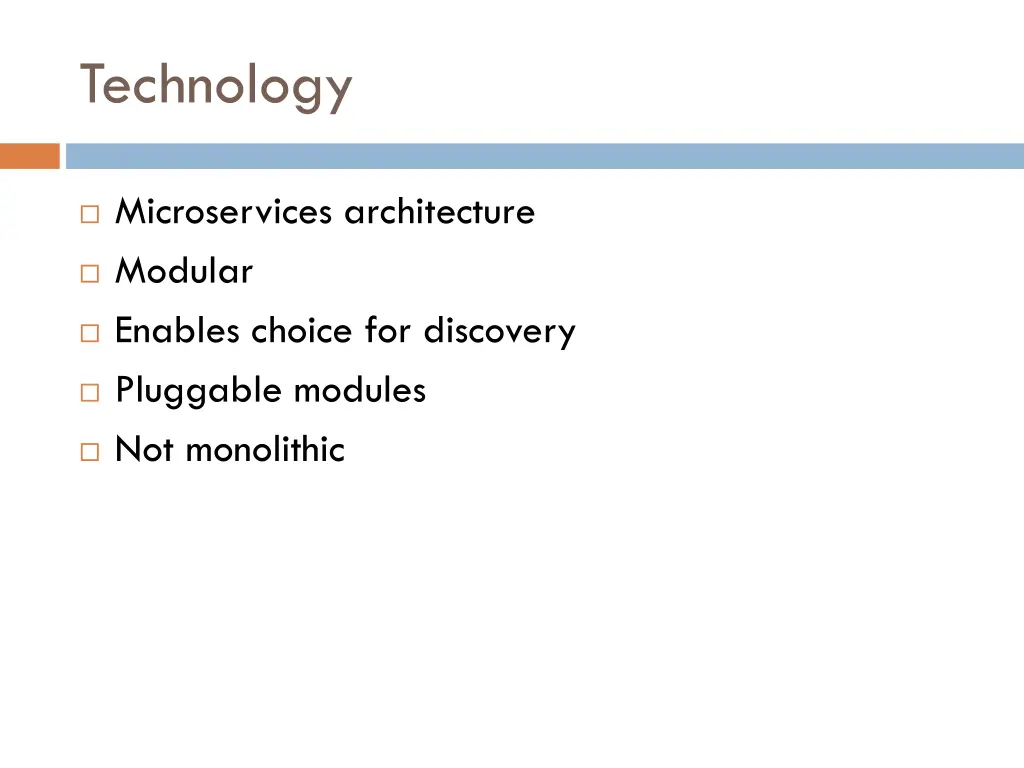
Technology Microservices architecture Modular Enables choice for discovery Pluggable modules Not monolithic
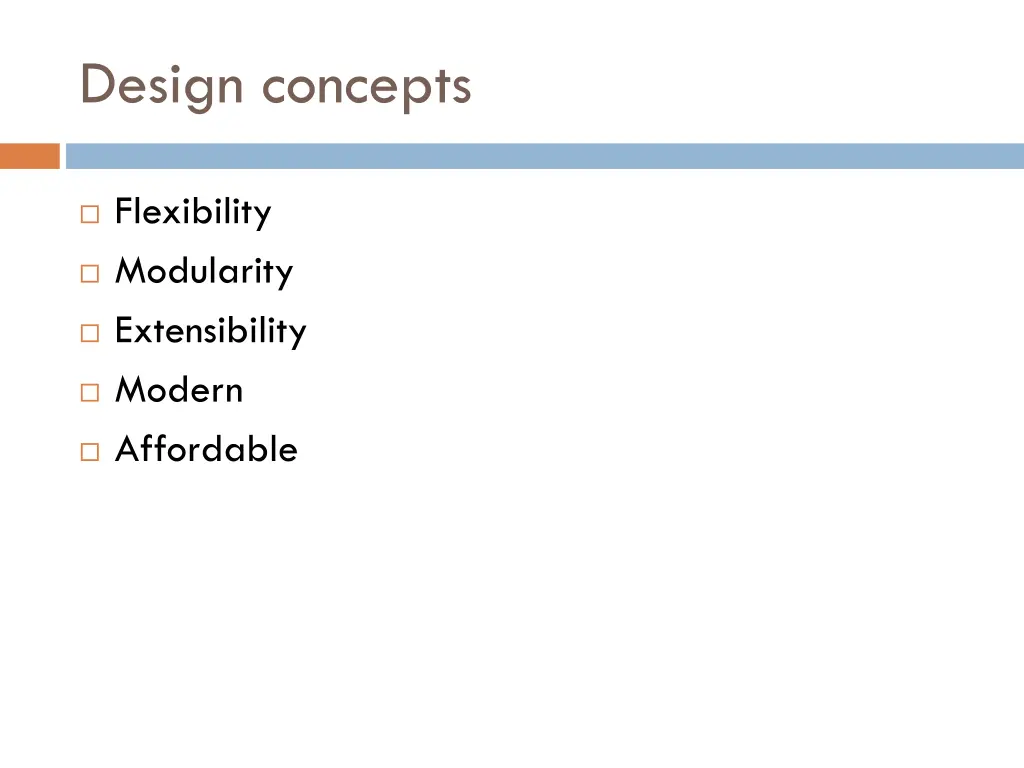
Design concepts Flexibility Modularity Extensibility Modern Affordable
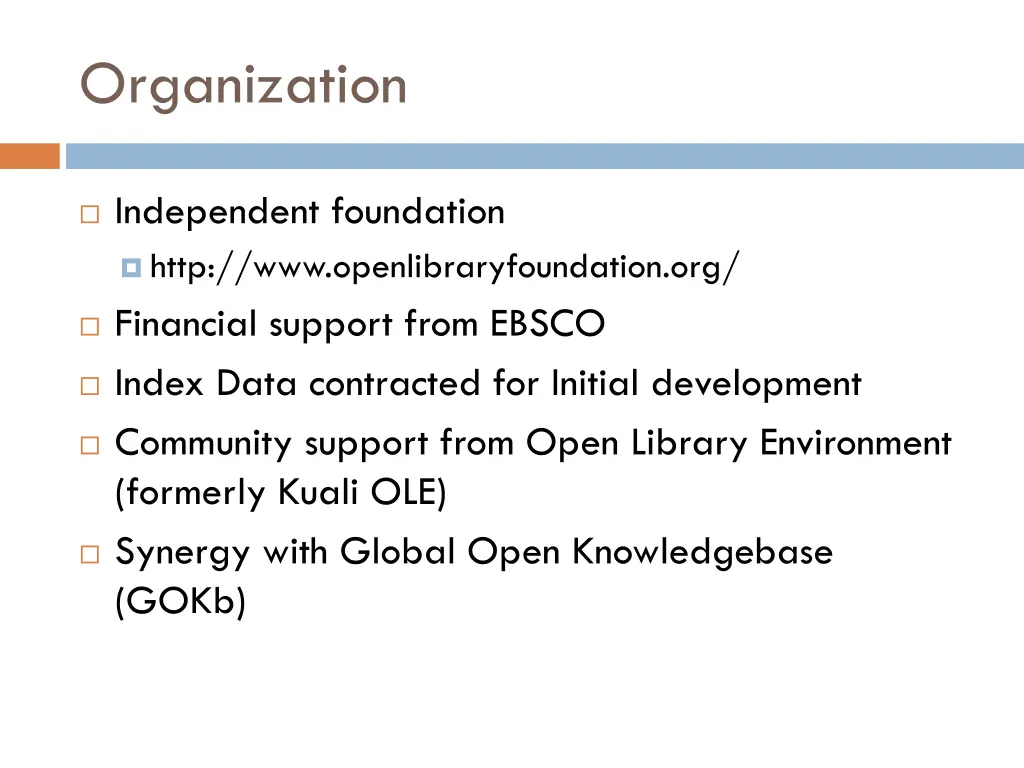
Organization Independent foundation http://www.openlibraryfoundation.org/ Financial support from EBSCO Index Data contracted for Initial development Community support from Open Library Environment (formerly Kuali OLE) Synergy with Global Open Knowledgebase (GOKb)
EBSCO Involvement Not owned by EBSCO EBSCO provides financial and in-kind resources Governed through independent non-profit Participation by Kuali OLE Engage with developers from libraries, consortia, and commercial entities EBSCO will provide hosting services Based on modules and pluggable apps
Open Source License Apache v2 Friendly to commercial use Intellectual property to be held by Open Library Foundation
Timeline Aug 2016: Initial release of base platform 2017: Initial version available for early adopters
Observations Open source now a routine part of the library automation landscape Proprietary and open source solutions will co-exist Open source software resonates with the library community Must prevail by virtue of its merits in functionality and flexibility Adoption varies by country and region