Ordeal of Reconstruction and Major Questions Answered
Learn about the challenges faced during the Reconstruction period after the Civil War, including efforts towards national reunification, the treatment of former rebel leaders, and initiatives to improve the status of freedmen. Explore key events such as the establishment of the Freedmen's Bureau, Lincoln's and Johnson's plans for Reconstruction, the Black Codes, and the political landscape post-war. Discover how important legislation like the Civil Rights Bill and the 14th Amendment shaped the future of the United States.

Download Presentation

Please find below an Image/Link to download the presentation.
The content on the website is provided AS IS for your information and personal use only. It may not be sold, licensed, or shared on other websites without obtaining consent from the author. If you encounter any issues during the download, it is possible that the publisher has removed the file from their server.
You are allowed to download the files provided on this website for personal or commercial use, subject to the condition that they are used lawfully. All files are the property of their respective owners.
The content on the website is provided AS IS for your information and personal use only. It may not be sold, licensed, or shared on other websites without obtaining consent from the author.
E N D
Presentation Transcript
Attempt to achieve national reunification and reconciliation after the Civil War and to improve the status of former slaves (freedmen). Major questions of Reconstruction: How should states and leaders be handled? Punished? Forgiven? Somewhere in between? President Johnson pardoned most rebel leaders
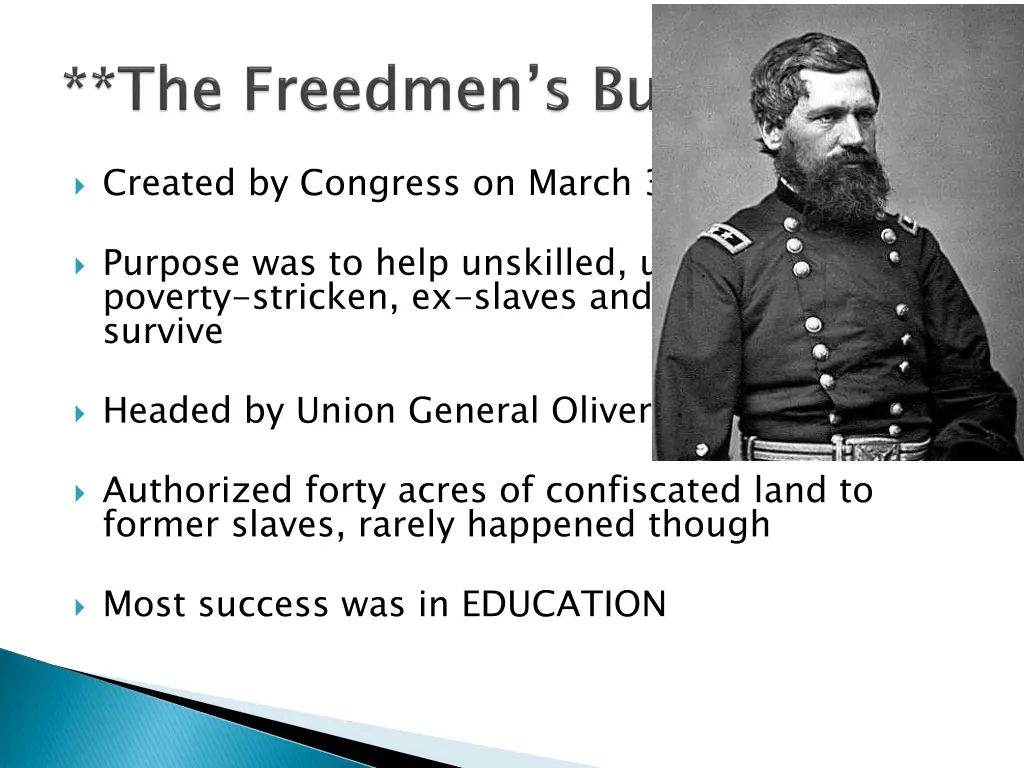
Created by Congress on March 3, 1865 Purpose was to help unskilled, uneducated, poverty-stricken, ex-slaves and poor-whites survive Headed by Union General Oliver O. Howard Authorized forty acres of confiscated land to former slaves, rarely happened though Most success was in EDUCATION
1863, Lincoln proclaimed his 10 % plan If 10% of voters in 1860 election pledge loyalty to US and abide by emancipation, state could be readmitted Very forgiving plan Wade-Davis Bill: Required 50% of voters to take oath of allegiance before readmission Pocket-vetoed by Lincoln Johnson s Plan: Similar to Lincoln s plan, recognized 10% governments, called for states to ratify 13 13th thamendment amendment
Designed to regulate the affairs of the emancipated Blacks Way to keep former slaves down and keep a steady labor supply Many Blacks signed contracts to work for low wages for same employer for 1 year Penalties for jumping contracts, bounty hunters to catch jumpers Other aspects of codes: Blacks couldn t serve on a jury or vote Many former slaves were forced to become Share-croppers Tenants are allowed to use land in exchange for giving percentage of crops to owner
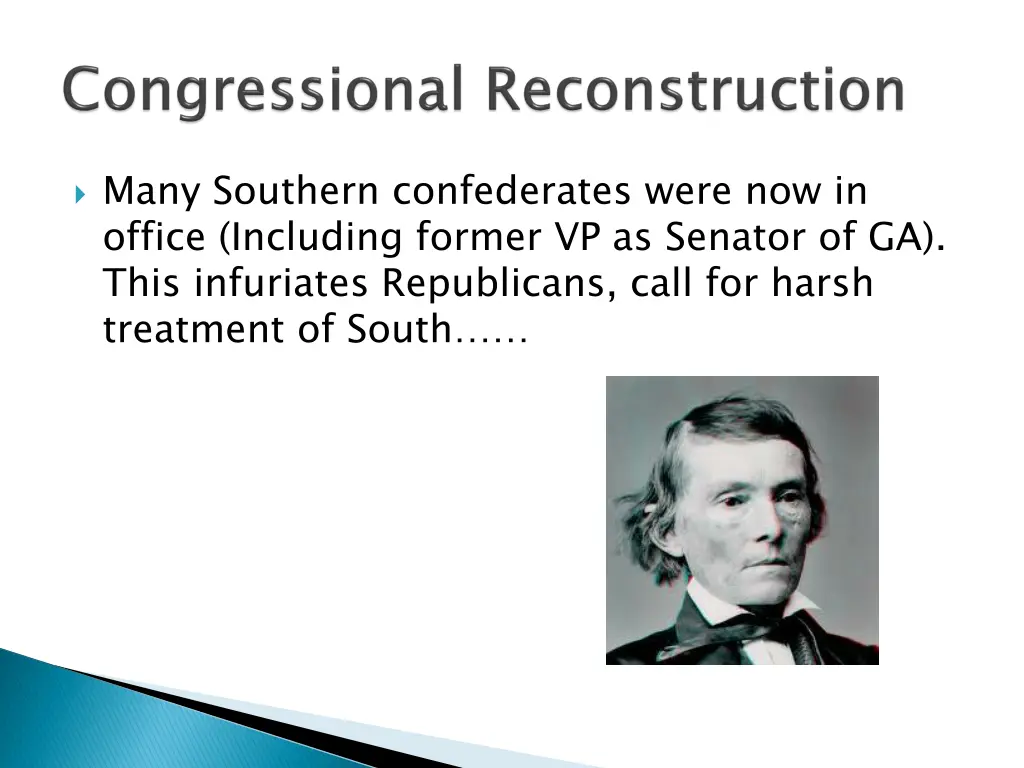
Many Southern confederates were now in office (Including former VP as Senator of GA). This infuriates Republicans, call for harsh treatment of South
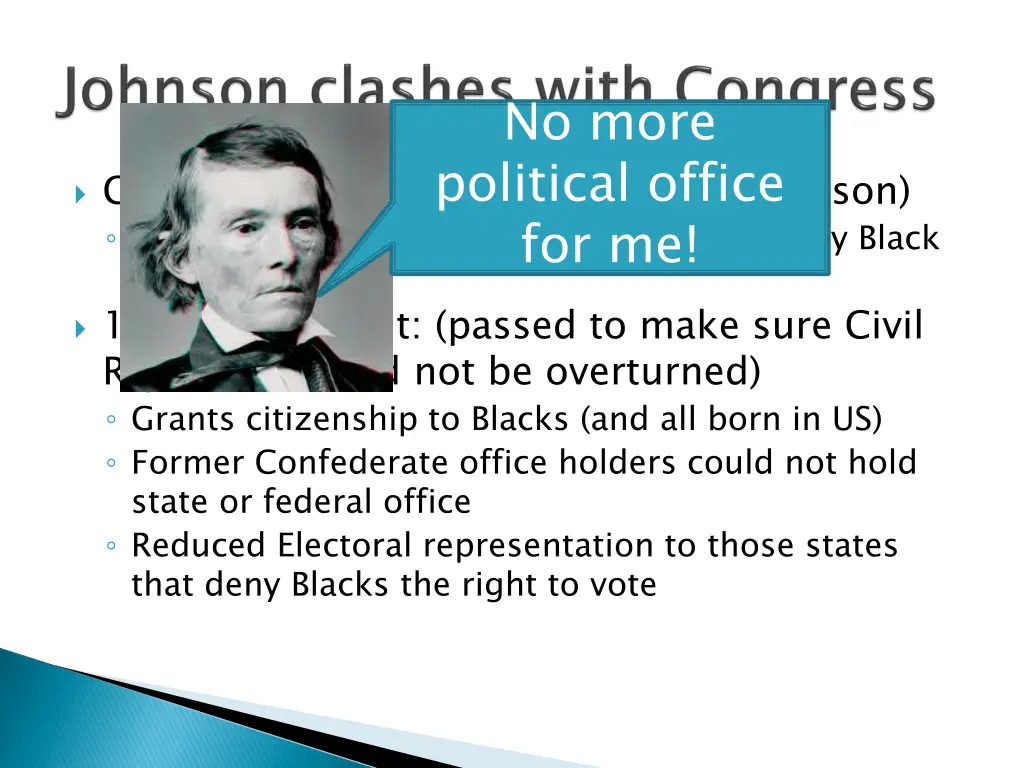
No more political office for me! Civil Rights Bill (1865): (Vetoed by Johnson) Gave Blacks citizenship and aimed to destroy Black Codes 14thamendment: (passed to make sure Civil Rights Bill could not be overturned) Grants citizenship to Blacks (and all born in US) Former Confederate office holders could not hold state or federal office Reduced Electoral representation to those states that deny Blacks the right to vote
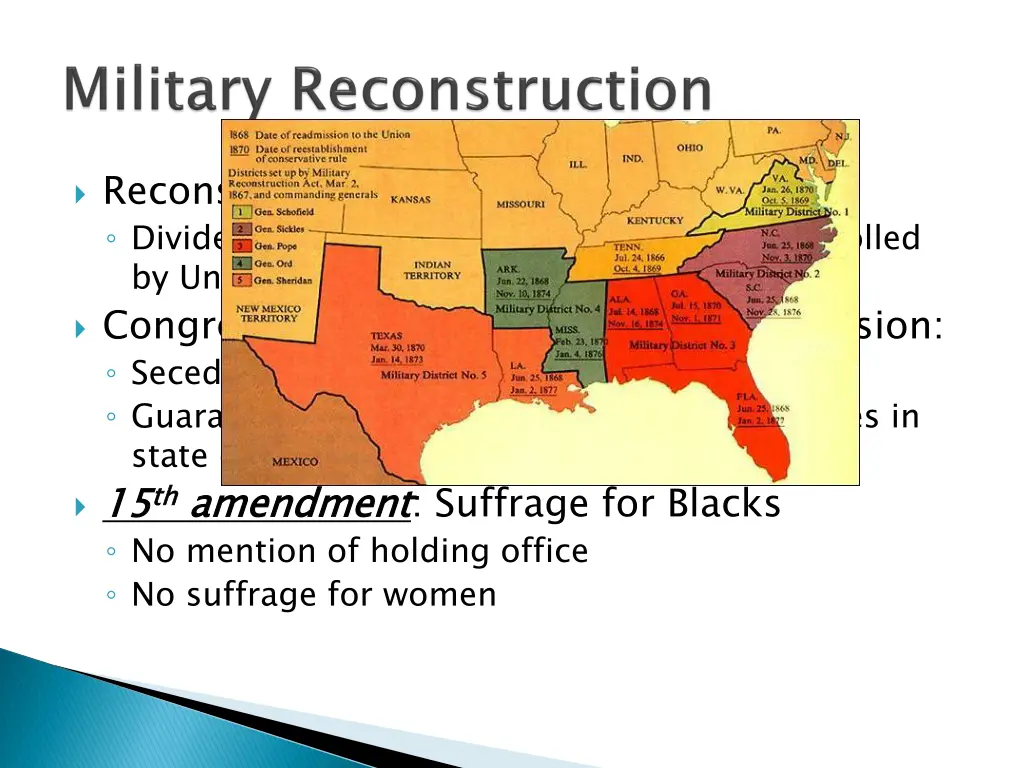
Reconstruction Act (March 2, 1867): Divided the South into 5 military zones controlled by Union generals Congressional requirements for readmission: Seceded states must ratify 14th amendment Guarantee suffrage to former adult male slaves in state constitutions 15 No mention of holding office No suffrage for women 15th th amendment amendment: Suffrage for Blacks
Free, Citizens, Vote 13th = freedom 14th = citizenship granted 15th = universal male suffrage Thanks Mr. Hughes HipHughes
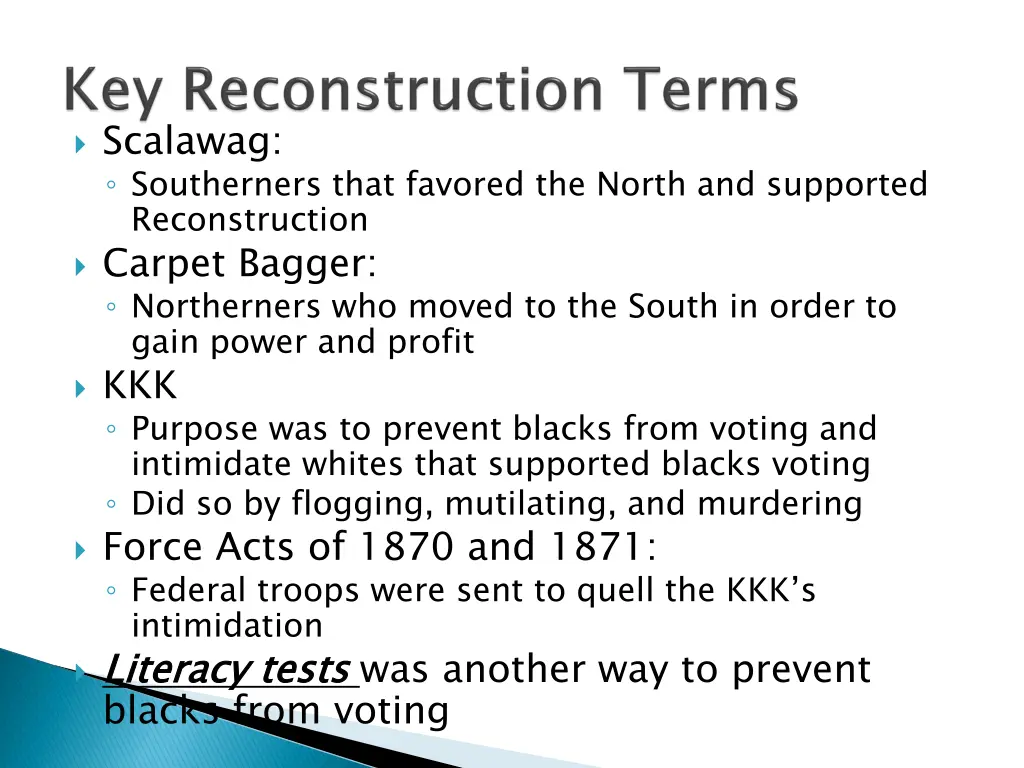
Scalawag: Southerners that favored the North and supported Reconstruction Carpet Bagger: Northerners who moved to the South in order to gain power and profit KKK Purpose was to prevent blacks from voting and intimidate whites that supported blacks voting Did so by flogging, mutilating, and murdering Force Acts of 1870 and 1871: Federal troops were sent to quell the KKK s intimidation Literacy tests blacks from voting Literacy tests was another way to prevent
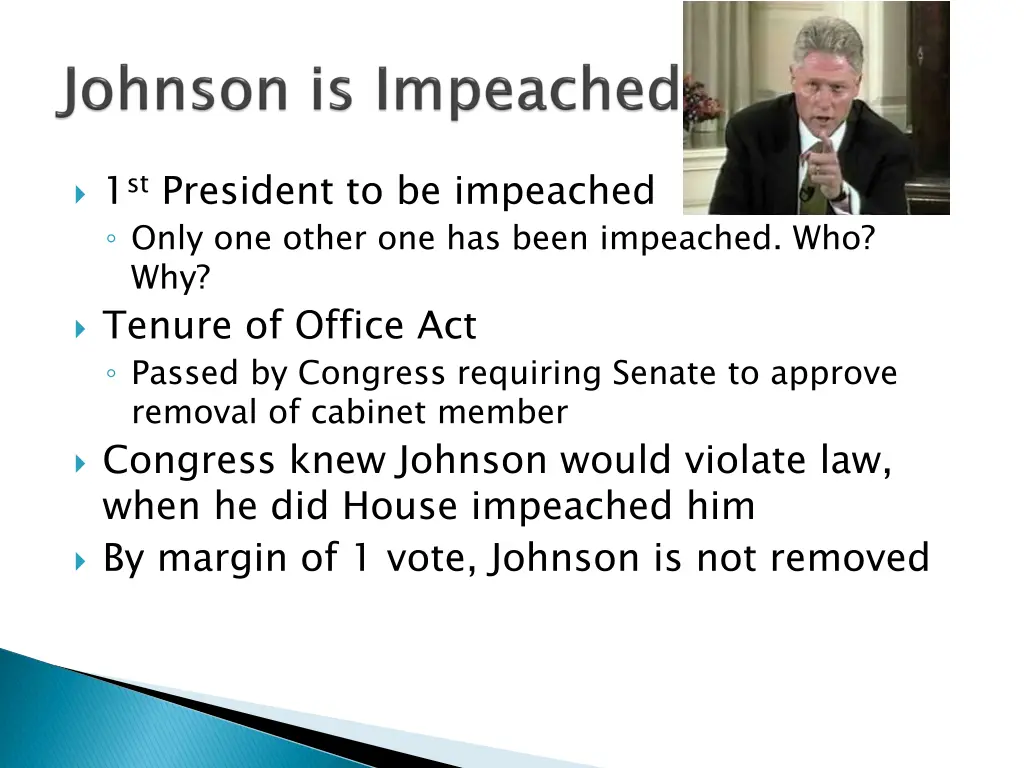
1st President to be impeached Only one other one has been impeached. Who? Why? Tenure of Office Act Passed by Congress requiring Senate to approve removal of cabinet member Congress knew Johnson would violate law, when he did House impeached him By margin of 1 vote, Johnson is not removed
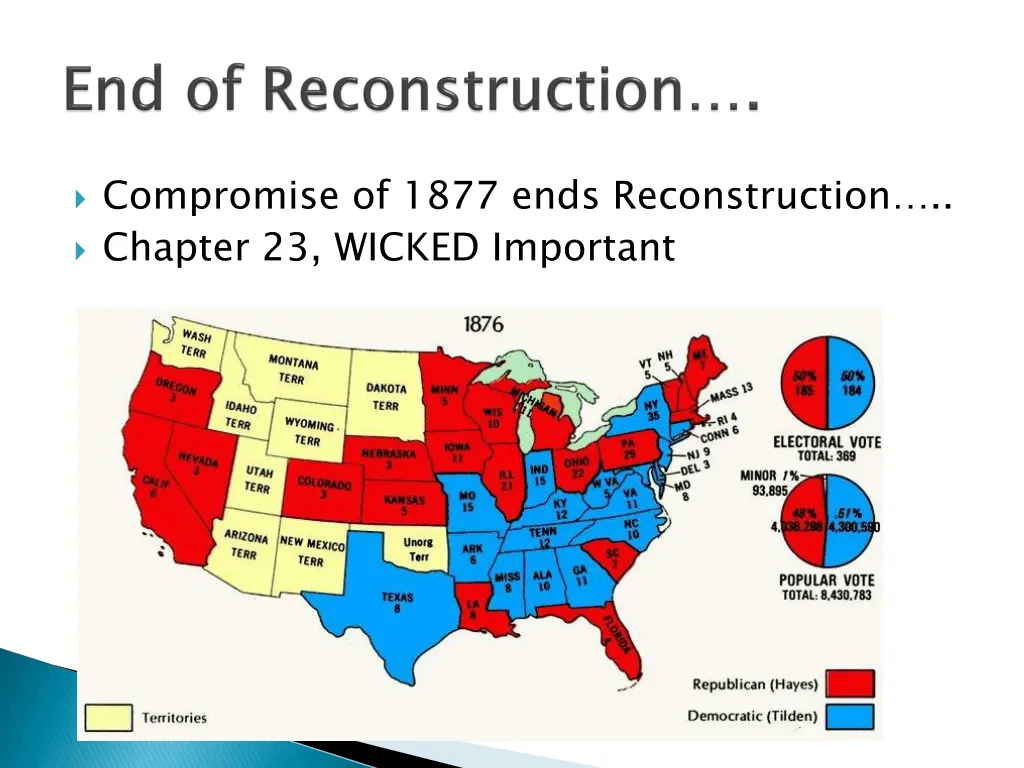
Compromise of 1877 ends Reconstruction.. Chapter 23, WICKED Important
Subscribe to my channel Help spread the word Questions? Comments? Ideas for videos? Email or leave in comments 4 Score and 7 Years ago, APUSH students subscribed to this channel