Explore the fascinating world of organelles in human biology, from the nucleus to the endoplasmic reticulum and Golgi apparatus. Discover the functions and structures of these essential cell components, providing insights into cellular activities and genetic material organization.
Please find below an Image/Link to download the presentation.
The content on the website is provided AS IS for your information and personal use only. It may not be sold, licensed, or shared on other websites without obtaining consent from the author. If you encounter any issues during the download, it is possible that the publisher has removed the file from their server.
You are allowed to download the files provided on this website for personal or commercial use, subject to the condition that they are used lawfully. All files are the property of their respective owners.
The content on the website is provided AS IS for your information and personal use only. It may not be sold, licensed, or shared on other websites without obtaining consent from the author.
E N D
Presentation Transcript
Human Biology Assistant Lecturer Buthaina Ibrahem Al-ezzi
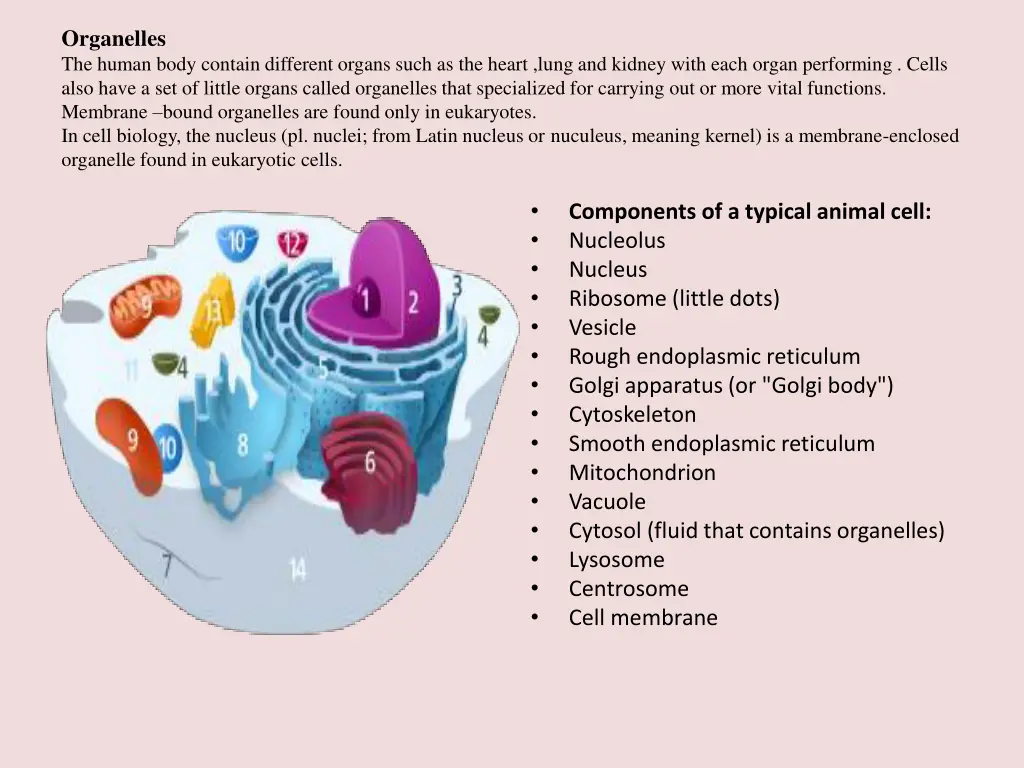
Organelles The human body contain different organs such as the heart ,lung and kidney with each organ performing . Cells also have a set of little organs called organelles that specialized for carrying out or more vital functions. Membrane bound organelles are found only in eukaryotes. In cell biology, the nucleus (pl. nuclei; from Latin nucleus or nuculeus, meaning kernel) is a membrane-enclosed organelle found in eukaryotic cells. Components of a typical animal cell: Nucleolus Nucleus Ribosome (little dots) Vesicle Rough endoplasmic reticulum Golgi apparatus (or "Golgi body") Cytoskeleton Smooth endoplasmic reticulum Mitochondrion Vacuole Cytosol (fluid that contains organelles) Lysosome Centrosome Cell membrane
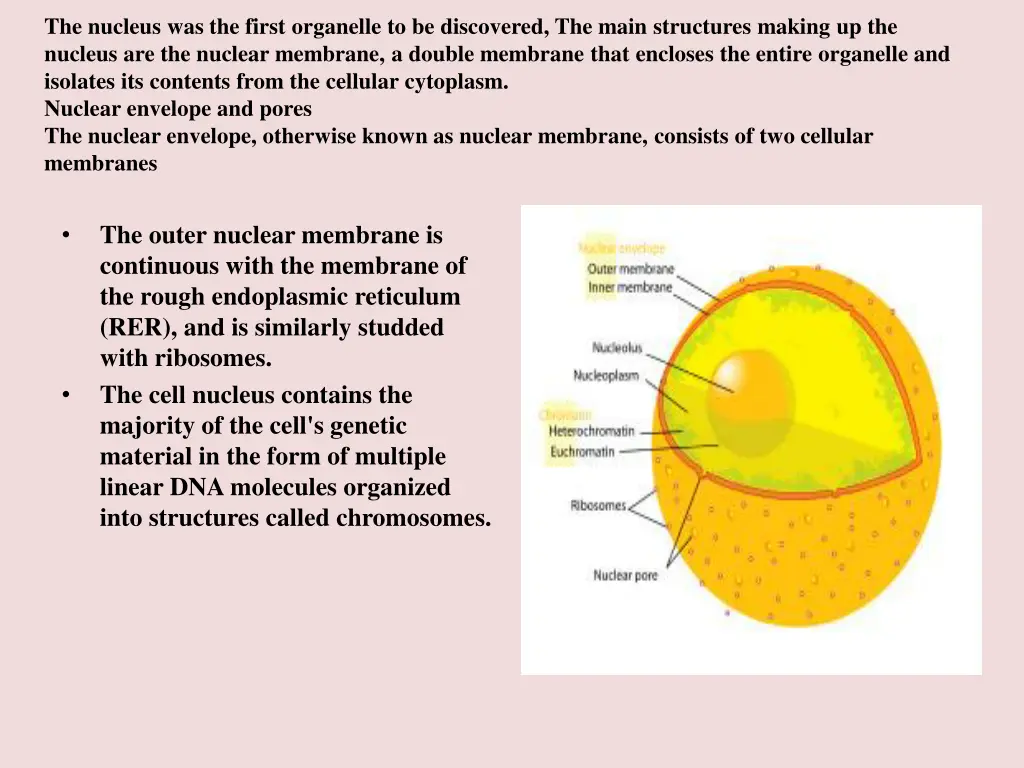
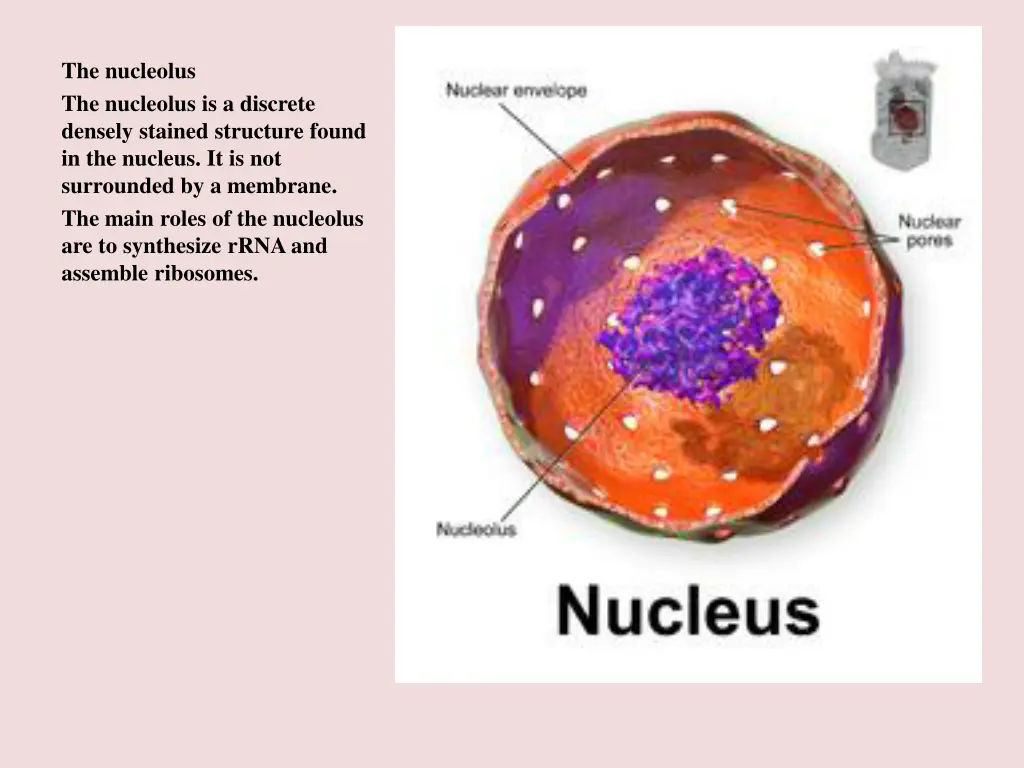
The nucleus was the first organelle to be discovered, The main structures making up the nucleus are the nuclear membrane, a double membrane that encloses the entire organelle and isolates its contents from the cellular cytoplasm. Nuclear envelope and pores The nuclear envelope, otherwise known as nuclear membrane, consists of two cellular membranes The outer nuclear membrane is continuous with the membrane of the rough endoplasmic reticulum (RER), and is similarly studded with ribosomes. The cell nucleus contains the majority of the cell's genetic material in the form of multiple linear DNA molecules organized into structures called chromosomes.
The nucleolus The nucleolus is a discrete densely stained structure found in the nucleus. It is not surrounded by a membrane. The main roles of the nucleolus are to synthesize rRNAand assemble ribosomes.
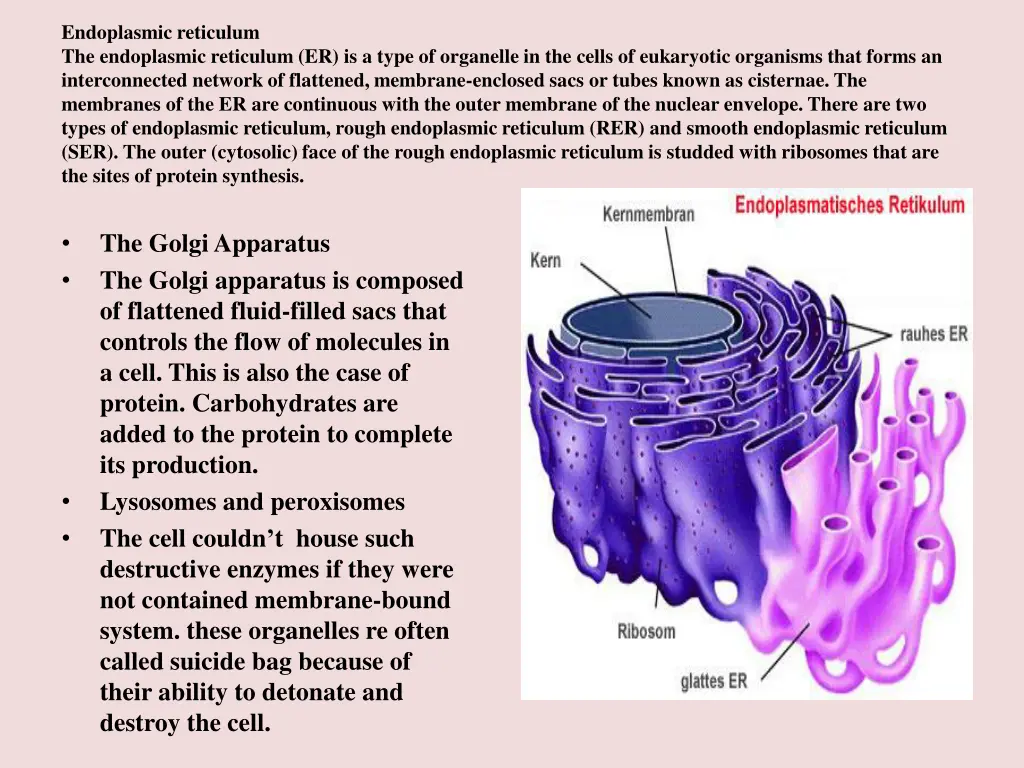
Endoplasmic reticulum The endoplasmic reticulum (ER) is a type of organelle in the cells of eukaryotic organisms that forms an interconnected network of flattened, membrane-enclosed sacs or tubes known as cisternae. The membranes of the ER are continuous with the outer membrane of the nuclear envelope. There are two types of endoplasmic reticulum, rough endoplasmic reticulum (RER) and smooth endoplasmic reticulum (SER). The outer (cytosolic) face of the rough endoplasmic reticulum is studded with ribosomes that are the sites of protein synthesis. The Golgi Apparatus The Golgi apparatus is composed of flattened fluid-filled sacs that controls the flow of molecules in a cell. This is also the case of protein. Carbohydrates are added to the protein to complete its production. Lysosomes and peroxisomes The cell couldn t house such destructive enzymes if they were not contained membrane-bound system. these organelles re often called suicide bag because of their ability to detonate and destroy the cell.
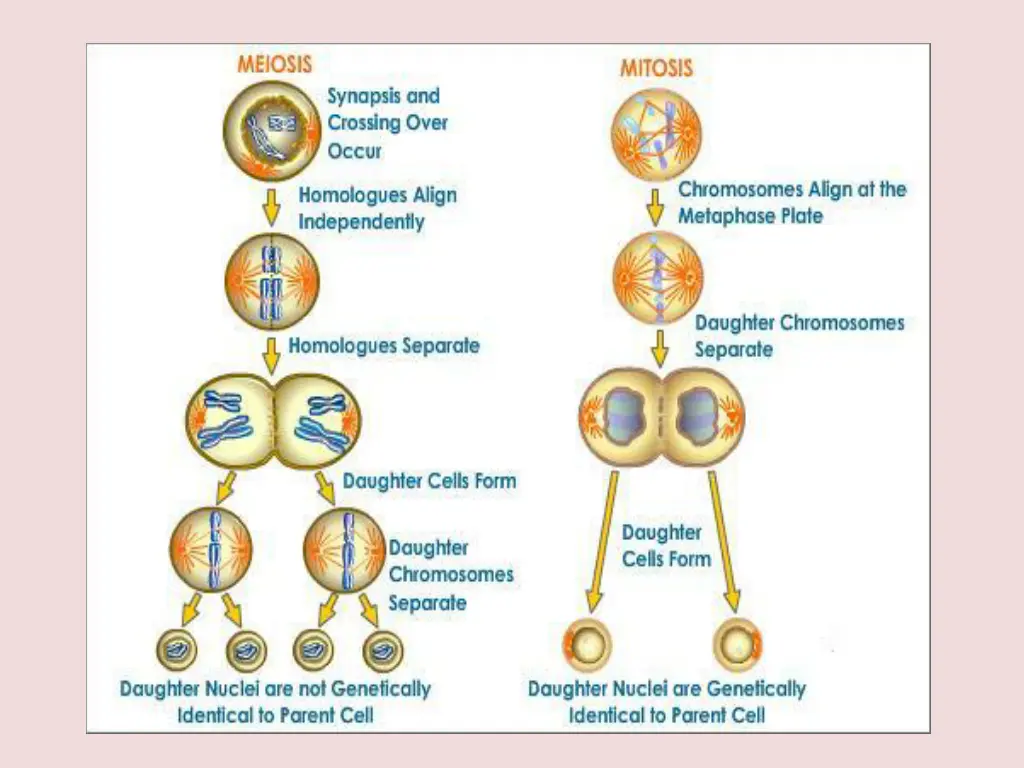
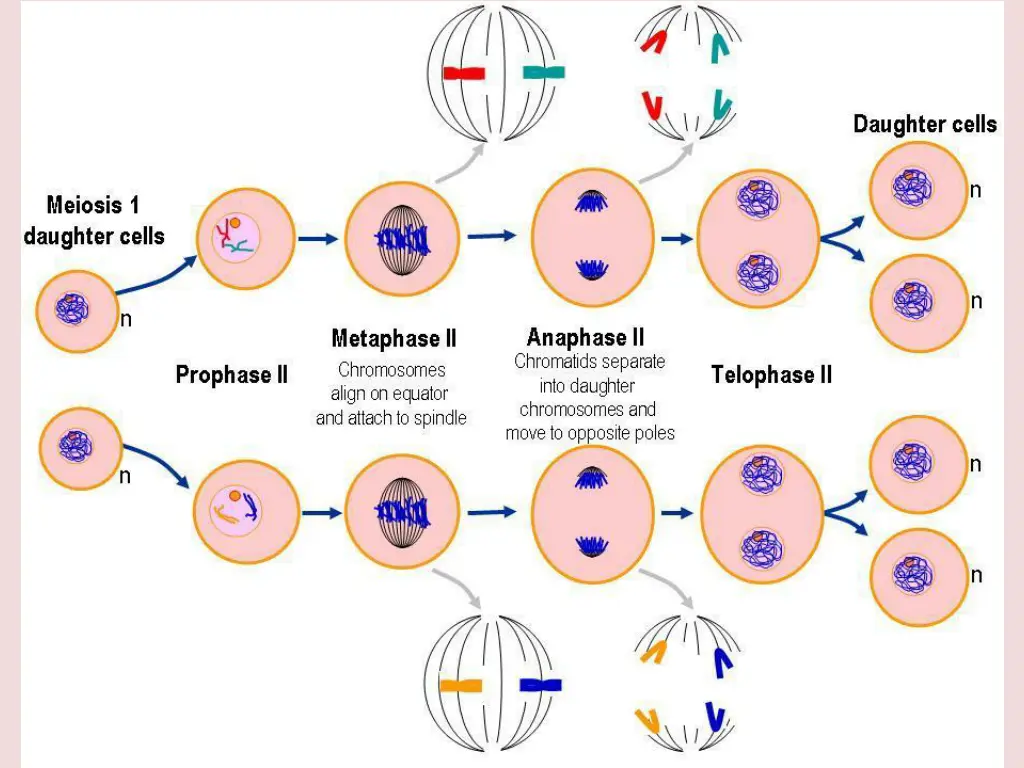
Reproduction Reproduction (or procreation) is the biological process by which new "offspring" individual organisms are produced from their "parents . The known methods of reproduction are broadly grouped into two main types: sexual and asexual. In asexual reproduction, an individual can reproduce without involvement with another individual of that species. Sexual reproduction typically requires the involvement of two individuals or gametes, one each from opposite type of sex. Mitosis and meiosis Mitosis and meiosis are an integral part of cell division. Mitosis occurs in somatic cells, while meiosis occurs in gametes. Mitosis The resultant number of cells in mitosis is twice the number of original cells. The number of chromosomes in the daughter cells is the same as that of the parent cell. Meiosis The resultant number of cells is four times the number of original cells. This results in cells with half the number of chromosomes present in the parent cell. A diploid cell duplicates itself, then undergoes two divisions, in the process forming four haploid cells. This process occurs in two phases, meiosis I and meiosis II.
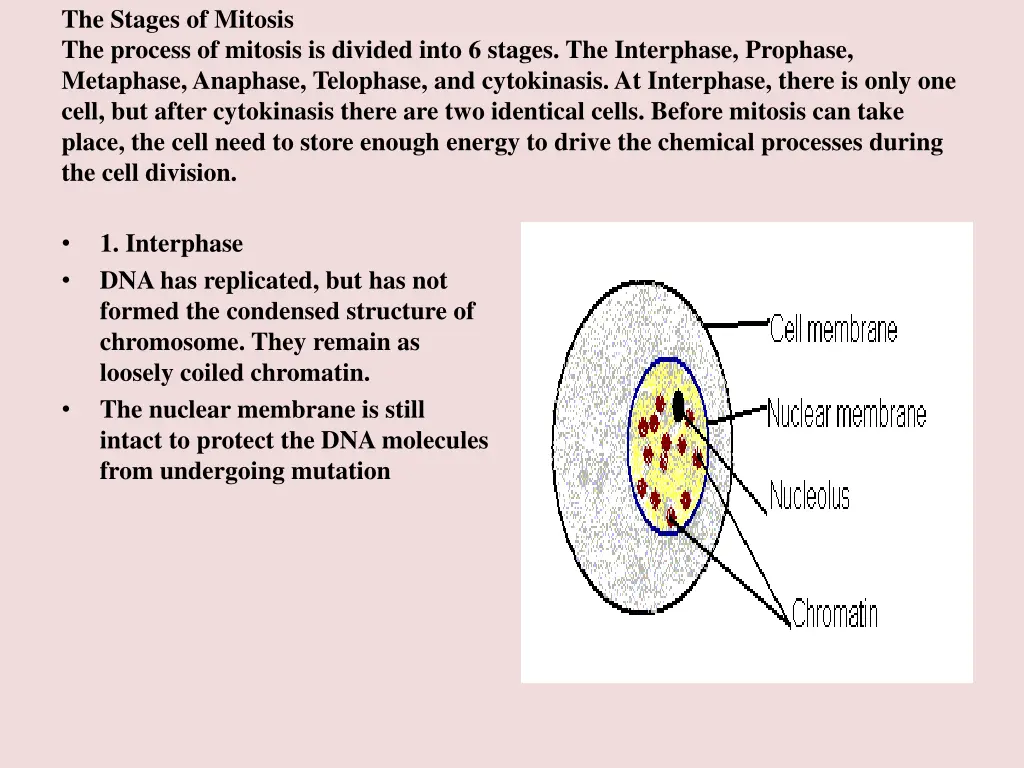
The Stages of Mitosis The process of mitosis is divided into 6 stages. The Interphase, Prophase, Metaphase, Anaphase, Telophase, and cytokinasis. At Interphase, there is only one cell, but after cytokinasis there are two identical cells. Before mitosis can take place, the cell need to store enough energy to drive the chemical processes during the cell division. 1. Interphase DNA has replicated, but has not formed the condensed structure of chromosome. They remain as loosely coiled chromatin. The nuclear membrane is still intact to protect the DNA molecules from undergoing mutation
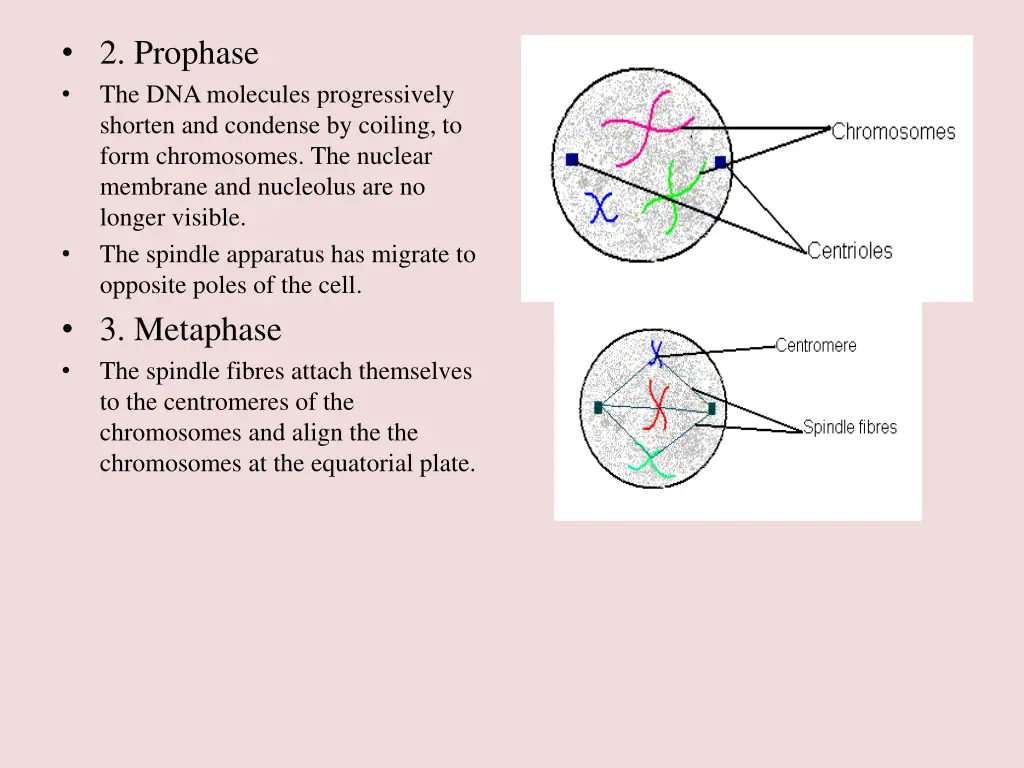
2. Prophase The DNA molecules progressively shorten and condense by coiling, to form chromosomes. The nuclear membrane and nucleolus are no longer visible. The spindle apparatus has migrate to opposite poles of the cell. 3. Metaphase The spindle fibres attach themselves to the centromeres of the chromosomes and align the the chromosomes at the equatorial plate.
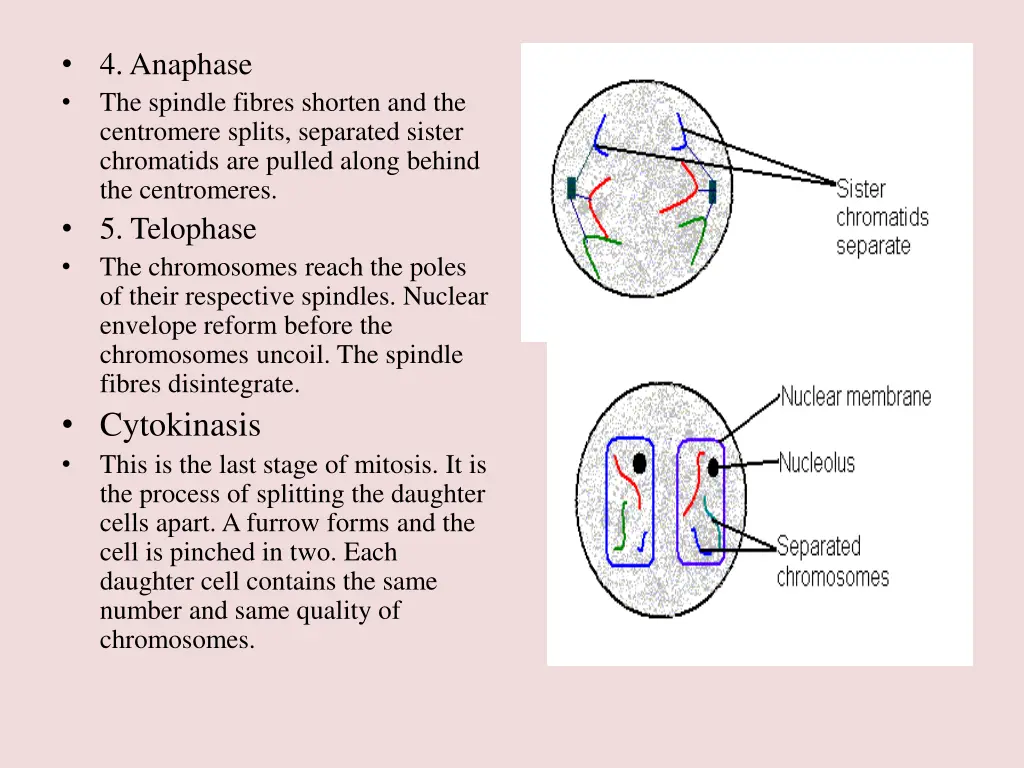
4. Anaphase The spindle fibres shorten and the centromere splits, separated sister chromatids are pulled along behind the centromeres. 5. Telophase The chromosomes reach the poles of their respective spindles. Nuclear envelope reform before the chromosomes uncoil. The spindle fibres disintegrate. Cytokinasis This is the last stage of mitosis. It is the process of splitting the daughter cells apart. A furrow forms and the cell is pinched in two. Each daughter cell contains the same number and same quality of chromosomes.
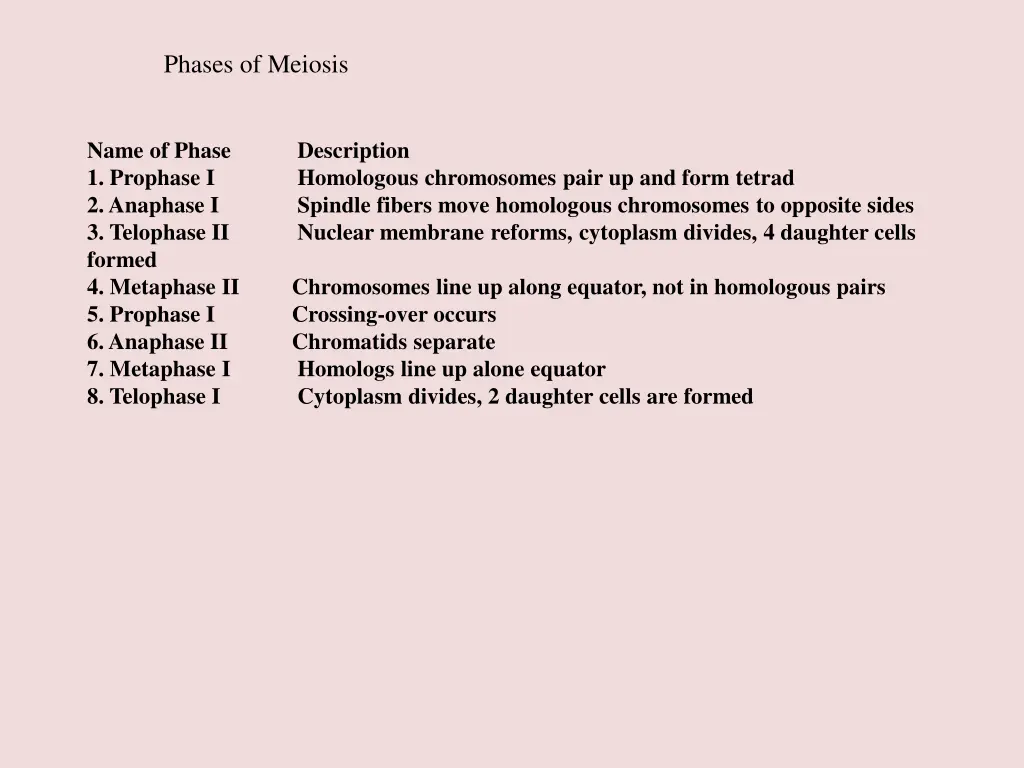
Phases of Meiosis Name of Phase 1. Prophase I 2. Anaphase I 3. Telophase II formed 4. Metaphase II 5. Prophase I 6. Anaphase II 7. Metaphase I 8. Telophase I Description Homologous chromosomes pair up and form tetrad Spindle fibers move homologous chromosomes to opposite sides Nuclear membrane reforms, cytoplasm divides, 4 daughter cells Chromosomes line up along equator, not in homologous pairs Crossing-over occurs Chromatids separate Homologs line up alone equator Cytoplasm divides, 2 daughter cells are formed