Organic Carbon Cycling

Explore the organic carbon cycle, flow of energy and matter, reservoirs, fluxes, and residence time within systems. Learn how organic and inorganic carbon are cycled in natural processes, examining examples like glucose, carbon dioxide, and more.

Download Presentation

Please find below an Image/Link to download the presentation.
The content on the website is provided AS IS for your information and personal use only. It may not be sold, licensed, or shared on other websites without obtaining consent from the author.If you encounter any issues during the download, it is possible that the publisher has removed the file from their server.
You are allowed to download the files provided on this website for personal or commercial use, subject to the condition that they are used lawfully. All files are the property of their respective owners.
The content on the website is provided AS IS for your information and personal use only. It may not be sold, licensed, or shared on other websites without obtaining consent from the author.
E N D
Presentation Transcript
Chapter 8Part 1 Fluxes and reservoirs/ The organic carbon cycle
The Carbon Cycle 1. Flow of energy and matter 2. Organic and inorganic carbon 3. The organic carbon cycle
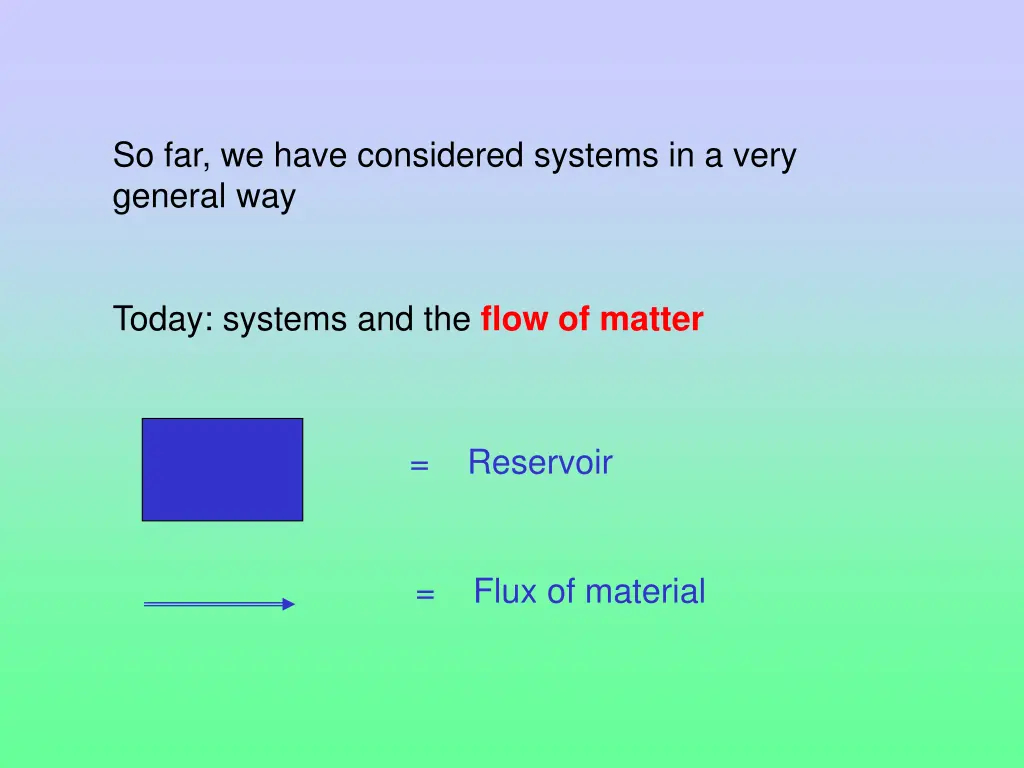
So far, we have considered systems in a very general way Today: systems and the flow of matter = Reservoir = Flux of material
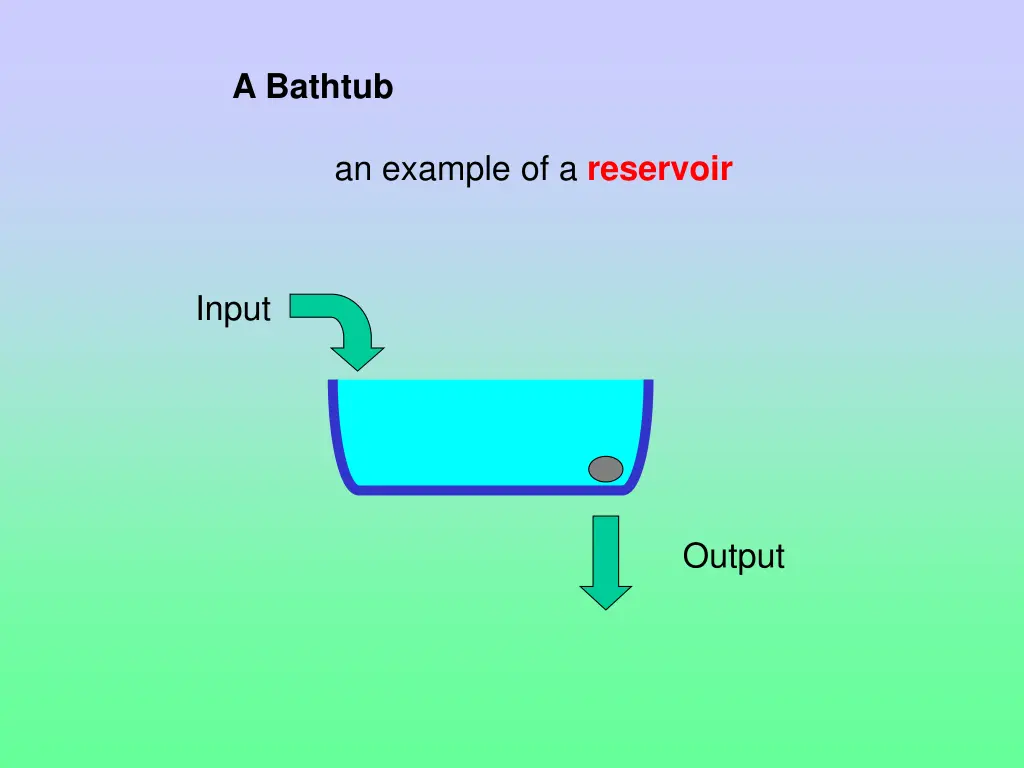
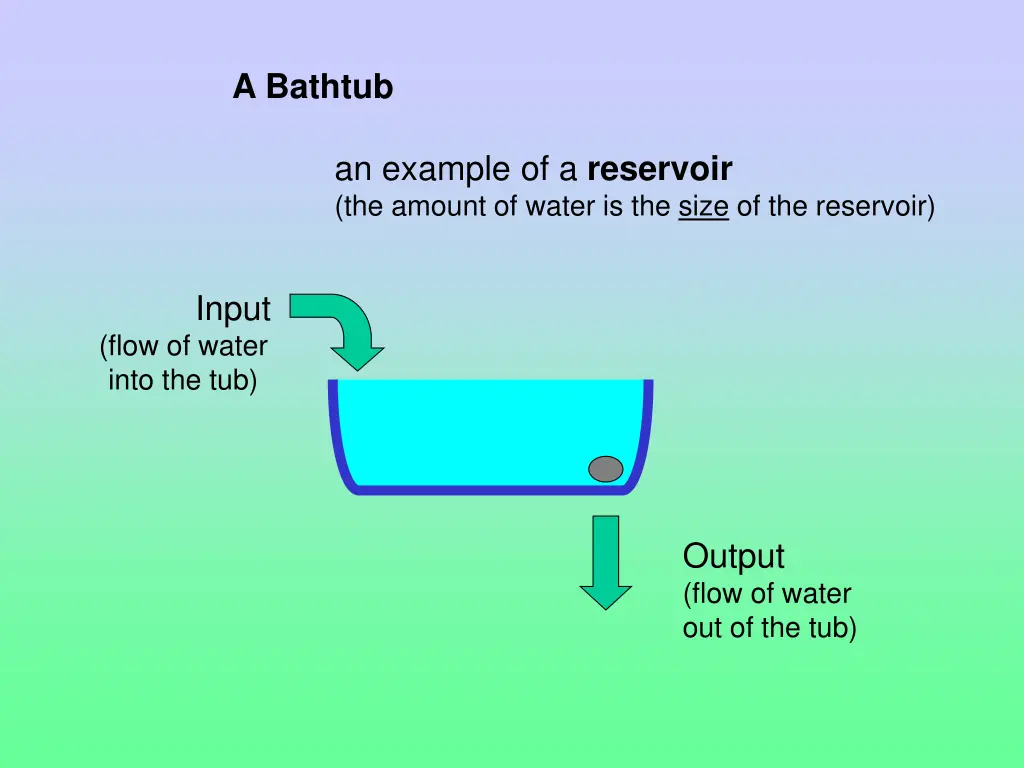
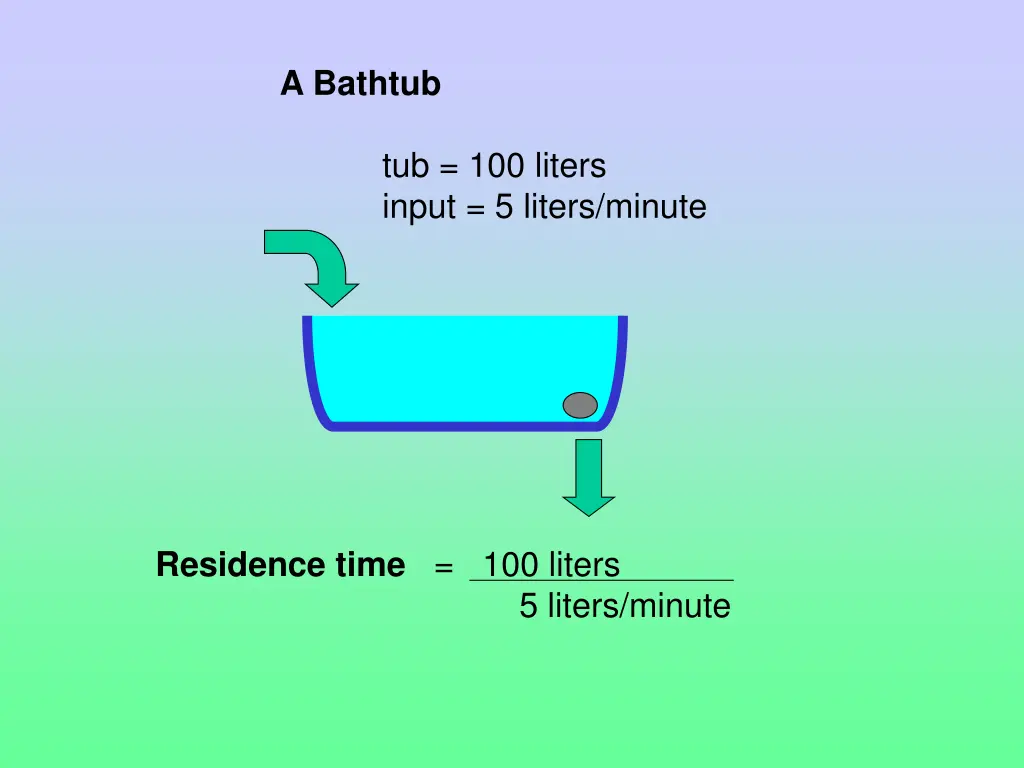
A Bathtub an example of a reservoir Input Output
A Bathtub an example of a reservoir (the amount of water is the size of the reservoir) Input (flow of water into the tub) Output (flow of water out of the tub)
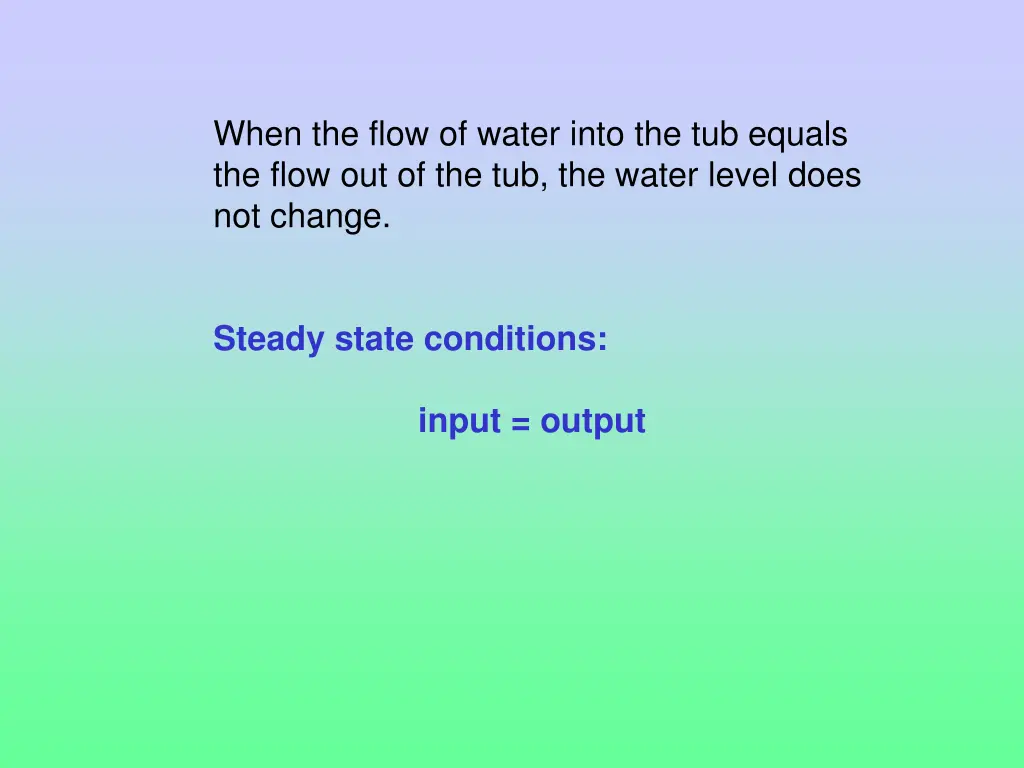
When the flow of water into the tub equals the flow out of the tub, the water level does not change. Steady state conditions: input = output
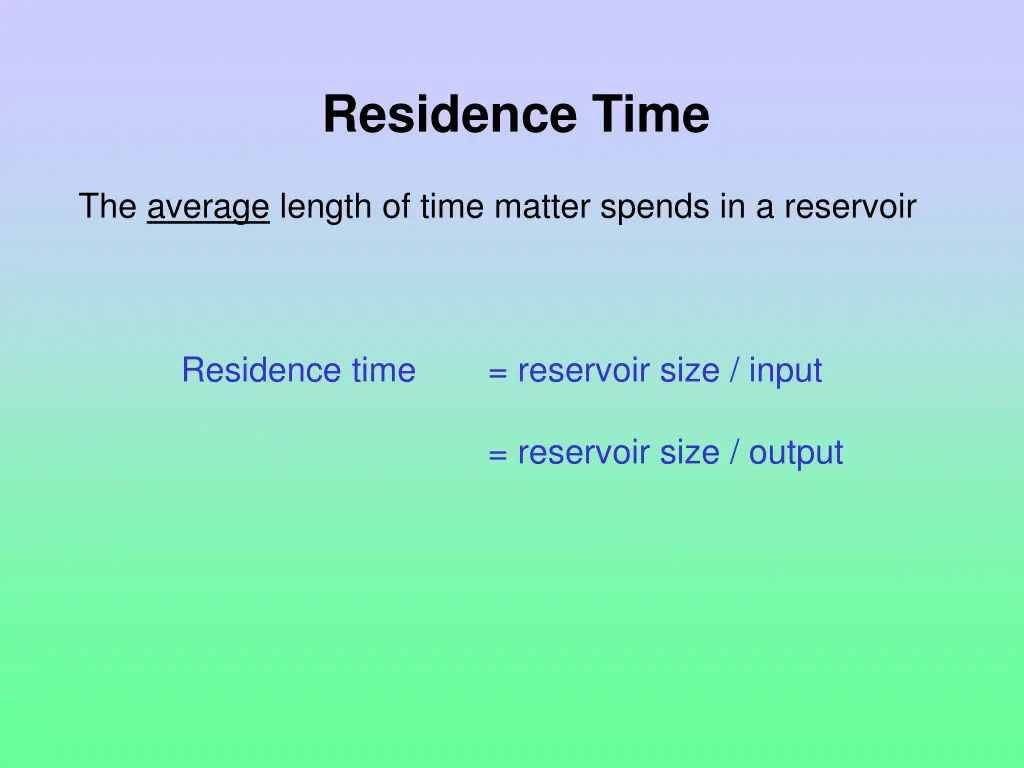
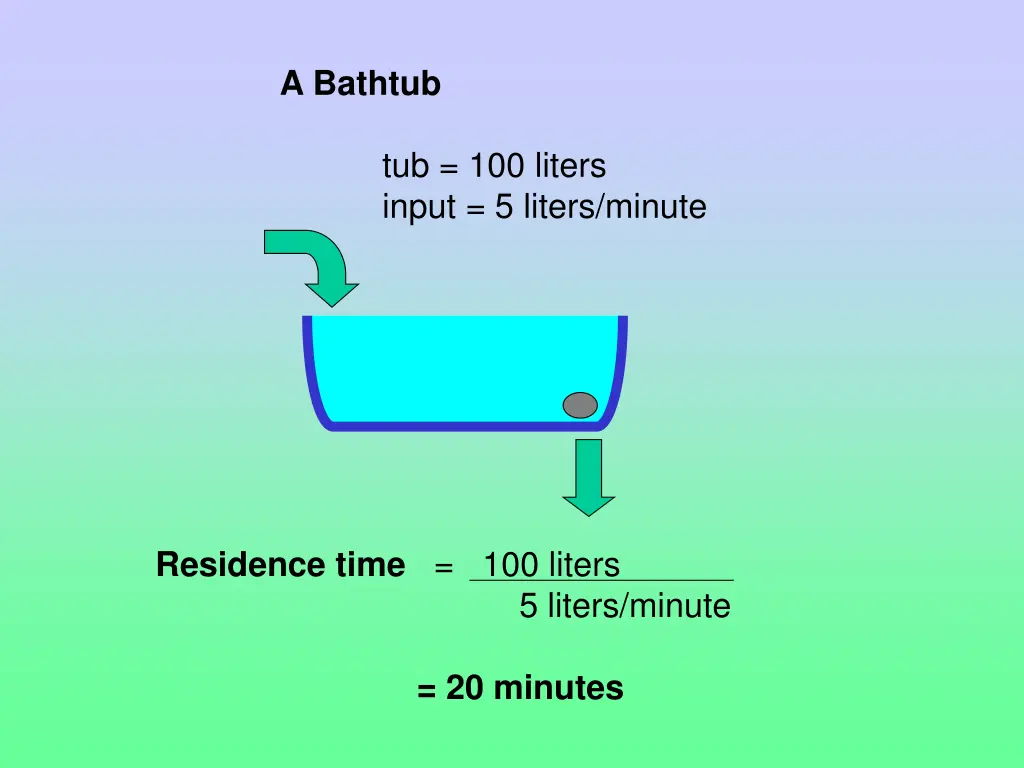
Residence Time The average length of time matter spends in a reservoir Residence time = reservoir size / input = reservoir size / output
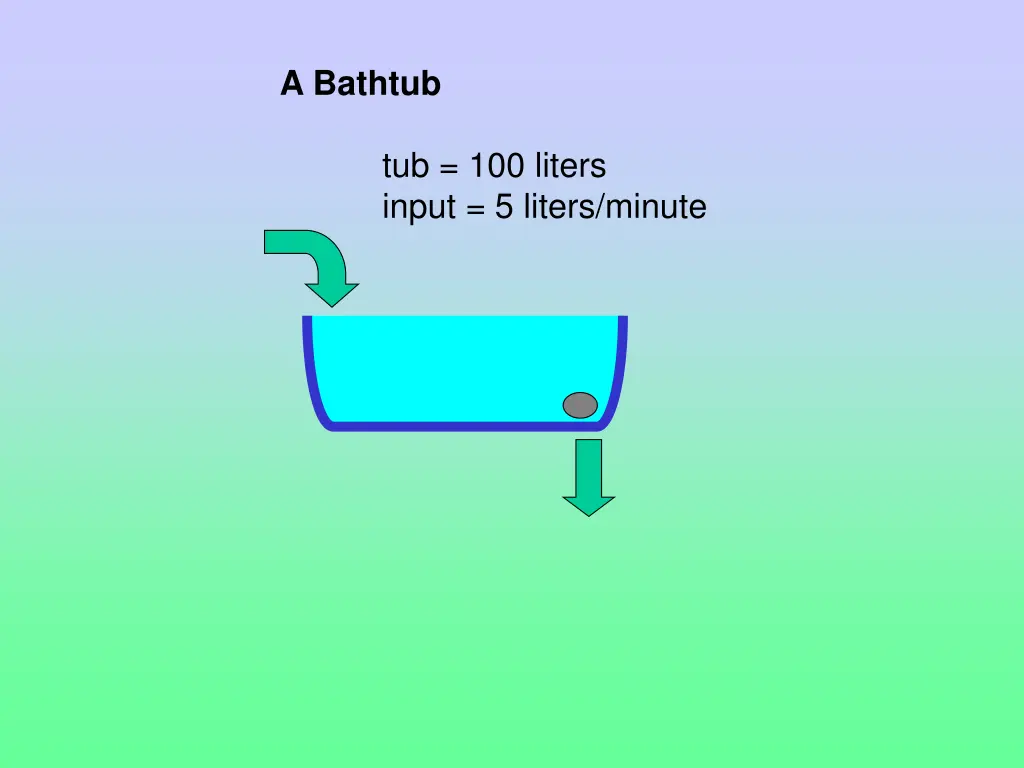
A Bathtub tub = 100 liters input = 5 liters/minute
A Bathtub tub = 100 liters input = 5 liters/minute Residence time = 100 liters 5 liters/minute
A Bathtub tub = 100 liters input = 5 liters/minute Residence time = 100 liters 5 liters/minute = 20 minutes
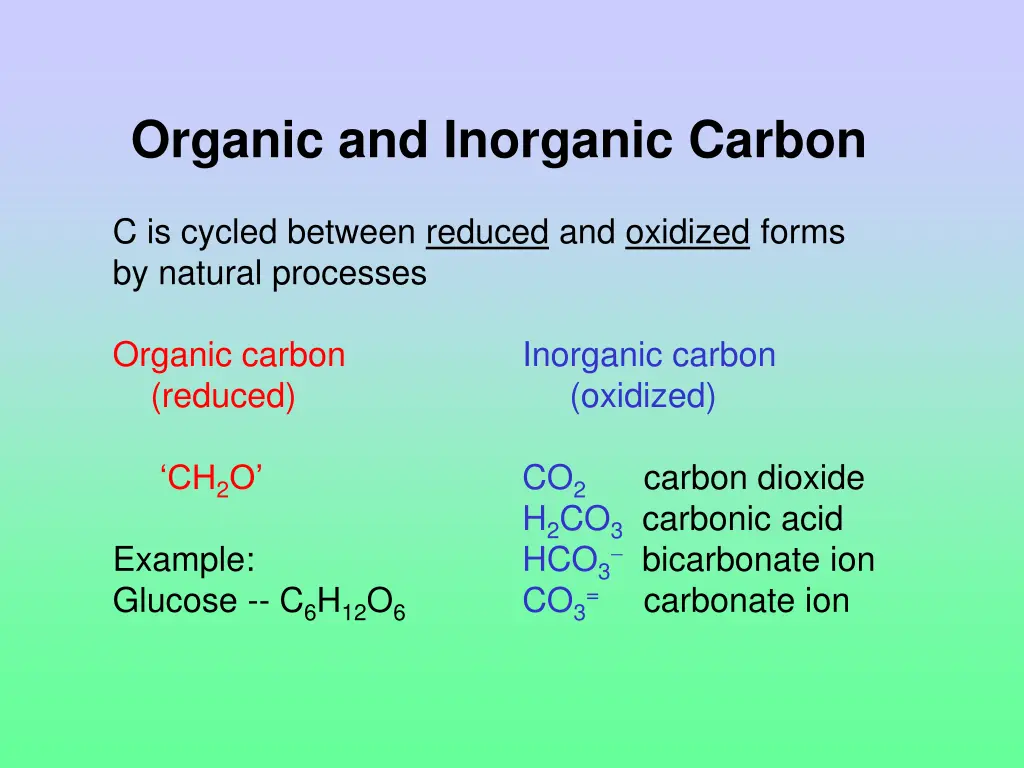
Organic and Inorganic Carbon C is cycled between reduced and oxidized forms by natural processes Organic carbon (reduced) Inorganic carbon (oxidized) CH2O Example: Glucose -- C6H12O6 CO2 carbon dioxide H2CO3 carbonic acid HCO3 bicarbonate ion CO3= carbonate ion
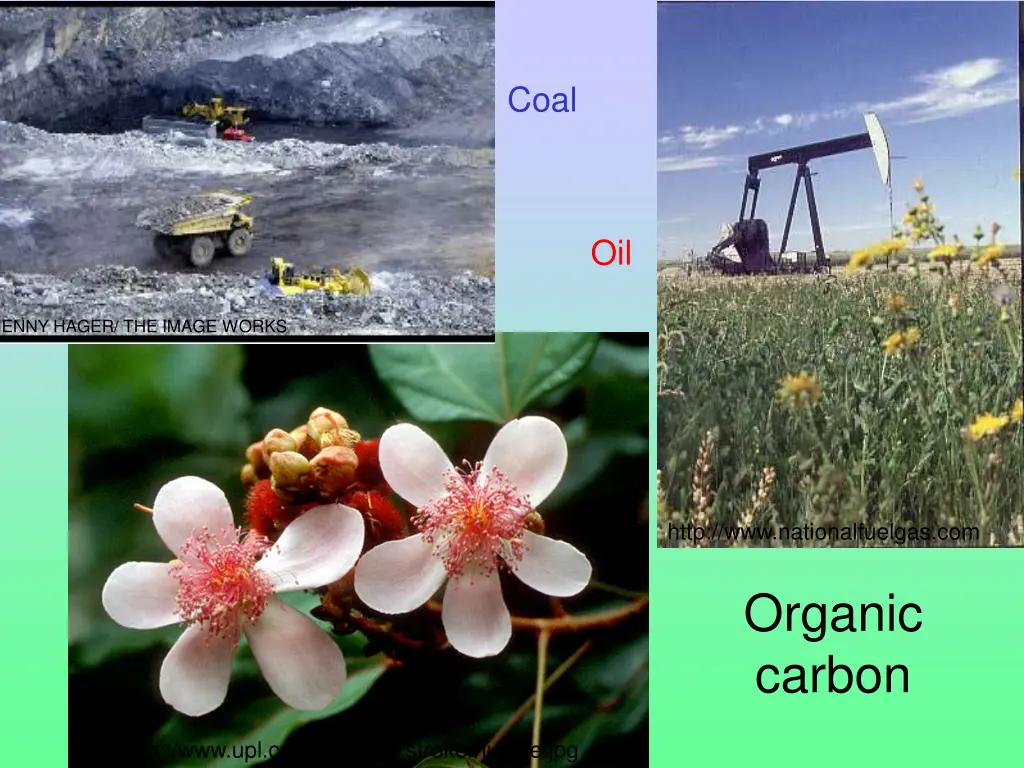
Coal Oil JENNY HAGER/ THE IMAGE WORKS http://www.nationalfuelgas.com Organic carbon http://www.upl.cs.wisc.edu/~stroker/jungle.jpg
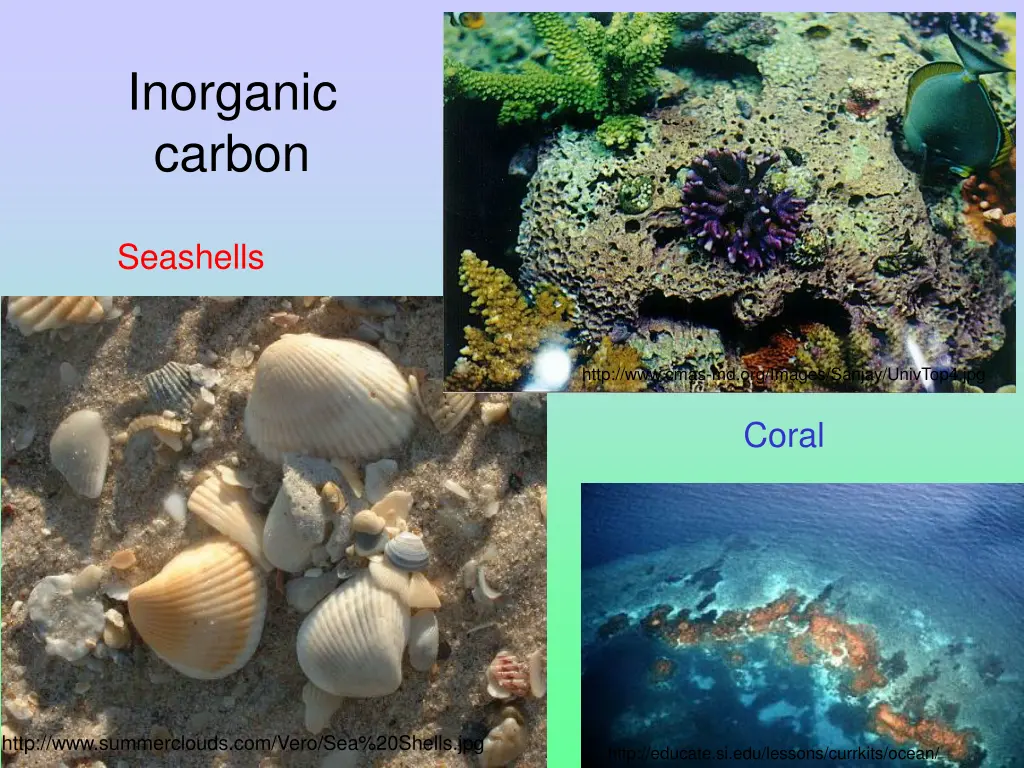
Inorganic carbon Seashells http://www.cmas-md.org/Images/Sanjay/UnivTop4.jpg Coral http://www.summerclouds.com/Vero/Sea%20Shells.jpg http://educate.si.edu/lessons/currkits/ocean/
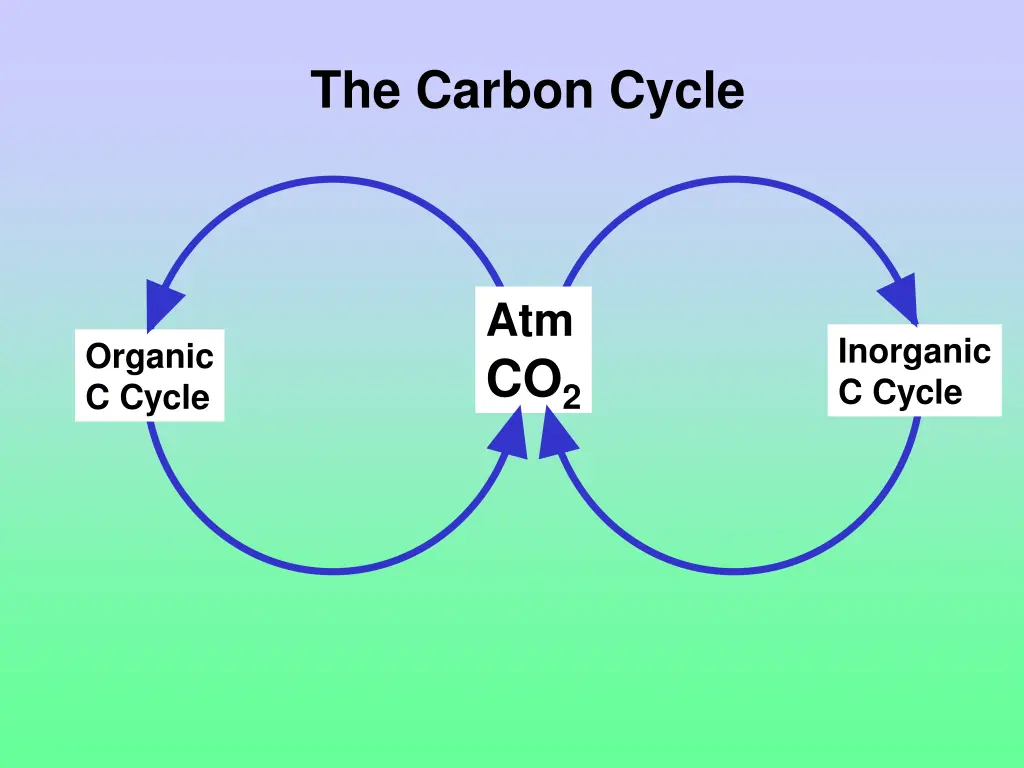
The Carbon Cycle Atm CO2 Inorganic C Cycle Organic C Cycle
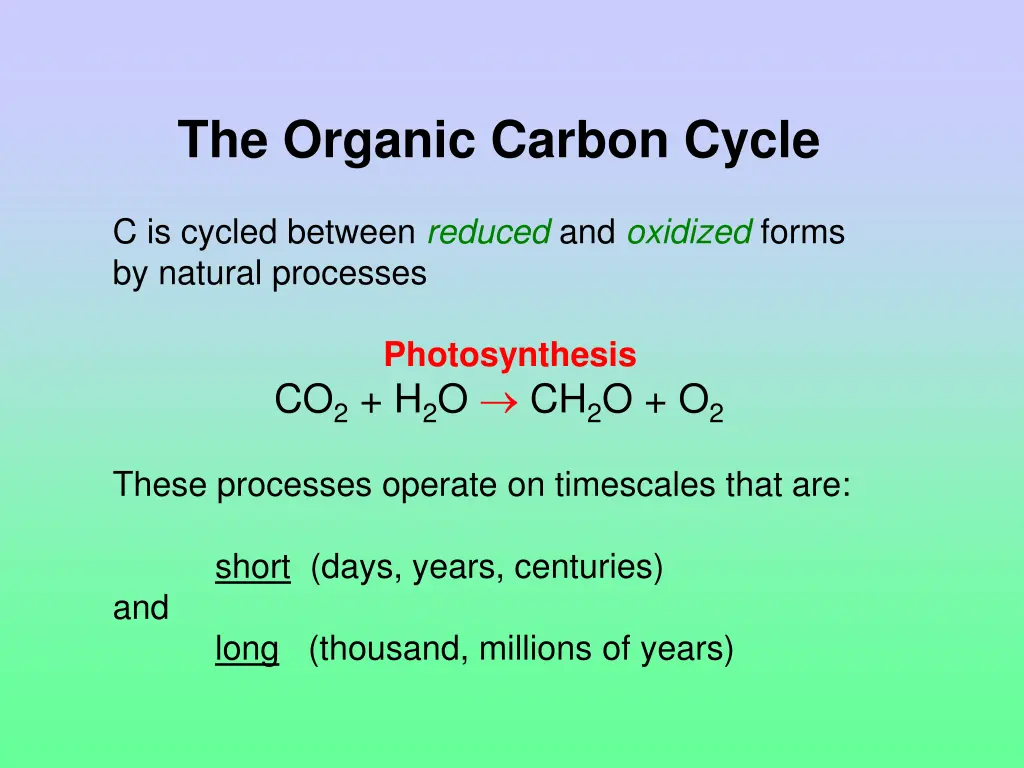
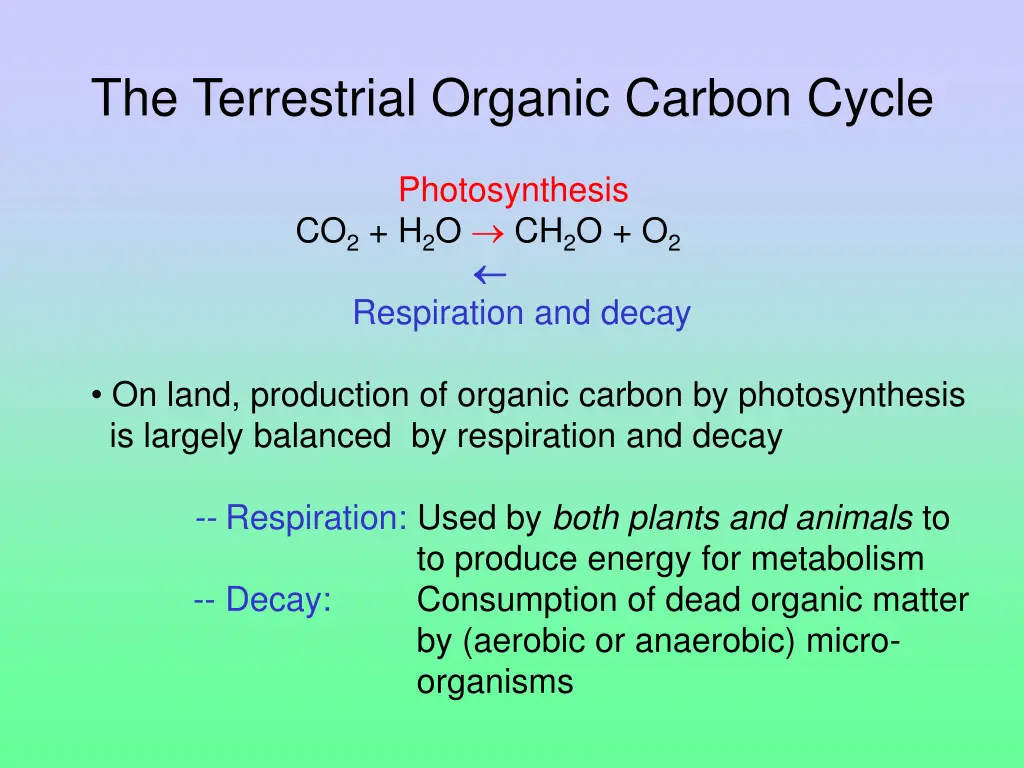
The Organic Carbon Cycle C is cycled between reduced and oxidized forms by natural processes Photosynthesis CO2 + H2O CH2O + O2 These processes operate on timescales that are: and short (days, years, centuries) long (thousand, millions of years)
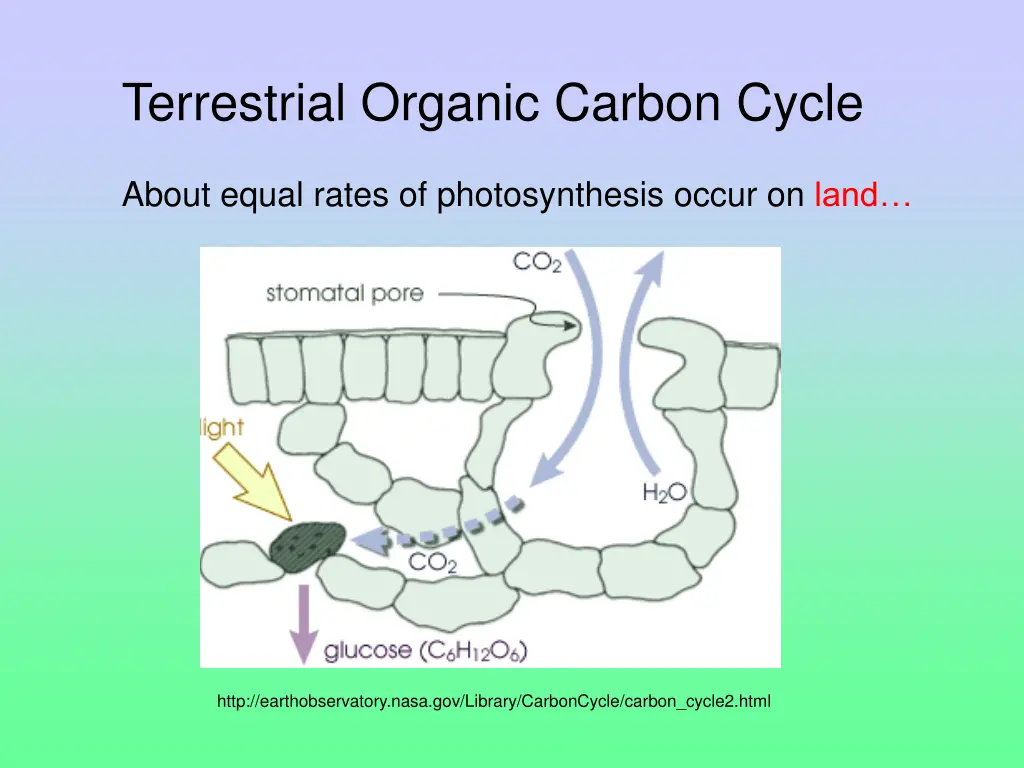
Terrestrial Organic Carbon Cycle About equal rates of photosynthesis occur on land http://earthobservatory.nasa.gov/Library/CarbonCycle/carbon_cycle2.html
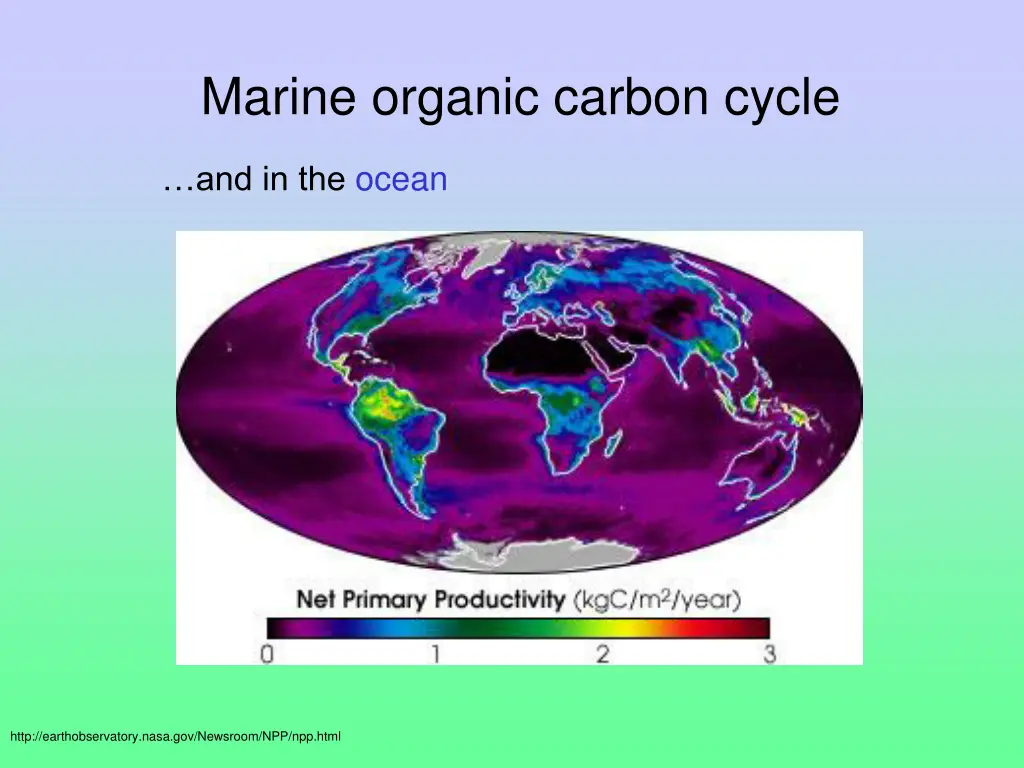
Marine organic carbon cycle and in the ocean http://earthobservatory.nasa.gov/Newsroom/NPP/npp.html
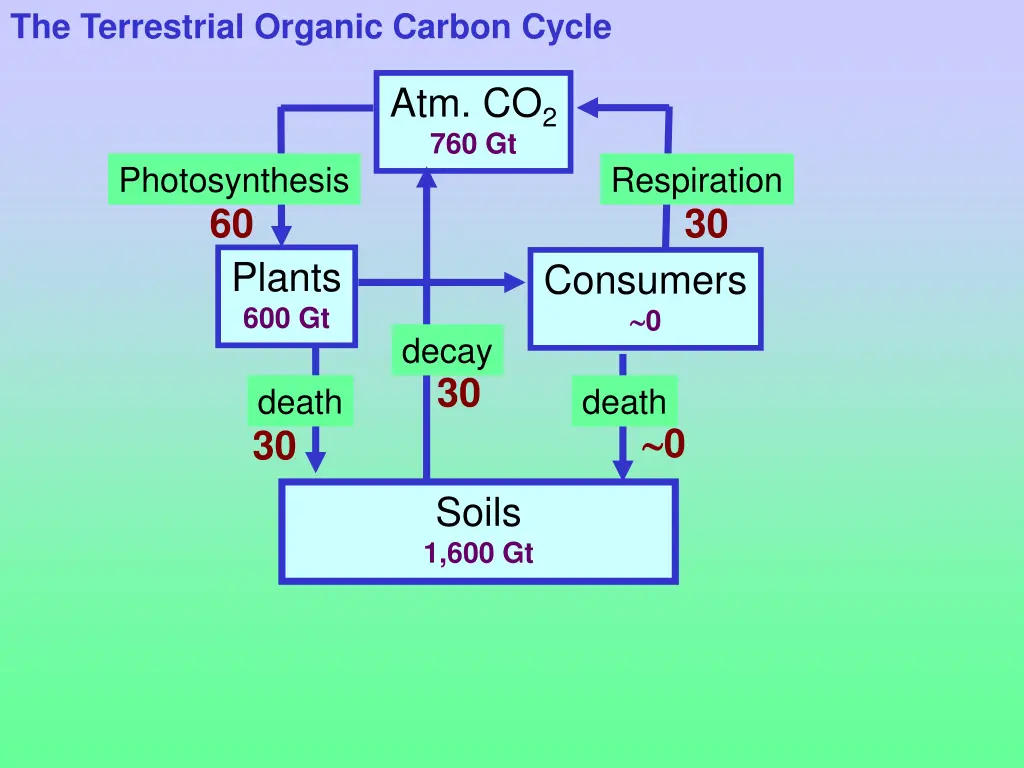
The Terrestrial Organic Carbon Cycle CO2 + H2O CH2O + O2 Respiration and decay Photosynthesis On land, production of organic carbon by photosynthesis is largely balanced by respiration and decay -- Respiration: Used by both plants and animals to to produce energy for metabolism -- Decay: Consumption of dead organic matter by (aerobic or anaerobic) micro- organisms
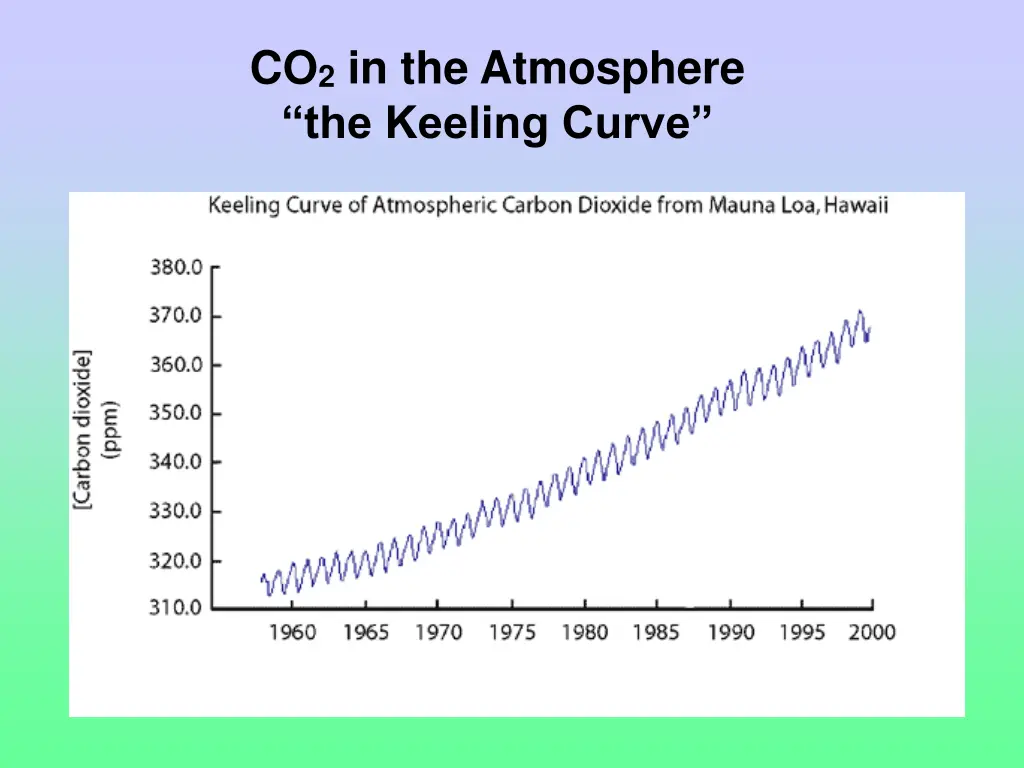
CO2 in the Atmosphere the Keeling Curve
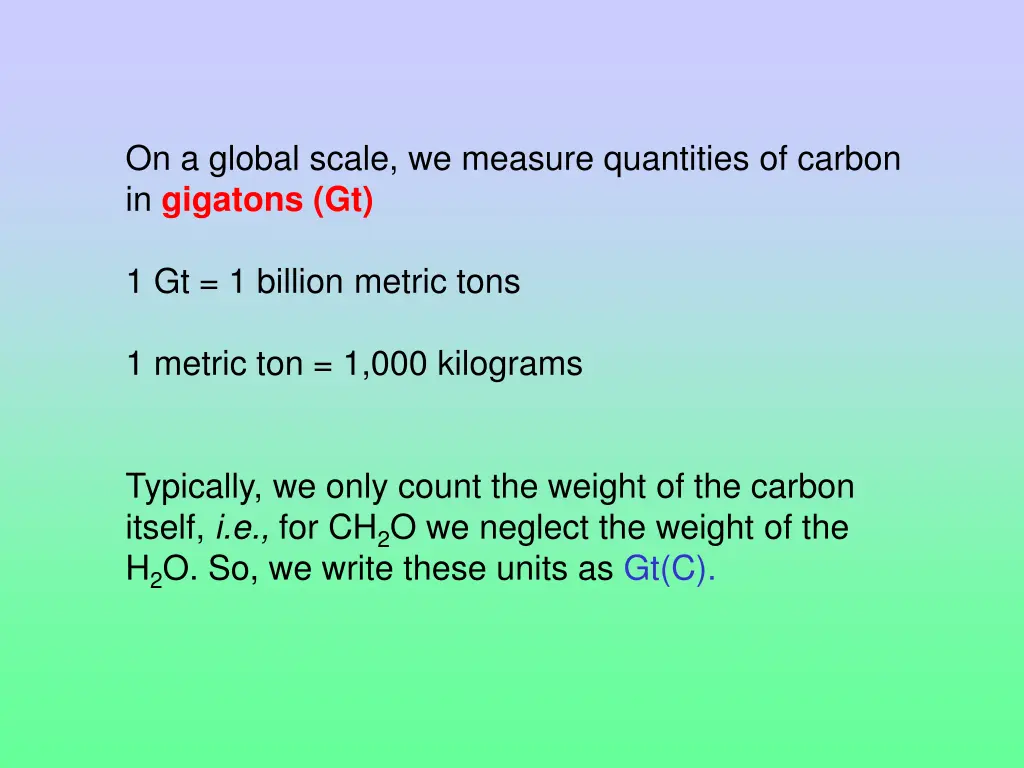
On a global scale, we measure quantities of carbon in gigatons (Gt) 1 Gt = 1 billion metric tons 1 metric ton = 1,000 kilograms Typically, we only count the weight of the carbon itself, i.e., for CH2O we neglect the weight of the H2O. So, we write these units as Gt(C).
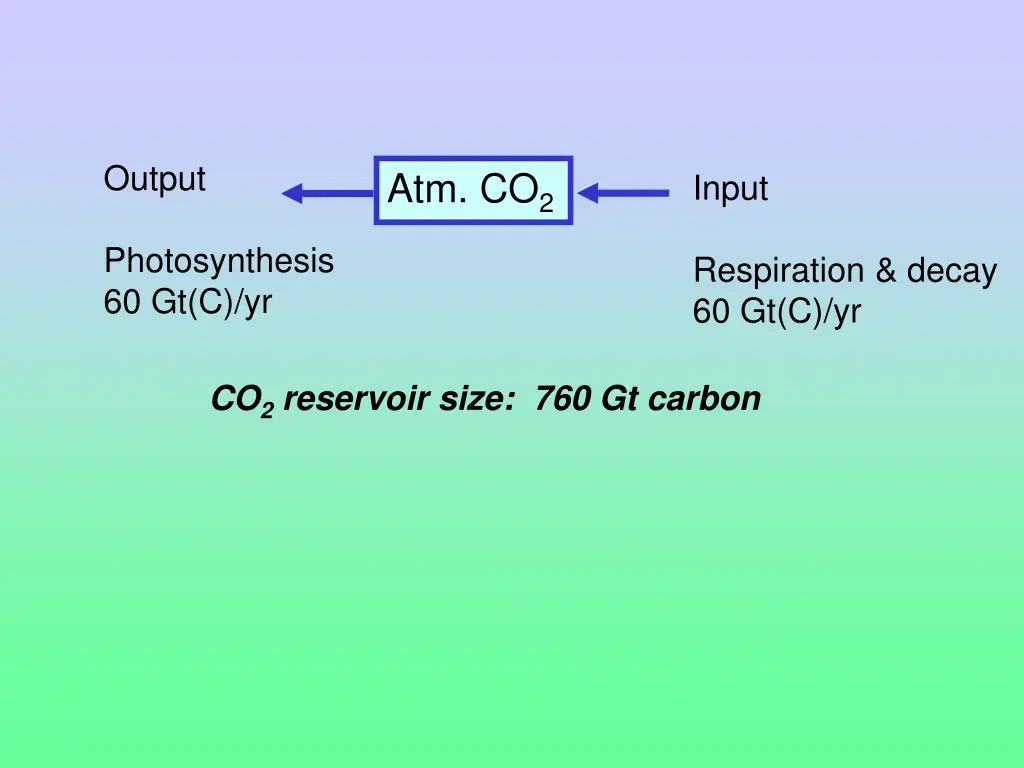
Output Atm. CO2 Input Photosynthesis 60 Gt(C)/yr Respiration & decay 60 Gt(C)/yr CO2 reservoir size: 760 Gt carbon
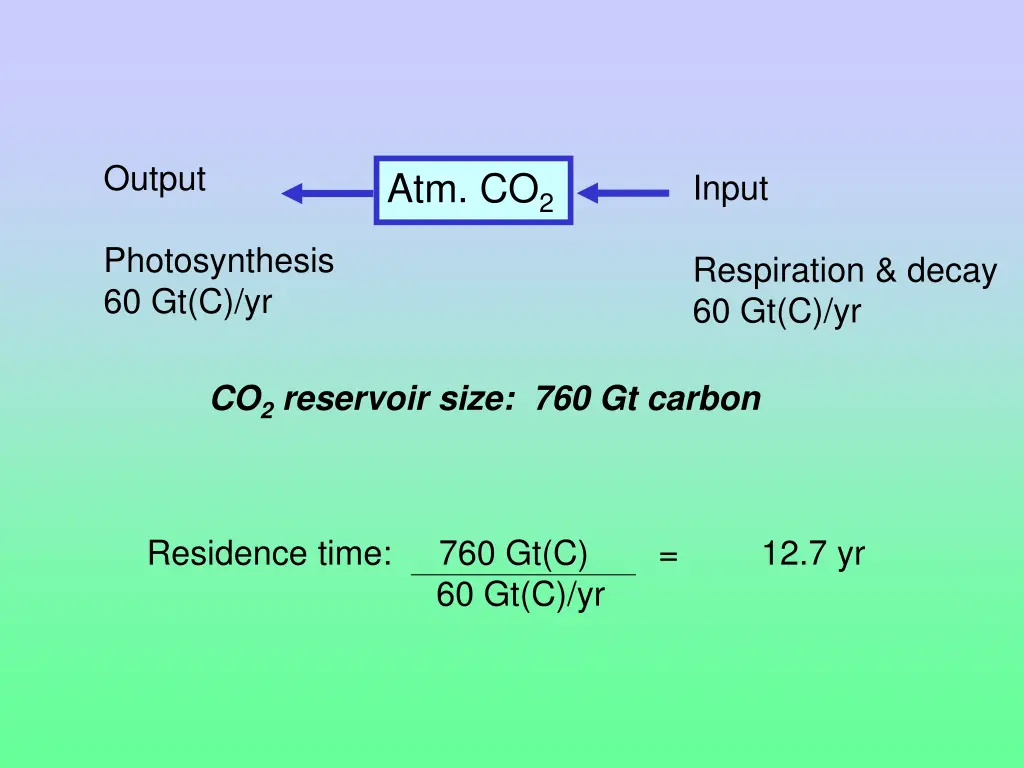
Output Atm. CO2 Input Photosynthesis 60 Gt(C)/yr Respiration & decay 60 Gt(C)/yr CO2 reservoir size: 760 Gt carbon Residence time: 760 Gt(C) 60 Gt(C)/yr = 12.7 yr
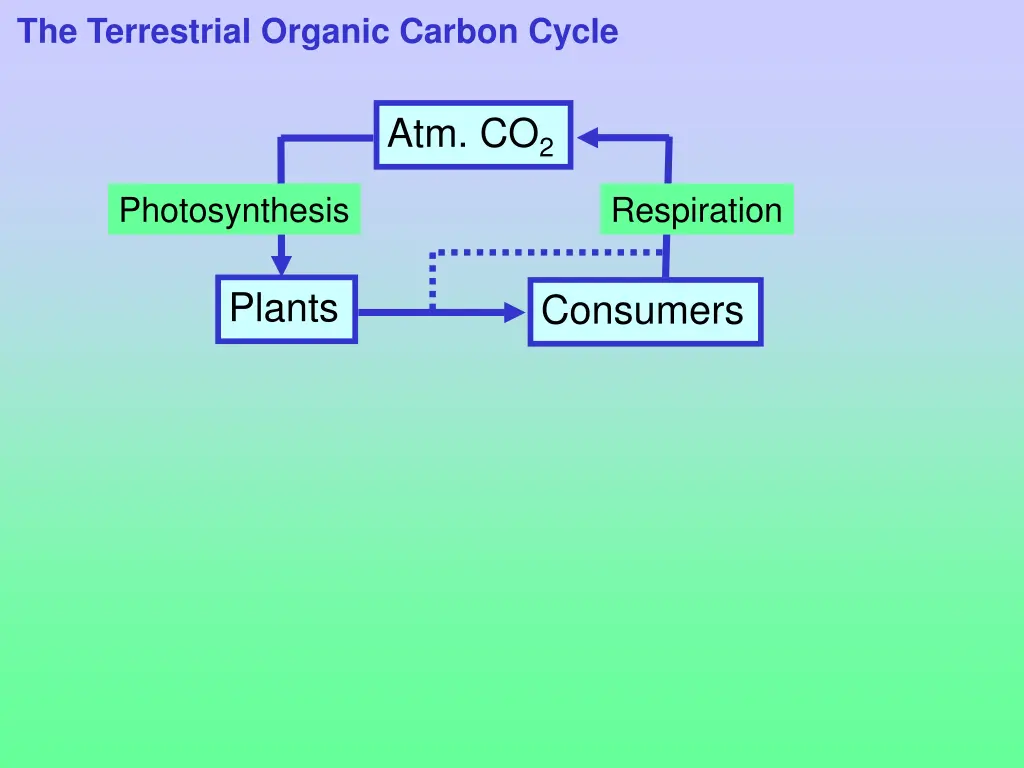
The Terrestrial Organic Carbon Cycle Atm. CO2 Photosynthesis Respiration Plants Consumers
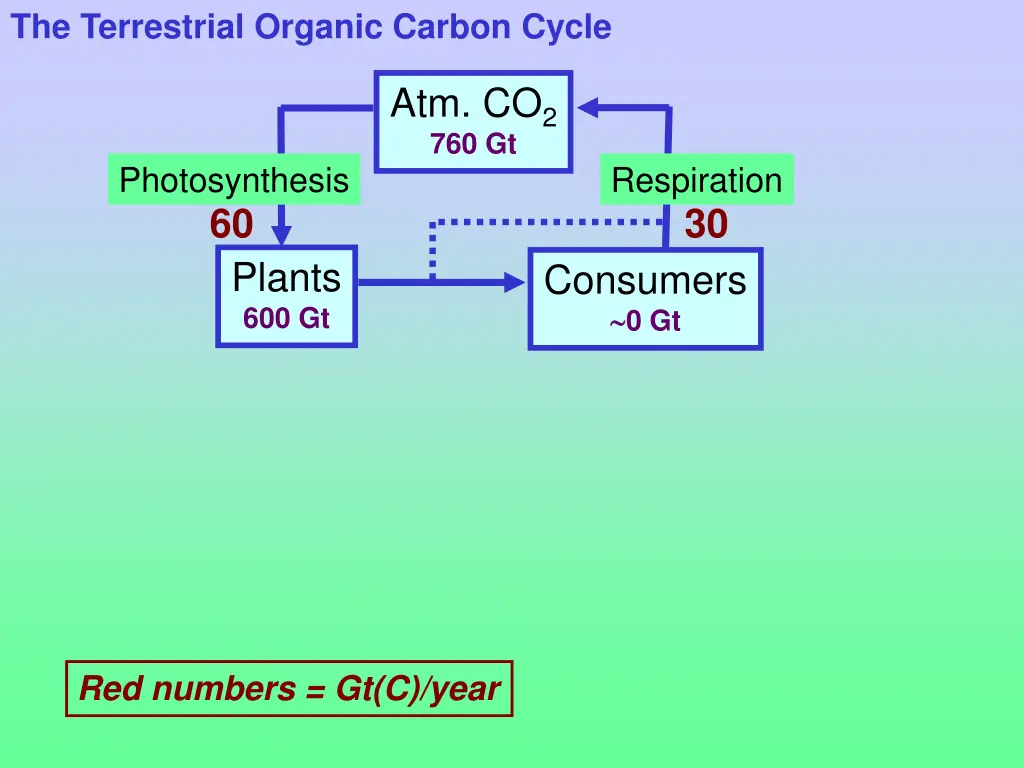
The Terrestrial Organic Carbon Cycle Atm. CO2 760 Gt Photosynthesis 60 Respiration 30 Plants 600 Gt Consumers 0 Gt Red numbers = Gt(C)/year
The Terrestrial Organic Carbon Cycle Atm. CO2 760 Gt Photosynthesis 60 Respiration 30 Plants 600 Gt Consumers 0 decay 30 death 30 death 0 Soils 1,600 Gt
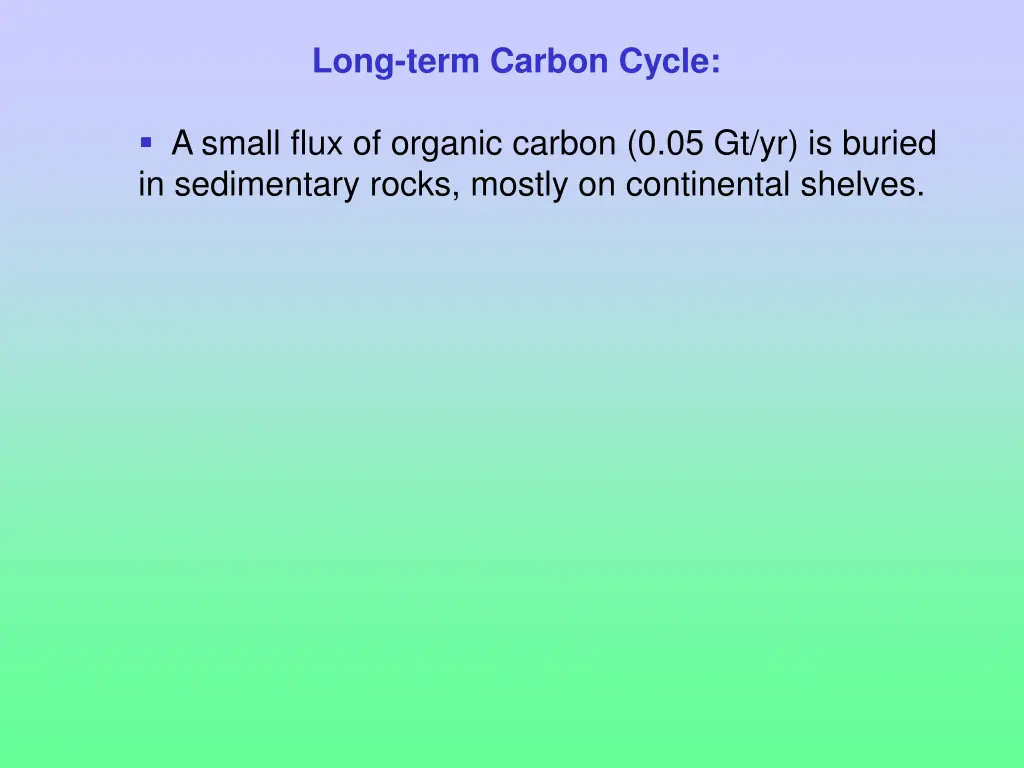
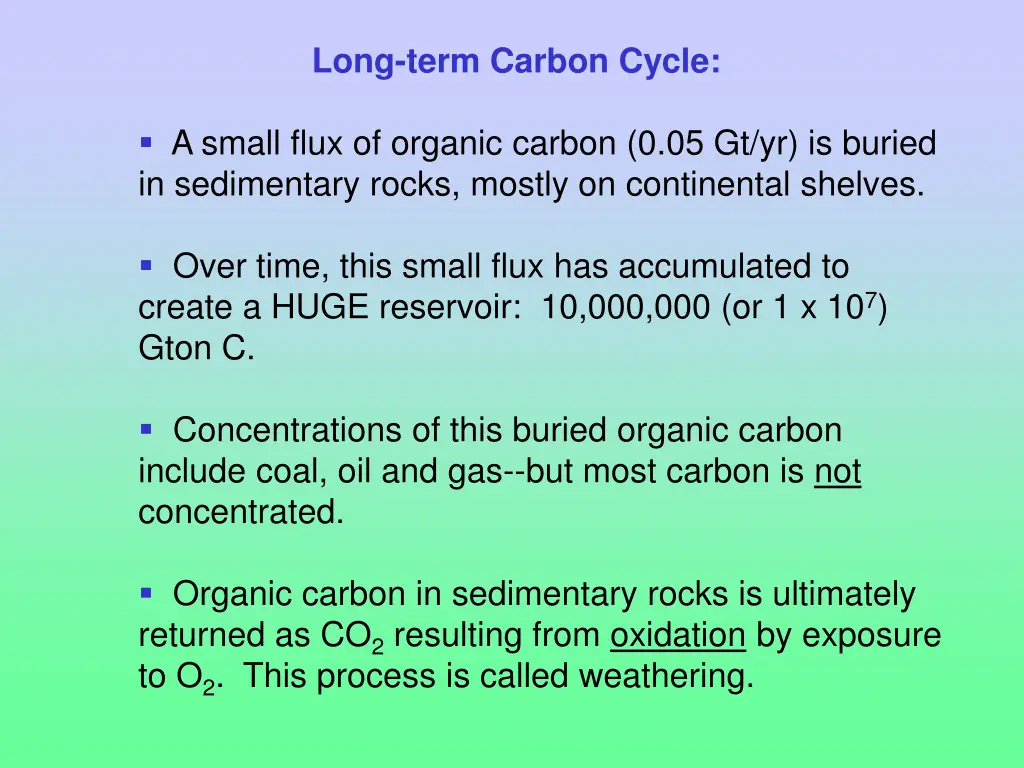
Long-term Carbon Cycle: A small flux of organic carbon (0.05 Gt/yr) is buried in sedimentary rocks, mostly on continental shelves.
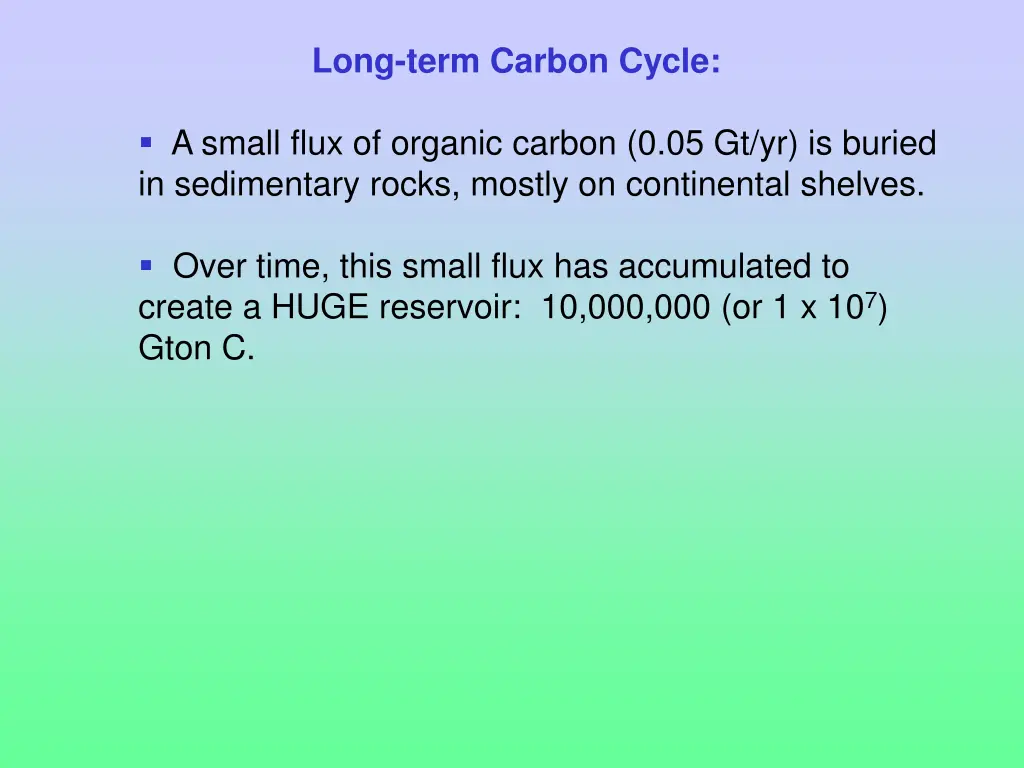
Long-term Carbon Cycle: A small flux of organic carbon (0.05 Gt/yr) is buried in sedimentary rocks, mostly on continental shelves. Over time, this small flux has accumulated to create a HUGE reservoir: 10,000,000 (or 1 x 10⁷) Gton C.
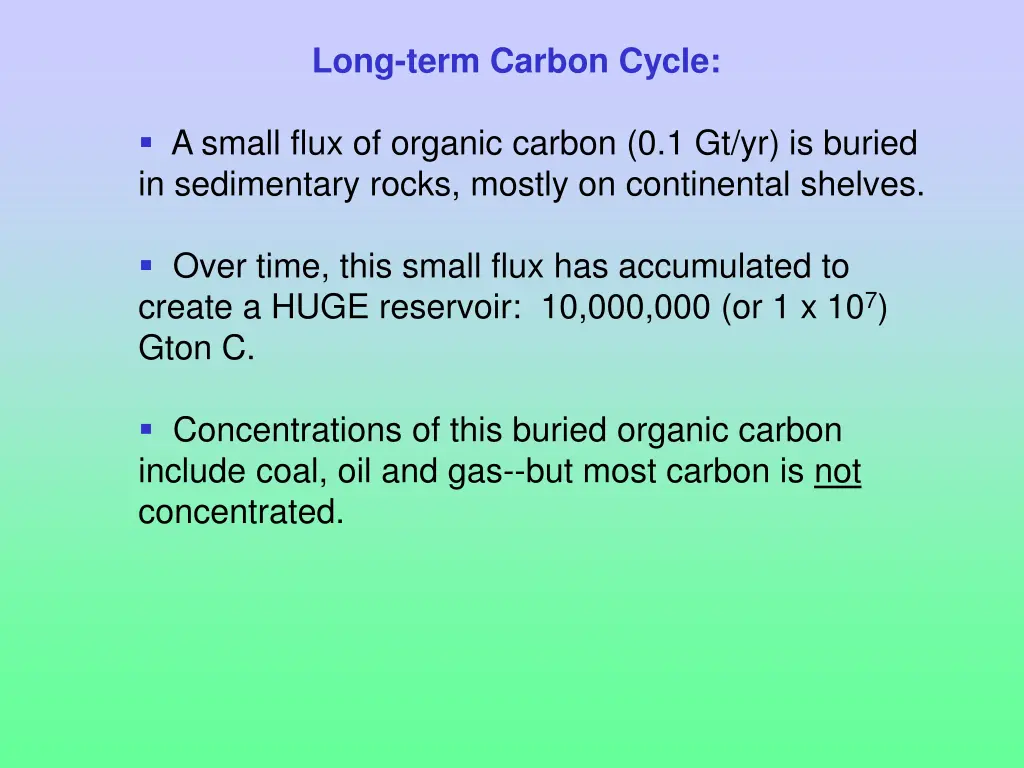
Long-term Carbon Cycle: A small flux of organic carbon (0.1 Gt/yr) is buried in sedimentary rocks, mostly on continental shelves. Over time, this small flux has accumulated to create a HUGE reservoir: 10,000,000 (or 1 x 10⁷) Gton C. Concentrations of this buried organic carbon include coal, oil and gas--but most carbon is not concentrated.
Long-term Carbon Cycle: A small flux of organic carbon (0.05 Gt/yr) is buried in sedimentary rocks, mostly on continental shelves. Over time, this small flux has accumulated to create a HUGE reservoir: 10,000,000 (or 1 x 10⁷) Gton C. Concentrations of this buried organic carbon include coal, oil and gas--but most carbon is not concentrated. Organic carbon in sedimentary rocks is ultimately returned as CO2 resulting from oxidation by exposure to O2. This process is called weathering.
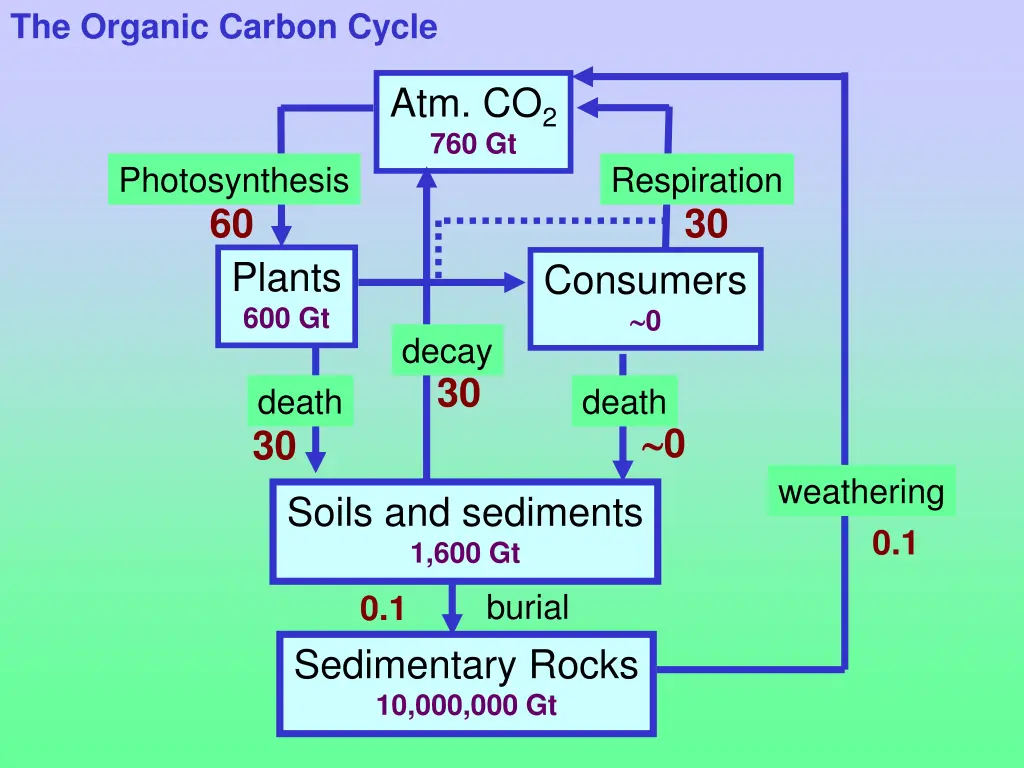
The Organic Carbon Cycle Atm. CO2 760 Gt Photosynthesis 60 Respiration 30 Plants 600 Gt Consumers 0 decay 30 death 30 death 0 weathering Soils and sediments 1,600 Gt 0.1 burial 0.1 Sedimentary Rocks 10,000,000 Gt
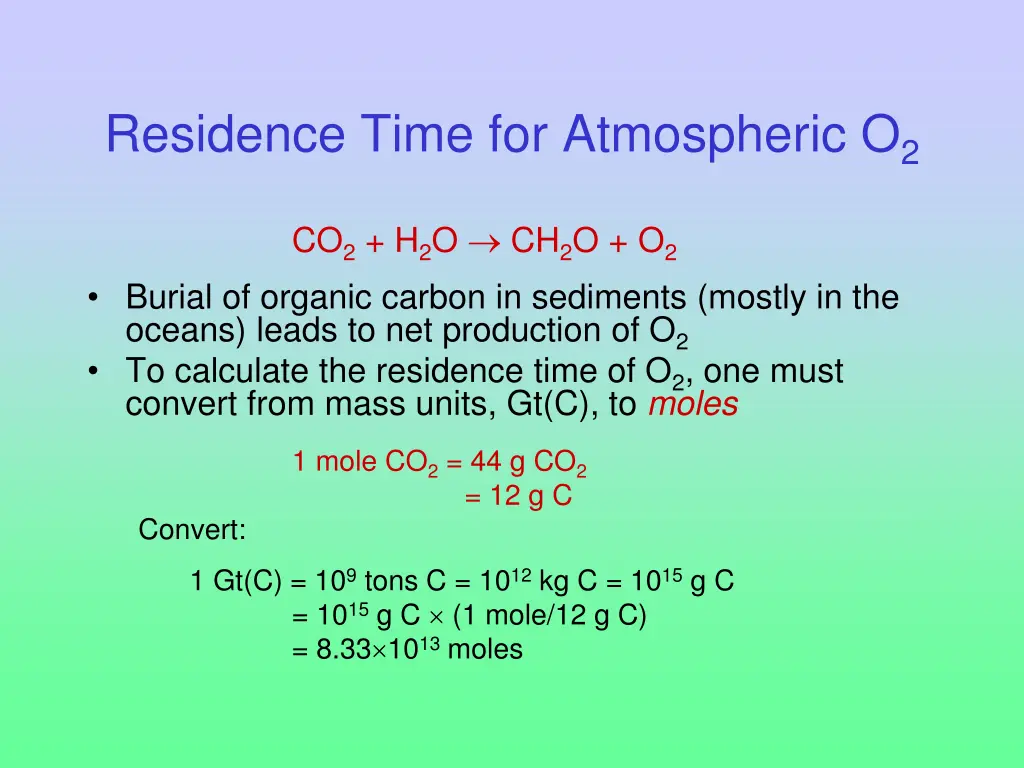
Residence Time for Atmospheric O2 CO2 + H2O CH2O + O2 Burial of organic carbon in sediments (mostly in the oceans) leads to net production of O2 To calculate the residence time of O2, one must convert from mass units, Gt(C), to moles Convert: 1 mole CO2 = 44 g CO2 = 12 g C 1 Gt(C) = 109 tons C = 1012 kg C = 1015 g C = 1015 g C (1 mole/12 g C) = 8.33 1013 moles
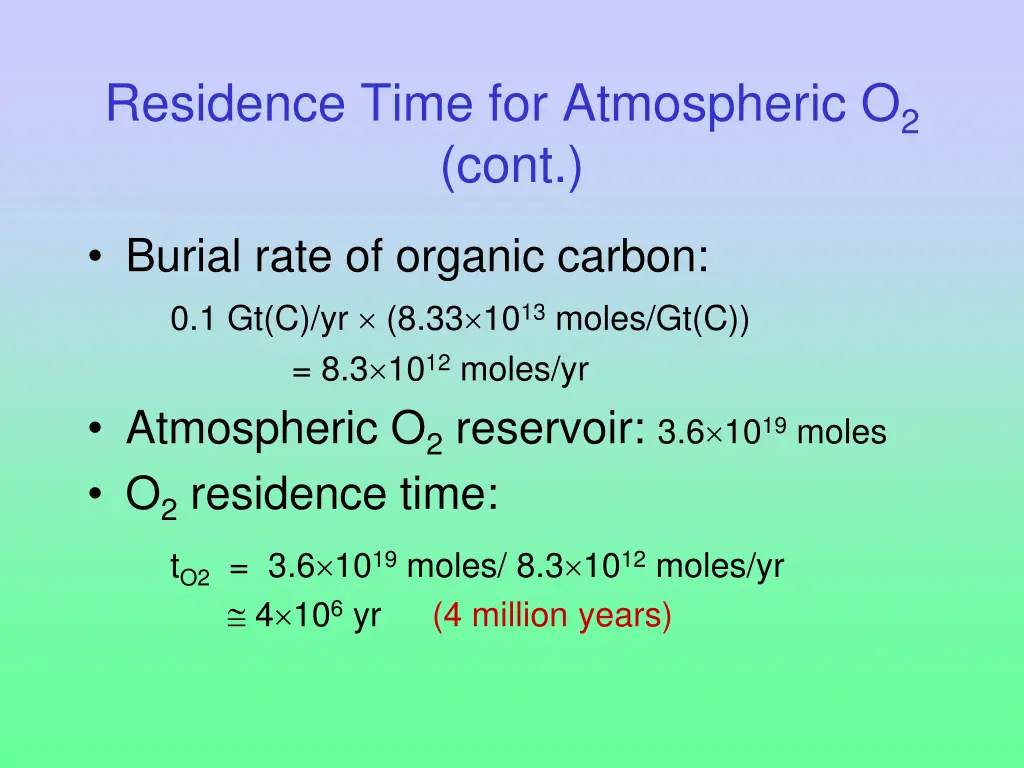
Residence Time for Atmospheric O2 (cont.) Burial rate of organic carbon: 0.1 Gt(C)/yr (8.33 1013 moles/Gt(C)) = 8.3 1012 moles/yr Atmospheric O2 reservoir: 3.6 1019 moles O2 residence time: tO2 = 3.6 1019 moles/ 8.3 1012 moles/yr 4 106 yr (4 million years)
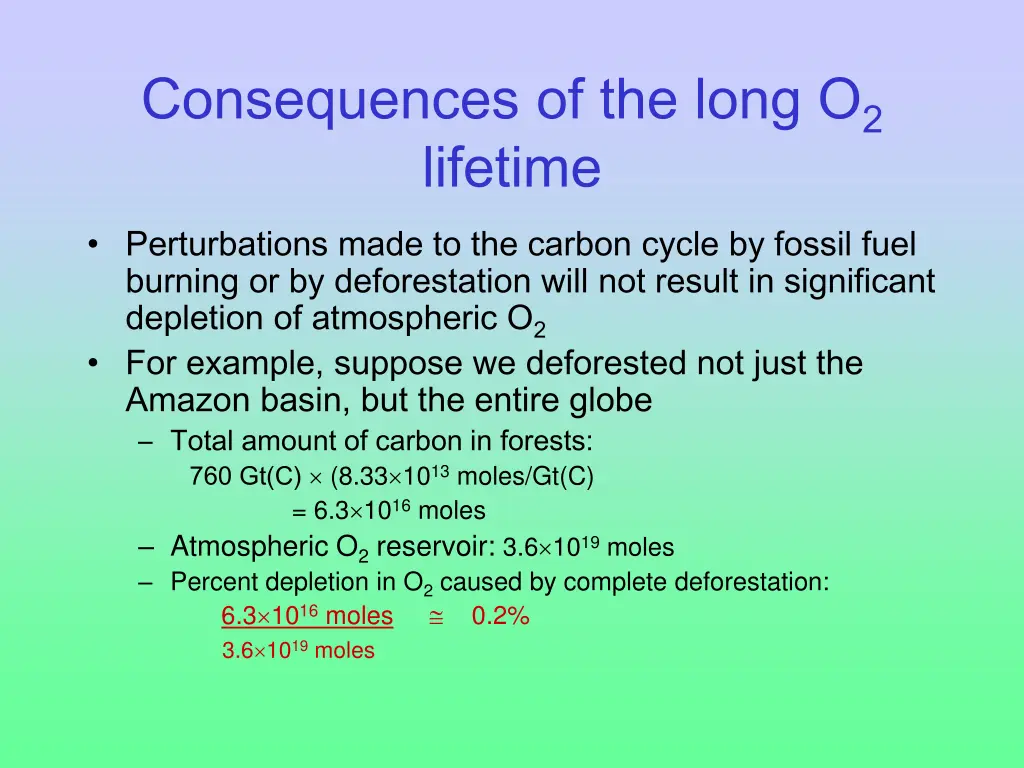
Consequences of the long O2 lifetime Perturbations made to the carbon cycle by fossil fuel burning or by deforestation will not result in significant depletion of atmospheric O2 For example, suppose we deforested not just the Amazon basin, but the entire globe Total amount of carbon in forests: 760 Gt(C) (8.33 1013 moles/Gt(C) = 6.3 1016 moles Atmospheric O2 reservoir: 3.6 1019 moles Percent depletion in O2 caused by complete deforestation: 6.3 1016 moles 0.2% 3.6 1019 moles