Organic Pharmaceutical Chemistry IV - Prodrug Strategies in Drug Delivery
Explore the use of prodrugs in pharmaceutical chemistry, including the challenges with amides and the successful approaches with Mannich bases, as well as examples like Hetacillin and Rolitetracycline. Learn about the benefits of azo prodrugs and the specific case of Sulfasalazine. Discover how these strategies enhance drug delivery and targeting for improved therapeutic outcomes.

Download Presentation

Please find below an Image/Link to download the presentation.
The content on the website is provided AS IS for your information and personal use only. It may not be sold, licensed, or shared on other websites without obtaining consent from the author. If you encounter any issues during the download, it is possible that the publisher has removed the file from their server.
You are allowed to download the files provided on this website for personal or commercial use, subject to the condition that they are used lawfully. All files are the property of their respective owners.
The content on the website is provided AS IS for your information and personal use only. It may not be sold, licensed, or shared on other websites without obtaining consent from the author.
E N D
Presentation Transcript
Lec 3 5th stage Organic Pharmaceutical Chemistry IV 2018-2019 Assist prof. Dr.Rita Sabah Elias College of Pharmacy, university of Basrah
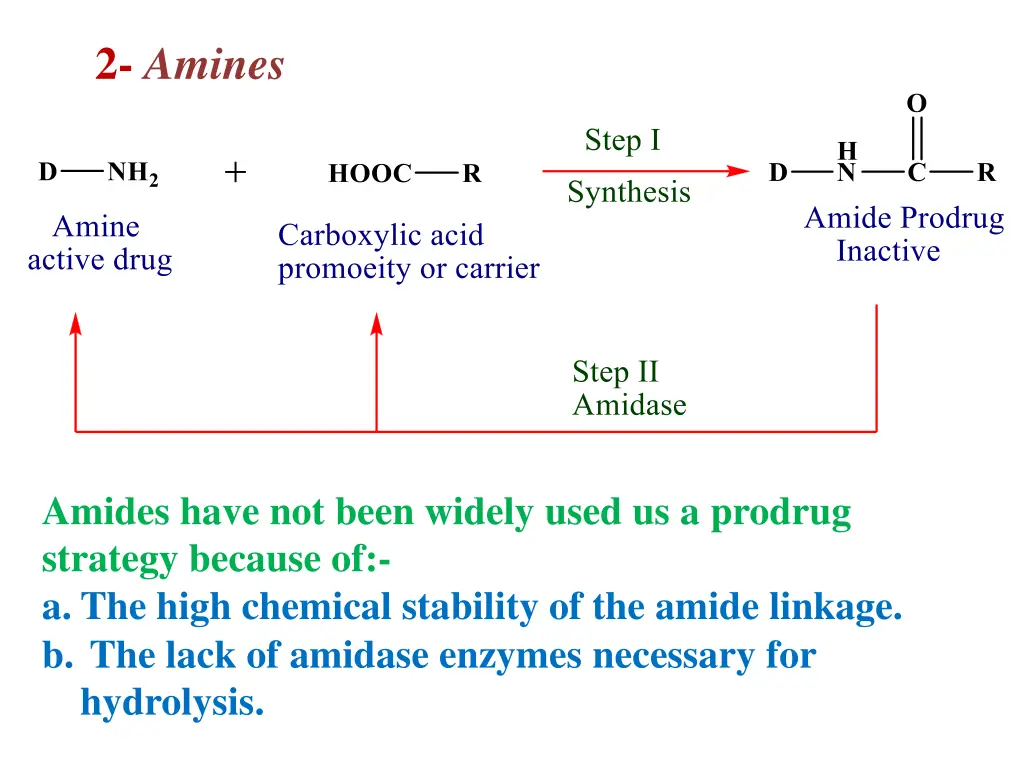
2-Amines Amides have not been widely used us a prodrug strategy because of:- a. The high chemical stability of the amide linkage. b. The lack of amidase enzymes necessary for hydrolysis.
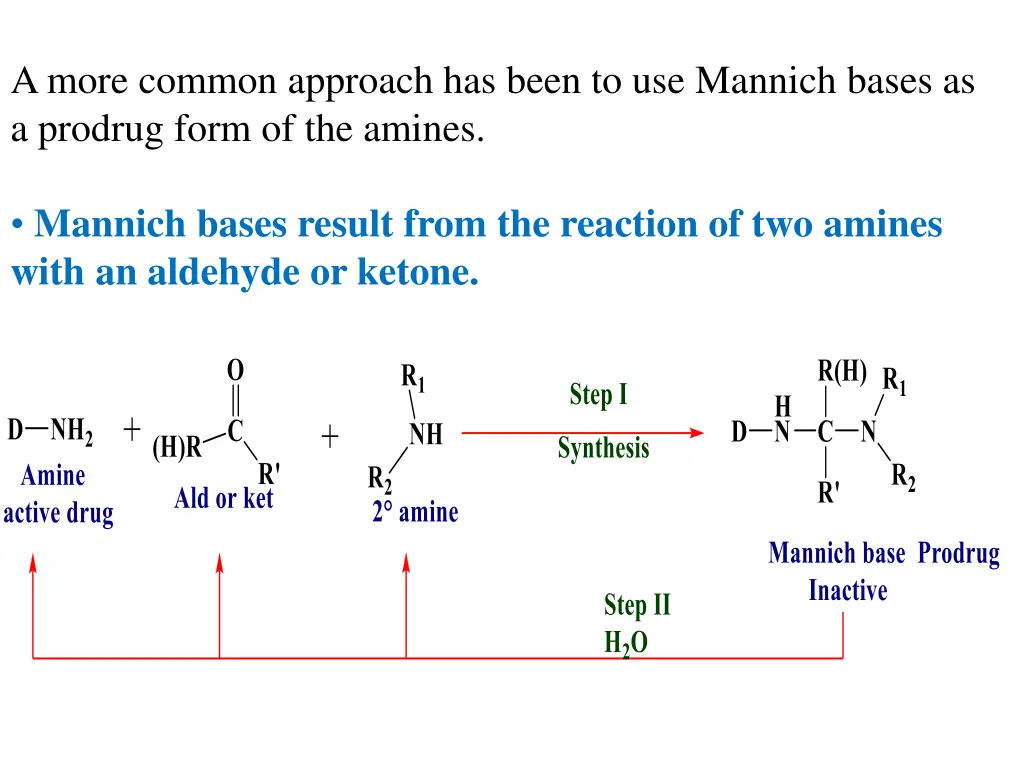
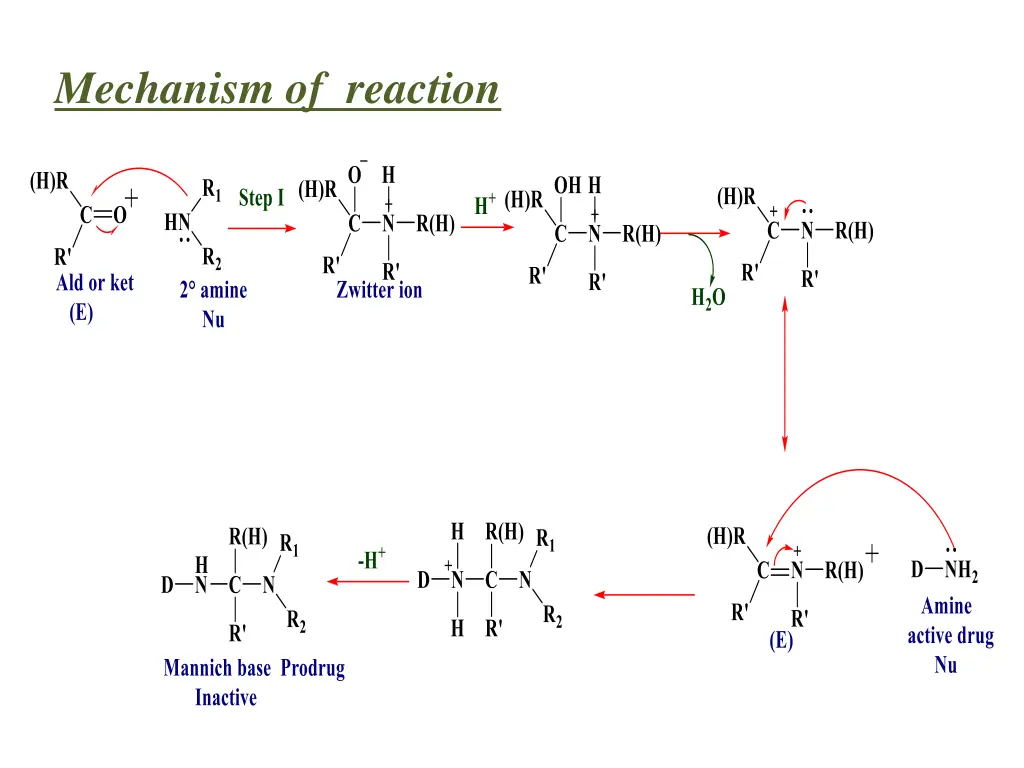
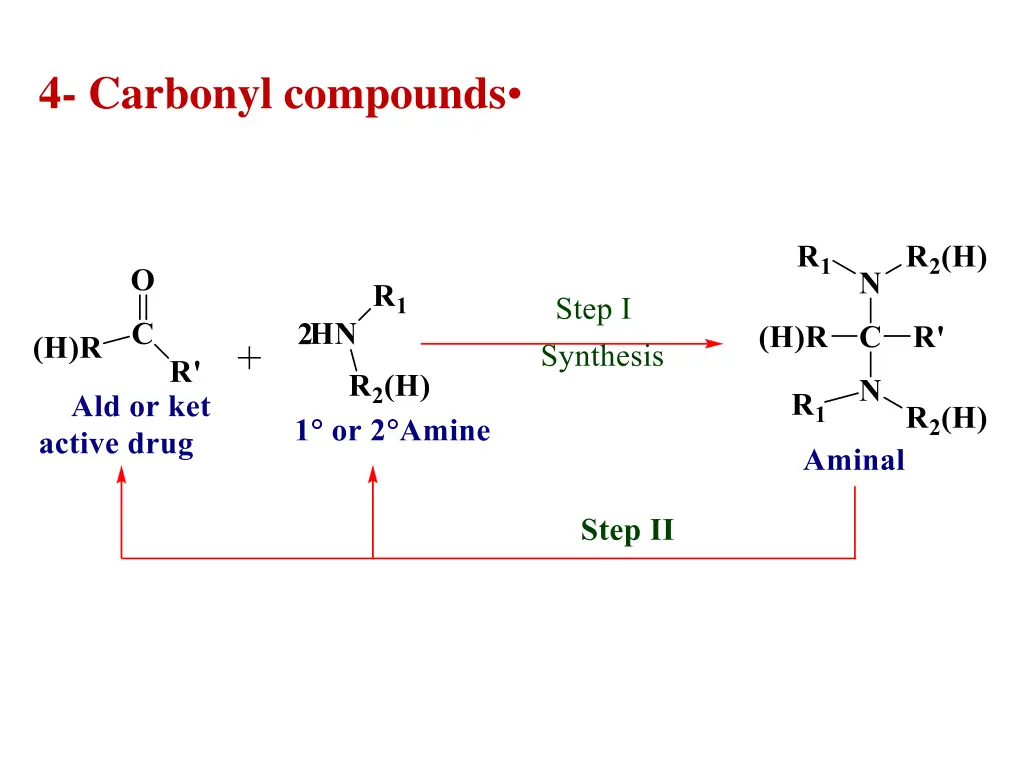
A more common approach has been to use Mannich bases as a prodrug form of the amines. Mannich bases result from the reaction of two amines with an aldehyde or ketone.
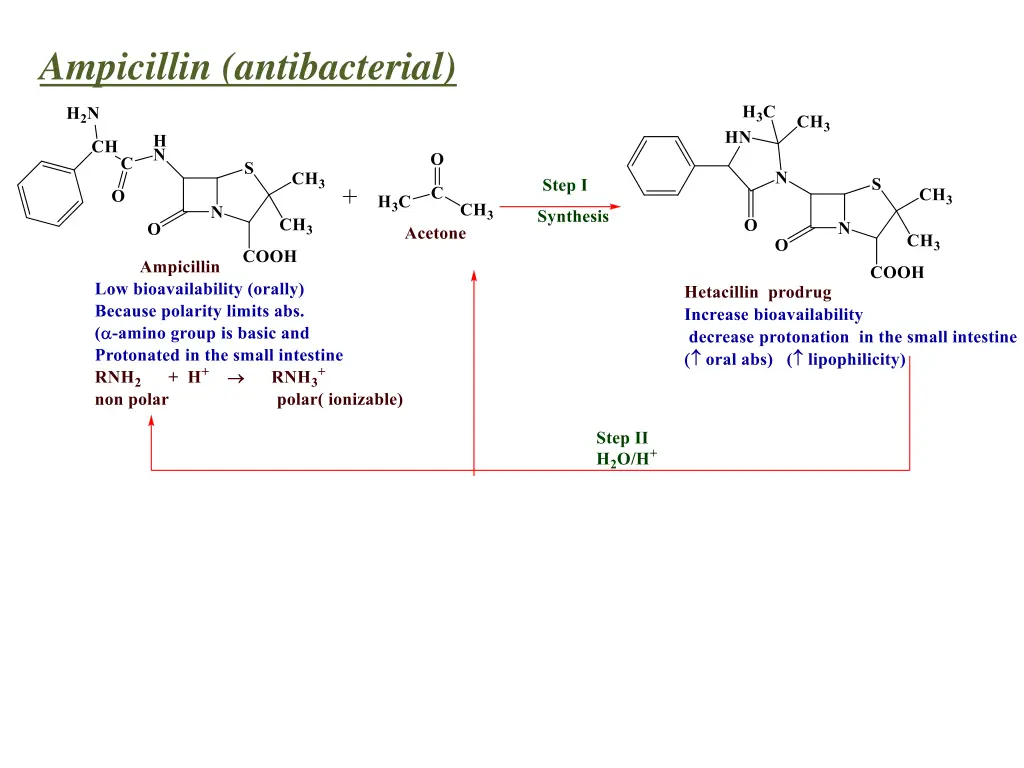
Hetacillin is a prodrug form of ampicillin in which the amide nitrogen and -amino functionalities have been allowed to react with acetone to give an imidazolidinone ring system. This decreases the basicity of the -amino group and reduces protonation in the small intestine so that the agent is more lipophilic. In this manner, the absorption of the drug from the small intestine is increased after oral dosing, and chemical hydrolysis after absorption regenerates ampicillin.
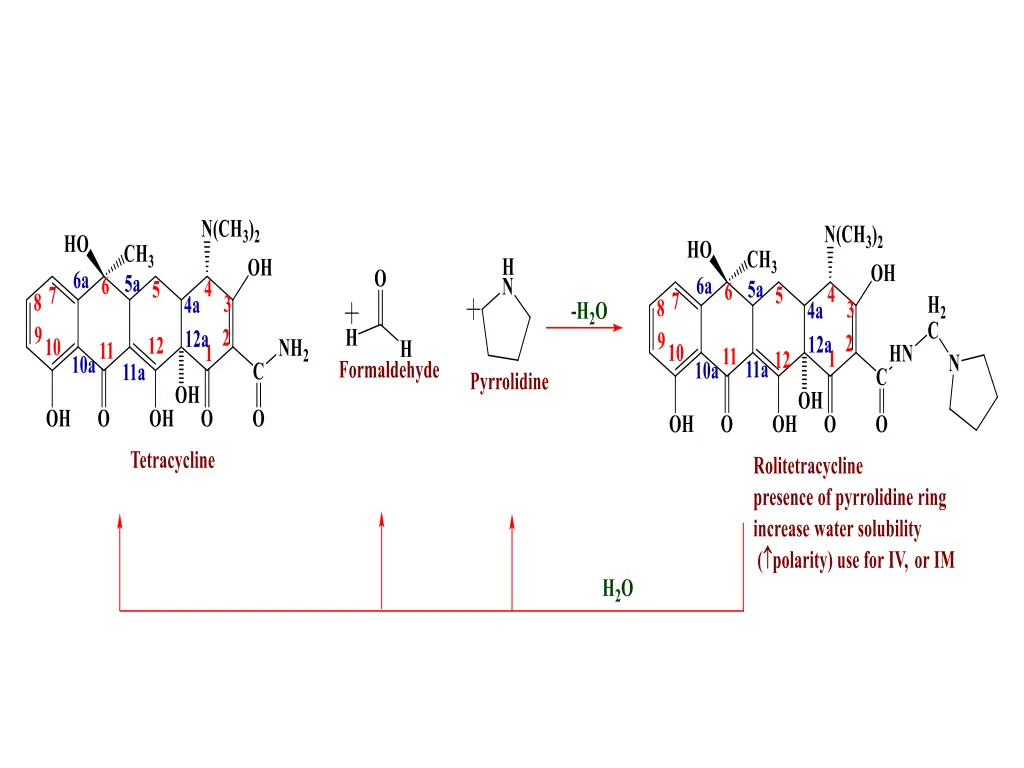
Rolitetracycline This approach was also used with the antibiotic tetracycline the amide nitrogen was allowed to react with formaldehyde and pyrrolidine to give the Mannich base rolitetracycline. In this case, addition of the basic pyrrolidine nitrogen introduces an additional ionizable functionality and increases the water solubility of the parent drug. The Mannich base hydrolyzes completely and rapidly in aqueous media to give the active tetracycline.
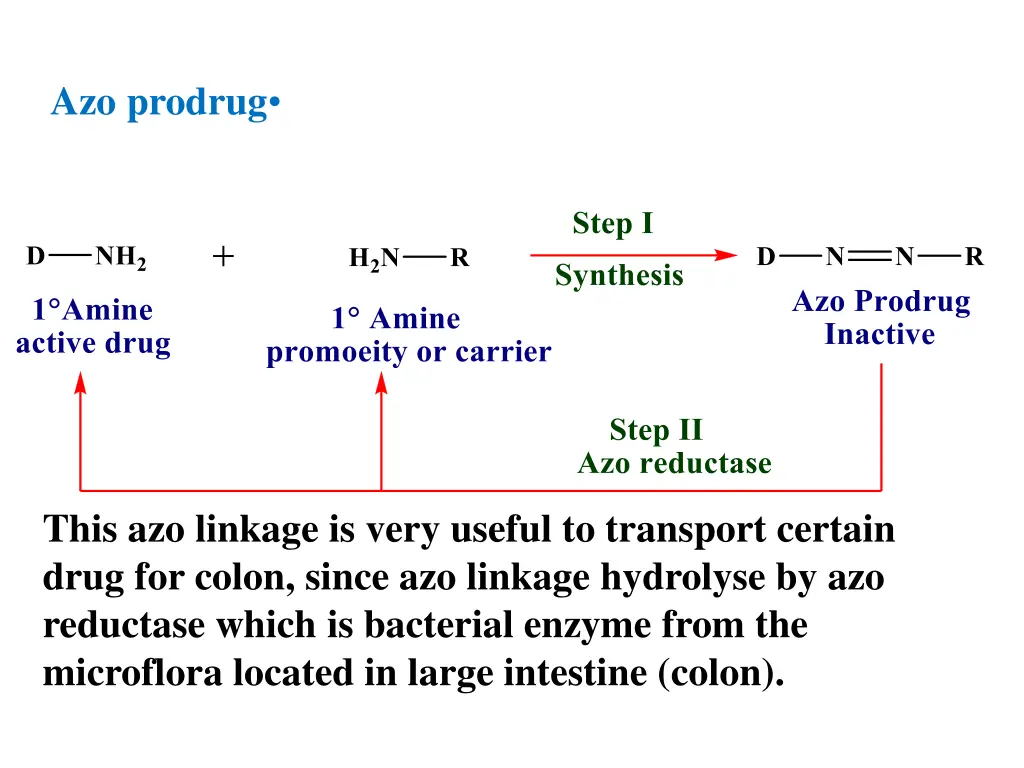
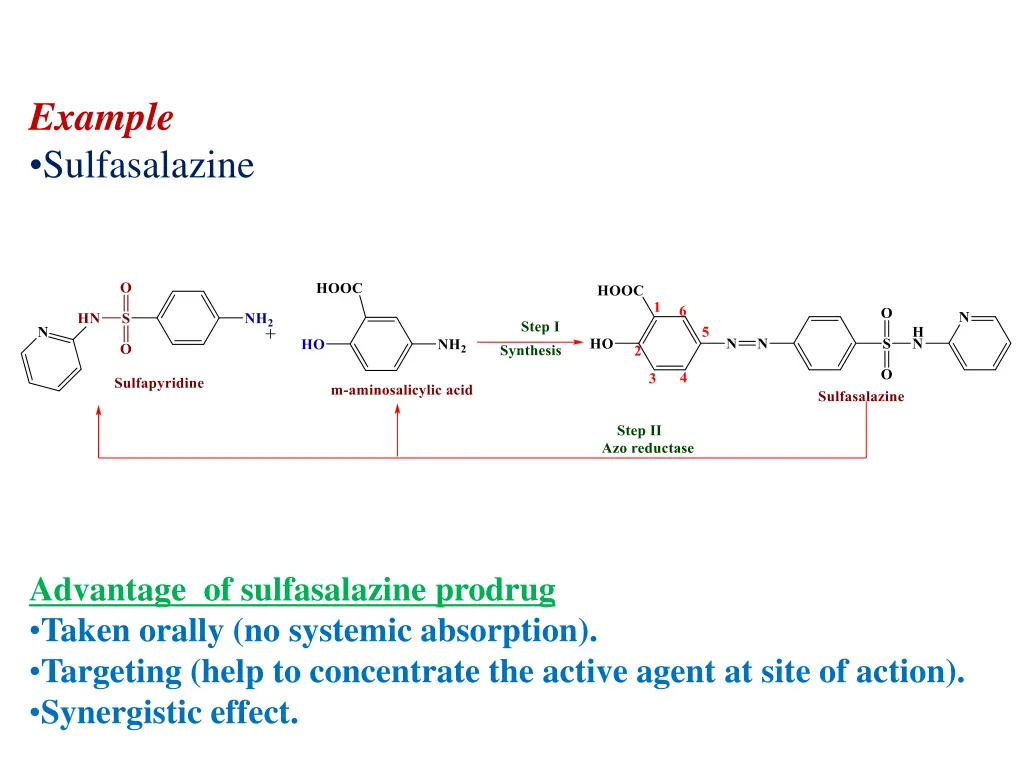
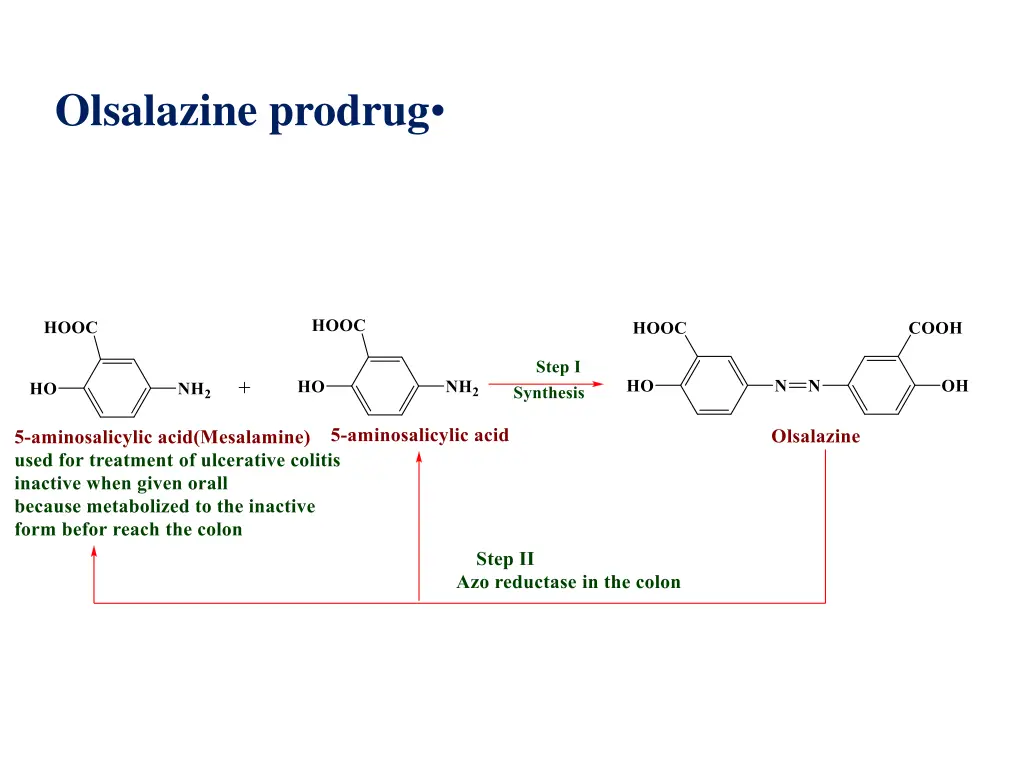
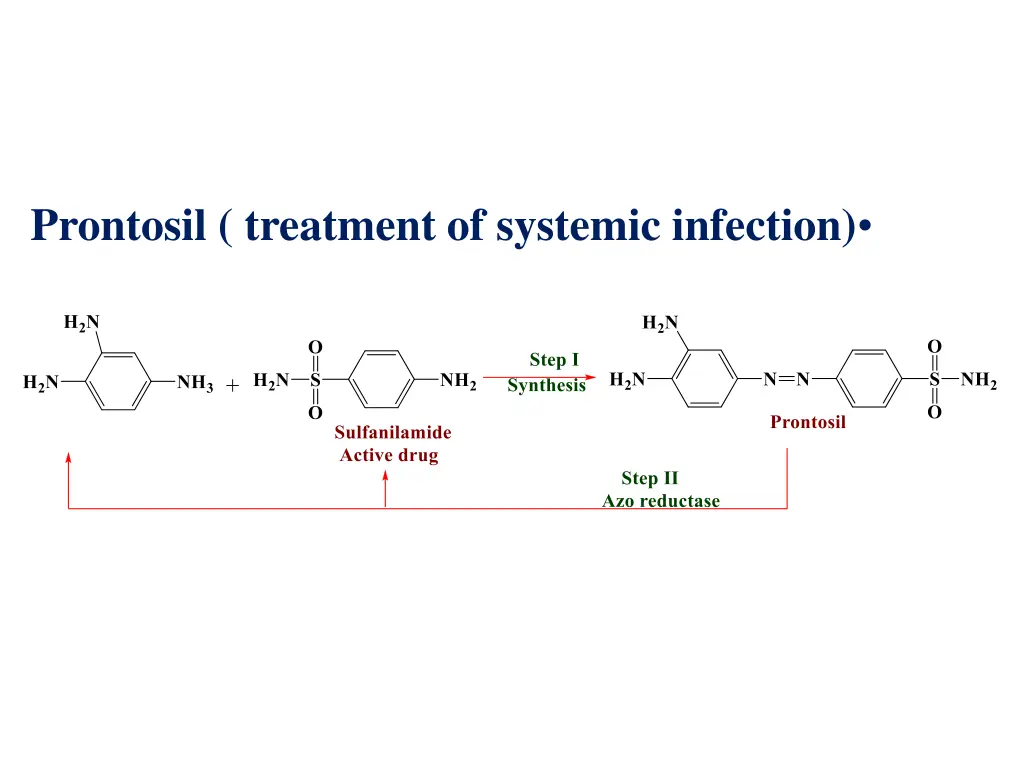
Azo prodrug This azo linkage is very useful to transport certain drug for colon, since azo linkage hydrolyse by azo reductase which is bacterial enzyme from the microflora located in large intestine (colon).
Example Sulfasalazine Advantage of sulfasalazine prodrug Taken orally (no systemic absorption). Targeting (help to concentrate the active agent at site of action). Synergistic effect.
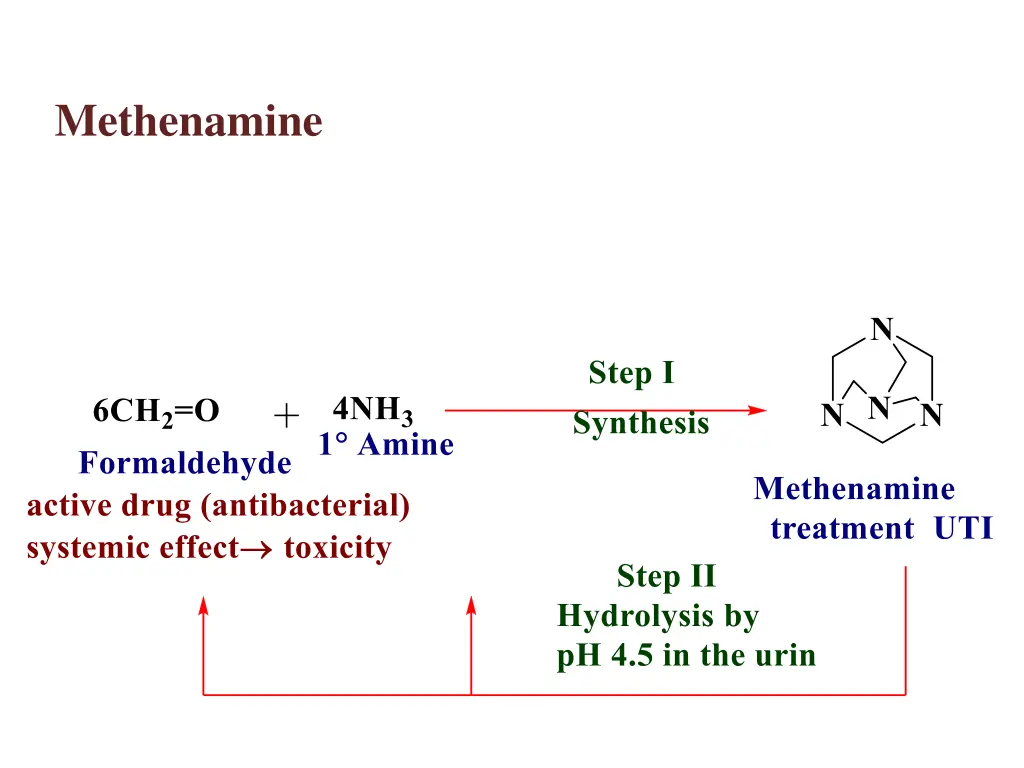
Methenamine is only hydrolyse in acidic media which is found in acidic urine leading to liberation of formaldehyde and 4NH3,where the formaldehyde act as antibacterial agent by reacting with nucleophiles present in bacteria. The agent is administered in enteric-coated capsules to protect it from premature hydrolysis in the acidic environment of the stomach. After dissolution of the enteric-coated capsules in the intestine, the agent is absorbed and moves into the bloodstream, eventually ending up in the urine, where the acidic pH catalyzes the chemical hydrolysis to give formaldehyde. Use of this prodrug approach prevents the systemic release of formaldehyde and reduces toxicity.