Organizing Production and Economic Efficiency
Explore the definition of a firm, the economic problems firms face, and the distinction between technological and economic efficiency. Learn about different market types, the firm's goal of maximizing economic profit, accounting versus economic profits, opportunity cost, and the cost of capital. Delve into the difference between economic and accounting profit, and the importance of technological efficiency in production.

Download Presentation

Please find below an Image/Link to download the presentation.
The content on the website is provided AS IS for your information and personal use only. It may not be sold, licensed, or shared on other websites without obtaining consent from the author. If you encounter any issues during the download, it is possible that the publisher has removed the file from their server.
You are allowed to download the files provided on this website for personal or commercial use, subject to the condition that they are used lawfully. All files are the property of their respective owners.
The content on the website is provided AS IS for your information and personal use only. It may not be sold, licensed, or shared on other websites without obtaining consent from the author.
E N D
Presentation Transcript
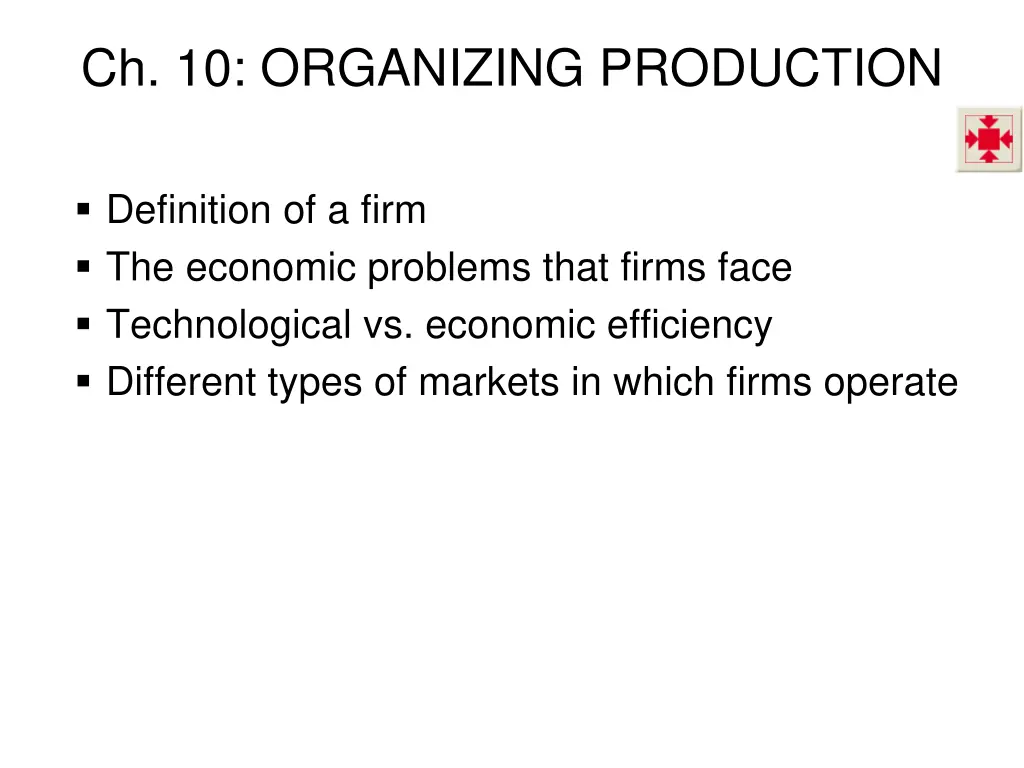
Ch. 10: ORGANIZING PRODUCTION but1 Definition of a firm The economic problems that firms face Technological vs. economic efficiency Different types of markets in which firms operate
The Firm and Its Economic Problem but1 Firm an institution that hires factors of production and organizes them to produce and sell goods or services. Firm s Goal Maximize economic profit. If the firm fails to maximize economic profits, it is either eliminated or bought out by other firms seeking to maximize profit.
Accounting vs Economic Profits Accounting profits IRS or Financial Accounting Standards Board rules Goals report profit so that the firm pays the correct amount of tax Truthful representation of financial situation Economic profits Measured based on an opportunity cost measure of cost. Primary difference between accounting and economic profits is in measurement of costs. but1
Opportunity Cost A firm s opportunity cost of producing a good is the best forgone alternative use of its factors of production, usually measured in dollars. Opportunity cost of production includes Explicit costs costs paid directly in money Implicit costs Opportunity cost of owner s resources for which no direct money payment is made. but1
Cost of capital can be explicit or implicit The firm can rent its capital and pay an explicit rental rate The firm can buy capital and incur an implicit opportunity cost of using its own capital (implicit rental rate) which includes Economic depreciation change in market value of capital over a given period. Differs from accounting depreciation. Interest forgone foregone interest on the funds used to acquire the capital. but1
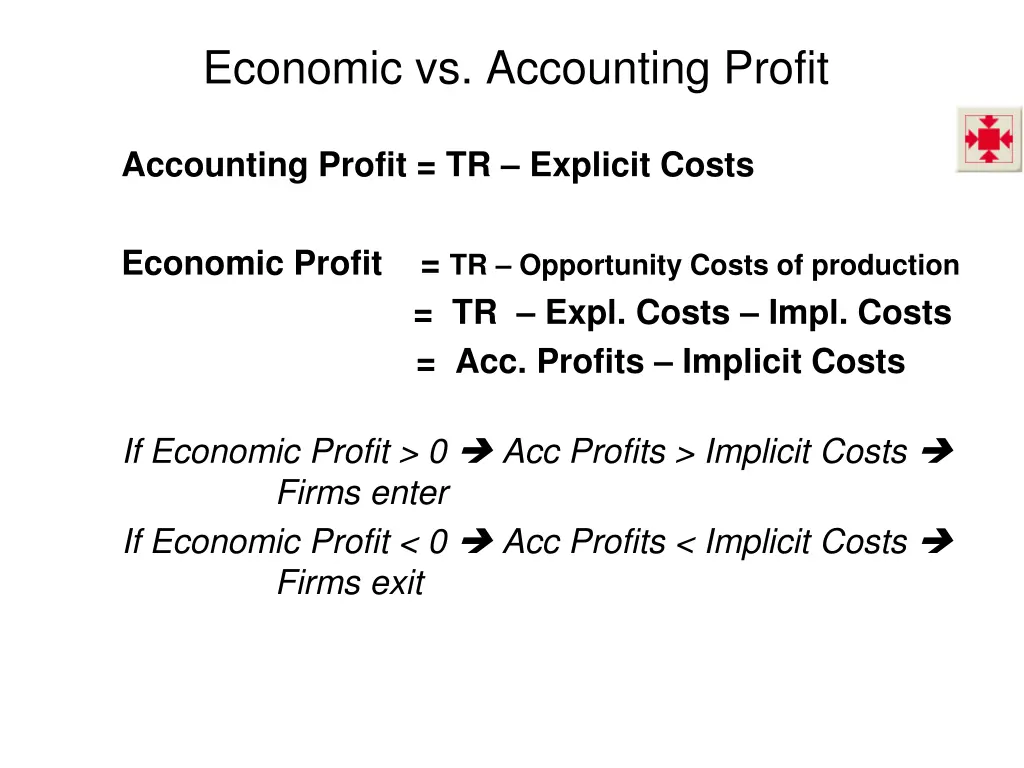
Economic vs. Accounting Profit but1 Accounting Profit = TR Explicit Costs Economic Profit = TR Opportunity Costs of production = TR Expl. Costs Impl. Costs = Acc. Profits Implicit Costs If Economic Profit > 0 Acc Profits > Implicit Costs Firms enter If Economic Profit < 0 Acc Profits < Implicit Costs Firms exit
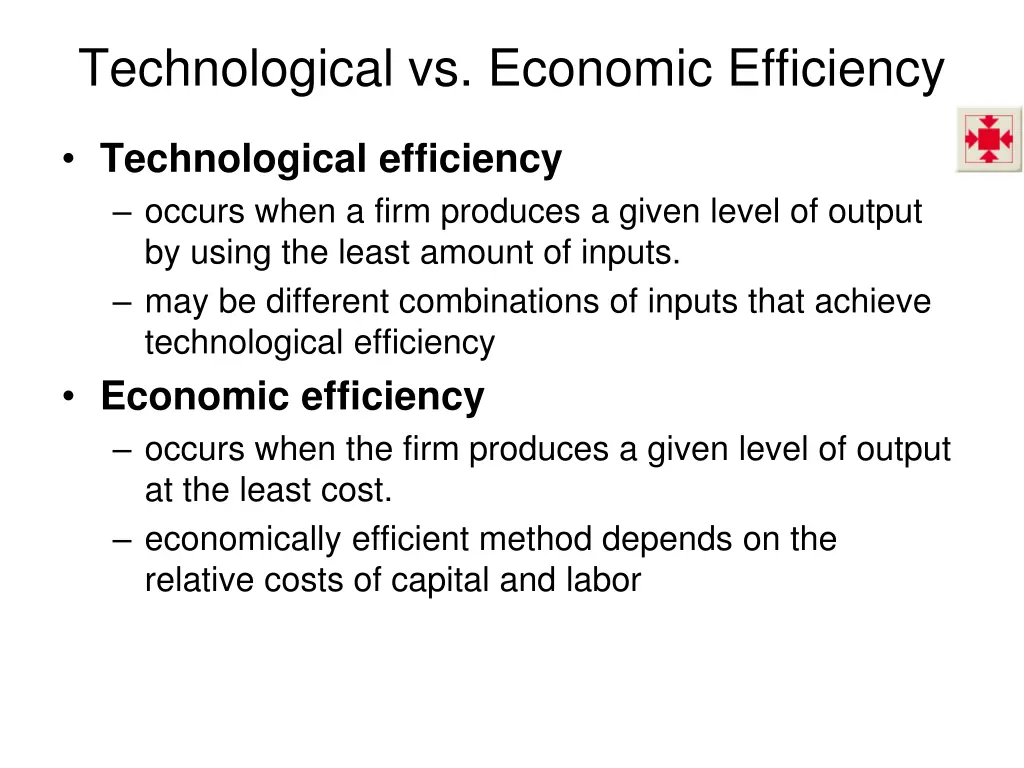
Technological vs. Economic Efficiency but1 Technological efficiency occurs when a firm produces a given level of output by using the least amount of inputs. may be different combinations of inputs that achieve technological efficiency Economic efficiency occurs when the firm produces a given level of output at the least cost. economically efficient method depends on the relative costs of capital and labor
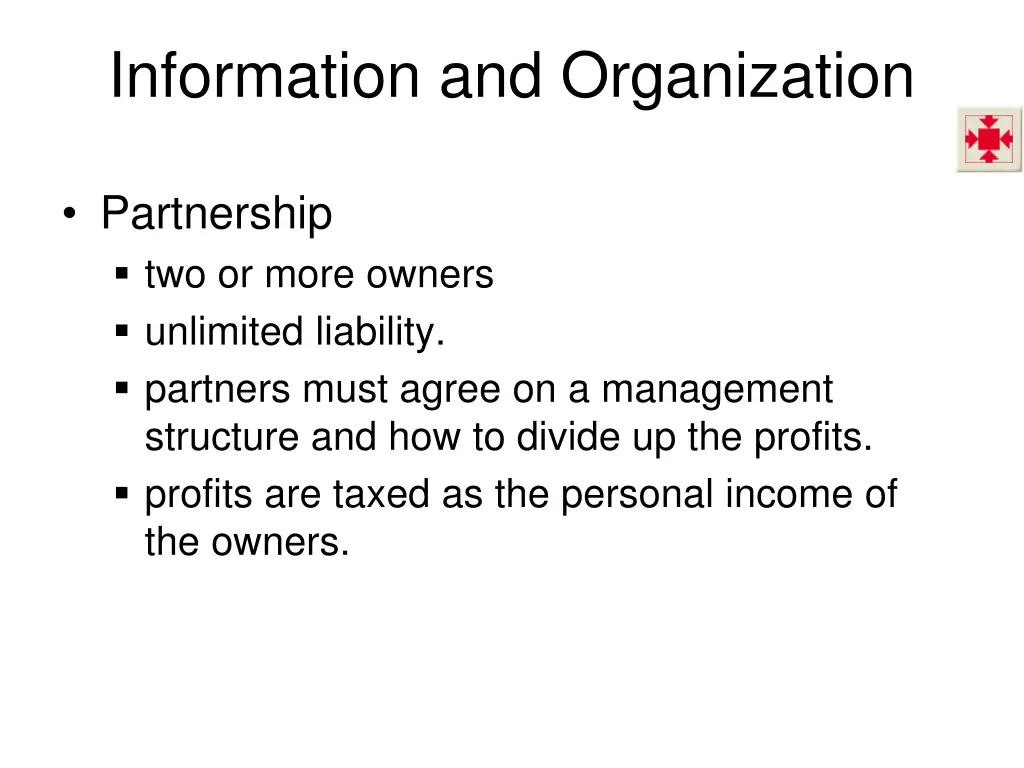
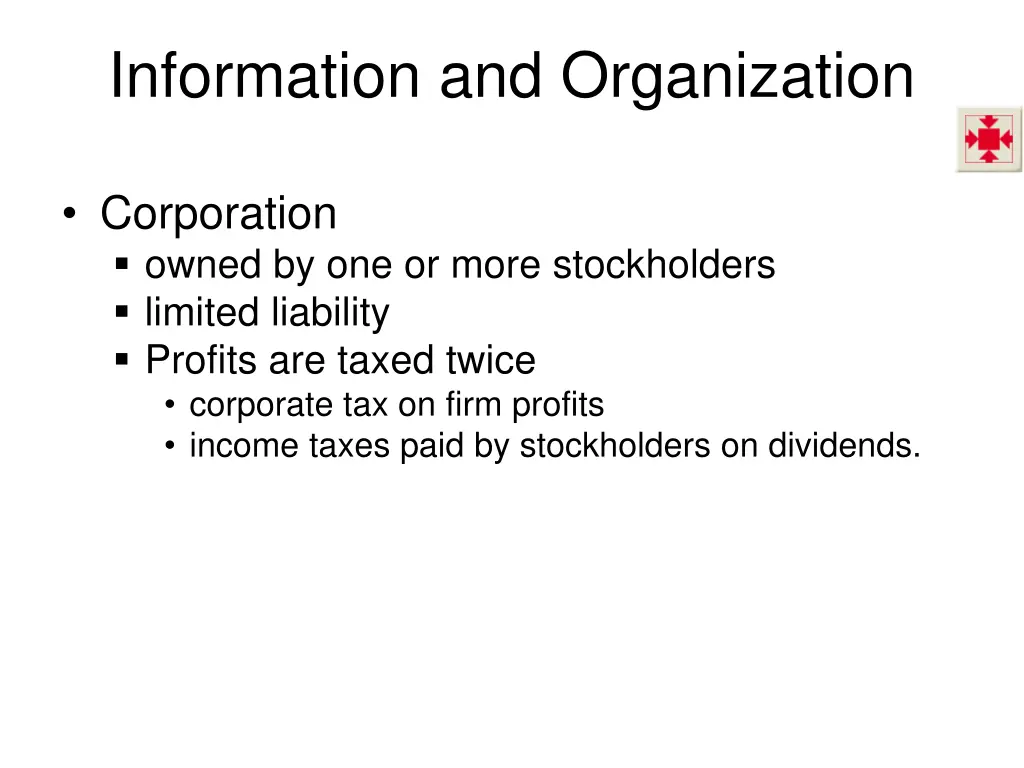
Information and Organization but1 3 Types of Business Organization Proprietorship Partnership Corporation
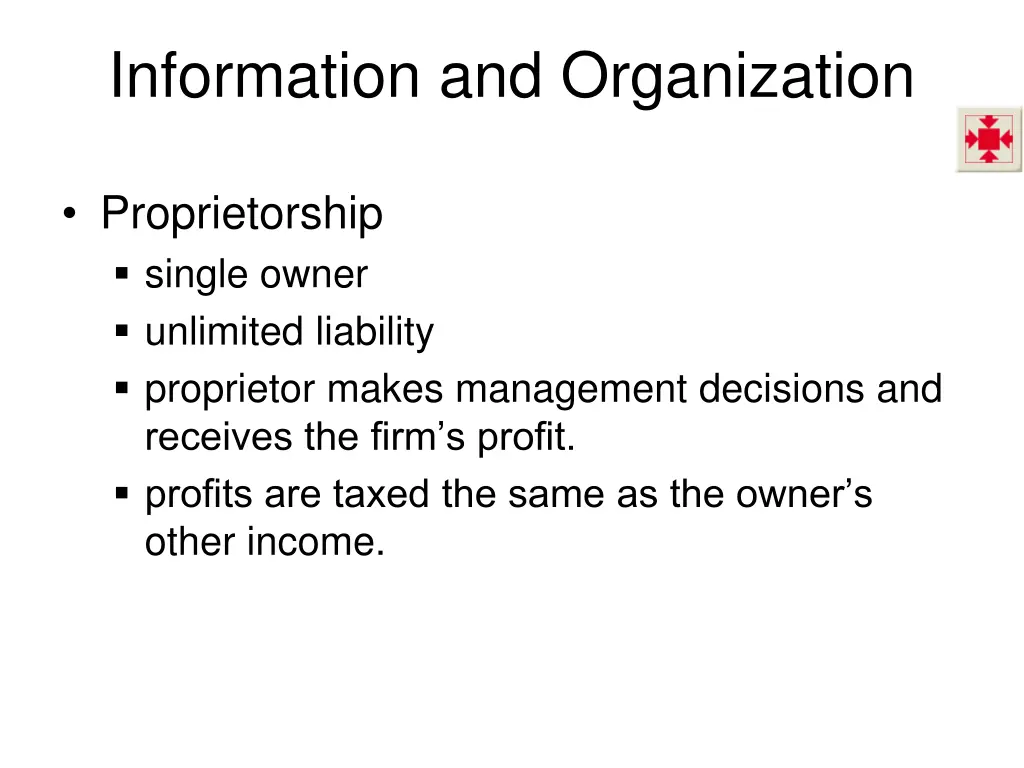
Information and Organization but1 Proprietorship single owner unlimited liability proprietor makes management decisions and receives the firm s profit. profits are taxed the same as the owner s other income.
Information and Organization but1 Partnership two or more owners unlimited liability. partners must agree on a management structure and how to divide up the profits. profits are taxed as the personal income of the owners.
Information and Organization but1 Corporation owned by one or more stockholders limited liability Profits are taxed twice corporate tax on firm profits income taxes paid by stockholders on dividends.
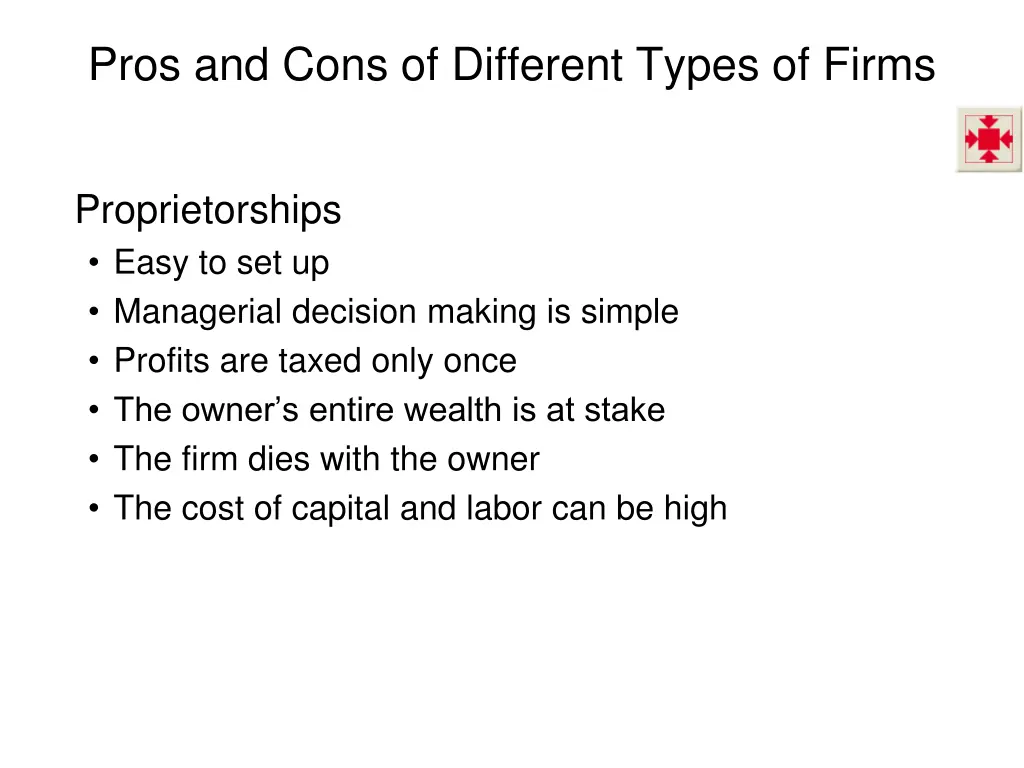
Pros and Cons of Different Types of Firms but1 Proprietorships Easy to set up Managerial decision making is simple Profits are taxed only once The owner s entire wealth is at stake The firm dies with the owner The cost of capital and labor can be high
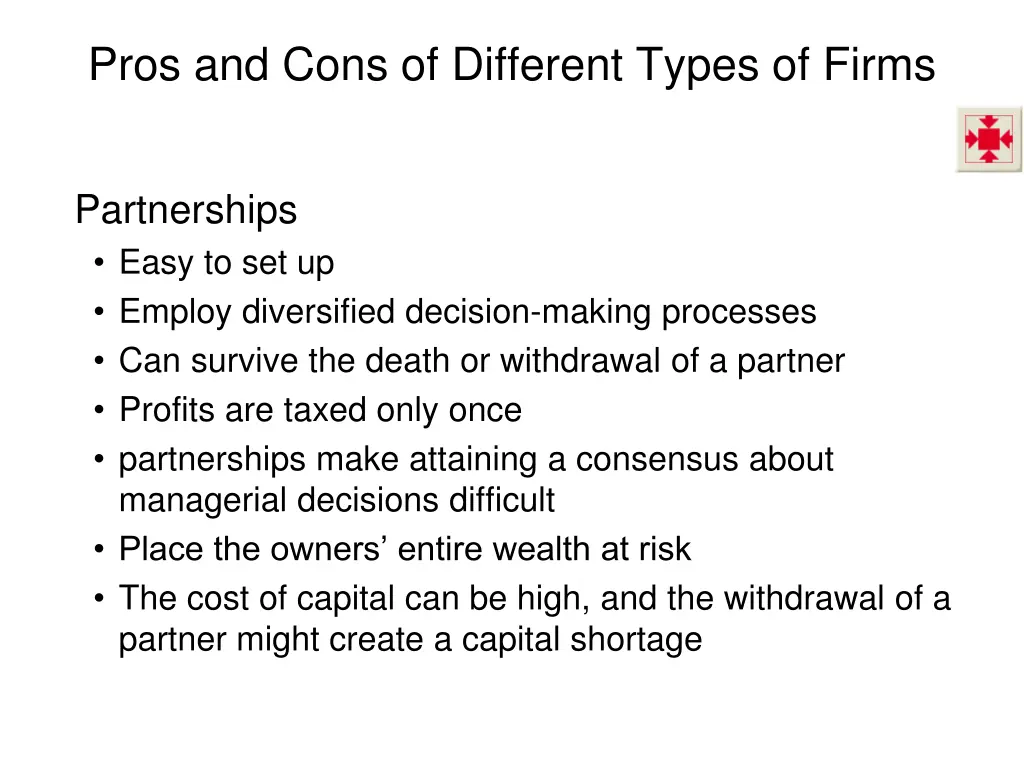
Pros and Cons of Different Types of Firms but1 Partnerships Easy to set up Employ diversified decision-making processes Can survive the death or withdrawal of a partner Profits are taxed only once partnerships make attaining a consensus about managerial decisions difficult Place the owners entire wealth at risk The cost of capital can be high, and the withdrawal of a partner might create a capital shortage
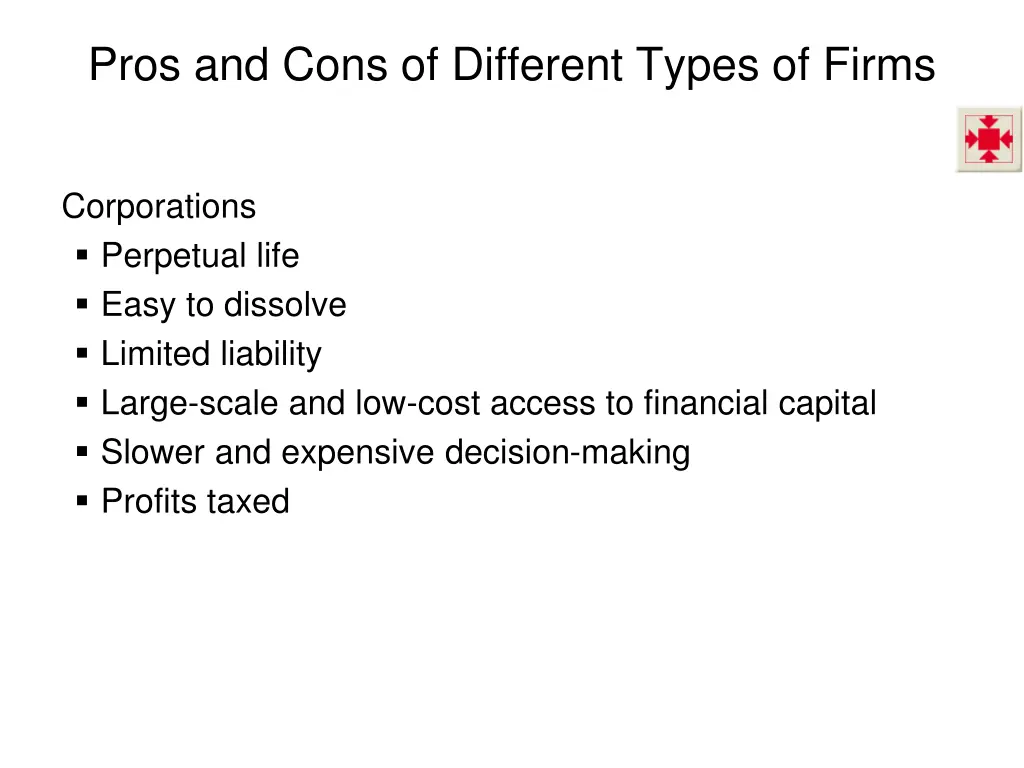
Pros and Cons of Different Types of Firms but1 Corporations Perpetual life Easy to dissolve Limited liability Large-scale and low-cost access to financial capital Slower and expensive decision-making Profits taxed
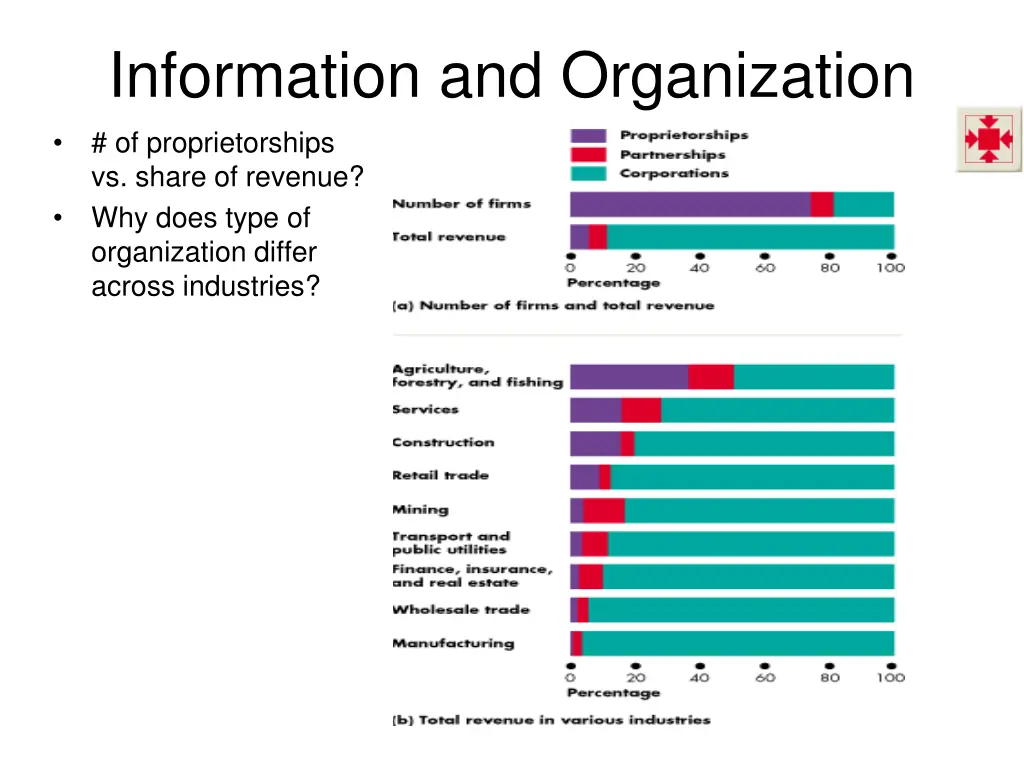
Information and Organization but1 # of proprietorships vs. share of revenue? Why does type of organization differ across industries?
Types of Markets but1 Perfect competition Monopolistic competition Oligopoly Monopoly
Perfect competition but1 Many firms Homogeneous products No single firm can control price Many buyers No restrictions on entry of new firms to the industry Both firms and buyers are all well informed of the prices and products of all firms in the industry.
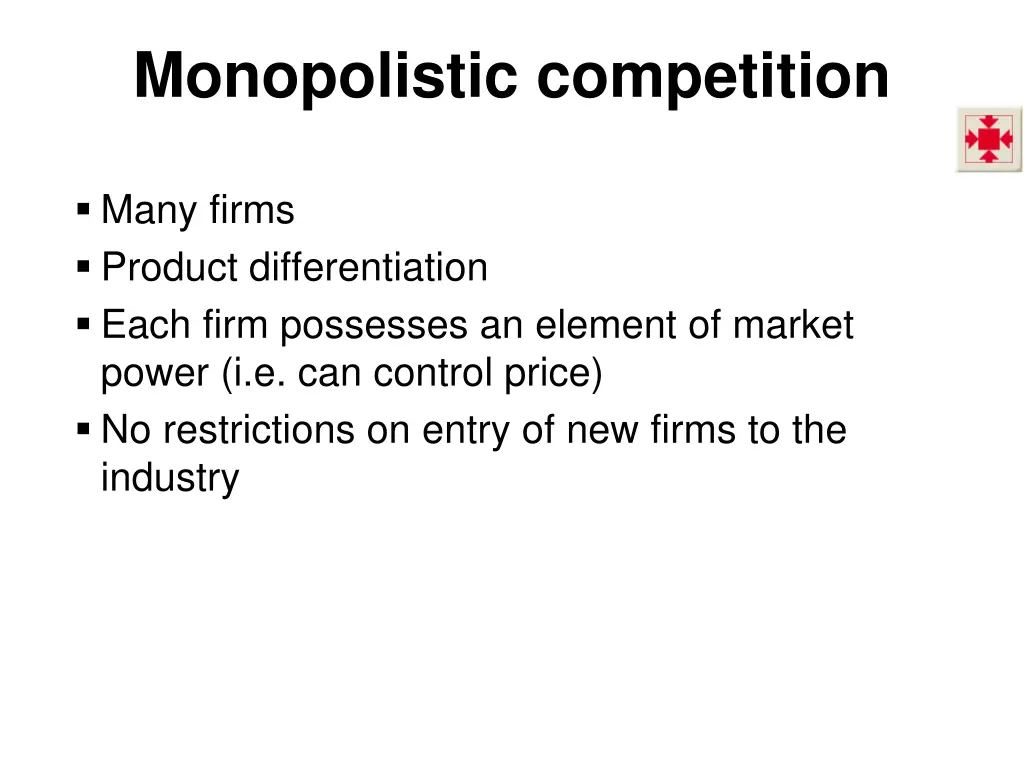
Monopolistic competition but1 Many firms Product differentiation Each firm possesses an element of market power (i.e. can control price) No restrictions on entry of new firms to the industry
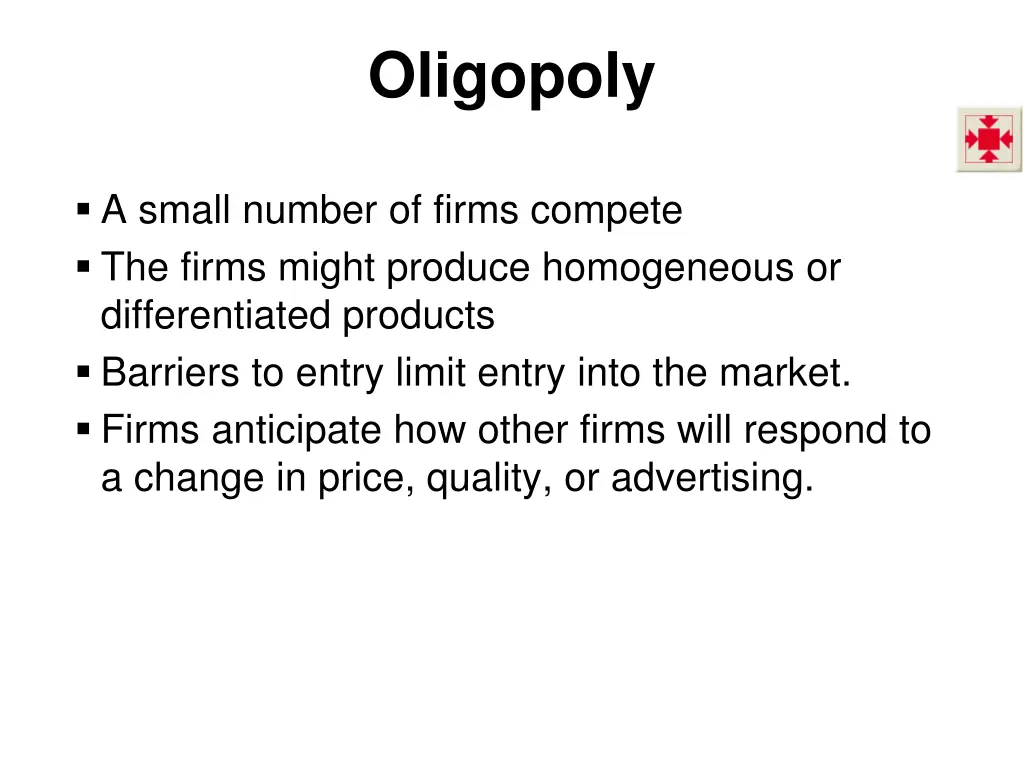
Oligopoly but1 A small number of firms compete The firms might produce homogeneous or differentiated products Barriers to entry limit entry into the market. Firms anticipate how other firms will respond to a change in price, quality, or advertising.
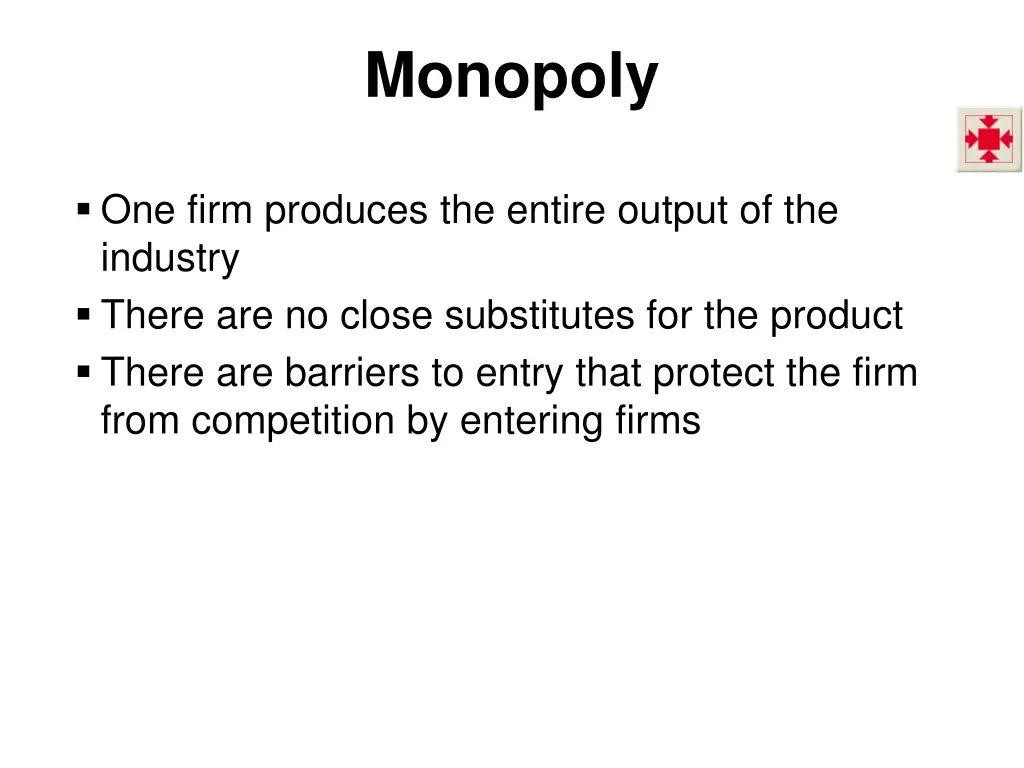
Monopoly but1 One firm produces the entire output of the industry There are no close substitutes for the product There are barriers to entry that protect the firm from competition by entering firms
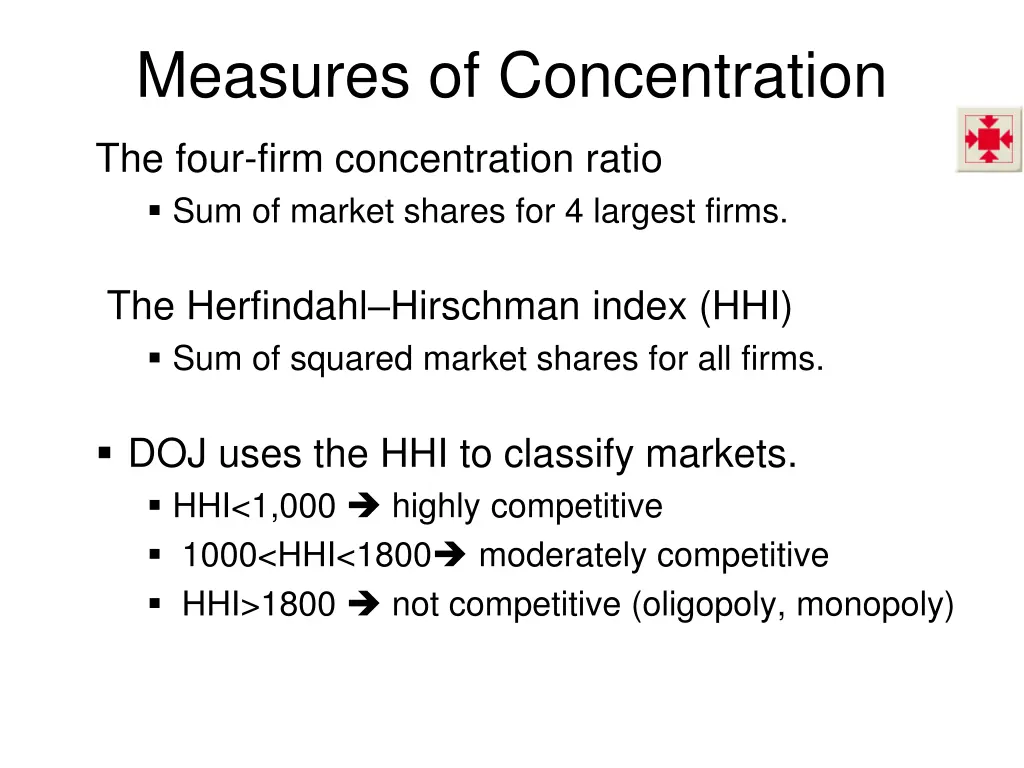
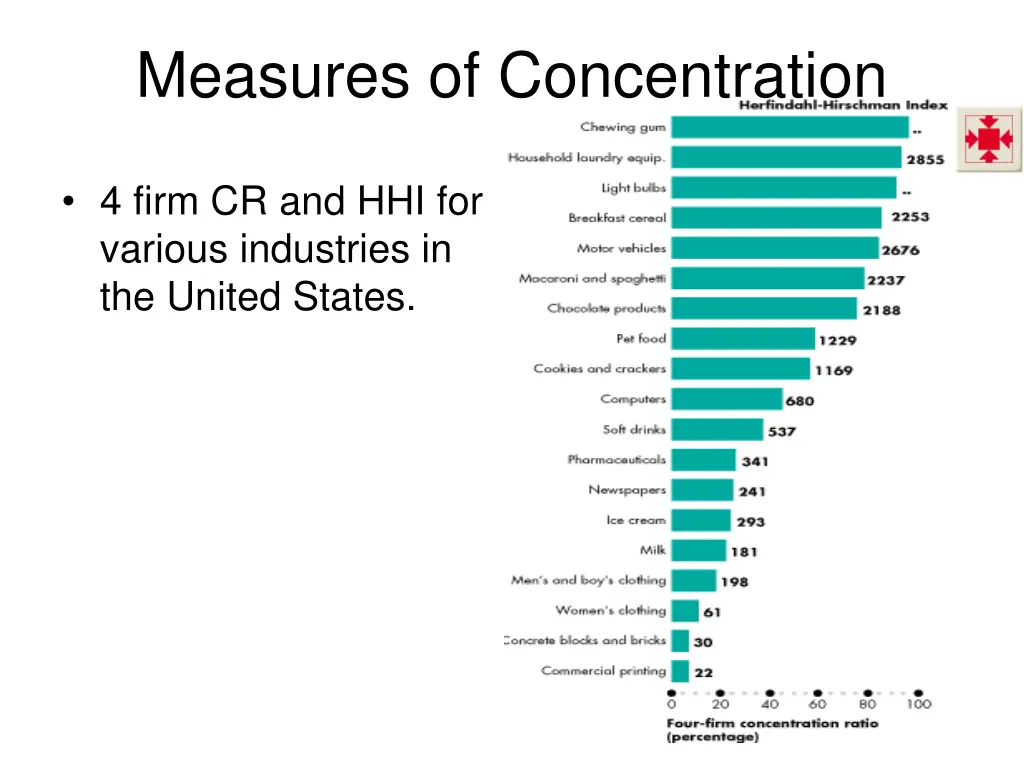
Measures of Concentration but1 The four-firm concentration ratio Sum of market shares for 4 largest firms. The Herfindahl Hirschman index (HHI) Sum of squared market shares for all firms. DOJ uses the HHI to classify markets. HHI<1,000 highly competitive 1000<HHI<1800 moderately competitive HHI>1800 not competitive (oligopoly, monopoly)
Measures of Concentration but1 4 firm CR and HHI for various industries in the United States.
Measures of Concentration but1 Limitations of Concentration Measures as measures of competition. Geographic boundaries Product boundaries. Barriers to Entry Ability to Collude
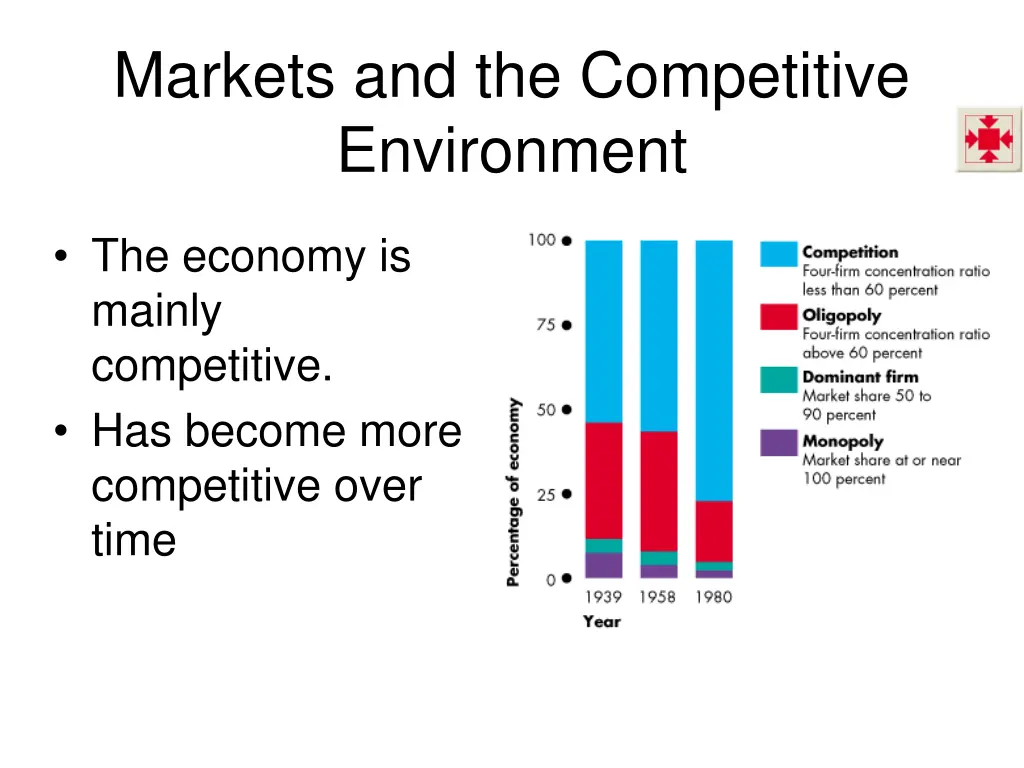
Markets and the Competitive Environment but1 The economy is mainly competitive. Has become more competitive over time
Markets and Firms but1 Why Firms? Firms coordinate production when they can do so more efficiently than a market. 4 reasons firms could be more efficient than market Lower transactions costs Economies of scale Economies of scope Principal-Agent problem can make firms less efficient.