Otago's Air Quality Management Strategy Workshop
The Otago Air Quality Programme is hosting a workshop to discuss managing air quality issues, guided by various factors like government regulations, community engagement, scientific data, and financial considerations. Participants will focus on defining outcomes, prioritizing health, compliance, and cost effectiveness, and designing effective strategies for the region. The workshop aims to achieve progress in air quality management through collaboration and informed decision-making.

Download Presentation

Please find below an Image/Link to download the presentation.
The content on the website is provided AS IS for your information and personal use only. It may not be sold, licensed, or shared on other websites without obtaining consent from the author. If you encounter any issues during the download, it is possible that the publisher has removed the file from their server.
You are allowed to download the files provided on this website for personal or commercial use, subject to the condition that they are used lawfully. All files are the property of their respective owners.
The content on the website is provided AS IS for your information and personal use only. It may not be sold, licensed, or shared on other websites without obtaining consent from the author.
E N D
Presentation Transcript
Otago Air Quality Programme ESP Workshop Air Quality 20 February 2025
Introduction Regional councils have the function of managing air quality to control the adverse effect of discharges primarily on human health, and also on K i Tahu values, environmental health, and amenity. Before we can progress the Air Strategy and Air Plan, we need to understand Council slevel of ambition for managing Otago s air quality issues. This will likely be guided by: - Central government through the RMA and NESAQ; - Council/community through the Strategic Directions, pORPS 2021, and 2024 community engagement; - Kai Tahu values and aspirations; - Scientific data about Otago's air quality and efficacy of possible approaches; - Competing demand for limited resources; - Relative financial costs to ORC, homeowners, and our communities.
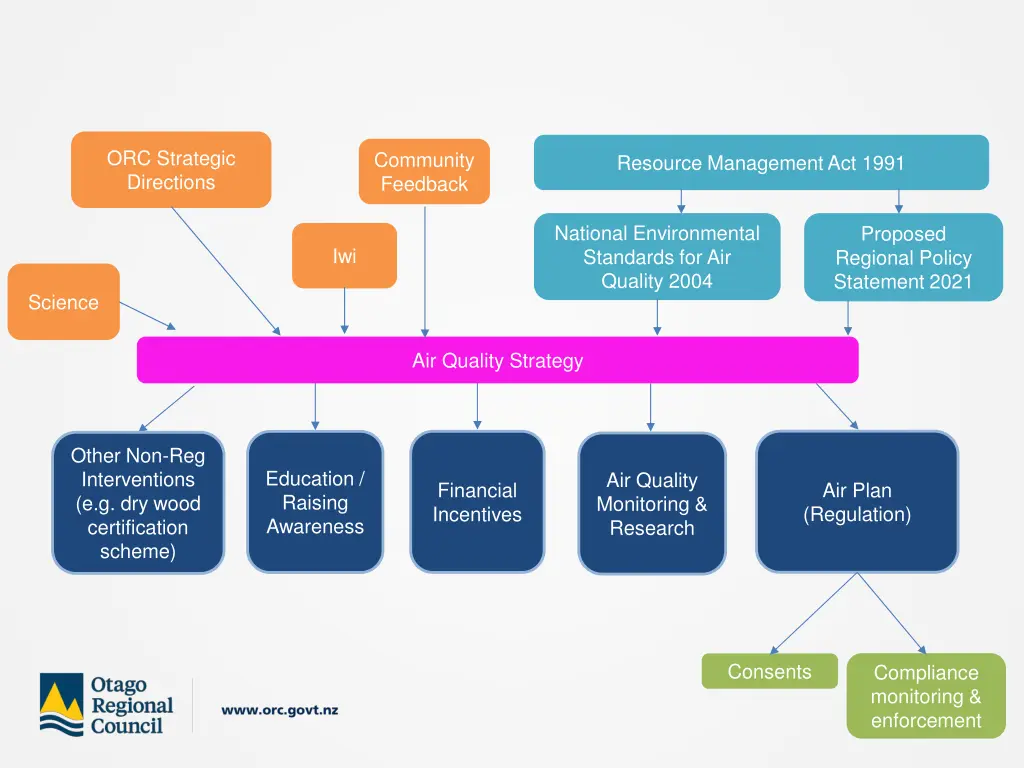
ORC Strategic Directions Community Feedback Resource Management Act 1991 National Environmental Standards for Air Quality 2004 Proposed Regional Policy Statement 2021 Iwi Science Air Quality Strategy Other Non-Reg Interventions (e.g. dry wood certification scheme) Education / Raising Awareness Air Quality Monitoring & Research Air Plan (Regulation) Financial Incentives Consents Compliance monitoring & enforcement
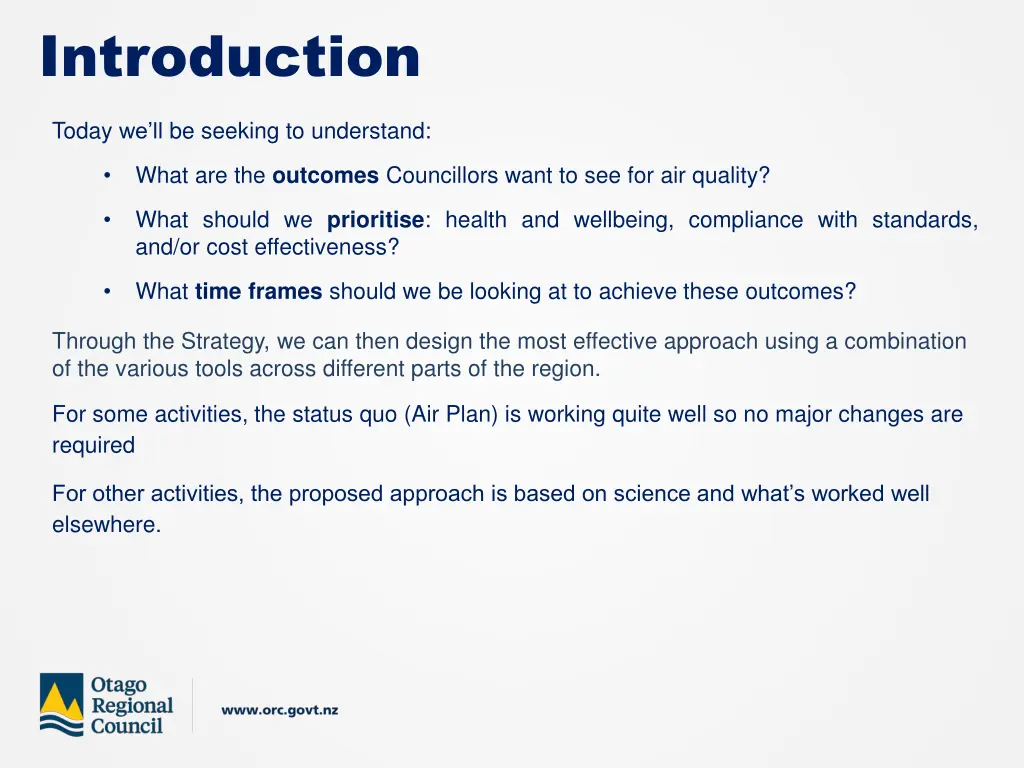
Introduction Today we ll be seeking to understand: What are the outcomes Councillors want to see for air quality? What should we prioritise: health and wellbeing, compliance with standards, and/or cost effectiveness? What time frames should we be looking at to achieve these outcomes? Through the Strategy, we can then design the most effective approach using a combination of the various tools across different parts of the region. For some activities, the status quo (Air Plan) is working quite well so no major changes are required For other activities, the proposed approach is based on science and what s worked well elsewhere.
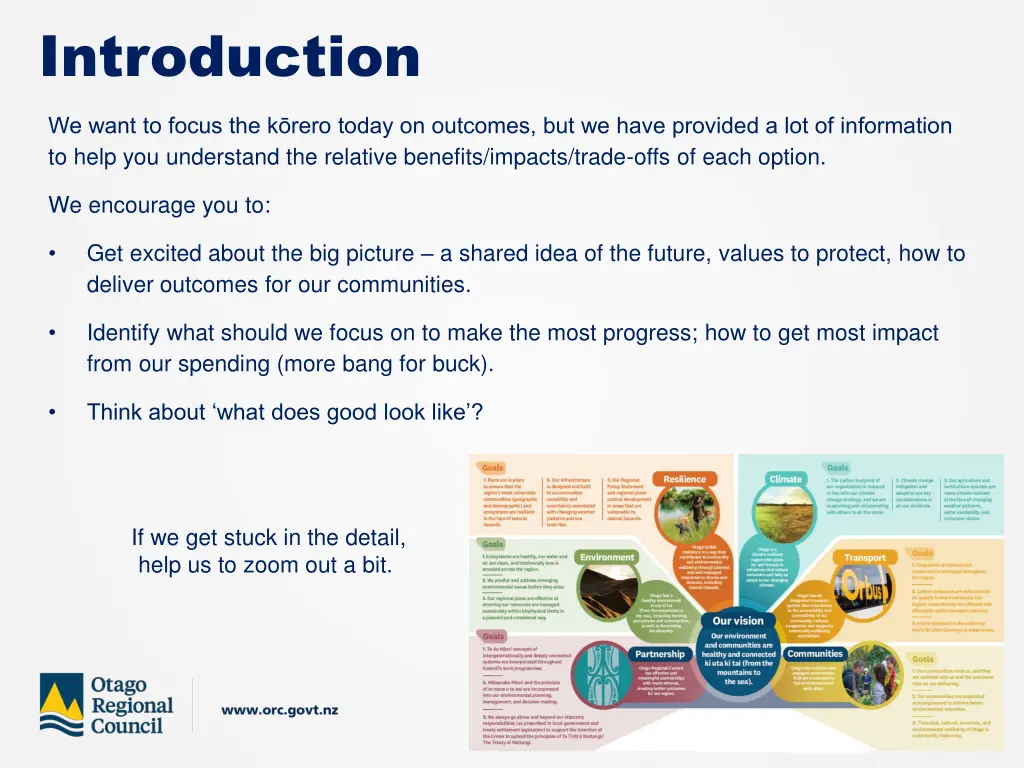
Introduction We want to focus the k rero today on outcomes, but we have provided a lot of information to help you understand the relative benefits/impacts/trade-offs of each option. We encourage you to: Get excited about the big picture a shared idea of the future, values to protect, how to deliver outcomes for our communities. Identify what should we focus on to make the most progress; how to get most impact from our spending (more bang for buck). Think about what does good look like ? If we get stuck in the detail, help us to zoom out a bit.
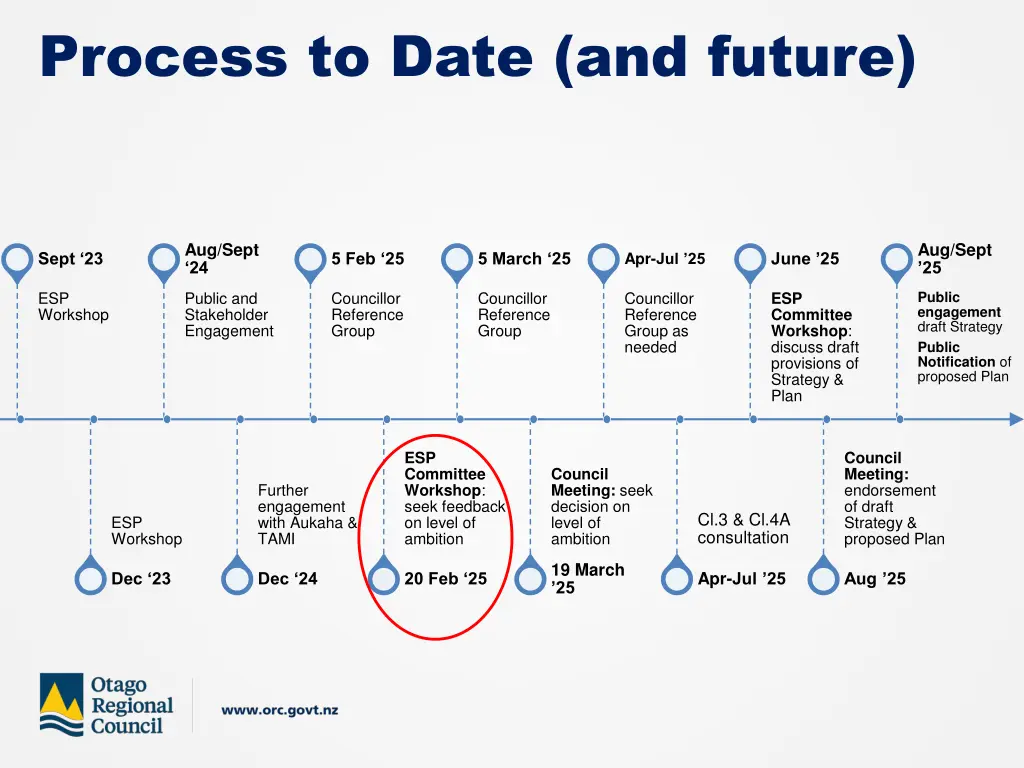
Process to Date (and future) Aug/Sept 24 Aug/Sept 25 Sept 23 5 Feb 25 5 March 25 June 25 Apr-Jul 25 Public engagement draft Strategy Public Notification of proposed Plan ESP Workshop Public and Stakeholder Engagement Councillor Reference Group Councillor Reference Group Councillor Reference Group as needed ESP Committee Workshop: discuss draft provisions of Strategy & Plan ESP Committee Workshop: seek feedback on level of ambition Council Meeting: endorsement of draft Strategy & proposed Plan Council Meeting: seek decision on level of ambition Further engagement with Aukaha & TAMI Cl.3 & Cl.4A consultation ESP Workshop 19 March 25 Apr-Jul 25 Dec 23 Dec 24 20 Feb 25 Aug 25
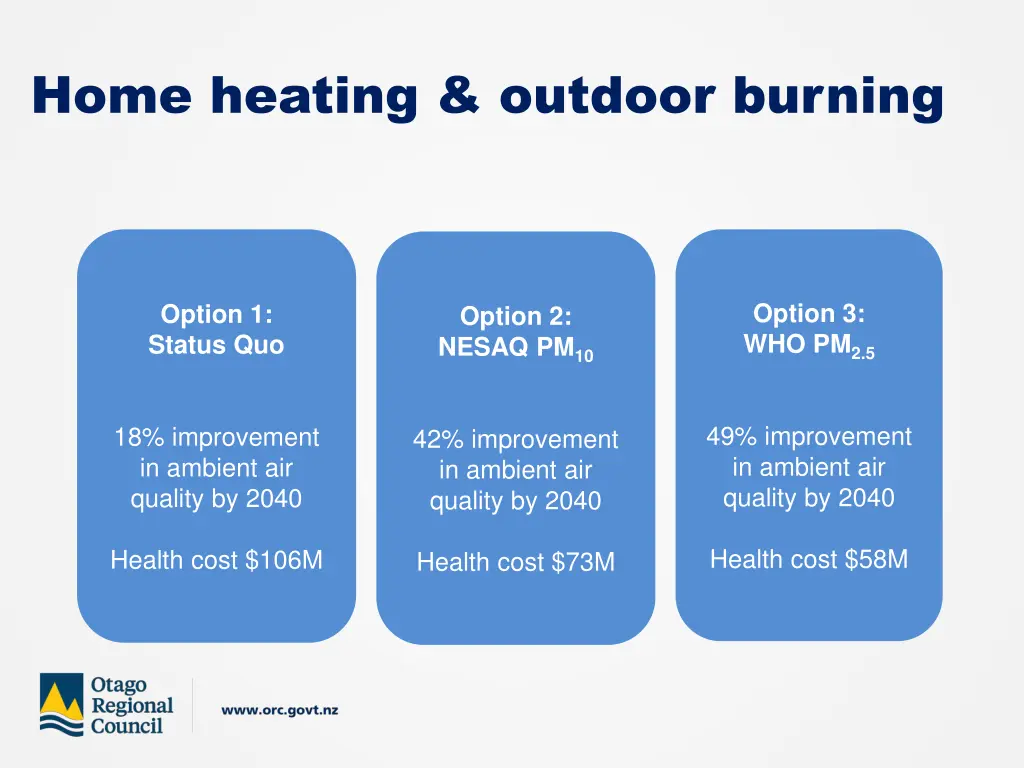
Home heating & outdoor burning Option 3: WHO PM2.5 Option 1: Status Quo Option 2: NESAQ PM10 49% improvement in ambient air quality by 2040 18% improvement in ambient air quality by 2040 42% improvement in ambient air quality by 2040 Health cost $58M Health cost $106M Health cost $73M
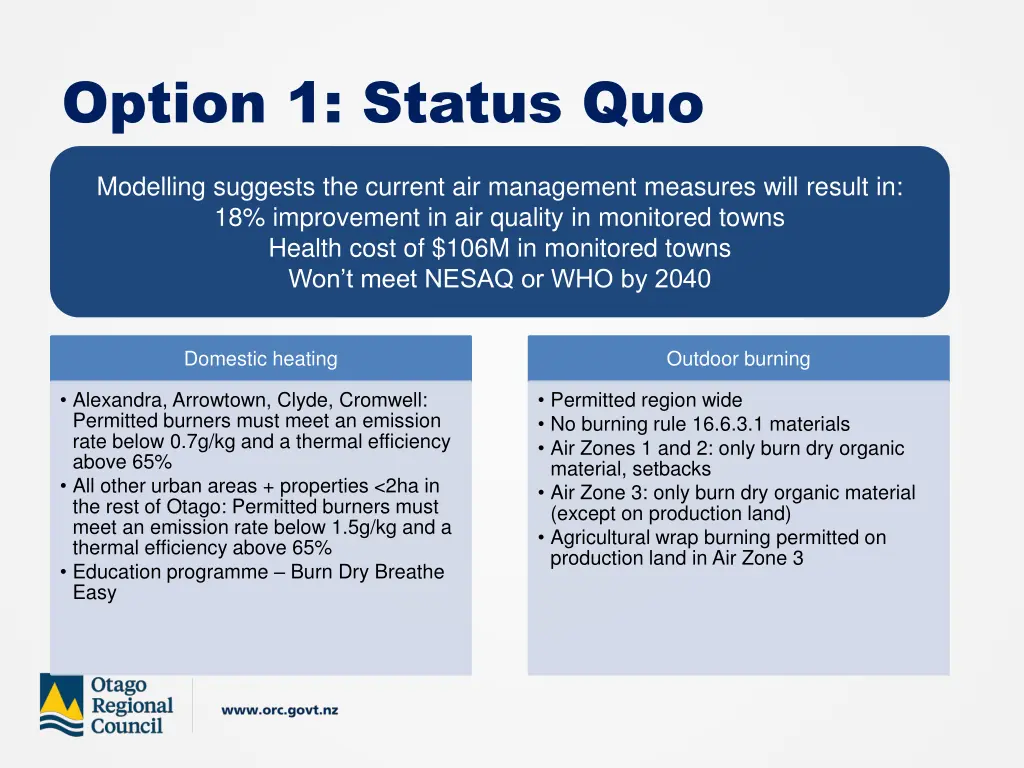
Option 1: Status Quo Modelling suggests the current air management measures will result in: 18% improvement in air quality in monitored towns Health cost of $106M in monitored towns Won t meet NESAQ or WHO by 2040 Domestic heating Outdoor burning Alexandra, Arrowtown, Clyde, Cromwell: Permitted burners must meet an emission rate below 0.7g/kg and a thermal efficiency above 65% All other urban areas + properties <2ha in the rest of Otago: Permitted burners must meet an emission rate below 1.5g/kg and a thermal efficiency above 65% Education programme Burn Dry Breathe Easy Permitted region wide No burning rule 16.6.3.1 materials Air Zones 1 and 2: only burn dry organic material, setbacks Air Zone 3: only burn dry organic material (except on production land) Agricultural wrap burning permitted on production land in Air Zone 3
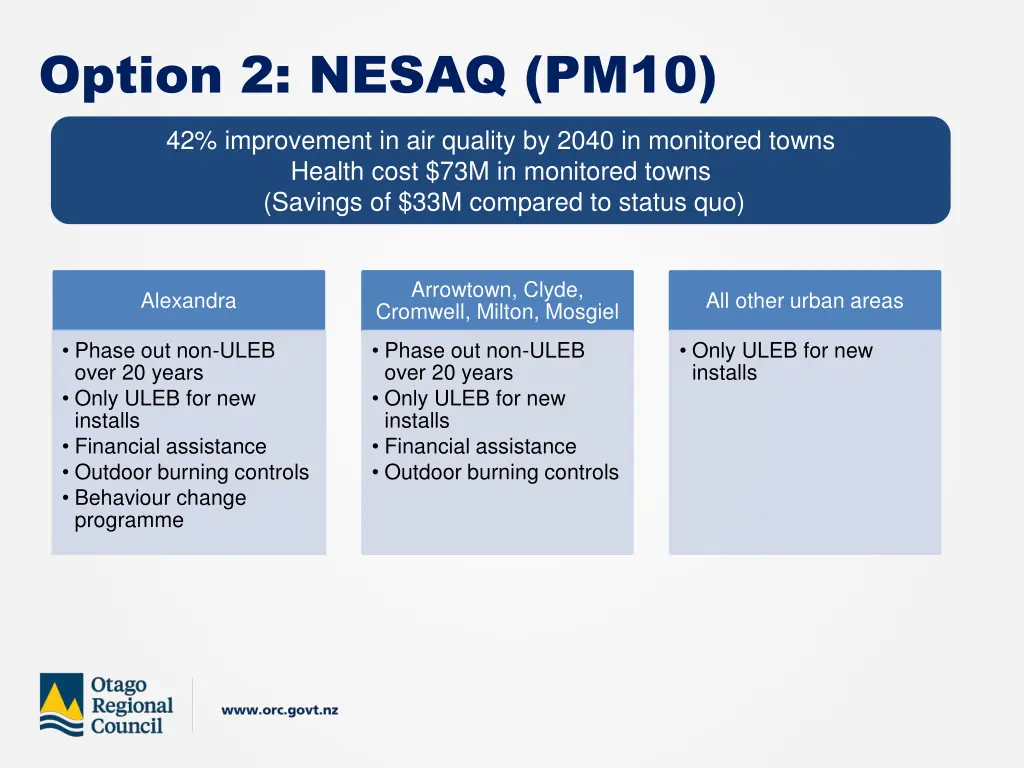
Option 2: NESAQ (PM10) 42% improvement in air quality by 2040 in monitored towns Health cost $73M in monitored towns (Savings of $33M compared to status quo) Arrowtown, Clyde, Cromwell, Milton, Mosgiel Alexandra All other urban areas Phase out non-ULEB over 20 years Only ULEB for new installs Financial assistance Outdoor burning controls Behaviour change programme Phase out non-ULEB over 20 years Only ULEB for new installs Financial assistance Outdoor burning controls Only ULEB for new installs
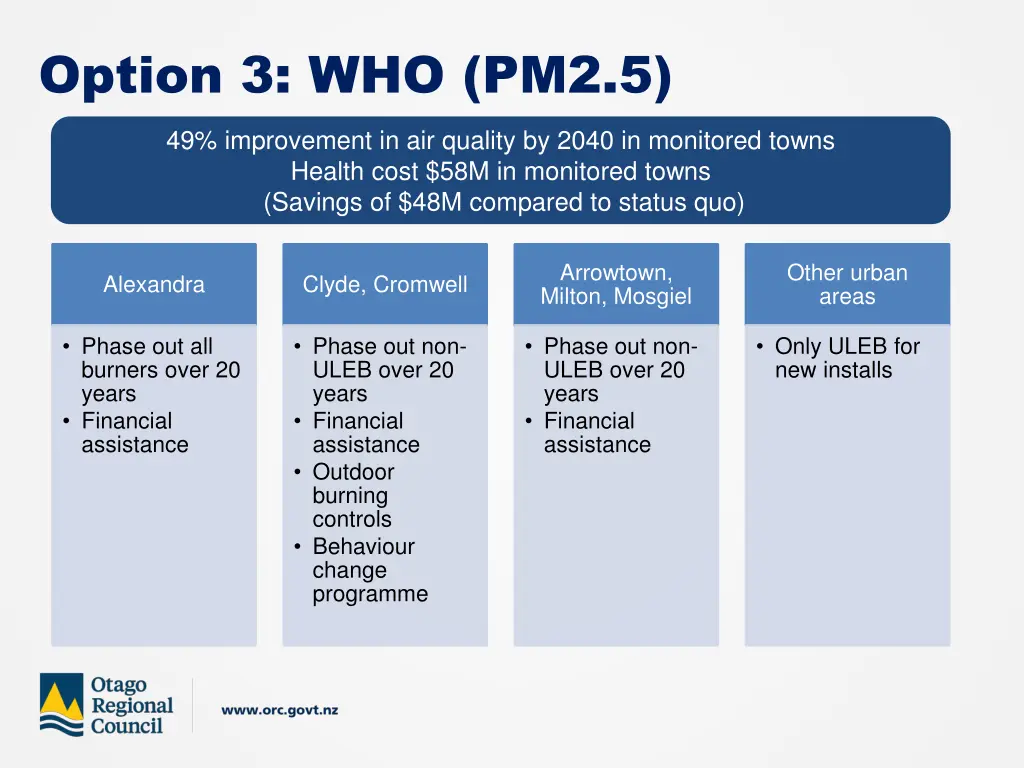
Option 3: WHO (PM2.5) 49% improvement in air quality by 2040 in monitored towns Health cost $58M in monitored towns (Savings of $48M compared to status quo) Arrowtown, Milton, Mosgiel Other urban areas Alexandra Clyde, Cromwell Phase out all burners over 20 years Financial assistance Phase out non- ULEB over 20 years Financial assistance Outdoor burning controls Behaviour change programme Phase out non- ULEB over 20 years Financial assistance Only ULEB for new installs
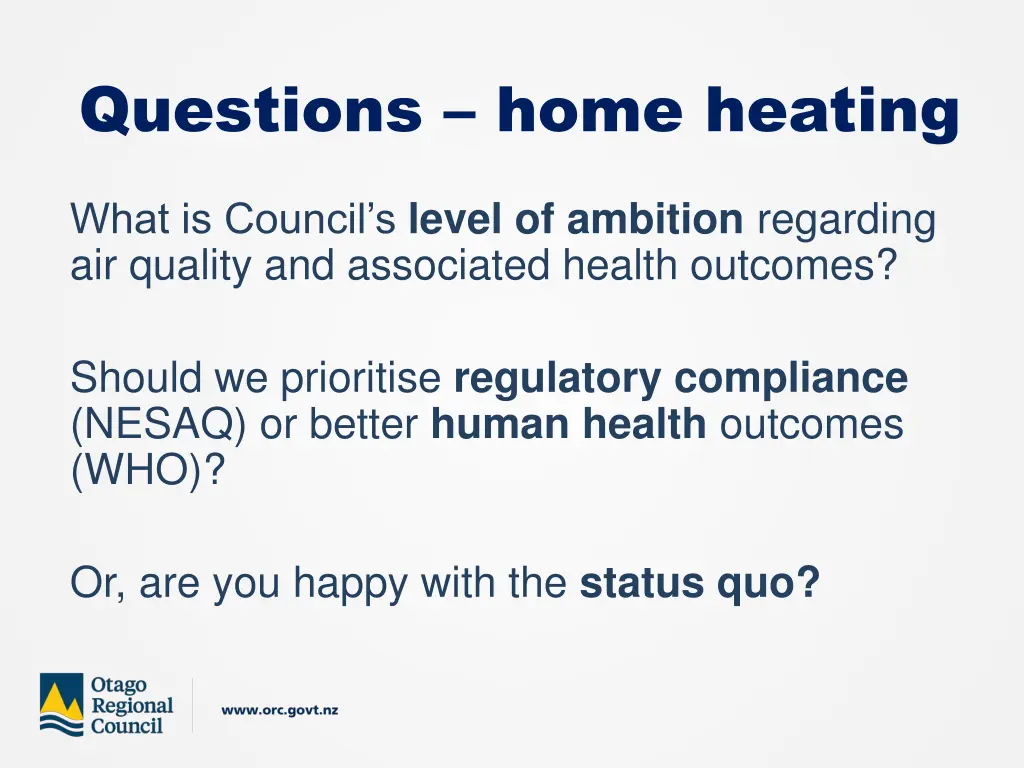
Questions home heating What is Council s level of ambition regarding air quality and associated health outcomes? Should we prioritise regulatory compliance (NESAQ) or better human health outcomes (WHO)? Or, are you happy with the status quo?
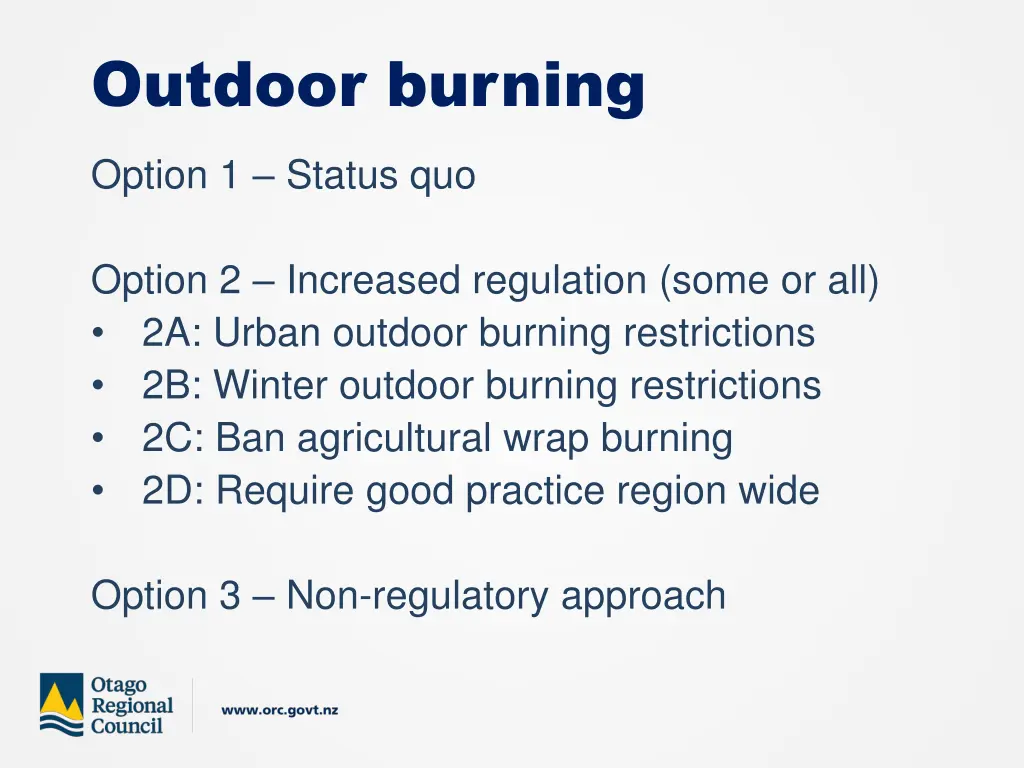
Outdoor burning Option 1 Status quo Option 2 Increased regulation (some or all) 2A: Urban outdoor burning restrictions 2B: Winter outdoor burning restrictions 2C: Ban agricultural wrap burning 2D: Require good practice region wide Option 3 Non-regulatory approach
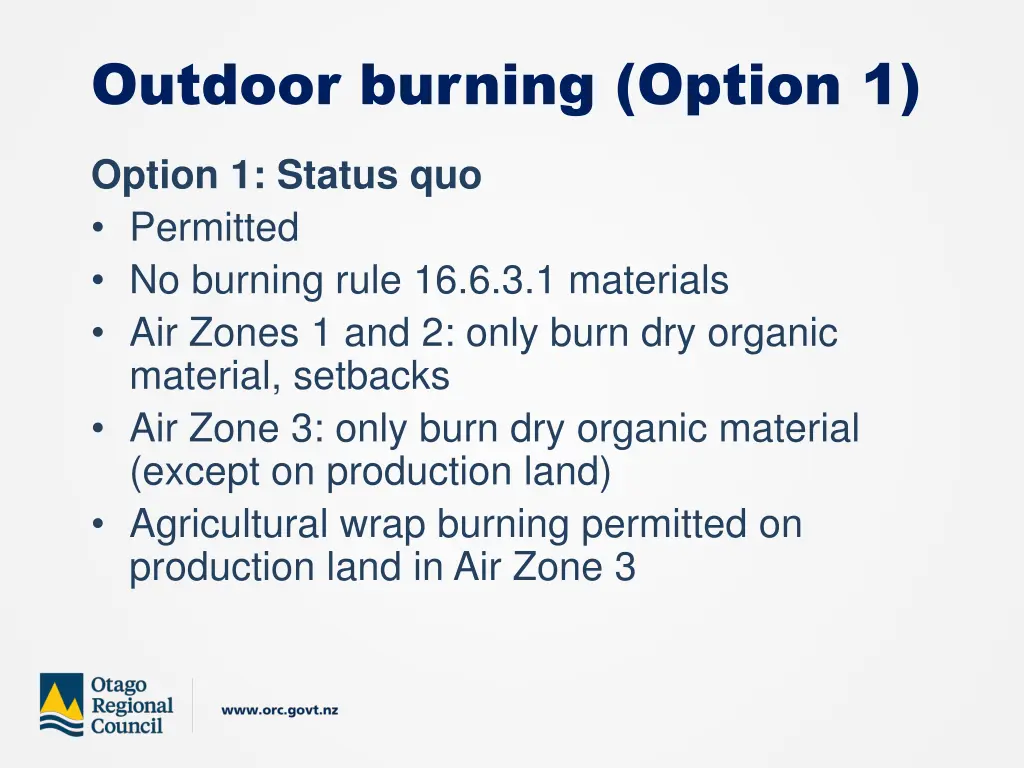
Outdoor burning (Option 1) Option 1: Status quo Permitted No burning rule 16.6.3.1 materials Air Zones 1 and 2: only burn dry organic material, setbacks Air Zone 3: only burn dry organic material (except on production land) Agricultural wrap burning permitted on production land in Air Zone 3
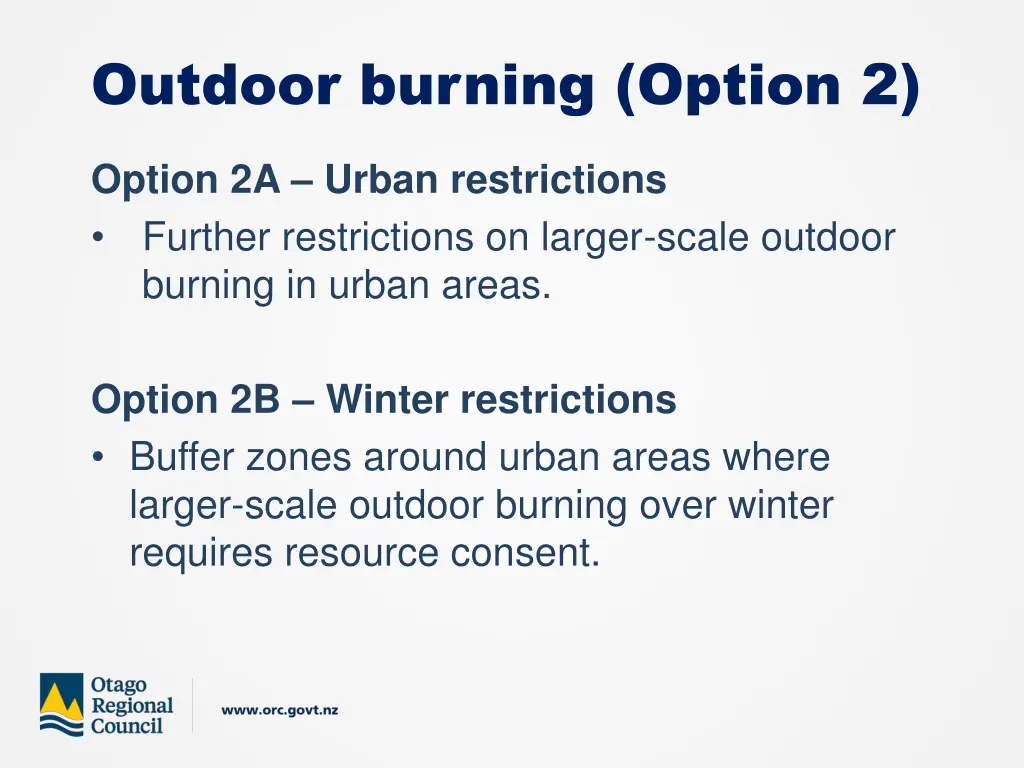
Outdoor burning (Option 2) Option 2A Urban restrictions Further restrictions on larger-scale outdoor burning in urban areas. Option 2B Winter restrictions Buffer zones around urban areas where larger-scale outdoor burning over winter requires resource consent.
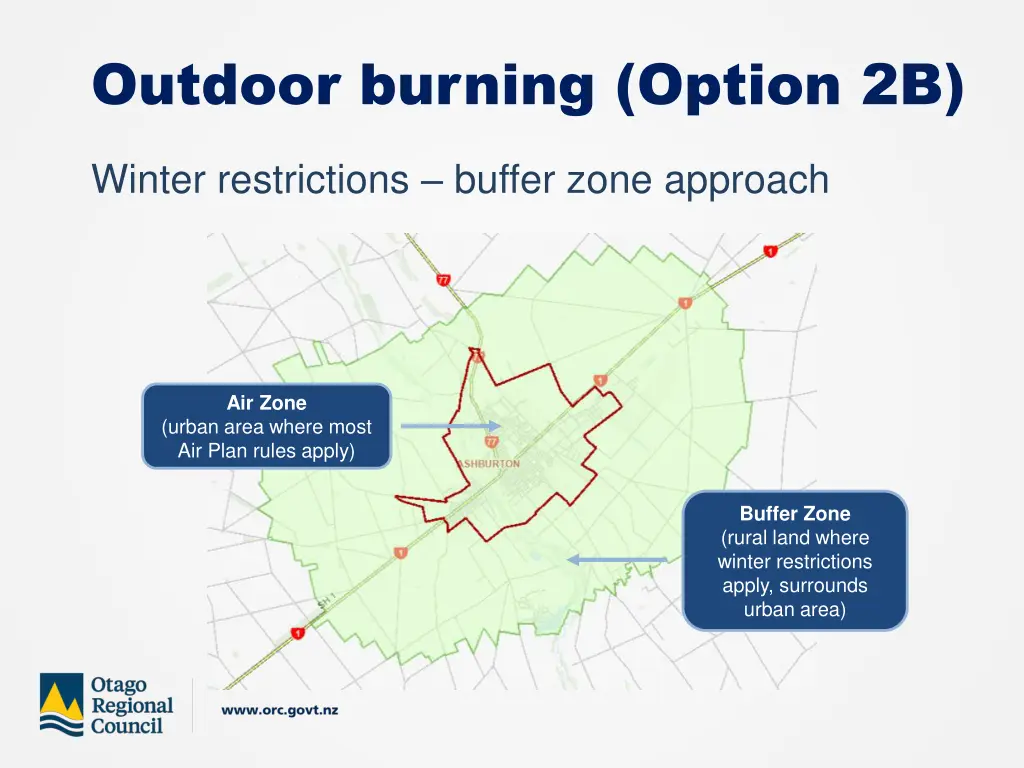
Outdoor burning (Option 2B) Winter restrictions buffer zone approach Air Zone (urban area where most Air Plan rules apply) Buffer Zone (rural land where winter restrictions apply, surrounds urban area)
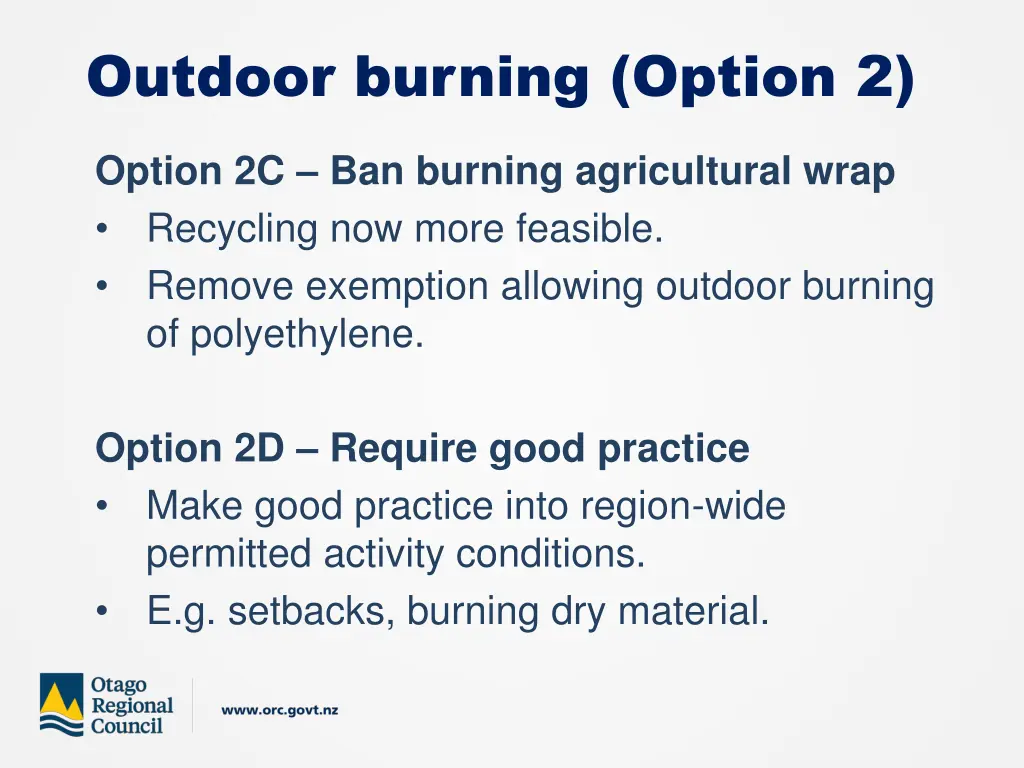
Outdoor burning (Option 2) Option 2C Ban burning agricultural wrap Recycling now more feasible. Remove exemption allowing outdoor burning of polyethylene. Option 2D Require good practice Make good practice into region-wide permitted activity conditions. E.g. setbacks, burning dry material.
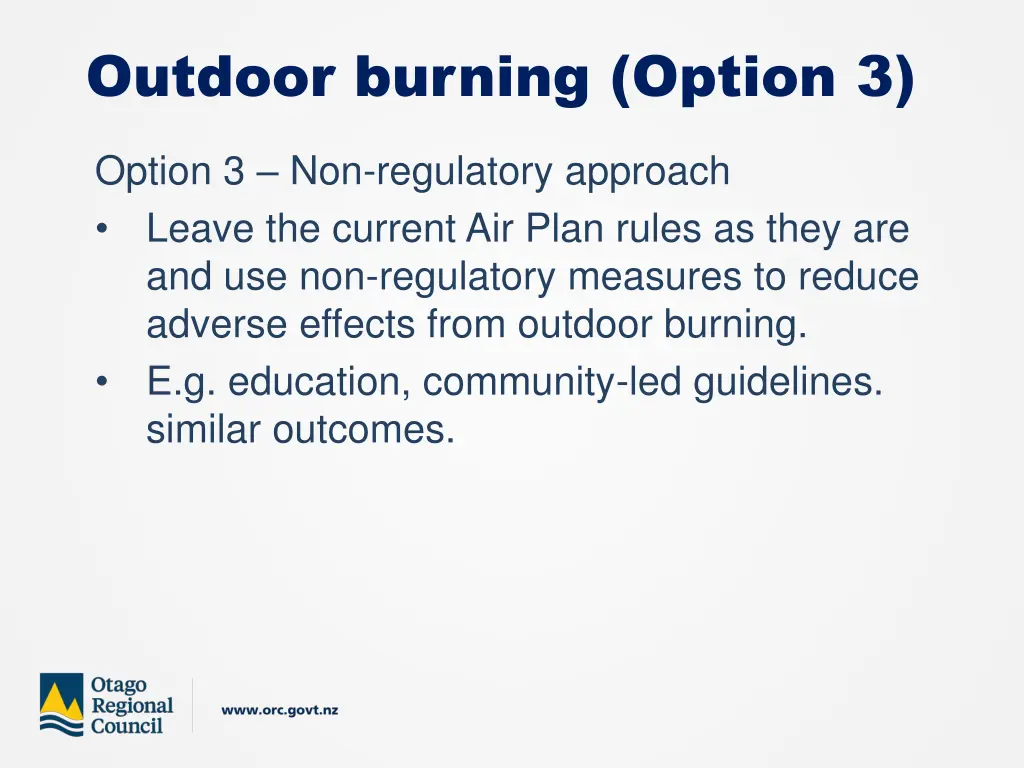
Outdoor burning (Option 3) Option 3 Non-regulatory approach Leave the current Air Plan rules as they are and use non-regulatory measures to reduce adverse effects from outdoor burning. E.g. education, community-led guidelines. similar outcomes.
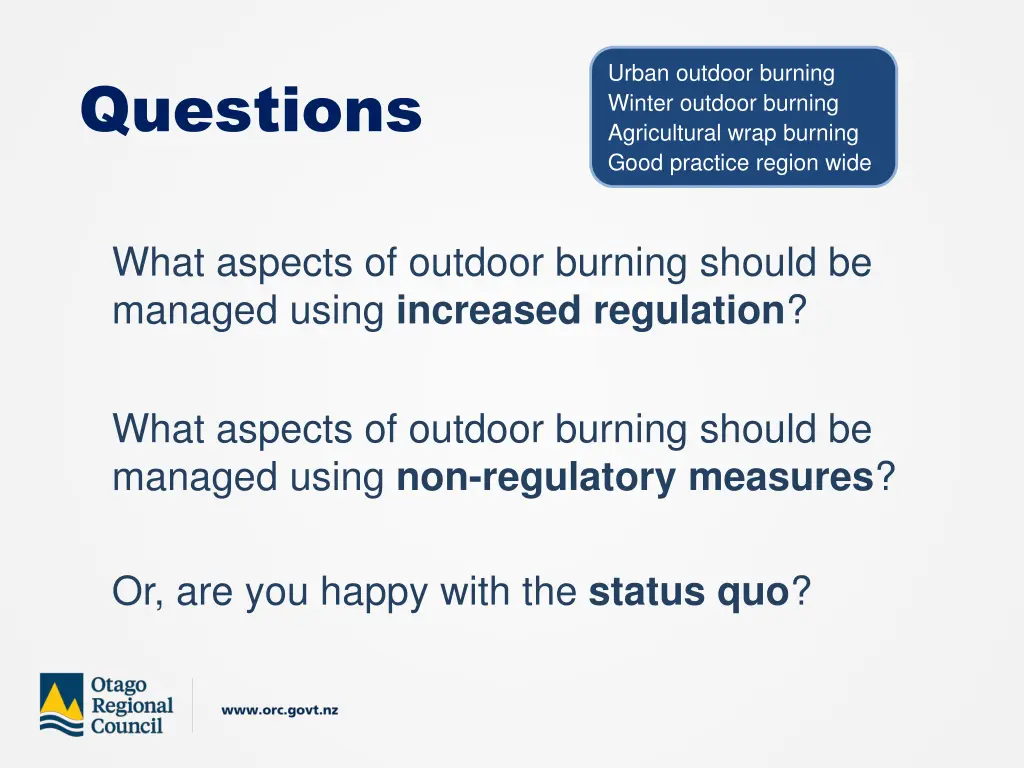
Urban outdoor burning Winter outdoor burning Agricultural wrap burning Good practice region wide Questions What aspects of outdoor burning should be managed using increased regulation? What aspects of outdoor burning should be managed using non-regulatory measures? Or, are you happy with the status quo?
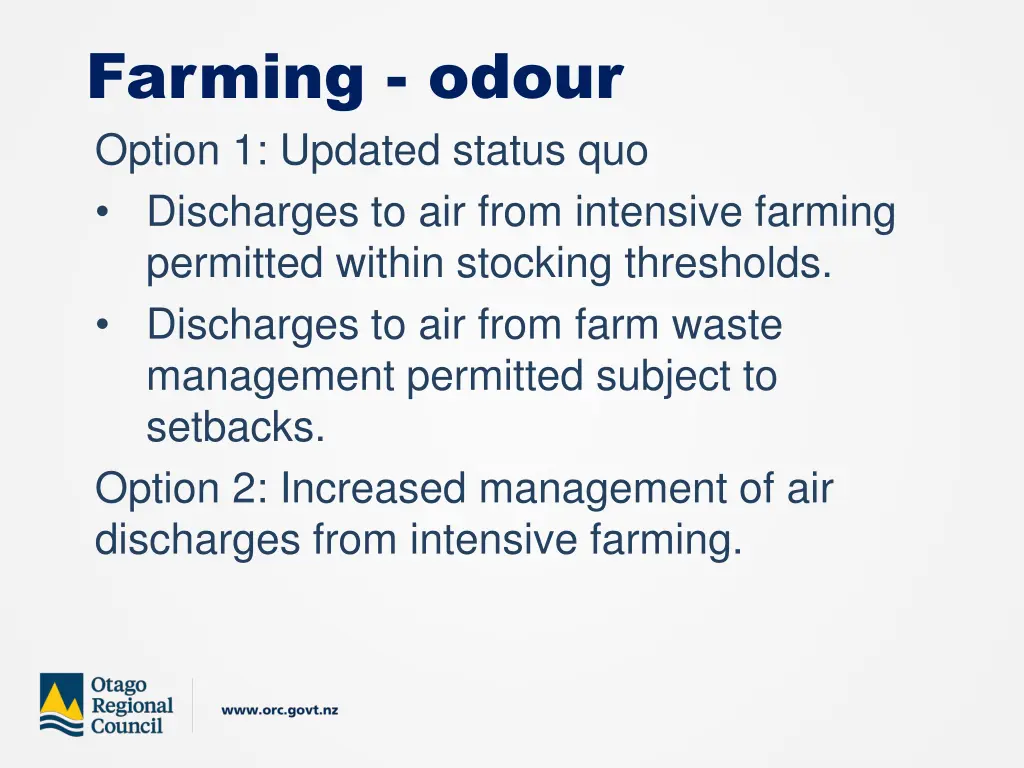
Farming - odour Option 1: Updated status quo Discharges to air from intensive farming permitted within stocking thresholds. Discharges to air from farm waste management permitted subject to setbacks. Option 2: Increased management of air discharges from intensive farming.
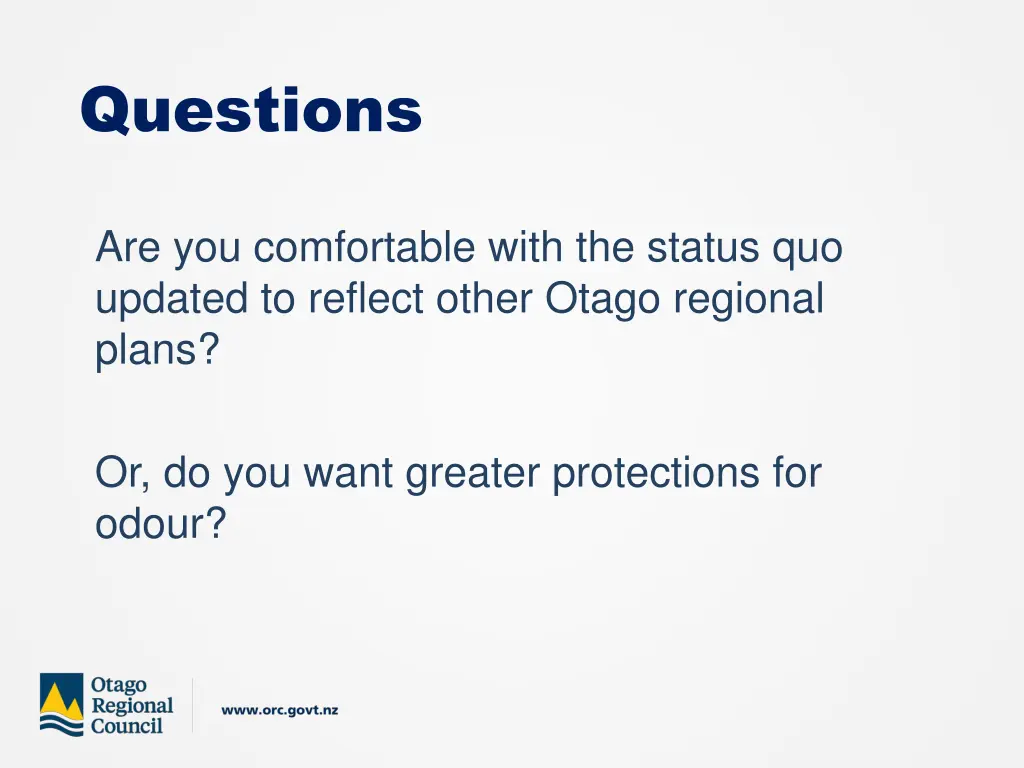
Questions Are you comfortable with the status quo updated to reflect other Otago regional plans? Or, do you want greater protections for odour?
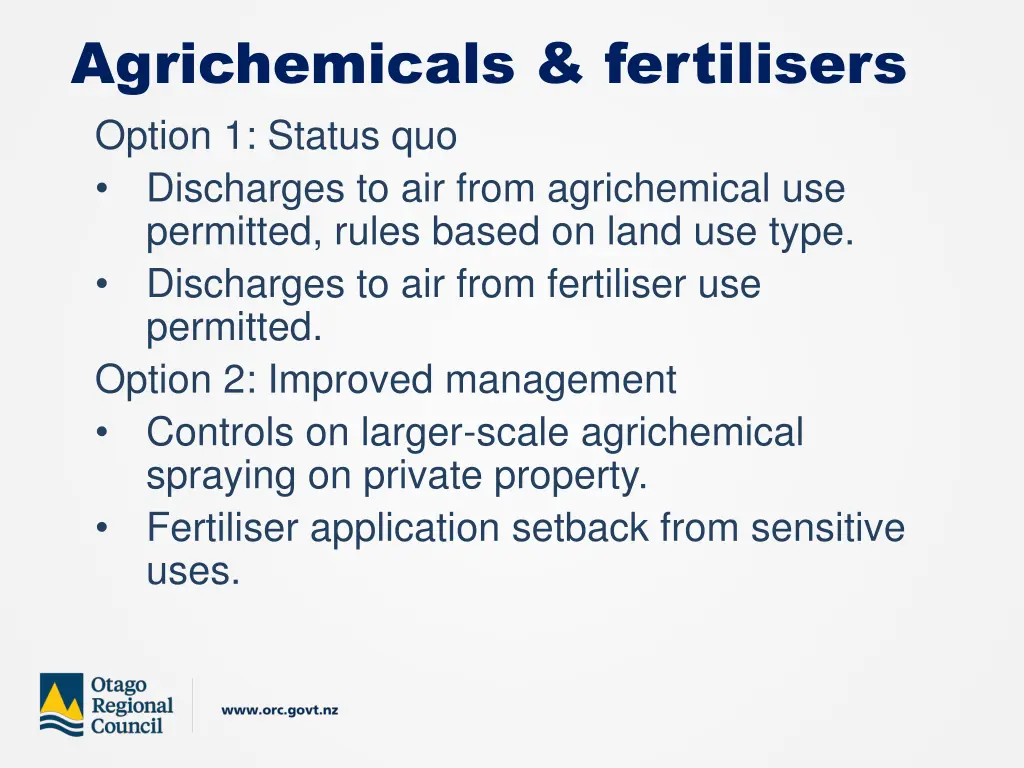
Agrichemicals & fertilisers Option 1: Status quo Discharges to air from agrichemical use permitted, rules based on land use type. Discharges to air from fertiliser use permitted. Option 2: Improved management Controls on larger-scale agrichemical spraying on private property. Fertiliser application setback from sensitive uses.
Questions Are you comfortable with the status quo? Or, do you want more controls around agrichemicals and fertiliser?
Trade and Industrial Option 1: Status quo Permitted low risk activities Discretionary consents required for high risk or large-scale activities
Question Are you comfortable with an approach of just updating these rules to reflect current planning practices? Or, do you want greater controls for trade and industrial air discharges?
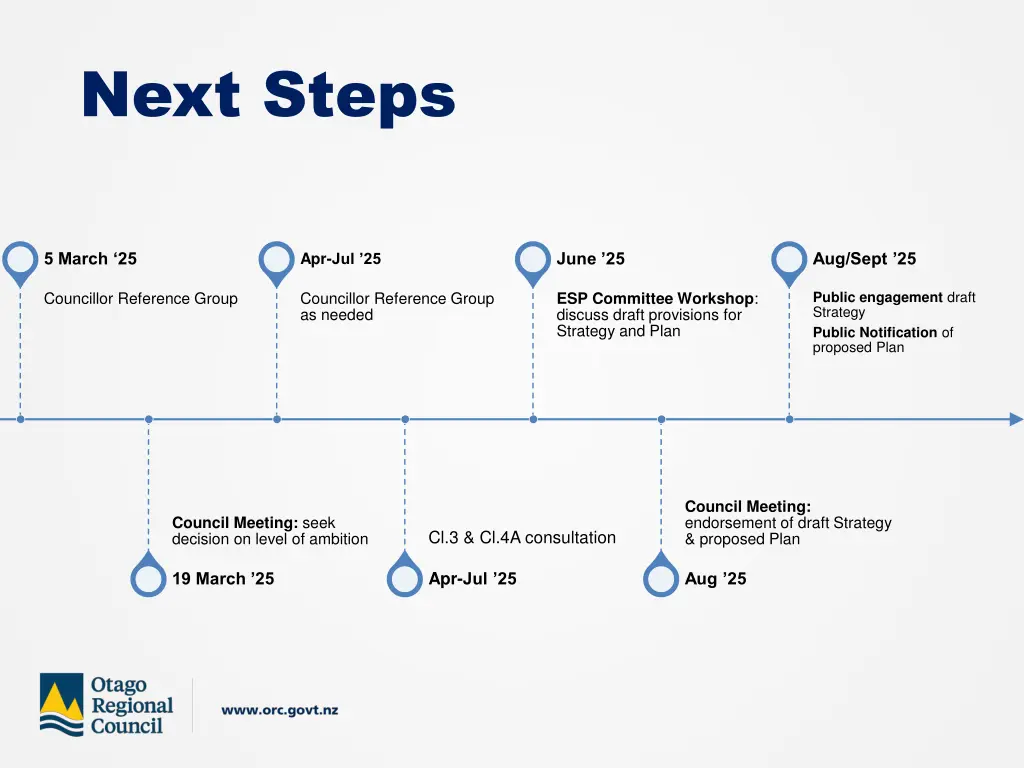
Next Steps 5 March 25 June 25 Aug/Sept 25 Apr-Jul 25 Public engagement draft Strategy Public Notification of proposed Plan Councillor Reference Group Councillor Reference Group as needed ESP Committee Workshop: discuss draft provisions for Strategy and Plan Council Meeting: endorsement of draft Strategy & proposed Plan Council Meeting: seek decision on level of ambition Cl.3 & Cl.4A consultation Apr-Jul 25 19 March 25 Aug 25
Closing questions and comments Is there anything further you d like to discuss?