Parturient Paresis in Cows
Parturient paresis, also known as milk fever or hypocalcemia, is a common metabolic disorder in food animals, particularly in cattle. It is associated with a calcium imbalance and occurs around parturition. Incidence increases with factors like age, parity, and breed susceptibility. Clinical signs progress from loss of appetite and dullness to muscle tremors, incoordination, and hypersensitivity. Detecting and managing this condition is crucial for animal health.

Download Presentation

Please find below an Image/Link to download the presentation.
The content on the website is provided AS IS for your information and personal use only. It may not be sold, licensed, or shared on other websites without obtaining consent from the author.If you encounter any issues during the download, it is possible that the publisher has removed the file from their server.
You are allowed to download the files provided on this website for personal or commercial use, subject to the condition that they are used lawfully. All files are the property of their respective owners.
The content on the website is provided AS IS for your information and personal use only. It may not be sold, licensed, or shared on other websites without obtaining consent from the author.
E N D
Presentation Transcript
Parturient Paresis (Milk Fever) and Hypocalcemia in Cows
Synonym: Paresis puerperalis, Eclampsia, Parturient apoplexy One of the most common metabolic disorders of food animals It occurs principally in cattle and to a lesser extent in sheep and goats The disease is associated with hypocalcemia and occurs at or close to parturition, as a result of an acute imbalance between the output and input of calcium In sheep, the disease associated with hypocalcemia is less related to parturition and is more common during late pregnancy, and it can also occur during early lactation
Incidence: In cattle, milk fever is one of the most important diseases from economic point of view, because it occurs widely and often leads to complications, such as downer cow syndrome The incidence of milk fever increases as the average milk production increases Several important predisposing factors influence the occurrence of the milk fever
Age of Cow: Incidence rises with increase in the age and parity (lactation number) of the cow. It is rare in heifers and by 6th lactation more than 20% cows succumb. Its mainly due to the gradual decrease in the cow s ability to mobilize its own body stores of Ca when there are either sudden increases in the demand for Ca, such as that occur at the onset of lactation, or decreases in the input of Ca, such as that occur during transient starvation. In addition to this, the milk yield of the cow increases with parity, particularly up to the 4thlactation. Thus the cow s requirements for the output of Ca increases with age and tend to aggravate the imbalance Breed: Jersey breed is particularly susceptible to milk fever but the physiologic basis is unknown. It may be related to the relatively high productivity of this small breed of cow Nutritional Factors: Include long-term and short-term factors
Clinical Signs: I stStage: Loss of appetite Dullness and lethargy Afebrile Cold ears Dilated pupils in some cases (This generally occurs in III rdstage)
II ndStage: With severity of hypocalcemia, the cow stands with her hock straight and paddles from one hind foot to the other There may be tremors of muscles, especially of head and limbs Grinding of teeth is seen sometimes Incoordination Excitability is shown sometimes The cow becomes hypersensitive when approached and so difficult to restrain Profuse sweating
III rdstage: Recumbency with drowsy appearance Flaccid paralysis At first, she lies on her sternum, often with a characteristic curvature of the neck, and may struggle to rise Eventually, she lies on her side and become comatose with dilated pupils and a dry muzzle Does not pass urine or faeces and the anal reflex is lost Tympany occurs and the rumen contents may be regurgitated If the cow is not treated, she dies of respiratory failure either due to rumen tympany or as a result of inhalation of rumen contents As the III rdstage of the disease progresses, the body temperature tends to decrease and also the intensity of heart sounds Heart rate 60- 80 /min Respirations are shallow and slow
Pupillary reflex to light is absent and the pupil is dilated to the maximum Stasis of rumen and alimentary tract severely reduces absorption of Ca from the intestine and so increases the severity of the hypocalcemia As hypocalcemia progresses to the terminal stage, the heart rate and breathing become more irregular, and respirations sometimes end with a forced expiratory grunt The progress to the final stages may take 24 hr. In cows with milk fever, before calving uterine inertia is an important sign. The process of calving may stop, there is no straining of voluntary muscles and dystocia may remain undetected If calving does occur, a prolapse of uterus is common in severely hypocalcaemic cows
Etiology and Pathogenesis: Some degree of hypocalcemia occurs normally in cows at or close to calving but when it becomes severe, disease occurs. Frequently, hypocalcemia is accompanied by hypophos-phatemia and hypermagnesaemia. Hyperglycemia is also often observed Normal concentration of calcium in plasma and extracellular fluid lies within 2.2-2.6 mmol/ L (8.8- 10.4mg/100ml)
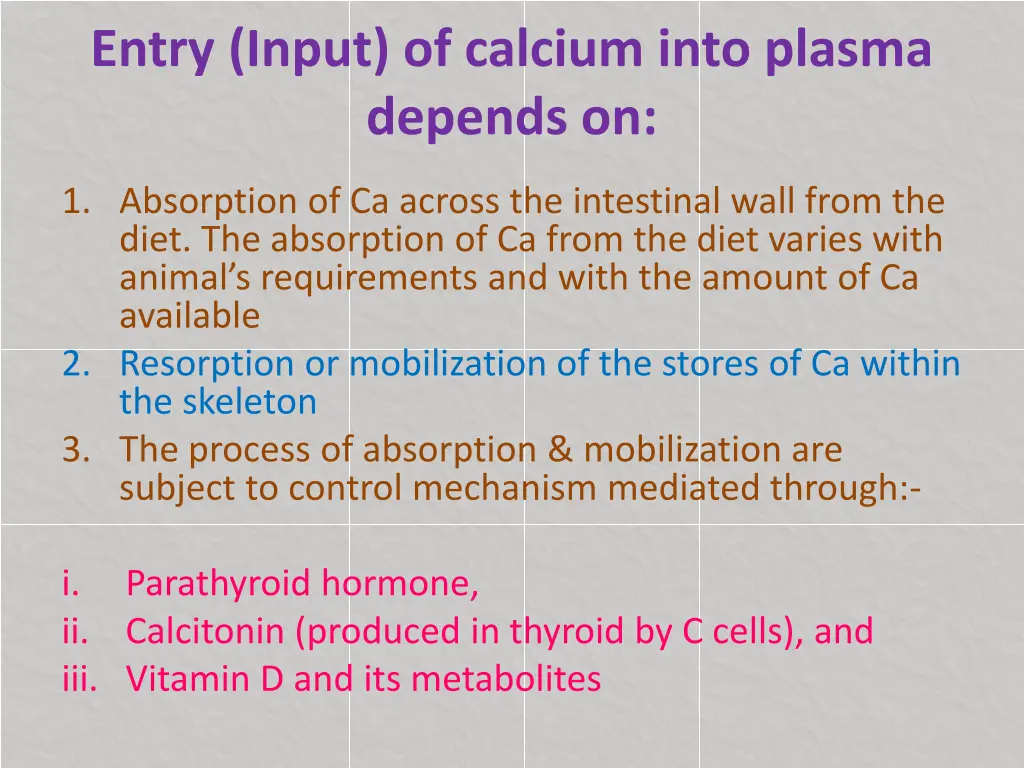
Entry (Input) of calcium into plasma depends on: 1. Absorption of Ca across the intestinal wall from the diet. The absorption of Ca from the diet varies with animal s requirements and with the amount of Ca available 2. Resorption or mobilization of the stores of Ca within the skeleton 3. The process of absorption & mobilization are subject to control mechanism mediated through:- i. ii. iii. Vitamin D and its metabolites Parathyroid hormone, Calcitonin (produced in thyroid by C cells), and
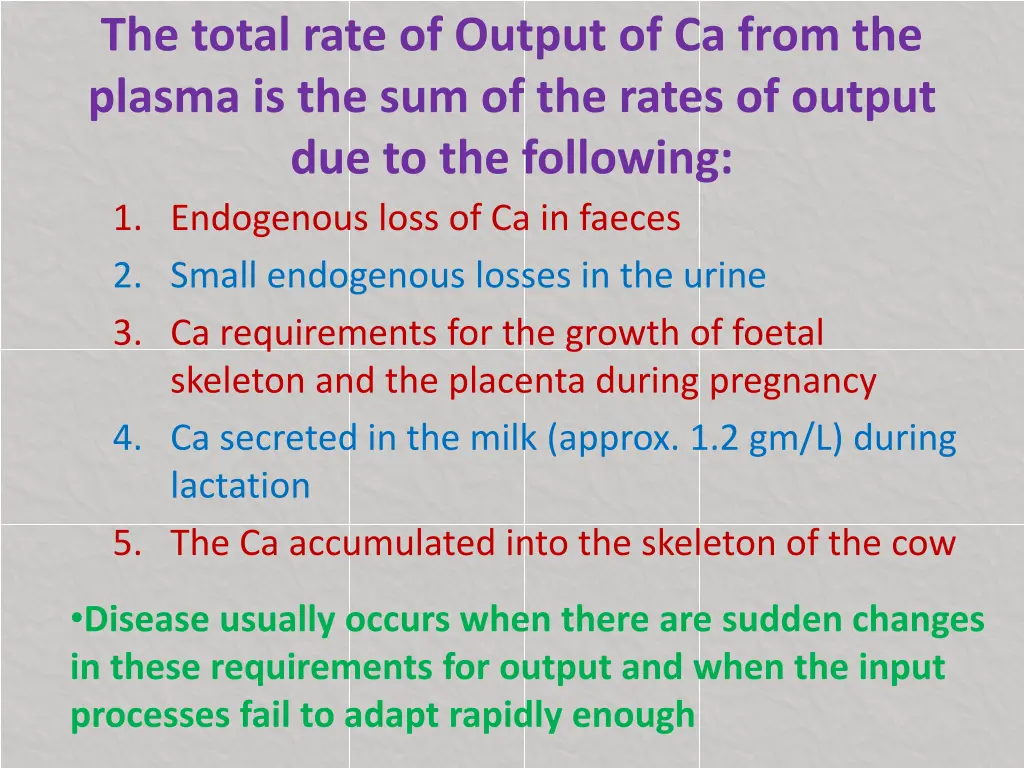
The total rate of Output of Ca from the plasma is the sum of the rates of output due to the following: 1. Endogenous loss of Ca in faeces 2. Small endogenous losses in the urine 3. Ca requirements for the growth of foetal skeleton and the placenta during pregnancy 4. Ca secreted in the milk (approx. 1.2 gm/L) during lactation 5. The Ca accumulated into the skeleton of the cow Disease usually occurs when there are sudden changes in these requirements for output and when the input processes fail to adapt rapidly enough
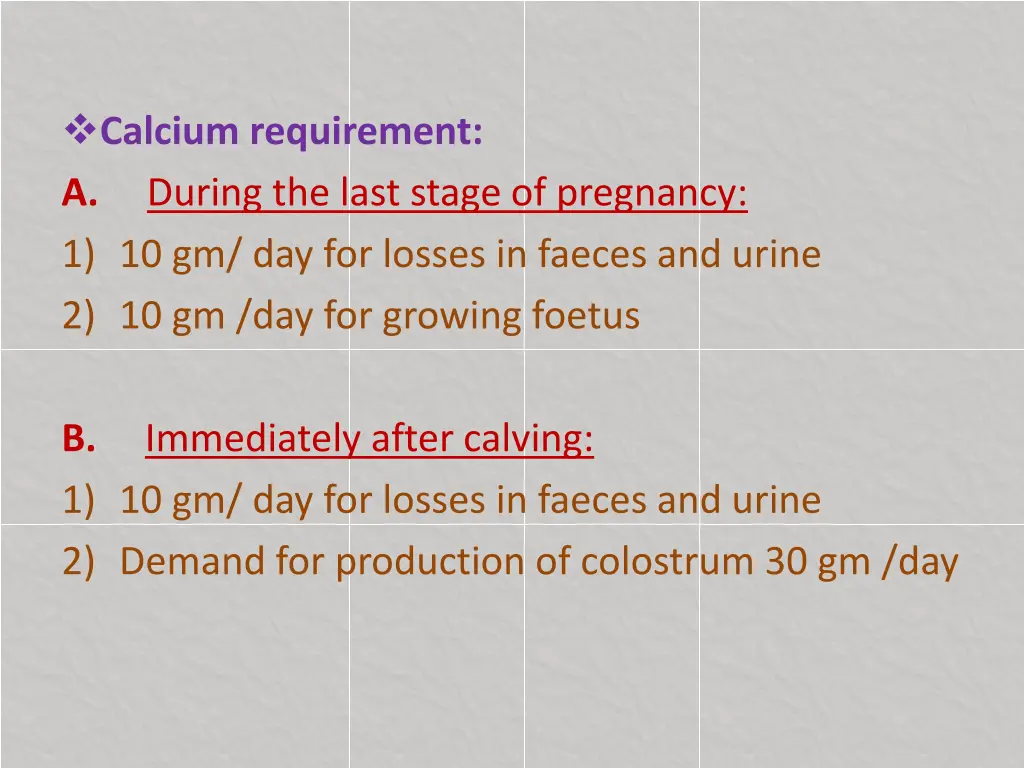
Calcium requirement: A. During the last stage of pregnancy: 1) 10 gm/ day for losses in faeces and urine 2) 10 gm /day for growing foetus B. Immediately after calving: 1) 10 gm/ day for losses in faeces and urine 2) Demand for production of colostrum 30 gm /day
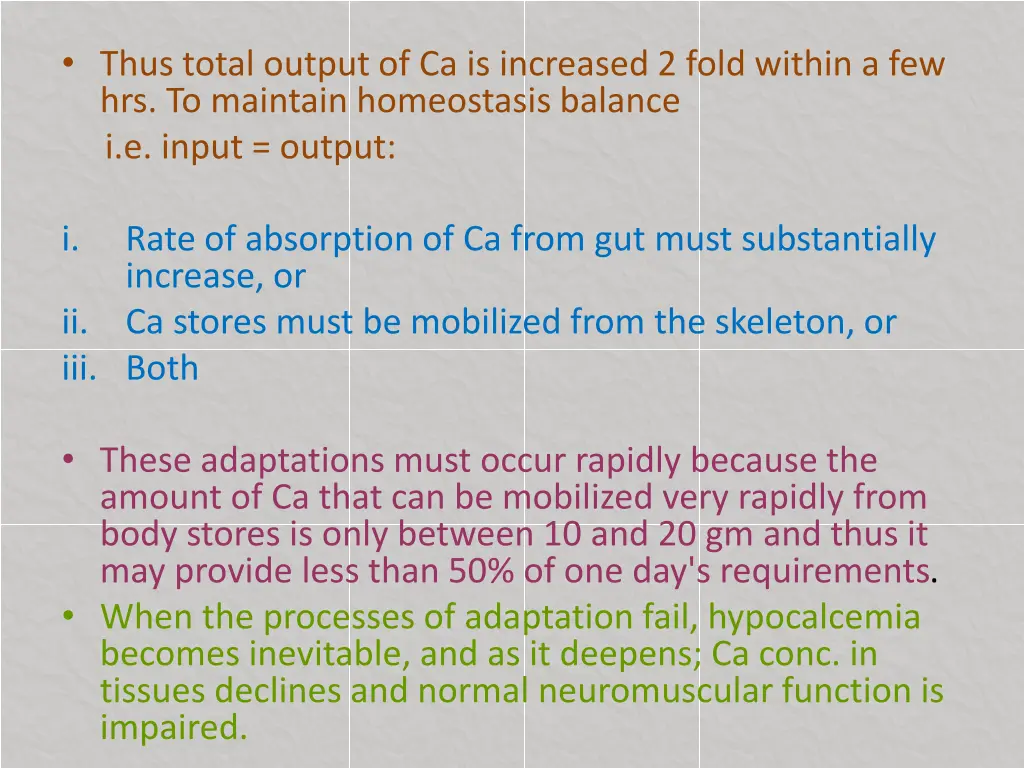
Thus total output of Ca is increased 2 fold within a few hrs. To maintain homeostasis balance i.e. input = output: i. Rate of absorption of Ca from gut must substantially increase, or Ca stores must be mobilized from the skeleton, or iii. Both ii. These adaptations must occur rapidly because the amount of Ca that can be mobilized very rapidly from body stores is only between 10 and 20 gm and thus it may provide less than 50% of one day's requirements. When the processes of adaptation fail, hypocalcemia becomes inevitable, and as it deepens; Ca conc. in tissues declines and normal neuromuscular function is impaired.
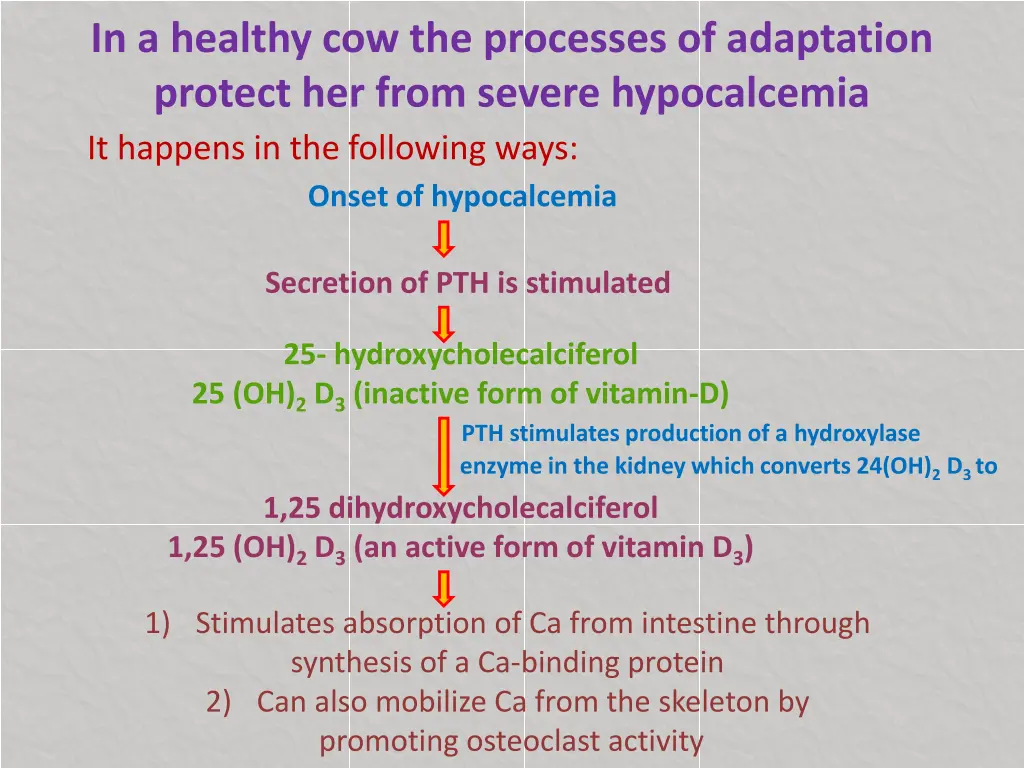
In a healthy cow the processes of adaptation protect her from severe hypocalcemia It happens in the following ways: Onset of hypocalcemia Secretion of PTH is stimulated 25- hydroxycholecalciferol 25 (OH)2 D3 (inactive form of vitamin-D) PTH stimulates production of a hydroxylase enzyme in the kidney which converts 24(OH)2 D3 to 1,25 dihydroxycholecalciferol 1,25 (OH)2 D3 (an active form of vitamin D3) 1) Stimulates absorption of Ca from intestine through synthesis of a Ca-binding protein 2) Can also mobilize Ca from the skeleton by promoting osteoclast activity
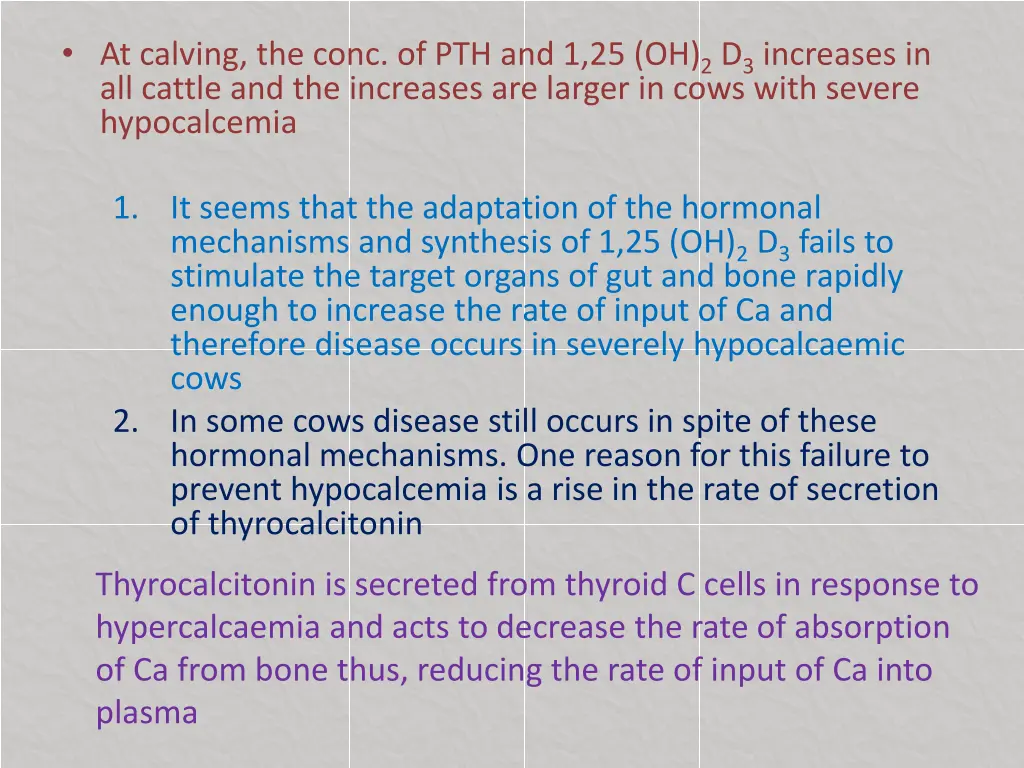
At calving, the conc. of PTH and 1,25 (OH)2 D3 increases in all cattle and the increases are larger in cows with severe hypocalcemia 1. It seems that the adaptation of the hormonal mechanisms and synthesis of 1,25 (OH)2 D3 fails to stimulate the target organs of gut and bone rapidly enough to increase the rate of input of Ca and therefore disease occurs in severely hypocalcaemic cows 2. In some cows disease still occurs in spite of these hormonal mechanisms. One reason for this failure to prevent hypocalcemia is a rise in the rate of secretion of thyrocalcitonin Thyrocalcitonin is secreted from thyroid C cells in response to hypercalcaemia and acts to decrease the rate of absorption of Ca from bone thus, reducing the rate of input of Ca into plasma
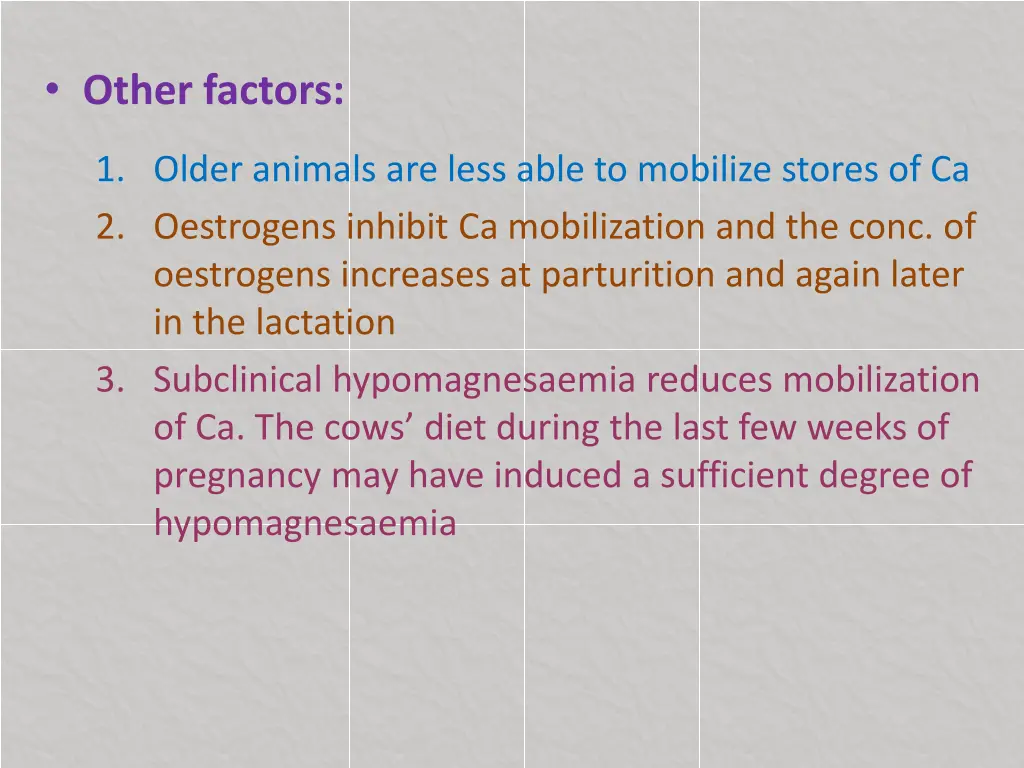
Other factors: 1. Older animals are less able to mobilize stores of Ca 2. Oestrogens inhibit Ca mobilization and the conc. of oestrogens increases at parturition and again later in the lactation 3. Subclinical hypomagnesaemia reduces mobilization of Ca. The cows diet during the last few weeks of pregnancy may have induced a sufficient degree of hypomagnesaemia
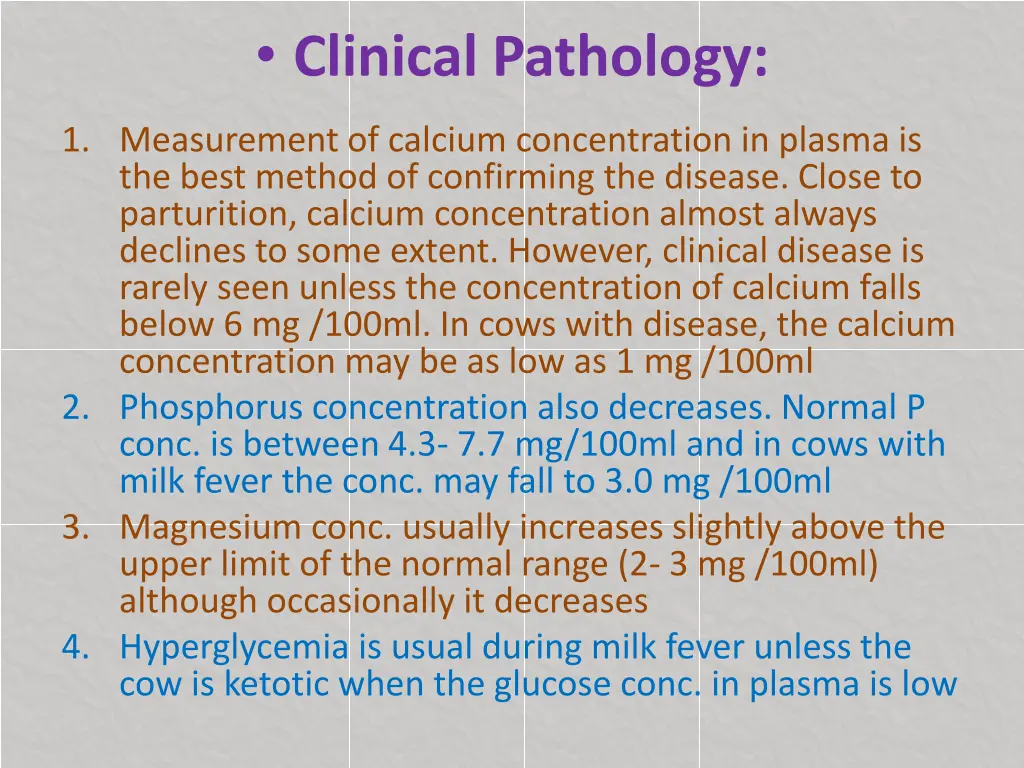
Clinical Pathology: 1. Measurement of calcium concentration in plasma is the best method of confirming the disease. Close to parturition, calcium concentration almost always declines to some extent. However, clinical disease is rarely seen unless the concentration of calcium falls below 6 mg /100ml. In cows with disease, the calcium concentration may be as low as 1 mg /100ml 2. Phosphorus concentration also decreases. Normal P conc. is between 4.3- 7.7 mg/100ml and in cows with milk fever the conc. may fall to 3.0 mg /100ml 3. Magnesium conc. usually increases slightly above the upper limit of the normal range (2- 3 mg /100ml) although occasionally it decreases 4. Hyperglycemia is usual during milk fever unless the cow is ketotic when the glucose conc. in plasma is low
Diagnosis: 1. Based on observation of the clinical signs, particularly paresis in cows close to calving 2. Quick, practical confirmation is often provided by a rapid response, sometimes within minutes, to treatment with Ca borogluconate solutions 3. Blood analysis can only confirm the diagnosis retrospectively
Differential Diagnosis: 1. The downer cow syndrome 2. Severe toxaemia 3. Physical injury 4. Hypomagnesaemia 5. Fat cow syndrome
Treatment: Treatment should be given as soon as possible after clinical signs are observed Intravenous administration of solution of Ca borogluconate is the first and foremost measure Most cows recover after a single i.v. dose of between 8 to 12 gm Ca A total of 12 gm of Ca can be administered in 400 ml of a 40% soln. over 5-10 mts The muscles of recumbent cow may twitch during treatment and the animals may pass faeces and urine and eructate rumen gases Treatment with solution that contain magnesium (1.03 gm) and phosphorus (2.6 gm) in addition to Ca (8 gm) has also been advocated The intravenous admin. of Ca rapidly increases Ca conc. in plasma and causes transient hypercalcaemia (However, 8-12 gm of Ca once can not be considered as substitution therapy as it s a small amount when compared with the pool of readily exchangeable Ca in the animal s body and considerably less than the amount excreted in the milk during 24 hr)
The administration of 8-12 gm of Ca restores temporarily plasma Ca conc. Allows the reestablishment of normal homeostatic mechanisms and Stimulates cow s appetite Nevertheless, subclinical hypocalcemia persists in many cows for 24 hrs or longer after first successful treatment for milk fever. If a cow does not recover within 5-8 hr of a single i.v. dose of Ca, the cow should be reexamined and treated with Ca again, if it is not a complicated case of milk fever. It is a common practice to administer Ca borogluconate subcutaneously at the same time as the single i.v. injection of Ca (with Mg and P). But these s/c injection do not reduce the likelihood of a cow relapsing after an initial recovery
Other measures: 1. Adequate nursing and care 2. The calf should be removed and the cow should not be milked out 3. If in lateral recumbency, should be propped in to sternal position to prevent regurgitation of rumen contents and risk of aspiratory pneumonia 4. Turning from side to side at regular interval, at least 4-5 times daily, to prevent pressure damage to muscles 5. If lying on hard slippery surface, it should be covered with straw or farm yard manure (FYM)
Prevention: Many predisposing factors are involved in the aetiology of milk fever and therefore, preventive measures must be designed to reduce the adverse effects of as many of these predisposing factors as possible. These include age, breed, nutritional and husbandry systems, and body condition score at parturition Older cows, especially in certain breeds, are more susceptible to disease and need particular attention to avoid hypocalcemia Nutritional factors: which include: i. Long term: Those important in long term i.e., during dry period. These affect the cow s body condition at calving and also influence the way in which her vitamin D metabolism is primed to respond to sudden increase in demand for calcium at calving ii. Short term: Those important in short term i.e., between 48 hr before calving and 48 hr after calving. These affect the ability of the cow to maintain a sufficient intake of Ca at the onset of lactation
Long term factors: 1. During dry period it is important to maintain the conc. of magnesium in plasma above 0.85 in mol /L. Below this level, the cow can be considered to be subclinically hypomagnesemic. Unfortunately, it is not easy to correct hypomagnesaemia in dry cows. Addition of magnesium acetate to the drinking water is effective 2. During dry period, Ca intake in ration should be as little as possible. Optimum benefit of a low Ca diet occurs with diets supplying < 20gm Ca /day. Low Ca intake causes stimulation of 1,25 (OH)2 D3 synthesis, which in turn increases the rates of mobilization and absorption of Ca at parturition
Short term factors: 1. The cow s appetite should remain high at and around the time of parturition. Feeding of concentrate rich ration during the dry period, along with high body condition score, results in decline in the intake of dry matter as parturition approaches and it may increase the possibility of milk fever 2. When parturition is imminent, Ca intake should be increased as rapidly as possible to provide for the cow s greater requirement for Ca 3. Feeding of either silage or hay alone during the last days of pregnancy can reduce the incidence of milk fever. Cows grazing lush pastures in late pregnancy commonly develop milk fever at parturition 4. Administration of vitamin D, 5-10 days before calving, can be beneficial. A single intramuscular inj. of 10 x 106 IU (250 mg) vitamin D3, approx. 10 days before calving has been shown to lower the incidence of milk fever