Passive Voice in Spanish: Formation and Usage
Learn how to form and use the passive voice in Spanish when the subject is indefinite or unknown. Explore examples and understand when to use reflexive pronouns in passive constructions.

Download Presentation

Please find below an Image/Link to download the presentation.
The content on the website is provided AS IS for your information and personal use only. It may not be sold, licensed, or shared on other websites without obtaining consent from the author. If you encounter any issues during the download, it is possible that the publisher has removed the file from their server.
You are allowed to download the files provided on this website for personal or commercial use, subject to the condition that they are used lawfully. All files are the property of their respective owners.
The content on the website is provided AS IS for your information and personal use only. It may not be sold, licensed, or shared on other websites without obtaining consent from the author.
E N D
Presentation Transcript
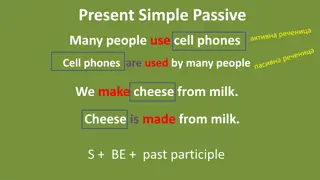
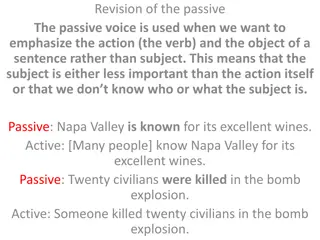
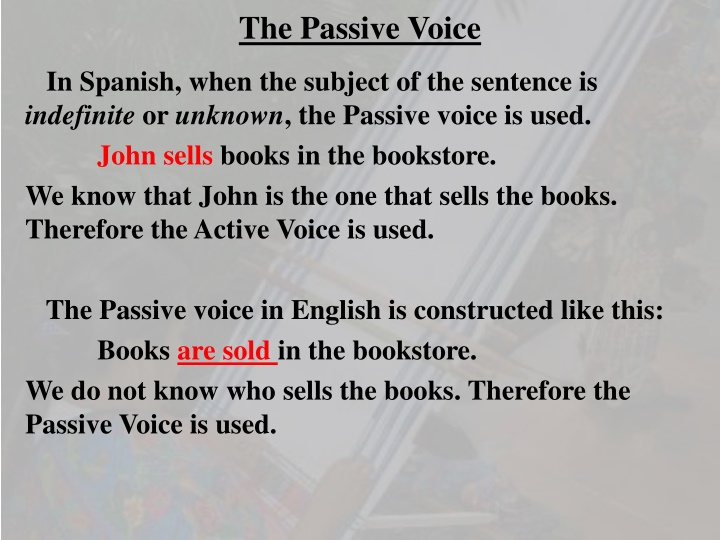
The Passive Voice In Spanish, when the subject of the sentence is indefinite or unknown, the Passive voice is used. John sells books in the bookstore. We know that John is the one that sells the books. Therefore the Active Voice is used. The Passive voice in English is constructed like this: Books are sold in the bookstore. We do not know who sells the books. Therefore the Passive Voice is used.
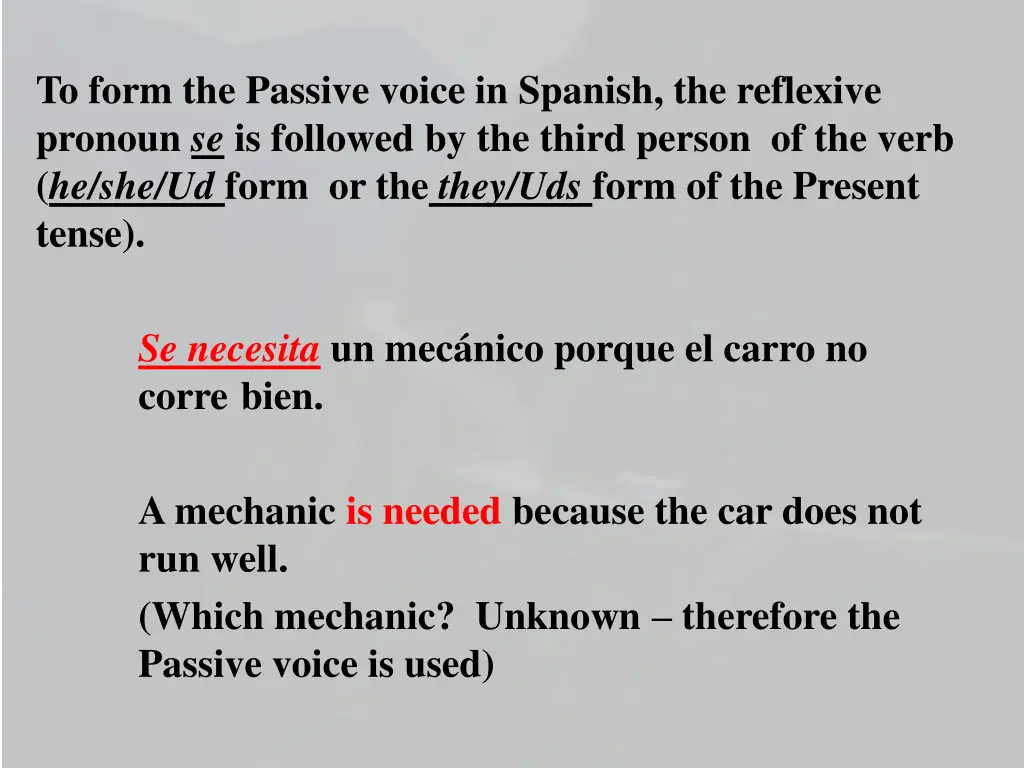
To form the Passive voice in Spanish, the reflexive pronoun se is followed by the third person of the verb (he/she/Ud form or the they/Uds form of the Present tense). Se necesita un mec nico porque el carro no corre bien. A mechanic is needed because the car does not run well. (Which mechanic? Unknown therefore the Passive voice is used)
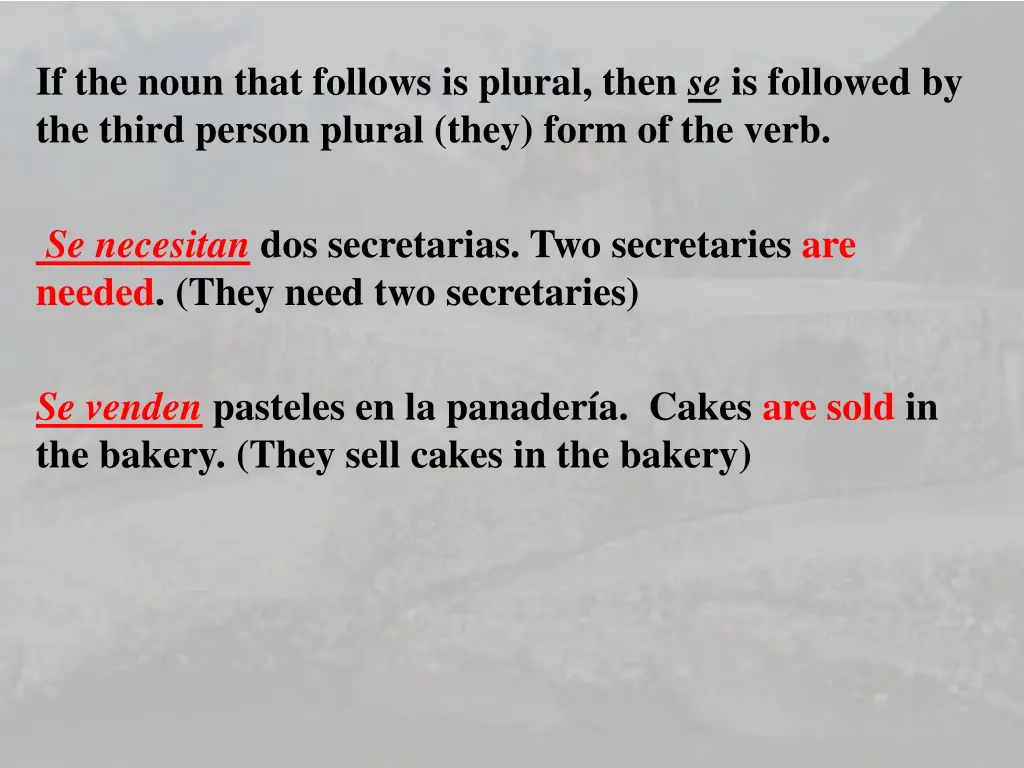
If the noun that follows is plural, then se is followed by the third person plural (they) form of the verb. Se necesitan dos secretarias. Two secretaries are needed. (They need two secretaries) Se venden pasteles en la panader a. Cakes are sold in the bakery. (They sell cakes in the bakery)
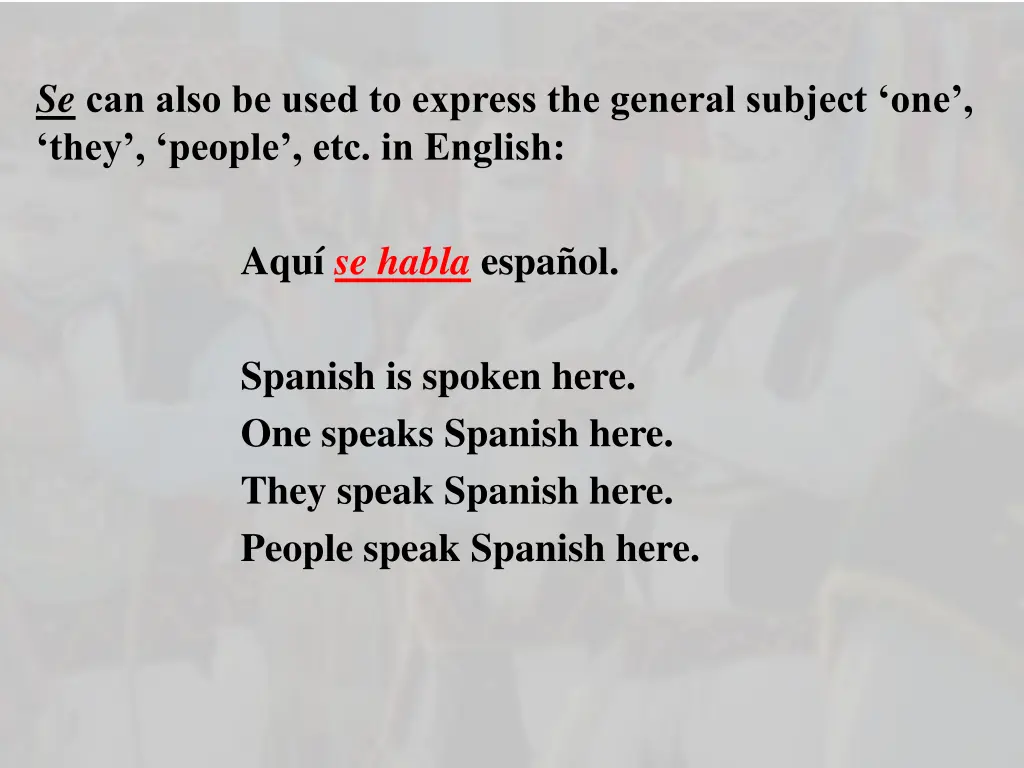
Se can also be used to express the general subject one, they , people , etc. in English: Aqu se habla espa ol. Spanish is spoken here. One speaks Spanish here. They speak Spanish here. People speak Spanish here.