Pathway-Based Analysis Using Random Forests for scRNA-Seq Data Classification
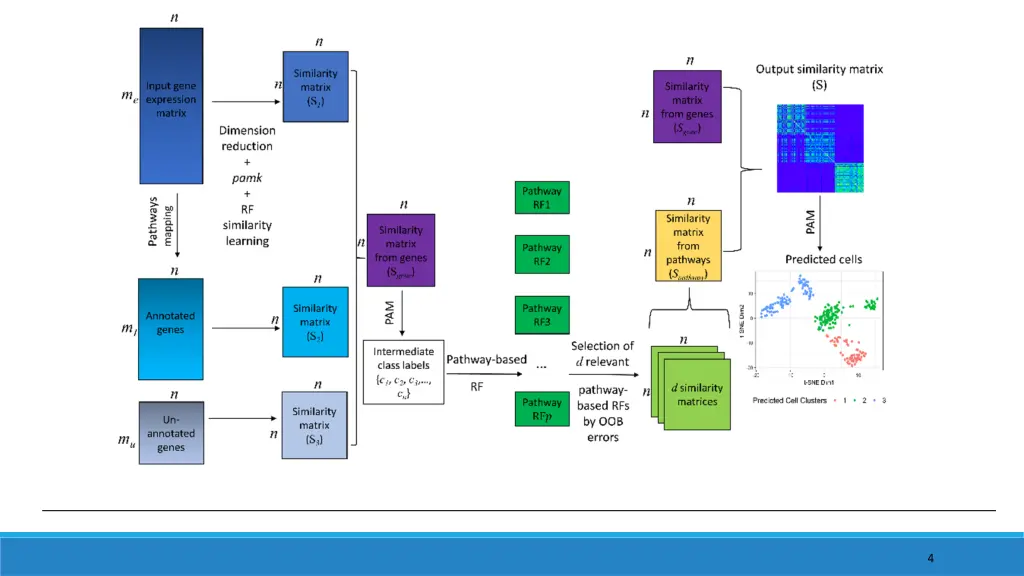
Explore the role of single-cell RNA sequencing (scRNA-Seq) in identifying rare cell types, cellular heterogeneity, and gene-gene interactions. Utilize Random Forests for clustering, pathway-based classification, and network construction.

Download Presentation

Please find below an Image/Link to download the presentation.
The content on the website is provided AS IS for your information and personal use only. It may not be sold, licensed, or shared on other websites without obtaining consent from the author. If you encounter any issues during the download, it is possible that the publisher has removed the file from their server.
You are allowed to download the files provided on this website for personal or commercial use, subject to the condition that they are used lawfully. All files are the property of their respective owners.
The content on the website is provided AS IS for your information and personal use only. It may not be sold, licensed, or shared on other websites without obtaining consent from the author.
E N D
Presentation Transcript
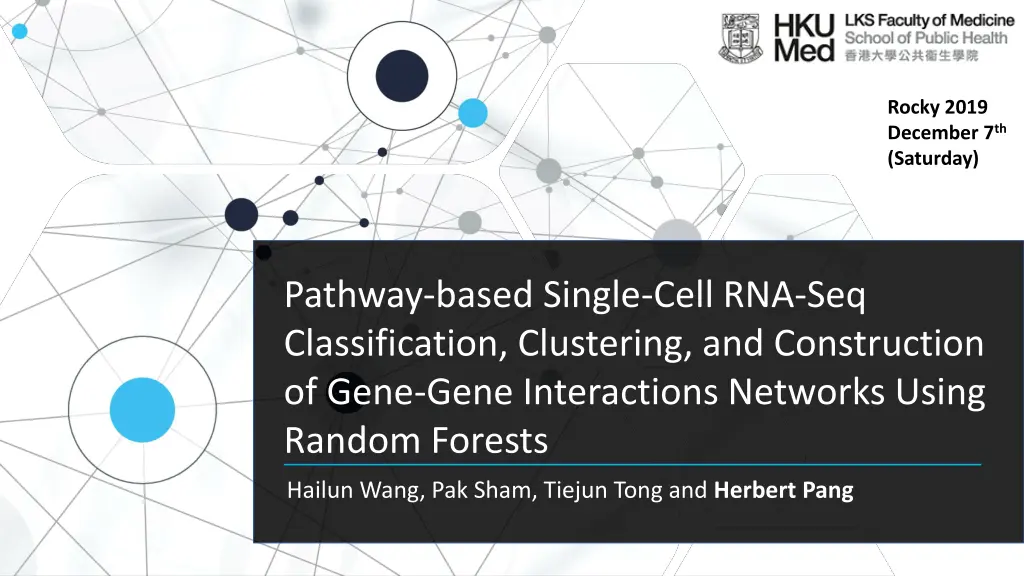
Rocky 2019 December 7th (Saturday) Pathway-based Single-Cell RNA-Seq Classification, Clustering, and Construction of Gene-Gene Interactions Networks Using Random Forests Hailun Wang, Pak Sham, Tiejun Tong and Herbert Pang
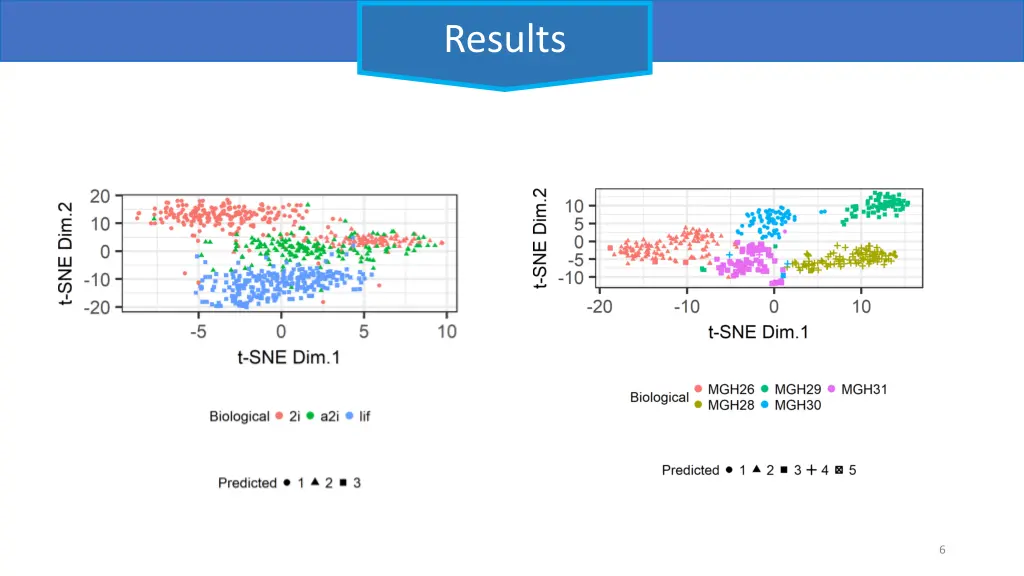
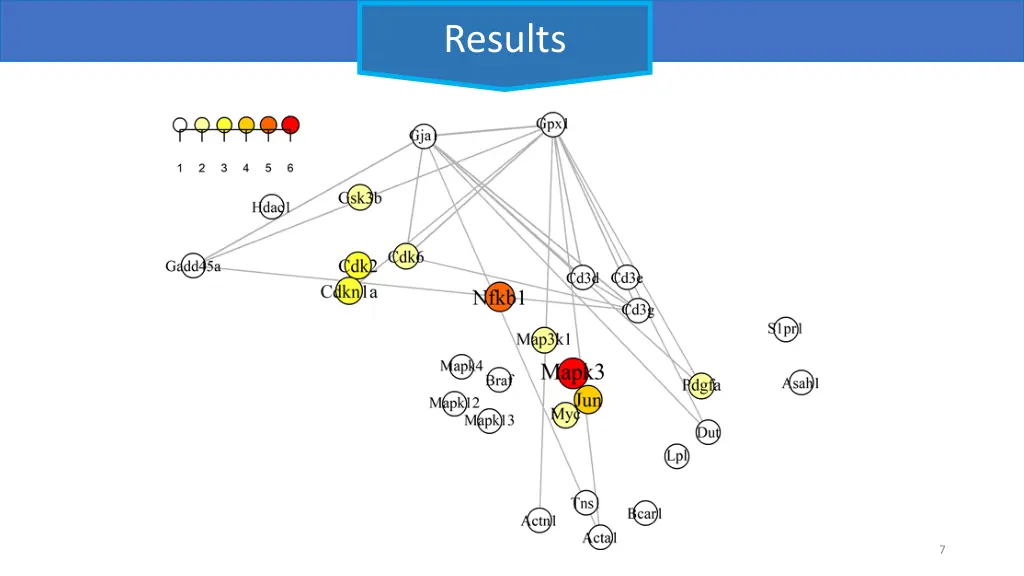
Why scRNA-Seq data Identification of rare cell types / sub-cell types Heterogeneity within the cell population Cell lineage and differentiation states Cell signaling / functional pathways Propose a pathway-based analytic framework using Random Forests Identify discriminative functional pathways related to cellular heterogeneity Cluster cell populations for scRNA-Seq data Construct gene-gene interactions networks 2
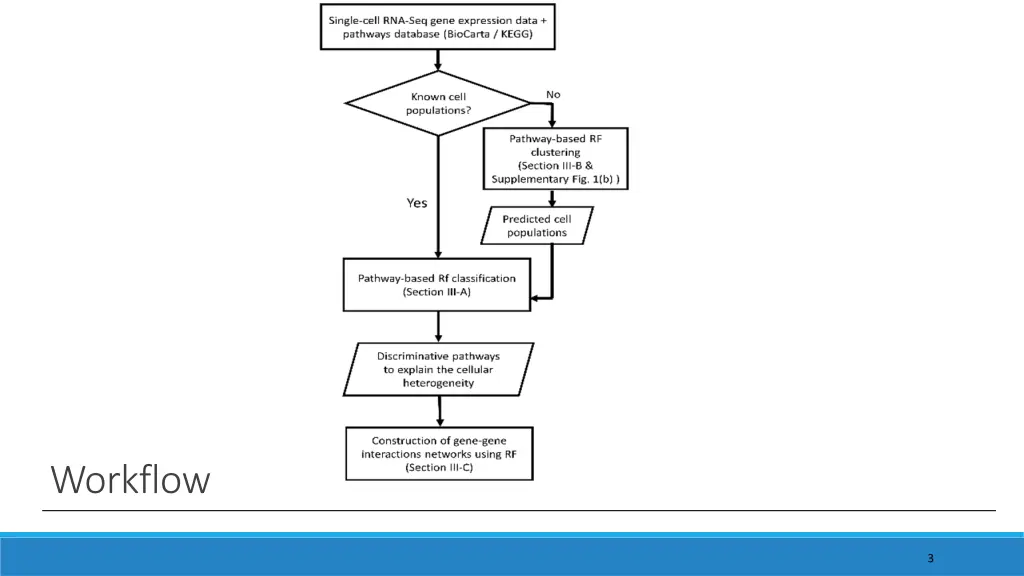
Workflow 3
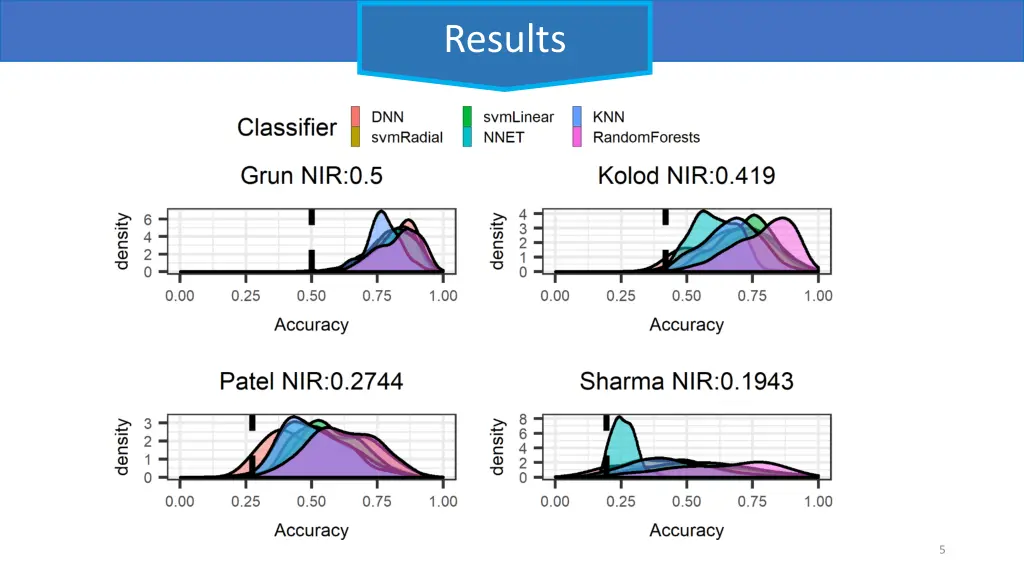
Results 5
Results 6
Results 7
Acknowledgements Hong Kong Postgraduate Fellowship Scheme RGC/GRF grant no.: 17157416 8
References D. Grun, L. Kester, and A. van Oudenaarden, Validation of noise models for single-cell transcriptomics, Nat. Methods, vol. 11, no. 6, pp. 637- 640, Jun. 2014. J.K. Kim et al., Characterizing noise structure in single-cell RNA-seq distinguishes genuine from technical stochastic allelic expression, Nat. Commun., vol. 6, pp. 8687, Oct. 2015. D.A. Lawson et al, Tumor heterogeneity and metastasis at single-cell resolution, Nat. Cell Biol., vol. 20, no. 12, pp. 1349-1360, Nov 2018. B. Hwang et al , Single-cell RNA sequencing technologies and bioinformatics pipelines, Experimental & Molecular Medicine, vol. 50, pp. 96, Aug. 2018. AA. Kolodziejczyk et al., Single Cell RNA-Sequencing of Pluripotent States Unlocks Modular Transcriptional Variation, Cell Stem Cell., vol. 17, no. 4, pp. 471-485, Oct. 2015. A.P. Patel et al., Single-cell RNA-seq highlights intratumoral heterogeneity in primary glioblastoma, Science, vol. 344, no. 6190, pp. 1396-1401, Jun. 2014. A. Sharma et al., Longitudinal single-cell RNA sequencing of patient derived primary cells reveals drug-induced infidelity in stem cell hierarchy, Nat Commun., vol. 9, pp. 4931, Nov. 2018. 9
Thank you! 10