Explore the first national study by Washington University on international women religious residing in the United States, highlighting their backgrounds, pathways, typical assistance, and more. The study reveals insights into the experiences and support provided to these sisters, shedding light on their journeys and needs within U.S.-based religious institutes.
Please find below an Image/Link to download the presentation.
The content on the website is provided AS IS for your information and personal use only. It may not be sold, licensed, or shared on other websites without obtaining consent from the author. If you encounter any issues during the download, it is possible that the publisher has removed the file from their server.
You are allowed to download the files provided on this website for personal or commercial use, subject to the condition that they are used lawfully. All files are the property of their respective owners.
The content on the website is provided AS IS for your information and personal use only. It may not be sold, licensed, or shared on other websites without obtaining consent from the author.
E N D
Presentation Transcript
TRINITY WASHINGTON UNIVERSITY/ CARA STUDY: INTERNATIONAL SISTERS IN THE UNITED STATES Mary Gautier Thu Do, LHC Patricia Wittberg, SC Mary Johnson, SND deN Washington University
BACKGROUND OF THE STUDY Washington University First ever national study of international women religious Collaboration between CARA and Trinity Washington University Funding from GHR Foundation Definition: International sister is a woman religious who was born outside the United States and is now living in the United States, in ministry or study or residence.
METHODOLOGY STAGE ONE Contacted 560 U.S. based institutes of women religious with a brief survey and a request for the names of any international sisters 336 survey responses from religious institutes(60 percent response) Identified 1,678 international sisters, either in the congregation or the area One in five institutes (19 percent) report no international sisters Contacted 194 Vicars for Religious in U.S. Dioceses (61 percent response) Identified 1,866 non-duplicated international sisters 18 Dioceses report no international sisters Identified more than 3,544 international sisters from these two sources as well as several hundred more through personal contacts more than 4,000 international sisters invited to participate in survey
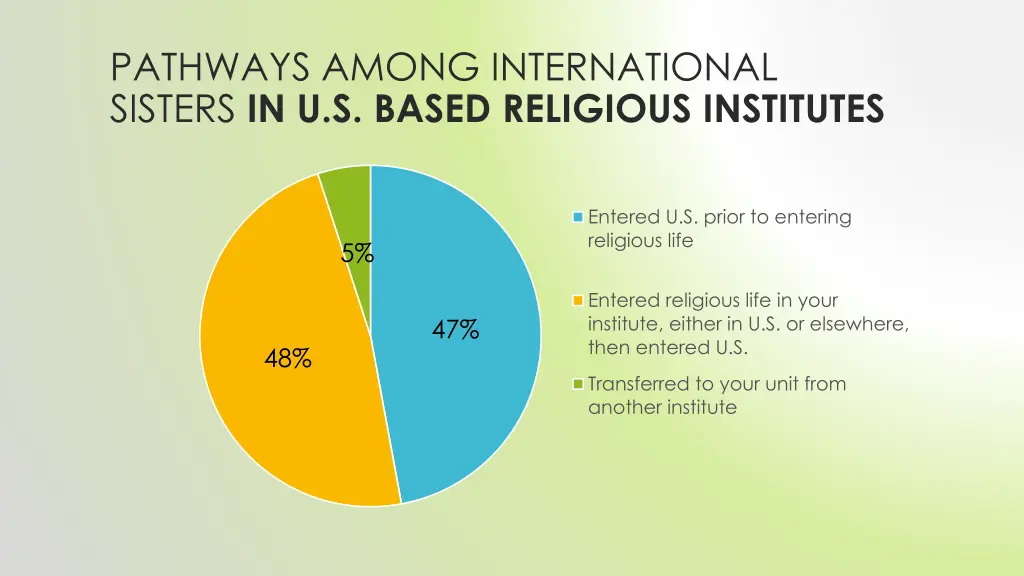
PATHWAYS AMONG INTERNATIONAL SISTERS IN U.S. BASED RELIGIOUS INSTITUTES Entered U.S. prior to entering religious life 5% Entered religious life in your institute, either in U.S. or elsewhere, then entered U.S. 47% 48% Transferred to your unit from another institute
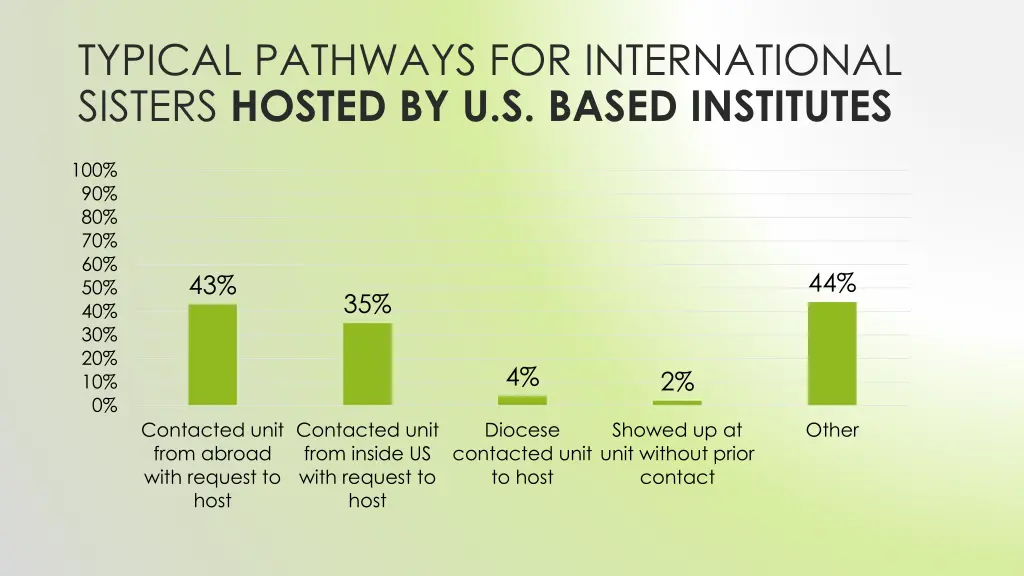
TYPICAL PATHWAYS FOR INTERNATIONAL SISTERS HOSTED BY U.S. BASED INSTITUTES 100% 90% 80% 70% 60% 44% 43% 50% 35% 40% 30% 20% 4% 2% 10% 0% Contacted unit from abroad with request to host Contacted unit from inside US with request to host Diocese contacted unit to host Showed up at unit without prior contact Other
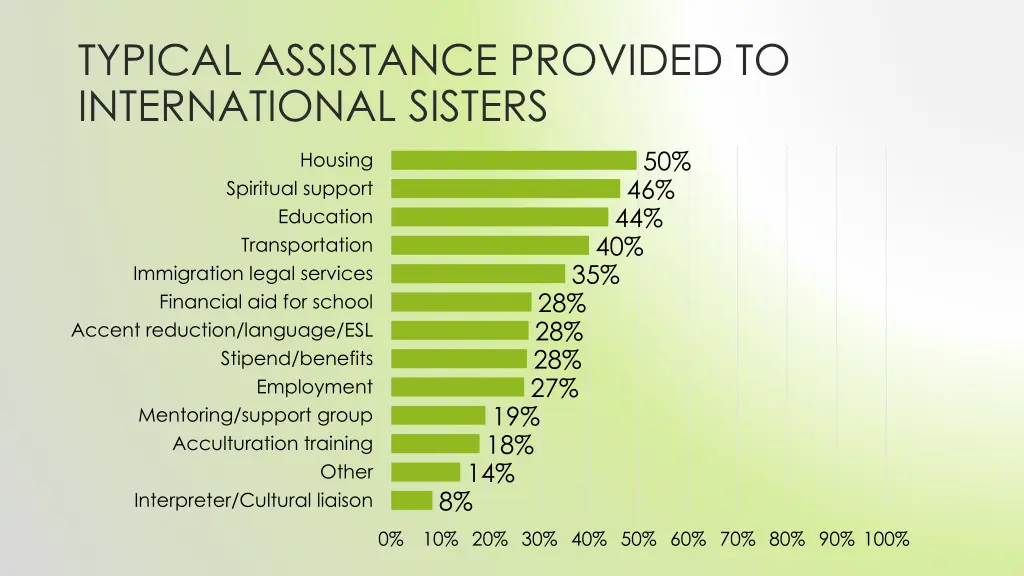
TYPICAL ASSISTANCE PROVIDED TO INTERNATIONAL SISTERS 50% Housing 46% Spiritual support 44% Education 40% Transportation 35% Immigration legal services 28% Financial aid for school 28% Accent reduction/language/ESL 28% Stipend/benefits 27% Employment 19% Mentoring/support group 18% Acculturation training 14% Other 8% Interpreter/Cultural liaison 0% 10% 20% 30% 40% 50% 60% 70% 80% 90% 100%
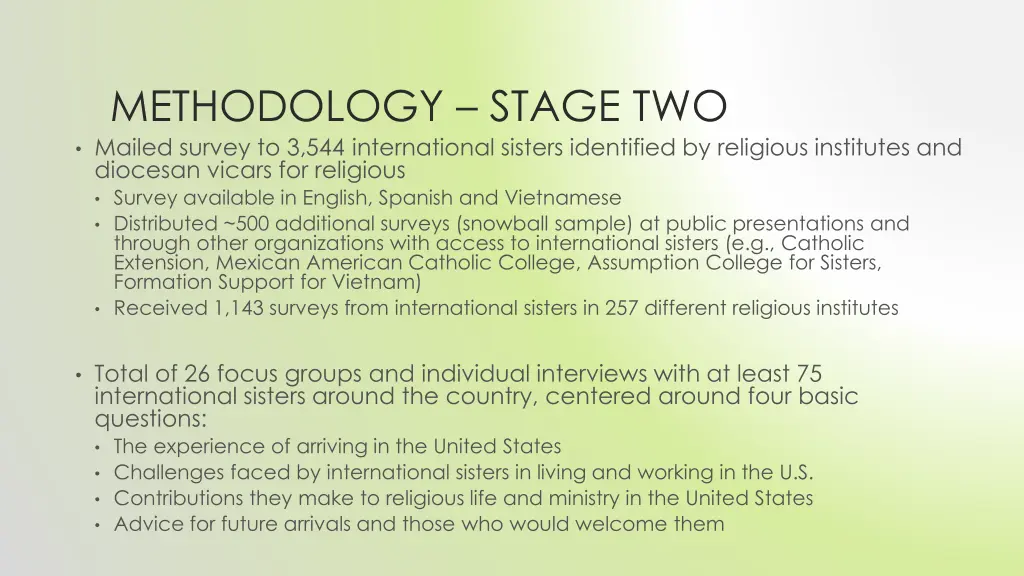
METHODOLOGY STAGE TWO Mailed survey to 3,544 international sisters identified by religious institutes and diocesan vicars for religious Survey available in English, Spanish and Vietnamese Distributed ~500 additional surveys (snowball sample) at public presentations and through other organizations with access to international sisters (e.g., Catholic Extension, Mexican American Catholic College, Assumption College for Sisters, Formation Support for Vietnam) Received 1,143 surveys from international sisters in 257 different religious institutes Total of 26 focus groups and individual interviews with at least 75 international sisters around the country, centered around four basic questions: The experience of arriving in the United States Challenges faced by international sisters in living and working in the U.S. Contributions they make to religious life and ministry in the United States Advice for future arrivals and those who would welcome them
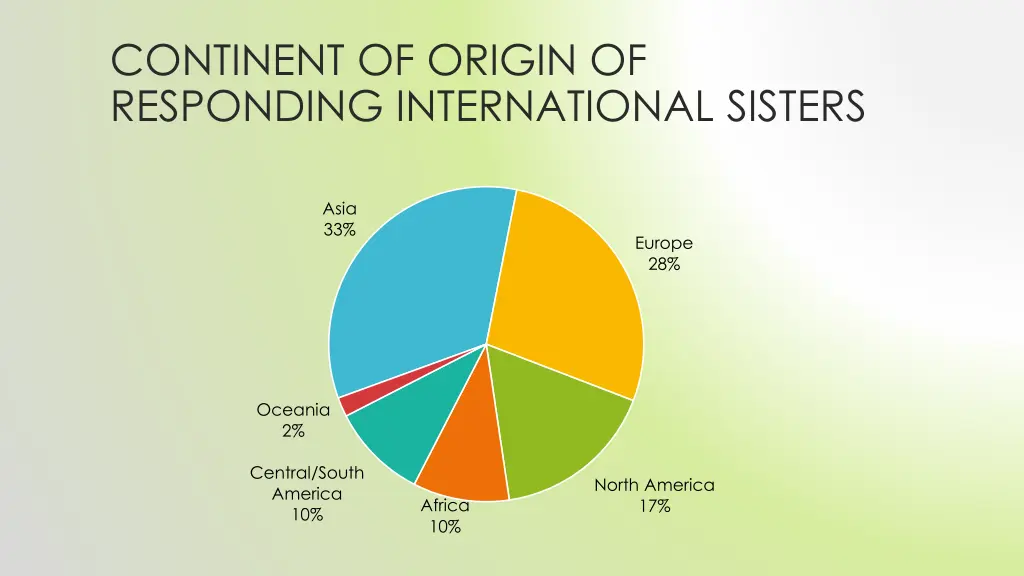
CONTINENT OF ORIGIN OF RESPONDING INTERNATIONAL SISTERS Asia 33% Europe 28% Oceania 2% Central/South America 10% North America 17% Africa 10%
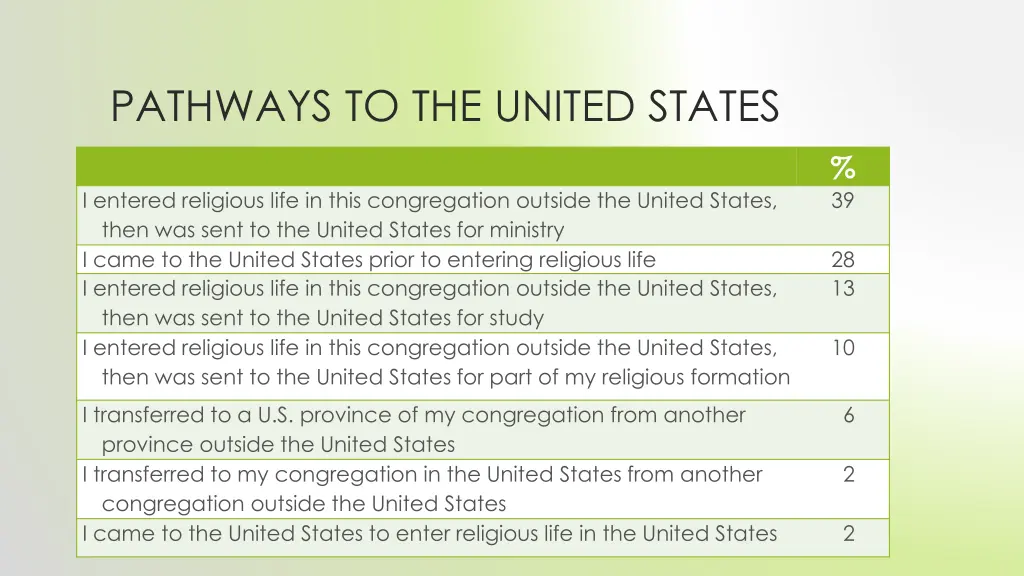
PATHWAYS TO THE UNITED STATES % 39 I entered religious life in this congregation outside the United States, then was sent to the United States for ministry I came to the United States prior to entering religious life I entered religious life in this congregation outside the United States, then was sent to the United States for study I entered religious life in this congregation outside the United States, then was sent to the United States for part of my religious formation 28 13 10 I transferred to a U.S. province of my congregation from another province outside the United States I transferred to my congregation in the United States from another congregation outside the United States I came to the United States to enter religious life in the United States 6 2 2
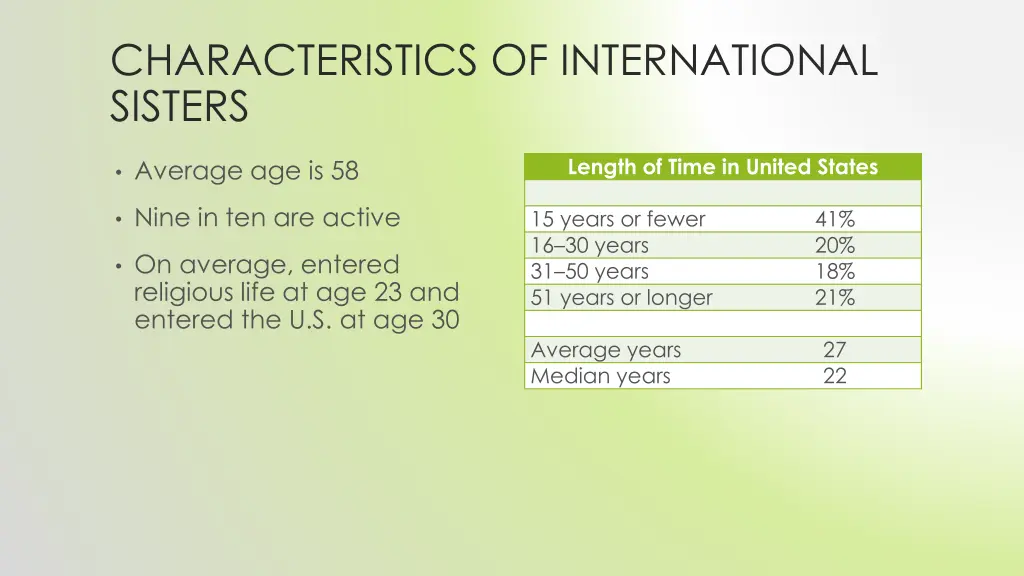
CHARACTERISTICS OF INTERNATIONAL SISTERS Length of Time in United States Average age is 58 Nine in ten are active 15 years or fewer 16 30 years 31 50 years 51 years or longer 41% 20% 18% 21% On average, entered religious life at age 23 and entered the U.S. at age 30 Average years Median years 27 22
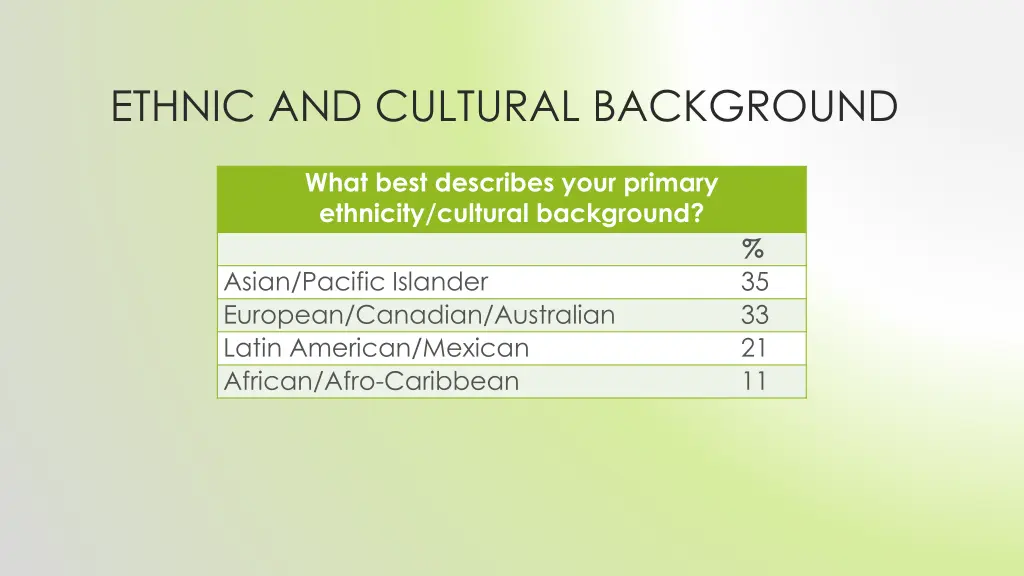
ETHNIC AND CULTURAL BACKGROUND What best describes your primary ethnicity/cultural background? % Asian/Pacific Islander European/Canadian/Australian Latin American/Mexican African/Afro-Caribbean 35 33 21 11
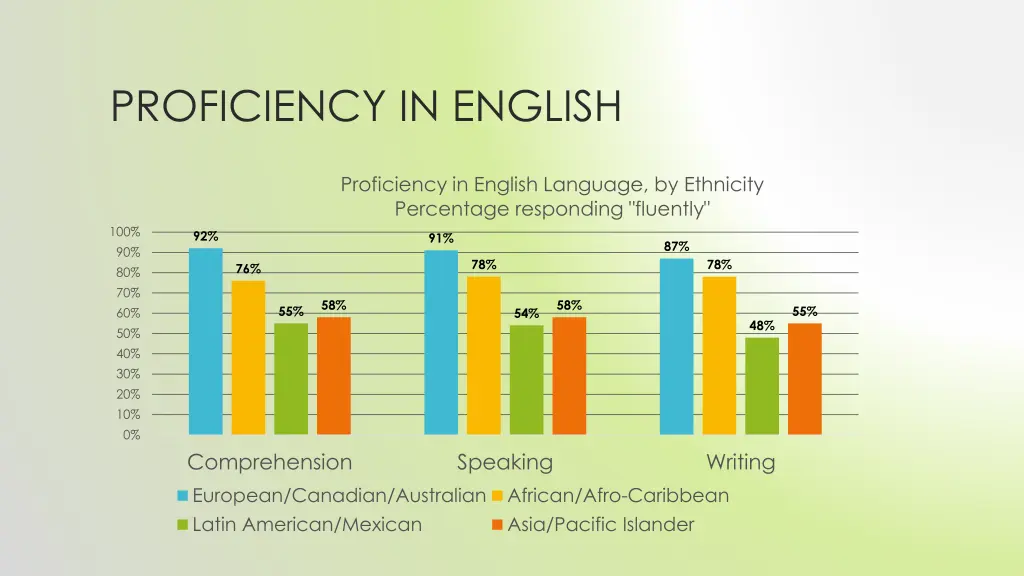
PROFICIENCY IN ENGLISH Proficiency in English Language, by Ethnicity Percentage responding "fluently" 100% 92% 91% 87% 90% 78% 78% 76% 80% 70% 58% 58% 55% 55% 60% 54% 48% 50% 40% 30% 20% 10% 0% Comprehension European/Canadian/Australian Latin American/Mexican Speaking Writing African/Afro-Caribbean Asia/Pacific Islander
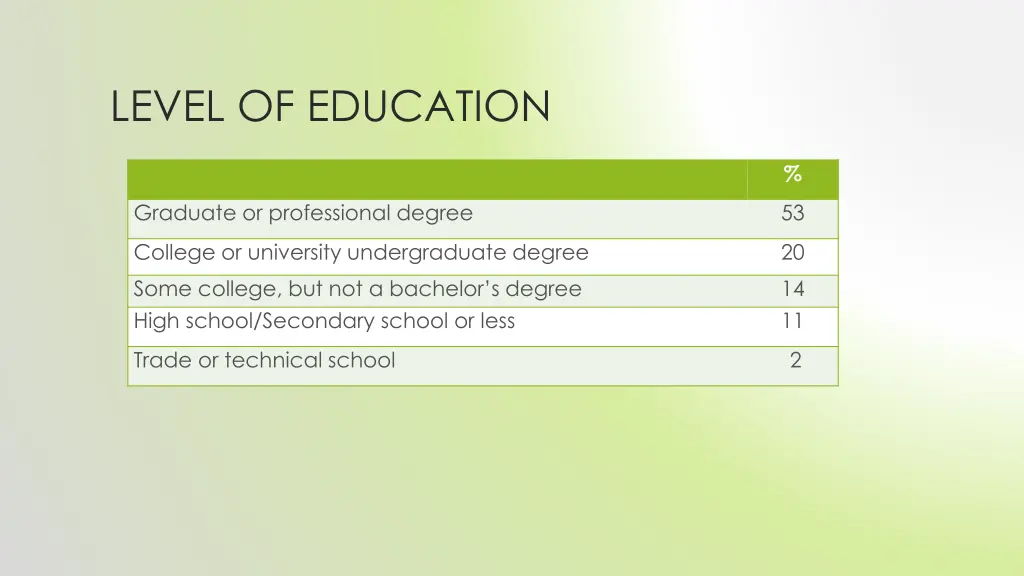
LEVEL OF EDUCATION % Graduate or professional degree 53 College or university undergraduate degree Some college, but not a bachelor s degree High school/Secondary school or less 20 14 11 Trade or technical school 2
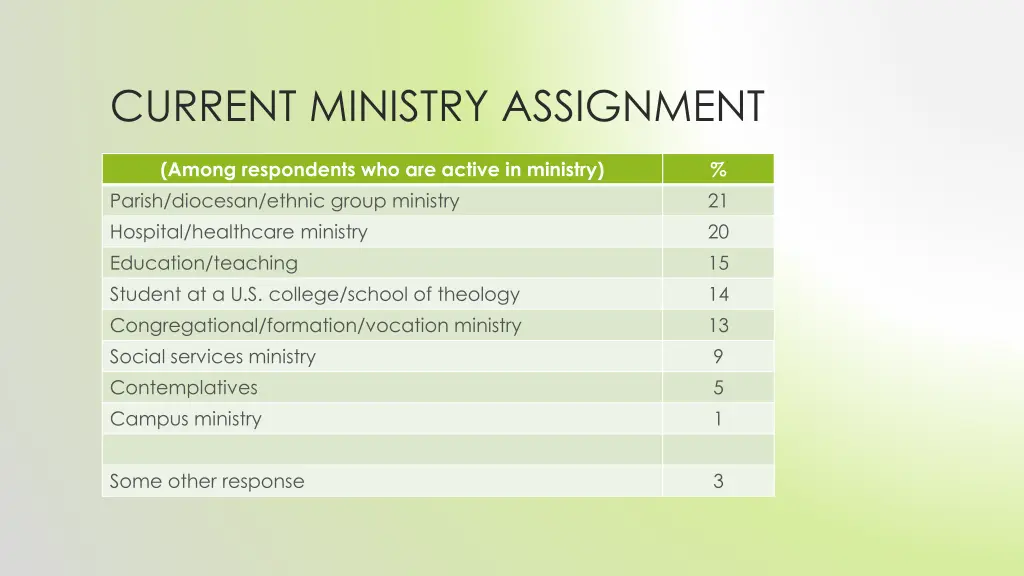
CURRENT MINISTRY ASSIGNMENT (Among respondents who are active in ministry) Parish/diocesan/ethnic group ministry Hospital/healthcare ministry Education/teaching Student at a U.S. college/school of theology Congregational/formation/vocation ministry Social services ministry Contemplatives Campus ministry % 21 20 15 14 13 9 5 1 Some other response 3
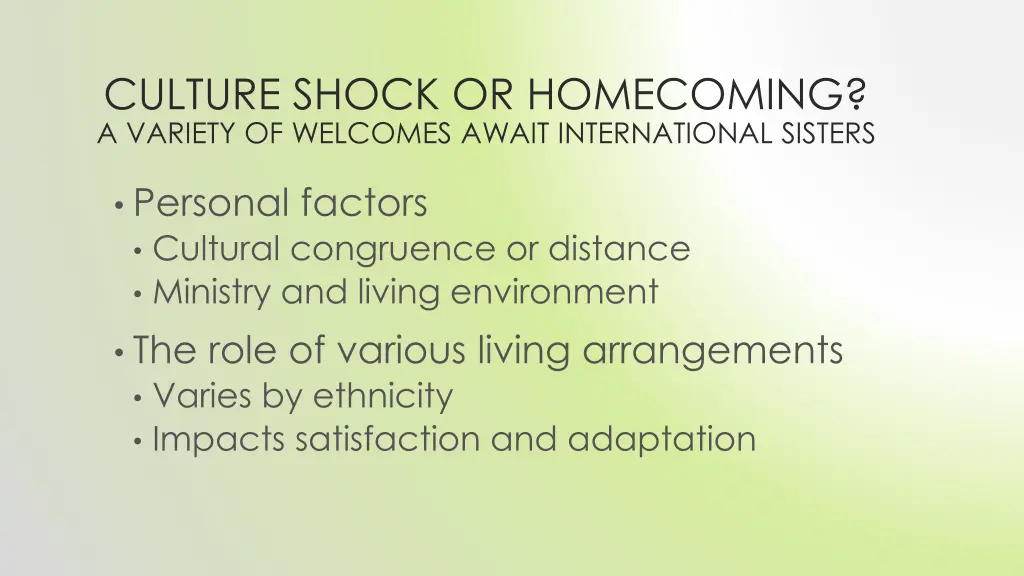
CULTURE SHOCK OR HOMECOMING? A VARIETY OF WELCOMES AWAIT INTERNATIONAL SISTERS Personal factors Cultural congruence or distance Ministry and living environment The role of various living arrangements Varies by ethnicity Impacts satisfaction and adaptation
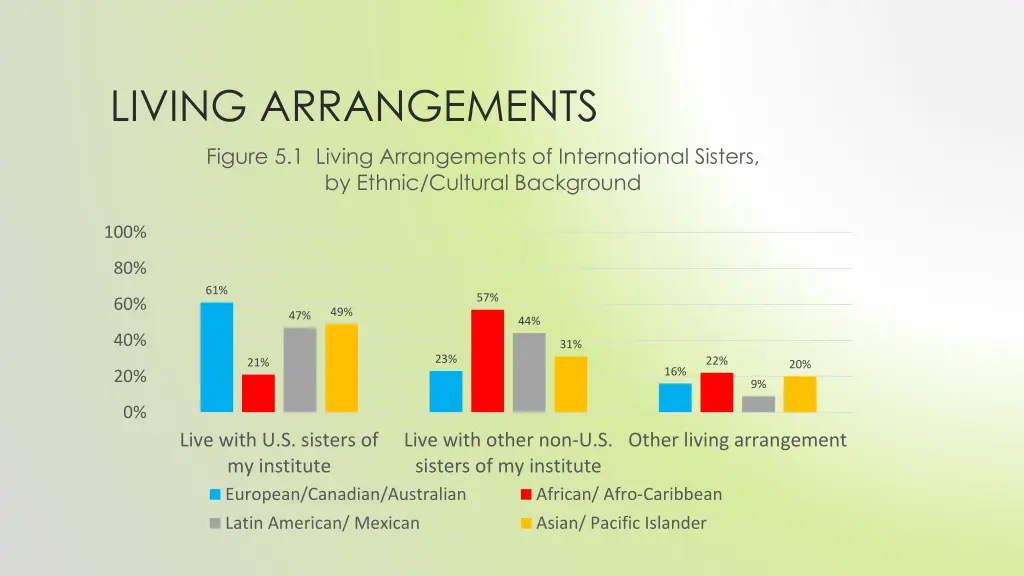
LIVING ARRANGEMENTS Figure 5.1 Living Arrangements of International Sisters, by Ethnic/Cultural Background 100% 80% 61% 57% 60% 49% 47% 44% 40% 31% 23% 22% 21% 20% 16% 20% 9% 0% Live with U.S. sisters of my institute European/Canadian/Australian Live with other non-U.S. sisters of my institute Other living arrangement African/ Afro-Caribbean Latin American/ Mexican Asian/ Pacific Islander
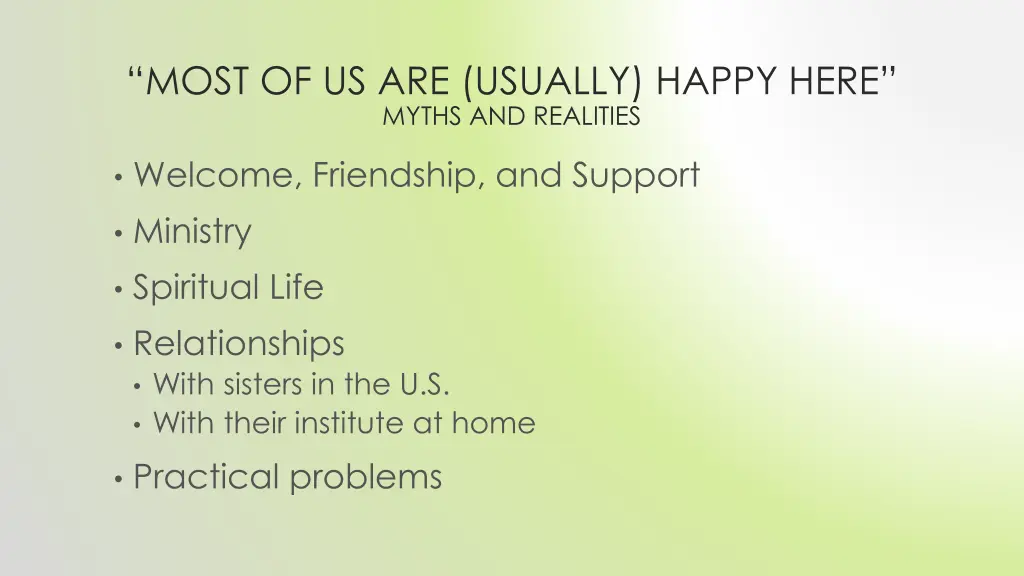
MOST OF US ARE (USUALLY) HAPPY HERE MYTHS AND REALITIES Welcome, Friendship, and Support Ministry Spiritual Life Relationships With sisters in the U.S. With their institute at home Practical problems
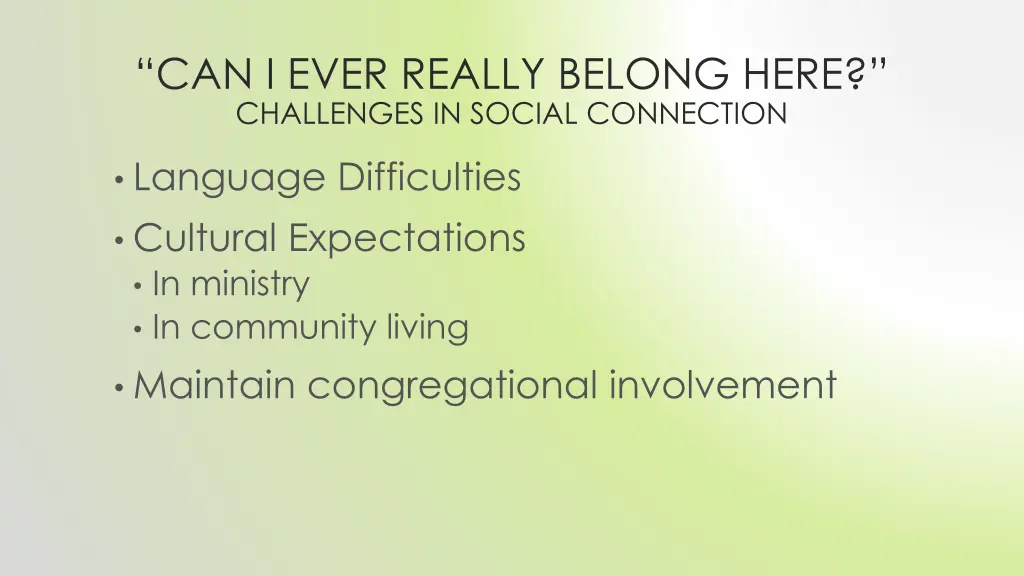
CAN I EVER REALLY BELONG HERE? CHALLENGES IN SOCIAL CONNECTION Language Difficulties Cultural Expectations In ministry In community living Maintain congregational involvement
GIFTS GIVEN AND RECEIVED THE BLESSING OF INTERNATIONAL SISTERS Diversity in Prayer and Worship Intercultural Understanding For those they serve in their ministry For the sending and receiving communities
HIDDEN IN PLAIN SIGHT WITH MANY STORIES Institutions: Large and small Locations: Urban and rural Ministries: Long-standing and innovative Networks: Local and global
BUILDING BRIDGES AND KNOCKING DOWN WALLS Between sisters Students Ethnic/cultural Across groups Links among the groups? Links between the groups and Church structures?
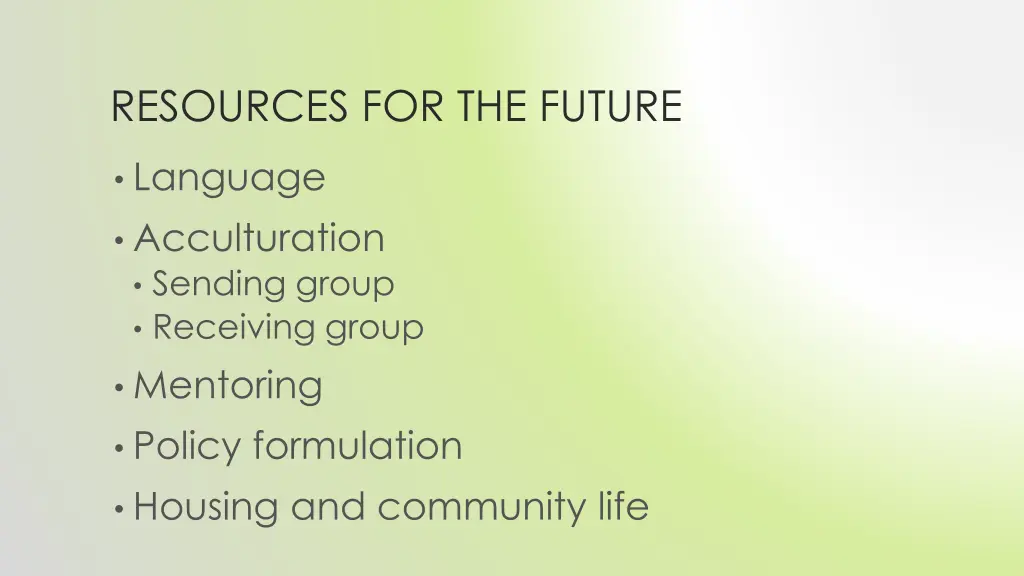
RESOURCES FOR THE FUTURE Language Acculturation Sending group Receiving group Mentoring Policy formulation Housing and community life