Pharmaceuticalsin the environment under EU regulation
The EU Water Framework Directive aims to protect water quality by addressing pollutants like Priority Substances (PS). Specific measures are required to prevent water pollution and ensure good chemical status by controlling emissions. Article 8c of the Directive focuses on developing a strategic approach to reduce the release of pharmaceutical substances into the aquatic environment. The initiative seeks to identify gaps in knowledge, propose solutions, and balance environmental protection with access to pharmaceutical treatments.

Download Presentation

Please find below an Image/Link to download the presentation.
The content on the website is provided AS IS for your information and personal use only. It may not be sold, licensed, or shared on other websites without obtaining consent from the author.If you encounter any issues during the download, it is possible that the publisher has removed the file from their server.
You are allowed to download the files provided on this website for personal or commercial use, subject to the condition that they are used lawfully. All files are the property of their respective owners.
The content on the website is provided AS IS for your information and personal use only. It may not be sold, licensed, or shared on other websites without obtaining consent from the author.
E N D
Presentation Transcript
Pharmaceuticalsin the environment under EU regulation Stefano Polesello CNR-IRSA, Italy
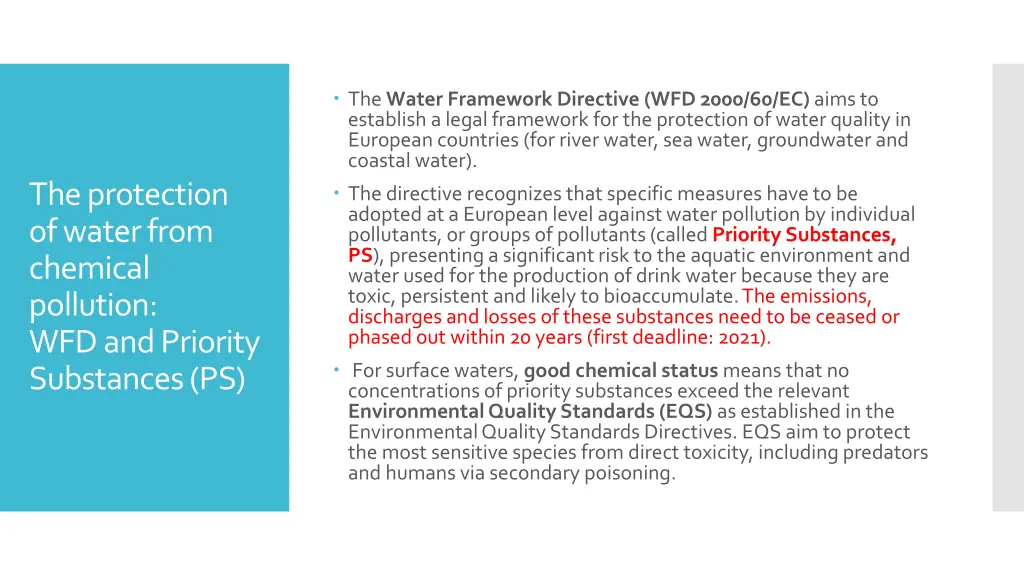
The Water Framework Directive (WFD 2000/60/EC) aims to establish a legal framework for the protection of water quality in European countries (for river water, sea water, groundwater and coastal water). The directive recognizes that specific measures have to be adopted at a European level against water pollution by individual pollutants, or groups of pollutants (called Priority Substances, PS), presenting a significant risk to the aquatic environment and water used for the production of drink water because they are toxic, persistent and likely to bioaccumulate. The emissions, discharges and losses of these substances need to be ceased or phased out within 20 years (first deadline: 2021). For surface waters, good chemical status means that no concentrations of priority substances exceed the relevant Environmental Quality Standards (EQS) as established in the Environmental Quality Standards Directives. EQS aim to protect the most sensitive species from direct toxicity, including predators and humans via secondary poisoning. The protection of water from chemical pollution: WFD and Priority Substances(PS)
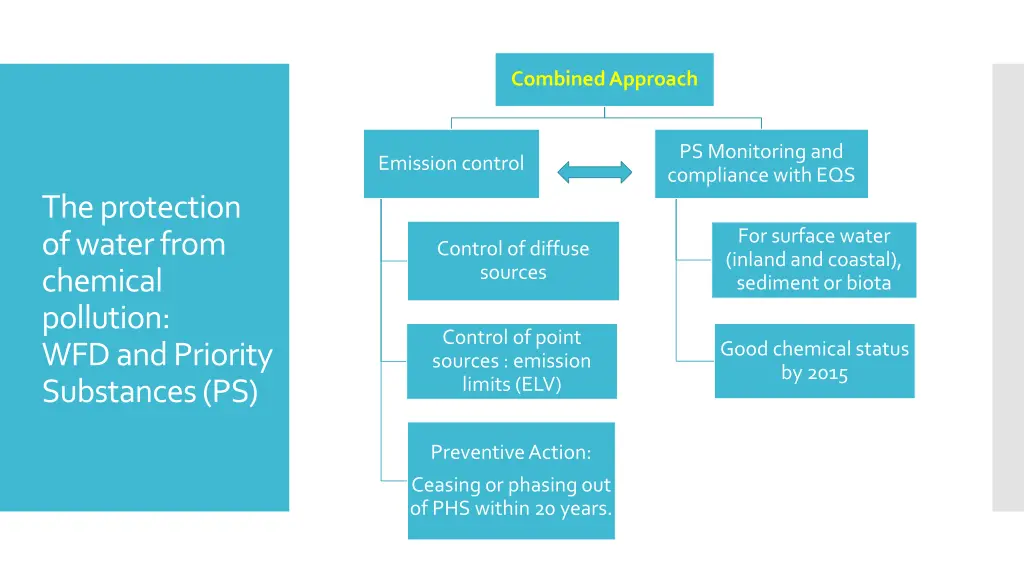
CombinedApproach PS Monitoringand compliancewith EQS Emissioncontrol The protection of water from chemical pollution: WFD and Priority Substances(PS) For surface water (inland and coastal), sediment or biota Control of diffuse sources Control of point sources : emission limits (ELV) Good chemical status by 2015 Preventive Action: Ceasing or phasing out of PHS within 20 years.
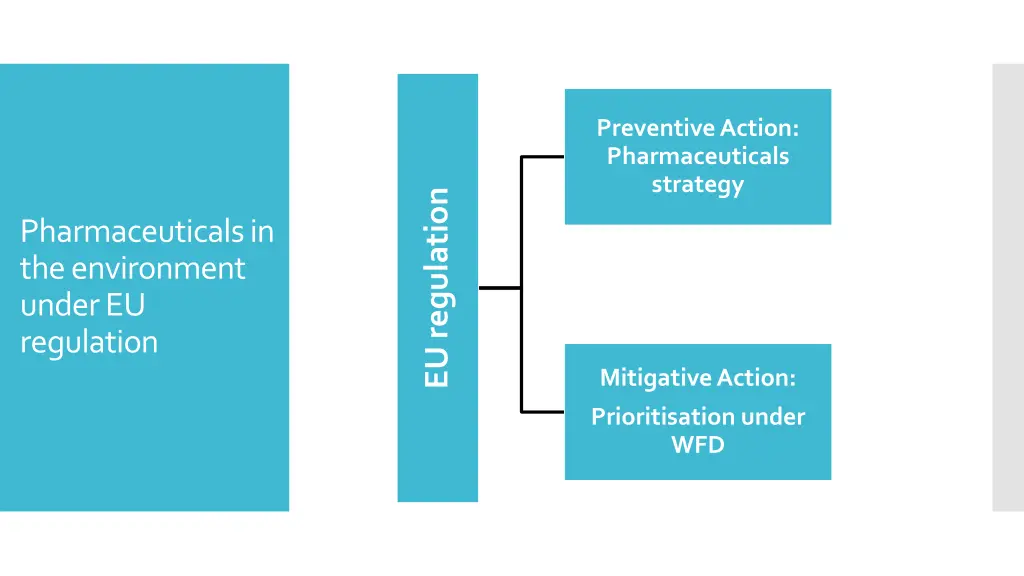
Preventive Action: Pharmaceuticals strategy EU regulation Pharmaceuticalsin the environment under EU regulation Mitigative Action: Prioritisation under WFD
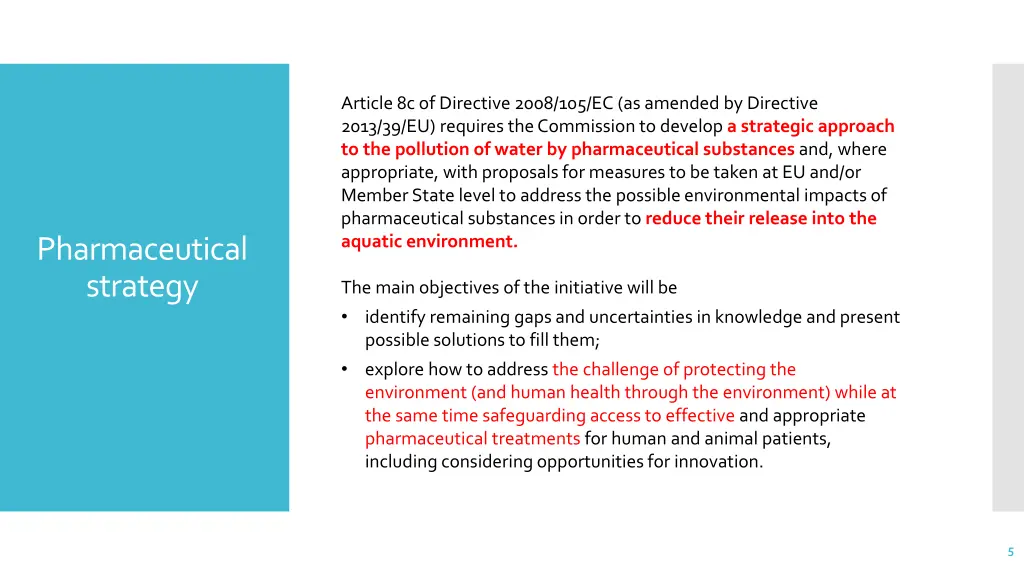
Article 8c of Directive 2008/105/EC (as amended by Directive 2013/39/EU) requires the Commission to develop a strategic approach to the pollution of water by pharmaceutical substances and, where appropriate, with proposals for measures to be taken at EU and/or Member State level to address the possible environmental impacts of pharmaceutical substances in order to reduce their release into the aquatic environment. Pharmaceutical strategy The main objectives of the initiative will be identify remaining gaps and uncertainties in knowledge and present possible solutions to fill them; explore how to address the challenge of protecting the environment (and human health through the environment) while at the same time safeguarding access to effective and appropriate pharmaceutical treatments for human and animal patients, including considering opportunities for innovation. 5
Adopted on 25 November 2020, the Pharmaceutical Strategy for Europe aims to create a regulatory framework fit for the future and to support industry in promoting research and technologies to effectively reach patients to meet their therapeutic needs, while addressing market failures. Pharmaceutical Strategyfor Europe COM(2020) 761 final Itwill be based on four pillars, involving legislative and non-legislative action: ensuring patients' access to affordable medicines and addressing unmet medical needs (e.g. antimicrobial resistance, cancer and rare diseases) foster the competitiveness, innovation capacity and sustainability of the EU pharmaceutical sector and the production of high quality, safe, effective and more environmentally friendly medicines improve crisis preparedness and response mechanisms, establish diversified and secure supply chains, address drug shortages ensuring a strong position of the EU on the world stage by promoting high standards in terms of quality, effectiveness and safety. 6
EQS Directive 2013/39 /EU includes a list of priority substances (45 compounds) and environmentalqualitystandards whichdoes not include pharmaceuticals. Art 8c states to develop a strategic approach to pollution of water by pharmaceutical substances. Article 8b: Watch list: The Commission shall establish a watch list of substances for which Union-wide monitoring data are to be gathered for the purpose of supporting future prioritisation exercises Pharmaceuticals asPriority Substances Watch List includes substances of concern for whichmonitoringon a Europeanscale is required to produce occurrence data to supporta prioritizationof contaminantsby a riskquotient approach Some pharmaceuticalswere includedfor the first time
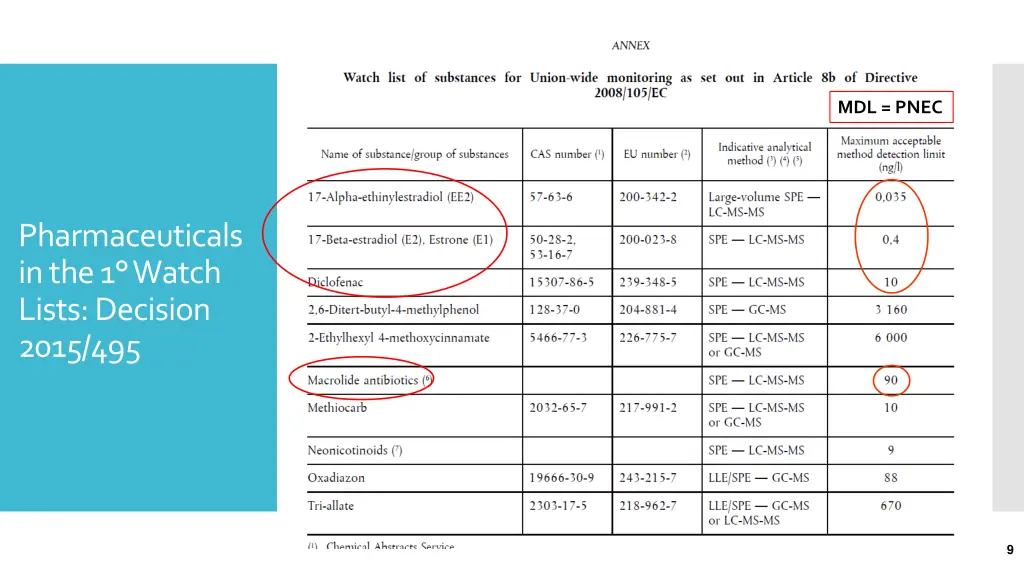
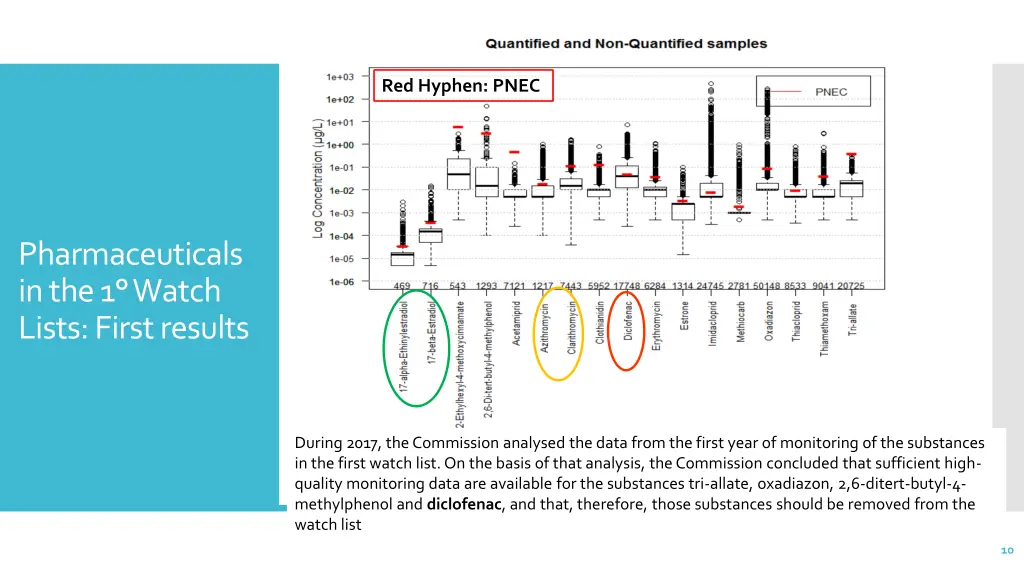
EQS Directive 2013/39 /EU includes a list of priority substances (45 compounds) and environmental quality standardswhich doesnot include pharmaceuticals. Art 8c states to develop a strategic approach to pollution of water by pharmaceutical substances. Article 8b: Watch list: The Commission shall establish a watch list of substances for which Union-wide monitoring data are to be gathered for the purpose of supporting future prioritisation exercises WFD Watch Lists Watch List includes substances of concern for which monitoring on a European scale isrequired to produce occurrence data to support a prioritization of contaminants by a riskquotient approach Decision 2015/495, includedin the 1 Watch List three estrogens (estrone, E1; 17- -estradiol, E2; and 17- -ethinylestradiol, EE2), four pharmaceuticals (diclofenac and the macrolide antibioticsazithromycin, clarithromycin and erythromycin)
MDL = PNEC Pharmaceuticals in the 1 Watch Lists: Decision 2015/495 9
Red Hyphen: PNEC Pharmaceuticals in the 1 Watch Lists: First results During 2017, the Commission analysed the data from the first year of monitoring of the substances in the first watch list. On the basis of that analysis, the Commission concluded that sufficient high- quality monitoring data are available for the substances tri-allate, oxadiazon, 2,6-ditert-butyl-4- methylphenol and diclofenac, and that, therefore, those substances should be removed from the watch list 10
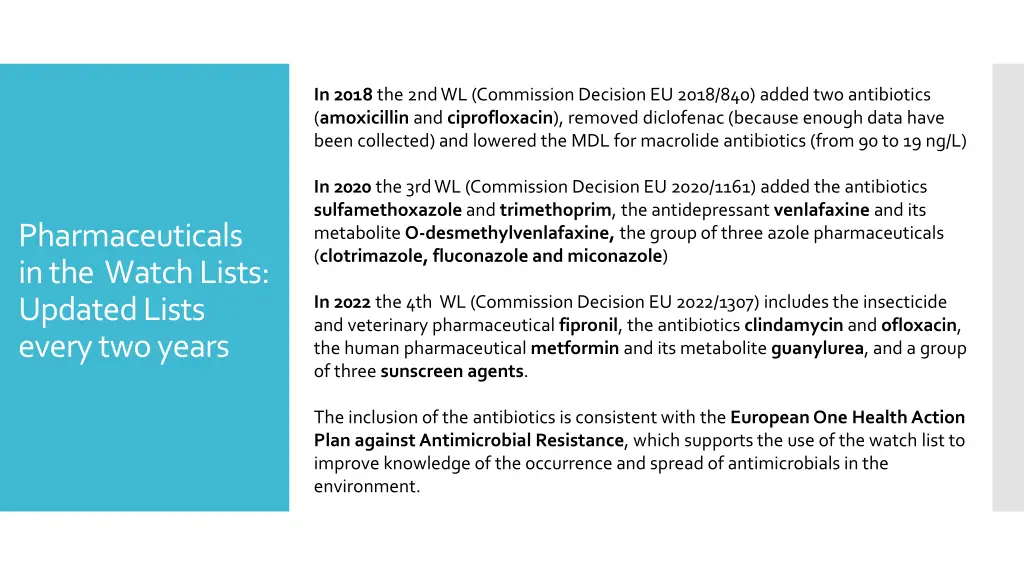
In 2018 the 2nd WL (CommissionDecisionEU 2018/840) added two antibiotics (amoxicillin and ciprofloxacin), removed diclofenac(because enough data have been collected) and lowered the MDL for macrolide antibiotics(from 90 to 19 ng/L) In 2020 the 3rd WL (CommissionDecisionEU 2020/1161) added the antibiotics sulfamethoxazoleand trimethoprim, the antidepressant venlafaxine and its metabolite O-desmethylvenlafaxine, the group of three azole pharmaceuticals (clotrimazole, fluconazole and miconazole) Pharmaceuticals in the Watch Lists: UpdatedLists everytwoyears In 2022 the 4th WL (CommissionDecisionEU 2022/1307) includes the insecticide and veterinary pharmaceutical fipronil, the antibiotics clindamycin and ofloxacin, the human pharmaceutical metformin and its metabolite guanylurea, and a group of three sunscreen agents. The inclusion of the antibiotics is consistent with the European One Health Action Plan against Antimicrobial Resistance, which supports the use of the watch list to improve knowledge of the occurrence and spread of antimicrobials in the environment.
Pilot studies on specific class of compounds(e.g. pharmaceuticals, PFAS) based on gathering data from MemberStates Aimsare: verify data availability; analytical method harmonisation; substance diffusion VoluntaryAction for MS Develop a future Watch List for monitoring Derive threshold values (for MS) Voluntary Watch List for Groundwater 12
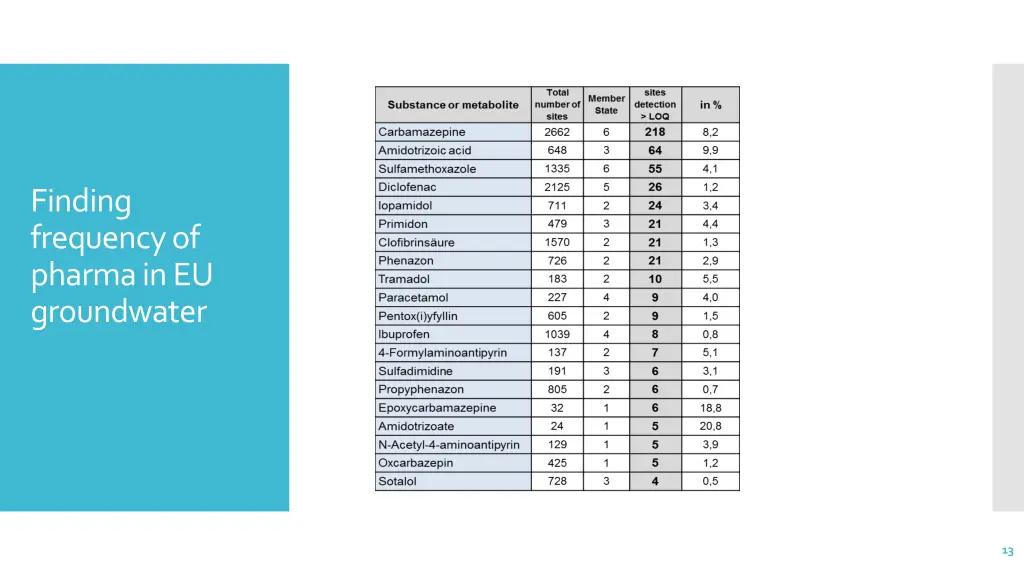
Finding frequencyof pharmain EU groundwater 13
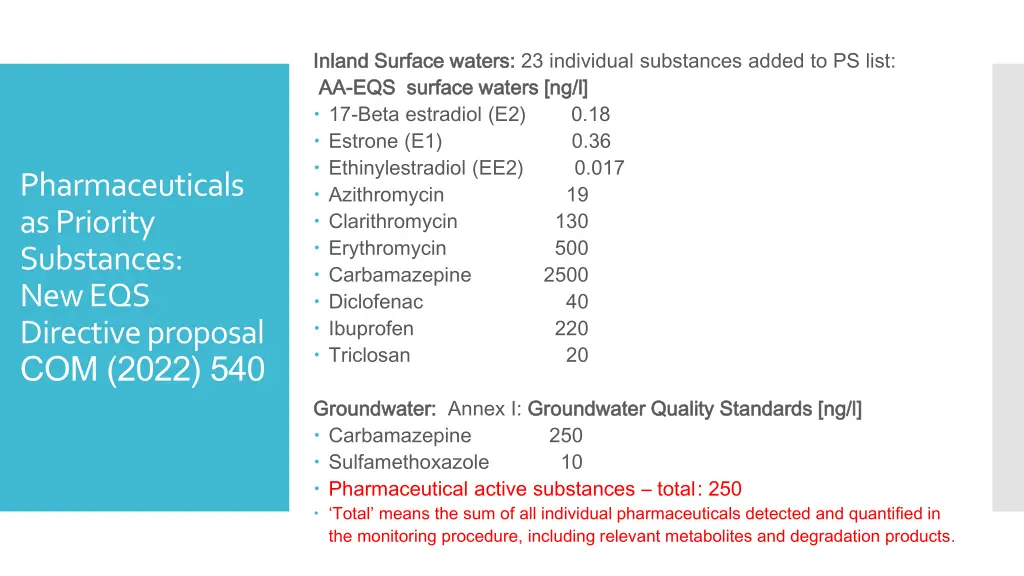
Inland Surface waters: Inland Surface waters: 23 individual substances added to PS list: AA AA- -EQS surface waters [ng/l] EQS surface waters [ng/l] 17-Beta estradiol (E2) 0.18 Estrone (E1) 0.36 Ethinylestradiol (EE2) 0.017 Azithromycin 19 Clarithromycin 130 Erythromycin 500 Carbamazepine 2500 Diclofenac 40 Ibuprofen 220 Triclosan 20 Pharmaceuticals asPriority Substances: New EQS Directive proposal COM (2022) 540 Groundwater: Groundwater: Annex I: Groundwater Quality Carbamazepine Sulfamethoxazole Pharmaceutical active substances total : 250 Total means the sum of all individual pharmaceuticals detected and quantified in the monitoring procedure, including relevant metabolites and degradation products. Groundwater Quality Standards [ng/l 250 10 Standards [ng/l] ]
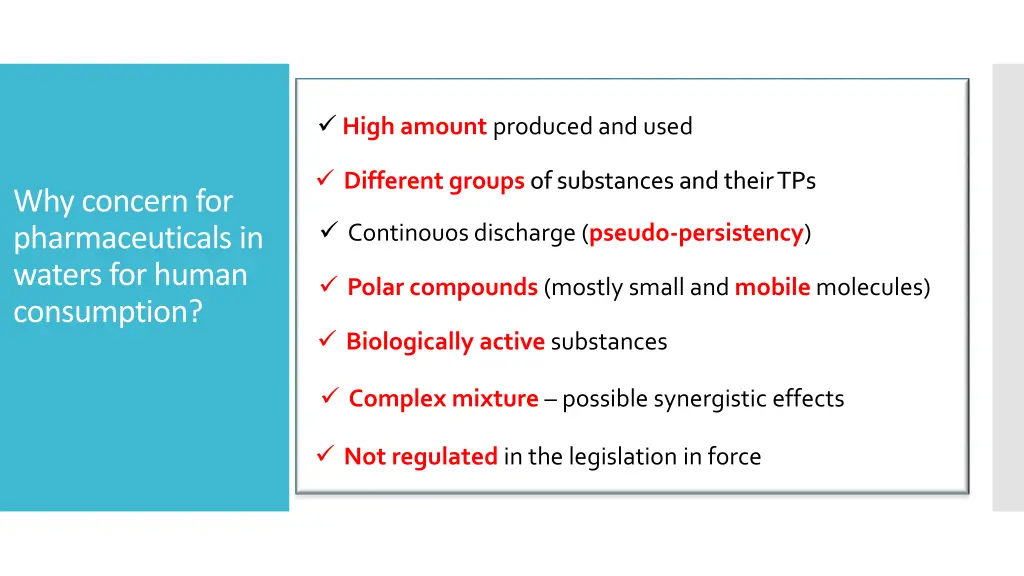
High amount producedand used Differentgroups of substances and theirTPs Whyconcernfor pharmaceuticalsin watersfor human consumption? Continouosdischarge (pseudo-persistency) Polar compounds (mostly small and mobilemolecules) Biologically active substances Complex mixture possible synergistic effects Not regulated in the legislation in force
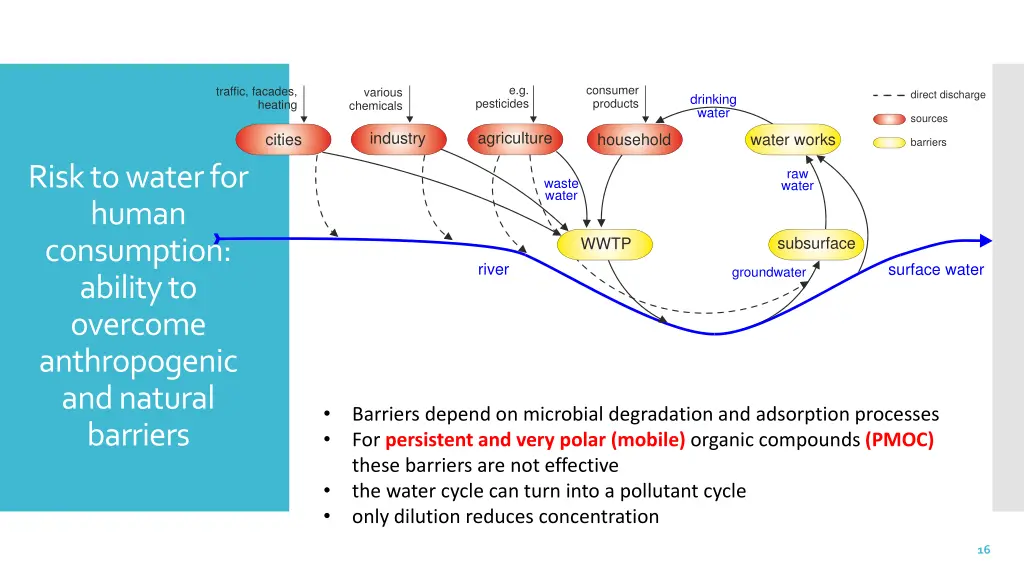
e.g. consumer products traffic, facades, various chemicals direct discharge drinking water pesticides heating sources agriculture industry cities household water works barriers Risk to water for human consumption: ability to overcome anthropogenic and natural barriers raw water waste water subsurface WWTP river surface water groundwater Barriers depend on microbial degradation and adsorption processes For persistent and very polar (mobile) organic compounds (PMOC) these barriers are not effective the water cycle can turn into a pollutant cycle only dilution reduces concentration 16
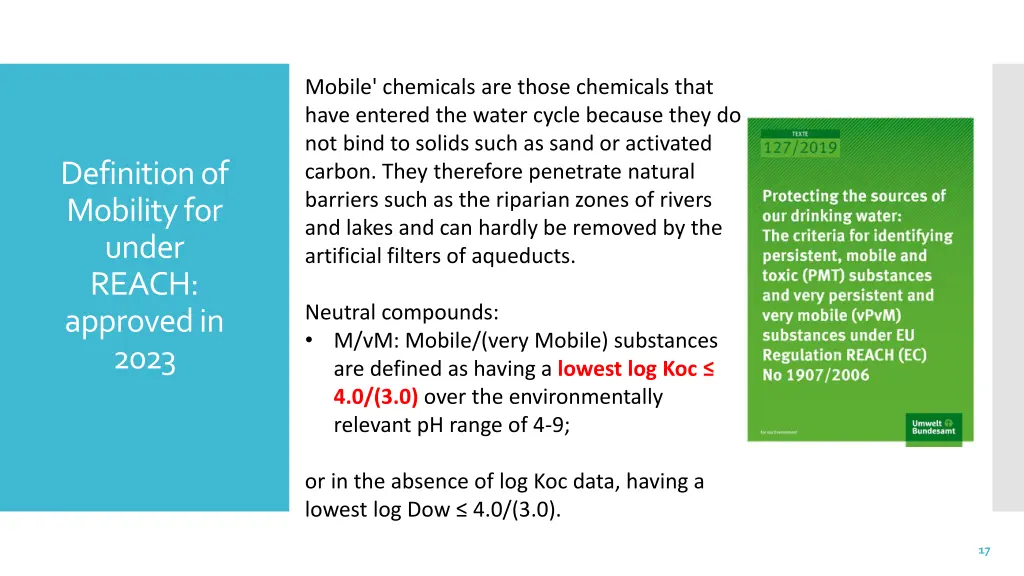
Mobile' chemicals are those chemicals that have entered the water cycle because they do not bind to solids such as sand or activated carbon. They therefore penetrate natural barriers such as the riparian zones of rivers and lakes and can hardly be removed by the artificial filters of aqueducts. Definition of Mobility for under REACH: approvedin 2023 Neutral compounds: M/vM: Mobile/(very Mobile) substances are defined as having a lowest log Koc 4.0/(3.0) over the environmentally relevant pH range of 4-9; or in the absence of log Koc data, having a lowest log Dow 4.0/(3.0). 17
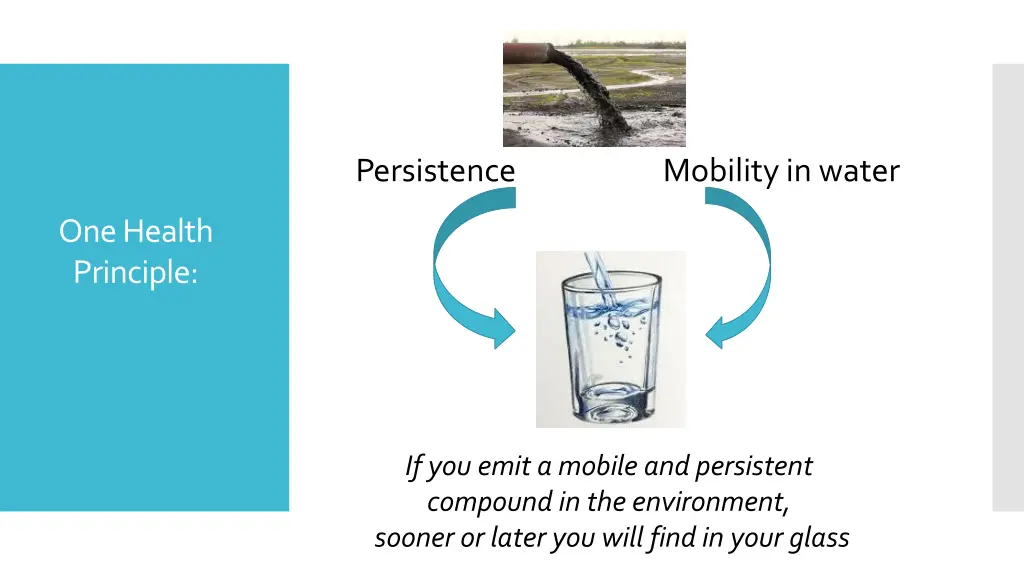
Persistence Mobility in water OneHealth Principle: If you emita mobile and persistent compound in the environment, sooner or lateryou will find in your glass
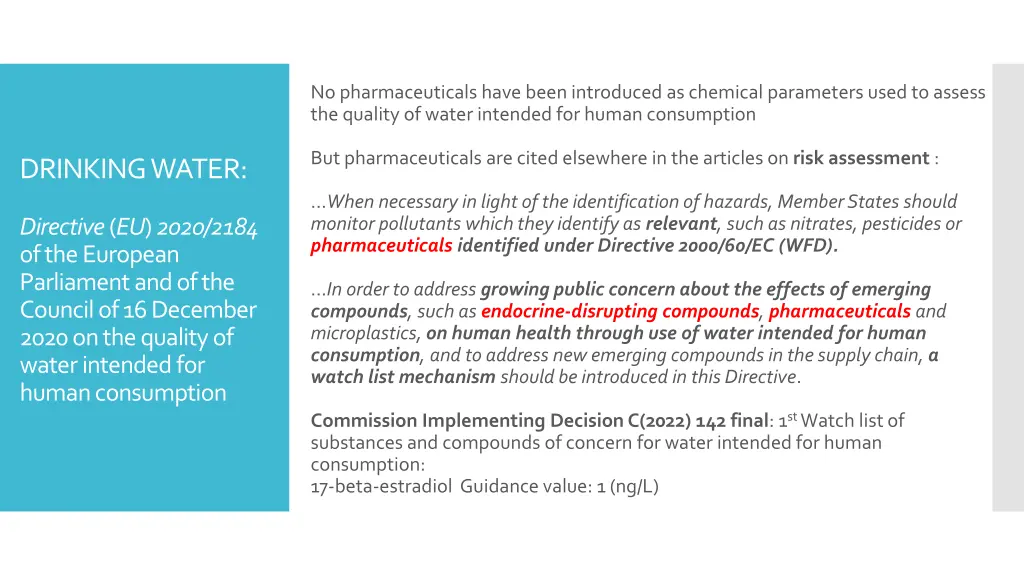
DWD 2020/2184 No pharmaceuticals have been introduced as chemical parameters used to assess the quality of water intended for human consumption But pharmaceuticals are cited elsewhere in the articles on risk assessment : DRINKING WATER: When necessary in light of the identification of hazards, Member States should monitor pollutants which they identify as relevant, such as nitrates, pesticides or pharmaceuticals identified under Directive 2000/60/EC (WFD). Directive (EU) 2020/2184 of the European Parliament and of the Council of 16 December 2020 on the quality of water intended for human consumption In order to address growing public concern about the effects of emerging compounds, such as endocrine-disrupting compounds, pharmaceuticals and microplastics, on human health through use of water intended for human consumption, and to address new emerging compounds in the supply chain, a watch list mechanism should be introduced in this Directive. Commission Implementing Decision C(2022) 142 final: 1st Watch list of substances and compounds of concern for water intended for human consumption: 17-beta-estradiol Guidance value: 1 (ng/L)
ANNEX II Conditions relating to the additional requirements 6. Consideration of requirements for water quality and monitoring that are additional to or stricter than those specified in Section 2 of Annex I, or both, when necessary and appropriate to ensure adequate protection of the environment and of human and animal health, in particular when there is clear scientific evidence that the risk originates from reclaimed water and not from other sources. Depending on the outcome of the risk assessment referred to in point 5, such additional requirements may in particular concern: (a)heavy metals; (b)pesticides; (c) disinfection by-products; (d)pharmaceuticals; (e) other substances of emerging concern, including micro pollutants and micro plastics; (f) anti-microbial resistance. WATER REUSE : Regulation (EU) 2020/741 of the European Parliament and of the Council of 25 may 2020 on minimum requirements for water reuse
WFD approachto extend the list of substances to be monitoredis atriskof failure. Itconcentratesresources on monitoringinstead on preventive measures What are the solutions to address the problem of drugs in the environment in the regulation? On the other side, in my professionalexperience, setting a EQS (or any other threshold value) is the only way to trigger the reduction of emission, discharge and losses by the companies Alternatively, adoptinga complete riskanalysismodels suchas WHO Water SafetyPlans couldbe more effective WHO Water SafetyPlanshavebeen legallyadopted by Drinking Water Directive (2022/2184/EU) and Water Reuse Regulation (2020/741) Need for considering the mixture effects by integrated monitoring methods such as the Effect Based Methods
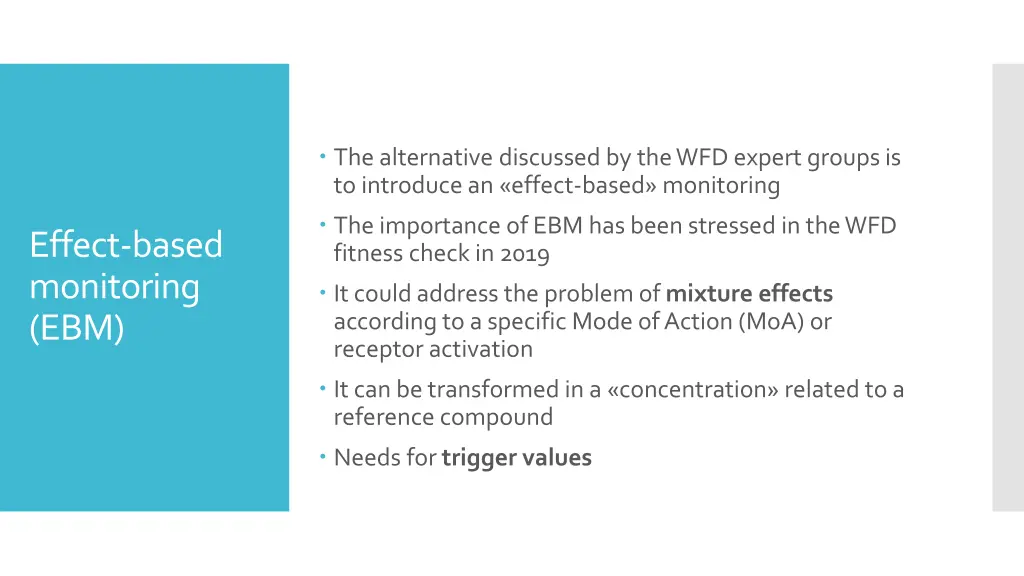
The alternative discussed by the WFD expertgroupsis to introduce an effect-based monitoring The importance of EBM hasbeen stressed in the WFD fitness checkin 2019 Itcouldaddress the problemof mixture effects accordingto a specific Mode of Action (MoA) or receptoractivation Itcan be transformedin a concentration related to a referencecompound Needs for trigger values Effect-based monitoring (EBM)