Explore the pilot study evaluating the potential benefits of Photobiomodulation Therapy for Diabetic Macular Edema. Learn about the objectives, study design, and treatment details in this Phase 2 randomized clinical trial. Discover how this therapy could offer a novel approach to managing diabetic eye conditions and potentially reducing the need for frequent injections. Stay informed on the latest advancements in ophthalmology research and treatment options for diabetic macular edema.
Please find below an Image/Link to download the presentation.
The content on the website is provided AS IS for your information and personal use only. It may not be sold, licensed, or shared on other websites without obtaining consent from the author. If you encounter any issues during the download, it is possible that the publisher has removed the file from their server.
You are allowed to download the files provided on this website for personal or commercial use, subject to the condition that they are used lawfully. All files are the property of their respective owners.
The content on the website is provided AS IS for your information and personal use only. It may not be sold, licensed, or shared on other websites without obtaining consent from the author.
E N D
Presentation Transcript
DRCR Retina Network A Pilot Study Evaluating Photobiomodulation Therapy for Diabetic Macular Edema (Protocol AE) Ophthalmology Retina. October 07, 2021. DOI:http://doi.org/10.1016/j.oret.2021.10.003 1
Background Intravitreous anti-VEGF injections for center-involved diabetic macular edema (CI-DME) have been proven effective. There are disadvantages to anti-VEGF therapy: Injection and visit frequency Risk of endophthalmitis and other adverse events Cost Refractory cases Ongoing need to identify novel therapies 2
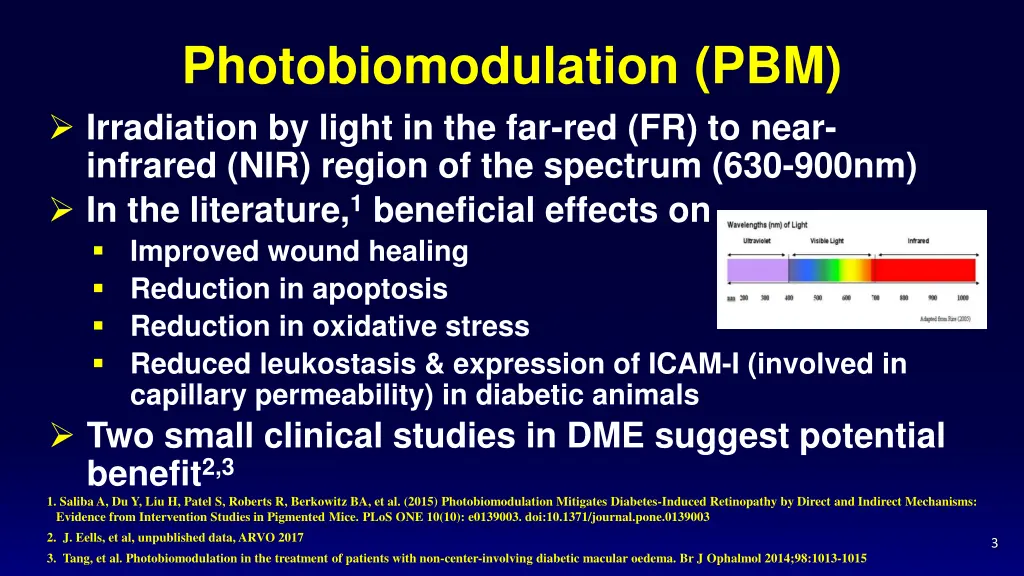
Photobiomodulation (PBM) Irradiation by light in the far-red (FR) to near- infrared (NIR) region of the spectrum (630-900nm) In the literature,1 beneficial effects on Improved wound healing Reduction in apoptosis Reduction in oxidative stress Reduced leukostasis & expression of ICAM-I (involved in capillary permeability) in diabetic animals Two small clinical studies in DME suggest potential benefit2,3 1. SalibaA, Du Y, Liu H, Patel S, Roberts R, Berkowitz BA, et al. (2015) Photobiomodulation Mitigates Diabetes-Induced Retinopathy by Direct and Indirect Mechanisms: Evidence from Intervention Studies in Pigmented Mice. PLoS ONE 10(10): e0139003. doi:10.1371/journal.pone.0139003 2. J. Eells, et al, unpublished data, ARVO 2017 3. Tang, et al. Photobiomodulation in the treatment of patients with non-center-involving diabetic macular oedema. Br J Ophalmol 2014;98:1013-1015 3
Objective Primary: To evaluate photobiomodulation (PBM) compared with placebo for eyes with CI-DME and good vision to determine whether there is a short- term effect on central subfield thickness (CST) Goal: Determine whether there is sufficient efficacy to proceed with a larger trial 4
Study Design Phase 2 Randomized Multicenter Clinical Trial (N = 23 Sites) 18 years old Type 1 or 2 diabetes CI-DME on OCT Visual acuity at least 20/25 or better No or minimal prior treatment for DME Objective: To determine whether there is a short-term effect on central subfield thickness at 4 months comparing PBM with placebo for eyes with CI-DME and good vision PBM Placebo No more than 1 laser and/or 4 injections, at least 12 months ago
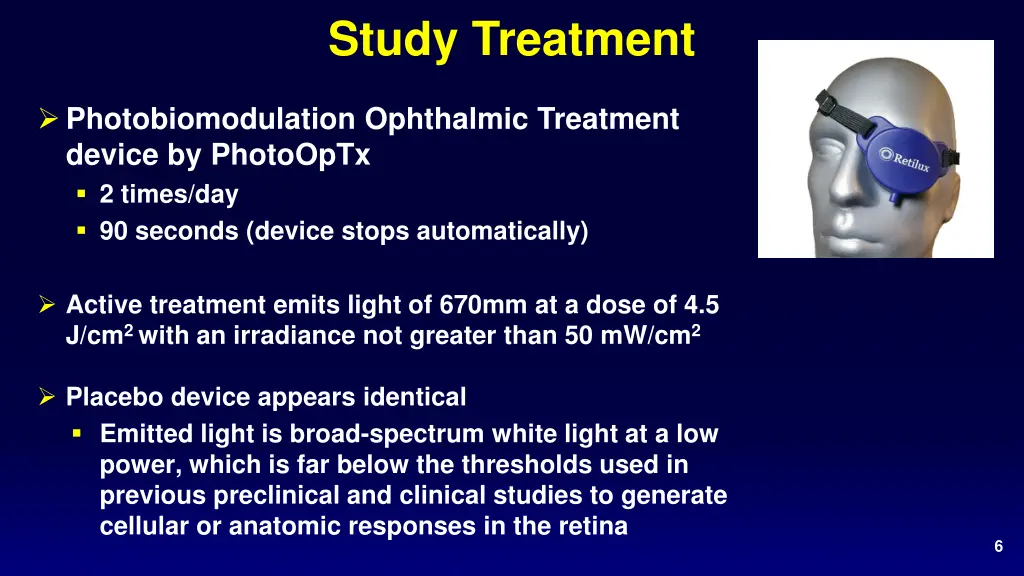
Study Treatment Photobiomodulation Ophthalmic Treatment device by PhotoOpTx 2 times/day 90 seconds (device stops automatically) Active treatment emits light of 670mm at a dose of 4.5 J/cm2 with an irradiance not greater than 50 mW/cm2 Placebo device appears identical Emitted light is broad-spectrum white light at a low power, which is far below the thresholds used in previous preclinical and clinical studies to generate cellular or anatomic responses in the retina 6
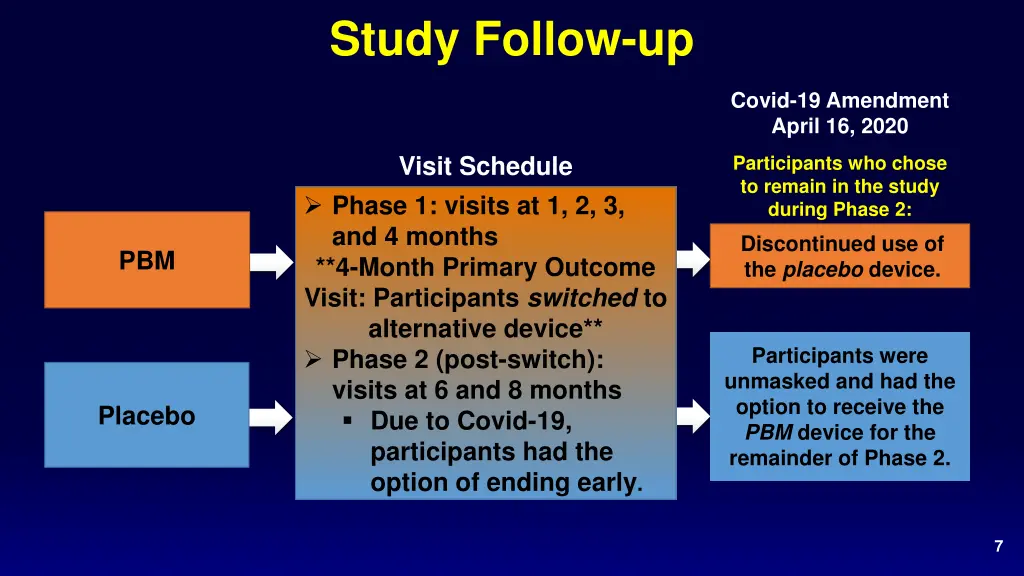
Study Follow-up Covid-19 Amendment April 16, 2020 Visit Schedule Participants who chose to remain in the study during Phase 2: Phase 1: visits at 1, 2, 3, and 4 months **4-Month Primary Outcome Visit: Participants switched to alternative device** Phase 2 (post-switch): visits at 6 and 8 months Due to Covid-19, participants had the option of ending early. Discontinued use of the placebo device. PBM Participants were unmasked and had the option to receive the PBM device for the remainder of Phase 2. Placebo 7
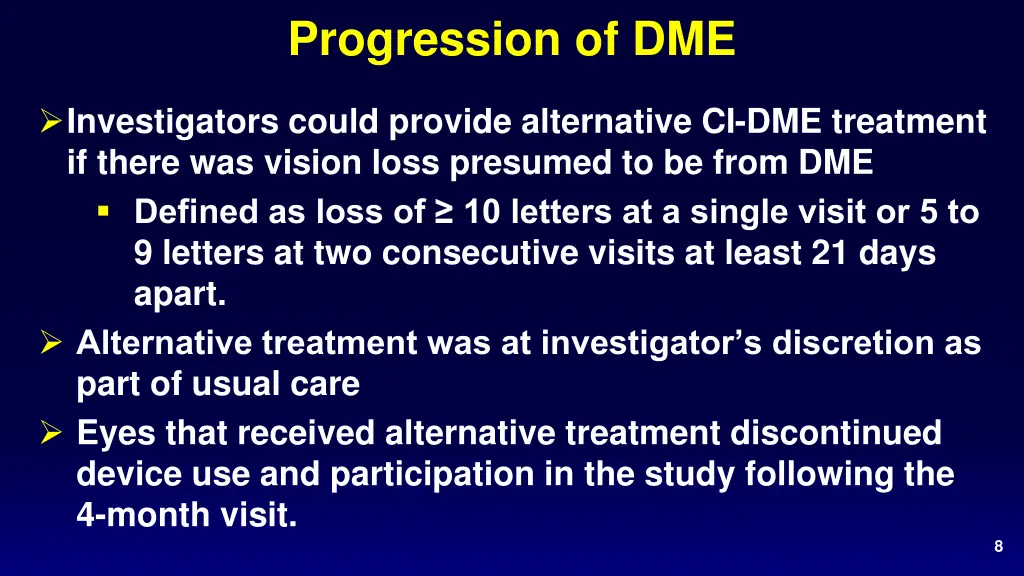
Progression of DME Investigators could provide alternative CI-DME treatment if there was vision loss presumed to be from DME Defined as loss of 10 letters at a single visit or 5 to 9 letters at two consecutive visits at least 21 days apart. Alternative treatment was at investigator s discretion as part of usual care Eyes that received alternative treatment discontinued device use and participation in the study following the 4-month visit. 8
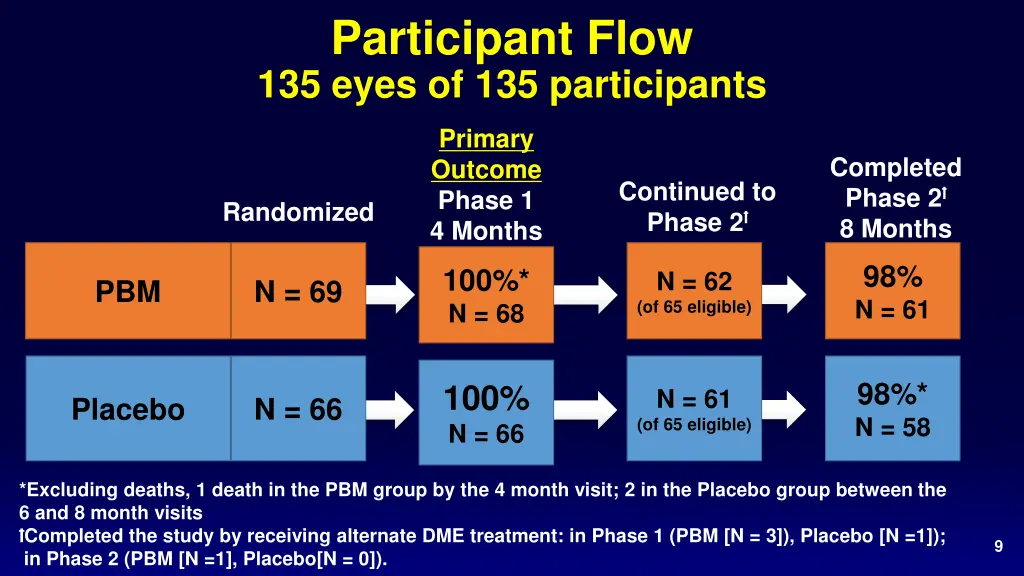
Participant Flow 135 eyes of 135 participants Primary Outcome Phase 1 4 Months 100%* N = 68 Completed Phase 2 8 Months Continued to Phase 2 Randomized 98% N = 61 N = 62 (of 65 eligible) PBM N = 69 98%* N = 58 100% N = 66 N = 61 (of 65 eligible) Placebo N = 66 *Excluding deaths, 1 death in the PBM group by the 4 month visit; 2 in the Placebo group between the 6 and 8 month visits Completed the study by receiving alternate DME treatment: in Phase 1 (PBM [N = 3]), Placebo [N =1]); in Phase 2 (PBM [N =1], Placebo[N = 0]). 9
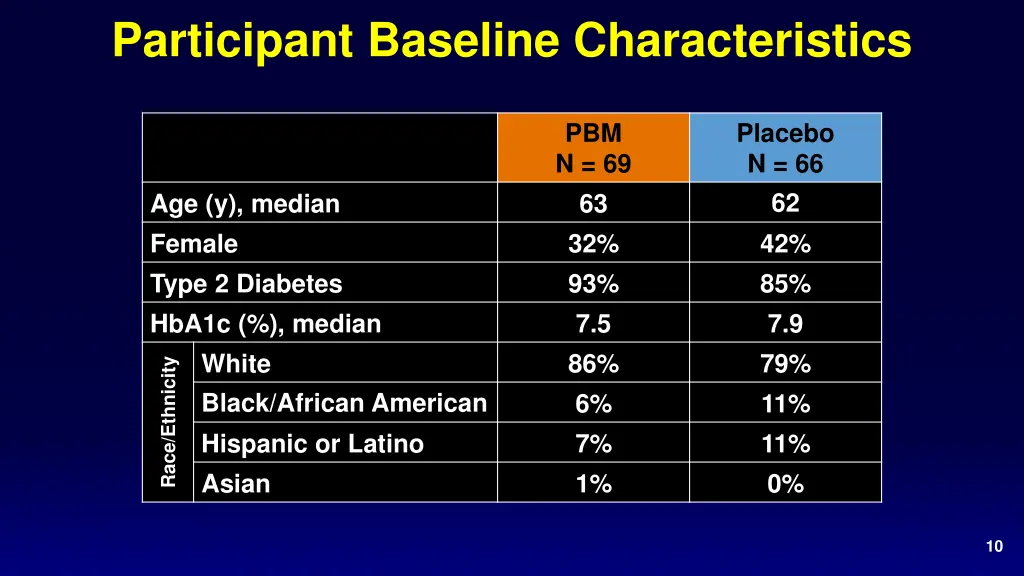
Participant Baseline Characteristics PBM N = 69 63 32% 93% 7.5 86% 6% 7% 1% Placebo N = 66 62 42% 85% 7.9 79% 11% 11% 0% Age (y), median Female Type 2 Diabetes HbA1c (%), median White Black/African American Hispanic or Latino Asian Race/Ethnicity 10
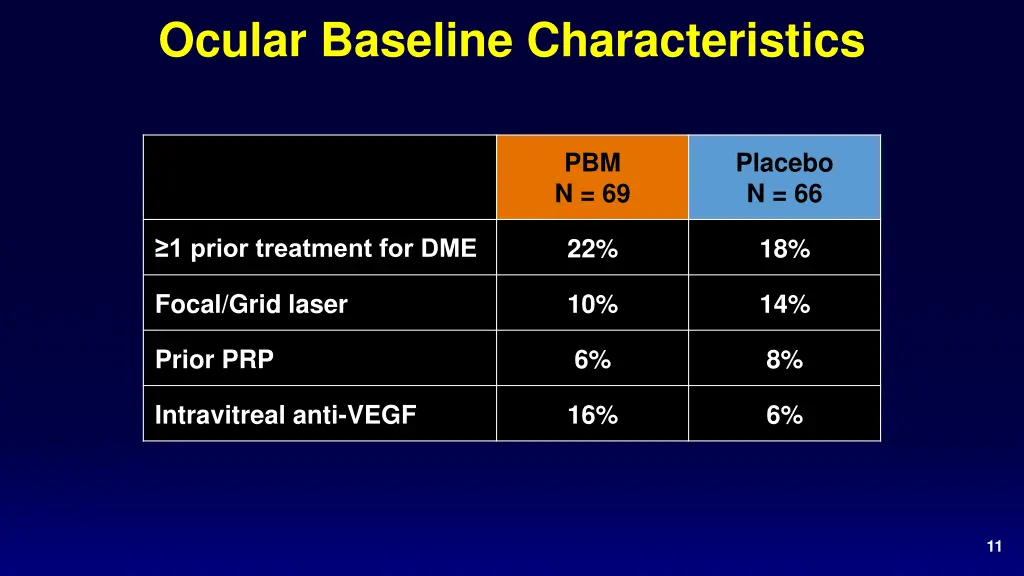
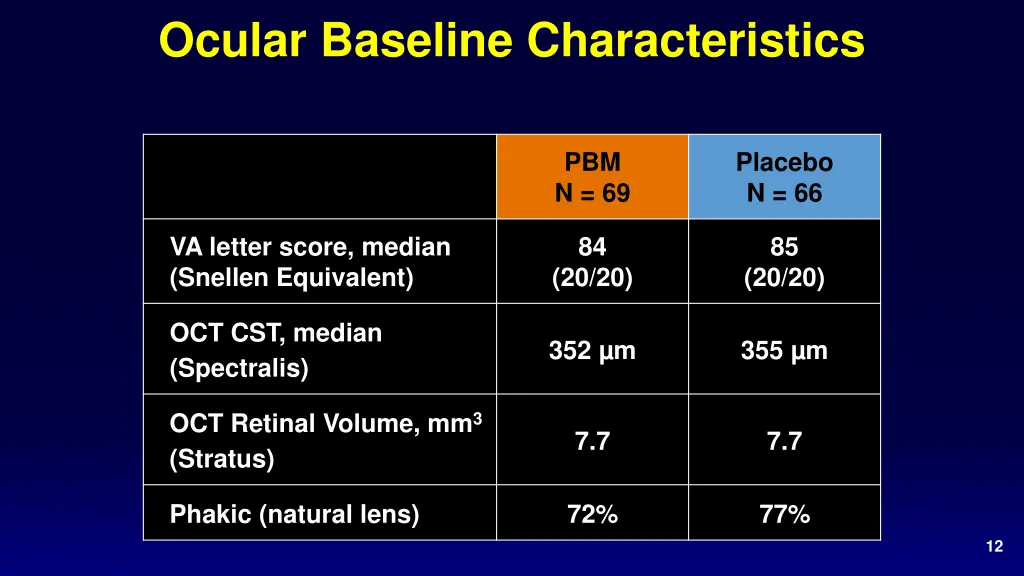
Ocular Baseline Characteristics PBM N = 69 Placebo N = 66 VA letter score, median (Snellen Equivalent) 84 85 (20/20) (20/20) OCT CST, median (Spectralis) 352 m 355 m OCT Retinal Volume, mm3 (Stratus) 7.7 7.7 Phakic (natural lens) 72% 77% 12
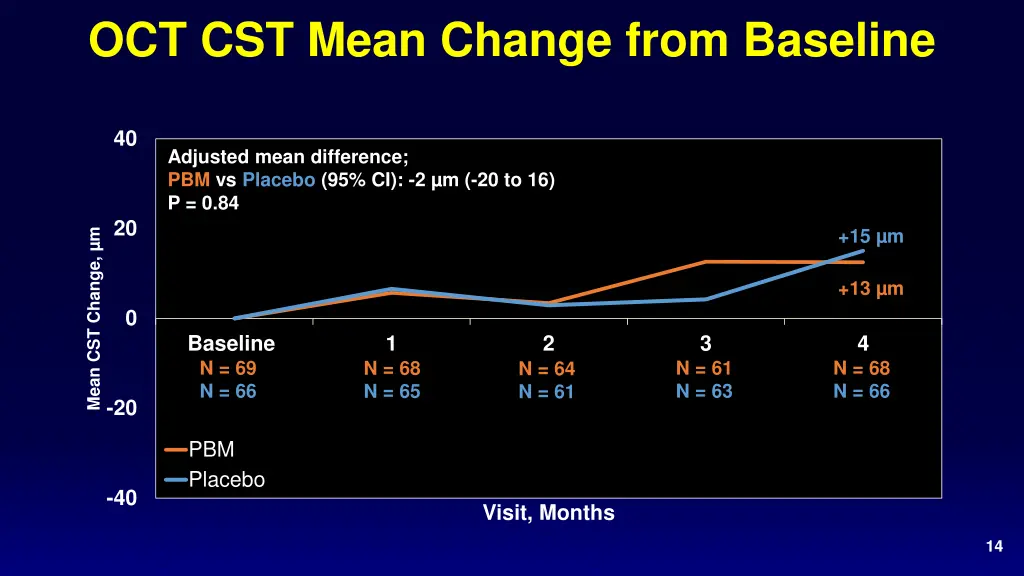
OCT CST Mean Change from Baseline 40 Adjusted mean difference; PBM vs Placebo (95% CI): -2 m (-20 to 16) P = 0.84 20 +15 m Mean CST Change, m +13 m 0 Baseline N = 69 N = 66 1 2 3 4 N = 61 N = 63 N = 68 N = 66 N = 68 N = 65 N = 64 N = 61 -20 PBM Placebo -40 Visit, Months 14
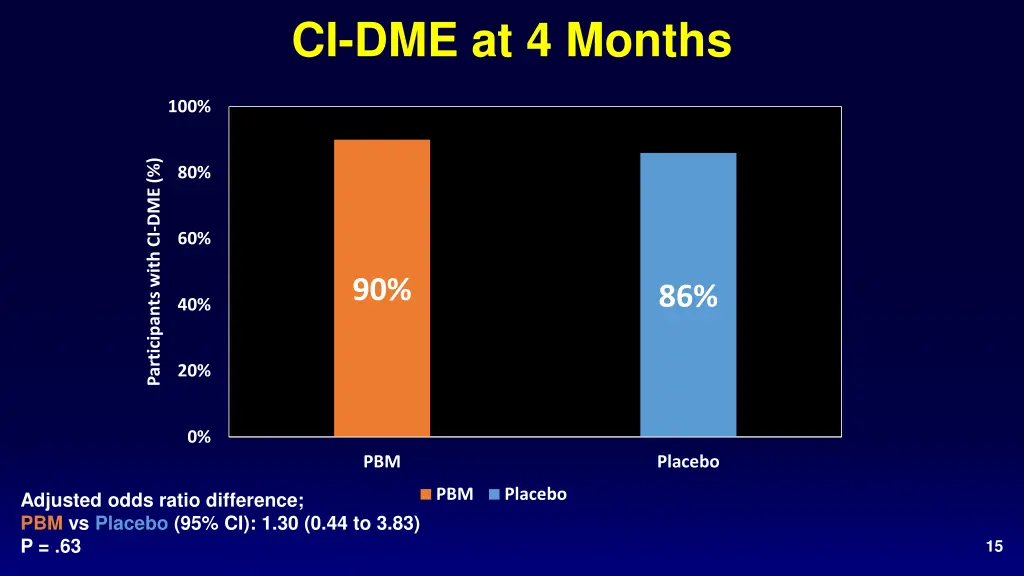
CI-DME at 4 Months 100% Participants with CI-DME (%) 80% 60% 90% 86% 40% 20% 0% PBM Placebo PBM Placebo Adjusted odds ratio difference; PBM vs Placebo (95% CI): 1.30 (0.44 to 3.83) P = .63 15
OCT Retinal Volume Change from Baseline 0.5 Adjusted mean difference; PBM vs Placebo (95% CI): 0.01 mm3 (-0.14 to 0.15) P = 0.93 Mean Retinal Volume Change, mm3 0.12 mm3 0.10 mm3 0 Baseline N = 65 N = 63 1 2 3 4 N = 57 N = 60 N = 60 N = 61 N = 63 N = 62 N = 60 N = 59 PBM Placebo -0.5 Visit, Months 16
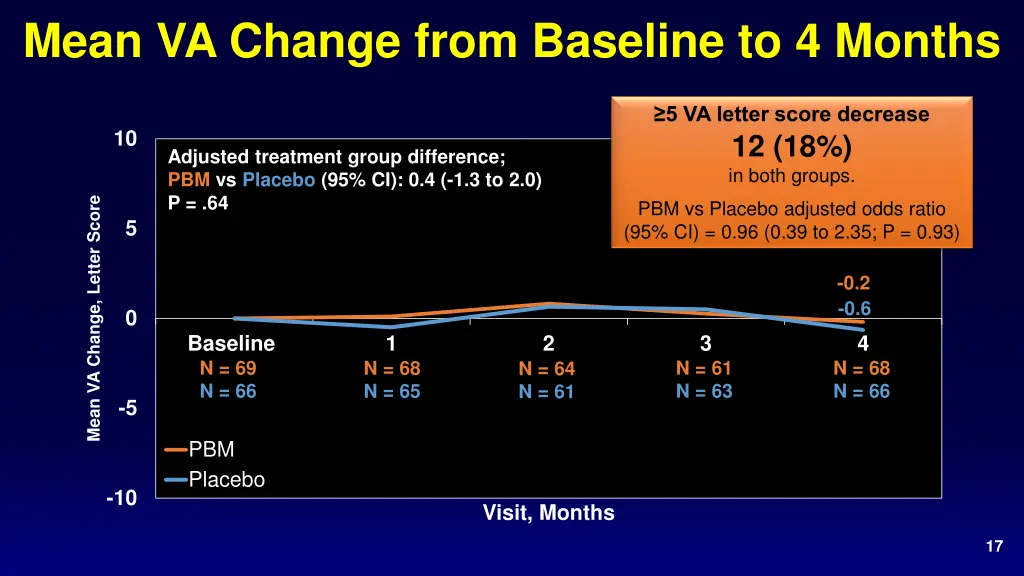
Mean VA Change from Baseline to 4 Months 5 VA letter score decrease 12 (18%) in both groups. 10 Adjusted treatment group difference; PBM vs Placebo (95% CI): 0.4 (-1.3 to 2.0) P = .64 Mean VA Change, Letter Score PBM vs Placebo adjusted odds ratio (95% CI) = 0.96 (0.39 to 2.35; P = 0.93) 5 -0.2 -0.6 0 Baseline N = 69 N = 66 1 2 3 4 N = 61 N = 63 N = 68 N = 66 N = 68 N = 65 N = 64 N = 61 -5 PBM Placebo -10 Visit, Months 17
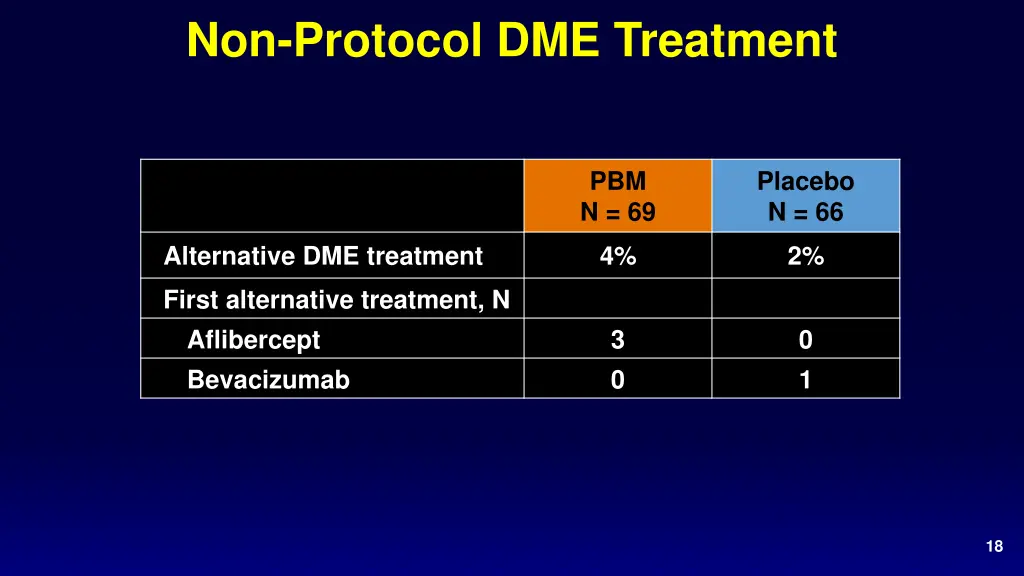
Non-Protocol DME Treatment PBM N = 69 Placebo N = 66 Alternative DME treatment 4% 2% First alternative treatment, N Aflibercept Bevacizumab 3 0 0 1 18
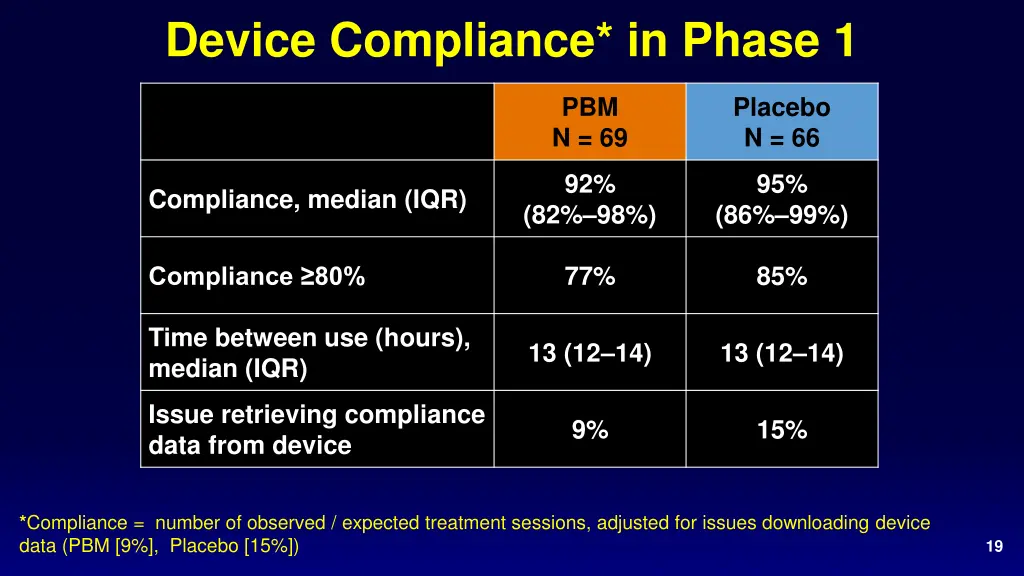
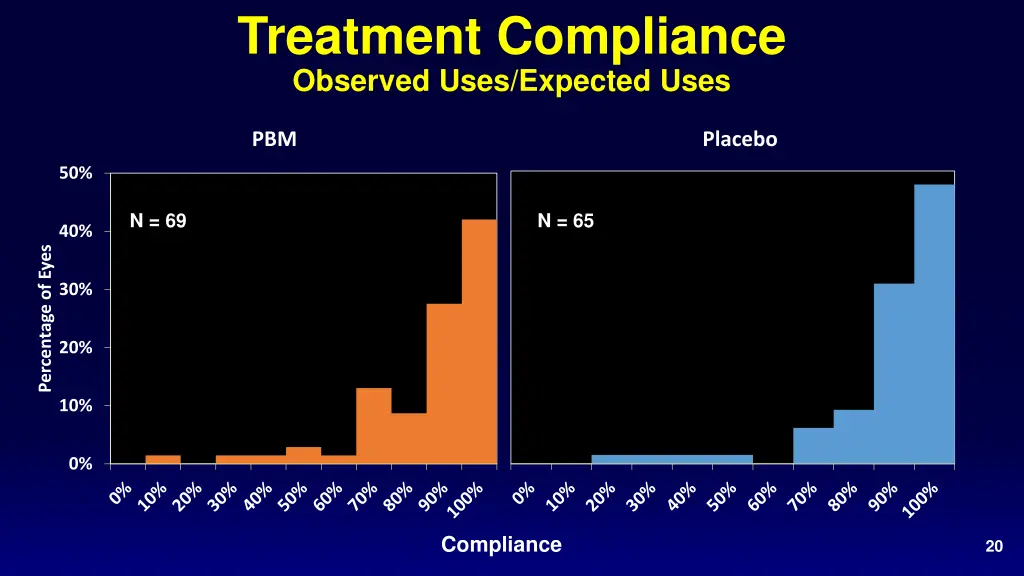
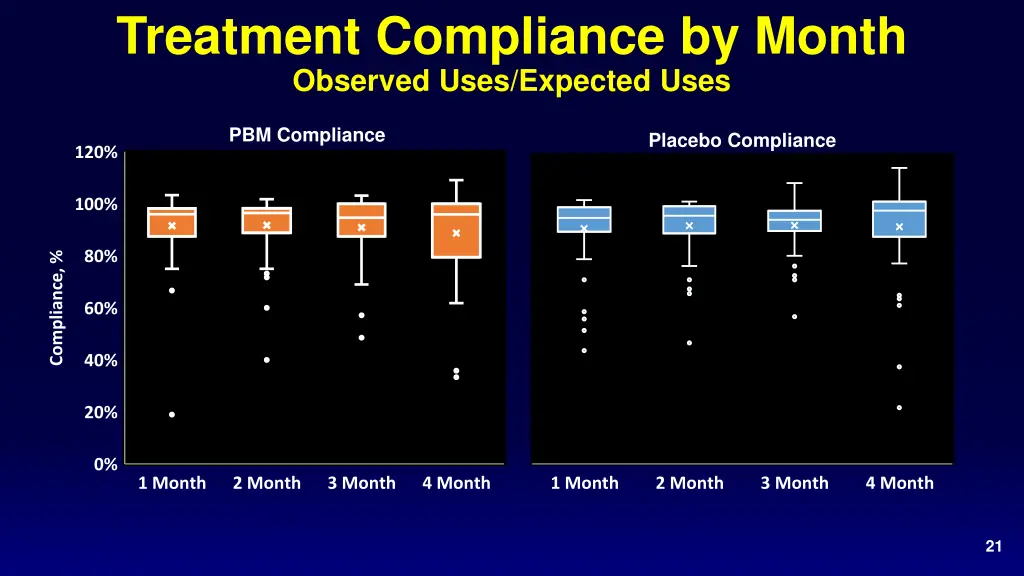
Device Compliance* in Phase 1 PBM N = 69 Placebo N = 66 92% 95% Compliance, median (IQR) (82% 98%) (86% 99%) 77% 85% Compliance 80% Time between use (hours), median (IQR) 13 (12 14) 13 (12 14) Issue retrieving compliance data from device 9% 15% *Compliance = number of observed / expected treatment sessions, adjusted for issues downloading device data (PBM [9%], Placebo [15%]) 19
Treatment Compliance Observed Uses/Expected Uses PBM Placebo 50% N = 69 N = 65 40% Percentage of Eyes 30% 20% 10% 0% Compliance 20
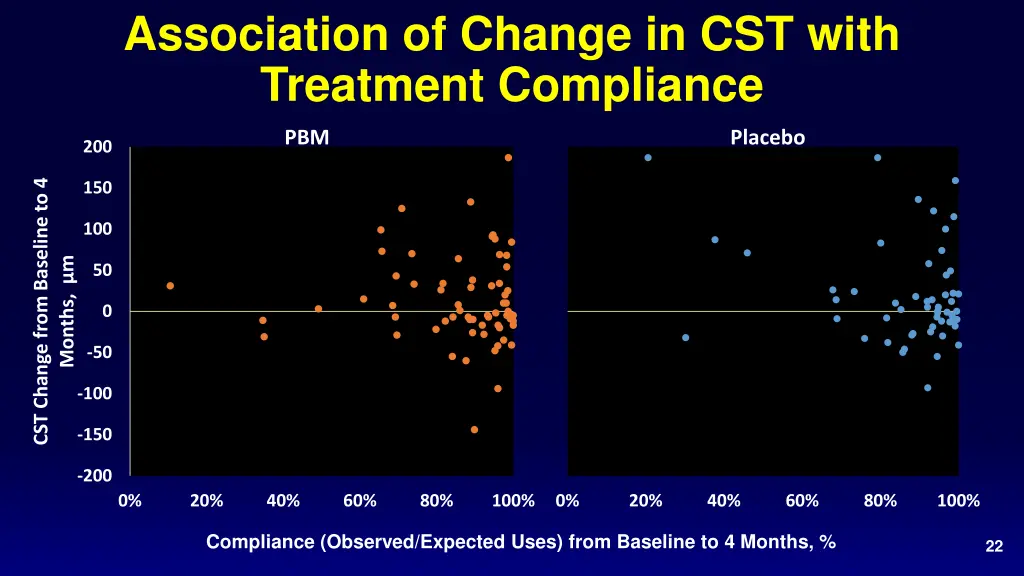
Association of Change in CST with Treatment Compliance PBM Placebo 200 CST Change from Baseline to 4 150 100 Months, m 50 0 -50 -100 -150 -200 0% 20% 40% 60% 80% 100% 0% 20% 40% 60% 80% 100% Compliance (Observed/Expected Uses) from Baseline to 4 Months, % 22
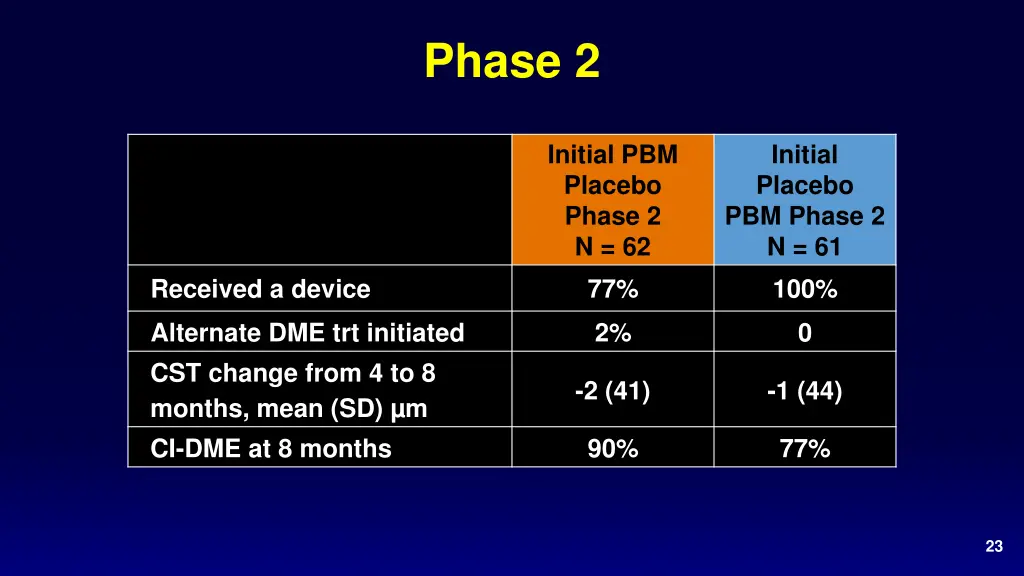
Phase 2 Initial PBM Placebo Phase 2 N = 62 77% Initial Placebo PBM Phase 2 N = 61 100% Received a device Alternate DME trt initiated CST change from 4 to 8 months, mean (SD) m CI-DME at 8 months 2% 0 -2 (41) -1 (44) 90% 77% 23
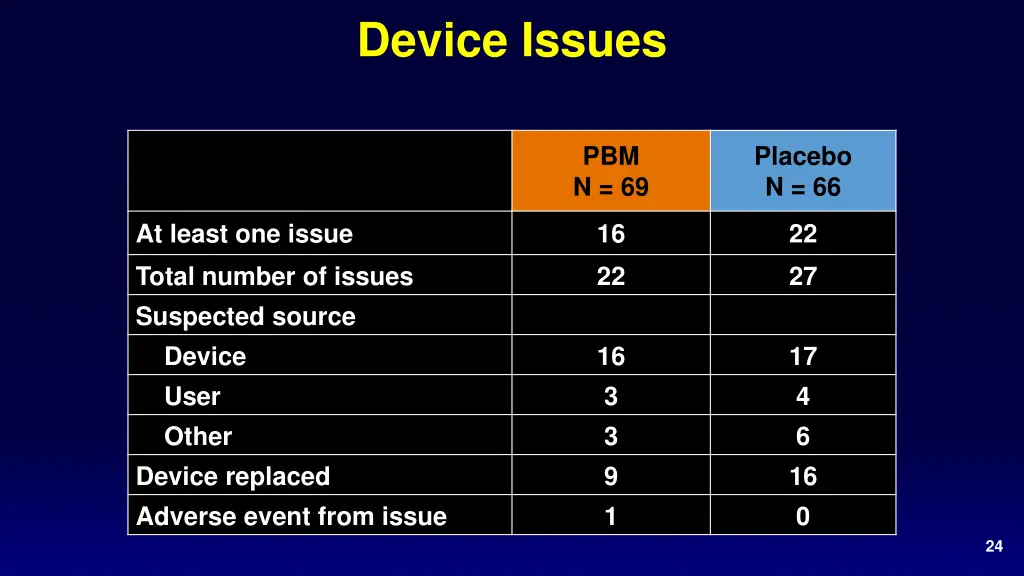
Device Issues PBM N = 69 Placebo N = 66 At least one issue Total number of issues Suspected source Device User Other Device replaced Adverse event from issue 16 22 22 27 16 3 3 9 1 17 4 6 16 0 24
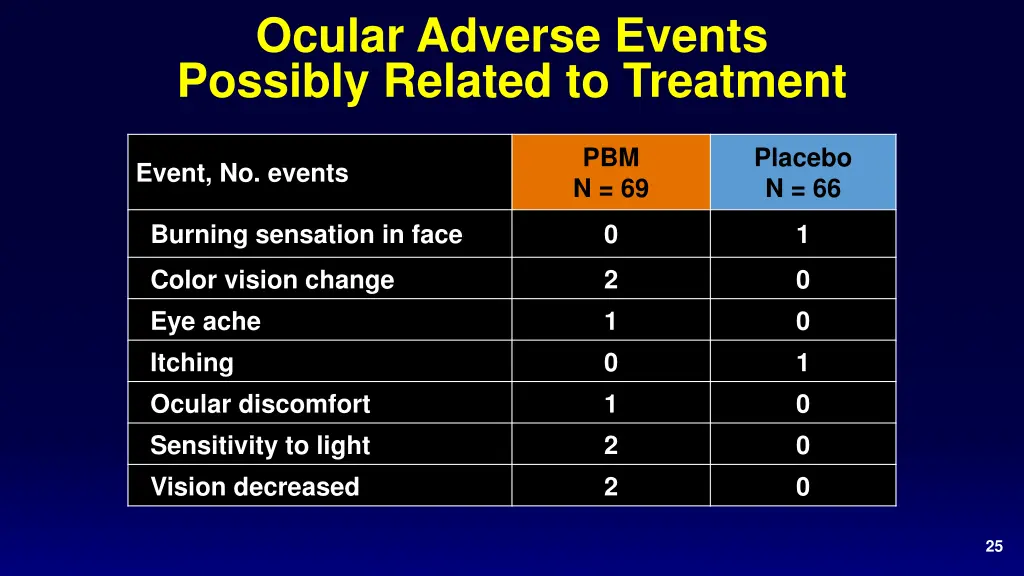
Ocular Adverse Events Possibly Related to Treatment PBM N = 69 Placebo N = 66 Event, No. events Burning sensation in face 0 1 Color vision change Eye ache Itching Ocular discomfort Sensitivity to light Vision decreased 2 1 0 1 2 2 0 0 1 0 0 0 25
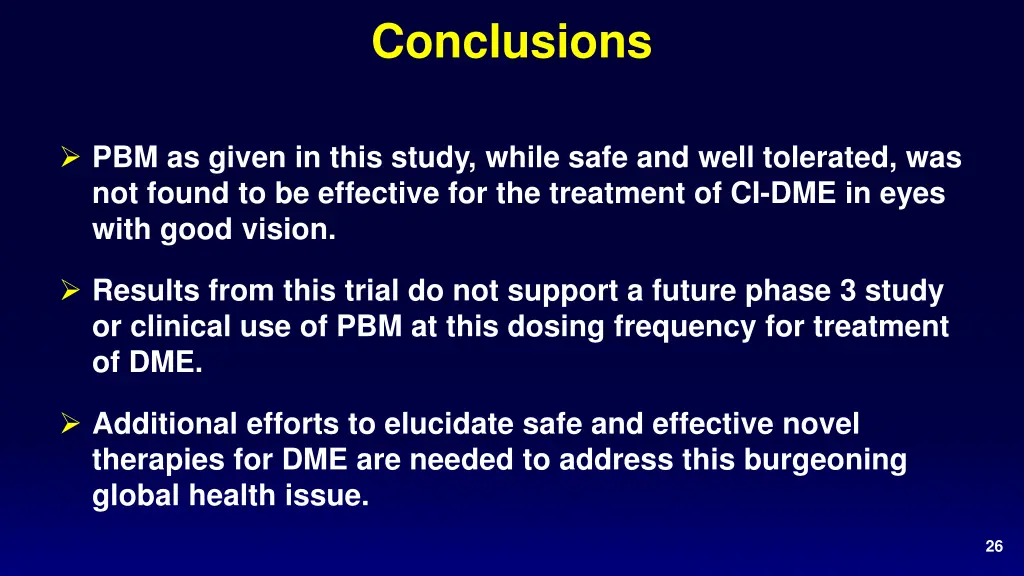
Conclusions PBM as given in this study, while safe and well tolerated, was not found to be effective for the treatment of CI-DME in eyes with good vision. Results from this trial do not support a future phase 3 study or clinical use of PBM at this dosing frequency for treatment of DME. Additional efforts to elucidate safe and effective novel therapies for DME are needed to address this burgeoning global health issue. 26