Postoperative Nursing Management Guidelines by Omimah Qadhi
"Learn about essential postoperative nursing care techniques, including maintaining airway patency, circulation monitoring, nutrition management, and complications to watch out for after surgery. Explore tips for promoting patient comfort and activity, and understand how to manage potential postoperative complications effectively."

Download Presentation

Please find below an Image/Link to download the presentation.
The content on the website is provided AS IS for your information and personal use only. It may not be sold, licensed, or shared on other websites without obtaining consent from the author. If you encounter any issues during the download, it is possible that the publisher has removed the file from their server.
You are allowed to download the files provided on this website for personal or commercial use, subject to the condition that they are used lawfully. All files are the property of their respective owners.
The content on the website is provided AS IS for your information and personal use only. It may not be sold, licensed, or shared on other websites without obtaining consent from the author.
E N D
Presentation Transcript
Postoperative Nursing management By: Omimah Qadhi KSU/SON
Postoprative Nursing acre 1. Maintaining patent airway (why??). Head @ side, deep breathing, coughing, and IS. Position changing Q 2 hours, activities as tolerated and prescribed. Assess breath sounds.
Contd, 2. Maintain circulation Elastic stocking for risk for thrombosis. Encourage bed exercises and ambulation as prescribed. Monitor intake & output (1200 ml output). IVFs, body weight, encourage oral intake, protein. 3. Maintain fluid and electrolytes.
Contd, 4. Maintain nutrition. protein and vit. C, carbohydrate, frequent meals for anorexia. Leg exercises, ADLs, reassume ambulation as permitted. 5. Promote activity. 6. Promote comfort. Pain relieve, expressing. 7. Teach patient Self care, diet, activities,
Postoprative com;ications C.V.S. (shock, hemorrhage, DVT, phlebities. 2. Pulmonary: atelectasis, pneumonia, aspiration, embolism. 3. G.I.T. : conception, paralytic ileus, intistinal obstruction. 4. Urinary sys. : urinary retention, urinary tract infection (UTI). 1. 5.
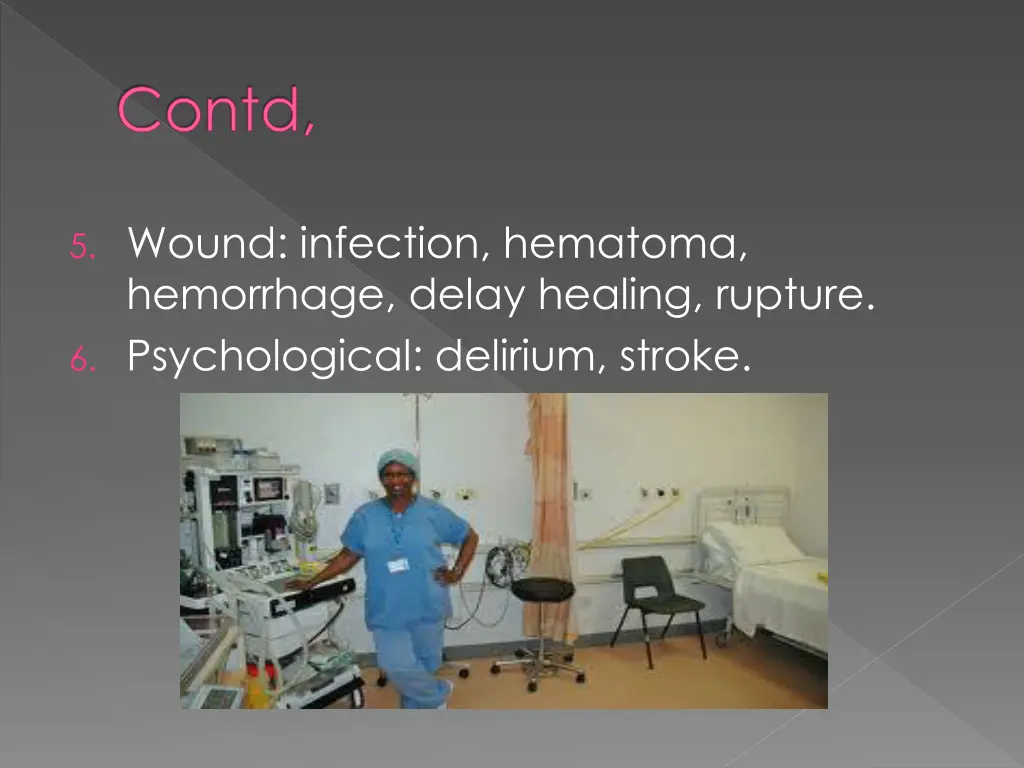
Contd, 5. Wound: infection, hematoma, hemorrhage, delay healing, rupture. 6. Psychological: delirium, stroke.
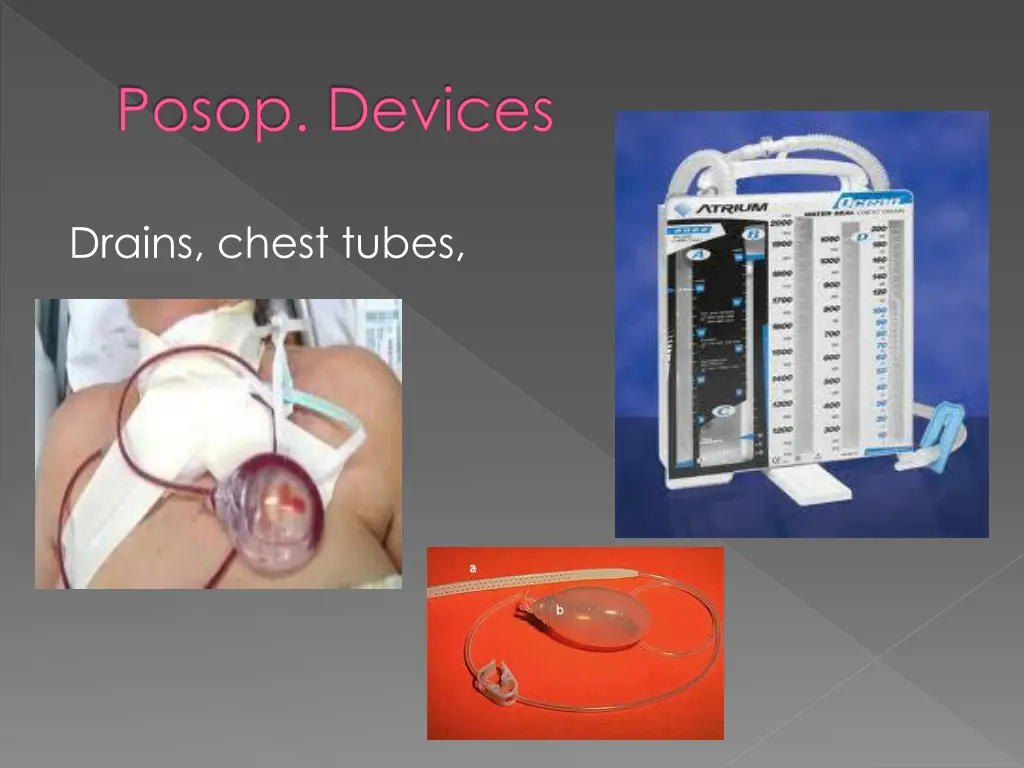
Posop. Devices Drains, chest tubes,
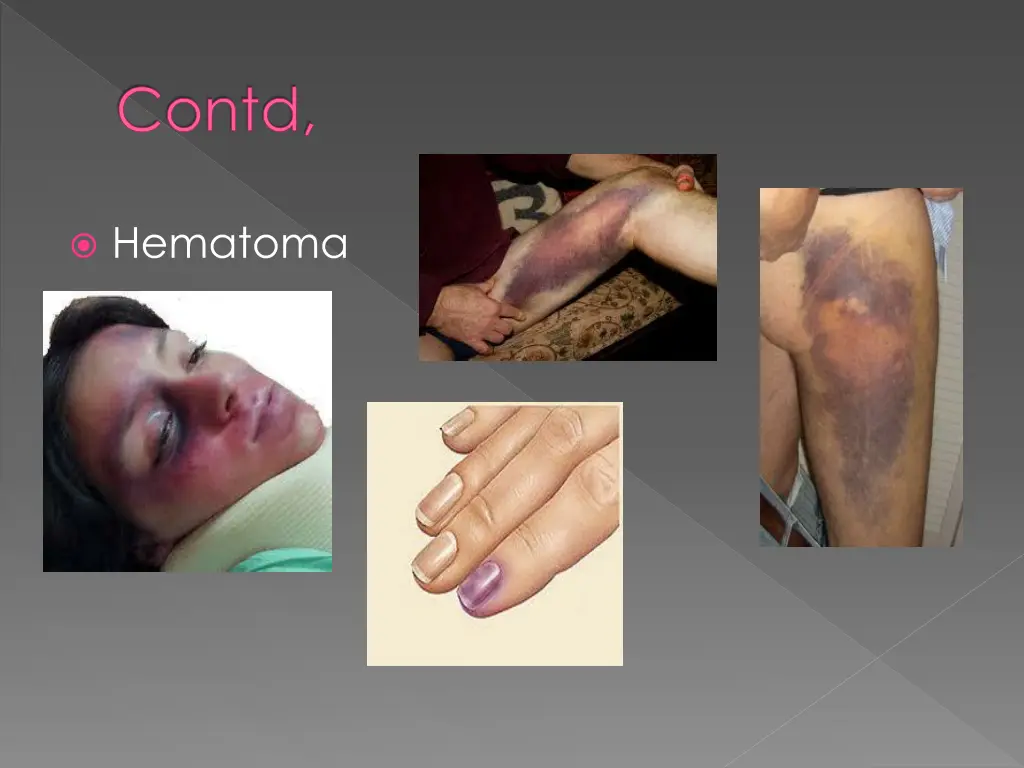
Contd, Hematoma
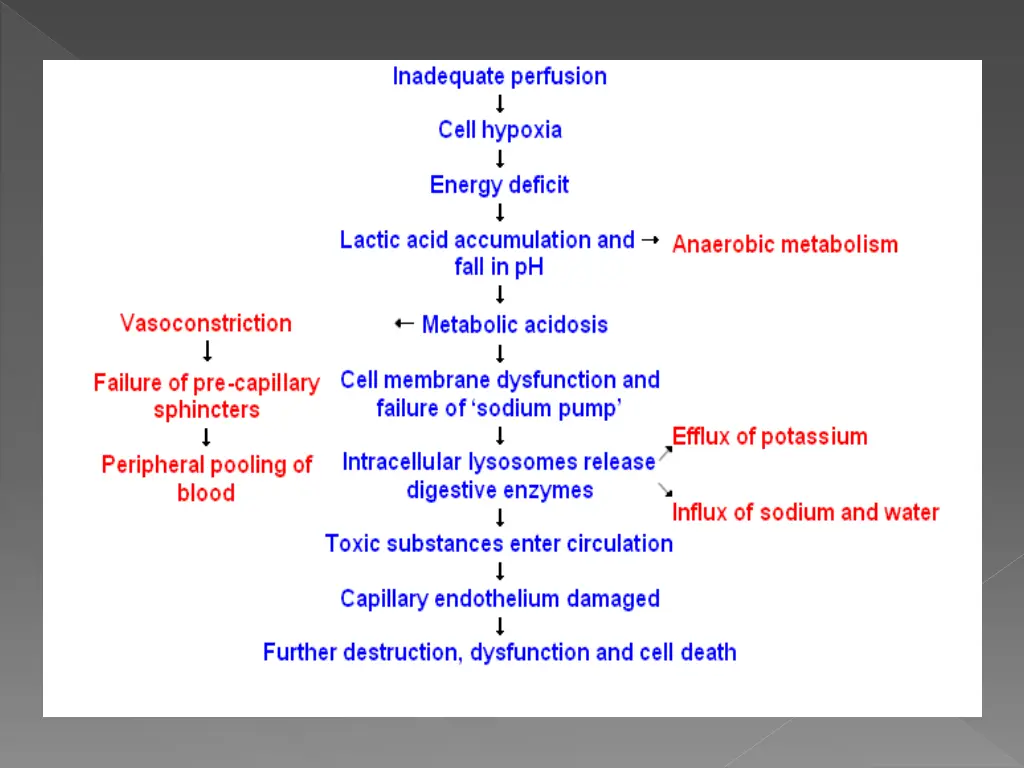
Shock Its serious condition postoperatively. Definition: inadequate cellular perfusion and inadequate cellular oxygenation that lead to a build up of waste (byproducts) from metabolism (unarorobic) .
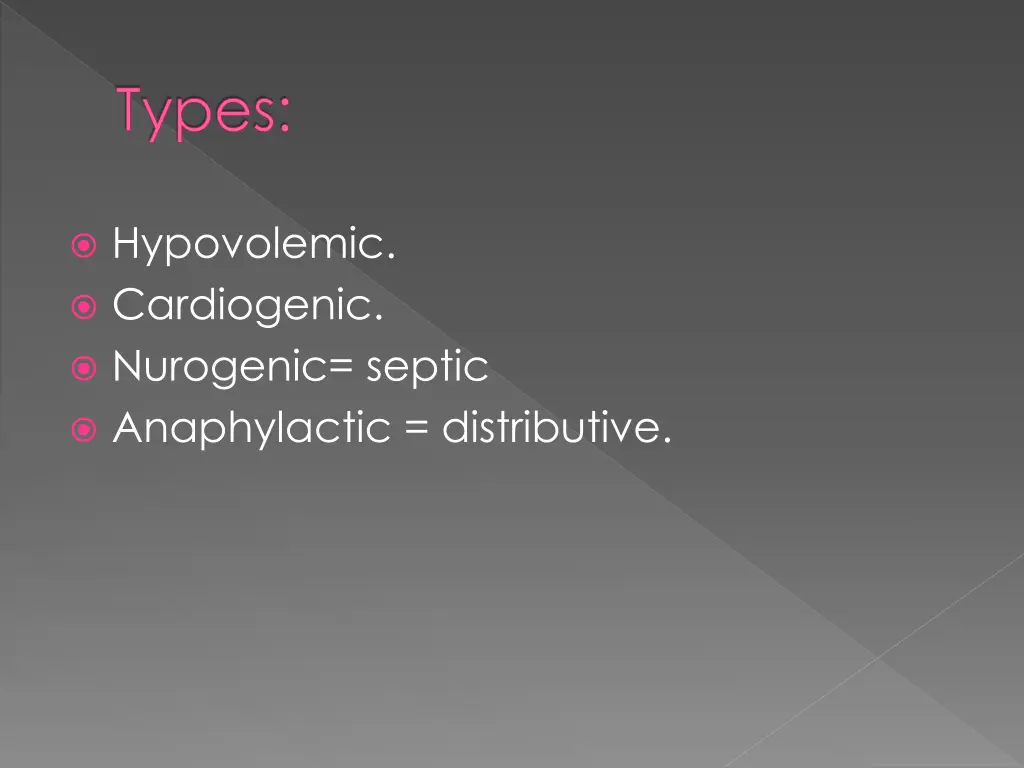
Types: Hypovolemic. Cardiogenic. Nurogenic= septic Anaphylactic = distributive.
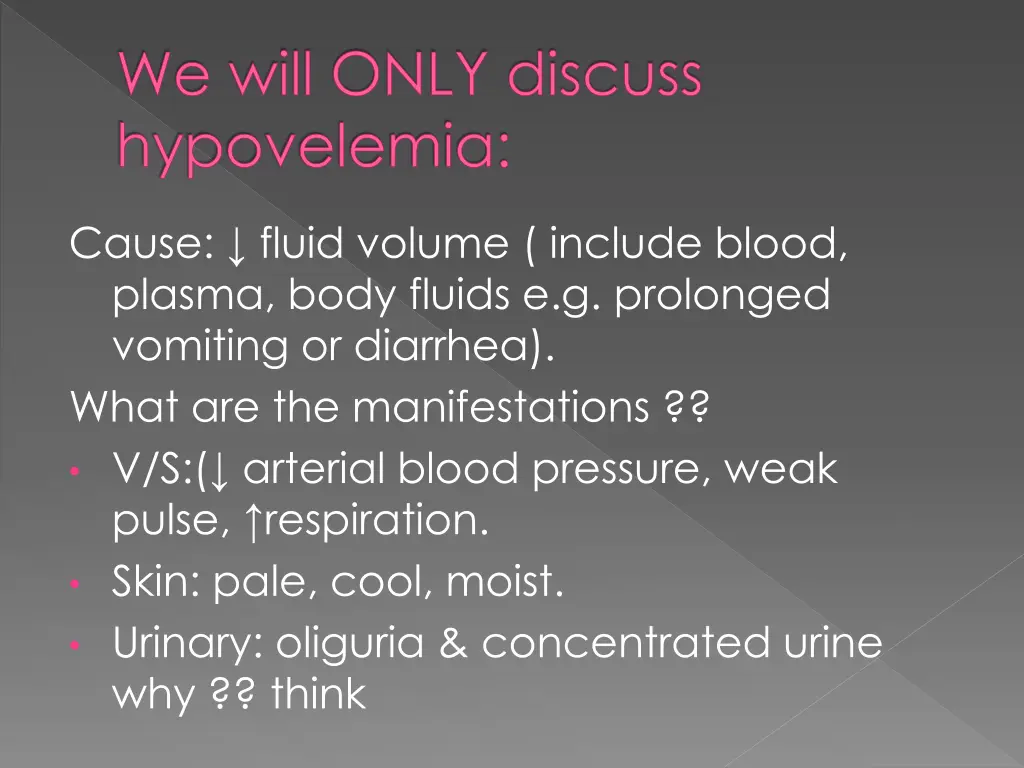
We will ONLY discuss hypovelemia: Cause: fluid volume ( include blood, plasma, body fluids e.g. prolonged vomiting or diarrhea). What are the manifestations ?? V/S:( arterial blood pressure, weak pulse, respiration. Skin: pale, cool, moist. Urinary: oliguria & concentrated urine why ?? think
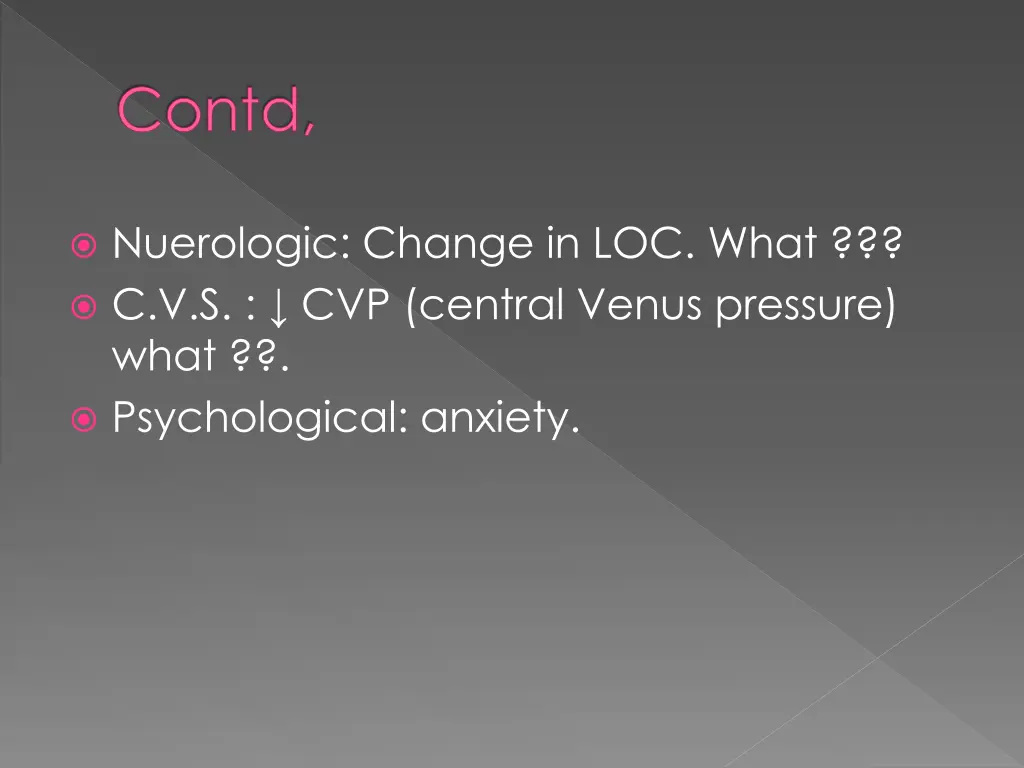
Contd, Nuerologic: Change in LOC. What ??? C.V.S. : CVP (central Venus pressure) what ??. Psychological: anxiety.
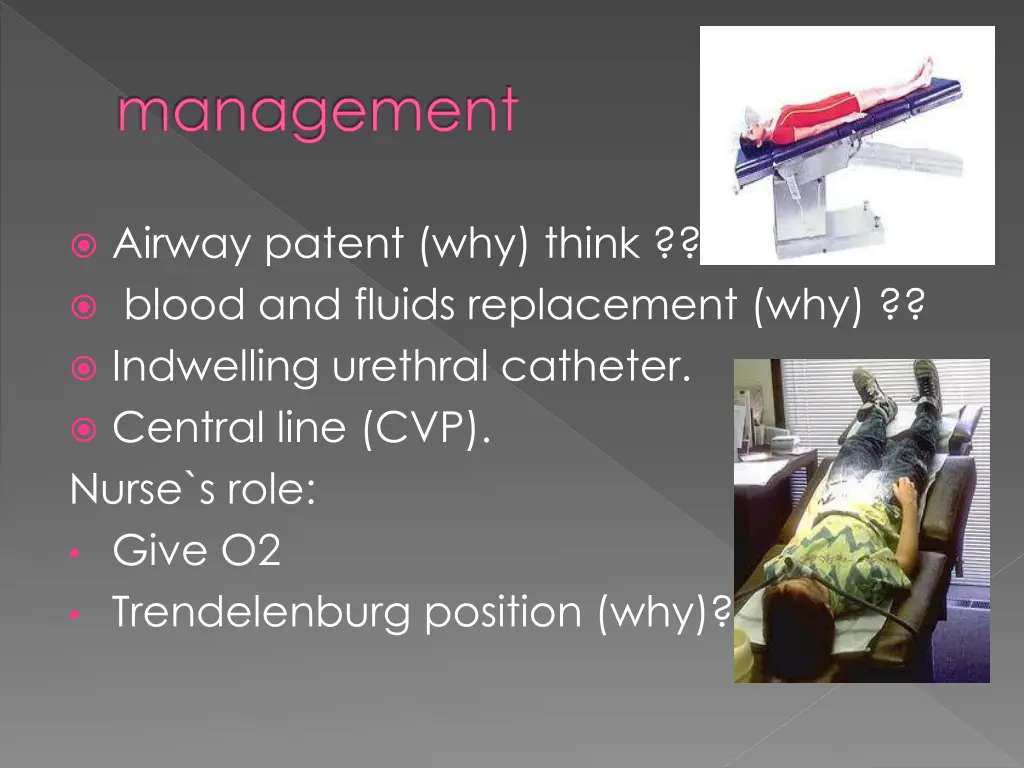
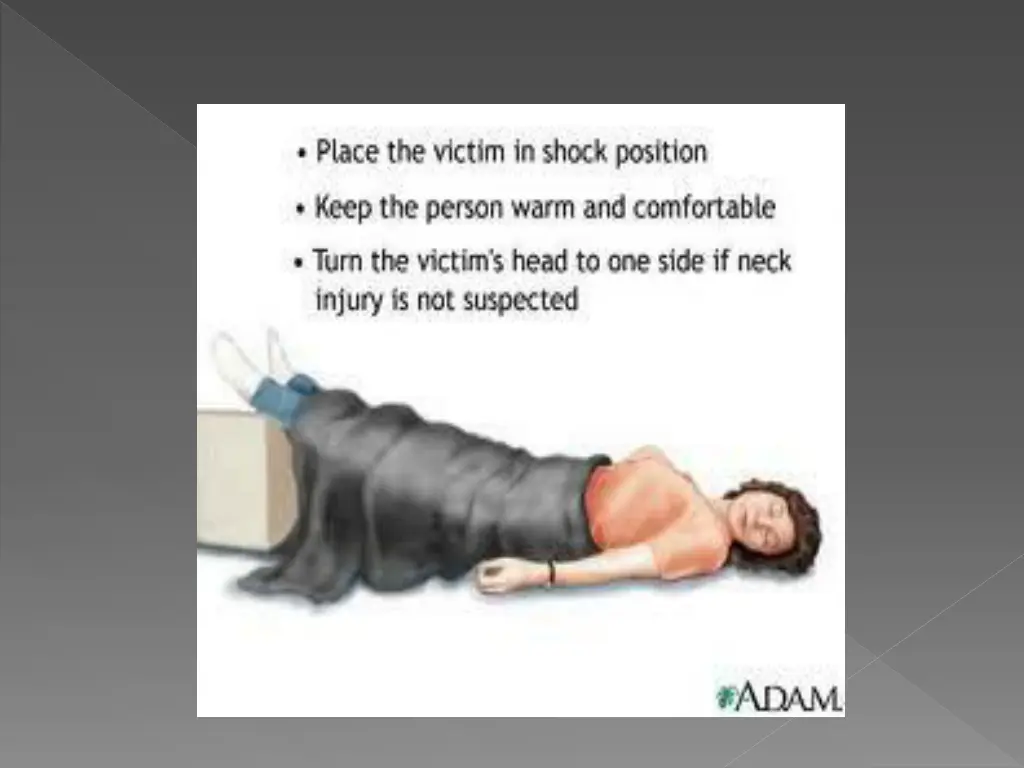
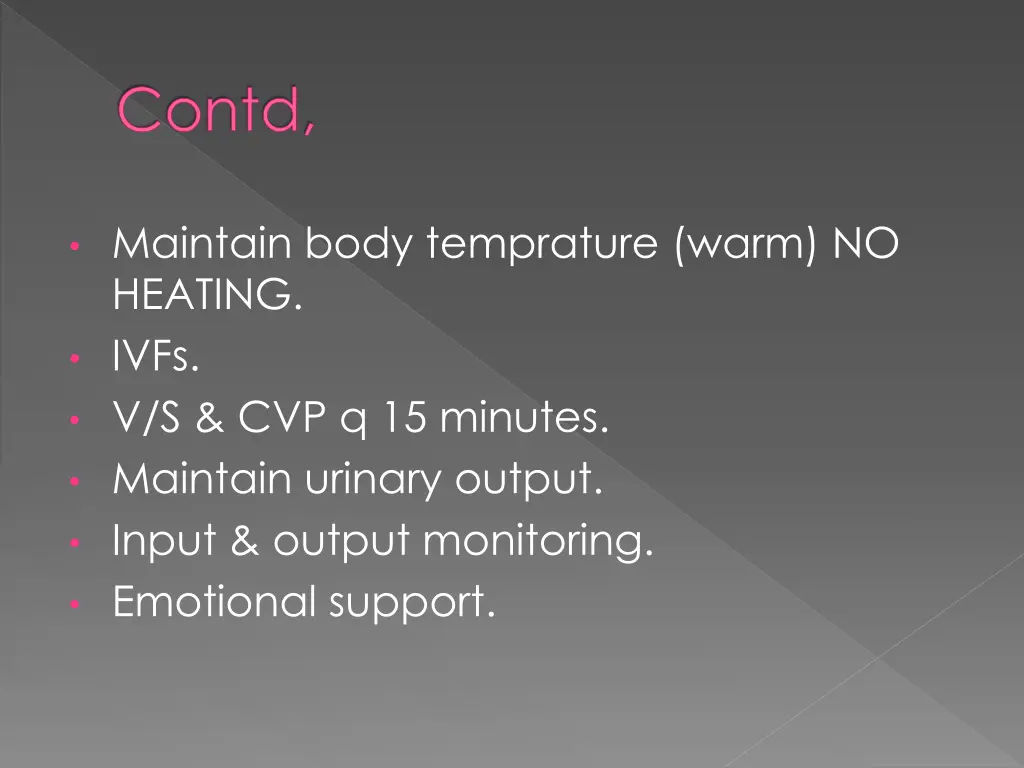
management Airway patent (why) think ?? blood and fluids replacement (why) ?? Indwelling urethral catheter. Central line (CVP). Nurse`s role: Give O2 Trendelenburg position (why)?
Contd, Maintain body temprature (warm) NO HEATING. IVFs. V/S & CVP q 15 minutes. Maintain urinary output. Input & output monitoring. Emotional support.
Heamorrage Types : 1. Primary: operation. 2. Intermediate or reactionary: first few hours post surgery. 3. Secondary: sometimes after the operation because of infection or insecure tying. It can be seen and on the surface (external or evident) if not seen its called (concealed or internal).
Further calssification: This classification is according to the kind of the vessel bleeding: 1. Capillary hemorrhage: slow, general ooze. 2. Venous hemorrhage: bubbles, dark. 3. Arterial hemorrhage: bright, spurts with each heart beat.
Manifestation: According to the amount and the rapidity. temperature, pulse, respiration (deep, air gasping) , blood pressure, cold, moist, & pale skin, rapid hemoglobin, thirsty, apprehension & restlessness.
Management: Shock position. Observe the wound for bleeding. Pressure dressing on the bleeding wound. Elevate bleeding part when possible. Blood transfusion. V/S q 15 minutes. Sedation or narcotic if indicated.
Circulatory problems: 1. Thrombophlebitis: ( thrombosis in diseased vein). It could be mild or sever inflammation of the vein associated with clot formation. Causes: 1. Concentrated blood. 2. Prolonged immobility & obesity. 3. Direct Pressure.
Contd, 4. Injury to the vein. Manifestations of thrombophlebites: Painful calf muscle & tenderness. Swelling & warmth or heat. ? Fever.
phlebothrombosis Its thrombosis in a healthy vein. Clot without inflammation in a vein. Common where ?? Calf muscles. Manifestations: Pain & tenderness in calf muscle. Homan`s sign. Slight edema in foot, ankle, or calf. pulse rate, mild fever.
Contd, Its dangerous because the clot can dislodged and form an ambolus e.g. P.E.
Nursing Management of BOTH Prevent or stop the clot formation: ( IVFs post op, ambulation, leg exercise, NO ELEVATION may cause knee constriction. Active treatment: anticoagulant agents, bed rest and elevation of the affected part, elastic stocking.
Pulmonary embolism (PE) Commonly caused by dislodgment of a thrombus from a vein in the leg. Manifestations: SOB, tachycardia, cyanosis, stabbing C.P., tachypnea, anxiety. how it could be prevented?? By preventing the formation of thrombosis (ambulation, leg exercise, early detection of DVT or any thrombosis)
Respiratory complication: 1) Atelectasis: collapse of some alveoli or may be the entire lung. 2) Bronchitis. 3) Bronchopneumonia. 4) Hypostatic pulmonary congestion. 5) Pleuristy.
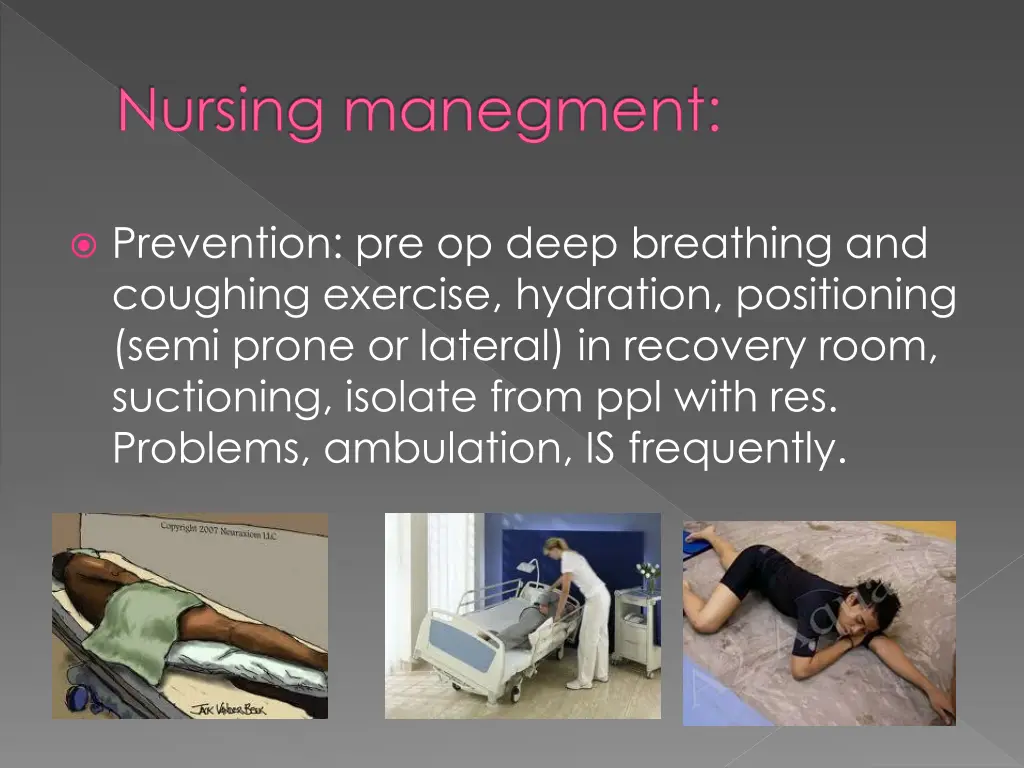
Nursing manegment: Prevention: pre op deep breathing and coughing exercise, hydration, positioning (semi prone or lateral) in recovery room, suctioning, isolate from ppl with res. Problems, ambulation, IS frequently.
Contd, Investigations may be required: bronchoscope, postural drainage, antibiotic,O2.
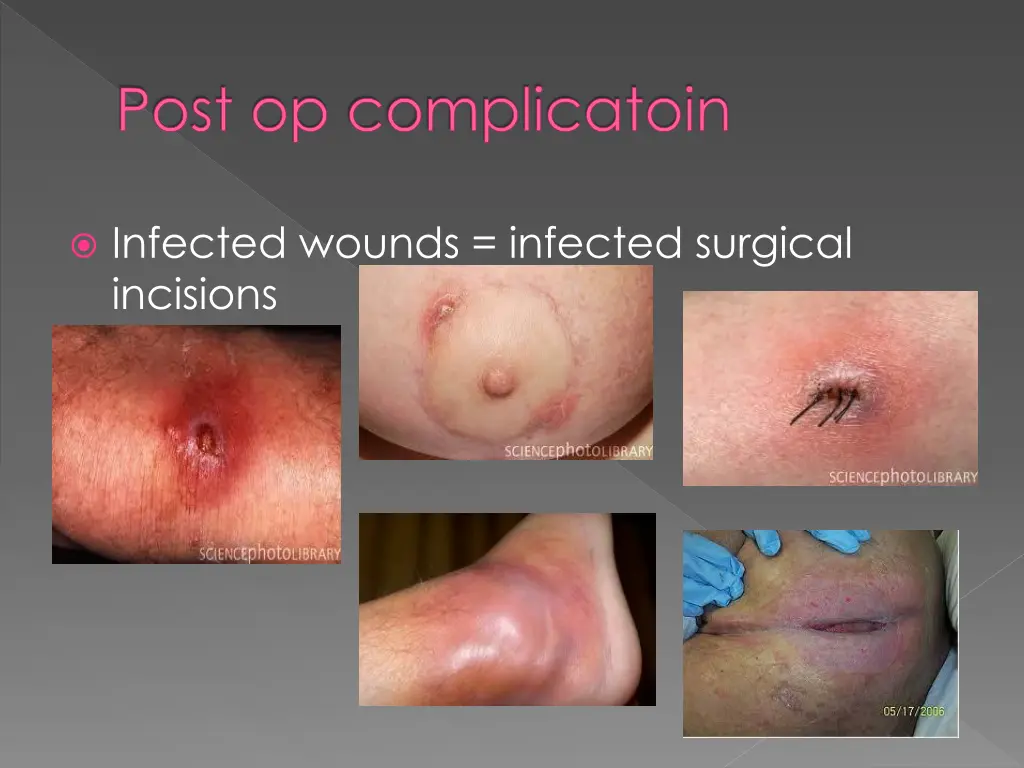
Post op complicatoin Infected wounds = infected surgical incisions
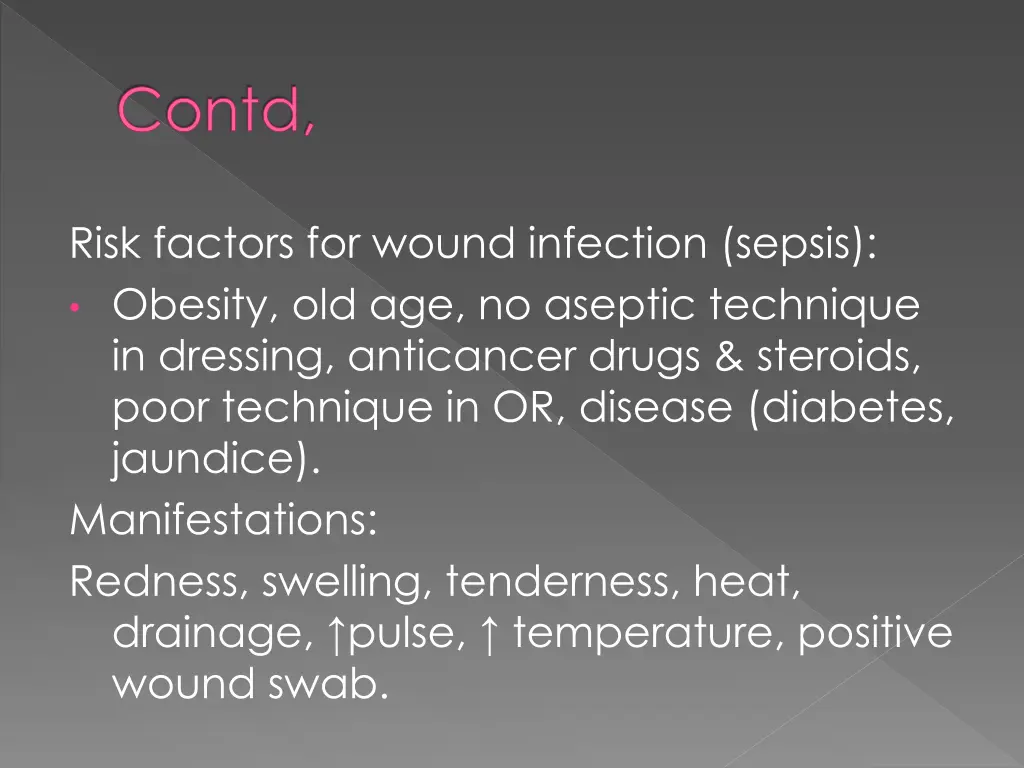
Contd, Risk factors for wound infection (sepsis): Obesity, old age, no aseptic technique in dressing, anticancer drugs & steroids, poor technique in OR, disease (diabetes, jaundice). Manifestations: Redness, swelling, tenderness, heat, drainage, pulse, temperature, positive wound swab.
Contd, Treatment could be incision and drainage.
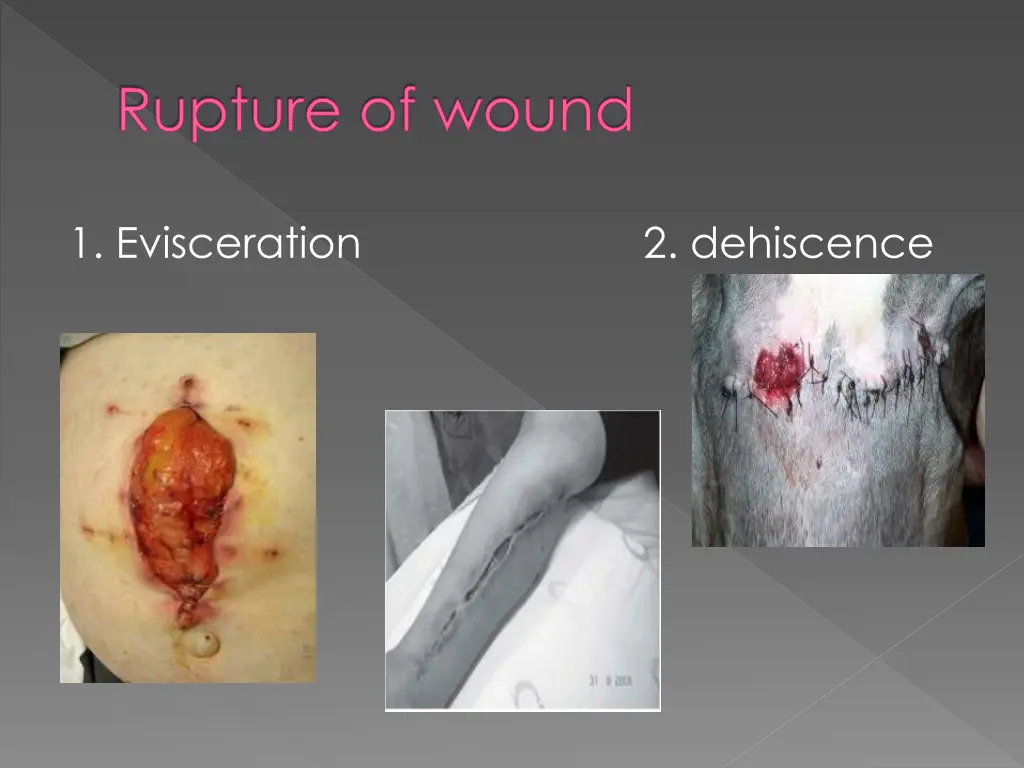
Rupture of wound 1. Evisceration 2. dehiscence