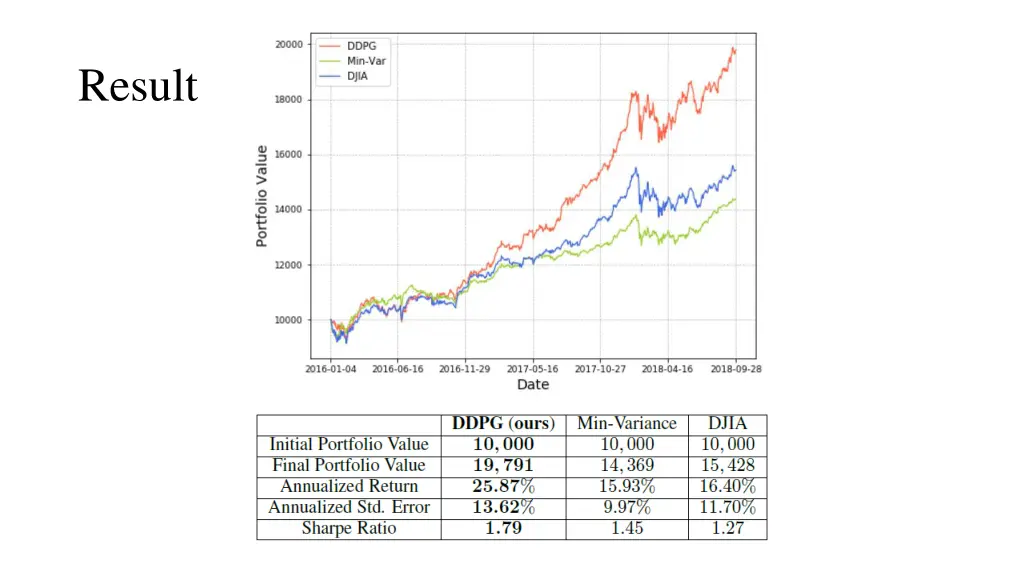
Explore the potential of deep reinforcement learning to optimize stock trading strategies and maximize investment returns. This study evaluates the performance of a deep reinforcement learning agent in comparison to traditional strategies using 30 selected stocks. Results demonstrate outperformance in terms of Sharpe ratio and cumulative returns.
Please find below an Image/Link to download the presentation.
The content on the website is provided AS IS for your information and personal use only. It may not be sold, licensed, or shared on other websites without obtaining consent from the author. If you encounter any issues during the download, it is possible that the publisher has removed the file from their server.
You are allowed to download the files provided on this website for personal or commercial use, subject to the condition that they are used lawfully. All files are the property of their respective owners.
The content on the website is provided AS IS for your information and personal use only. It may not be sold, licensed, or shared on other websites without obtaining consent from the author.
E N D
Presentation Transcript
Practical Deep Reinforcement Learning Approach for Stock Trading Zhuoran Xiong, Xiao-Yang Liu, Shan Zhong, Hongyang (Bruce) Yang, and Anwar Walid arXiv:1811.07522v2 [cs.LG] 2 Dec 2018 Presenter: Cheng-Han Wu Date:2018/12/10
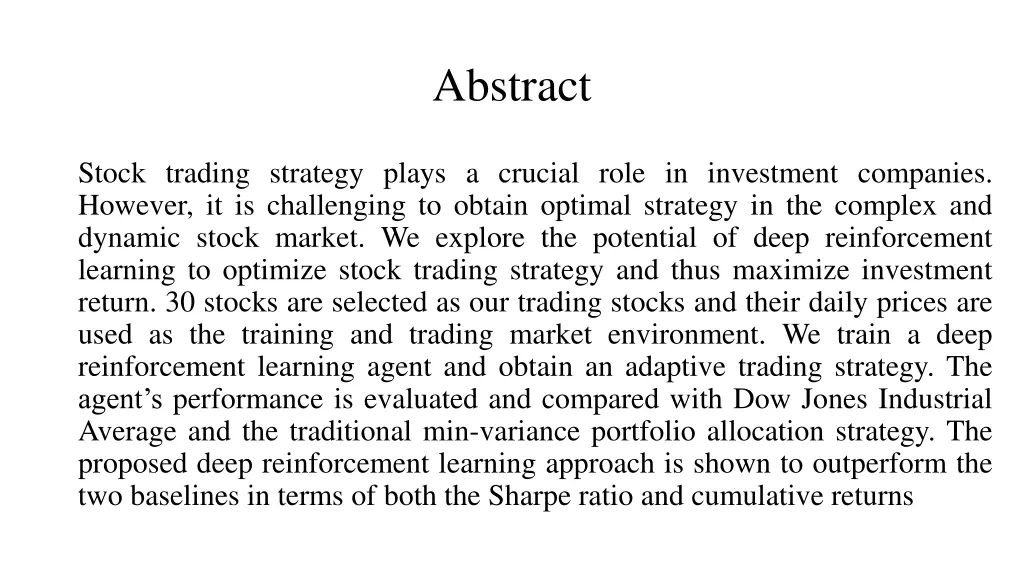
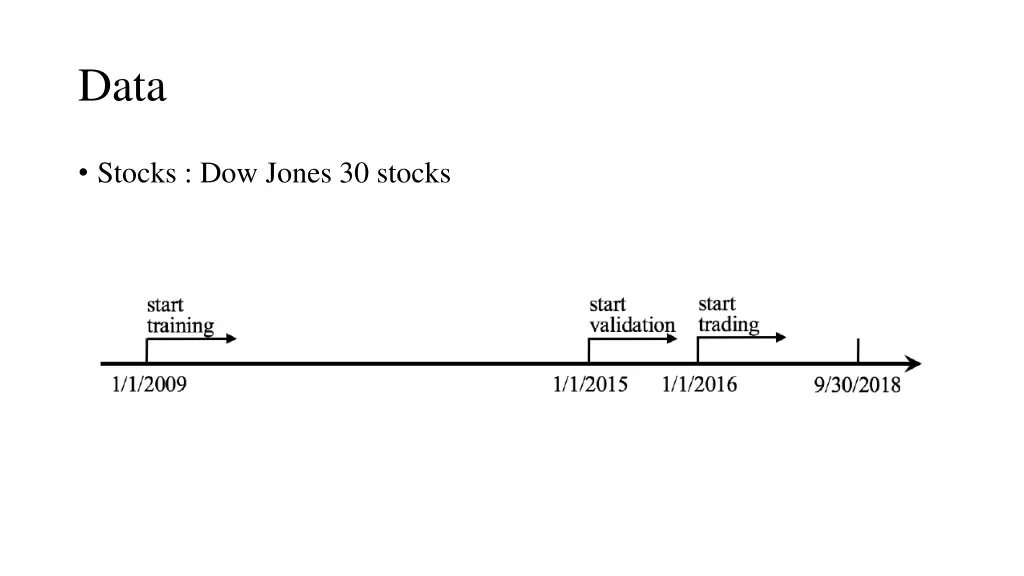
Abstract Stock trading strategy plays a crucial role in investment companies. However, it is challenging to obtain optimal strategy in the complex and dynamic stock market. We explore the potential of deep reinforcement learning to optimize stock trading strategy and thus maximize investment return. 30 stocks are selected as our trading stocks and their daily prices are used as the training and trading market environment. We train a deep reinforcement learning agent and obtain an adaptive trading strategy. The agent s performance is evaluated and compared with Dow Jones Industrial Average and the traditional min-variance portfolio allocation strategy. The proposed deep reinforcement learning approach is shown to outperform the two baselines in terms of both the Sharpe ratio and cumulative returns