Preventing Falls in Elderly: Risk Factors and Screening Guidelines
Learn about the importance of preventing falls in the elderly population. Discover key risk factors, such as balance impairments and vision impairment, and understand the screening guidelines for individuals aged 65 and older. Find out where falls are likely to occur and the multifactorial causes behind them. Stay informed to help reduce the risk of falls and promote the well-being of older adults.

Uploaded on | 0 Views
Download Presentation

Please find below an Image/Link to download the presentation.
The content on the website is provided AS IS for your information and personal use only. It may not be sold, licensed, or shared on other websites without obtaining consent from the author. If you encounter any issues during the download, it is possible that the publisher has removed the file from their server.
You are allowed to download the files provided on this website for personal or commercial use, subject to the condition that they are used lawfully. All files are the property of their respective owners.
The content on the website is provided AS IS for your information and personal use only. It may not be sold, licensed, or shared on other websites without obtaining consent from the author.
E N D
Presentation Transcript
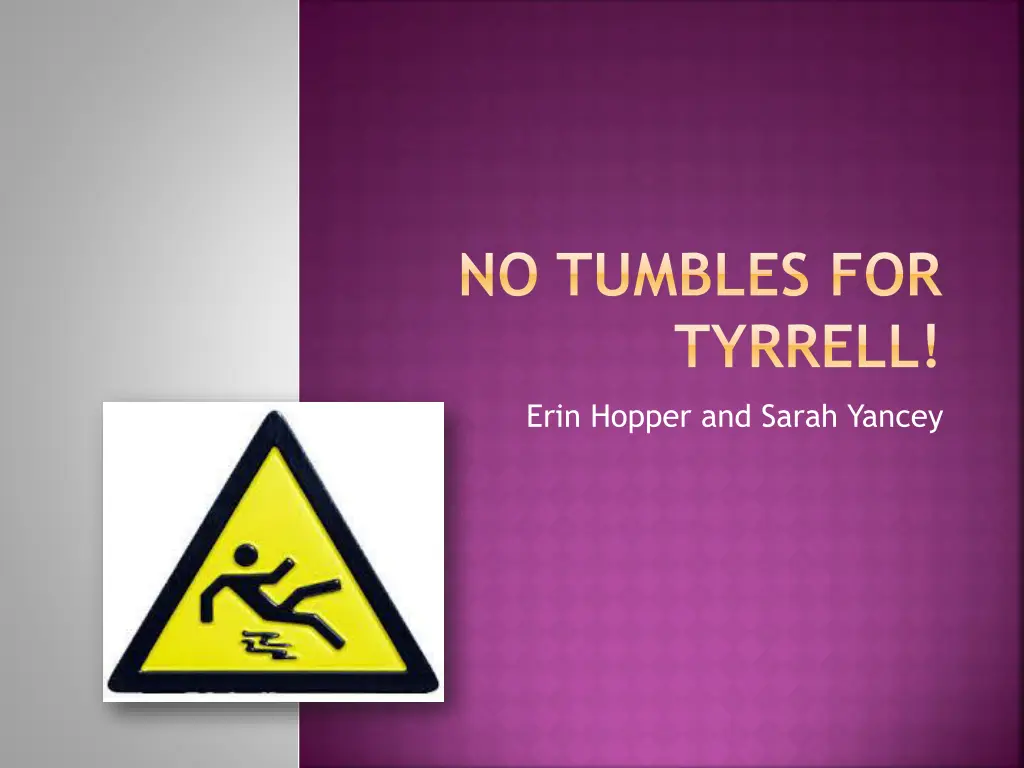
NO TUMBLES FOR TYRRELL! Erin Hopper and Sarah Yancey
Falls?!? Are they even a big deal?
FUN FALL FACTS 1 out of 3 adults over the age of 65 who live at home will fall each year1 20-30% of those who fall will suffer injuries such as lacerations, brain injuries, or hip fractures By age 90, one in four women and one in eight men will likely sustain a hip fracture from a fall2 Mortality post fracture is estimated between 10-20% with 50% resulting in permanent disability3,4 Every 29 minutes, an older adults dies from a fall1 Falls in the geriatric population accounted for $30 billion in direct medical costs in 20105
WHERE ARE PEOPLE LIKELY TO FALL?6 60% of falls occur in home 30% in the community 10% in institutions (i.e. nursing homes)
MULTIFACTORIAL CAUSES3,7,8 Decreased strength Impaired balance and coordination Vision impairment Dizziness Orthostatic hypotension Environmental obstacles Polypharmacy Cognitive impairment Impulsive behavior
So are ALL elderly people at risk for falls?!?!
ALL INDIVIDUALS 65 AND OLDER SHOULD BE SCREENED8 "Have you fallen in the past year?" If a patient states that he or she has experienced 2 or more falls or has sustained an injury from a fall, the patient is considered to be at risk of falling. Has the patient had an acute fall? If the patient comes to the provider because of a fall, the patient is considered to be at risk of falling. Does the patient have difficulty with walking or balance? If the patient has difficulty performing the "Timed Up and Go" (TUG) or has a slow walking speed, the patient is considered to be at risk of falling. 1. 2. 3.
IMPORTANT RISK FACTORS8 Previous falls Balance impairments Decreased muscle strength Vision impairment >4 medications or psychoactive medications Gait impairment
OTHER RISK FACTORS FOR FALLS8 Depression Dizziness Orthostatic hypotension Functional limitations or limitations in activities of daily living (ADL) Disabilities Age > 80 years old Female Low body mass index Urinary incontinence Cognitive impairment Arthritis Diabetes Pain
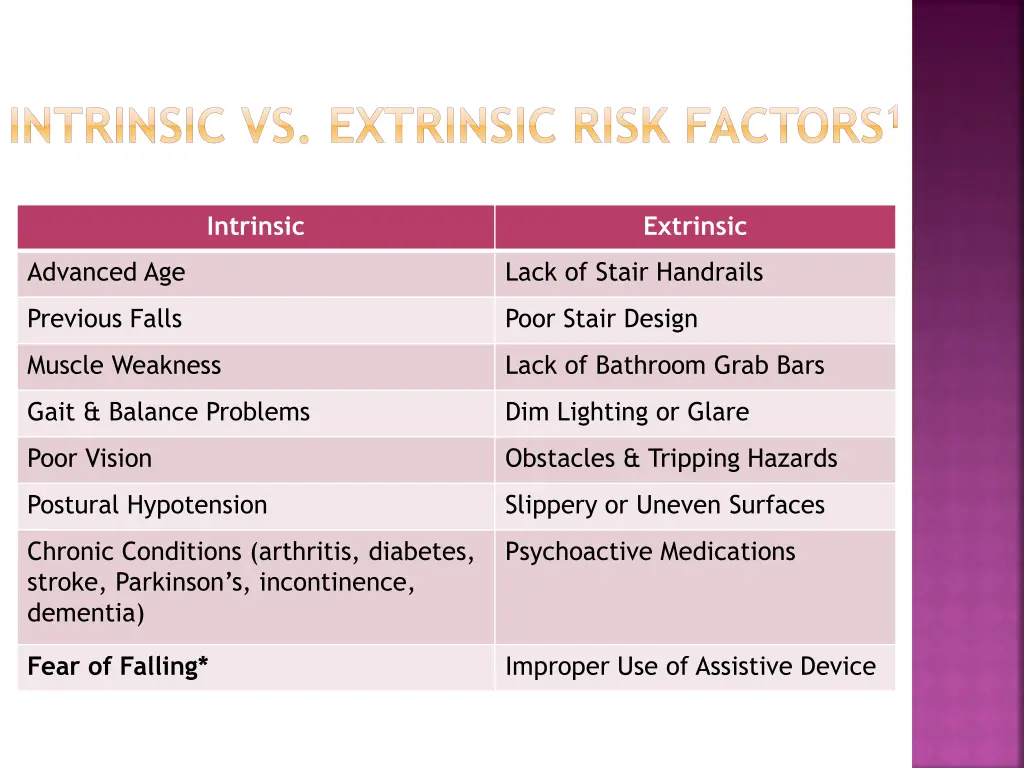
INTRINSIC VS. EXTRINSIC RISK FACTORS1 Intrinsic Extrinsic Advanced Age Lack of Stair Handrails Previous Falls Poor Stair Design Muscle Weakness Lack of Bathroom Grab Bars Gait & Balance Problems Dim Lighting or Glare Poor Vision Obstacles & Tripping Hazards Postural Hypotension Slippery or Uneven Surfaces Chronic Conditions (arthritis, diabetes, stroke, Parkinson s, incontinence, dementia) Psychoactive Medications Fear of Falling* Improper Use of Assistive Device
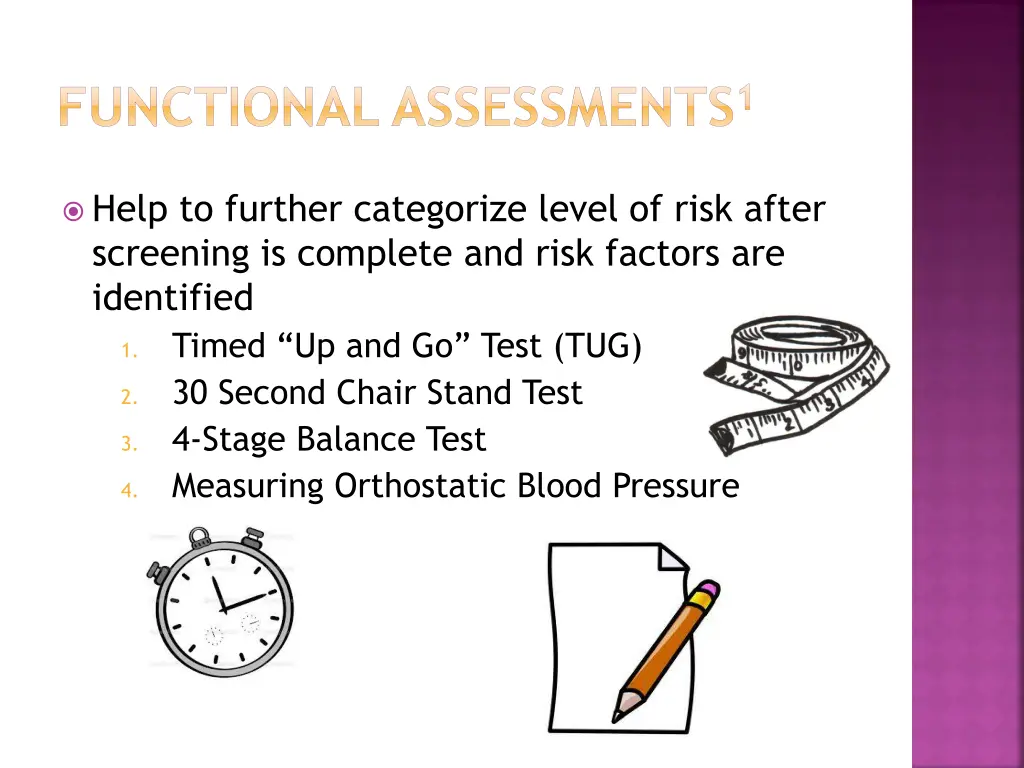
FUNCTIONAL ASSESSMENTS1 Help to further categorize level of risk after screening is complete and risk factors are identified Timed Up and Go Test (TUG) 30 Second Chair Stand Test 4-Stage Balance Test Measuring Orthostatic Blood Pressure 1. 2. 3. 4.
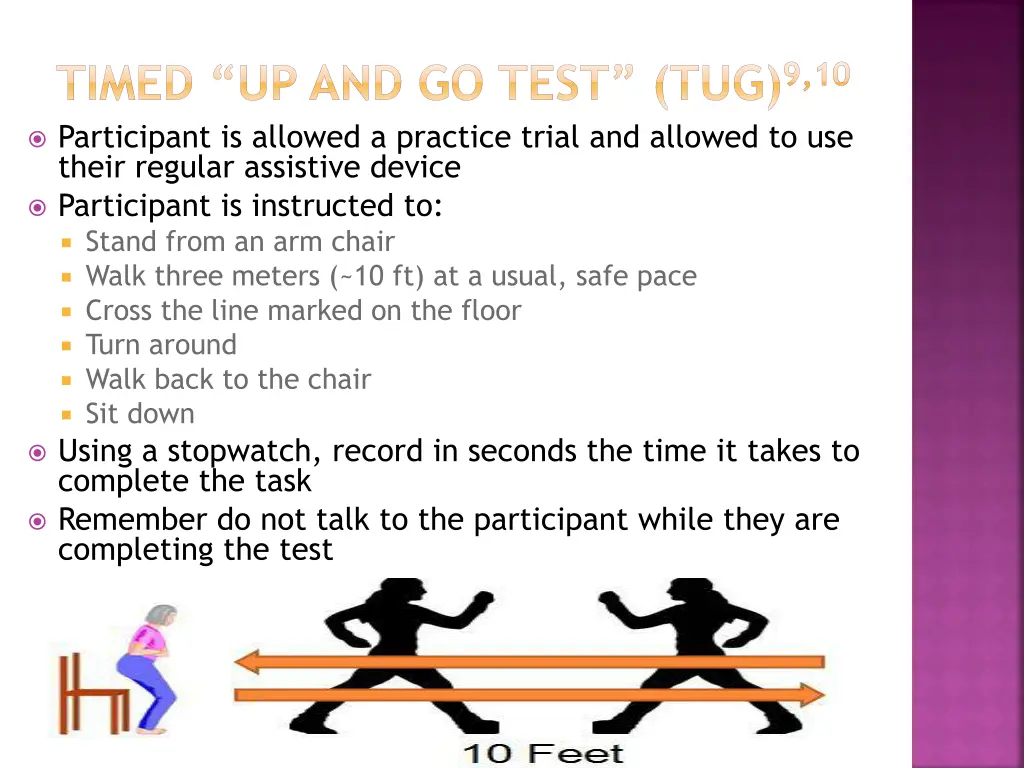
TIMED UP AND GO TEST (TUG)9,10 Participant is allowed a practice trial and allowed to use their regular assistive device Participant is instructed to: Stand from an arm chair Walk three meters (~10 ft) at a usual, safe pace Cross the line marked on the floor Turn around Walk back to the chair Sit down Using a stopwatch, record in seconds the time it takes to complete the task Remember do not talk to the participant while they are completing the test
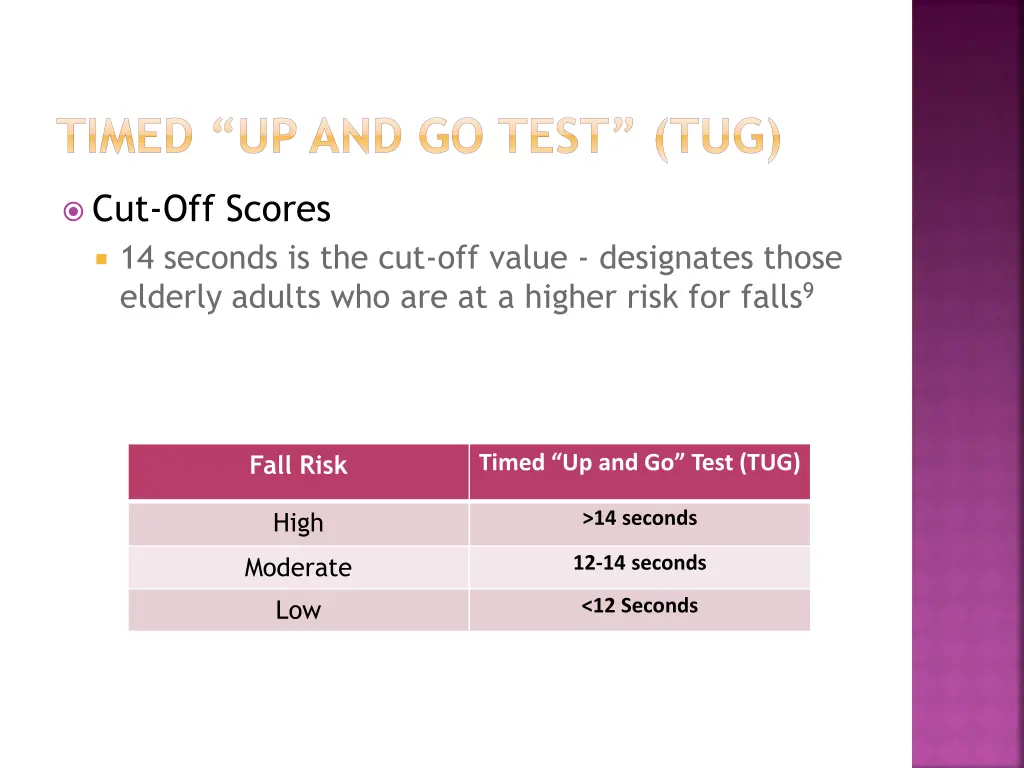
TIMED UP AND GO TEST (TUG) Cut-Off Scores 14 seconds is the cut-off value - designates those elderly adults who are at a higher risk for falls9 Fall Risk Timed Up and Go Test (TUG) High >14 seconds Moderate 12-14 seconds Low <12 Seconds
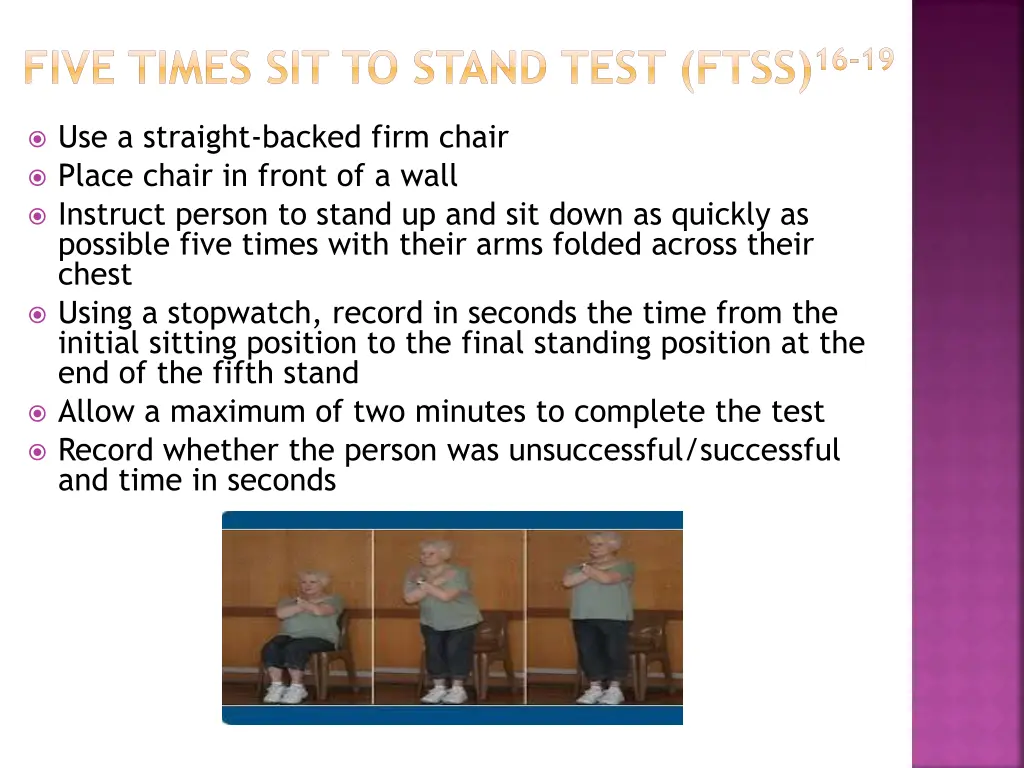
FIVE TIMES SIT TO STAND TEST (FTSS)16-19 Use a straight-backed firm chair Place chair in front of a wall Instruct person to stand up and sit down as quickly as possible five times with their arms folded across their chest Using a stopwatch, record in seconds the time from the initial sitting position to the final standing position at the end of the fifth stand Allow a maximum of two minutes to complete the test Record whether the person was unsuccessful/successful and time in seconds
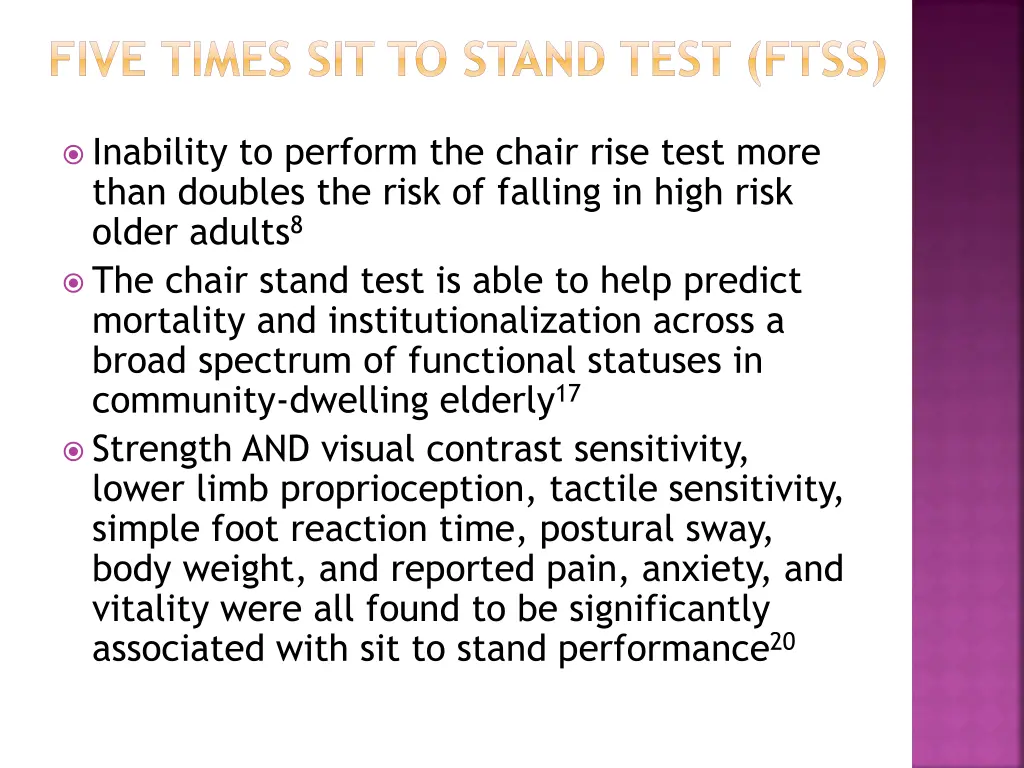
FIVE TIMES SIT TO STAND TEST (FTSS) Inability to perform the chair rise test more than doubles the risk of falling in high risk older adults8 The chair stand test is able to help predict mortality and institutionalization across a broad spectrum of functional statuses in community-dwelling elderly17 Strength AND visual contrast sensitivity, lower limb proprioception, tactile sensitivity, simple foot reaction time, postural sway, body weight, and reported pain, anxiety, and vitality were all found to be significantly associated with sit to stand performance20
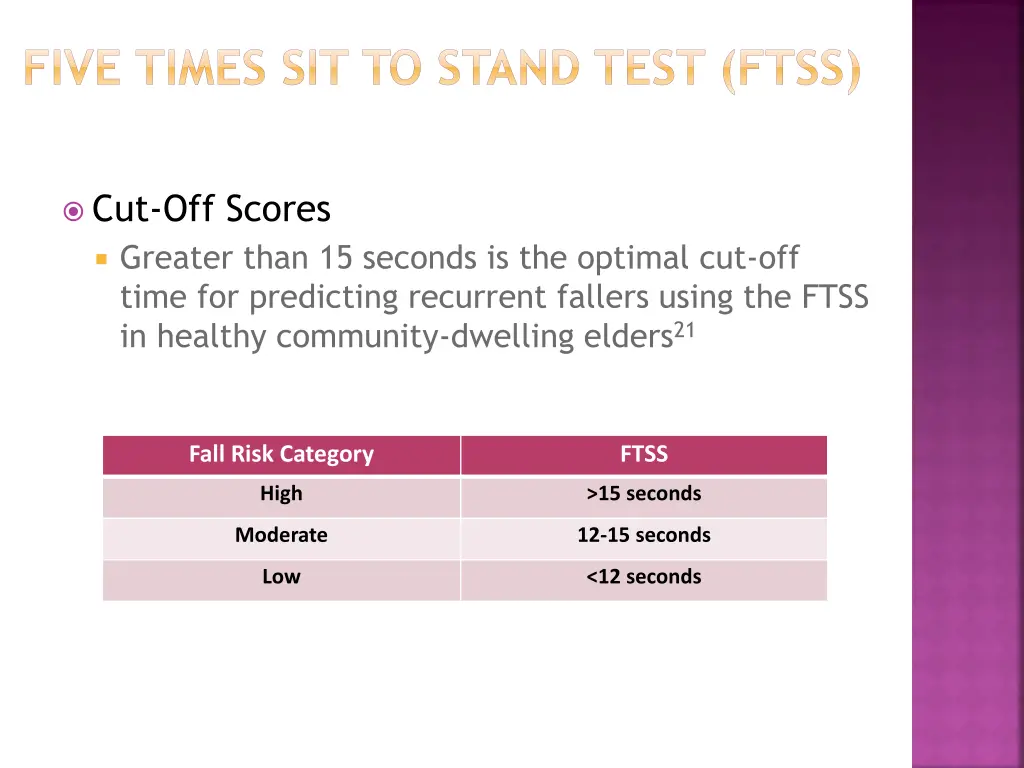
FIVE TIMES SIT TO STAND TEST (FTSS) Cut-Off Scores Greater than 15 seconds is the optimal cut-off time for predicting recurrent fallers using the FTSS in healthy community-dwelling elders21 Fall Risk Category FTSS High >15 seconds Moderate 12-15 seconds Low <12 seconds
YOU KNOW WHAT TIME IT IS LET S PRACTICE!!
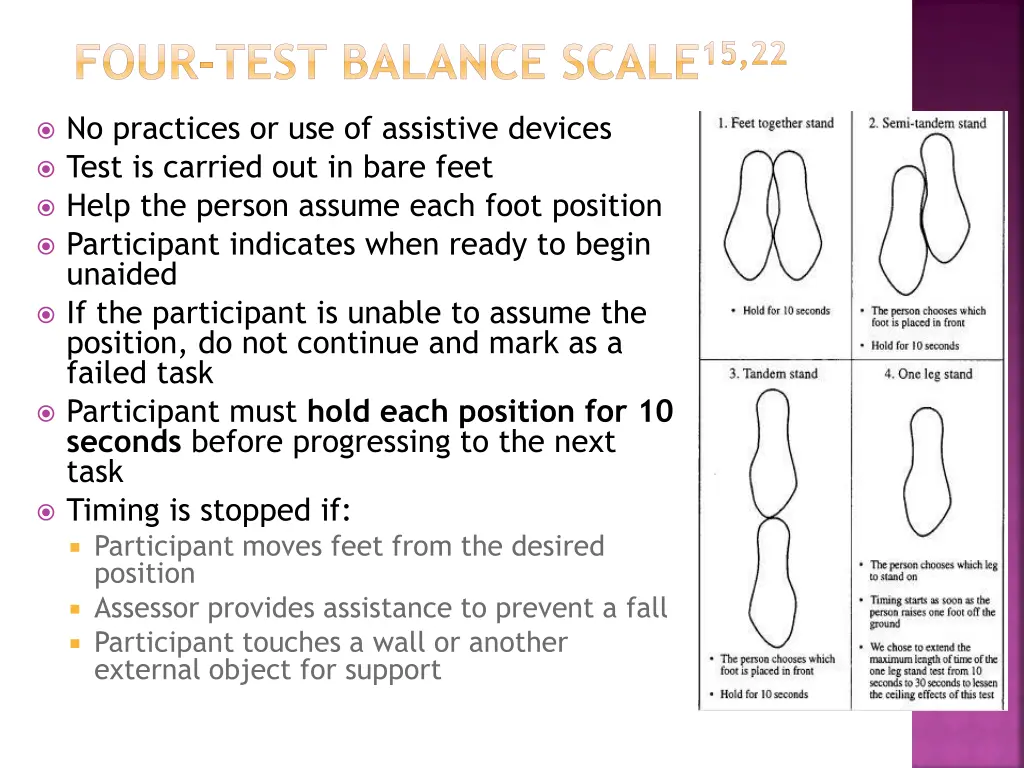
FOUR-TEST BALANCE SCALE15,22 No practices or use of assistive devices Test is carried out in bare feet Help the person assume each foot position Participant indicates when ready to begin unaided If the participant is unable to assume the position, do not continue and mark as a failed task Participant must hold each position for 10 seconds before progressing to the next task Timing is stopped if: Participant moves feet from the desired position Assessor provides assistance to prevent a fall Participant touches a wall or another external object for support
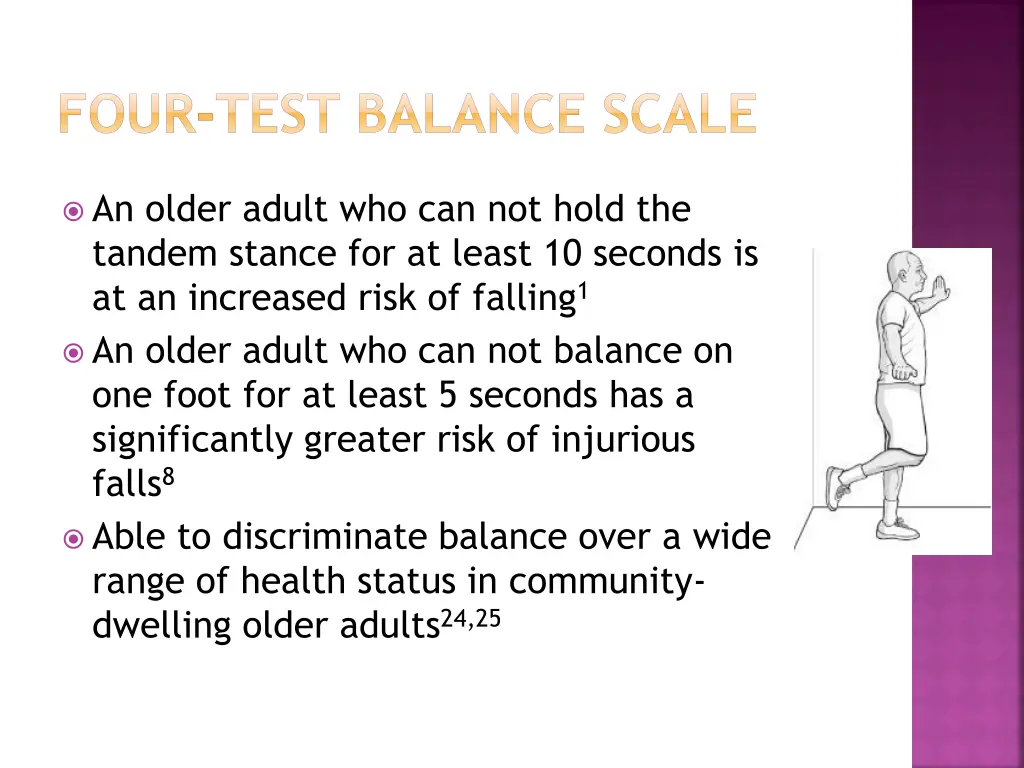
FOUR-TEST BALANCE SCALE An older adult who can not hold the tandem stance for at least 10 seconds is at an increased risk of falling1 An older adult who can not balance on one foot for at least 5 seconds has a significantly greater risk of injurious falls8 Able to discriminate balance over a wide range of health status in community- dwelling older adults24,25
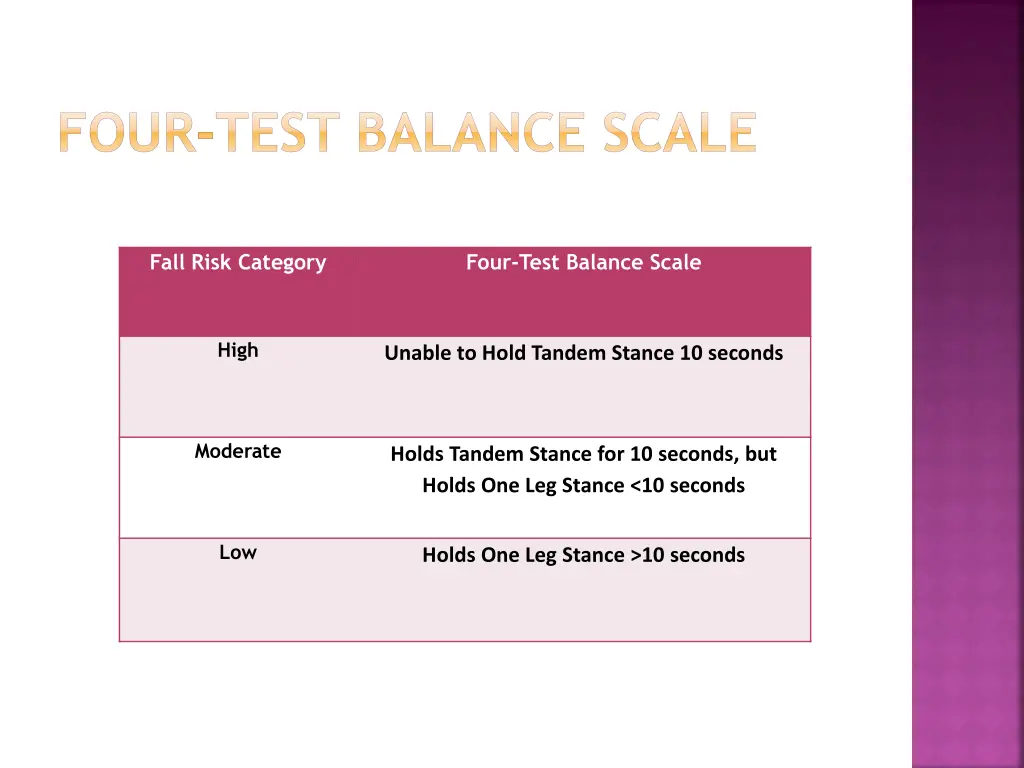
FOUR-TEST BALANCE SCALE Fall Risk Category Four-Test Balance Scale High Unable to Hold Tandem Stance 10 seconds Moderate Holds Tandem Stance for 10 seconds, but Holds One Leg Stance <10 seconds Low Holds One Leg Stance >10 seconds
MONKEY SEE, MONKEY DO LET S PRACTICE!!
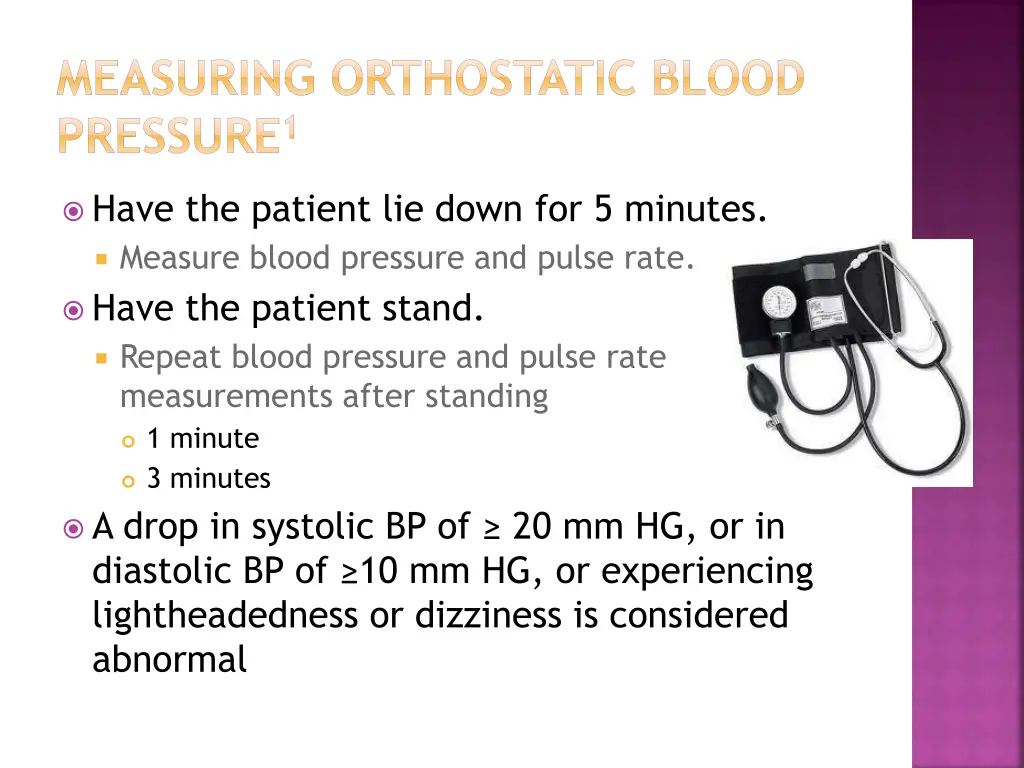
MEASURING ORTHOSTATIC BLOOD PRESSURE1 Have the patient lie down for 5 minutes. Measure blood pressure and pulse rate. Have the patient stand. Repeat blood pressure and pulse rate measurements after standing 1 minute 3 minutes A drop in systolic BP of 20 mm HG, or in diastolic BP of 10 mm HG, or experiencing lightheadedness or dizziness is considered abnormal
So what if we find our elderly patient is at risk for falls?!?!
PREVENTING FALLS1 Providers should focus FIRST on these modifiable risk factors: Lower body weakness Difficulties with gait and balance Use of psychoactive medications Poor vision Problems with feet and/or shoes Home hazards
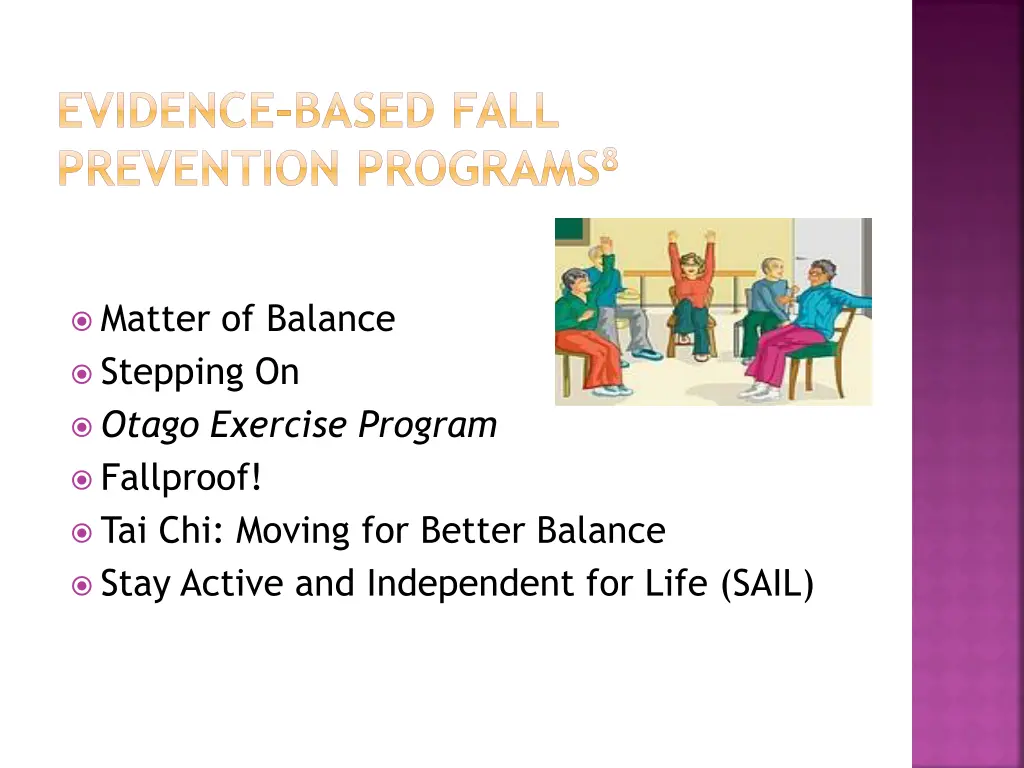
EVIDENCE-BASED FALL PREVENTION PROGRAMS8 Matter of Balance Stepping On Otago Exercise Program Fallproof! Tai Chi: Moving for Better Balance Stay Active and Independent for Life (SAIL)
HOME/ENVIRONMENT MODIFICATION RISK FACTORS Clutter Remove clutter, cords, throw rugs! Poor lighting Use nightlights to brighten bedrooms, halls and bathrooms Handrails Best to have handrails on BOTH sides. Fix loose handrails. Items that are hard to reach Keep things you use often stored in an easy to reach place Obstacles in walking paths Always keep objects off the floor Bathroom issues Use a nonslip mat in the tub or shower Install a grab bar next to the toilet and in the bathtub or shower
BEHAVIORAL MODIFICATION3 Using good judgment Decrease risky behaviors (i.e. climbing on roofs, taking long walks in the neighborhood alone) Wearing shoes in the house Getting up slowly after laying or sitting down Not rushing to answer the phone or doorbell Using appropriate assistive device
MEDICAL MANAGEMENT8 Polypharmacy Impaired vision Impaired cognition Abnormal heart rate or rhythm Orthostatic hypotension Impaired proprioception and sensation Neurological impairment
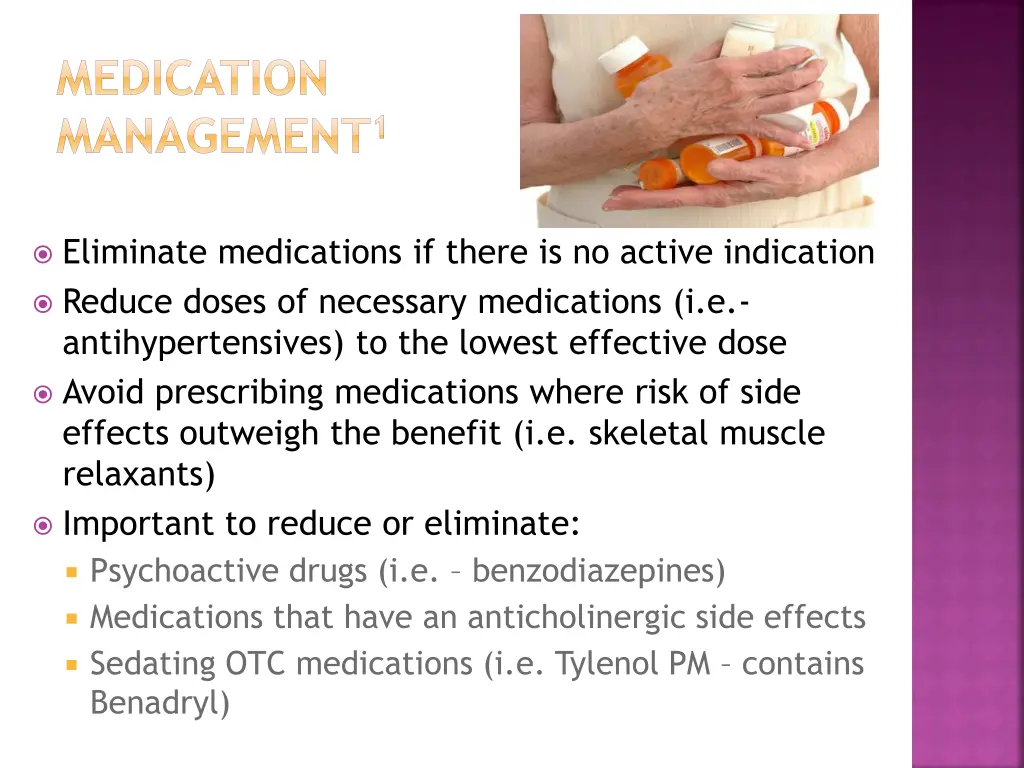
MEDICATION MANAGEMENT1 Eliminate medications if there is no active indication Reduce doses of necessary medications (i.e.- antihypertensives) to the lowest effective dose Avoid prescribing medications where risk of side effects outweigh the benefit (i.e. skeletal muscle relaxants) Important to reduce or eliminate: Psychoactive drugs (i.e. benzodiazepines) Medications that have an anticholinergic side effects Sedating OTC medications (i.e. Tylenol PM contains Benadryl)
SPECIFICS FOR TYRRELL 16.4% of persons in Tyrrell County are 65+ 27 Unintentional injuries (excluding MVAs) are Tyrrell County s 4th leading cause of death28 White females have the highest mortality Lack of fall prevention services in rural areas Home safety assessments by PTs/OTs are not often feasible in rural settings because of the scarcity of providers. Provide home safety checklist and modification tips to seniors in the area We all have a role in preventing falls!
REFERENCES See Word Document for References!