Psychological Correlates of Successful Aging
Aging brings physical and psychological changes. Understanding the psychological factors influencing successful aging is crucial. Resilience, optimism, and mental health play key roles. Promoting optimal aging involves comprehensive assessment and special training programs for older adults.

Download Presentation

Please find below an Image/Link to download the presentation.
The content on the website is provided AS IS for your information and personal use only. It may not be sold, licensed, or shared on other websites without obtaining consent from the author.If you encounter any issues during the download, it is possible that the publisher has removed the file from their server.
You are allowed to download the files provided on this website for personal or commercial use, subject to the condition that they are used lawfully. All files are the property of their respective owners.
The content on the website is provided AS IS for your information and personal use only. It may not be sold, licensed, or shared on other websites without obtaining consent from the author.
E N D
Presentation Transcript
Happy Aging: Psychological correlates of Aging By: Dr Sandhya Bhatt, Asst Professor, Amity University, Noida campus
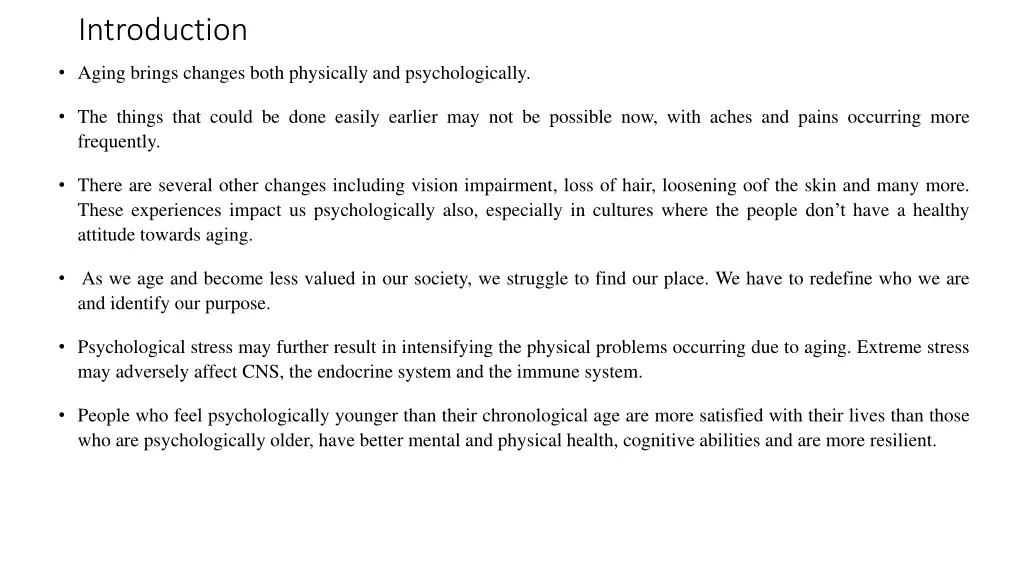
Introduction Aging brings changes both physically and psychologically. The things that could be done easily earlier may not be possible now, with aches and pains occurring more frequently. There are several other changes including vision impairment, loss of hair, loosening oof the skin and many more. These experiences impact us psychologically also, especially in cultures where the people don t have a healthy attitude towards aging. As we age and become less valued in our society, we struggle to find our place. We have to redefine who we are and identify our purpose. Psychological stress may further result in intensifying the physical problems occurring due to aging. Extreme stress may adversely affect CNS, the endocrine system and the immune system. People who feel psychologically younger than their chronological age are more satisfied with their lives than those who are psychologically older, have better mental and physical health, cognitive abilities and are more resilient.
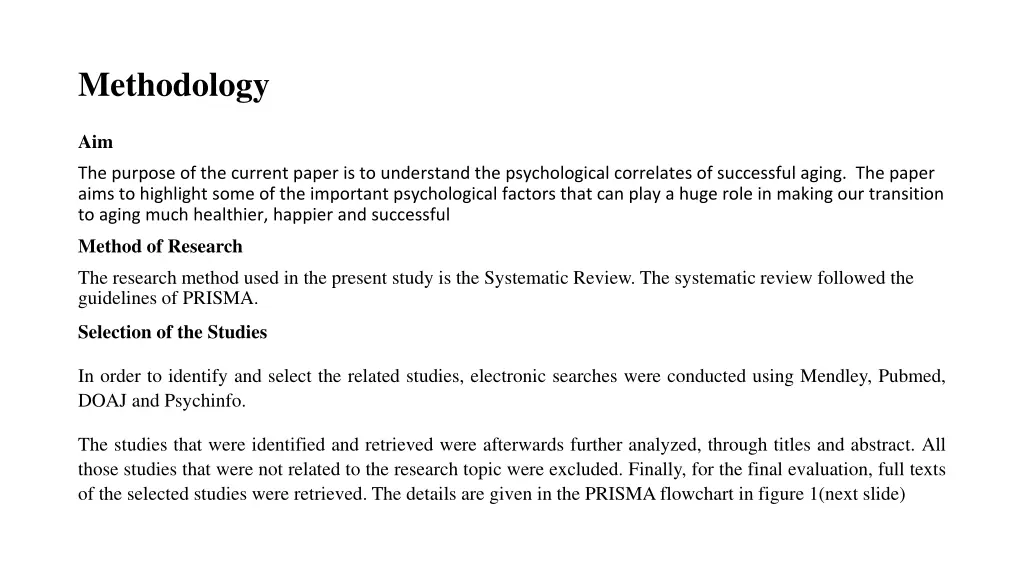
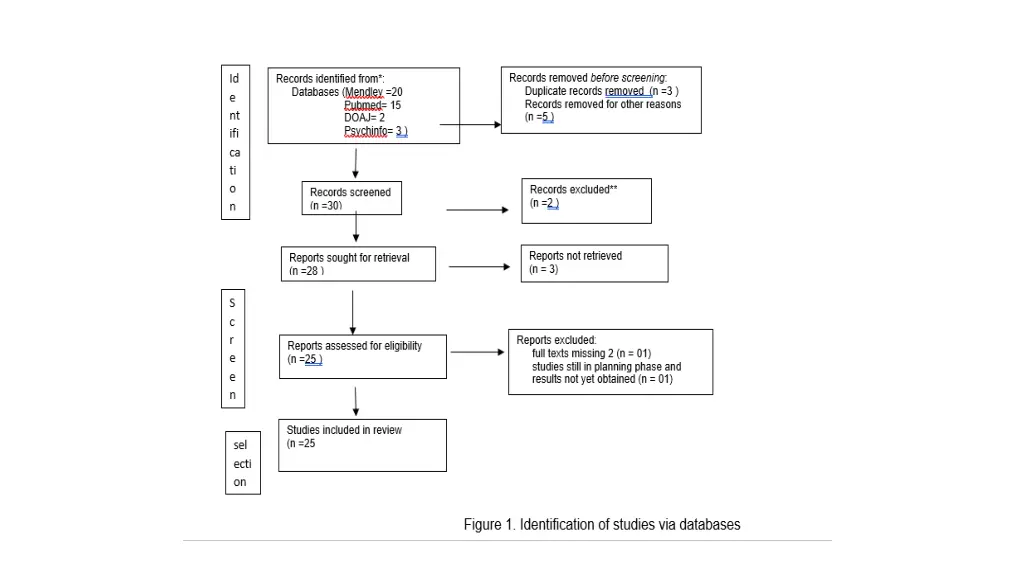
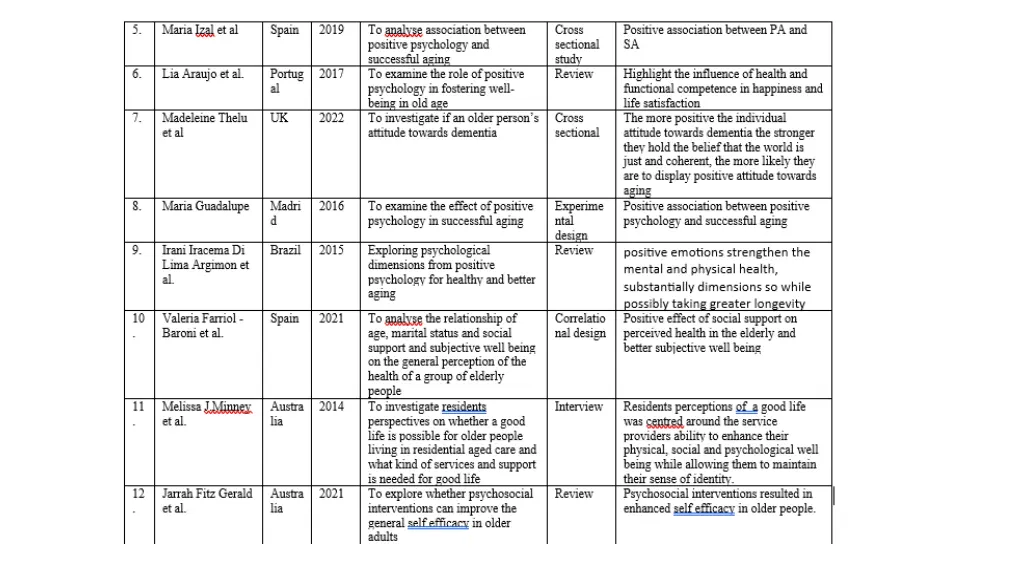
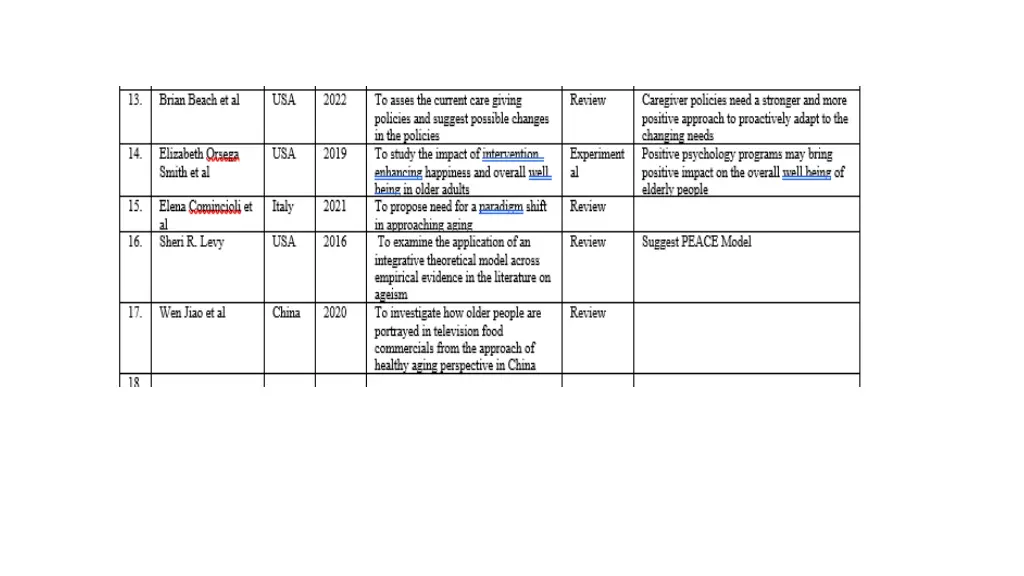
Methodology Aim The purpose of the current paper is to understand the psychological correlates of successful aging. The paper aims to highlight some of the important psychological factors that can play a huge role in making our transition to aging much healthier, happier and successful Method of Research The research method used in the present study is the Systematic Review. The systematic review followed the guidelines of PRISMA. Selection of the Studies In order to identify and select the related studies, electronic searches were conducted using Mendley, Pubmed, DOAJ and Psychinfo. The studies that were identified and retrieved were afterwards further analyzed, through titles and abstract. All those studies that were not related to the research topic were excluded. Finally, for the final evaluation, full texts of the selected studies were retrieved. The details are given in the PRISMAflowchart in figure 1(next slide)
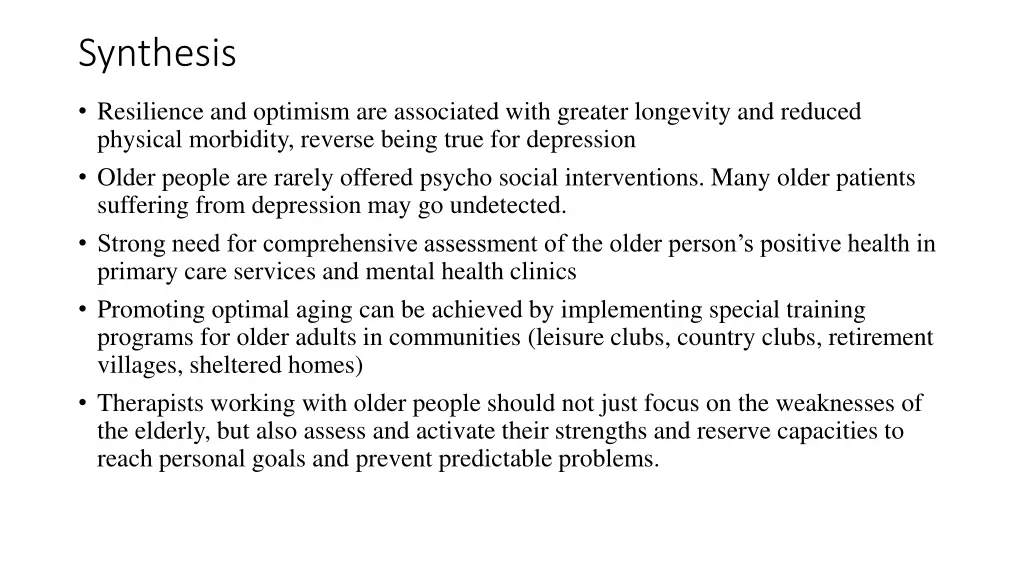
Synthesis Resilience and optimism are associated with greater longevity and reduced physical morbidity, reverse being true for depression Older people are rarely offered psycho social interventions. Many older patients suffering from depression may go undetected. Strong need for comprehensive assessment of the older person s positive health in primary care services and mental health clinics Promoting optimal aging can be achieved by implementing special training programs for older adults in communities (leisure clubs, country clubs, retirement villages, sheltered homes) Therapists working with older people should not just focus on the weaknesses of the elderly, but also assess and activate their strengths and reserve capacities to reach personal goals and prevent predictable problems.
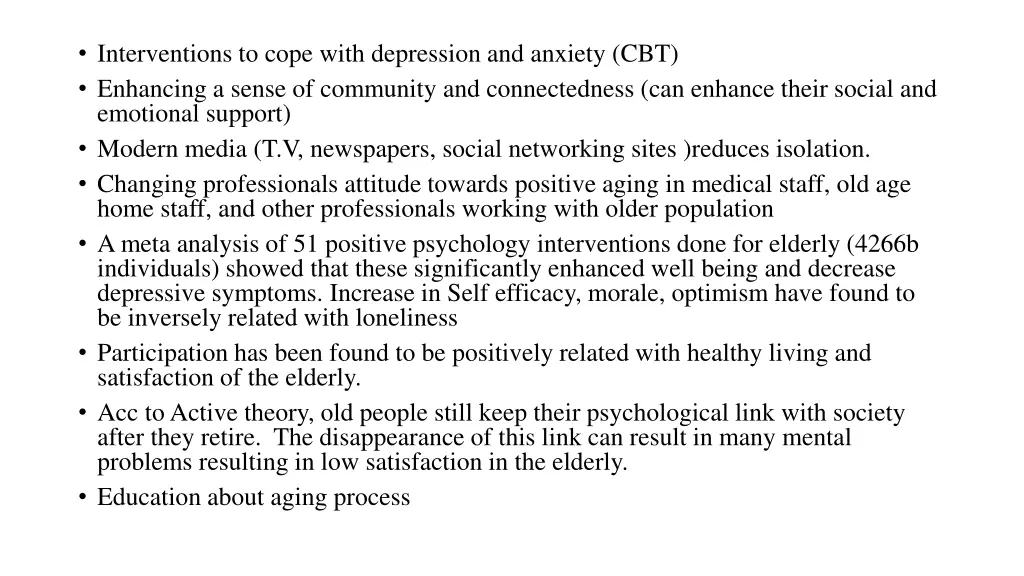
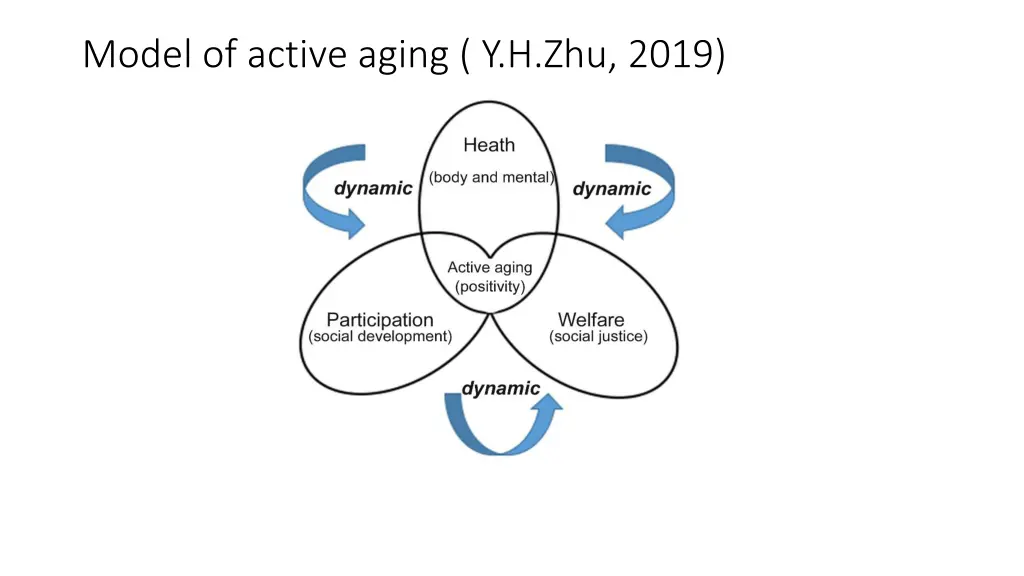
Interventions to cope with depression and anxiety (CBT) Enhancing a sense of community and connectedness (can enhance their social and emotional support) Modern media (T.V, newspapers, social networking sites )reduces isolation. Changing professionals attitude towards positive aging in medical staff, old age home staff, and other professionals working with older population A meta analysis of 51 positive psychology interventions done for elderly (4266b individuals) showed that these significantly enhanced well being and decrease depressive symptoms. Increase in Self efficacy, morale, optimism have found to be inversely related with loneliness Participation has been found to be positively related with healthy living and satisfaction of the elderly. Acc to Active theory, old people still keep their psychological link with society after they retire. The disappearance of this link can result in many mental problems resulting in low satisfaction in the elderly. Education about aging process
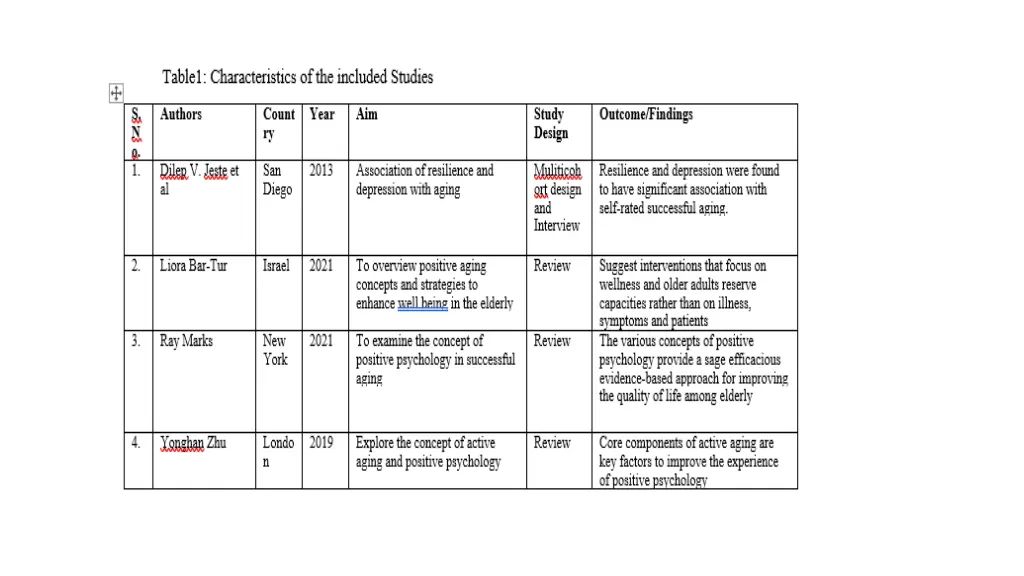
References Jeste DV, Depp CA, Vahia IV. Successful cognitive and emotional aging. World Psychiatry. 2010 Jun;9(2):78-84. doi: 10.1002/j.2051-5545.2010.tb00277.x. PMID: 20671889; PMCID: PMC2912035. Bar-Tur L. Fostering Well-Being in the Elderly: Translating Theories on Positive Aging to Practical Approaches. Front Med (Lausanne). 2021 Apr 9;8:517226. doi: 10.3389/fmed.2021.517226. PMID: 33898472; PMCID: PMC8062922. Marks R. Successful Aging and Chronic Osteoarthritis. Medicines (Basel). 2018 Sep 19;5(3):105. doi: 10.3390/medicines5030105. PMID: 30235816; PMCID: PMC6163800. Zhu, Y. (2019) Active and Positive: The Connection between Active Aging and Positive Psychology. Open Journal of Social Sciences, 7, 147-156. doi: 10.4236/jss.2019.72012. Izal M, Bernabeu S, Martinez H, Bellot A, Montorio I. Las ganas de vivir como expresi n del bienestar de las personas mayores [Will to live as an expression of the well-being of older people]. Rev Esp Geriatr Gerontol. 2020 Mar-Apr;55(2):76-83. Spanish. doi: 10.1016/j.regg.2019.06.005. Epub 2020 Feb 5. PMID: 32035789. Ara jo, L., Ribeiro, O., Teixeira, L., & Pa l, C. (2016). Predicting Successful Aging at One Hundred Years of Age. Research on Aging, 38(6), 689-709. https://doi.org/10.1177/0164027515603771