Explore efficient quantum protocols for XOR functions in communication complexity, including lower bounds and the Log-Rank Conjecture. Learn about computation modes, communication matrices, and connections to Fourier analysis.
Please find below an Image/Link to download the presentation.
The content on the website is provided AS IS for your information and personal use only. It may not be sold, licensed, or shared on other websites without obtaining consent from the author. If you encounter any issues during the download, it is possible that the publisher has removed the file from their server.
You are allowed to download the files provided on this website for personal or commercial use, subject to the condition that they are used lawfully. All files are the property of their respective owners.
The content on the website is provided AS IS for your information and personal use only. It may not be sold, licensed, or shared on other websites without obtaining consent from the author.
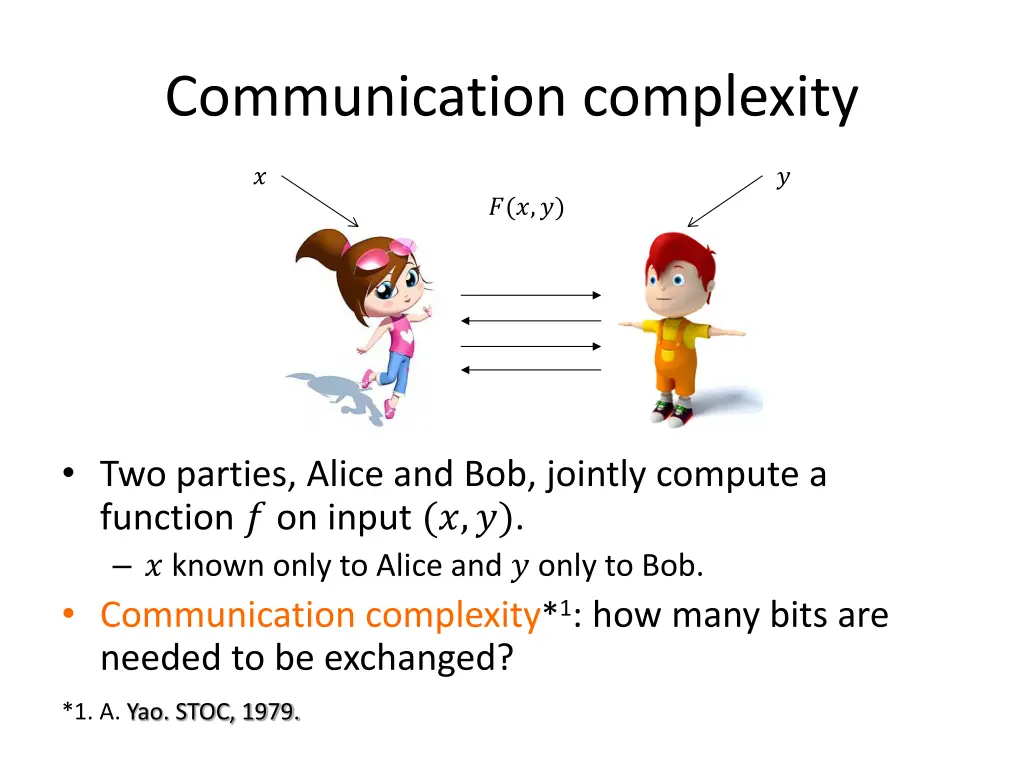
Communication complexity ? ? ?(?,?) Two parties, Alice and Bob, jointly compute a function ? on input (?,?). ? known only to Alice and ? only to Bob. Communication complexity*1: how many bits are needed to be exchanged? *1. A. Yao. STOC, 1979.
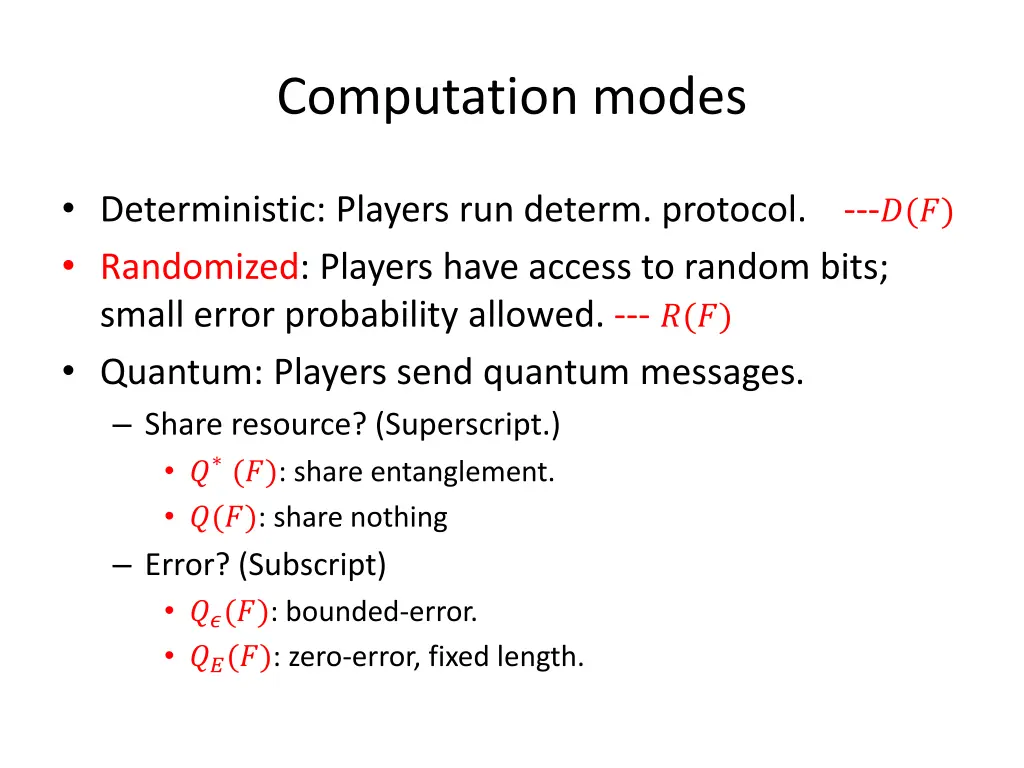
Computation modes Deterministic: Players run determ. protocol. ---?(?) Randomized: Players have access to random bits; small error probability allowed. --- ?(?) Quantum: Players send quantum messages. Share resource? (Superscript.) ? (?): share entanglement. ?(?): share nothing Error? (Subscript) ??(?): bounded-error. ??(?): zero-error, fixed length.
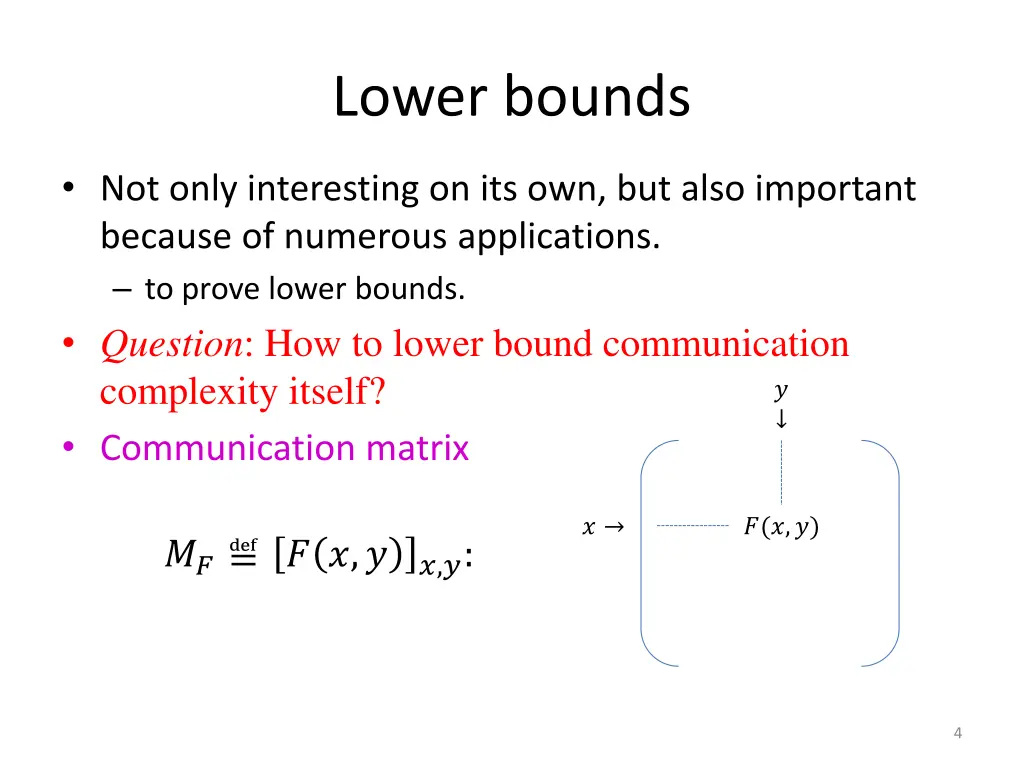
Lower bounds Not only interesting on its own, but also important because of numerous applications. to prove lower bounds. Question: How to lower bound communication complexity itself? Communication matrix ? ? ?(?,?) ?? ? ?,? ?,?: 4
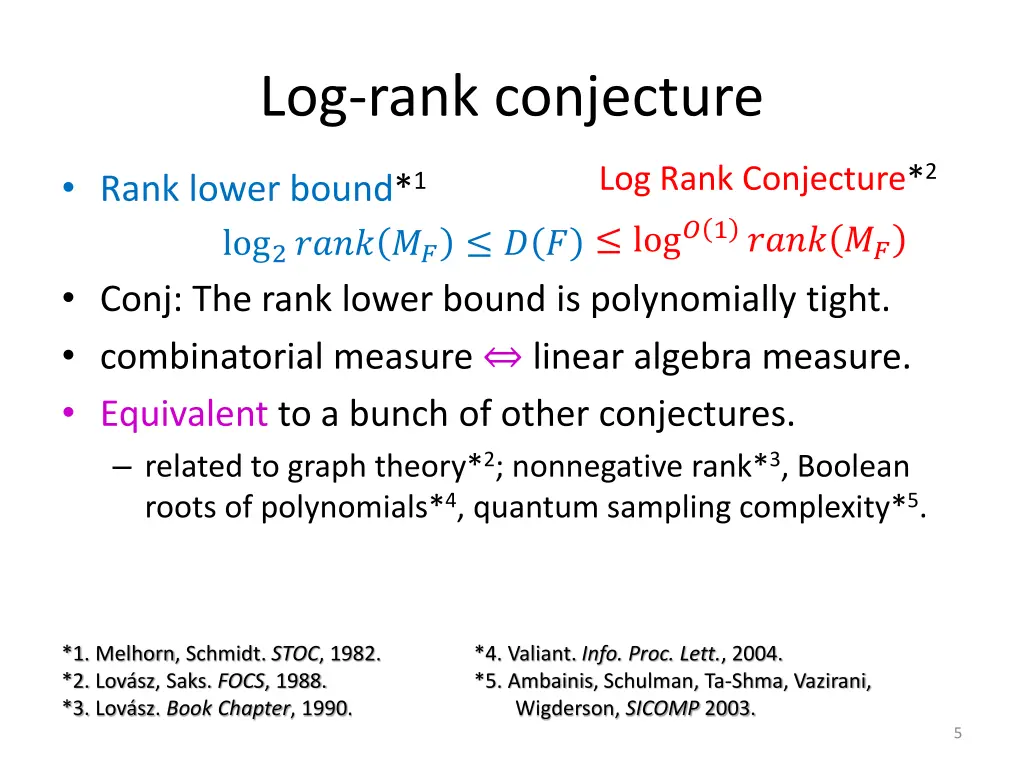
Log-rank conjecture Log Rank Conjecture*2 Rank lower bound*1 log2???? ?? ? ? Conj: The rank lower bound is polynomially tight. combinatorial measure linear algebra measure. Equivalent to a bunch of other conjectures. related to graph theory*2; nonnegative rank*3, Boolean roots of polynomials*4, quantum sampling complexity*5. log? 1???? ?? *1. Melhorn, Schmidt. STOC, 1982. *2. Lov sz, Saks. FOCS, 1988. *3. Lov sz. Book Chapter, 1990. *4. Valiant. Info. Proc. Lett., 2004. *5. Ambainis, Schulman, Ta-Shma, Vazirani, Wigderson, SICOMP 2003. 5
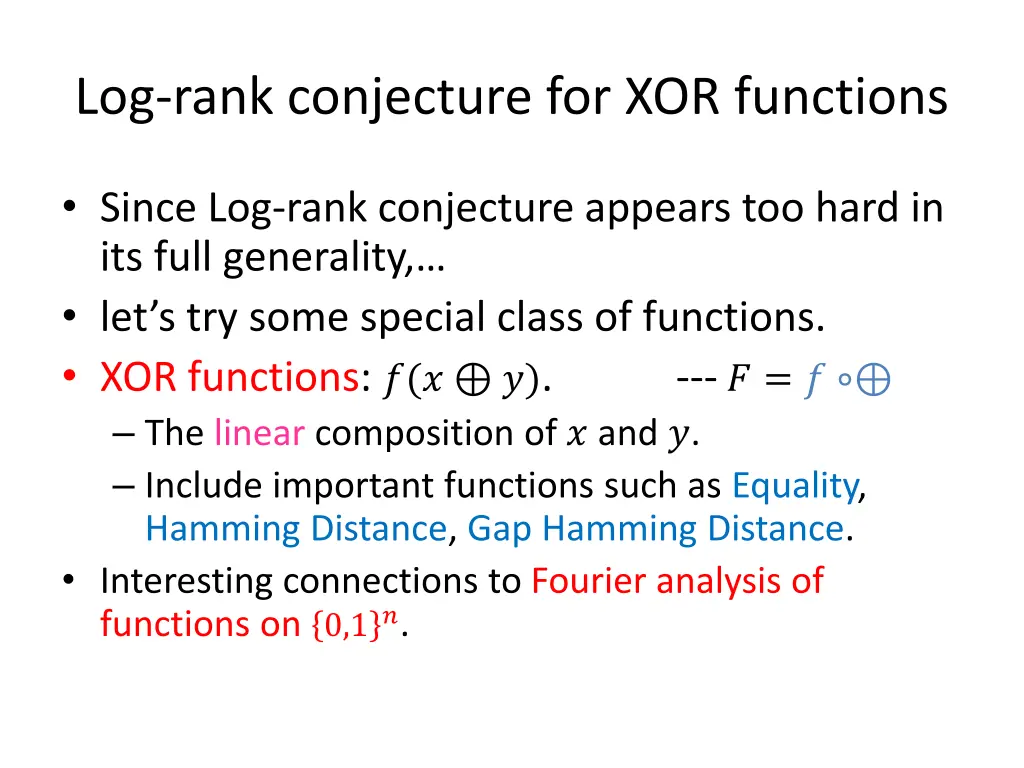
Log-rank conjecture for XOR functions Since Log-rank conjecture appears too hard in its full generality, let s try some special class of functions. XOR functions: ?(? ?). The linear composition of ? and ?. Include important functions such as Equality, Hamming Distance, Gap Hamming Distance. Interesting connections to Fourier analysis of functions on 0,1?. --- ? = ?
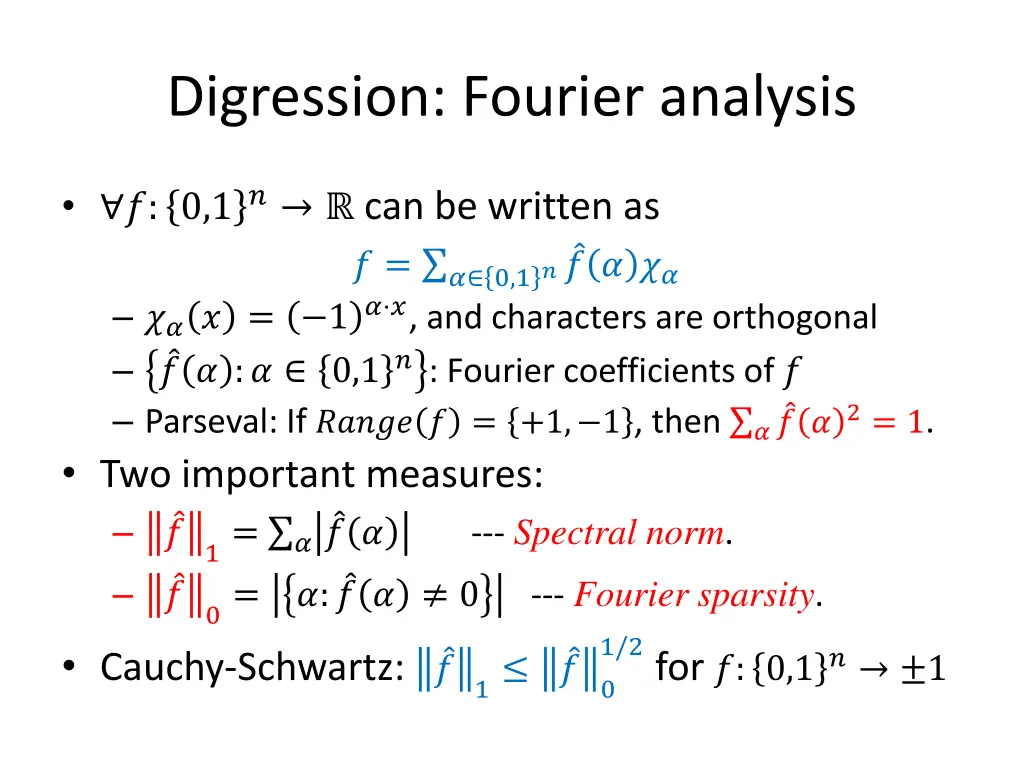
Digression: Fourier analysis ?: 0,1? can be written as ? = ? 0,1? ? ? ?? ??? = 1? ?, and characters are orthogonal ? ? :? 0,1?: Fourier coefficients of ? Parseval: If ????? ? = +1, 1 , then ? ? ?2= 1. Two important measures: ? --- Spectral norm. ? 0= Cauchy-Schwartz: ? 1 1= ? ? ? ?: ? ? 0 --- Fourier sparsity. 1/2for ?: 0,1? 1 ? 0
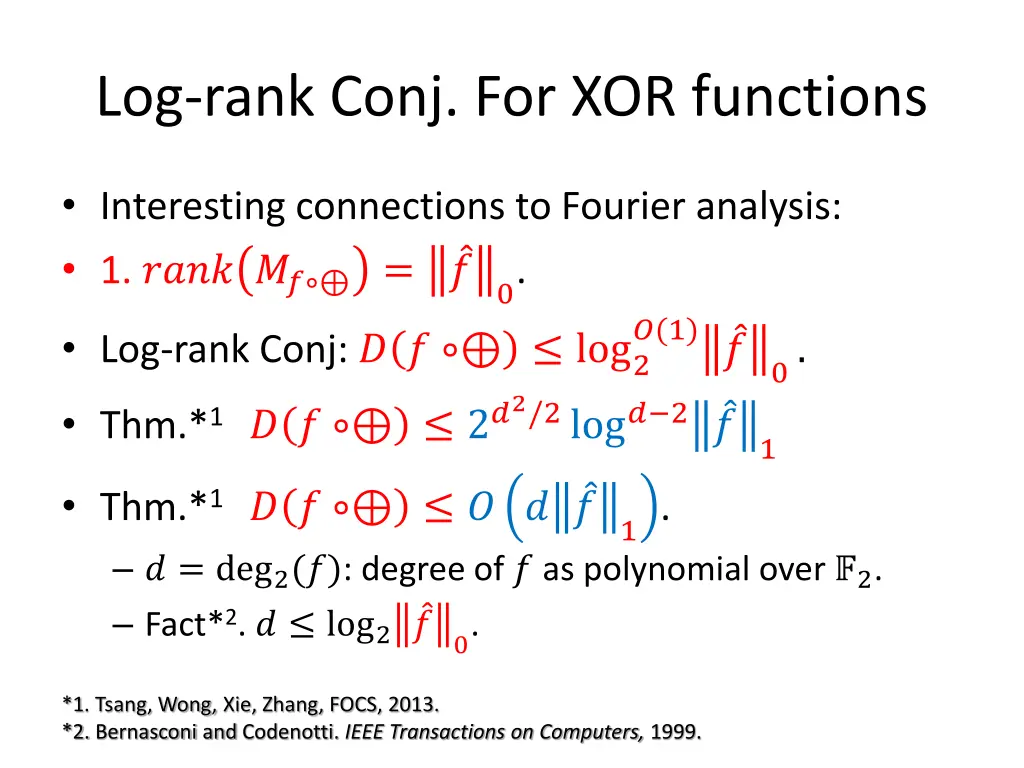
Log-rank Conj. For XOR functions Interesting connections to Fourier analysis: 1. ???? ?? = ? 0. ?(1) ? Log-rank Conj: ? ? log2 Thm.*1 ? ? 2?2/2log? 2 ? 0. 1 Thm.*1 ? ? ? ? ? ? = deg2(?): degree of ? as polynomial over ?2. Fact*2. ? log2 ? 1. 0. *1. Tsang, Wong, Xie, Zhang, FOCS, 2013. *2. Bernasconi and Codenotti. IEEE Transactions on Computers, 1999.
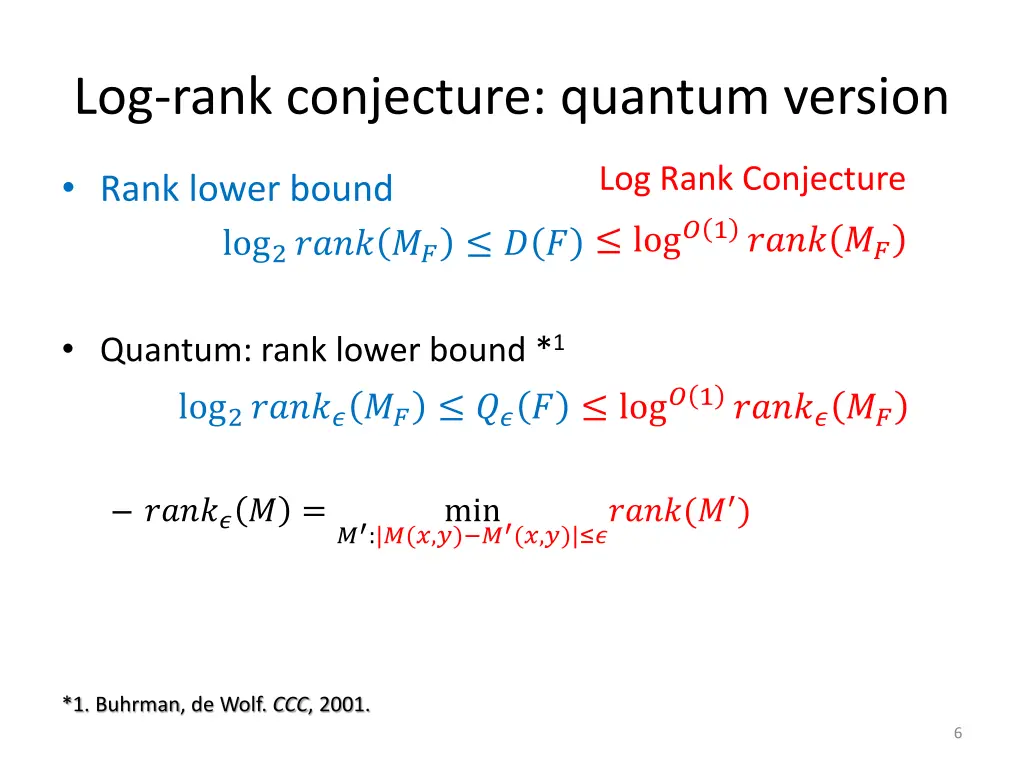
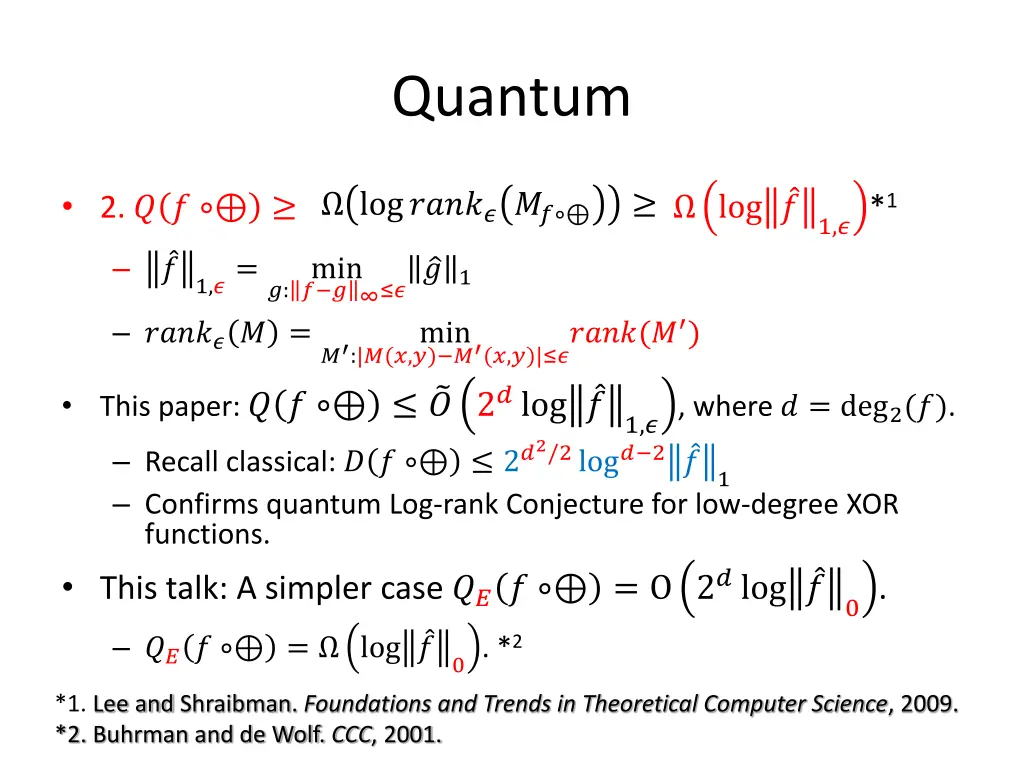
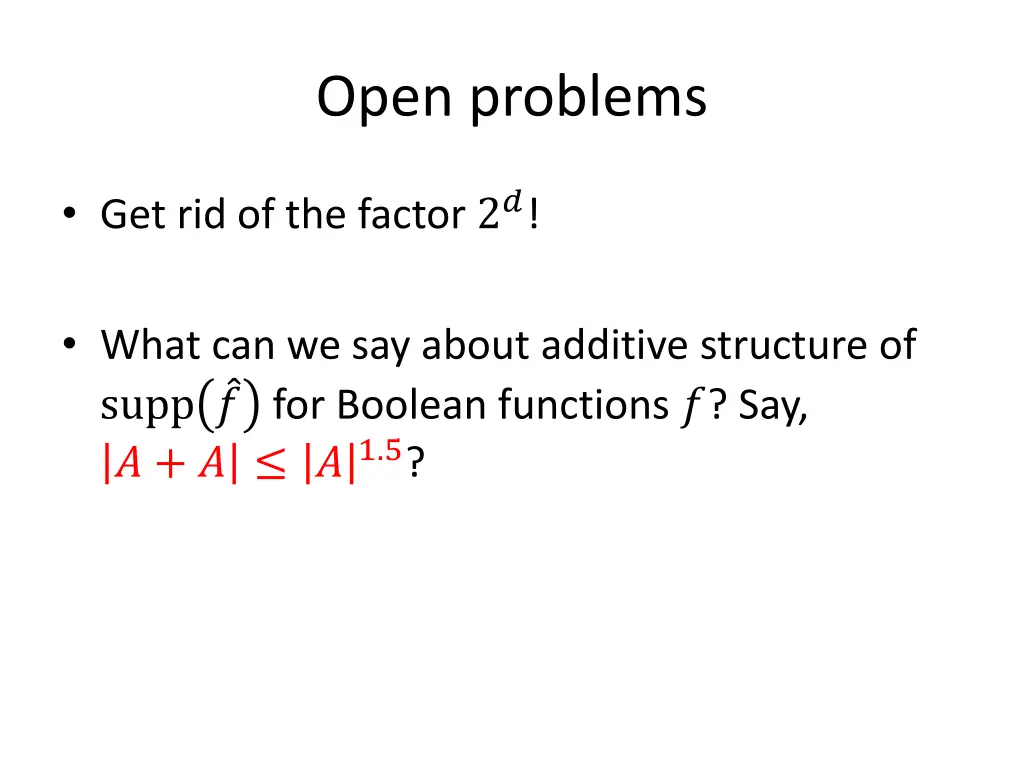
Quantum log ? 2. ? ? log??????? 1,?*1 ? 1,?= min ?1 ?: ? ? ? ? :|?(?,?) ? (?,?)| ?????(? ) This paper: ? ? ? 2?log ? Recall classical: ? ? 2?2/2log? 2 ? Confirms quantum Log-rank Conjecture for low-degree XOR functions. This talk: A simpler case ??? = O 2?log ? ??? = log ? ?????? = min 1,?, where ? = deg2(?). 1 0. 0. *2 *1. Lee and Shraibman. Foundations and Trends in Theoretical Computer Science, 2009. *2. Buhrman and de Wolf. CCC, 2001.
About quantum protocol Much simpler. log ? 0 comes very naturally. Inherently quantum. Not from quantizing any classical protocol.
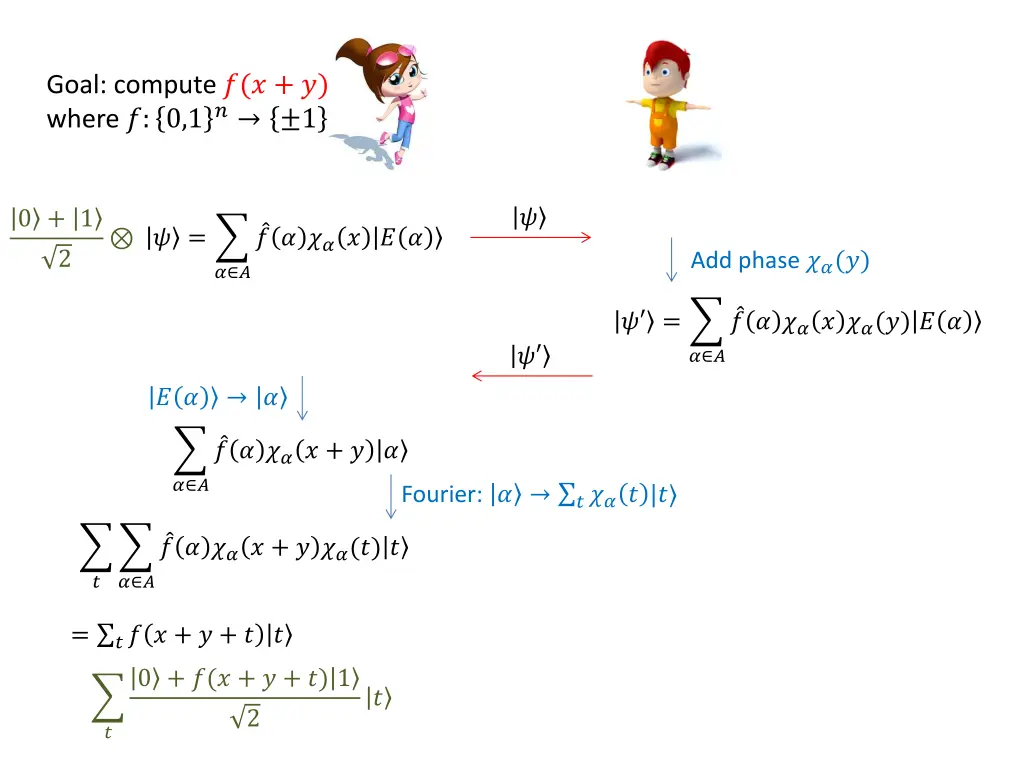
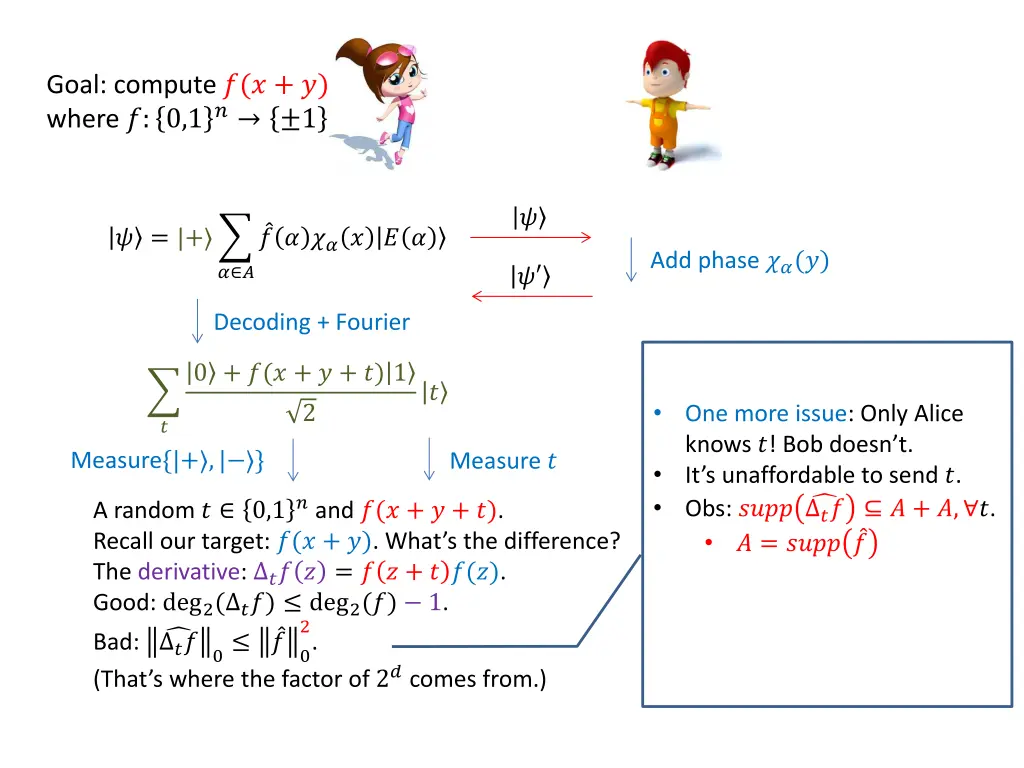
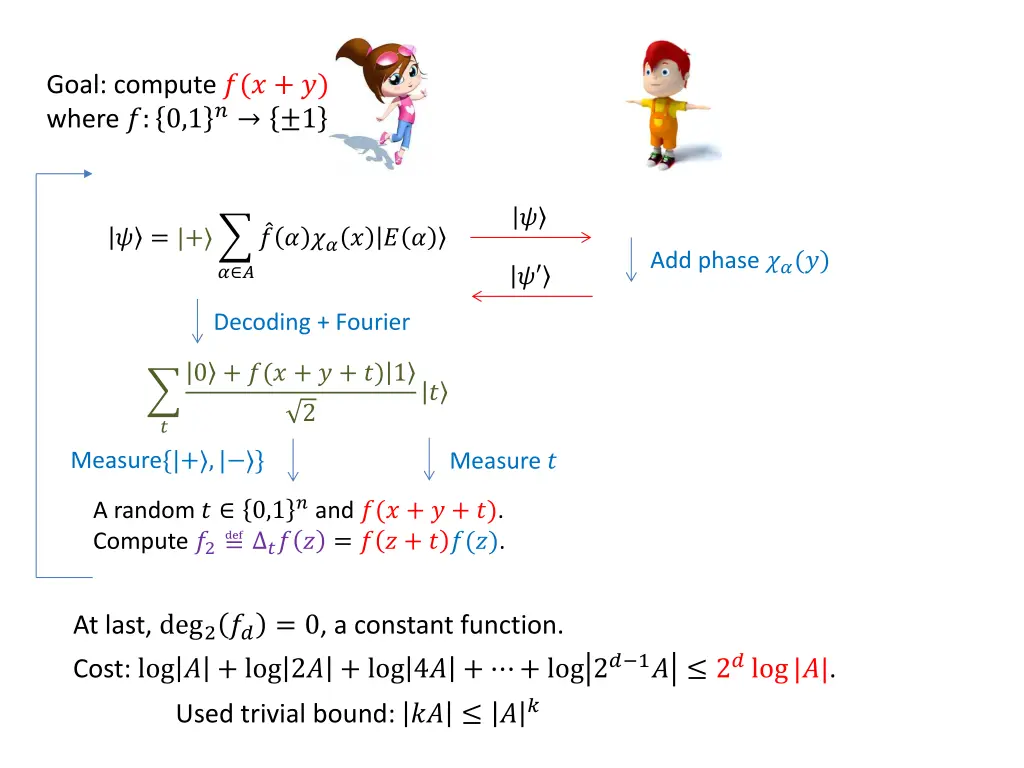
Goal: compute ?(? + ?) where ?: 0,1? 1 ? ? ? ??? ? ? ? = |+ Add phase ??(?) ? ? ? Decoding + Fourier 0 + ?(? + ? + ?) 1 ? 2 One more issue: Only Alice knows ?! Bob doesn t. It s unaffordable to send ?. Obs: ???? ?? ? + ?, ?. ? = ???? ? ? Measure{|+ ,| } Measure ? A random ? 0,1? and ?(? + ? + ?). Recall our target: ?(? + ?). What s the difference? The derivative: ?? ? = ? ? + ? ?(?). Good: deg2( ??) deg2(?) 1. Bad: ?? ? 0 (That s where the factor of 2? comes from.) 2. 0
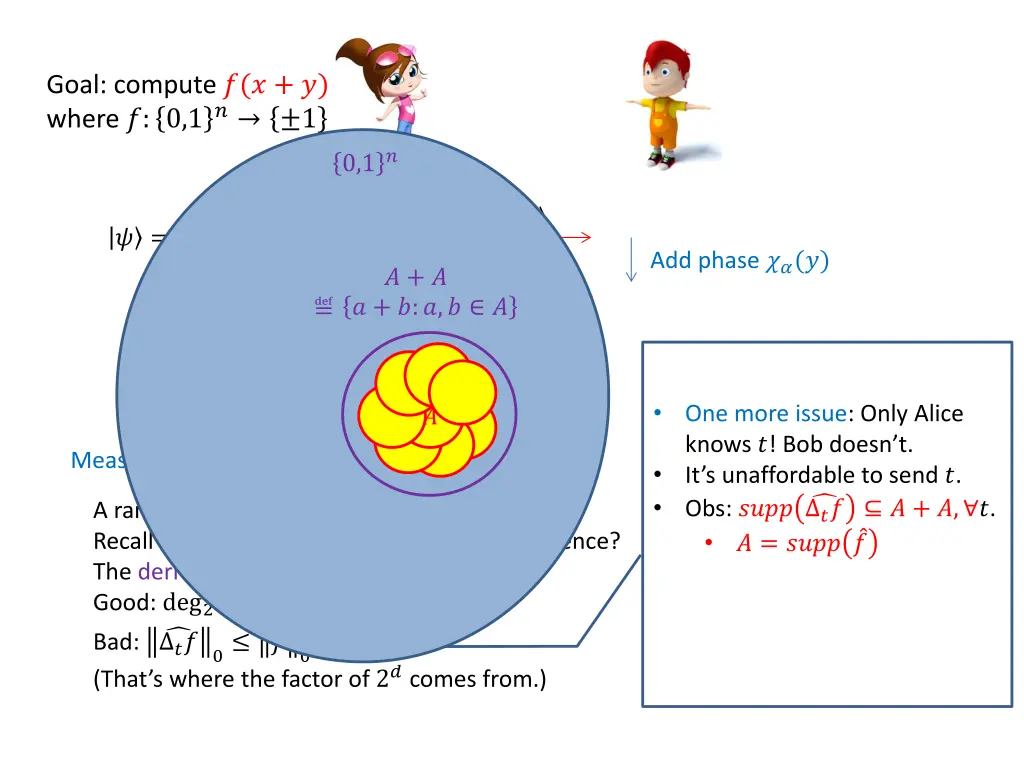
Goal: compute ?(? + ?) where ?: 0,1? 1 0,1? ? ? ? ??? ? ? ? = |+ Add phase ??(?) ? ? ? ? + ? ? + ?:?,? ? Decoding + Fourier 0 + ?(? + ? + ?) 1 ? 2 One more issue: Only Alice knows ?! Bob doesn t. It s unaffordable to send ?. Obs: ???? ?? ? + ?, ?. ? = ???? ? ? ? Measure{|+ ,| } Measure ? A random ? 0,1? and ?(? + ? + ?). Recall our target: ?(? + ?). What s the difference? The derivative: ?? ? = ? ? + ? ?(?). Good: deg2( ??) deg2(?) 1. Bad: ?? ? 0 (That s where the factor of 2? comes from.) 2. 0
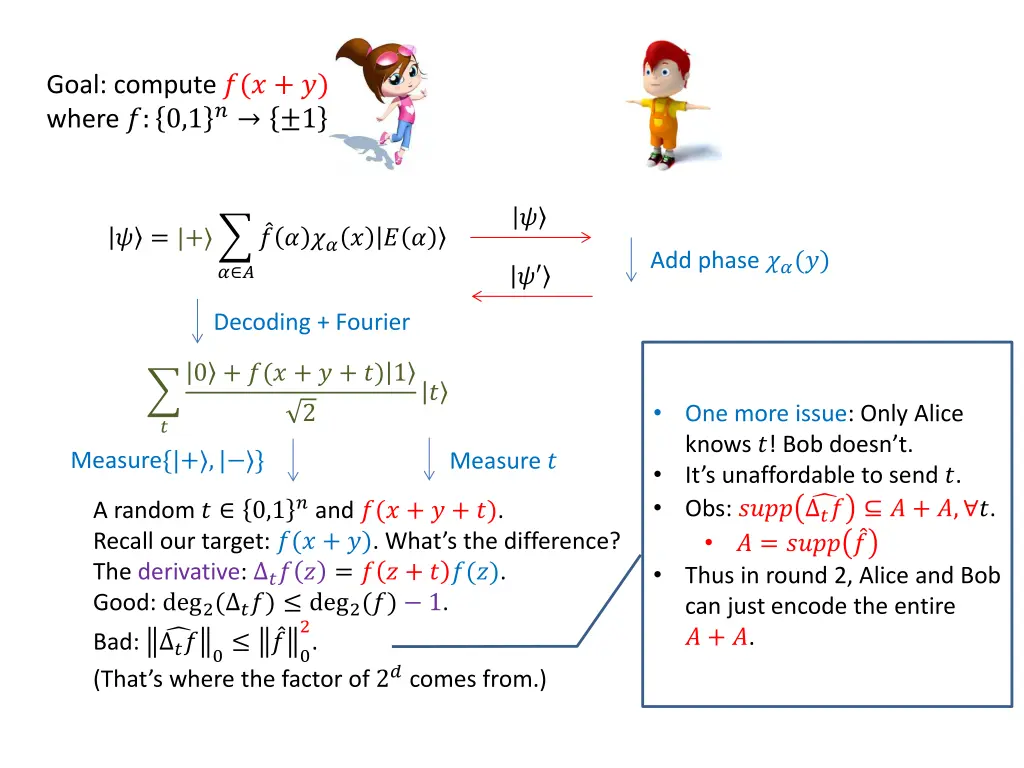
Goal: compute ?(? + ?) where ?: 0,1? 1 ? ? ? ??? ? ? ? = |+ Add phase ??(?) ? ? ? Decoding + Fourier 0 + ?(? + ? + ?) 1 ? 2 One more issue: Only Alice knows ?! Bob doesn t. It s unaffordable to send ?. Obs: ???? ?? ? + ?, ?. ? = ???? ? Thus in round 2, Alice and Bob can just encode the entire ? + ?. ? Measure{|+ ,| } Measure ? A random ? 0,1? and ?(? + ? + ?). Recall our target: ?(? + ?). What s the difference? The derivative: ?? ? = ? ? + ? ?(?). Good: deg2( ??) deg2(?) 1. Bad: ?? ? 0 (That s where the factor of 2? comes from.) 2. 0