Real-time Ultrasonic Imaging with Total Focusing Method
This report delves into the Real-time Total Focusing Method for Ultrasonic Imaging of Multilayered Objects, discussing concepts such as Full Matrix Capture, Region-Division TFM, new methods for point of incidence calculation, and more. Dive into the study for insights into ultrasonic imaging techniques.

Download Presentation

Please find below an Image/Link to download the presentation.
The content on the website is provided AS IS for your information and personal use only. It may not be sold, licensed, or shared on other websites without obtaining consent from the author.If you encounter any issues during the download, it is possible that the publisher has removed the file from their server.
You are allowed to download the files provided on this website for personal or commercial use, subject to the condition that they are used lawfully. All files are the property of their respective owners.
The content on the website is provided AS IS for your information and personal use only. It may not be sold, licensed, or shared on other websites without obtaining consent from the author.
E N D
Presentation Transcript
ASTHMA WITH HYPERTENSION Case presentation B.Manoj Kumar Pharm.D V Year
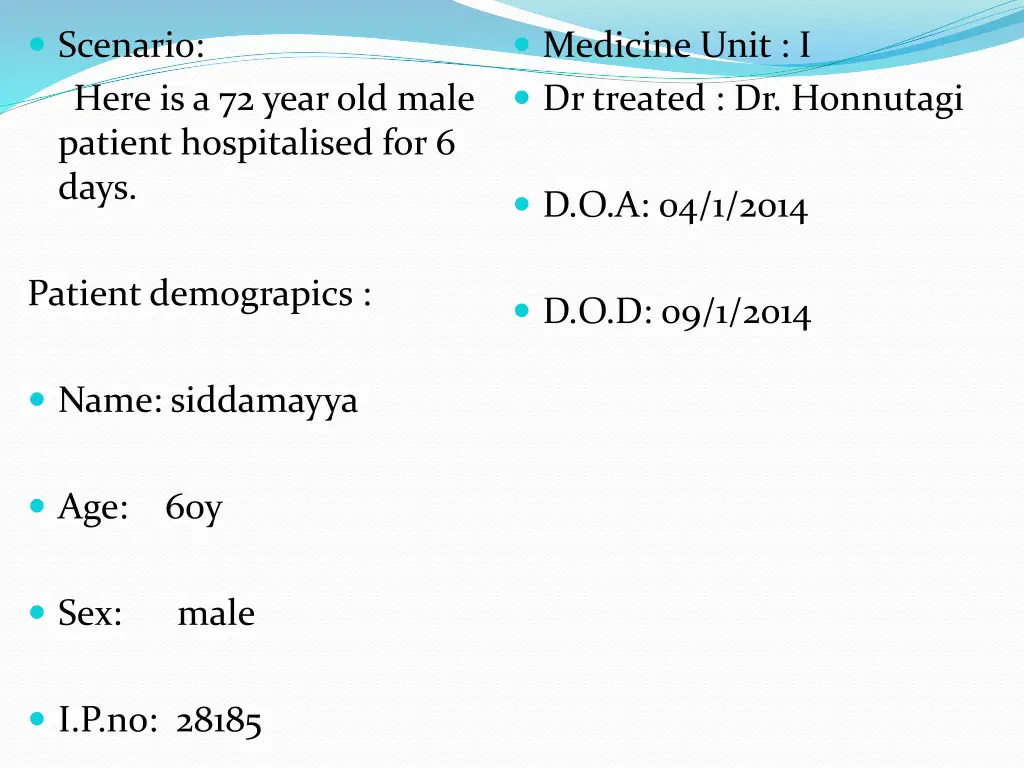
Scenario: Here is a 72 year old male patient hospitalised for 6 days. Medicine Unit : I Dr treated : Dr. Honnutagi D.O.A: 04/1/2014 Patient demograpics : D.O.D: 09/1/2014 Name: siddamayya Age: 60y Sex: male I.P.no: 28185
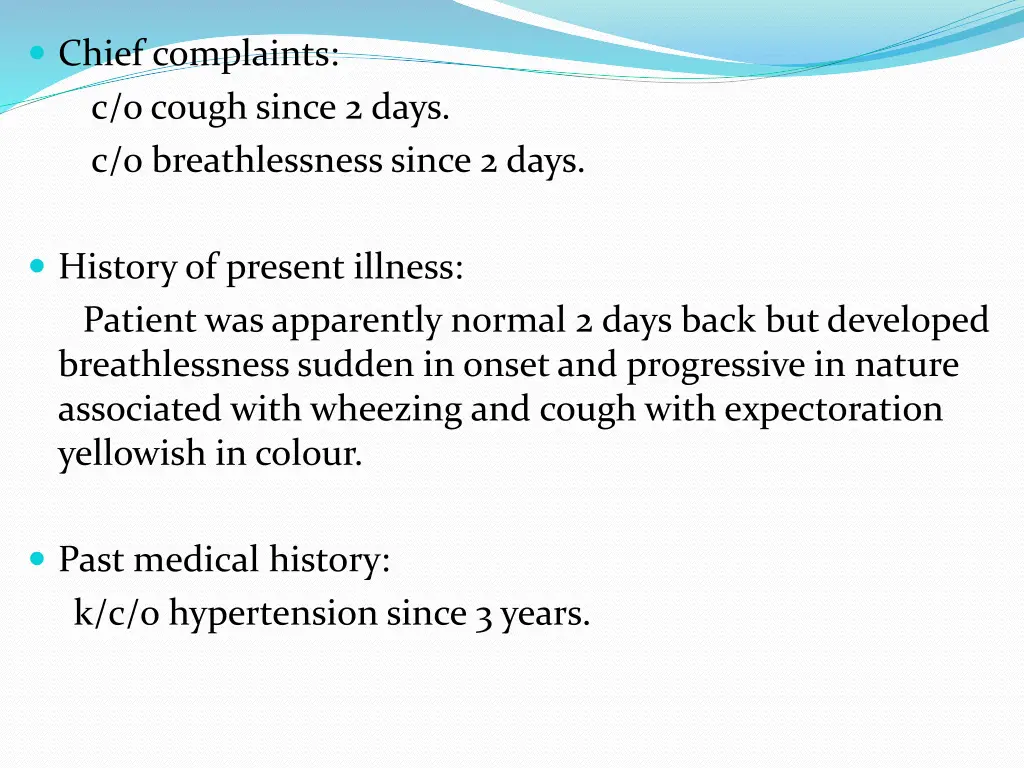
Chief complaints: c/o cough since 2 days. c/o breathlessness since 2 days. History of present illness: Patient was apparently normal 2 days back but developed breathlessness sudden in onset and progressive in nature associated with wheezing and cough with expectoration yellowish in colour. Past medical history: k/c/o hypertension since 3 years.
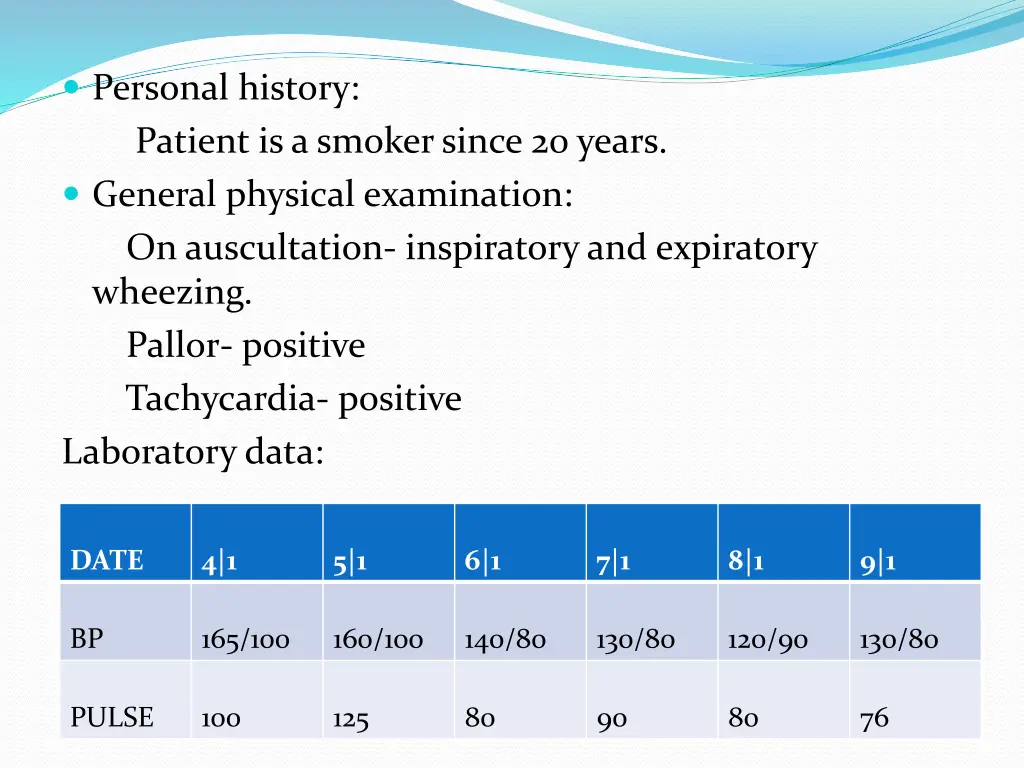
Personal history: Patient is a smoker since 20 years. General physical examination: On auscultation- inspiratory and expiratory wheezing. Pallor- positive Tachycardia- positive Laboratory data: DATE 4|1 5|1 6|1 7|1 8|1 9|1 BP 165/100 160/100 140/80 130/80 120/90 130/80 PULSE 100 125 80 90 80 76
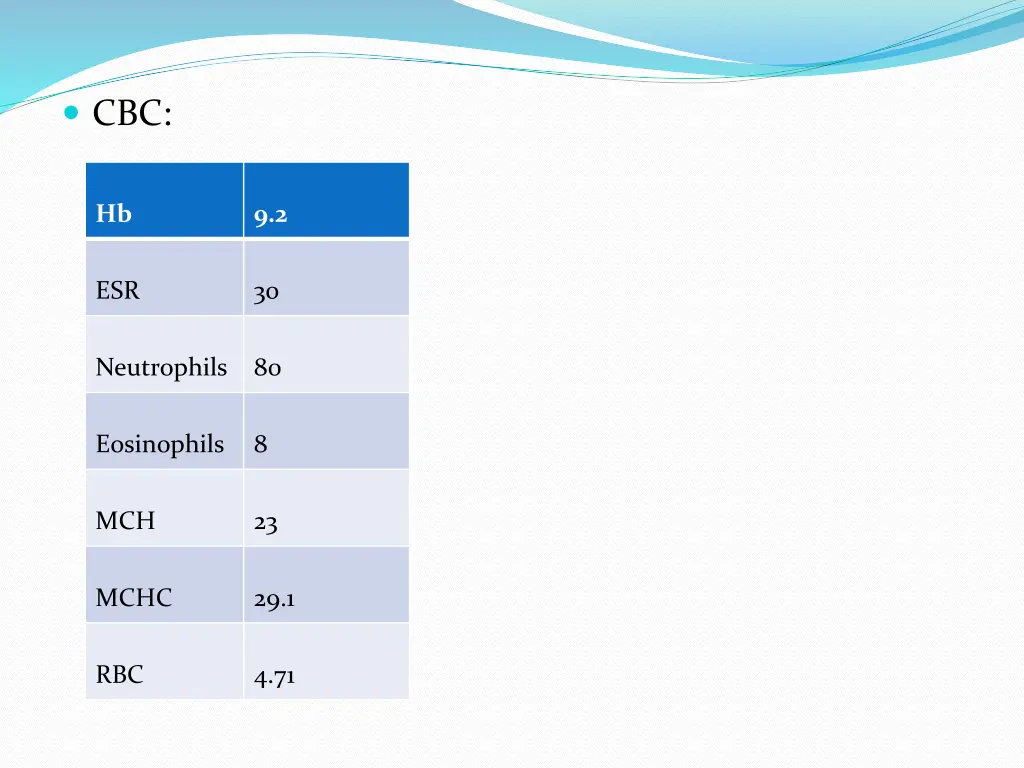
CBC: Hb 9.2 ESR 30 Neutrophils 80 Eosinophils 8 MCH 23 MCHC 29.1 RBC 4.71
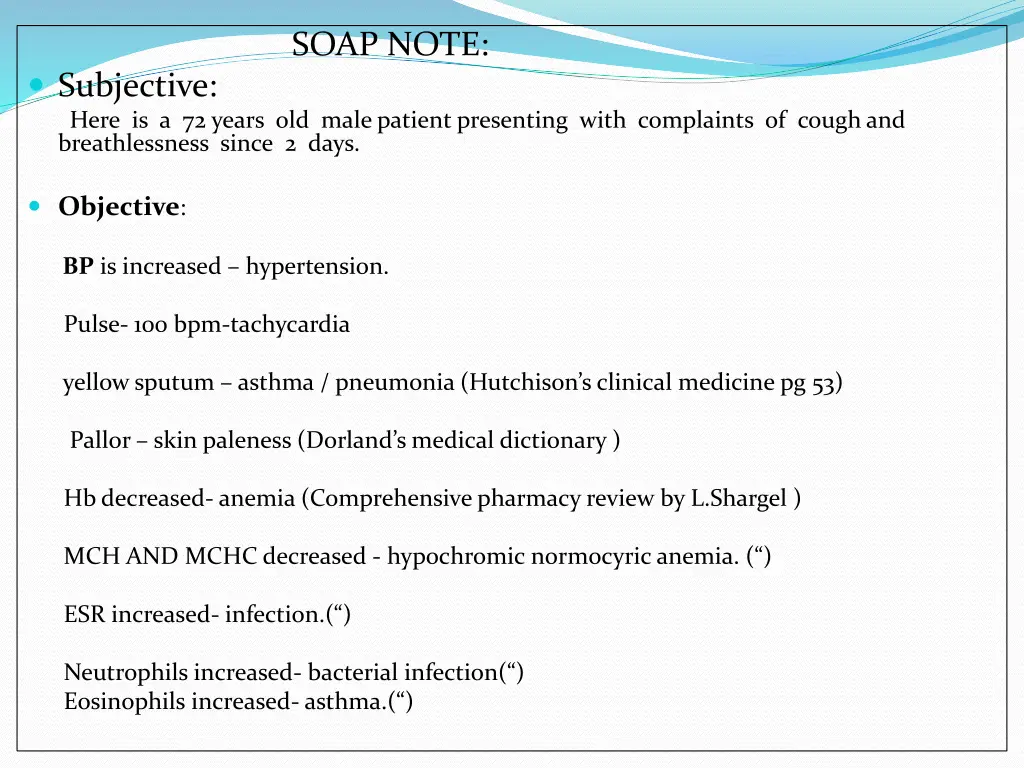
SOAP NOTE: Subjective: Here is a 72 years old male patient presenting with complaints of cough and breathlessness since 2 days. Objective: BP is increased hypertension. Pulse- 100 bpm-tachycardia yellow sputum asthma / pneumonia (Hutchison s clinical medicine pg 53) Pallor skin paleness (Dorland s medical dictionary ) Hb decreased- anemia (Comprehensive pharmacy review by L.Shargel ) MCH AND MCHC decreased - hypochromic normocyric anemia. ( ) ESR increased- infection.( ) Neutrophils increased- bacterial infection( ) Eosinophils increased- asthma.( )
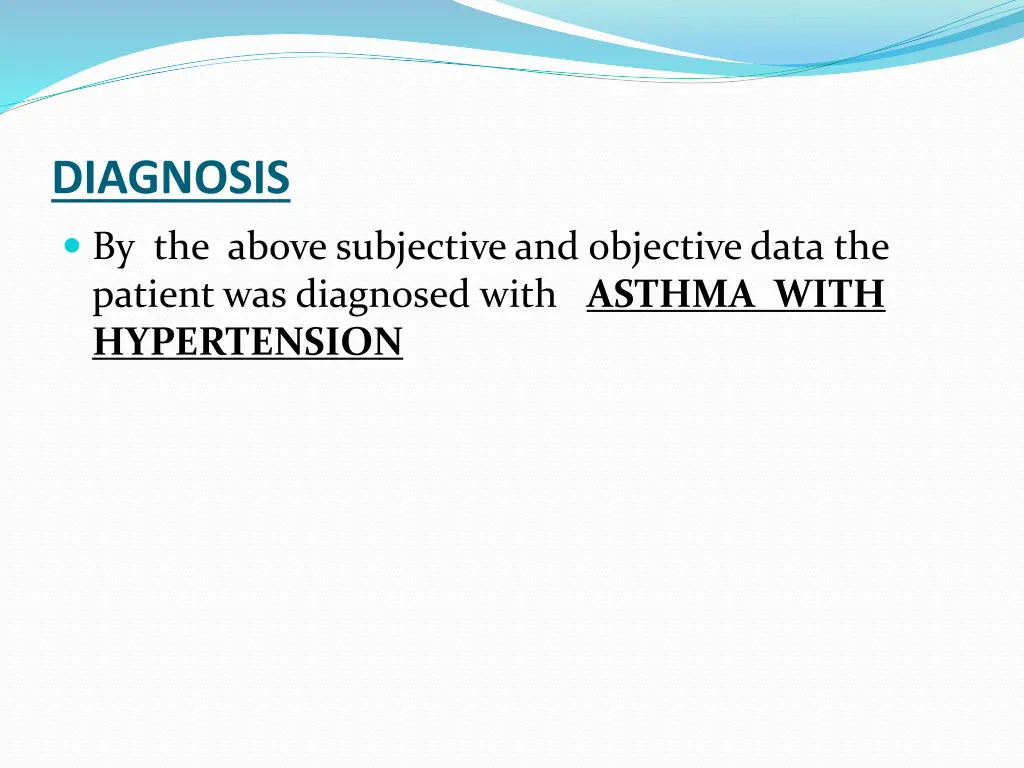
DIAGNOSIS By the above subjective and objective data the patient was diagnosed with ASTHMA WITH HYPERTENSION
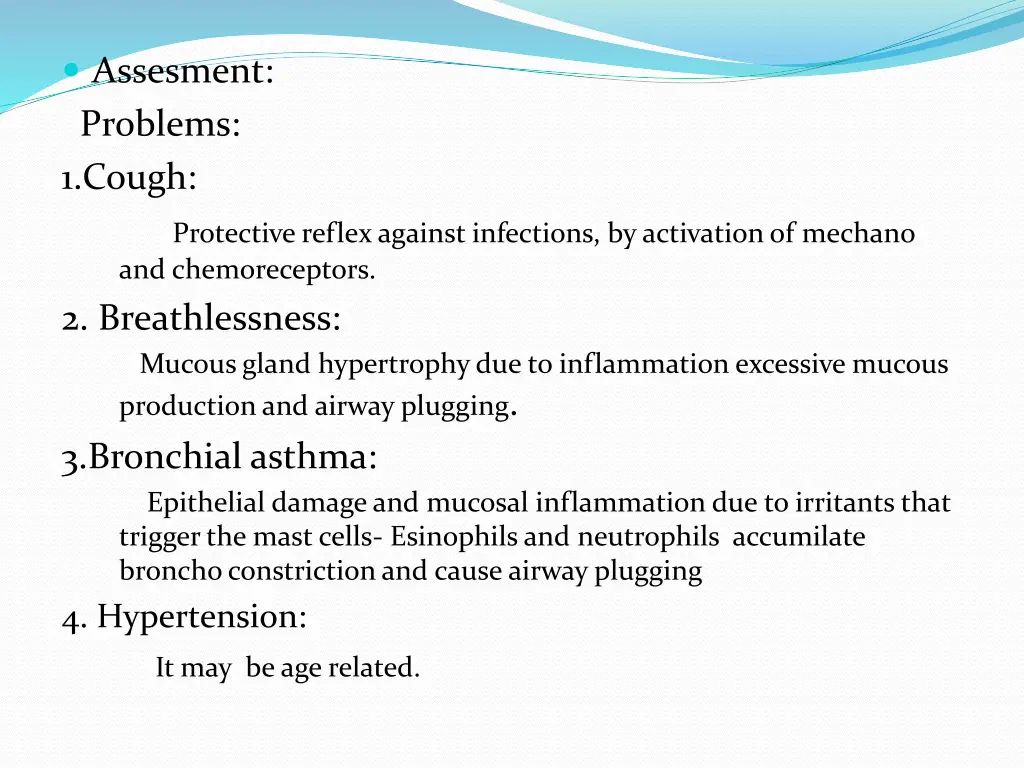
Assesment: Problems: 1.Cough: Protective reflex against infections, by activation of mechano and chemoreceptors. 2. Breathlessness: Mucous gland hypertrophy due to inflammation excessive mucous production and airway plugging. 3.Bronchial asthma: Epithelial damage and mucosal inflammation due to irritants that trigger the mast cells- Esinophils and neutrophils accumilate broncho constriction and cause airway plugging 4. Hypertension: It may be age related.
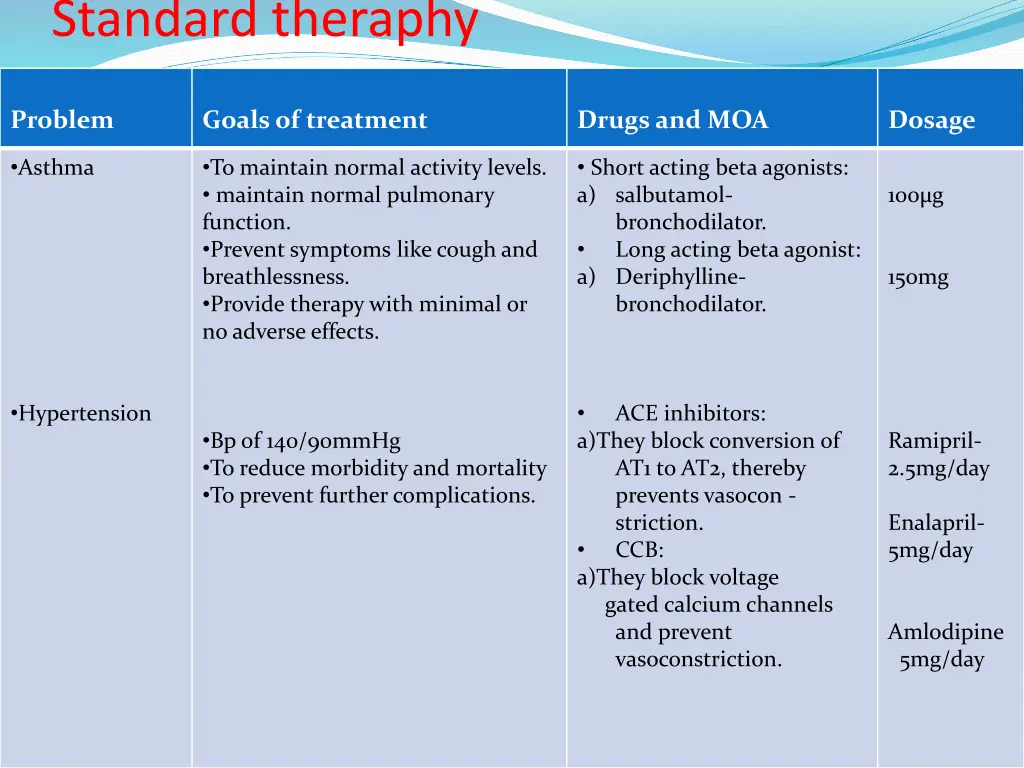
Standard theraphy Problem Goals of treatment Drugs and MOA Dosage Asthma To maintain normal activity levels. maintain normal pulmonary function. Prevent symptoms like cough and breathlessness. Provide therapy with minimal or no adverse effects. Short acting beta agonists: a) salbutamol- bronchodilator. Long acting beta agonist: a) Deriphylline- bronchodilator. 100 g 150mg Hypertension a)They block conversion of AT1 to AT2, thereby prevents vasocon - striction. CCB: a)They block voltage gated calcium channels and prevent vasoconstriction. ACE inhibitors: Bp of 140/90mmHg To reduce morbidity and mortality To prevent further complications. Ramipril- 2.5mg/day Enalapril- 5mg/day Amlodipine 5mg/day
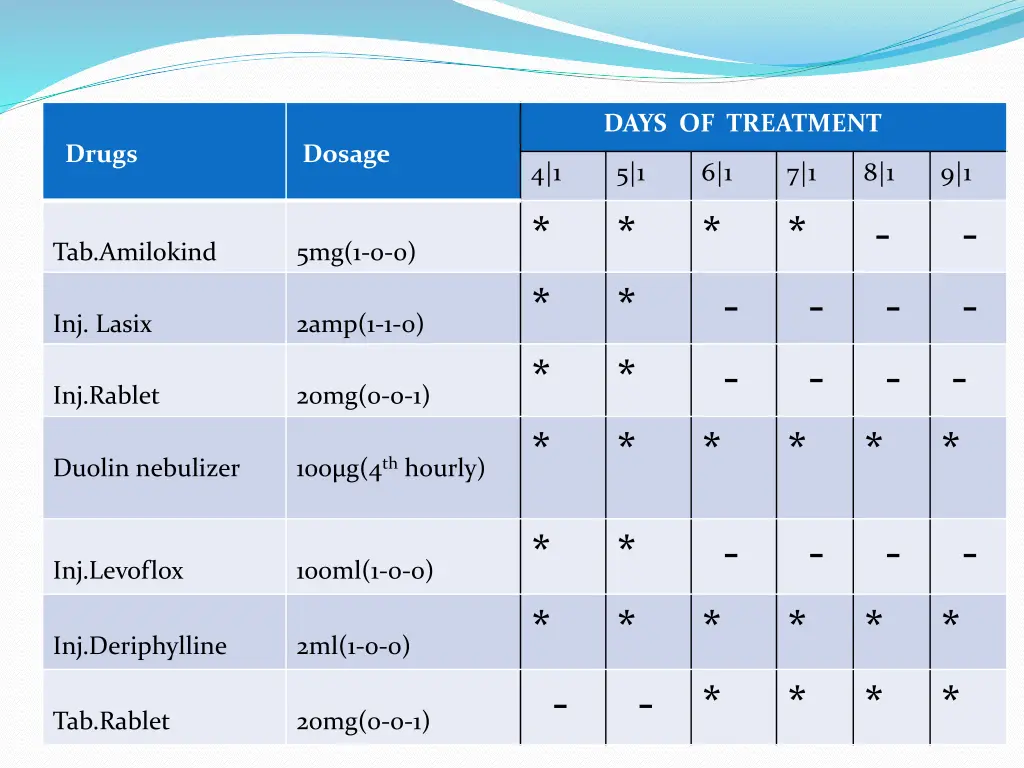
DAYS OF TREATMENT Drugs Dosage 4|1 5|1 6|1 7|1 8|1 9|1 * * * * - - Tab.Amilokind 5mg(1-0-0) * * - - - - Inj. Lasix 2amp(1-1-0) * * - - - - Inj.Rablet 20mg(0-0-1) * * * * * * 100 g(4th hourly) Duolin nebulizer * * - - - - Inj.Levoflox 100ml(1-0-0) * * * * * * Inj.Deriphylline 2ml(1-0-0) - - * * * * Tab.Rablet 20mg(0-0-1)
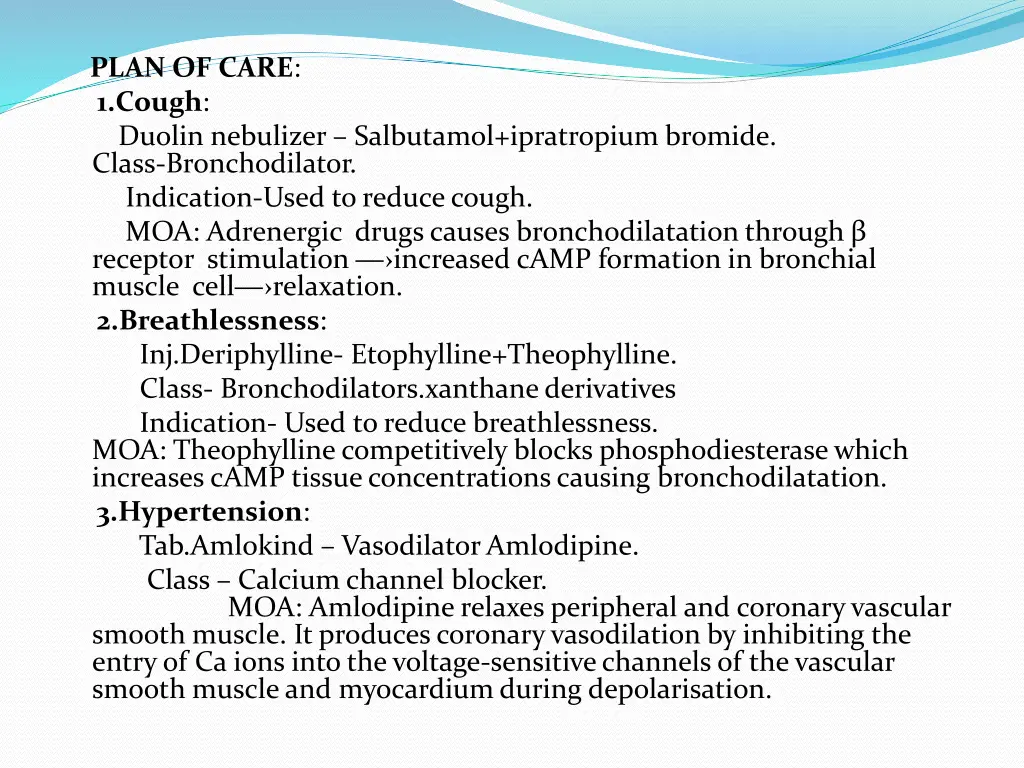
PLAN OF CARE: 1.Cough: Duolin nebulizer Salbutamol+ipratropium bromide. Class-Bronchodilator. Indication-Used to reduce cough. MOA: Adrenergic drugs causes bronchodilatation through receptor stimulation increased cAMP formation in bronchial muscle cell relaxation. 2.Breathlessness: Inj.Deriphylline- Etophylline+Theophylline. Class- Bronchodilators.xanthane derivatives Indication- Used to reduce breathlessness. MOA: Theophylline competitively blocks phosphodiesterase which increases cAMP tissue concentrations causing bronchodilatation. 3.Hypertension: Tab.Amlokind Vasodilator Amlodipine. Class Calcium channel blocker. MOA: Amlodipine relaxes peripheral and coronary vascular smooth muscle. It produces coronary vasodilation by inhibiting the entry of Ca ions into the voltage-sensitive channels of the vascular smooth muscle and myocardium during depolarisation.
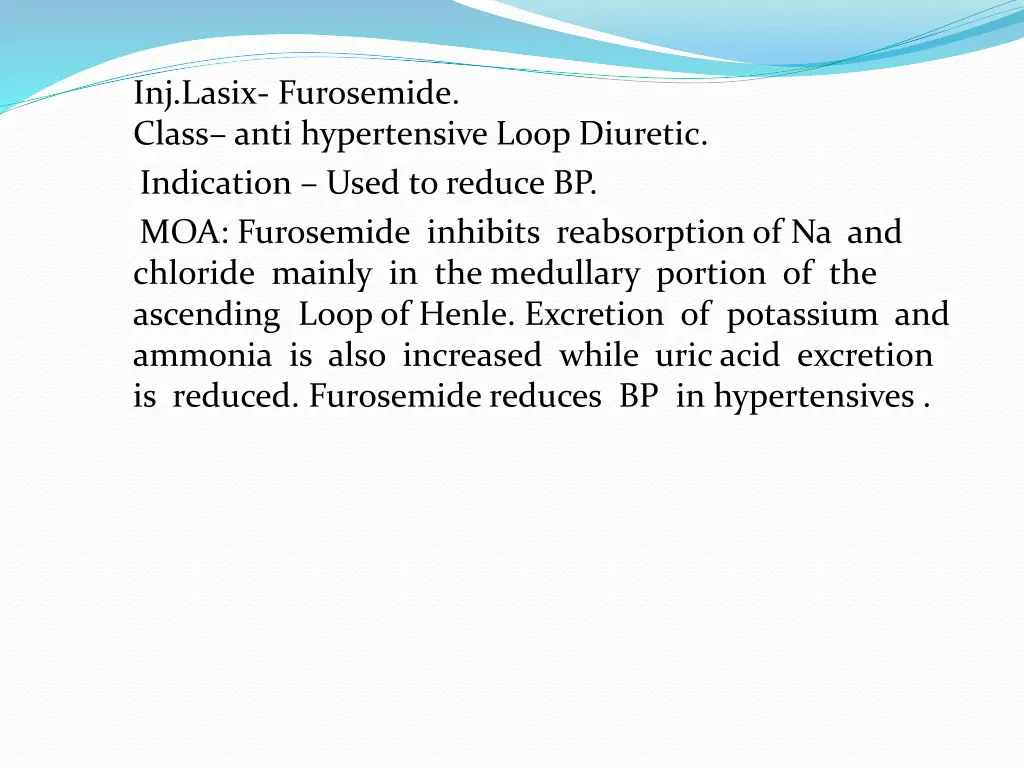
Inj.Lasix- Furosemide. Class anti hypertensive Loop Diuretic. Indication Used to reduce BP. MOA: Furosemide inhibits reabsorption of Na and chloride mainly in the medullary portion of the ascending Loop of Henle. Excretion of potassium and ammonia is also increased while uric acid excretion is reduced. Furosemide reduces BP in hypertensives .
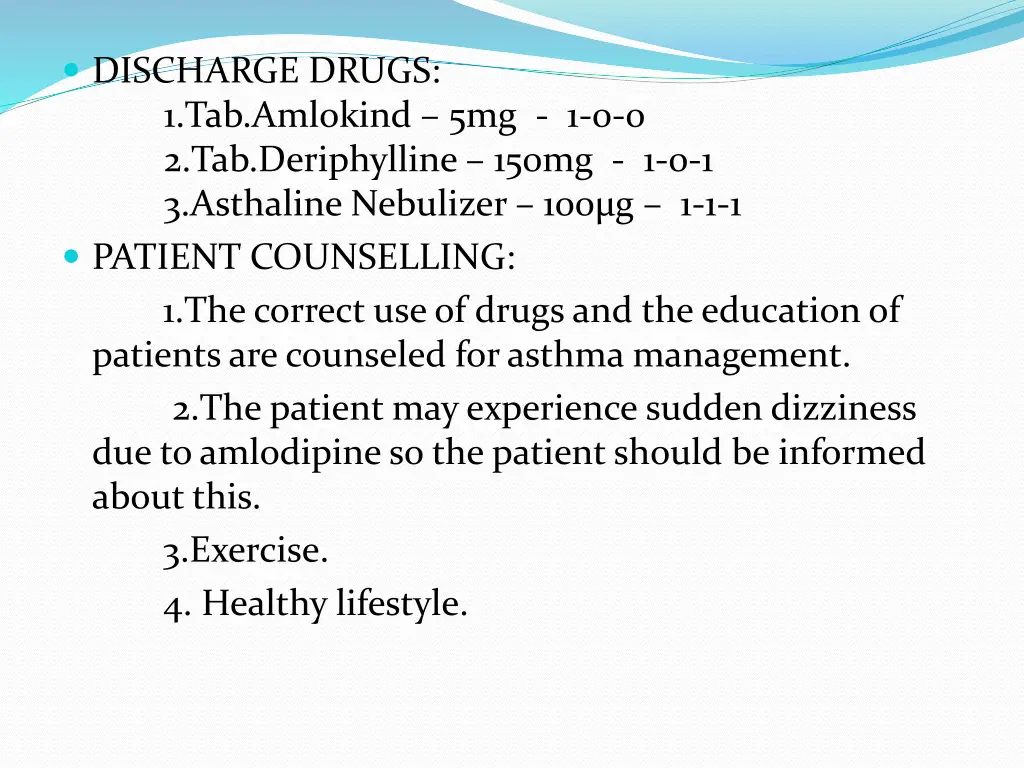
DISCHARGE DRUGS: 1.Tab.Amlokind 5mg - 1-0-0 2.Tab.Deriphylline 150mg - 1-0-1 3.Asthaline Nebulizer 100 g 1-1-1 PATIENT COUNSELLING: 1.The correct use of drugs and the education of patients are counseled for asthma management. 2.The patient may experience sudden dizziness due to amlodipine so the patient should be informed about this. 3.Exercise. 4. Healthy lifestyle.