Regulating and Facilitating Intra-Africa Tourism
Contextualizing the African tourism industry, regional tourism in Africa, tourism policies and protocols in Africa, tourism value chains in Africa, best practice approaches, and lessons from the EU. The importance of tourism in Africa is growing, with key insights on the top 10 fastest-growing tourism economies. Tourism is a driver of economic growth, as evidenced by the growth rates in Africa over the years. The sector is a significant employer, particularly notable in the top ten member states. Africa's share of global tourism GDP has been relatively small and declining, highlighting areas for potential improvement in the industry.

Download Presentation

Please find below an Image/Link to download the presentation.
The content on the website is provided AS IS for your information and personal use only. It may not be sold, licensed, or shared on other websites without obtaining consent from the author.If you encounter any issues during the download, it is possible that the publisher has removed the file from their server.
You are allowed to download the files provided on this website for personal or commercial use, subject to the condition that they are used lawfully. All files are the property of their respective owners.
The content on the website is provided AS IS for your information and personal use only. It may not be sold, licensed, or shared on other websites without obtaining consent from the author.
E N D
Presentation Transcript
Regulating and Facilitating Intra-Africa Tourism
Contextualizing the African tourism industry Regional tourism in Africa Tourism policies and protocols in Africa Tourism value chains in Africa Best practice approaches Lessons from EU Key messages and policy recommendations Outline
CONTEXTUALIZING AFRICAN TOURISM
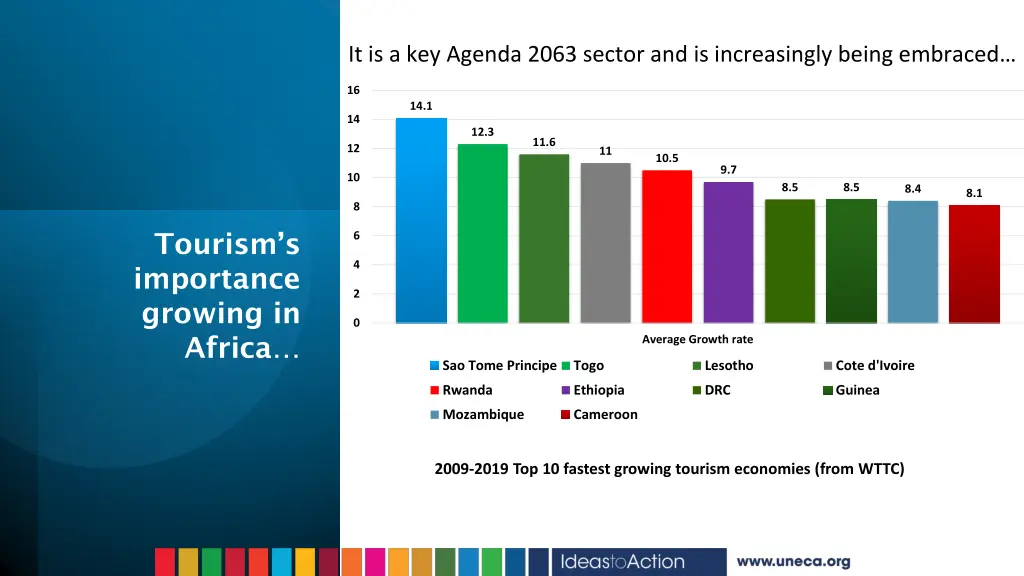
It is a key Agenda 2063 sector and is increasingly being embraced 16 14.1 14 12.3 11.6 12 11 10.5 9.7 10 8.5 8.5 8.4 8.1 8 Tourism s importance growing in Africa 6 4 2 0 Average Growth rate Sao Tome Principe Togo Lesotho Cote d'Ivoire Rwanda Ethiopia DRC Guinea Mozambique Cameroon 2009-2019 Top 10 fastest growing tourism economies (from WTTC)
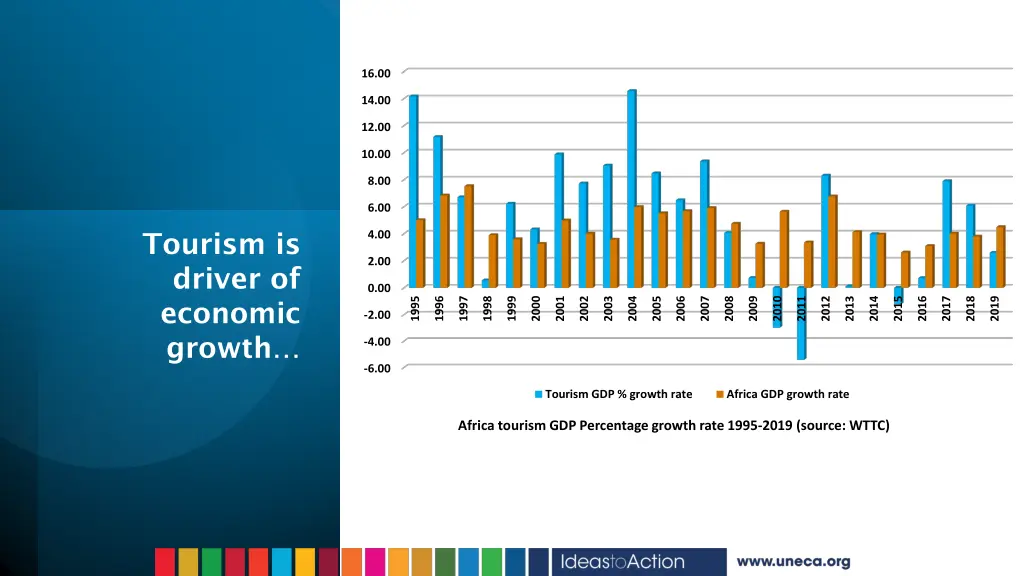
16.00 14.00 12.00 10.00 8.00 6.00 Tourism is driver of economic growth 4.00 2.00 0.00 2001 2018 1995 1996 1997 1998 1999 2000 2002 2003 2004 2005 2006 2007 2008 2009 2010 2011 2012 2013 2014 2015 2016 2017 2019 -2.00 -4.00 -6.00 Tourism GDP % growth rate Africa GDP growth rate Africa tourism GDP Percentage growth rate 1995-2019 (source: WTTC)
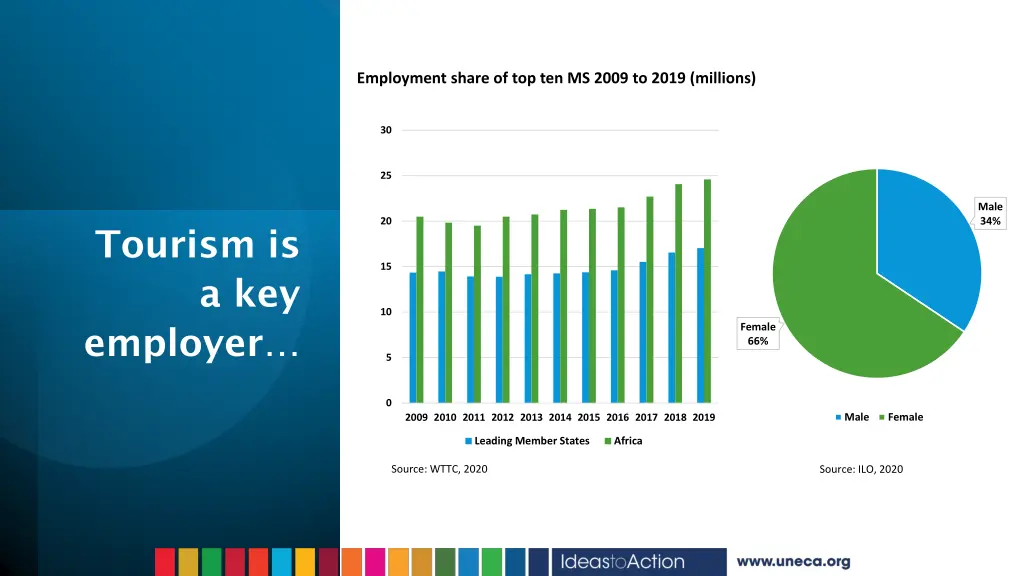
Employment share of top ten MS 2009 to 2019 (millions) 30 25 Male 34% 20 Tourism is a key employer 15 10 Female 66% 5 0 Male Female 2009 2010 2011 2012 2013 2014 2015 2016 2017 2018 2019 Leading Member States Africa Source: WTTC, 2020 Source: ILO, 2020
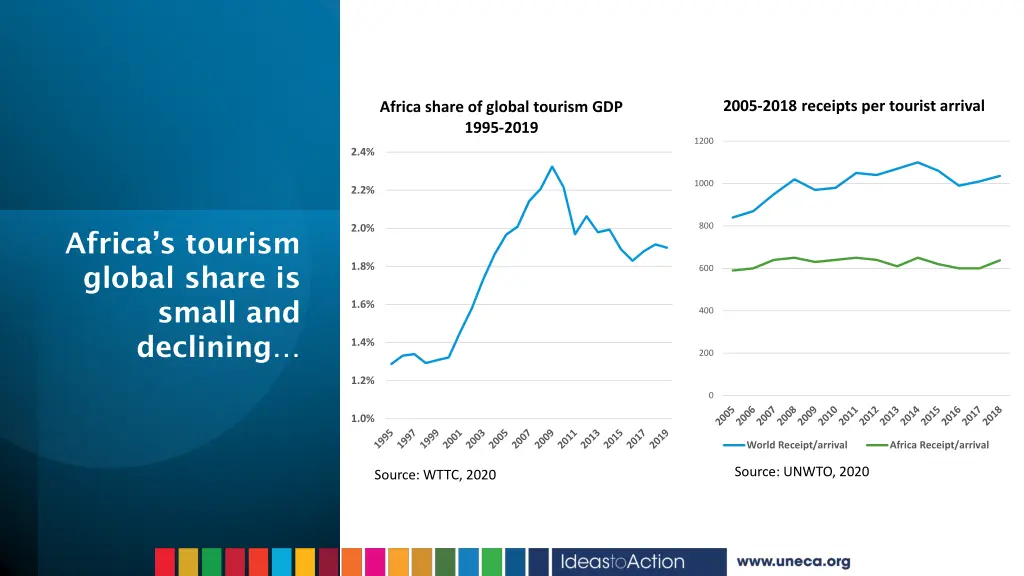
2005-2018 receipts per tourist arrival Africa share of global tourism GDP 1995-2019 1200 2.4% 1000 2.2% 800 2.0% Africa s tourism global share is small and declining 1.8% 600 1.6% 400 1.4% 200 1.2% 0 1.0% World Receipt/arrival Africa Receipt/arrival Source: UNWTO, 2020 Source: WTTC, 2020
REGIONAL TOURISM IN AFRICA
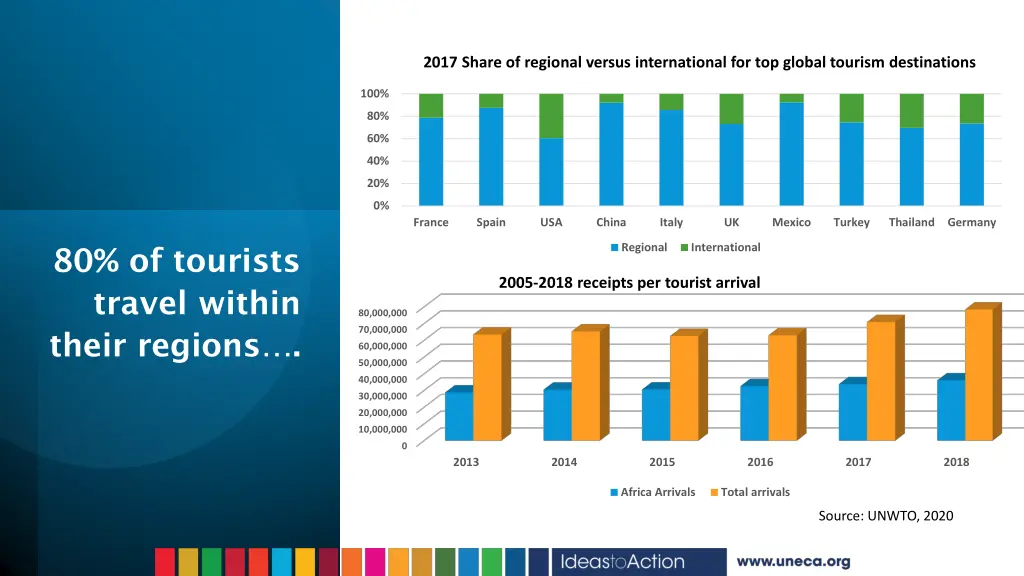
2017 Share of regional versus international for top global tourism destinations 100% 80% 60% 40% 20% 0% France Spain USA China Italy UK Mexico Turkey Thailand Germany 80% of tourists travel within their regions . Regional International 2005-2018 receipts per tourist arrival 80,000,000 70,000,000 60,000,000 50,000,000 40,000,000 30,000,000 20,000,000 10,000,000 0 2013 2014 2015 2016 2017 2018 Africa Arrivals Total arrivals Source: UNWTO, 2020
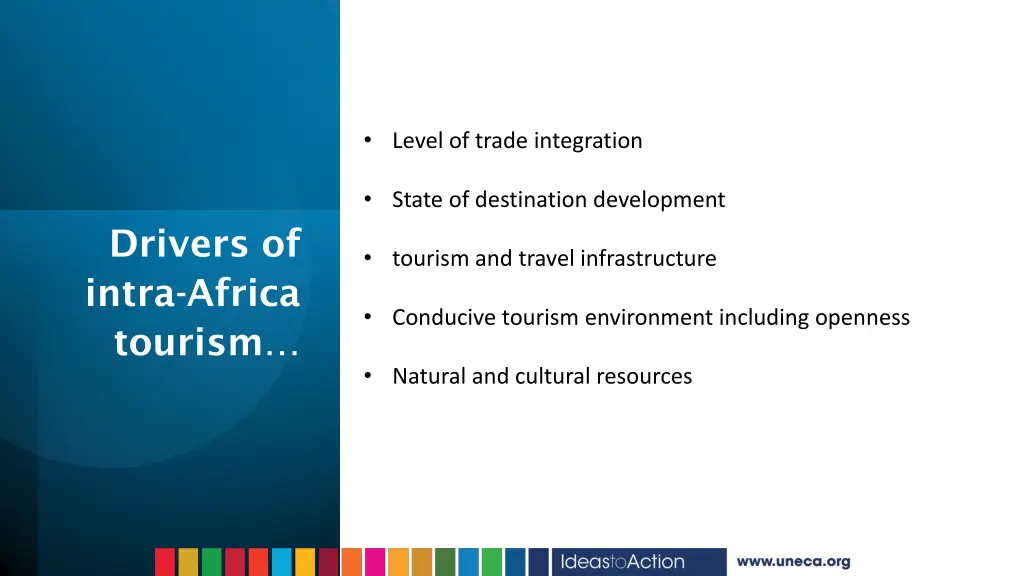
Level of trade integration State of destination development Drivers of intra-Africa tourism tourism and travel infrastructure Conducive tourism environment including openness Natural and cultural resources
TOURISM POLICIES AND PROTOCOLS IN AFRICA
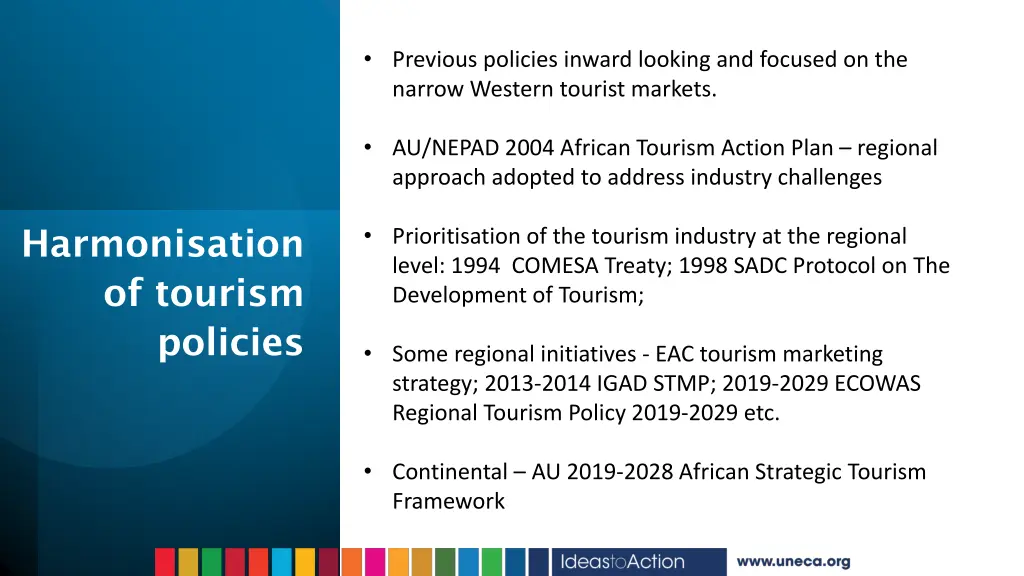
Previous policies inward looking and focused on the narrow Western tourist markets. AU/NEPAD 2004 African Tourism Action Plan regional approach adopted to address industry challenges Harmonisation of tourism policies Prioritisation of the tourism industry at the regional level: 1994 COMESA Treaty; 1998 SADC Protocol on The Development of Tourism; Some regional initiatives - EAC tourism marketing strategy; 2013-2014 IGAD STMP; 2019-2029 ECOWAS Regional Tourism Policy 2019-2029 etc. Continental AU 2019-2028 African Strategic Tourism Framework
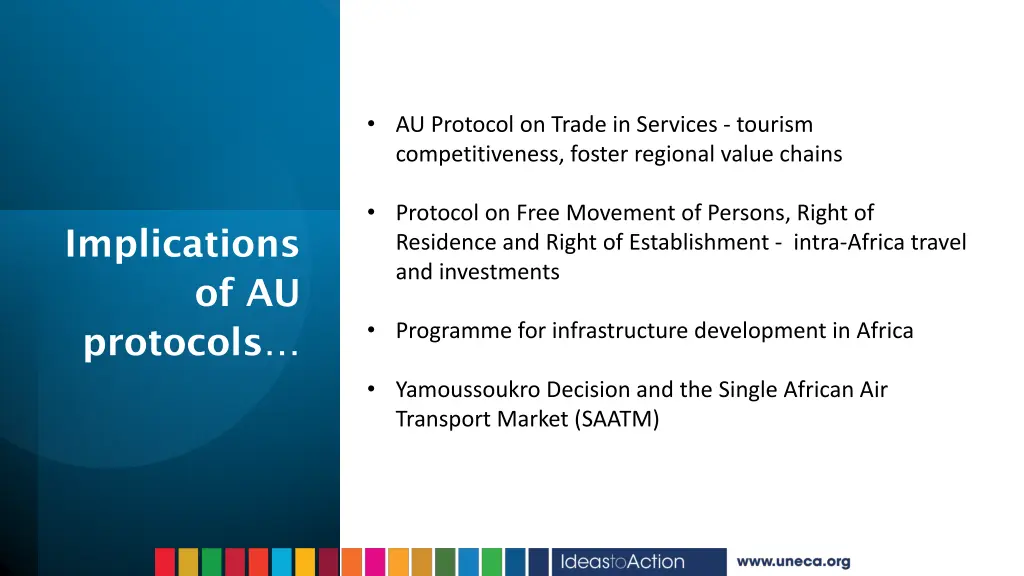
AU Protocol on Trade in Services - tourism competitiveness, foster regional value chains Protocol on Free Movement of Persons, Right of Residence and Right of Establishment - intra-Africa travel and investments Implications of AU Programme for infrastructure development in Africa protocols Yamoussoukro Decision and the Single African Air Transport Market (SAATM)
TOURISM VALUE CHAINS IN AFRICA
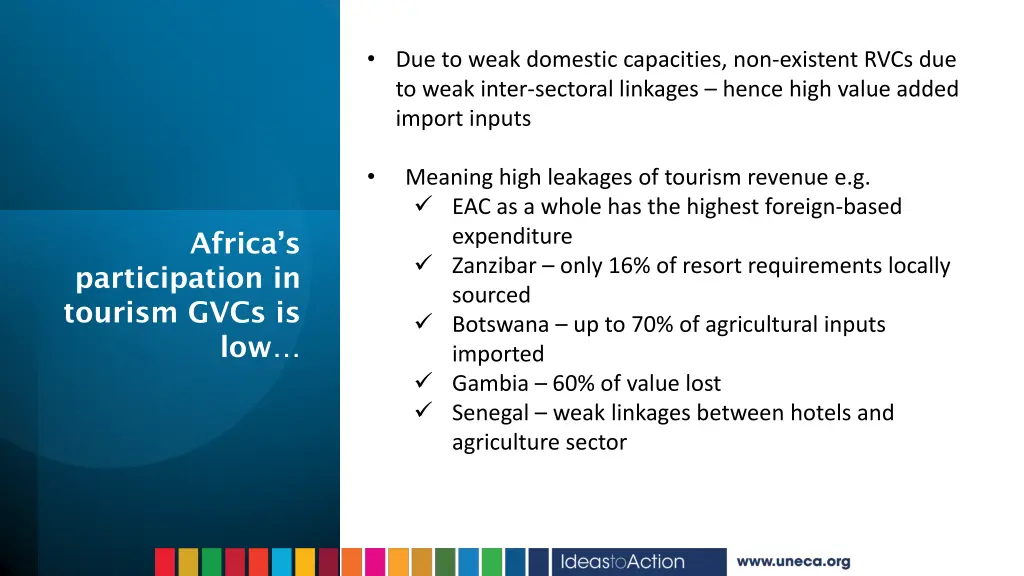
Due to weak domestic capacities, non-existent RVCs due to weak inter-sectoral linkages hence high value added import inputs Meaning high leakages of tourism revenue e.g. EAC as a whole has the highest foreign-based expenditure Zanzibar only 16% of resort requirements locally sourced Botswana up to 70% of agricultural inputs imported Gambia 60% of value lost Senegal weak linkages between hotels and agriculture sector Africa s participation in tourism GVCs is low
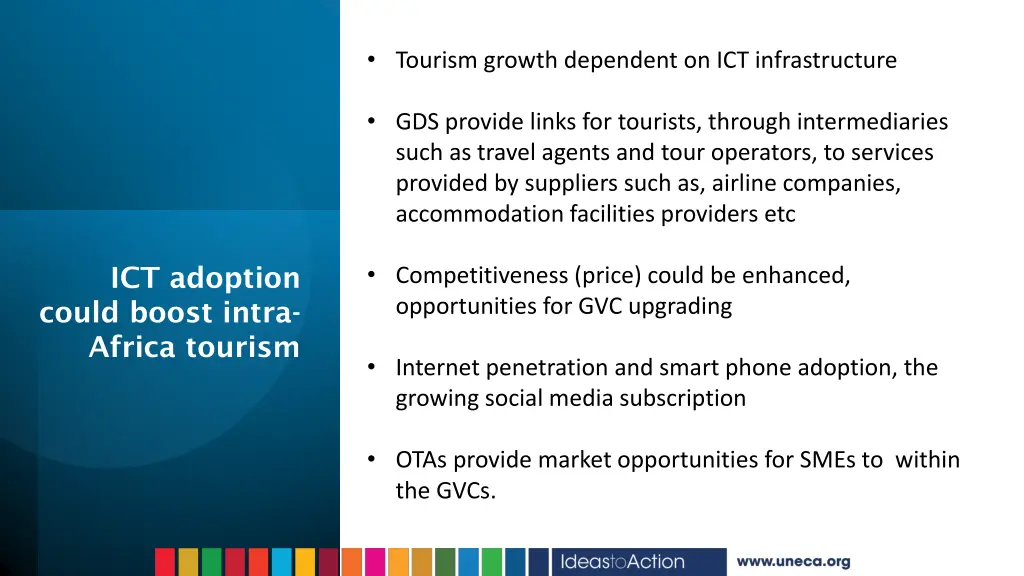
Tourism growth dependent on ICT infrastructure GDS provide links for tourists, through intermediaries such as travel agents and tour operators, to services provided by suppliers such as, airline companies, accommodation facilities providers etc Competitiveness (price) could be enhanced, opportunities for GVC upgrading ICT adoption could boost intra- Africa tourism Internet penetration and smart phone adoption, the growing social media subscription OTAs provide market opportunities for SMEs to within the GVCs.
BEST PRACTICE APPROACHES FOR REGIONAL TOURISM LESSONS FROM EU
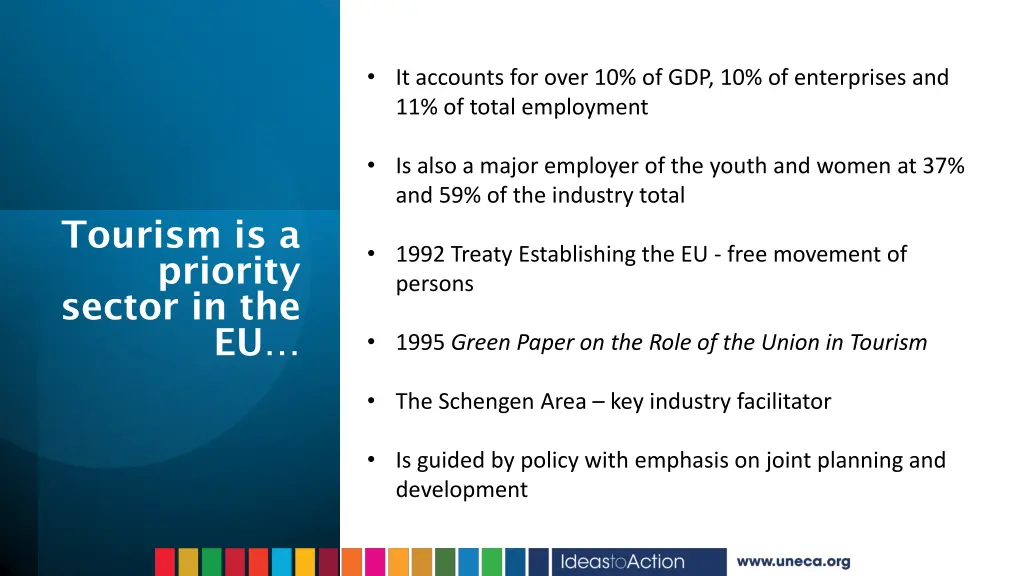
It accounts for over 10% of GDP, 10% of enterprises and 11% of total employment Is also a major employer of the youth and women at 37% and 59% of the industry total Tourism is a priority sector in the 1992 Treaty Establishing the EU - free movement of persons EU 1995 Green Paper on the Role of the Union in Tourism The Schengen Area key industry facilitator Is guided by policy with emphasis on joint planning and development
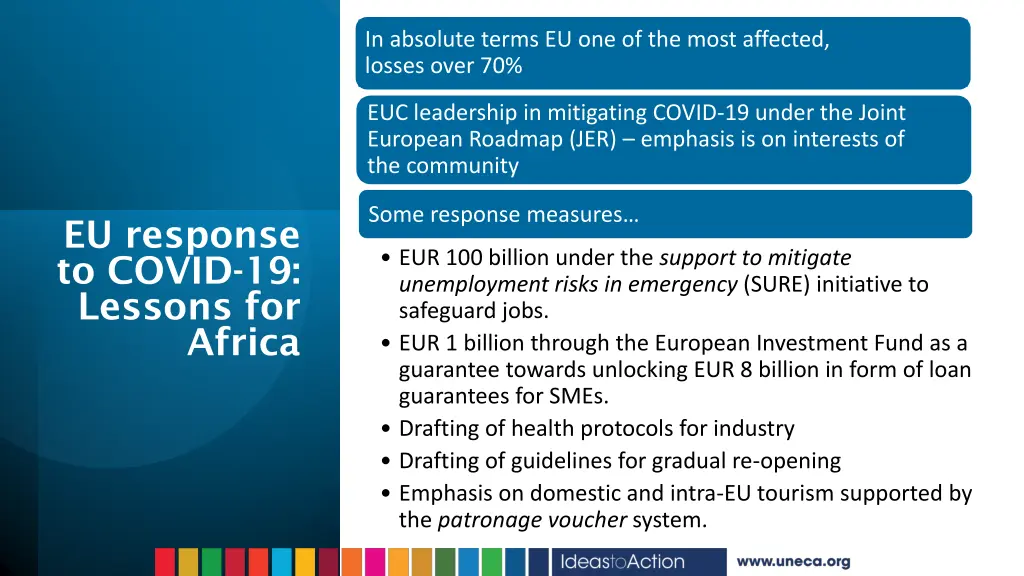
In absolute terms EU one of the most affected, losses over 70% EUC leadership in mitigating COVID-19 under the Joint European Roadmap (JER) emphasis is on interests of the community Some response measures EU response to COVID-19: Lessons for EUR 100 billion under the support to mitigate unemployment risks in emergency (SURE) initiative to safeguard jobs. EUR 1 billion through the European Investment Fund as a guarantee towards unlocking EUR 8 billion in form of loan guarantees for SMEs. Drafting of health protocols for industry Drafting of guidelines for gradual re-opening Emphasis on domestic and intra-EU tourism supported by the patronage voucher system. Africa
KEY MESSAGES AND POLICY RECOMMENDATIONS
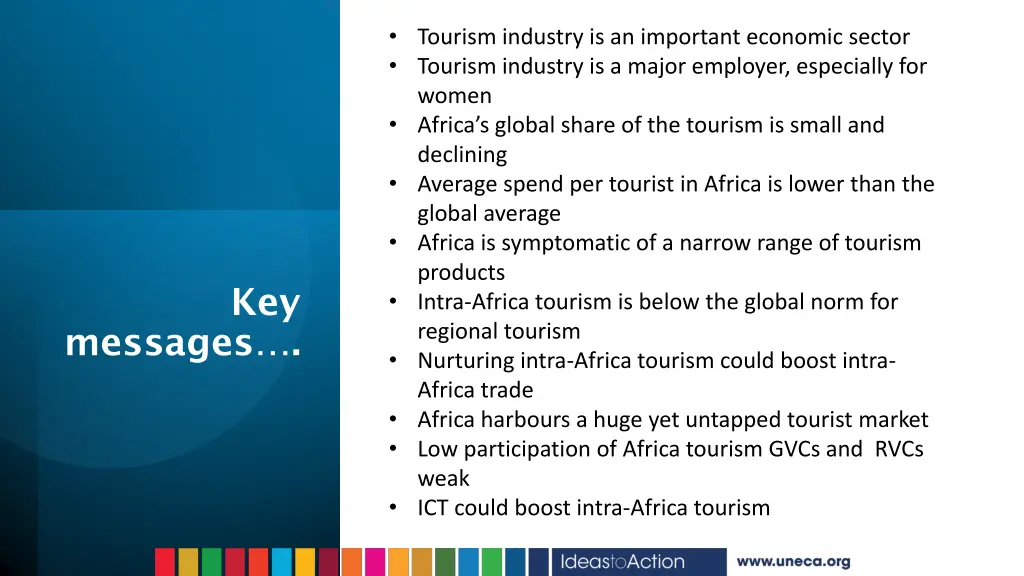
Tourism industry is an important economic sector Tourism industry is a major employer, especially for women Africa s global share of the tourism is small and declining Average spend per tourist in Africa is lower than the global average Africa is symptomatic of a narrow range of tourism products Intra-Africa tourism is below the global norm for regional tourism Nurturing intra-Africa tourism could boost intra- Africa trade Africa harbours a huge yet untapped tourist market Low participation of Africa tourism GVCs and RVCs weak ICT could boost intra-Africa tourism Key messages .
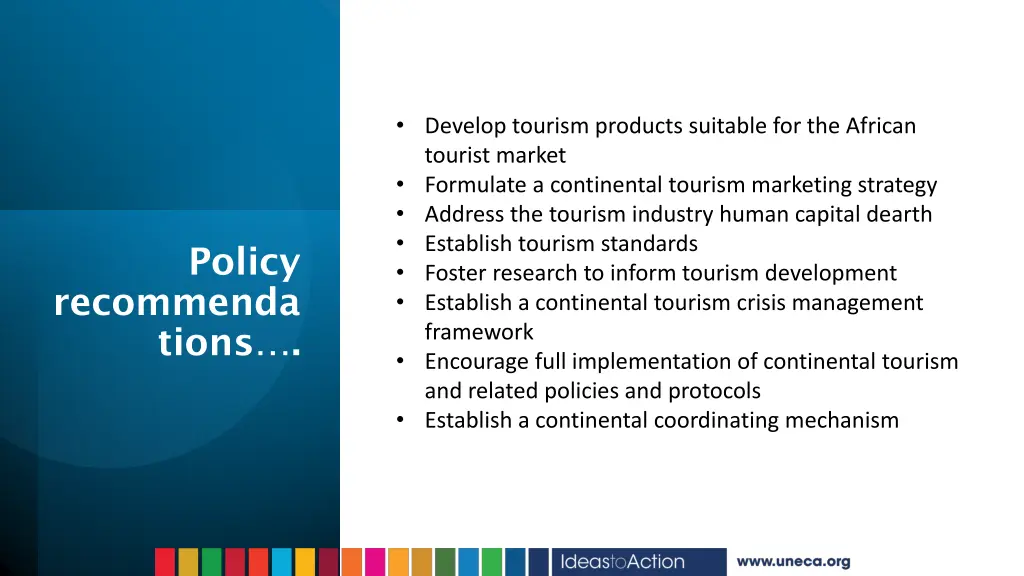
Develop tourism products suitable for the African tourist market Formulate a continental tourism marketing strategy Address the tourism industry human capital dearth Establish tourism standards Foster research to inform tourism development Establish a continental tourism crisis management framework Encourage full implementation of continental tourism and related policies and protocols Establish a continental coordinating mechanism Policy recommenda tions .
THANK YOU! MERCI BEAUCOUP!