Coronary artery disease occurs due to narrowing or occlusion of arteries feeding the heart. High HbA1c levels indicate prolonged high blood sugar, potentially leading to vascular damage, hemodynamic changes, and complications. This study aims to determine the connection between HbA1c and coronary artery disease severity using coronary angiography data from patients.
Please find below an Image/Link to download the presentation.
The content on the website is provided AS IS for your information and personal use only. It may not be sold, licensed, or shared on other websites without obtaining consent from the author. If you encounter any issues during the download, it is possible that the publisher has removed the file from their server.
You are allowed to download the files provided on this website for personal or commercial use, subject to the condition that they are used lawfully. All files are the property of their respective owners.
The content on the website is provided AS IS for your information and personal use only. It may not be sold, licensed, or shared on other websites without obtaining consent from the author.
E N D
Presentation Transcript
THE RELATIONSHIP BETWEEN HBA1C LEVEL AND CORONARY ARTERY DISEASE SEVERITY IN PATIENTS UNDERGOING CORONARY ANGIOGRAPHY Student : Abd lkadir Altunta Mentor : Mahmut Uluganyan
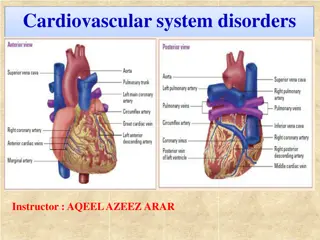
What is coronary artery disease? What is coronary artery disease? Coronary artery disease is the general name of the diseases that occur as a result of narrowing or occlusion of the arteries that feed the heart and called the coronary arteries.
What What is HbA1c? is HbA1c? HbA1c; It is the glycosylated hemoglobin value that allows reaching the 2-3 month average level of blood glucose level. Being high is a sign of high blood sugar for a long time.
Prolonged hyperglycemia triggers vascular wall damage, and hemodynamic changes, inflammatory response and endothelial dysfunction may result in complications. Because of these results, we planned to conduct a study on the connection between HbA1c and coronary artery disease.
What is our goal in this study? What is our goal in this study? Coronary anjiography is a way of showing damage to the coronary arteries. It detects not only the problems reflected in the clinic, but also the damages that are not reflected in the clinic but pose a risk for the patient. In this study, we aimed to determine the relationship between HbA1c value and coronary artery involvement.
Material Material/ /Method Method In our study, we retrospectively recruited patients aged 30-90 who underwent coronary angiography at Bezmialem Vak f University Medical Faculty Hospital between April 2019 and April 2020. The data of the patients were made over the archive data. All analyzes were analyzed and reported at the =0.05 significance level in the IBM SPSS statistics 20.0 program.
Results Results During our study, we screened a patient group of 1233 people. 67.6% are male, 32.4% are female. 64.8% of the patients have hypertension. 15.8% have hyperlipidemia. 42.8% of the patients smoke. In our study with 620 people whose HbA1c value and number of occluded vessels could be determined, we found a significant and positive relationship between HbA1c value and the number of occluded vessels. ( p<0.001 r=0.144)
It was determined that coronary artery disease involvement was more common in men (1.29 0.96) than in women (0.78 0.89). Apart from this, it was observed that there was a significant and negative relationship between HDL value and the number of occluded vessels. ( p<0.001 r=-0.213)
Conclusion Conclusion As a result , in this study, we found that coronary artery involvement increased with the increase in HbA1c value. Thus, we have shown that long-term hyperglycemia increases the severity of coronary artery disease.
References References 1) D lek H., Tuzcular Vural Z., G nen I. Kardiyovask ler Hastal klarda Risk Fakt rleri. Jour Turk Fam Phy 2018; 09 (2): 53-58. 2) Gyberg V. Screening For Dysglycaemia In Patients With Coronary Artery Disease As Reflected By Fasting Glucose, Oral Glucose Tolerance Test, And Hba1c: A Report From EUROASPIRE IV A Survey From The European Society Of Cardiology. European Heart Journal; 2015 [cited5Dec.2019];36: 1171 1177. 3) Cho, Y., Ann, S.H., Won, K. et al. Association Between nsulin Resistance, Hyperglycemia, And Coronary Artery Disease According To The Presence Of Diabetes. Sci Rep 9, 6129 (2019). 4) Havakuk O. Banai S. Halkin A. Konigstein M. Ben Assa E. Berliner S. Ziv-Baran T. Elbaz M.Revivo M. Keren G. Finkelstein A. HbA 1c Levels and Long-Term Mortality in Patients Undergoing Coronary Angiography. 2016;134:101-106