RESEARCH METHODOLOGY

The research study by Susanne Rabisch in Kenya aims to assess consumer challenges, understand concerns in complaint procedures, and analyze the operationalization of regulatory provisions for consumer participation in electricity reforms. The study also aims to identify avenues for consumer participation, assess awareness levels, and suggest improvements for consumer involvement in the sector.

Download Presentation

Please find below an Image/Link to download the presentation.
The content on the website is provided AS IS for your information and personal use only. It may not be sold, licensed, or shared on other websites without obtaining consent from the author.If you encounter any issues during the download, it is possible that the publisher has removed the file from their server.
You are allowed to download the files provided on this website for personal or commercial use, subject to the condition that they are used lawfully. All files are the property of their respective owners.
The content on the website is provided AS IS for your information and personal use only. It may not be sold, licensed, or shared on other websites without obtaining consent from the author.
E N D
Presentation Transcript
RESEARCH METHODOLOGY THE CASE OF KENYA SUSANNE RABISCH, CUTS NAIROBI
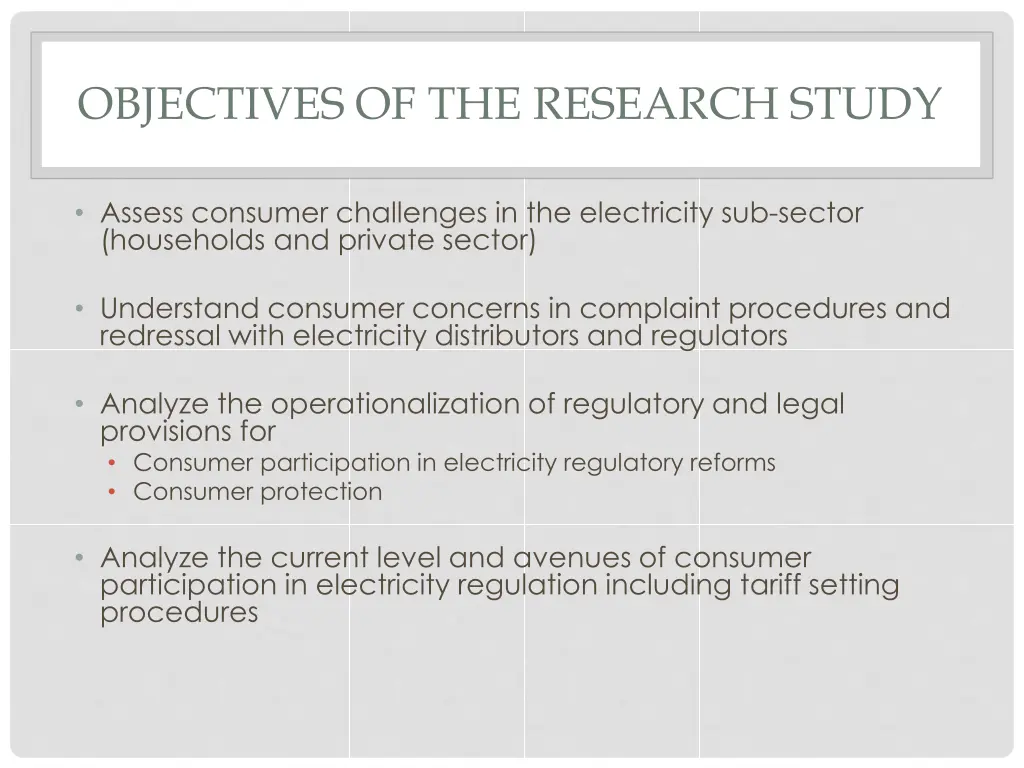
OBJECTIVES OF THE RESEARCH STUDY Assess consumer challenges in the electricity sub-sector (households and private sector) Understand consumer concerns in complaint procedures and redressal with electricity distributors and regulators Analyze the operationalization of regulatory and legal provisions for Consumer participation in electricity regulatory reforms Consumer protection Analyze the current level and avenues of consumer participation in electricity regulation including tariff setting procedures
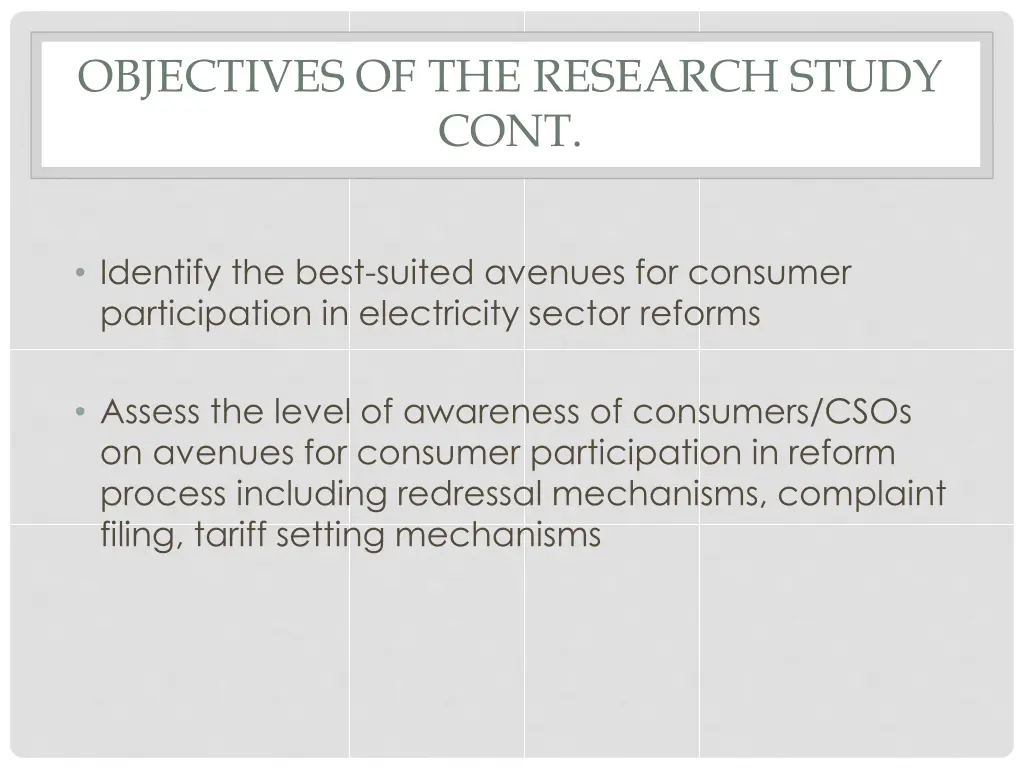
OBJECTIVES OF THE RESEARCH STUDY CONT. Identify the best-suited avenues for consumer participation in electricity sector reforms Assess the level of awareness of consumers/CSOs on avenues for consumer participation in reform process including redressal mechanisms, complaint filing, tariff setting mechanisms
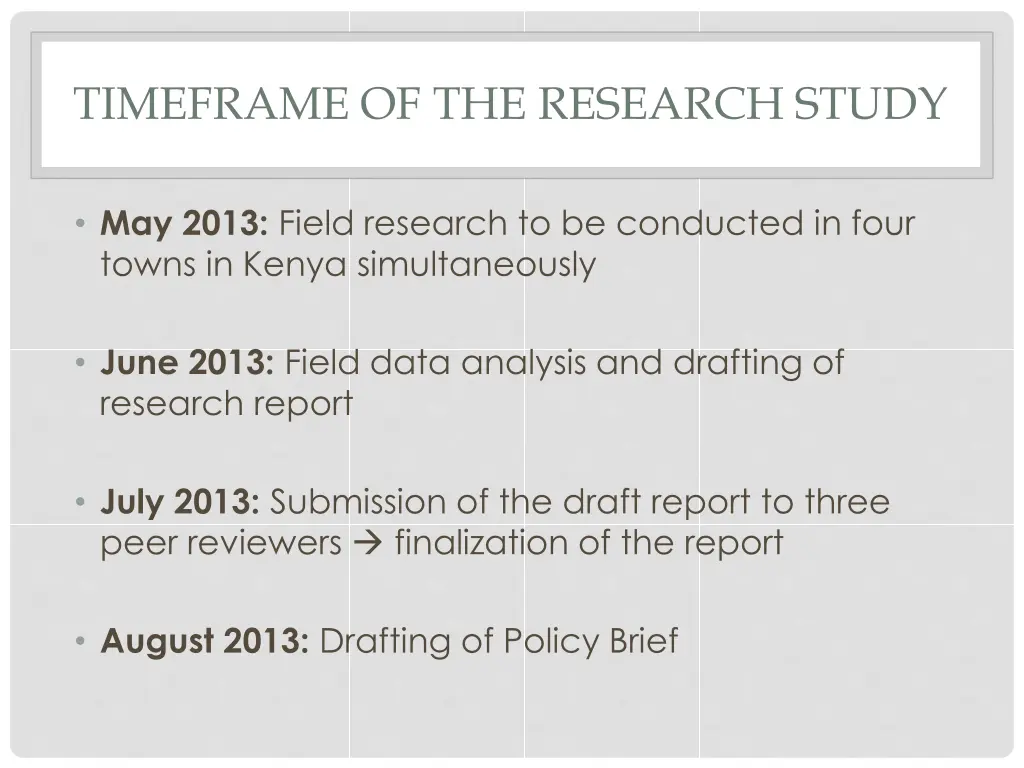
TIMEFRAME OF THE RESEARCH STUDY May 2013: Field research to be conducted in four towns in Kenya simultaneously June 2013: Field data analysis and drafting of research report July 2013: Submission of the draft report to three peer reviewers finalization of the report August 2013: Drafting of Policy Brief
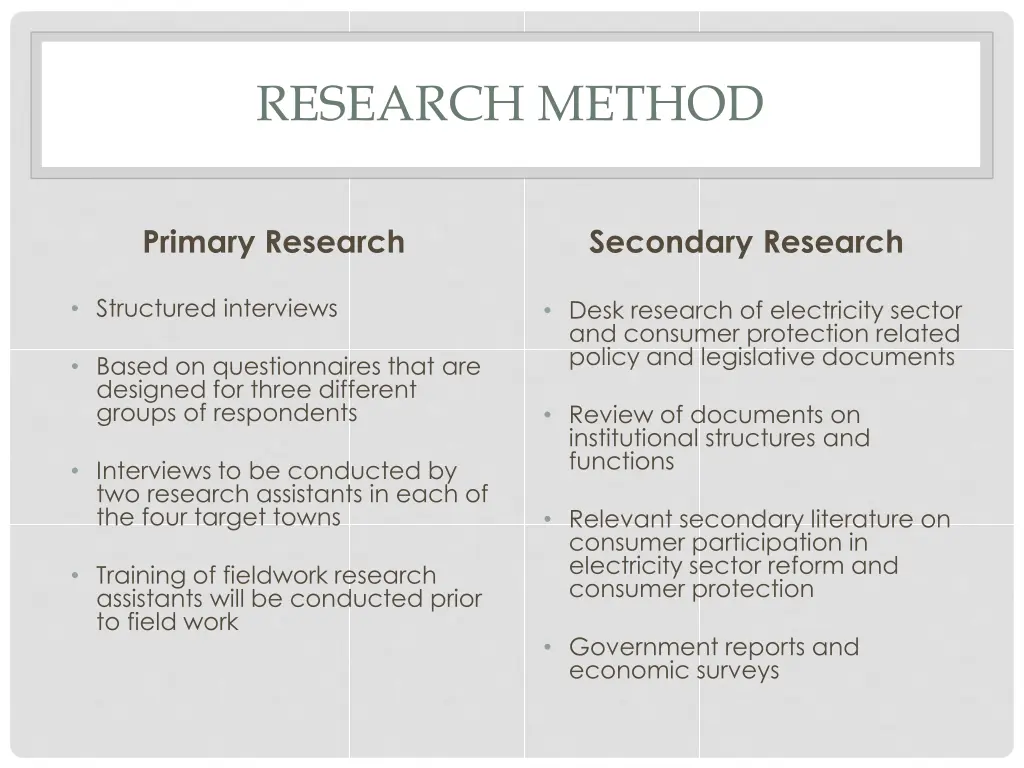
RESEARCH METHOD Primary Research Secondary Research Structured interviews Desk research of electricity sector and consumer protection related policy and legislative documents Based on questionnaires that are designed for three different groups of respondents Review of documents on institutional structures and functions Interviews to be conducted by two research assistants in each of the four target towns Relevant secondary literature on consumer participation in electricity sector reform and consumer protection Training of fieldwork research assistants will be conducted prior to field work Government reports and economic surveys
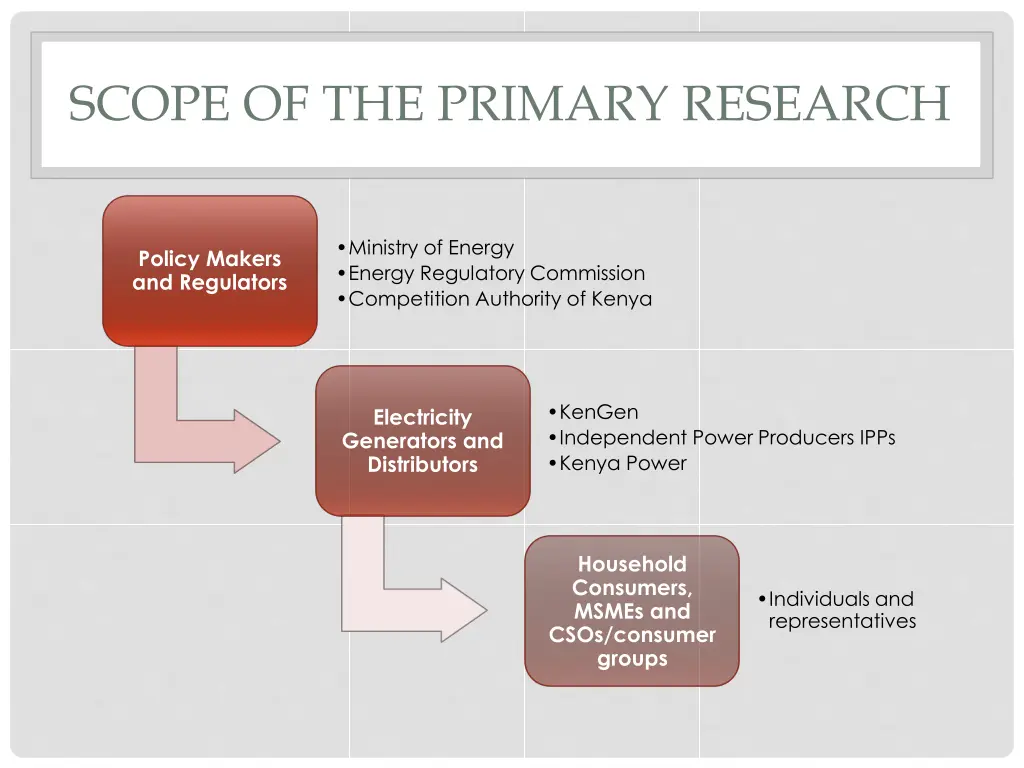
SCOPE OF THE PRIMARY RESEARCH Ministry of Energy Energy Regulatory Commission Competition Authority of Kenya Policy Makers and Regulators KenGen Independent Power Producers IPPs Kenya Power Electricity Generators and Distributors Household Consumers, MSMEs and CSOs/consumer groups Individuals and representatives
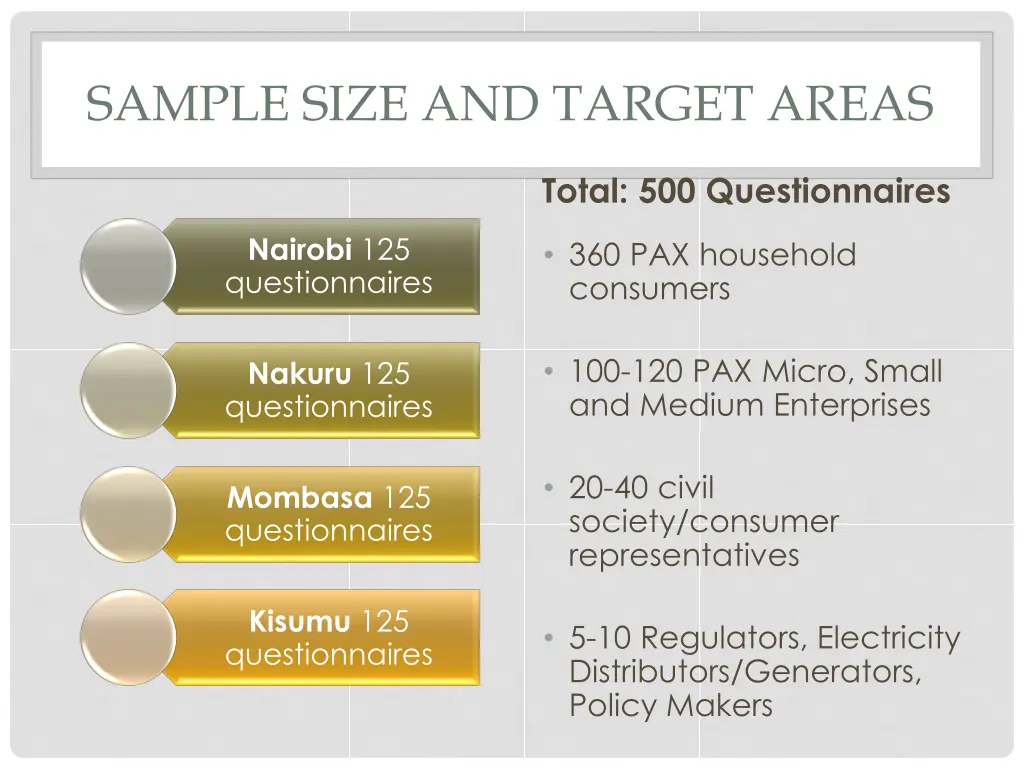
SAMPLE SIZE AND TARGET AREAS Total: 500 Questionnaires Nairobi 125 questionnaires 360 PAX household consumers 100-120 PAX Micro, Small and Medium Enterprises Nakuru 125 questionnaires 20-40 civil society/consumer representatives Mombasa 125 questionnaires Kisumu 125 questionnaires 5-10 Regulators, Electricity Distributors/Generators, Policy Makers
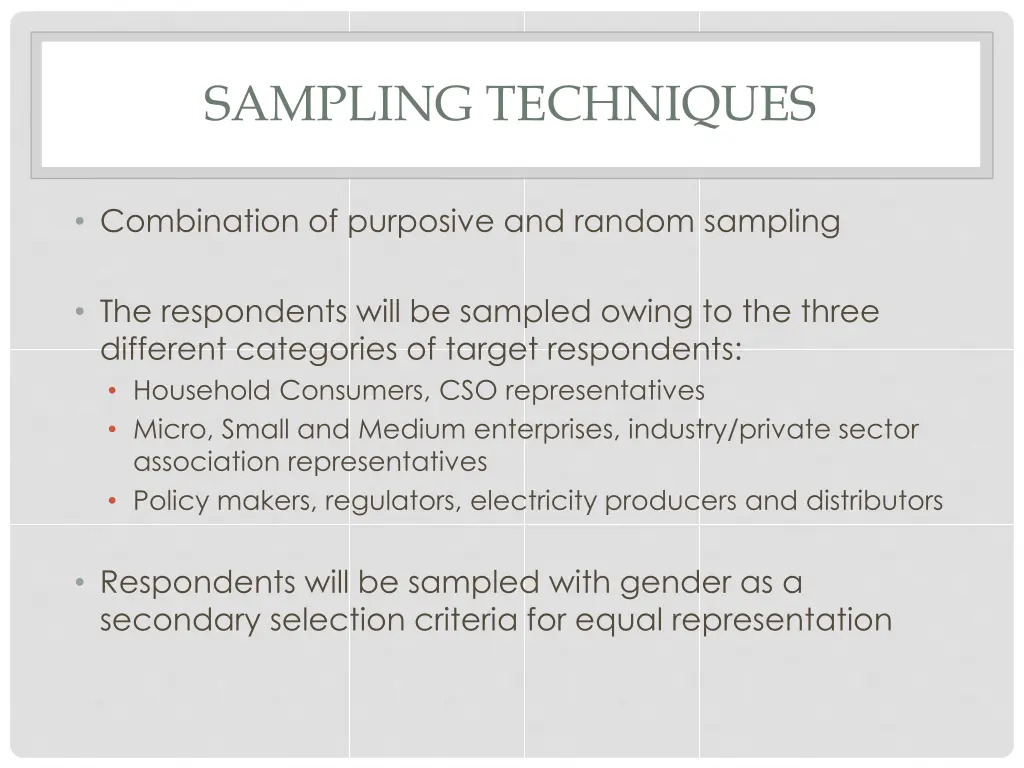
SAMPLING TECHNIQUES Combination of purposive and random sampling The respondents will be sampled owing to the three different categories of target respondents: Household Consumers, CSO representatives Micro, Small and Medium enterprises, industry/private sector association representatives Policy makers, regulators, electricity producers and distributors Respondents will be sampled with gender as a secondary selection criteria for equal representation
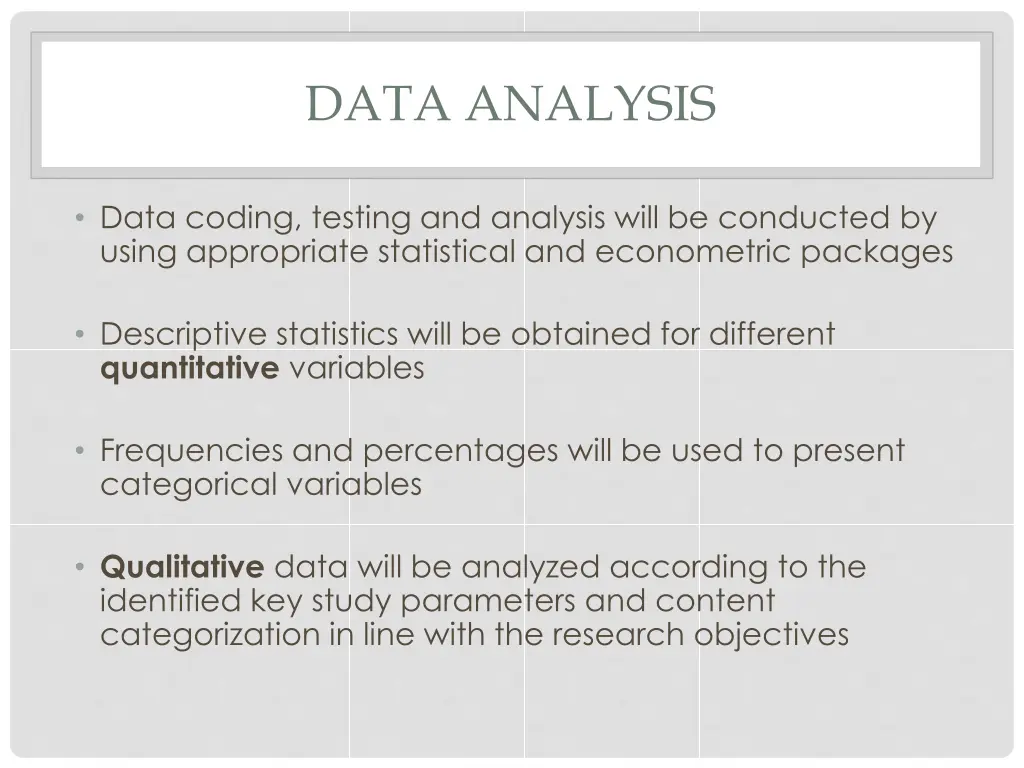
DATA ANALYSIS Data coding, testing and analysis will be conducted by using appropriate statistical and econometric packages Descriptive statistics will be obtained for different quantitative variables Frequencies and percentages will be used to present categorical variables Qualitative data will be analyzed according to the identified key study parameters and content categorization in line with the research objectives
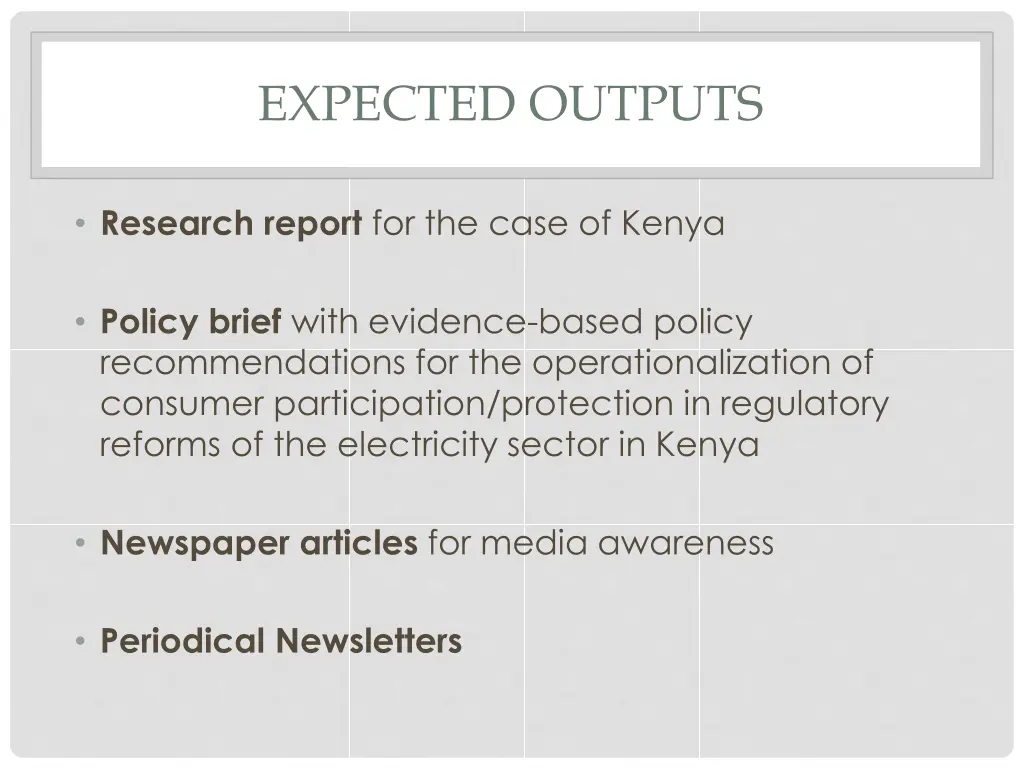
EXPECTED OUTPUTS Research report for the case of Kenya Policy brief with evidence-based policy recommendations for the operationalization of consumer participation/protection in regulatory reforms of the electricity sector in Kenya Newspaper articles for media awareness Periodical Newsletters