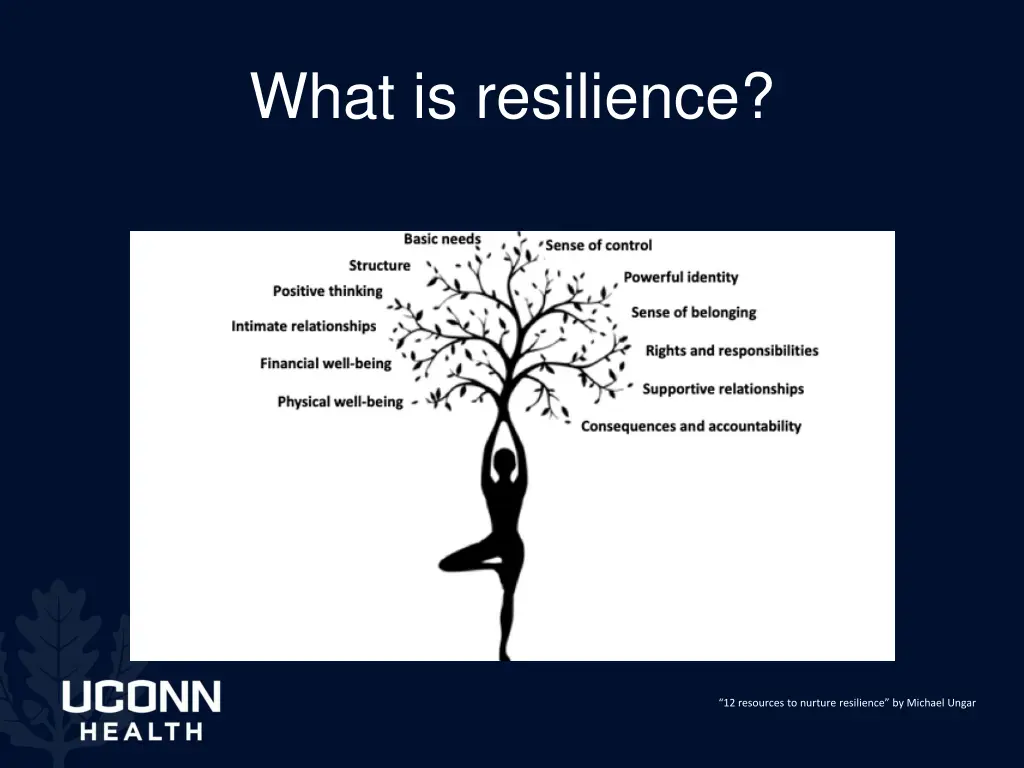
Explore the concept of resilience in academia, understand the difference between coping with stress and developing resilience, and learn practical ways to approach and navigate challenges effectively. Discover key markers of resilience and resources to nurture it, along with strategies to deal with problems and stressors proactively. Enhance your capacity to bounce back from setbacks and thrive in academic settings.
Please find below an Image/Link to download the presentation.
The content on the website is provided AS IS for your information and personal use only. It may not be sold, licensed, or shared on other websites without obtaining consent from the author. If you encounter any issues during the download, it is possible that the publisher has removed the file from their server.
You are allowed to download the files provided on this website for personal or commercial use, subject to the condition that they are used lawfully. All files are the property of their respective owners.
The content on the website is provided AS IS for your information and personal use only. It may not be sold, licensed, or shared on other websites without obtaining consent from the author.
E N D
Presentation Transcript
Surviving and Thriving: Resilience-Building in Academia Cassandra Holinka, PsyD Clinical Psychologist & Assistant Professor Jessica Meyer, Ph.D. Clinical Psychologist & Associate Professor
Todays Objectives Consider the difference between getting through stress and developing resilience Reflect on when you have the mental and emotional capacity to do each Identify four ways to approach any problem Take a deeper dive into specific skills Discuss some common topics of interest in the workplace
What is resilience? Ability and tendency to bounce back from a setback Adapting effectively in the face of adversity, trauma, tragedy, threats, or significant stress Markers: Capacity to make and carry out realistic plans Positive view of self and confidence in strengths Communication and problem-solving skills Capacity to manage strong feelings and impulses
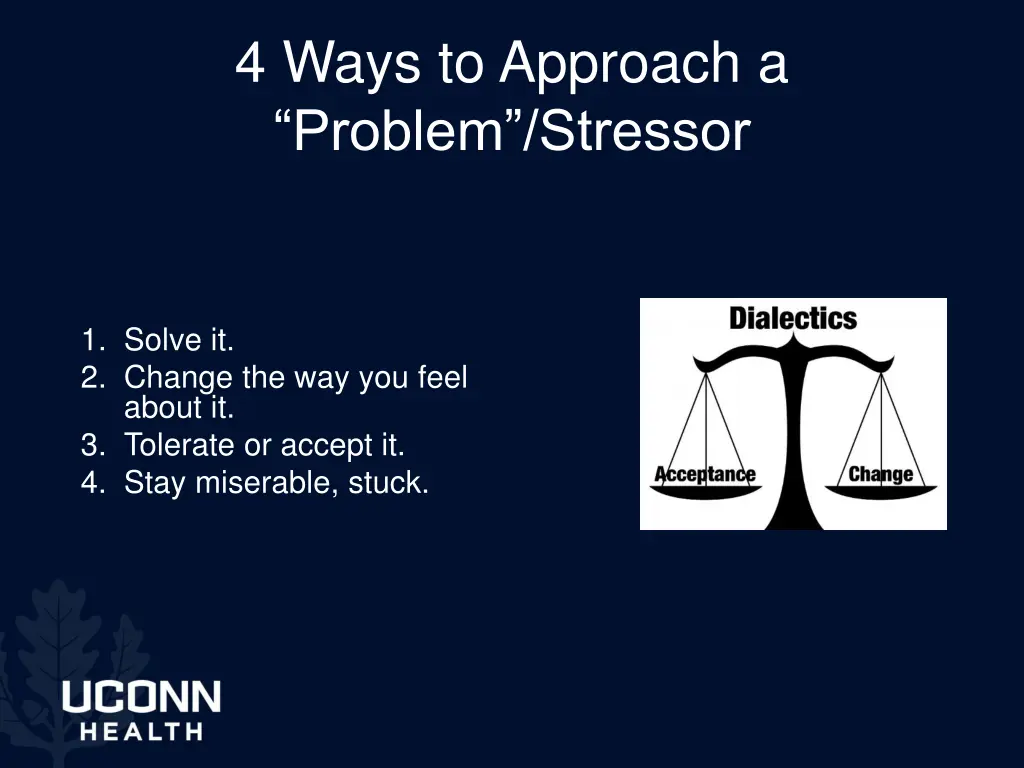
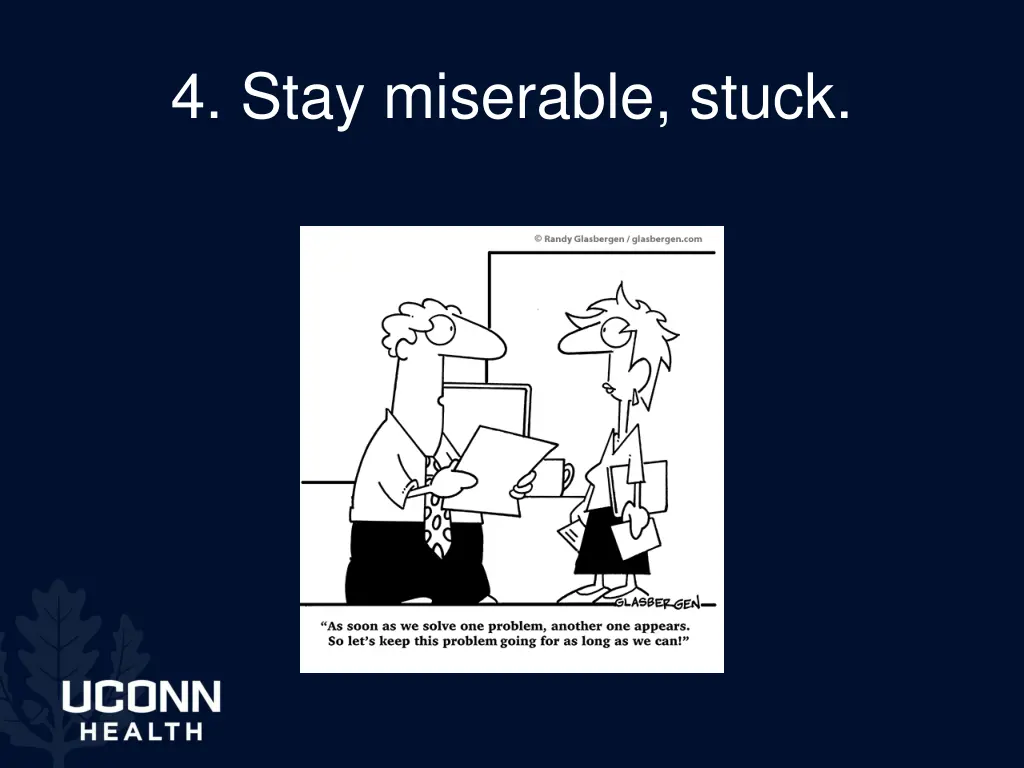
4 Ways to Approach a Problem /Stressor 1. Solve it. 2. Change the way you feel about it. 3. Tolerate or accept it. 4. Stay miserable, stuck.
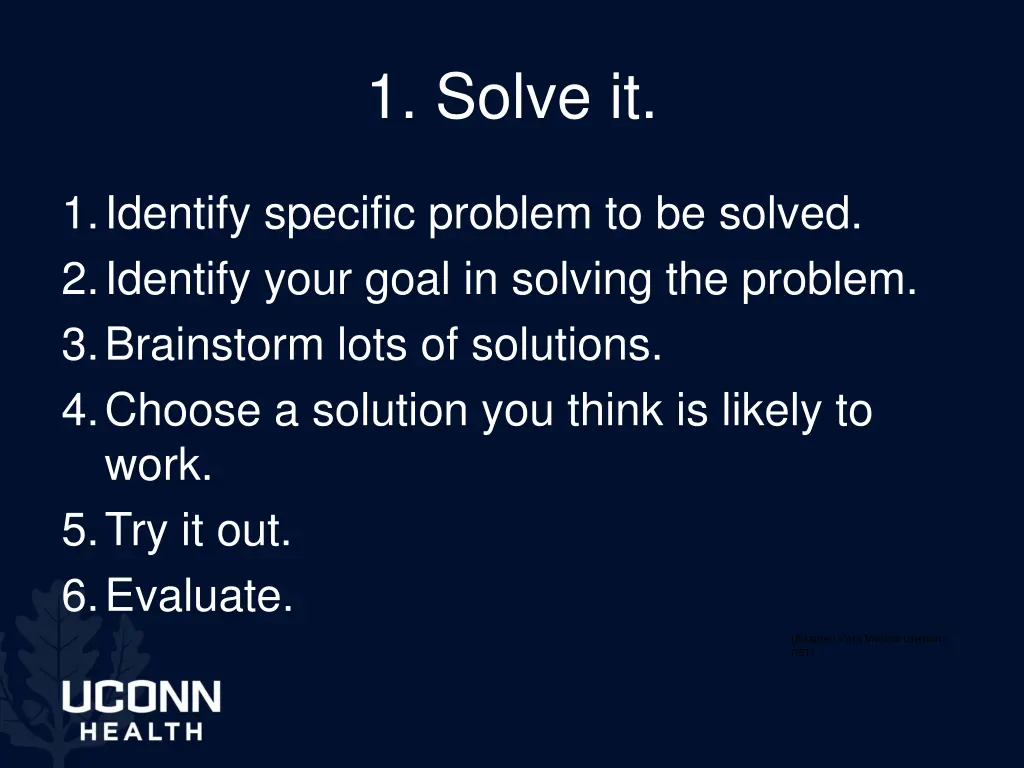
1. Solve it. 1.Identify specific problem to be solved. 2.Identify your goal in solving the problem. 3.Brainstorm lots of solutions. 4.Choose a solution you think is likely to work. 5.Try it out. 6.Evaluate. (Adapted from Marsha Linehan s DBT)
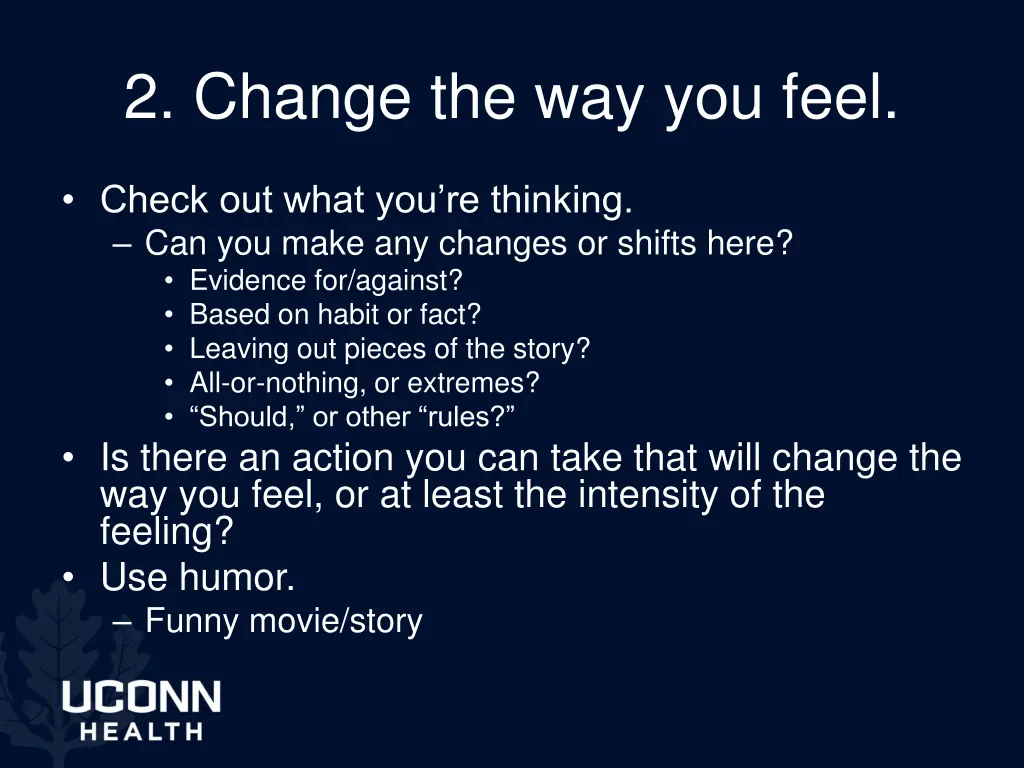
2. Change the way you feel. Check out what you re thinking. Can you make any changes or shifts here? Evidence for/against? Based on habit or fact? Leaving out pieces of the story? All-or-nothing, or extremes? Should, or other rules? Is there an action you can take that will change the way you feel, or at least the intensity of the feeling? Use humor. Funny movie/story
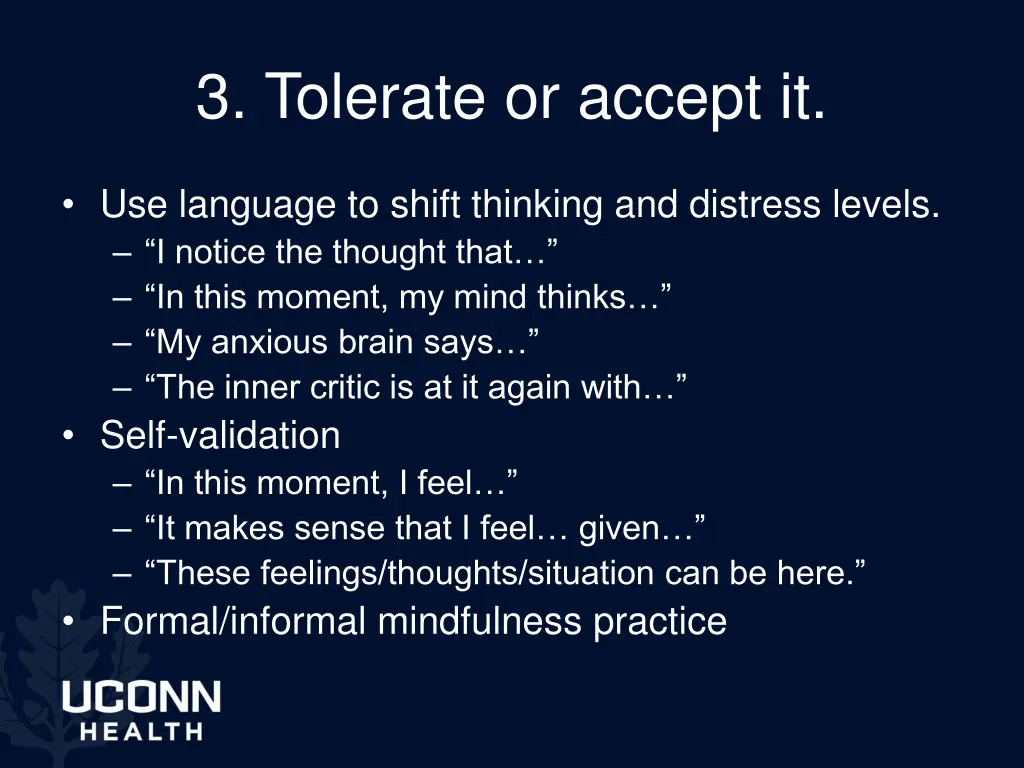
3. Tolerate or accept it. Use language to shift thinking and distress levels. I notice the thought that In this moment, my mind thinks My anxious brain says The inner critic is at it again with Self-validation In this moment, I feel It makes sense that I feel given These feelings/thoughts/situation can be here. Formal/informal mindfulness practice
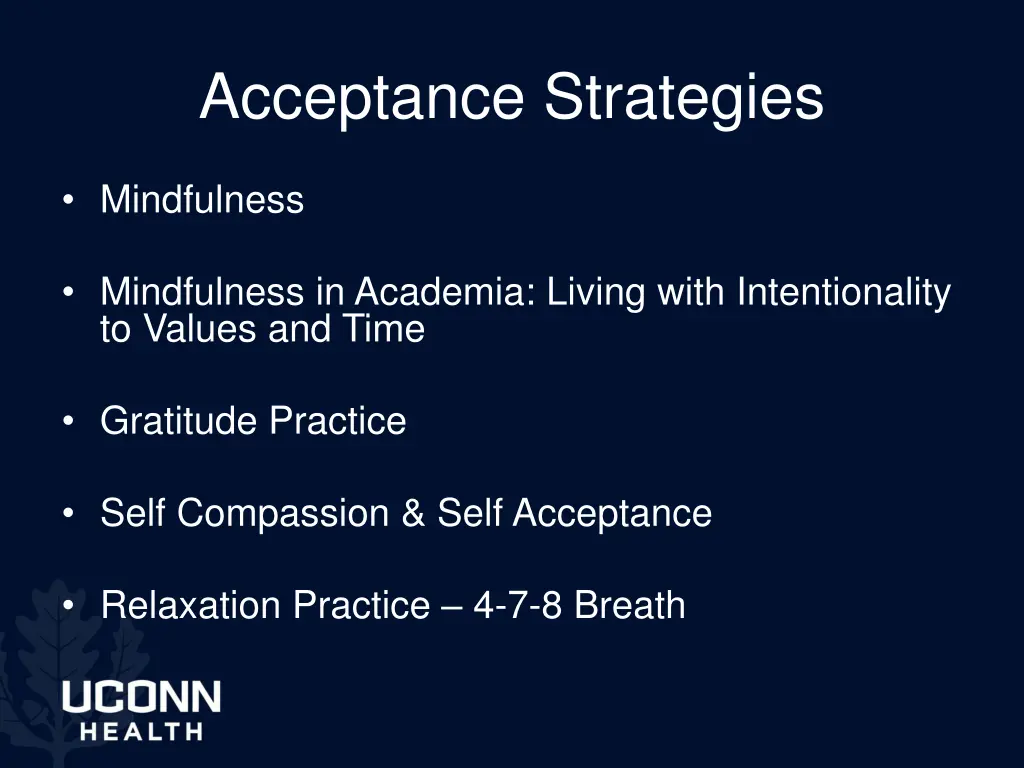
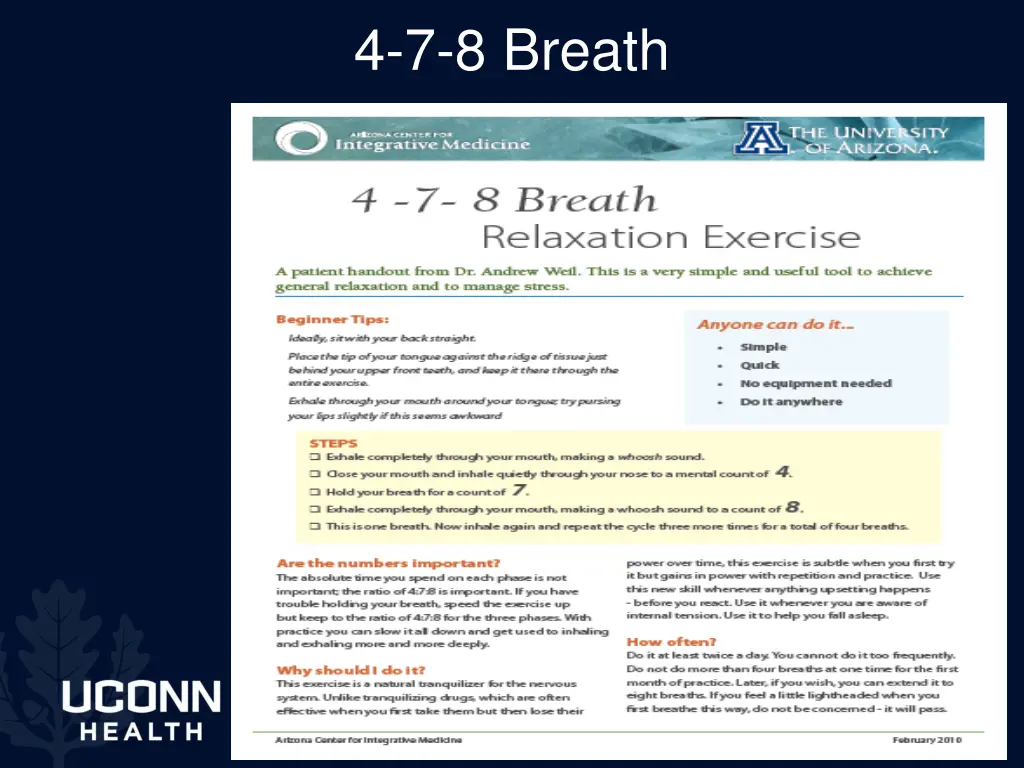
Acceptance Strategies Mindfulness Mindfulness in Academia: Living with Intentionality to Values and Time Gratitude Practice Self Compassion & Self Acceptance Relaxation Practice 4-7-8 Breath
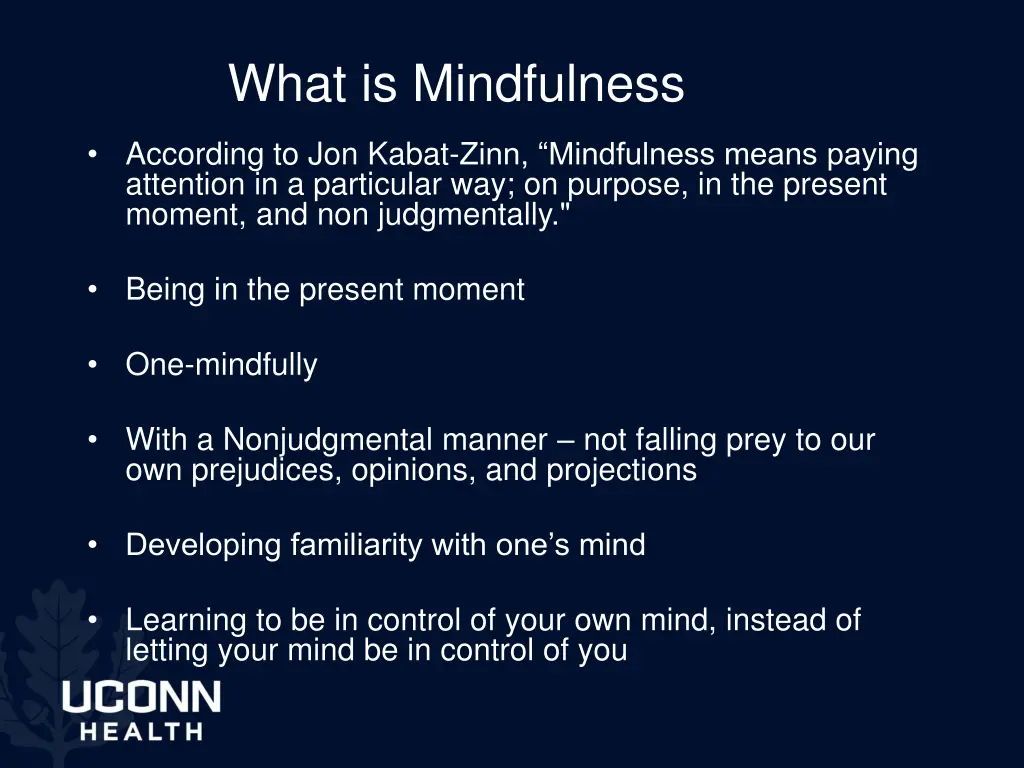
What is Mindfulness According to Jon Kabat-Zinn, Mindfulness means paying attention in a particular way; on purpose, in the present moment, and non judgmentally." Being in the present moment One-mindfully With a Nonjudgmental manner not falling prey to our own prejudices, opinions, and projections Developing familiarity with one s mind Learning to be in control of your own mind, instead of letting your mind be in control of you
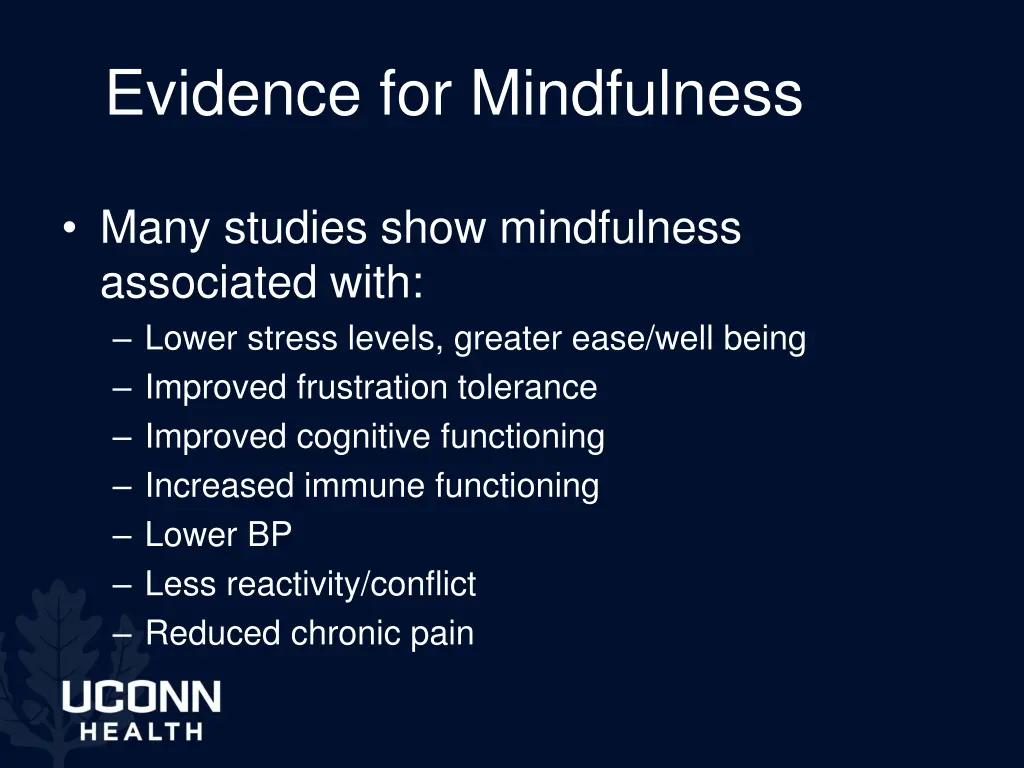
Evidence for Mindfulness Many studies show mindfulness associated with: Lower stress levels, greater ease/well being Improved frustration tolerance Improved cognitive functioning Increased immune functioning Lower BP Less reactivity/conflict Reduced chronic pain
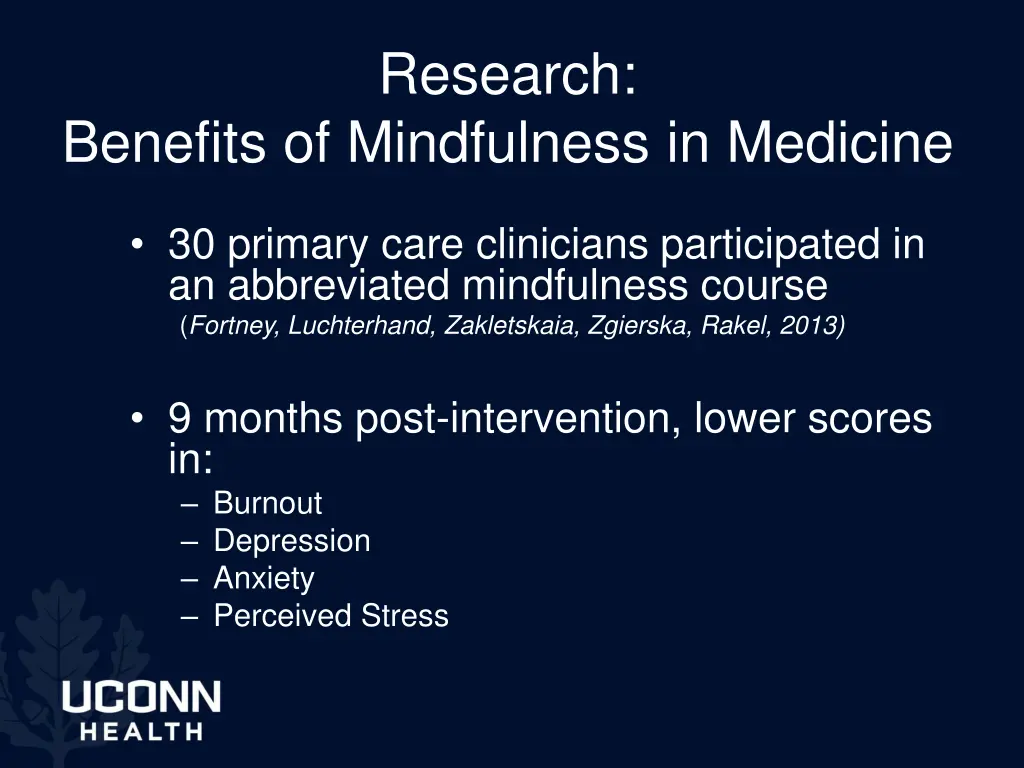
Research: Benefits of Mindfulness in Medicine 30 primary care clinicians participated in an abbreviated mindfulness course (Fortney, Luchterhand, Zakletskaia, Zgierska, Rakel, 2013) 9 months post-intervention, lower scores in: Burnout Depression Anxiety Perceived Stress
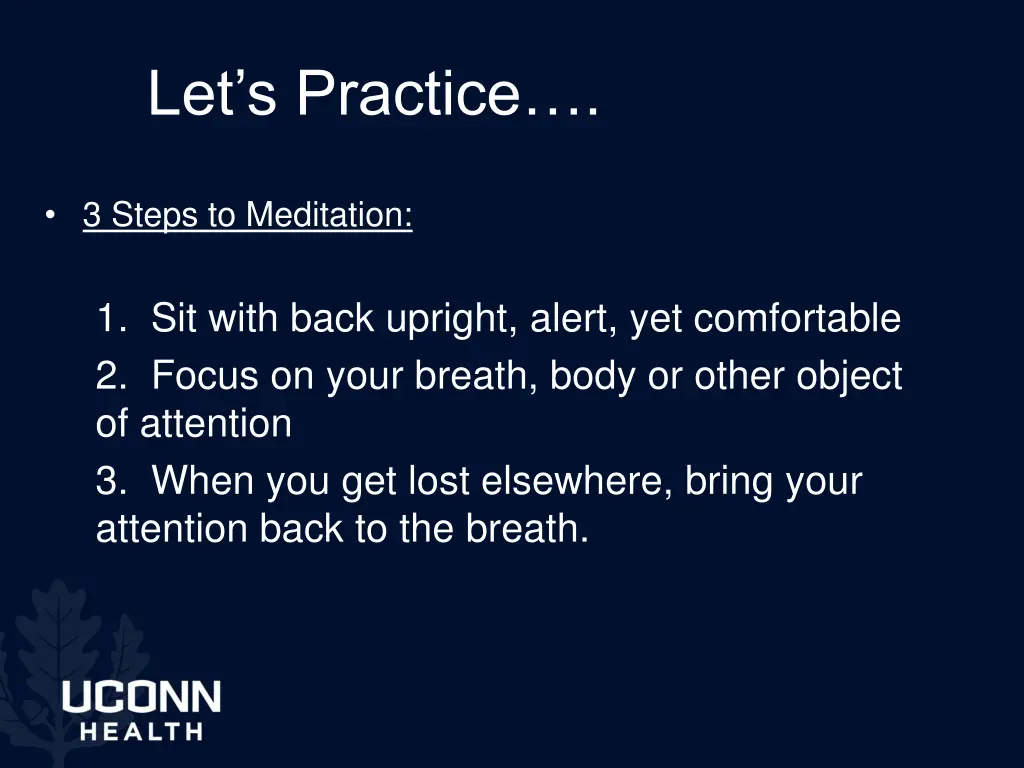
Lets Practice. 3 Steps to Meditation: 1. Sit with back upright, alert, yet comfortable 2. Focus on your breath, body or other object of attention 3. When you get lost elsewhere, bring your attention back to the breath.
Brief mindful breaks 1. Check-Ins with Yourself - Where are You Now? What are my thoughts? How are my thoughts affecting my actions at work? What are my emotions? Where do I feel this in my body? Come back to the present moment, the breath or body, whenever you realize you are caught up in thoughts or emotions
Mindfulness in Academia When stressed or feeling time pressure, mindfulness can be helpful to facilitate working with intentionality Take Mindful Pauses to: Work One-Mindfully Ask yourself if this is how you want to be using your time, and what function or value it is serving Identify your Values, and be willing to be flexible with them and to sacrifice some for the sake of others
Gratitude practice Shifts our negative bias in thinking to be more balanced Practice perceiving positive events that occur in everyday professional/personal life and not taking them for granted Log at end of day what went well or what you learned. Minimum 5 things per week. Benefits including better sleep, fewer symptoms of illness, less depression, and more happiness/psychological well being http://greatergood.berkeley.edu/article/item/tips_for_keeping_a_gratitude_journal
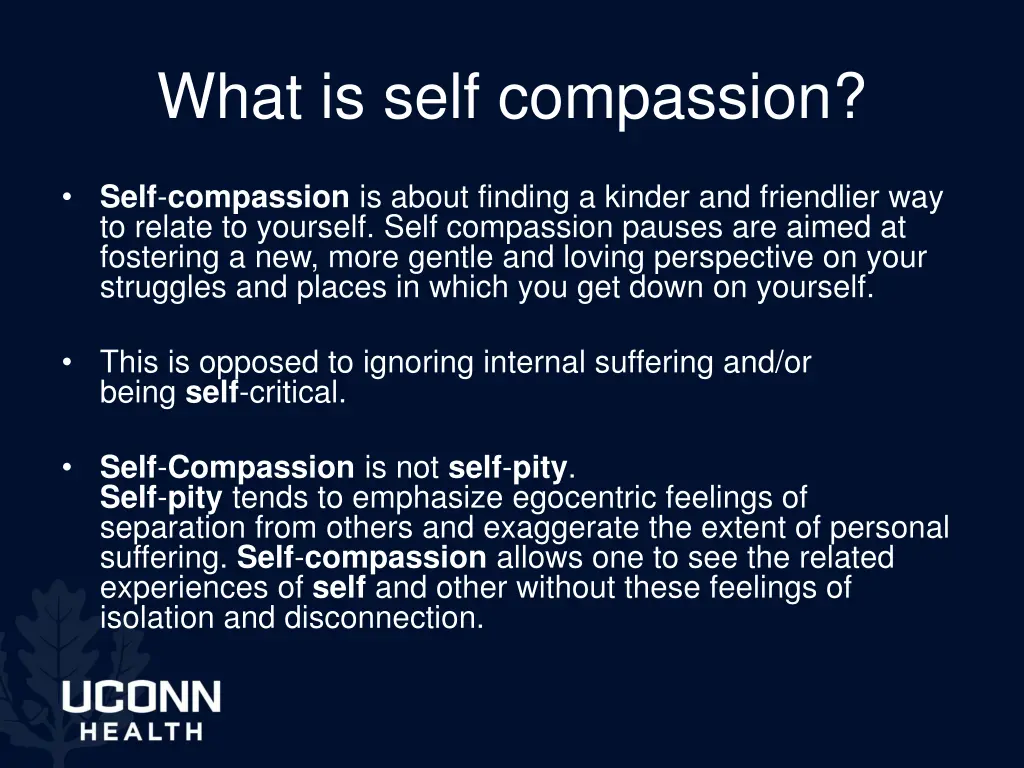
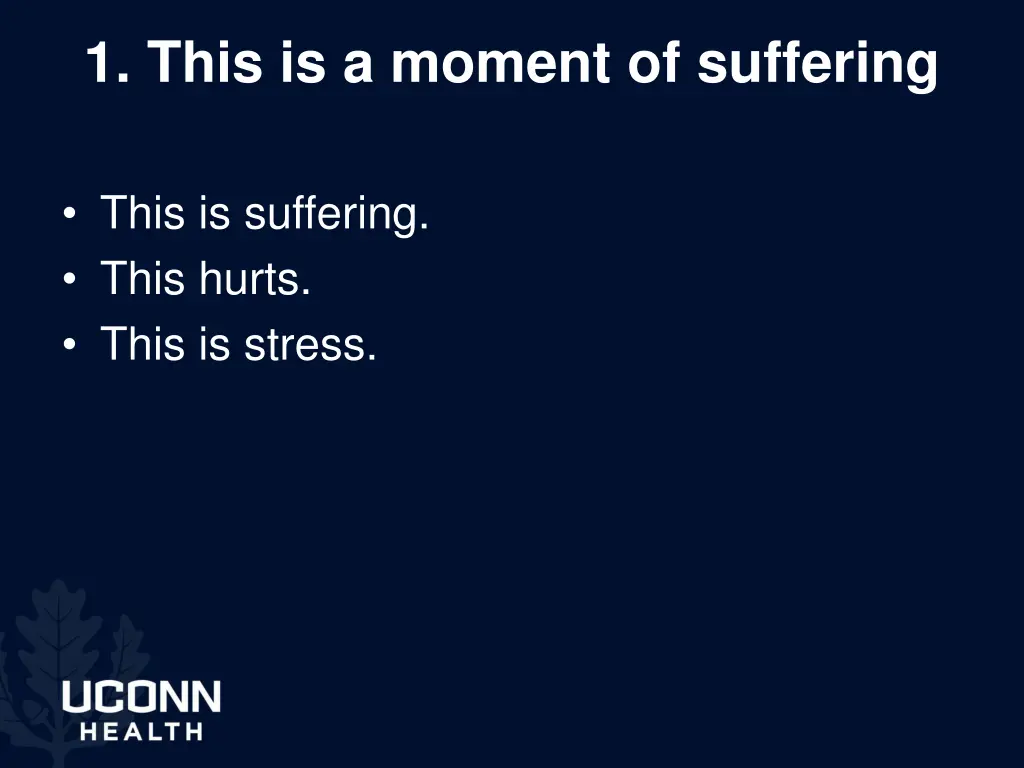
What is self compassion? Self-compassion is about finding a kinder and friendlier way to relate to yourself. Self compassion pauses are aimed at fostering a new, more gentle and loving perspective on your struggles and places in which you get down on yourself. This is opposed to ignoring internal suffering and/or being self-critical. Self-Compassion is not self-pity. Self-pity tends to emphasize egocentric feelings of separation from others and exaggerate the extent of personal suffering. Self-compassion allows one to see the related experiences of self and other without these feelings of isolation and disconnection.
What does self compassion feel like? Self-compassion entails being warm and understanding toward ourselves when we suffer, fail, or feel inadequate, rather than ignoring our pain or engaging in self- criticism.
Why is self compassion important? Self-compassion yields a number of benefits, including lower levels of anxiety and depression. Self-compassionate people recognize when they are suffering and are kind to themselves at these times, which reduces their anxiety and related depression.
Self-Compassion Break Think of a situation in your life that is difficult, that is causing you stress. Call the situation to mind, and see if you can actually feel the stress and emotional discomfort in your body. Now, say to yourself:
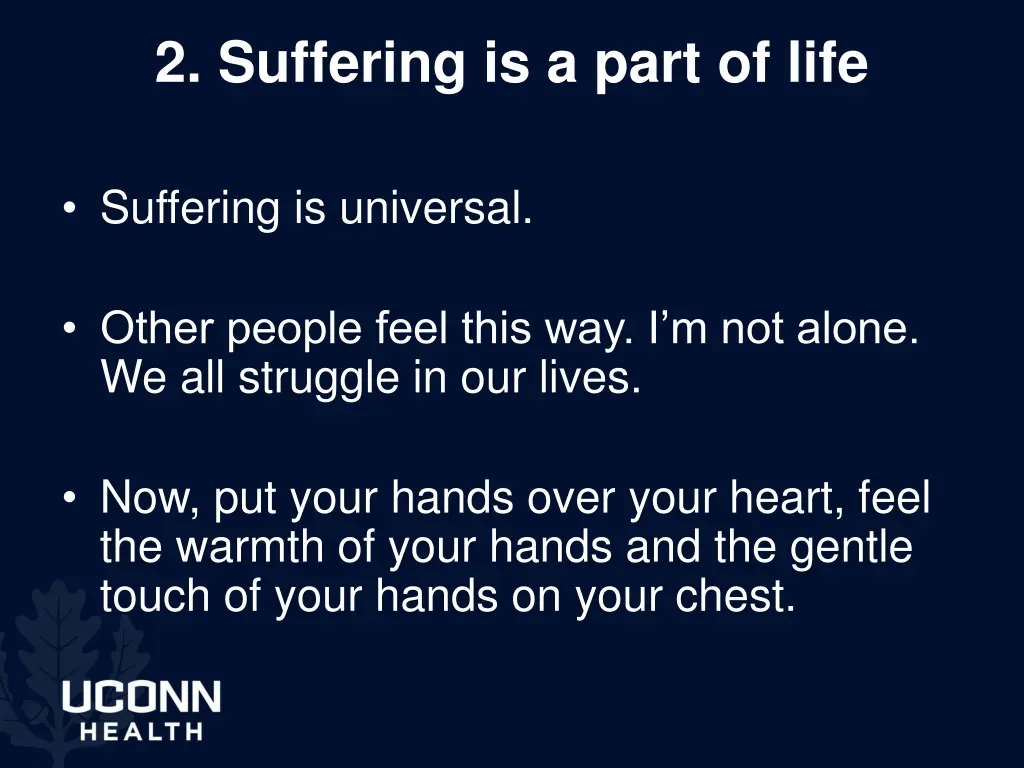
2. Suffering is a part of life Suffering is universal. Other people feel this way. I m not alone. We all struggle in our lives. Now, put your hands over your heart, feel the warmth of your hands and the gentle touch of your hands on your chest.
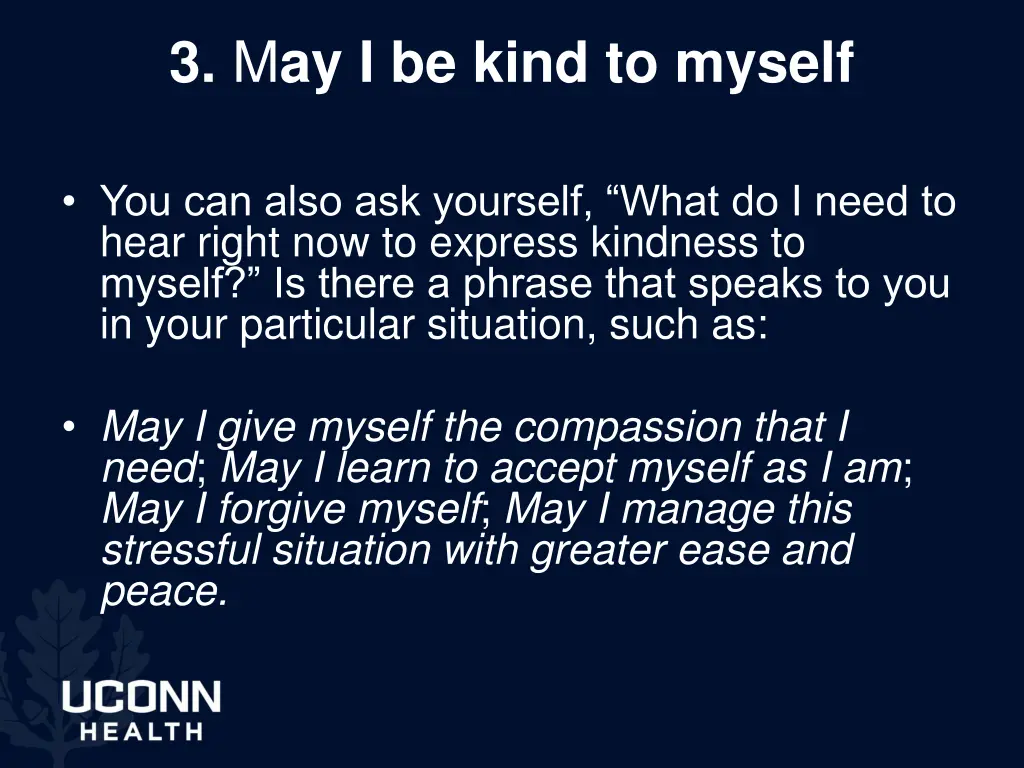
3. May I be kind to myself You can also ask yourself, What do I need to hear right now to express kindness to myself? Is there a phrase that speaks to you in your particular situation, such as: May I give myself the compassion that I need; May I learn to accept myself as I am; May I forgive myself; May I manage this stressful situation with greater ease and peace.
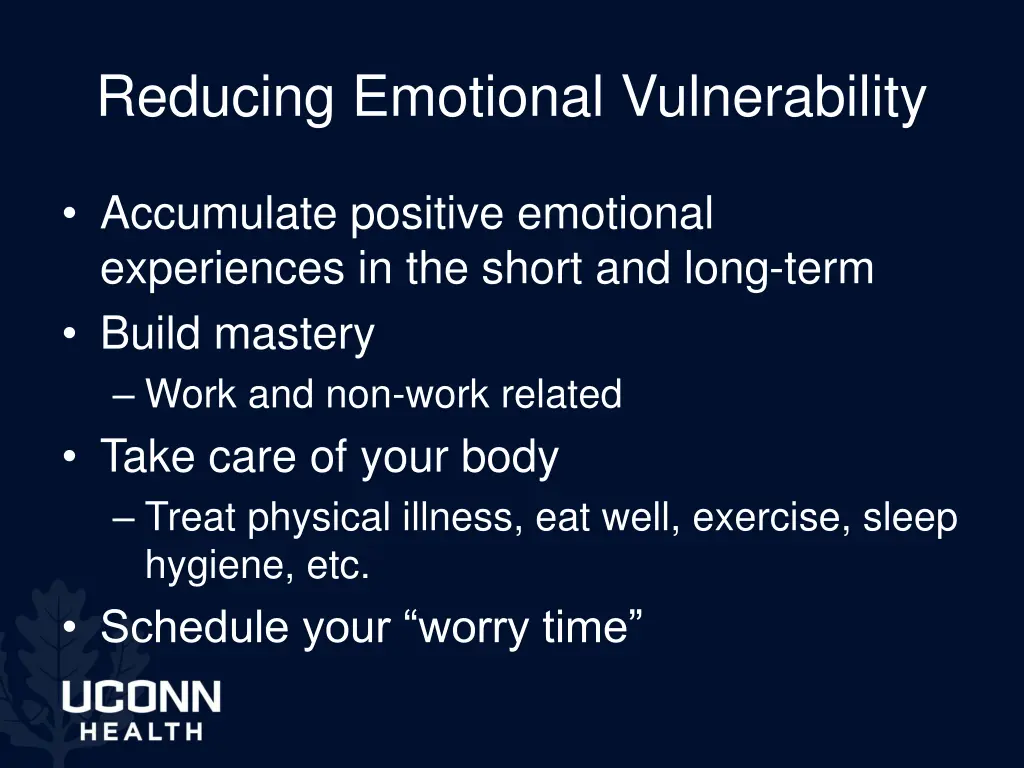
Reducing Emotional Vulnerability Accumulate positive emotional experiences in the short and long-term Build mastery Work and non-work related Take care of your body Treat physical illness, eat well, exercise, sleep hygiene, etc. Schedule your worry time
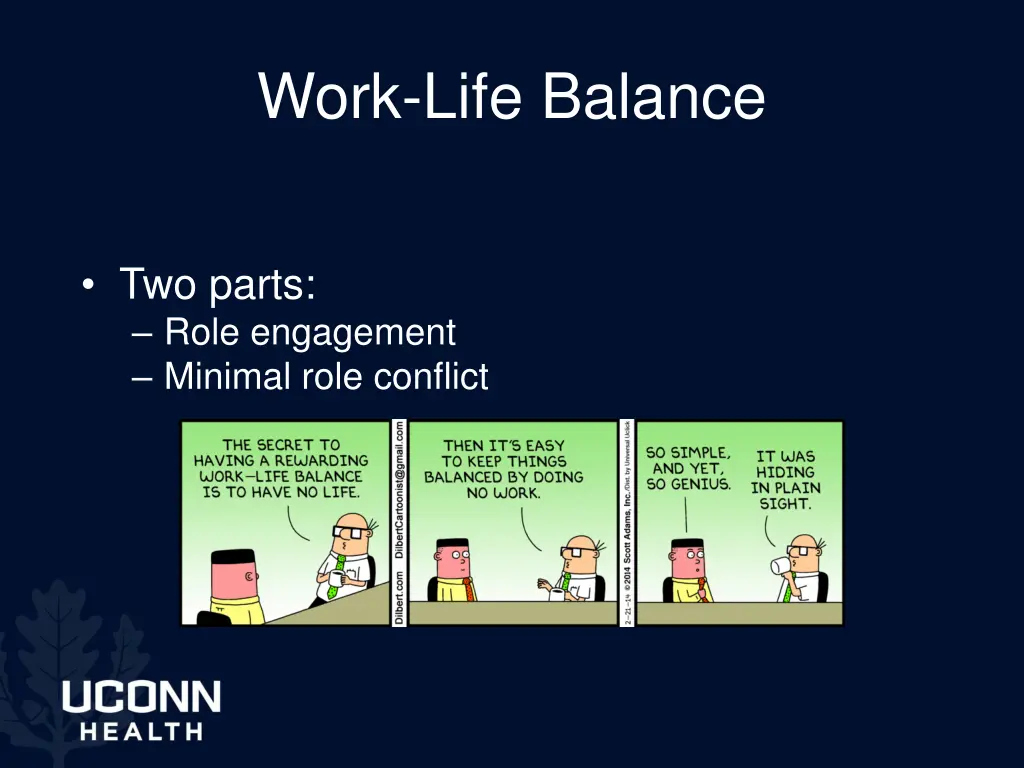
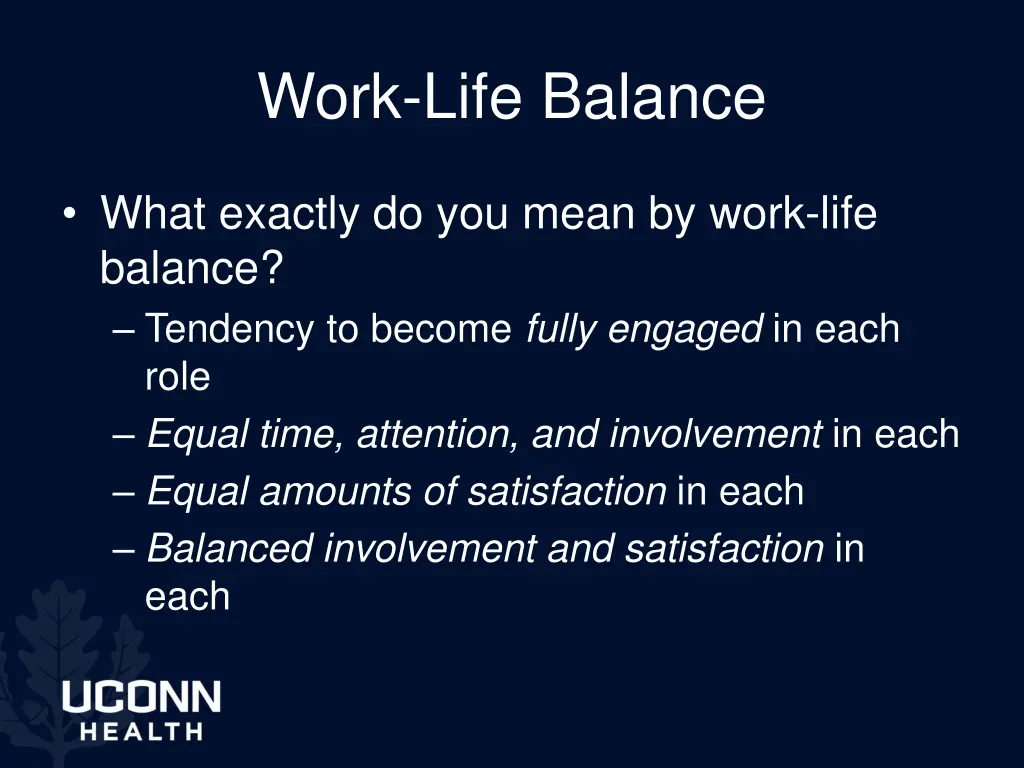
Work-Life Balance What exactly do you mean by work-life balance? Tendency to become fully engaged in each role Equal time, attention, and involvement in each Equal amounts of satisfaction in each Balanced involvement and satisfaction in each
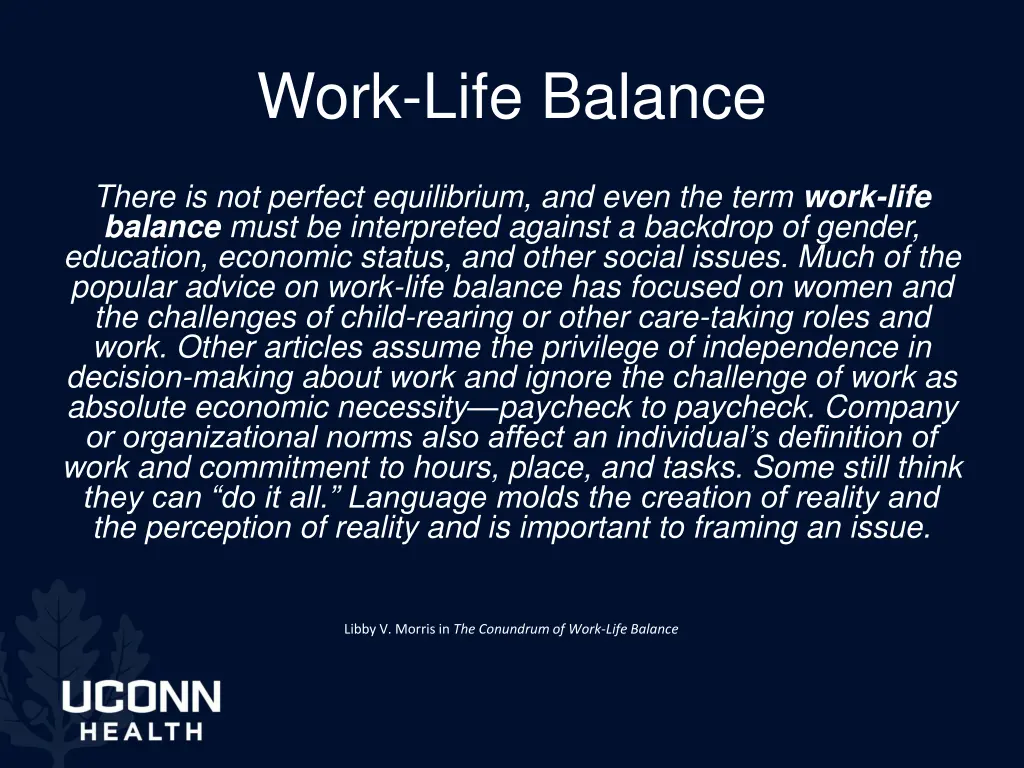
Work-Life Balance There is not perfect equilibrium, and even the term work-life balance must be interpreted against a backdrop of gender, education, economic status, and other social issues. Much of the popular advice on work-life balance has focused on women and the challenges of child-rearing or other care-taking roles and work. Other articles assume the privilege of independence in decision-making about work and ignore the challenge of work as absolute economic necessity paycheck to paycheck. Company or organizational norms also affect an individual s definition of work and commitment to hours, place, and tasks. Some still think they can do it all. Language molds the creation of reality and the perception of reality and is important to framing an issue. Libby V. Morris in The Conundrum of Work-Life Balance
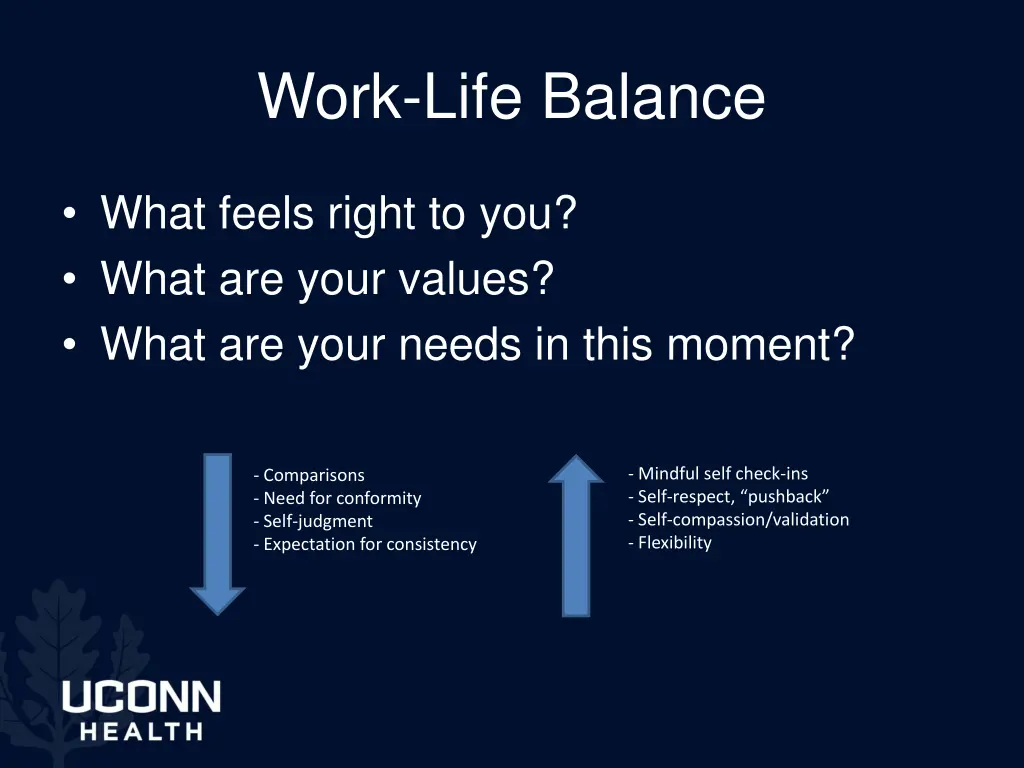
Work-Life Balance What feels right to you? What are your values? What are your needs in this moment? - Mindful self check-ins - Self-respect, pushback - Self-compassion/validation - Flexibility - Comparisons - Need for conformity - Self-judgment - Expectation for consistency
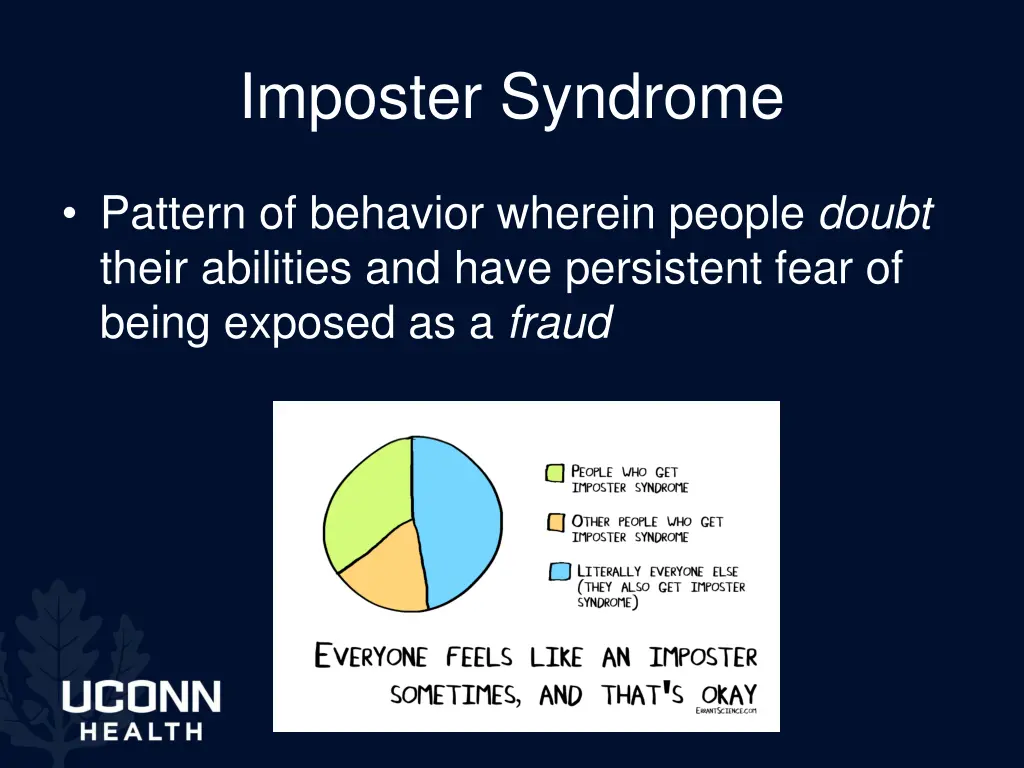
Imposter Syndrome Pattern of behavior wherein people doubt their abilities and have persistent fear of being exposed as a fraud
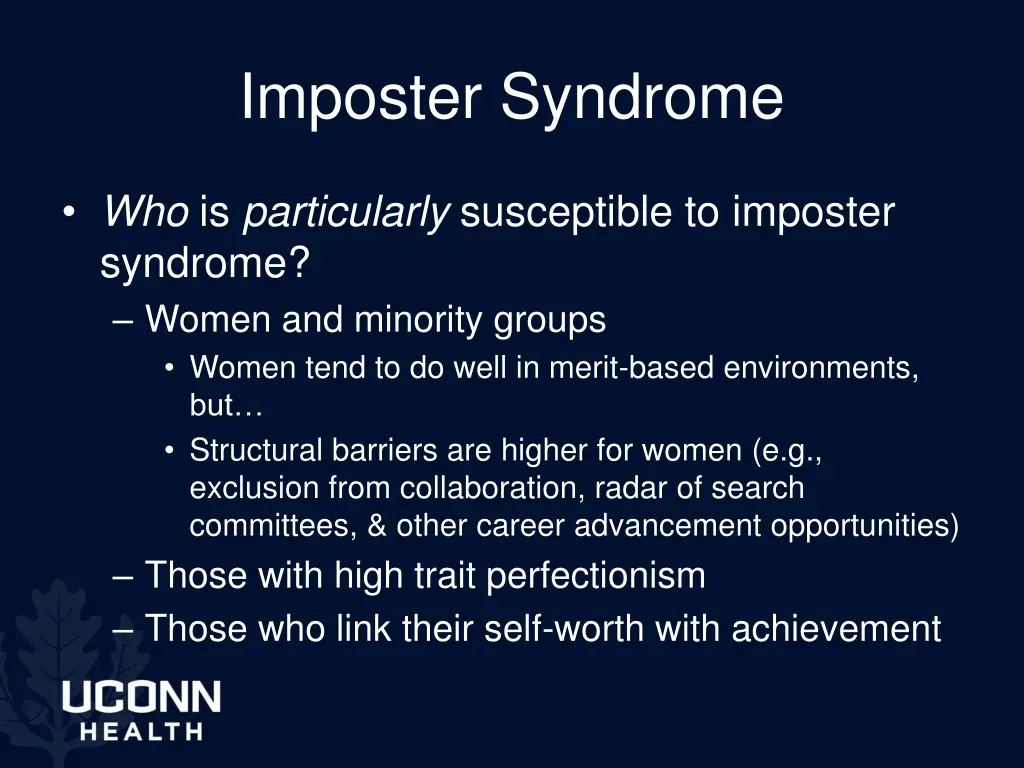
Imposter Syndrome Who is particularly susceptible to imposter syndrome? Women and minority groups Women tend to do well in merit-based environments, but Structural barriers are higher for women (e.g., exclusion from collaboration, radar of search committees, & other career advancement opportunities) Those with high trait perfectionism Those who link their self-worth with achievement
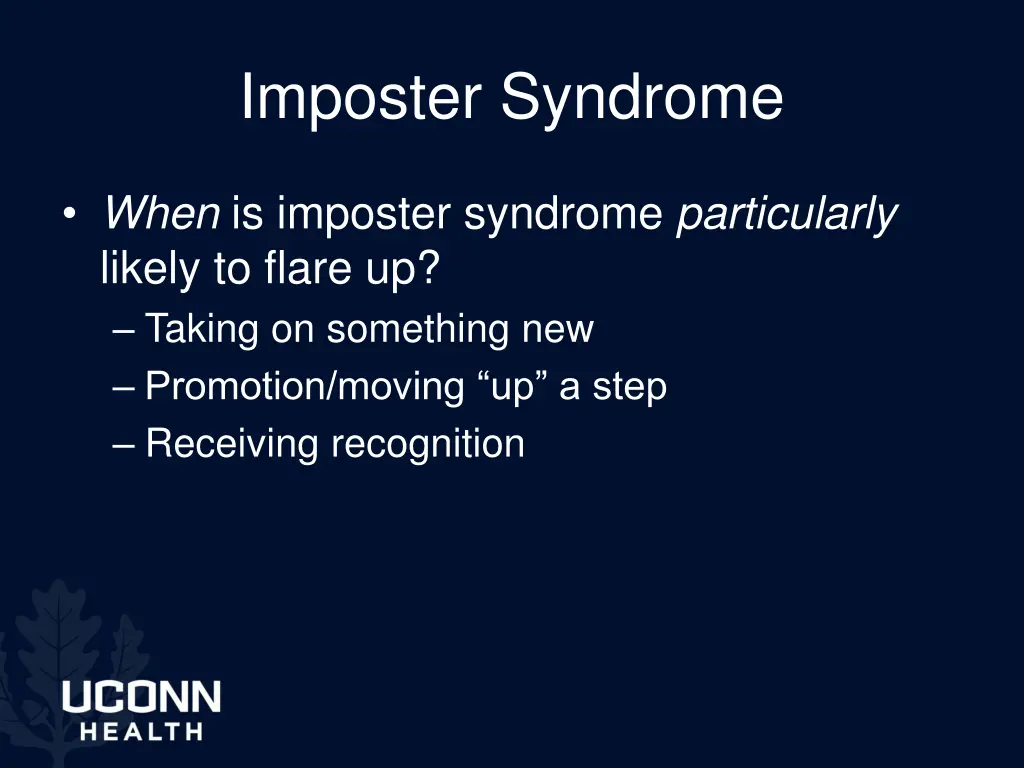
Imposter Syndrome When is imposter syndrome particularly likely to flare up? Taking on something new Promotion/moving up a step Receiving recognition
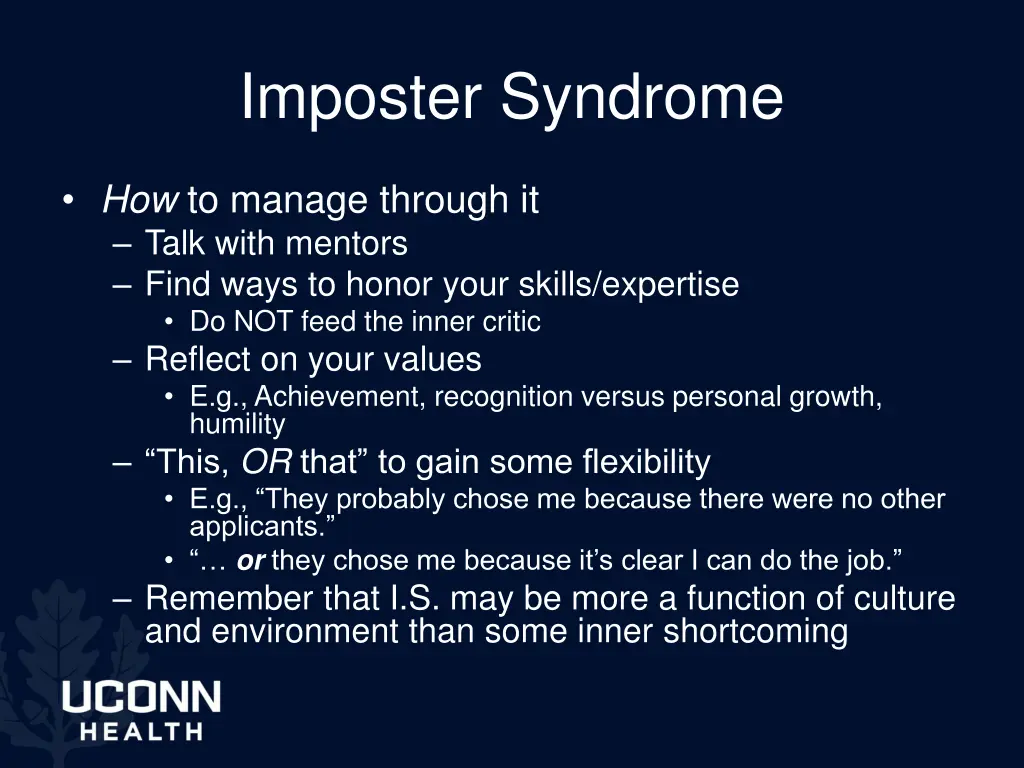
Imposter Syndrome How to manage through it Talk with mentors Find ways to honor your skills/expertise Do NOT feed the inner critic Reflect on your values E.g., Achievement, recognition versus personal growth, humility This, ORthat to gain some flexibility E.g., They probably chose me because there were no other applicants. orthey chose me because it s clear I can do the job. Remember that I.S. may be more a function of culture and environment than some inner shortcoming
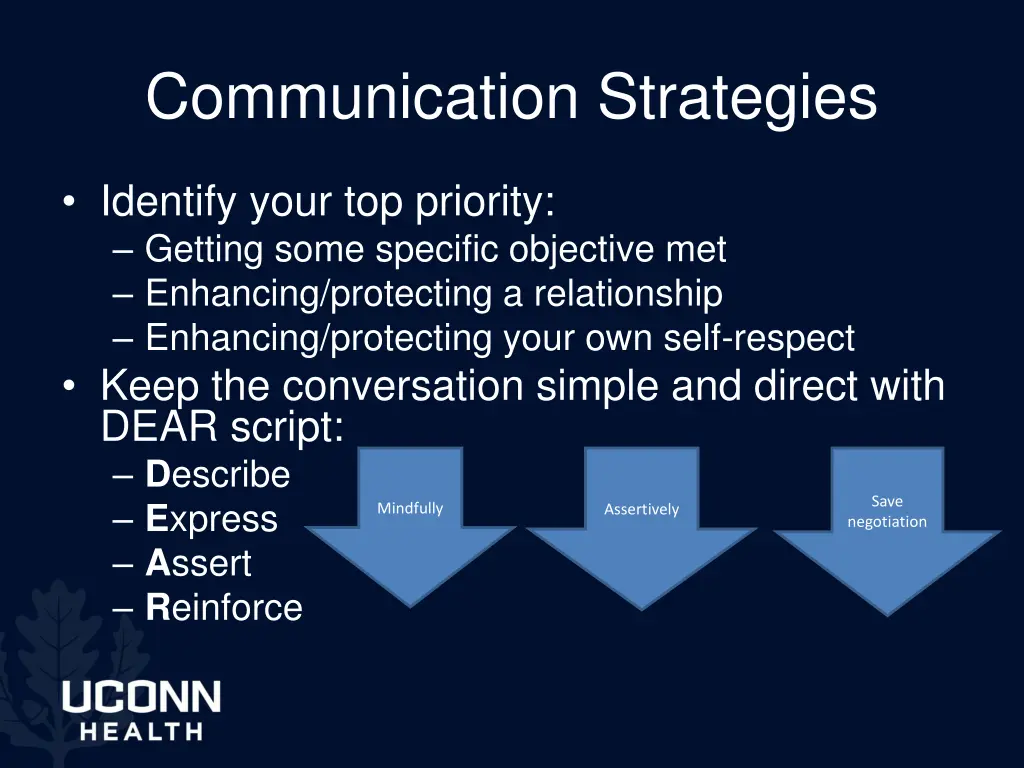
Communication Strategies Identify your top priority: Getting some specific objective met Enhancing/protecting a relationship Enhancing/protecting your own self-respect Keep the conversation simple and direct with DEAR script: Describe Express Assert Reinforce Save Mindfully Assertively negotiation
Communication Strategies Utilizing validation with others Stay awake, pay attention Accurately reflect back Read between the lines State how what they think/feel makes sense Genuineness
Resources Center for Mindful Self-Compassion: https://centerformsc.org/ The Positive Psychology Center at UPenn: https://ppc.sas.upenn.edu/ Self Compassion (Dr. Kristin Neff) https://self-compassion.org/ American Psychological Association https://www.apa.org/