Respiratory Distress in Newborn: Causes, Diagnosis, and Management
Respiratory distress in newborns is a critical condition that requires prompt identification and treatment. It can be caused by various factors such as pulmonary and non-pulmonary issues. Early recognition is vital to improve outcomes in newborns with respiratory distress. This article provides insights on the causes, diagnosis, and management of respiratory distress in newborns.

Download Presentation

Please find below an Image/Link to download the presentation.
The content on the website is provided AS IS for your information and personal use only. It may not be sold, licensed, or shared on other websites without obtaining consent from the author.If you encounter any issues during the download, it is possible that the publisher has removed the file from their server.
You are allowed to download the files provided on this website for personal or commercial use, subject to the condition that they are used lawfully. All files are the property of their respective owners.
The content on the website is provided AS IS for your information and personal use only. It may not be sold, licensed, or shared on other websites without obtaining consent from the author.
E N D
Presentation Transcript
Respiratory Distress in Newborn DR. SAURABH PIPARSANIA MBBS, DNB, MNAMS ASSOCIATE PROFESSOR IMCHRC
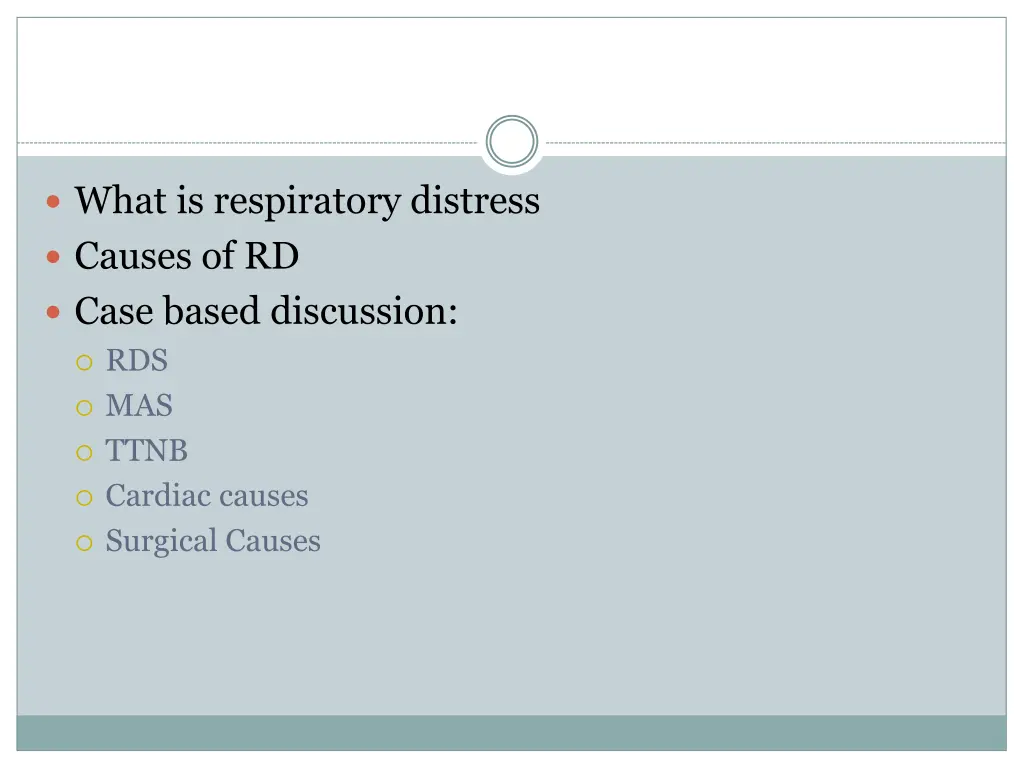
What is respiratory distress Causes of RD Case based discussion: RDS MAS TTNB Cardiac causes Surgical Causes
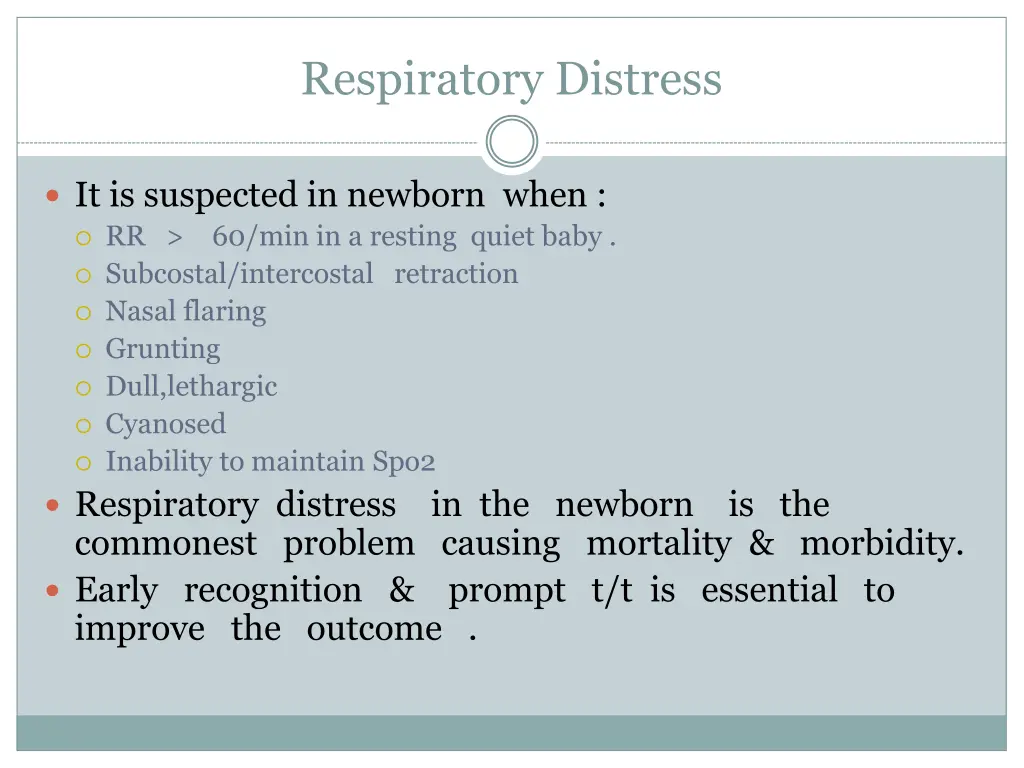
Respiratory Distress It is suspected in newborn when : RR > 60/min in a resting quiet baby . Subcostal/intercostal retraction Nasal flaring Grunting Dull,lethargic Cyanosed Inability to maintain Spo2 Respiratory distress in the newborn is the commonest problem causing mortality & morbidity. Early recognition & prompt t/t is essential to improve the outcome .
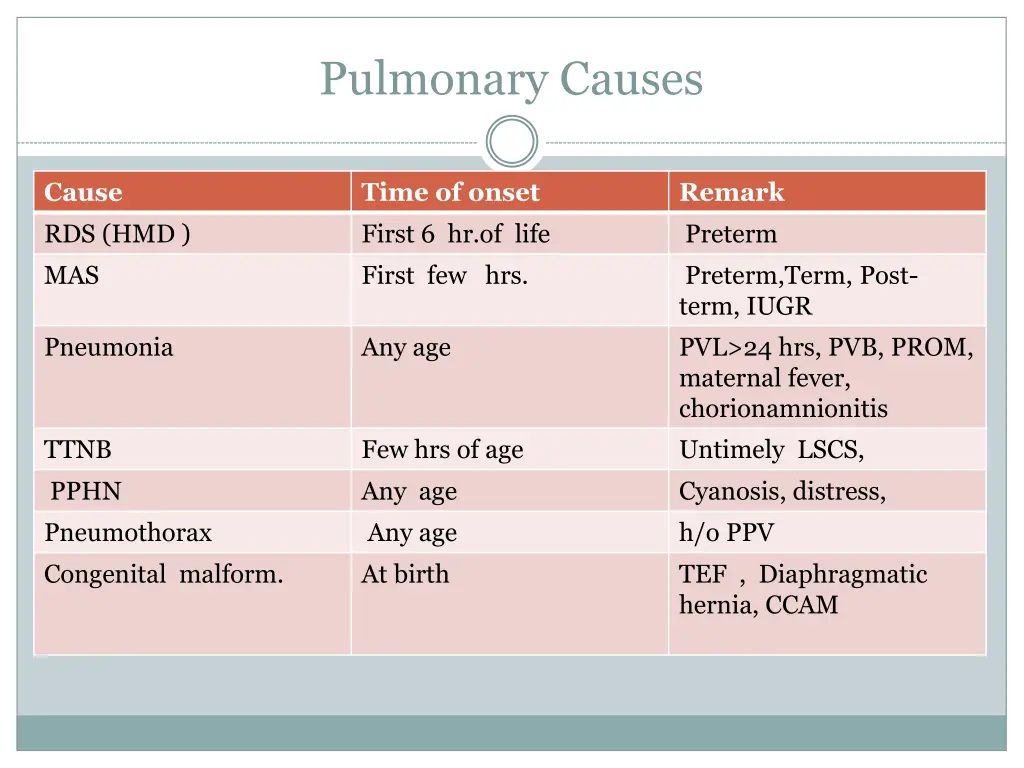
Pulmonary Causes Cause RDS (HMD ) MAS Time of onset First 6 hr.of life First few hrs. Remark Preterm Preterm,Term, Post- term, IUGR PVL>24 hrs, PVB, PROM, maternal fever, chorionamnionitis Untimely LSCS, Cyanosis, distress, h/o PPV TEF , Diaphragmatic hernia, CCAM Pneumonia Any age TTNB PPHN Pneumothorax Congenital malform. Few hrs of age Any age Any age At birth
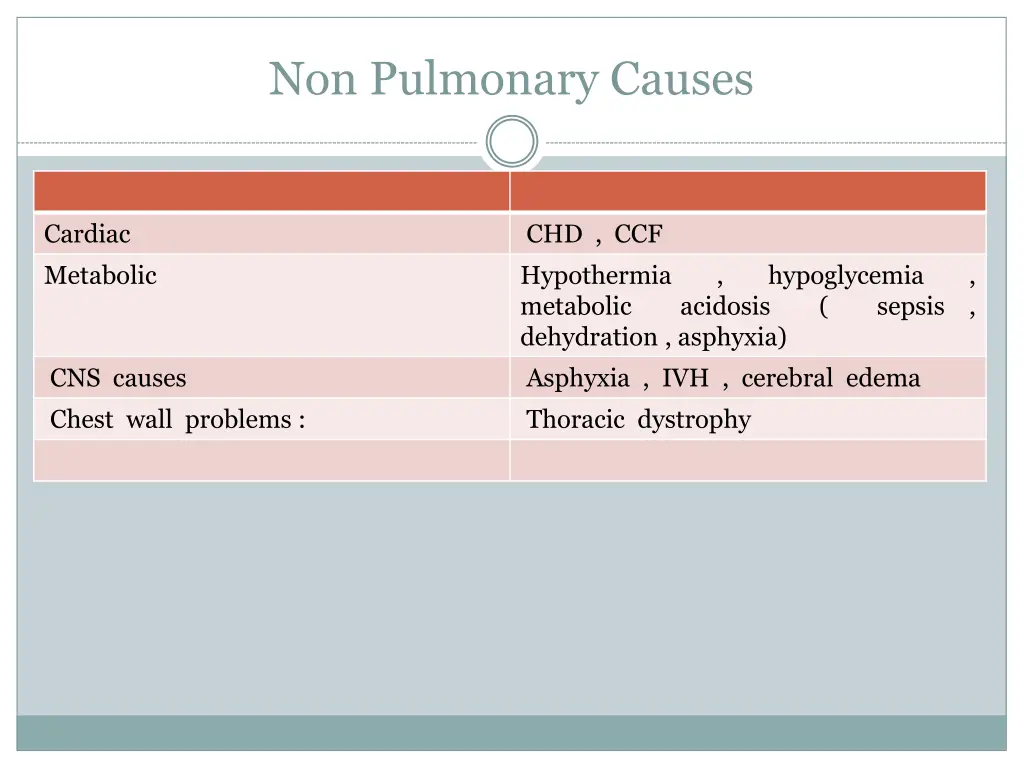
Non Pulmonary Causes Cardiac Metabolic CHD , CCF Hypothermia metabolic dehydration , asphyxia) Asphyxia , IVH , cerebral edema Thoracic dystrophy , hypoglycemia ( , , acidosis sepsis CNS causes Chest wall problems :
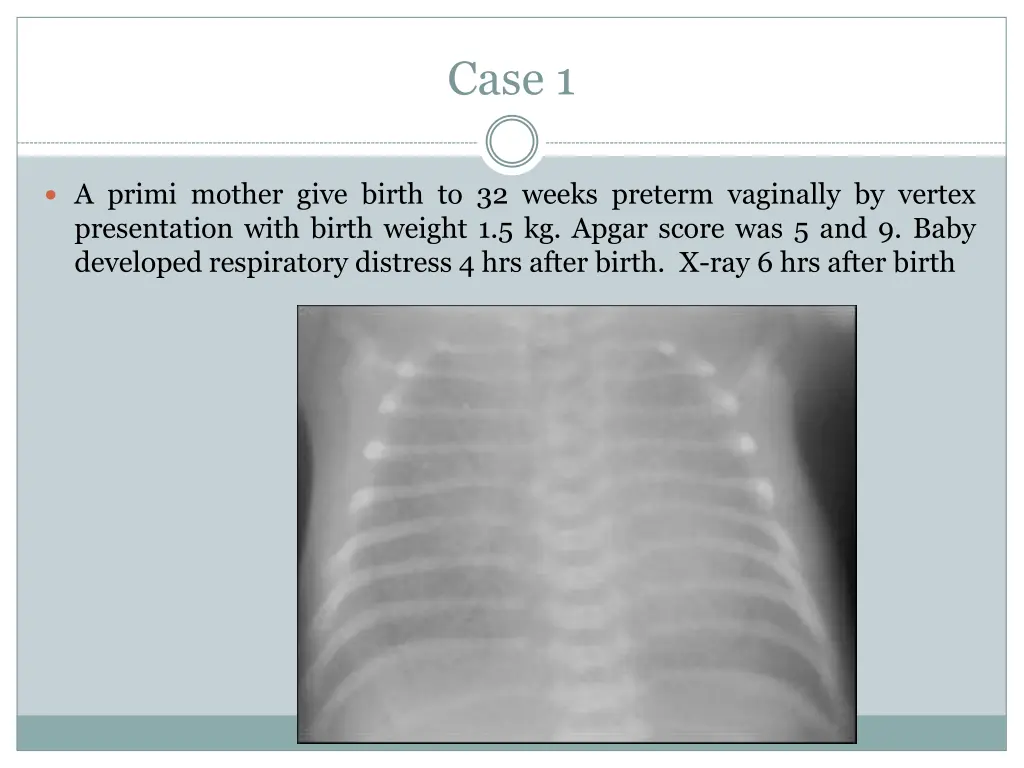
Case 1 A primi mother give birth to 32 weeks preterm vaginally by vertex presentation with birth weight 1.5 kg. Apgar score was 5 and 9. Baby developed respiratory distress 4 hrs after birth. X-ray 6 hrs after birth
What is the most probable diagnosis: RDS MAS TTNB Congenital Pneumonia Congenital diaphragmatic hernia Pneumothorax 1. 2. 3. 4. 5. 6.
Respiratory Distress Syndrome (HMD) RDS is common in Preterm babies < 34 wks. Of gestation . It is the commonest cause of RD in preterm neonate . Apart from Prematurity other causes are : Asphyxia Acidosis Maternal Diabetes C-Section
Etiopathogenesis Surfactant deficiency Surfactant is a Lipoprotein It is produced by Type 2 Alveolar cells of Lungs . Surfactant Therefore neonates production starts around born < 35 wks. Develop RDS. 20 wks. & peaks at 35-36 wks. Surfactant helps reduce surface tension in the alveoli ( from outside ) If SURFACTANT is less or to collapse during absent , surface tension and alveoli tend expiration .
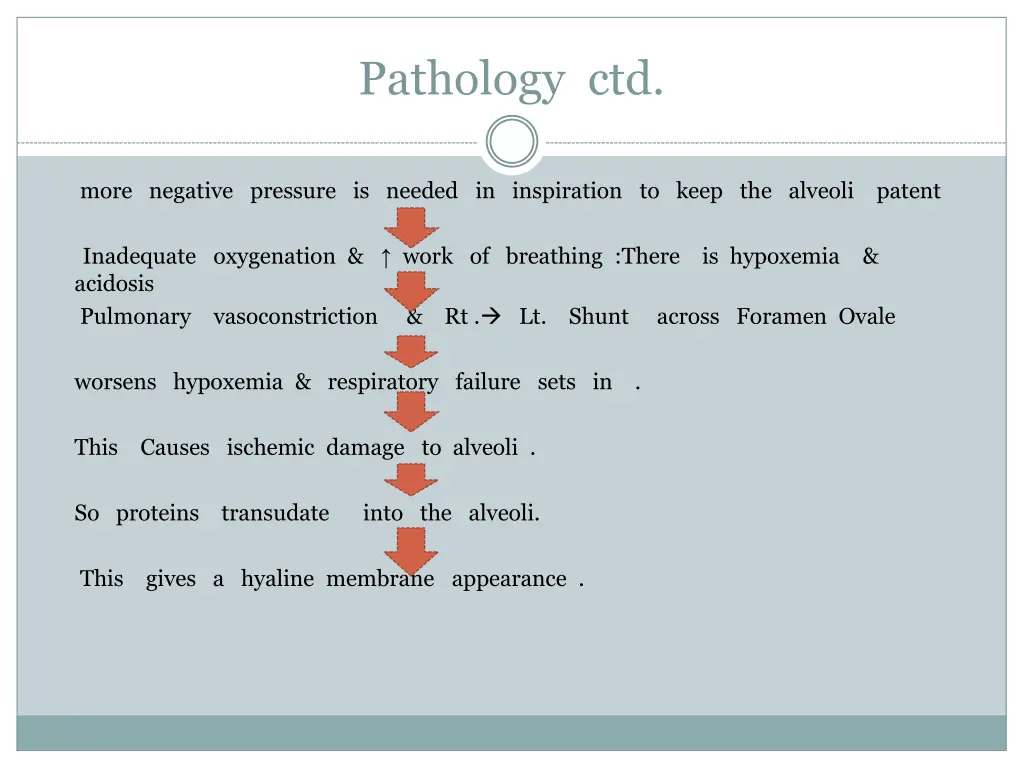
Pathology ctd. more negative pressure is needed in inspiration to keep the alveoli patent Inadequate oxygenation & work of breathing :There is hypoxemia & acidosis Pulmonary vasoconstriction & Rt . Lt. Shunt across Foramen Ovale worsens hypoxemia & respiratory failure sets in . This Causes ischemic damage to alveoli . So proteins transudate into the alveoli. This gives a hyaline membrane appearance .
Clinical Features of RDS Onset of RDS is within 6 hrs. Of life . Tachypnea , intercostal & subcostal retractions, grunting , cyanosis & air entry . Respiratory failure may occur.
Diagnosis of RDS Prenatal diagnosis : L/S ratio in amniotic fluid ; if > 2 it indicates lung maturity . Shake Test : Gastric or amniotic fluid + Alcohol shake for 15 sec . Allow to settle Bubbles are formed if if surfactant is adequate .
Investigations Septic screen, Calcium X-ray chest electrolytes. diagnosis is clinical X-Ray : Reticulogranular pattern , ground glass opacity, whiteout lung .
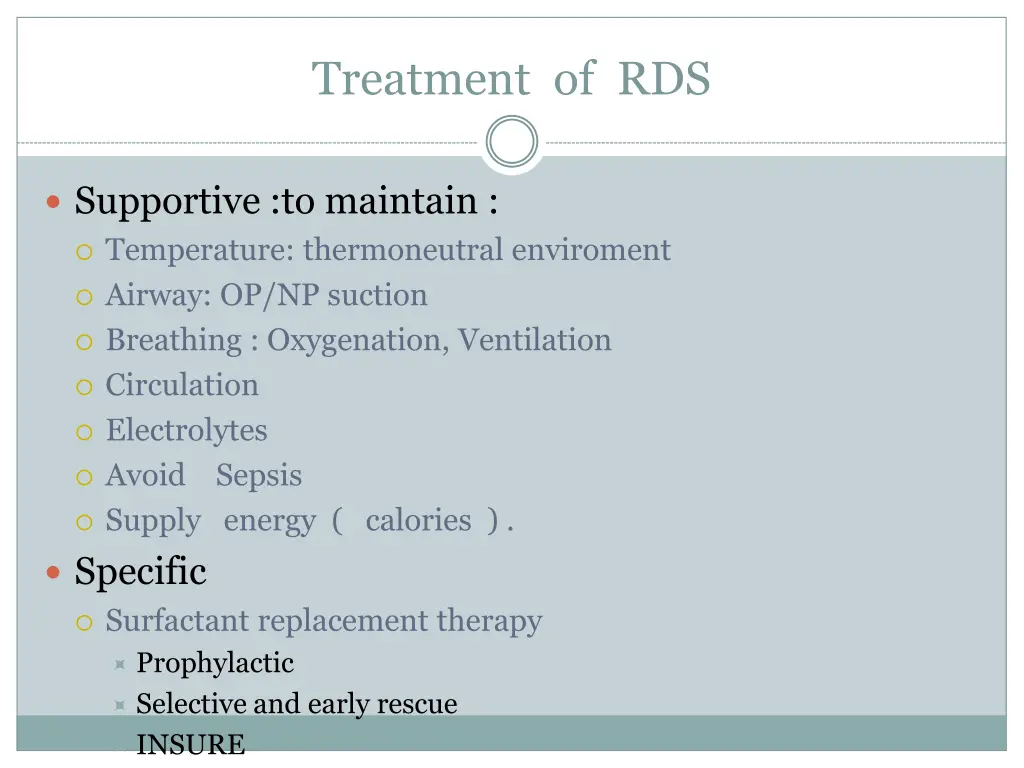
Treatment of RDS Supportive :to maintain : Temperature: thermoneutral enviroment Airway: OP/NP suction Breathing : Oxygenation, Ventilation Circulation Electrolytes Avoid Sepsis Supply energy ( calories ) . Specific Surfactant replacement therapy Prophylactic Selective and early rescue INSURE
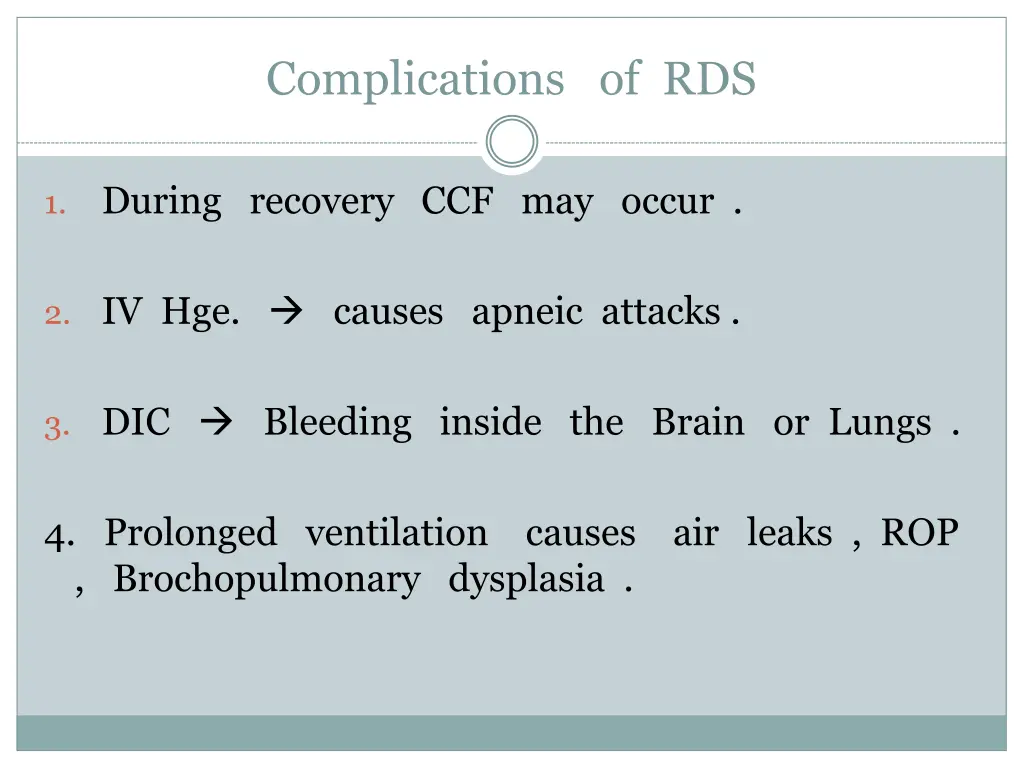
Complications of RDS During recovery CCF may occur . 1. 2. IV Hge. causes apneic attacks . 3. DIC Bleeding inside the Brain or Lungs . 4. Prolonged ventilation causes air leaks , ROP , Brochopulmonary dysplasia .
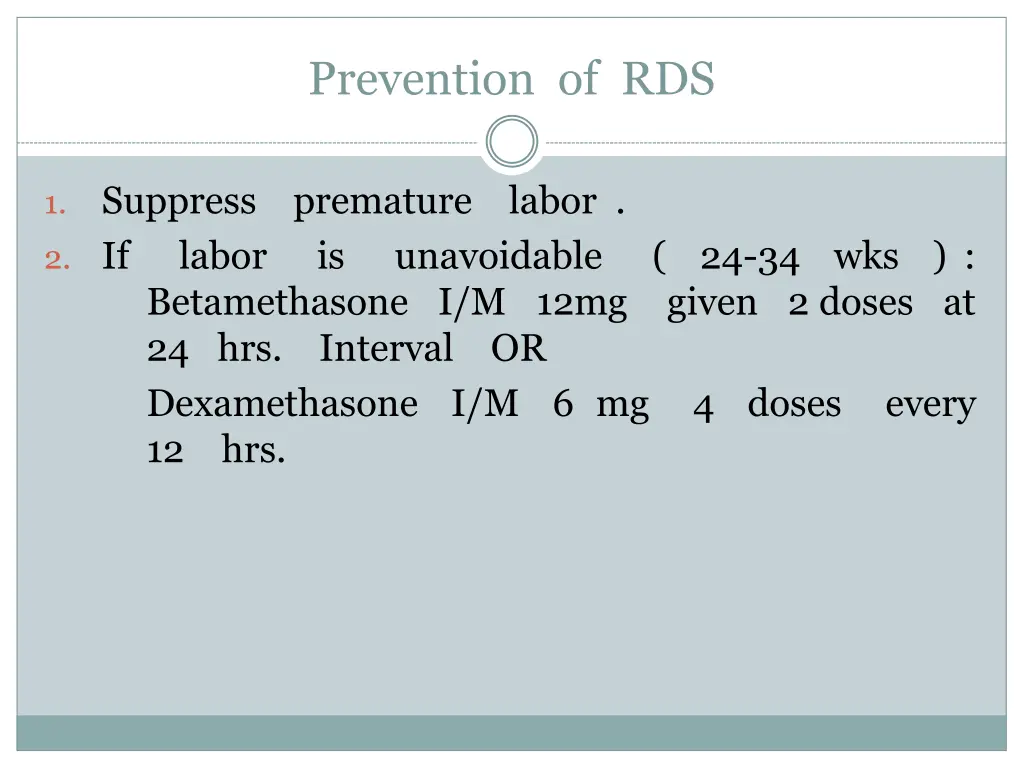
Prevention of RDS Suppress labor Betamethasone I/M 12mg 24 hrs. Interval Dexamethasone I/M 6 mg 12 hrs. premature is labor . 1. 2. If unavoidable ( 24-34 wks ) : given 2 doses at OR 4 doses every
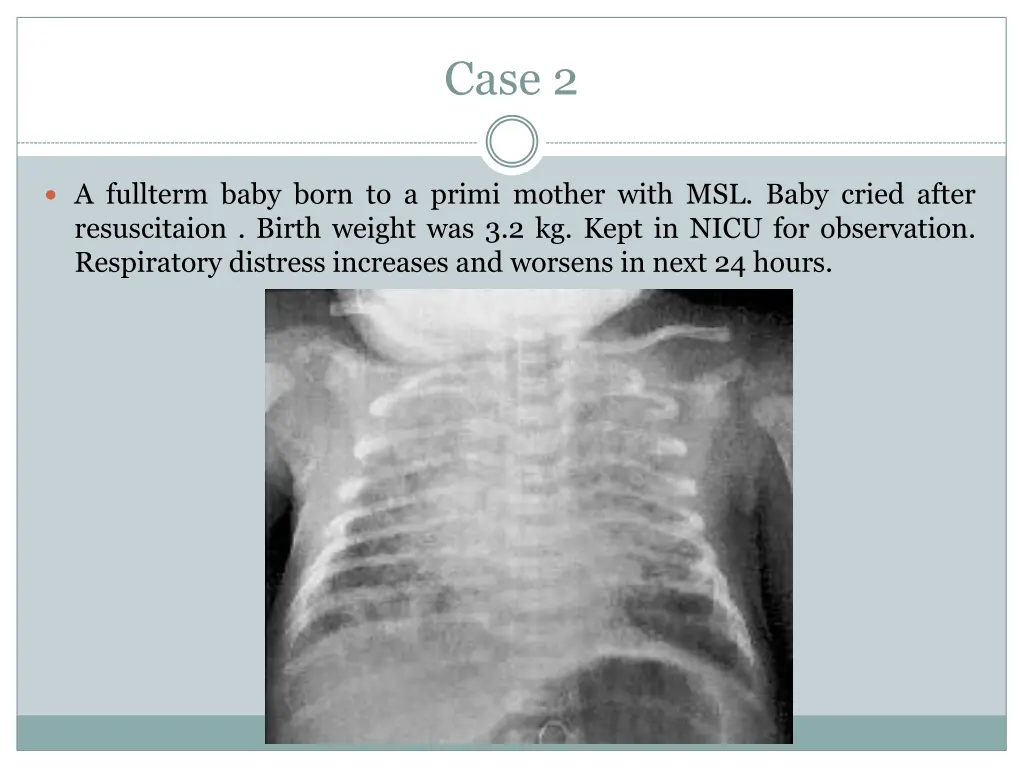
Case 2 A fullterm baby born to a primi mother with MSL. Baby cried after resuscitaion . Birth weight was 3.2 kg. Kept in NICU for observation. Respiratory distress increases and worsens in next 24 hours.
What is the most probable diagnosis: RDS MAS TTNB Congenital Pneumonia Congenital diaphragmatic hernia Pneumothorax 1. 2. 3. 4. 5. 6.
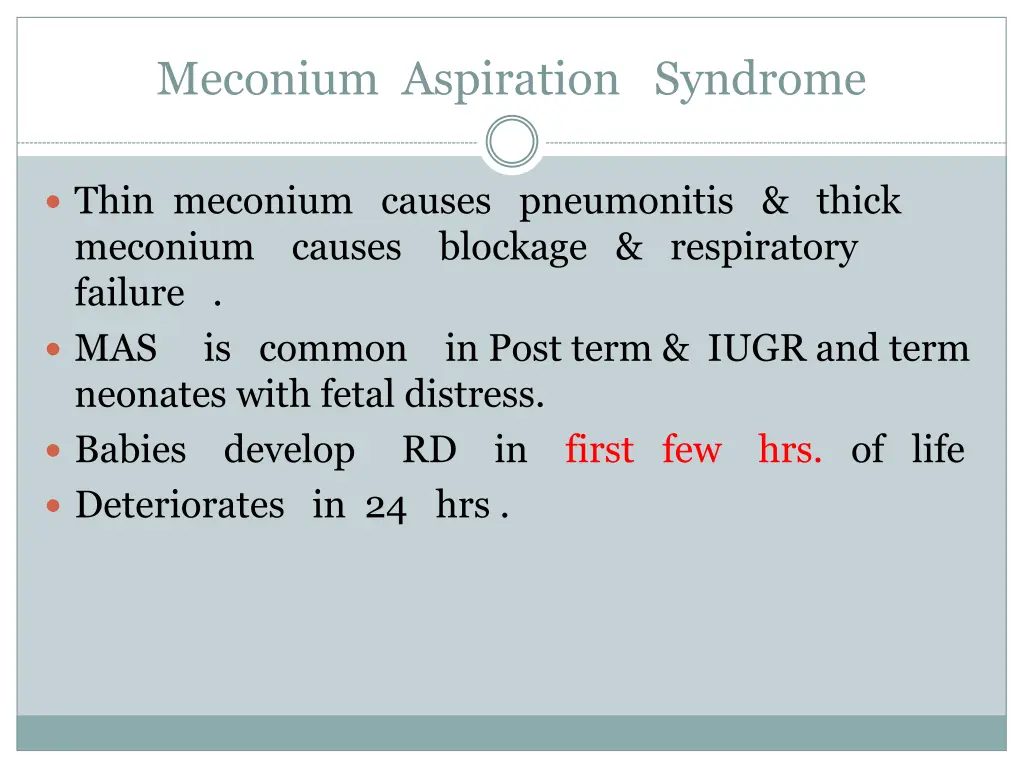
Meconium Aspiration Syndrome Thin meconium causes pneumonitis & thick meconium causes blockage & respiratory failure . MAS is common in Post term & IUGR and term neonates with fetal distress. Babies develop RD in first few hrs. of life Deteriorates in 24 hrs .
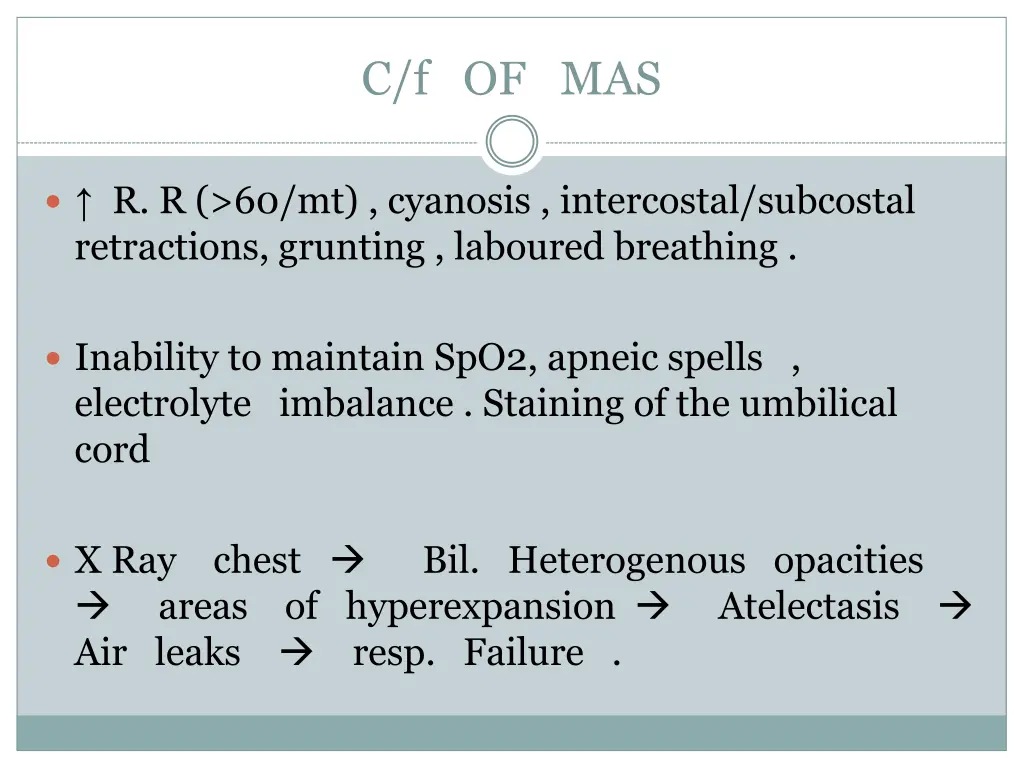
C/f OF MAS R. R (>60/mt) , cyanosis , intercostal/subcostal retractions, grunting , laboured breathing . Inability to maintain SpO2, apneic spells , electrolyte imbalance . Staining of the umbilical cord X Ray chest areas of hyperexpansion Air leaks resp. Failure . Bil. Heterogenous opacities Atelectasis
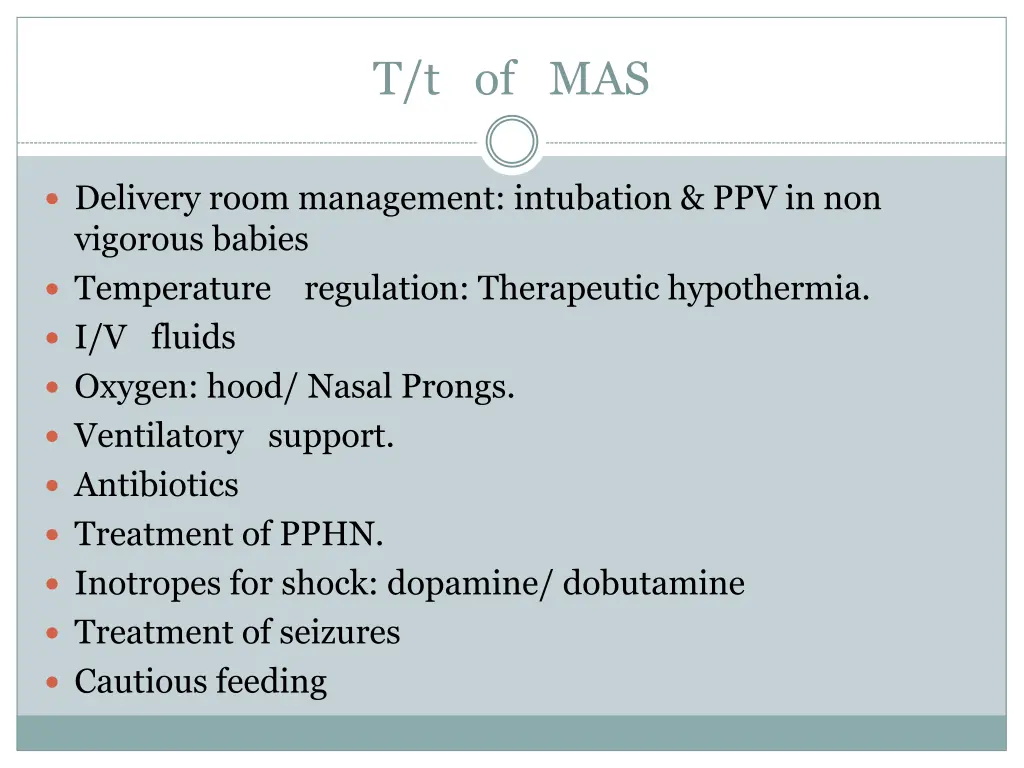
T/t of MAS Delivery room management: intubation & PPV in non vigorous babies Temperature regulation: Therapeutic hypothermia. I/V fluids Oxygen: hood/ Nasal Prongs. Ventilatory support. Antibiotics Treatment of PPHN. Inotropes for shock: dopamine/ dobutamine Treatment of seizures Cautious feeding
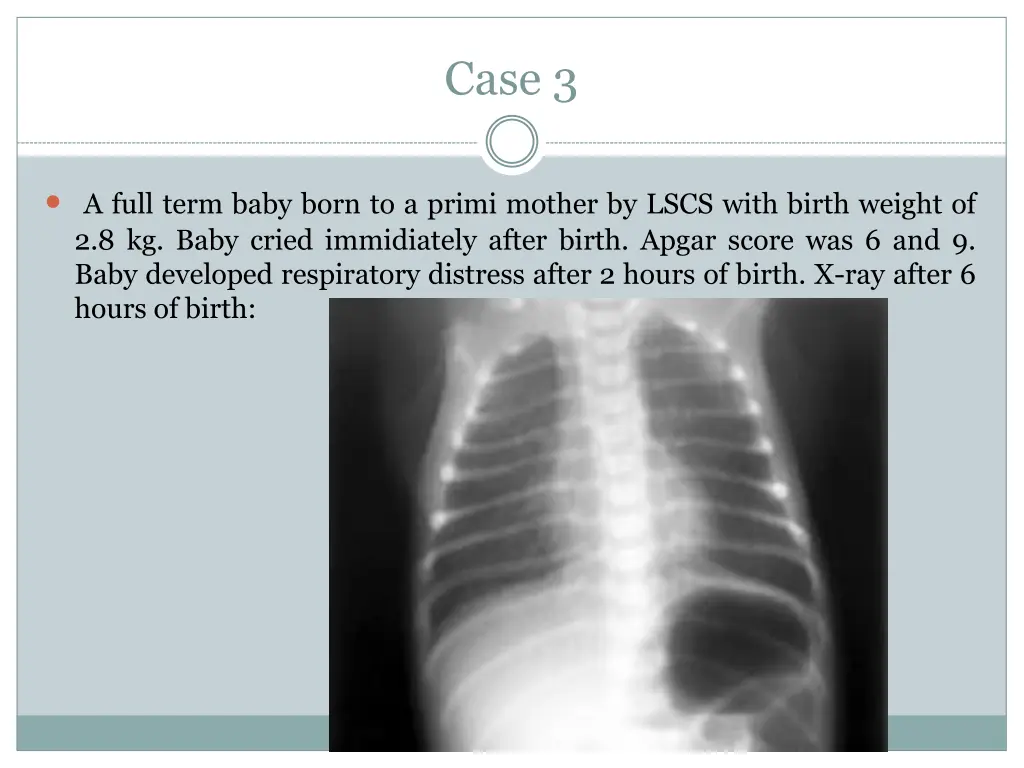
Case 3 A full term baby born to a primi mother by LSCS with birth weight of 2.8 kg. Baby cried immidiately after birth. Apgar score was 6 and 9. Baby developed respiratory distress after 2 hours of birth. X-ray after 6 hours of birth:
What is the most probable diagnosis: RDS MAS TTNB Congenital Pneumonia Pneumothorax Congenital diaphragmatic hernia 1. 2. 3. 4. 5. 6.
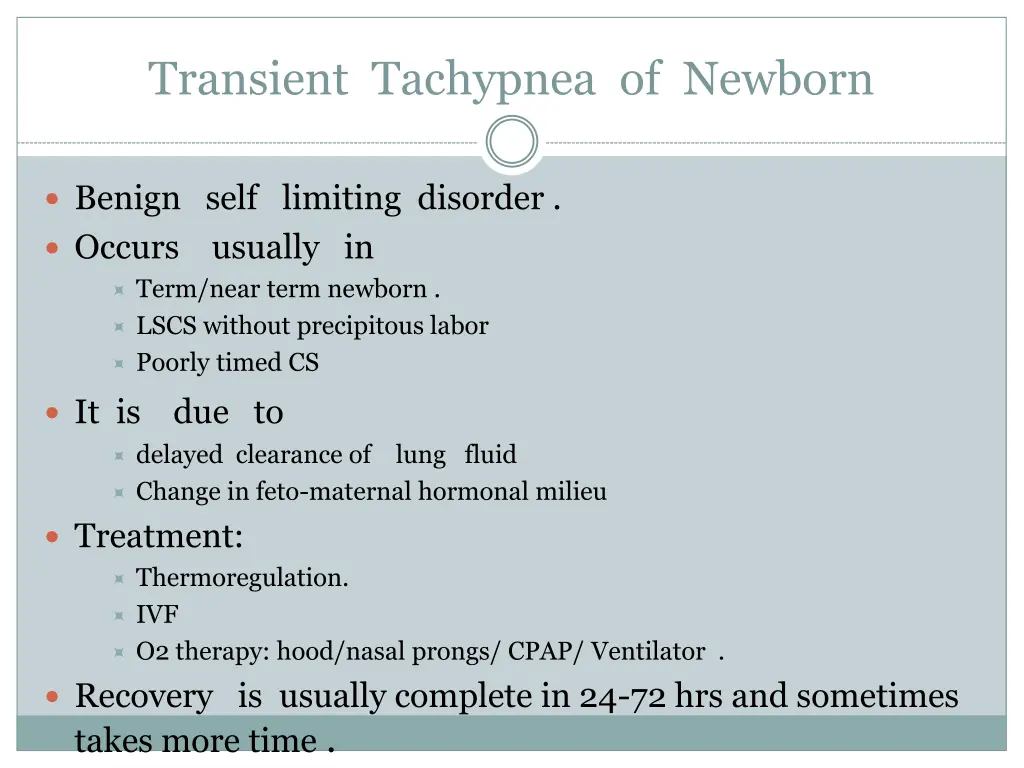
Transient Tachypnea of Newborn Benign self limiting disorder . Occurs usually in Term/near term newborn . LSCS without precipitous labor Poorly timed CS It is due to delayed clearance of lung fluid Change in feto-maternal hormonal milieu Treatment: Thermoregulation. IVF O2 therapy: hood/nasal prongs/ CPAP/ Ventilator . Recovery is usually complete in 24-72 hrs and sometimes takes more time .
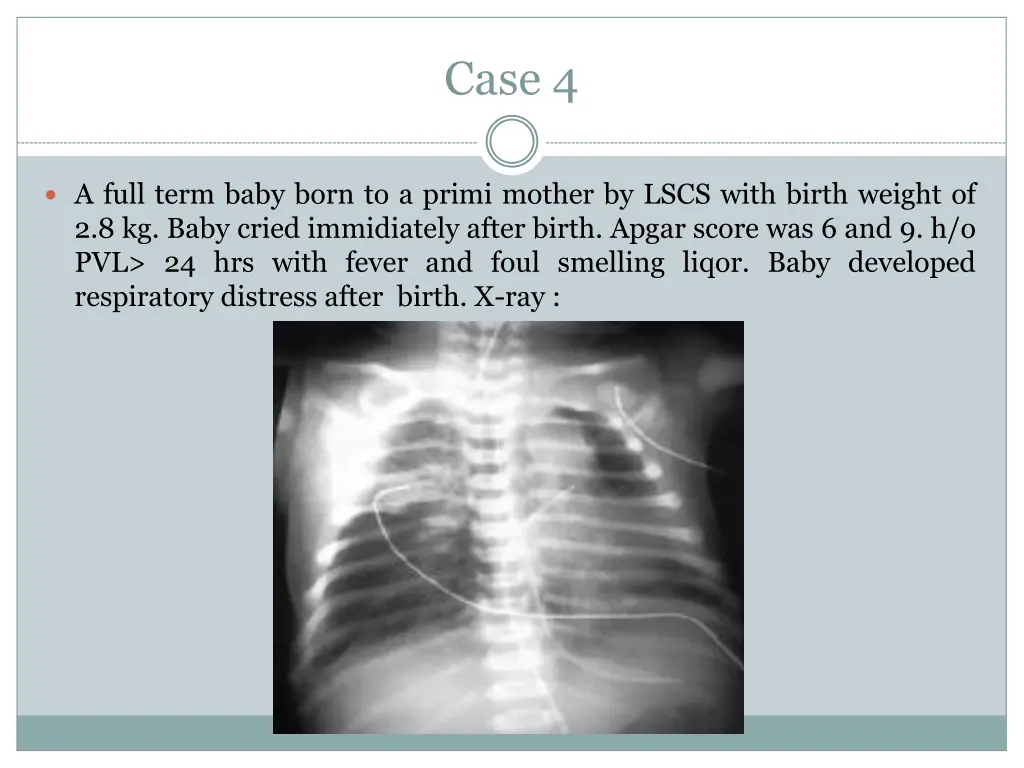
Case 4 A full term baby born to a primi mother by LSCS with birth weight of 2.8 kg. Baby cried immidiately after birth. Apgar score was 6 and 9. h/o PVL> 24 hrs with fever and foul smelling liqor. Baby developed respiratory distress after birth. X-ray :
What is the most probable diagnosis: RDS MAS TTNB Congenital Pneumonia Pneumothorax Congenital diaphragmatic hernia 1. 2. 3. 4. 5. 6.
Congenital Pneumonia H/o Leaking , Fever in mother . Respiratory distress with grunting , cyanosis , s/o sepsis . X-Ray shows patchy pneumonitis . Septic screen including CRP positive . T/t is Oxygen I/V fluids Antibiotics like 3 rd generation cephalosporins, or Piperacillin + Tazobactum . Antibiotics according to culture sensitivity
Cardiac causes CHD: Duct dependent lesions PDA is the common cause of CCF & resp. distress . PPHN T/t : Palliative: O2,/Inotropes/ PGE1/ treatment of CCF Ibuprofen/ Indomethacin for PDA Definitive: corrective surgeries
Surgical causes T.O Fistula , Diaphragmatic Hernia , Choanal atresia, CCAM, Pneumothorax etc. Treatment: surgical management .
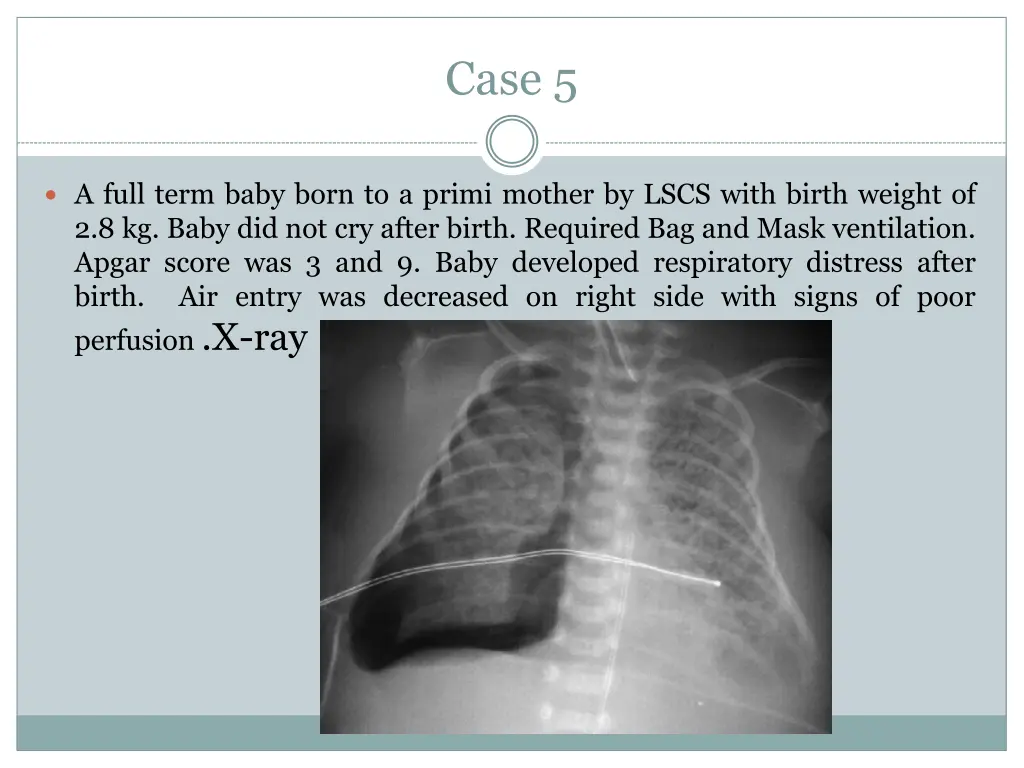
Case 5 A full term baby born to a primi mother by LSCS with birth weight of 2.8 kg. Baby did not cry after birth. Required Bag and Mask ventilation. Apgar score was 3 and 9. Baby developed respiratory distress after birth. Air entry was decreased on right side with signs of poor perfusion.X-ray :
What is the most probable diagnosis: RDS MAS TTNB Congenital Pneumonia Pneumothorax Congenital diaphragmatic hernia 1. 2. 3. 4. 5. 6.
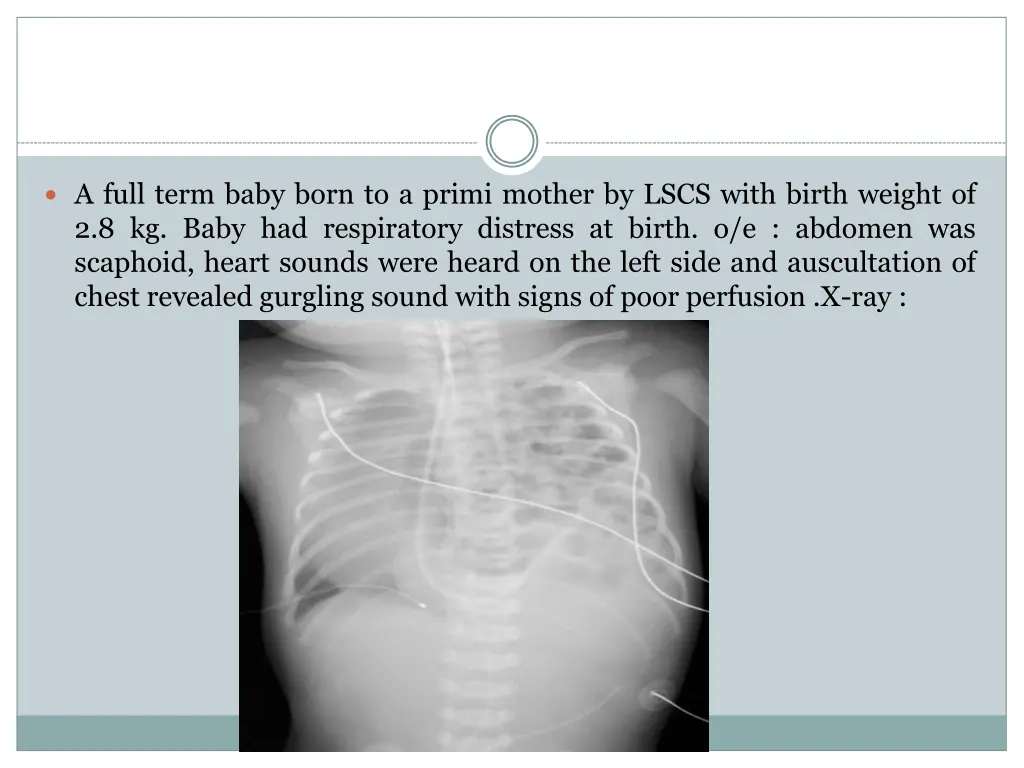
A full term baby born to a primi mother by LSCS with birth weight of 2.8 kg. Baby had respiratory distress at birth. o/e : abdomen was scaphoid, heart sounds were heard on the left side and auscultation of chest revealed gurgling sound with signs of poor perfusion .X-ray :