Respiratory System and Applied Terminology Overview
In this informative content, you will explore the respiratory system, cyanosis, hypoxia, and various applied terminology related to respiration. Dive into definitions, types, features, and physiological aspects of respiratory conditions. Learn about abnormal breathing patterns, respiratory acidosis, alkalosis, and common respiratory disorders like asthma, emphysema, and tuberculosis. Discover the causes, symptoms, and effects of these respiratory issues.

Download Presentation

Please find below an Image/Link to download the presentation.
The content on the website is provided AS IS for your information and personal use only. It may not be sold, licensed, or shared on other websites without obtaining consent from the author.If you encounter any issues during the download, it is possible that the publisher has removed the file from their server.
You are allowed to download the files provided on this website for personal or commercial use, subject to the condition that they are used lawfully. All files are the property of their respective owners.
The content on the website is provided AS IS for your information and personal use only. It may not be sold, licensed, or shared on other websites without obtaining consent from the author.
E N D
Presentation Transcript
Respiratory System Dr Archna Ghildiyal Associate Professor Department of Physiology KGMU
Lecture:10 Contents Applied-Terminology Hypoxia
Learning Objectives Definition of Terms Cyanosis: Types & Features Abnormal Breathing Hypoxia: Types & Physiology
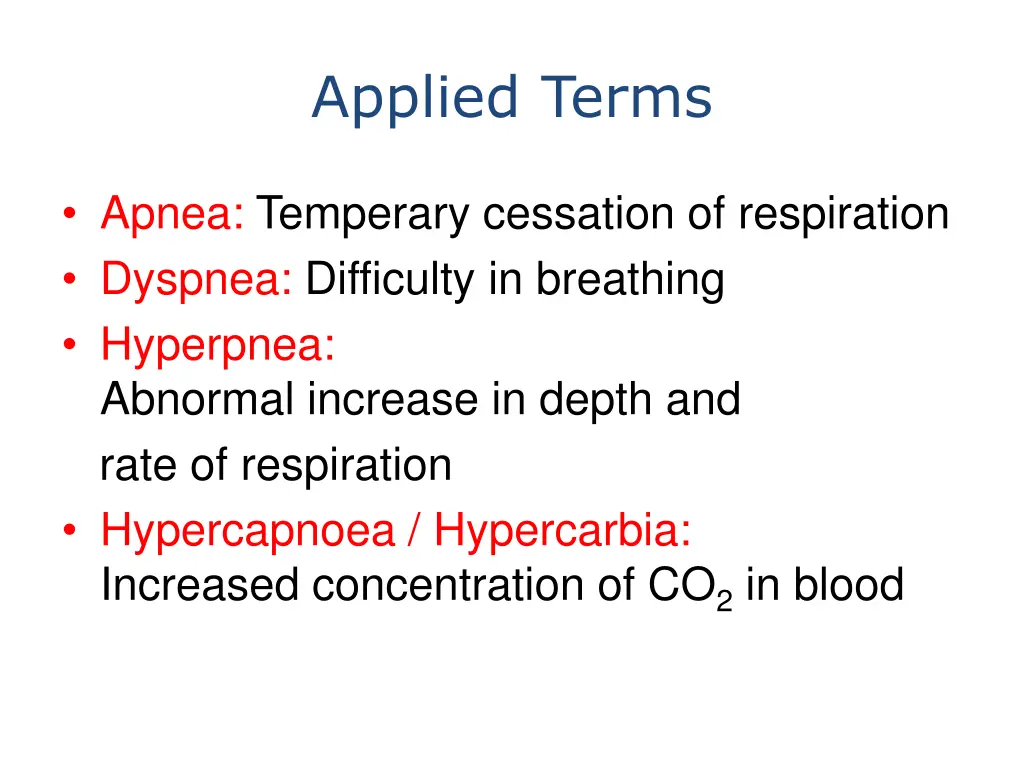
Applied Terms Apnea: Temperary cessation of respiration Dyspnea: Difficulty in breathing Hyperpnea: Abnormal increase in depth and rate of respiration Hypercapnoea / Hypercarbia: Increased concentration of CO2in blood
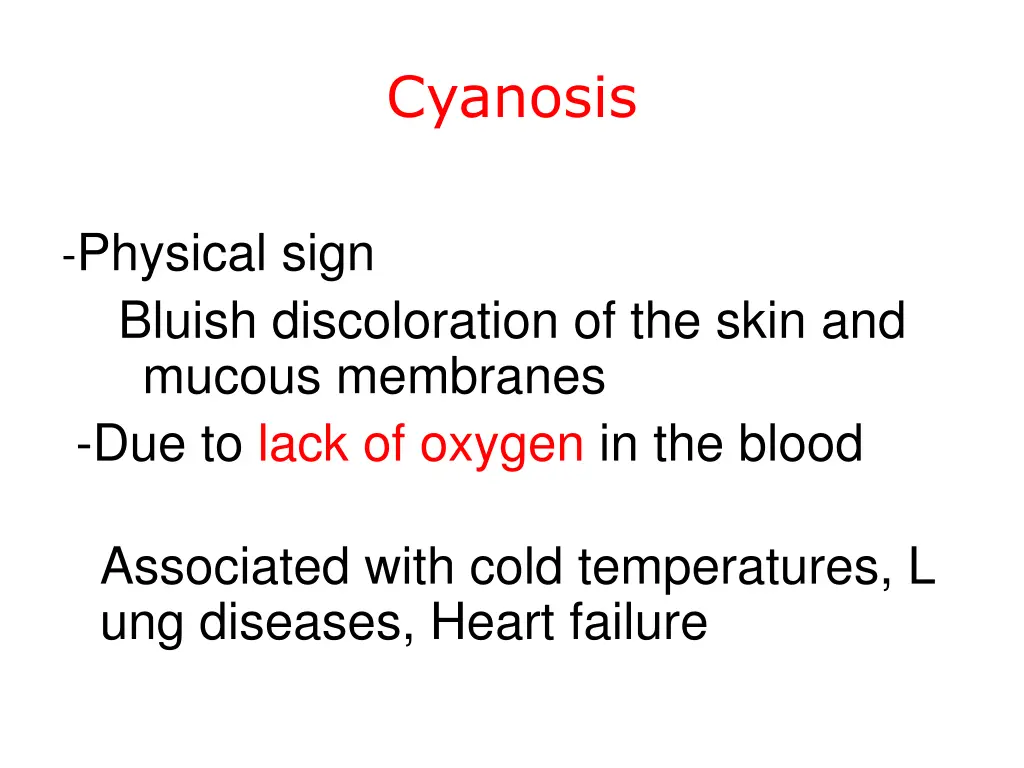
Cyanosis -Physical sign Bluish discoloration of the skin and mucous membranes -Due to lack of oxygen in the blood Associated with cold temperatures, L ung diseases, Heart failure
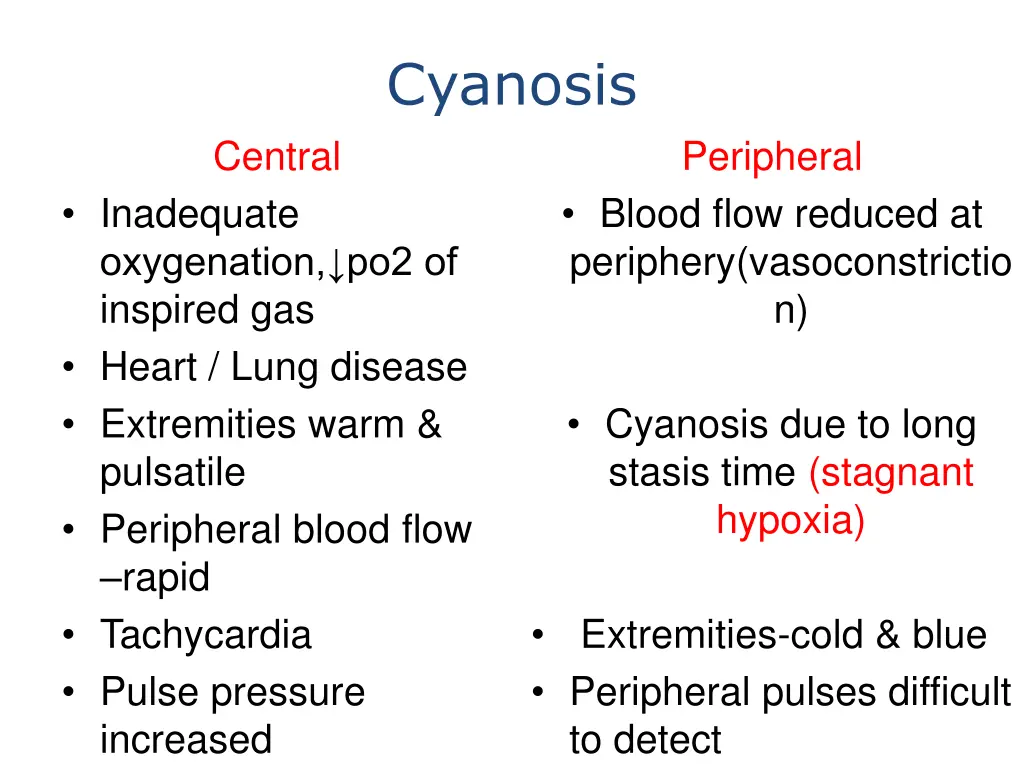
Cyanosis Central Peripheral Inadequate oxygenation, po2 of inspired gas Heart / Lung disease Extremities warm & pulsatile Peripheral blood flow rapid Tachycardia Pulse pressure increased Blood flow reduced at periphery(vasoconstrictio n) Cyanosis due to long stasis time (stagnant hypoxia) Extremities-cold & blue Peripheral pulses difficult to detect
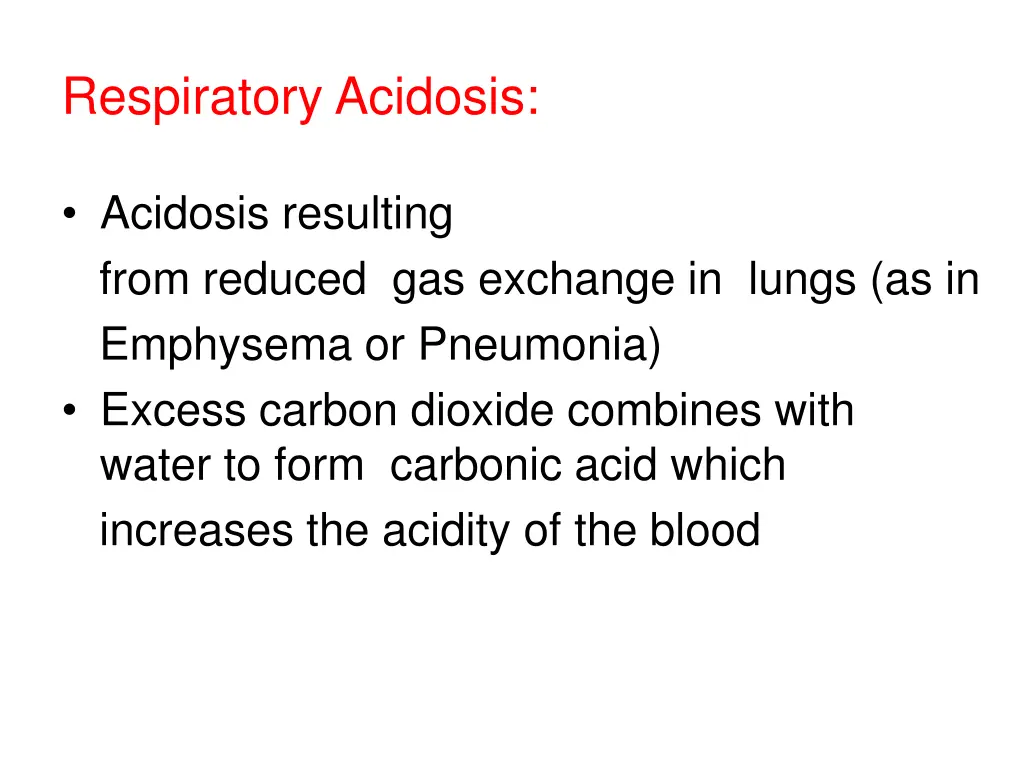
Respiratory Acidosis: Acidosis resulting from reduced gas exchange in lungs (as in Emphysema or Pneumonia) Excess carbon dioxide combines with water to form carbonic acid which increases the acidity of the blood
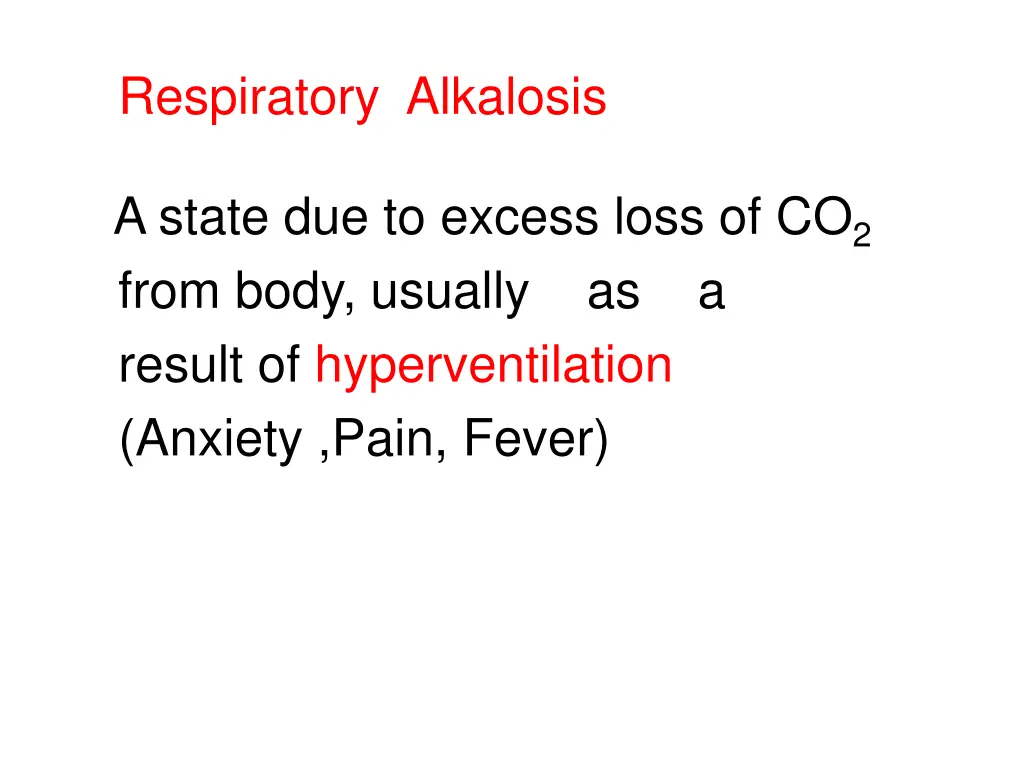
Respiratory Alkalosis A state due to excess loss of CO2 from body, usually result of hyperventilation (Anxiety ,Pain, Fever) as a
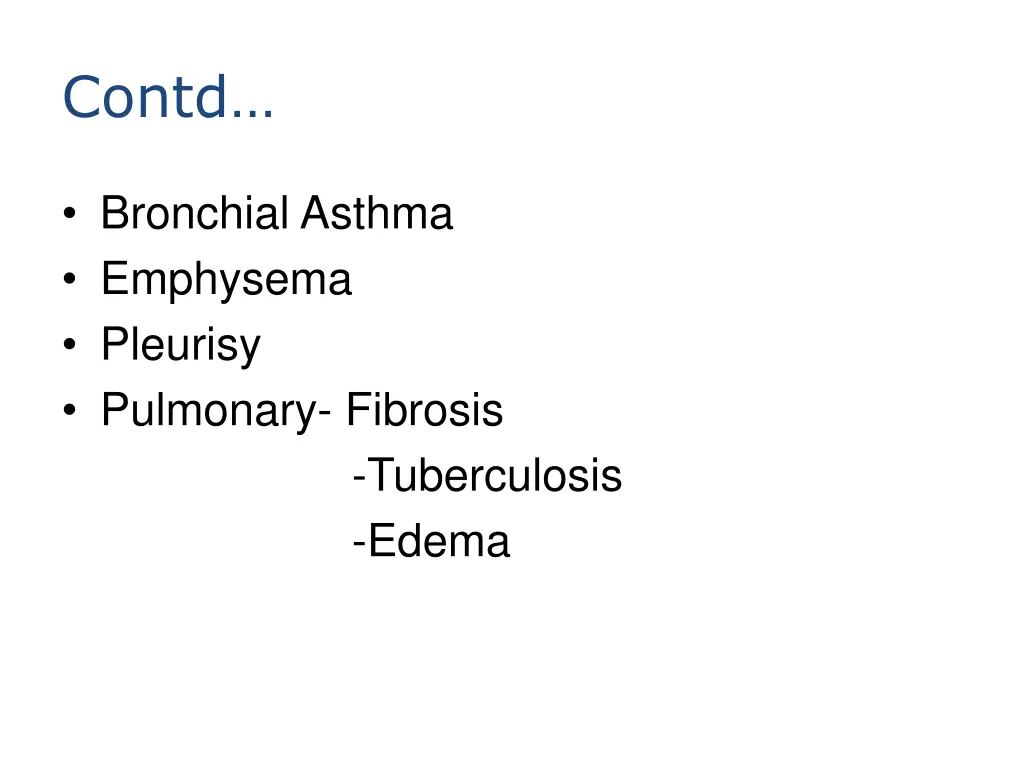
Contd Bronchial Asthma Emphysema Pleurisy Pulmonary- Fibrosis -Tuberculosis -Edema
Abnormal Breathing Pattern Cheyne-Stokes Breathing -Periods of apnea punctuated by periods of hyperpnea -Type of periodic breathing Occurs in: Brain stem disease affecting respiratory centers
Kussmaul Breathing Abnormally deep, very rapid sighing respiration Characteristic of Diabetic ketoacidosis (Metabolic Acidosis)
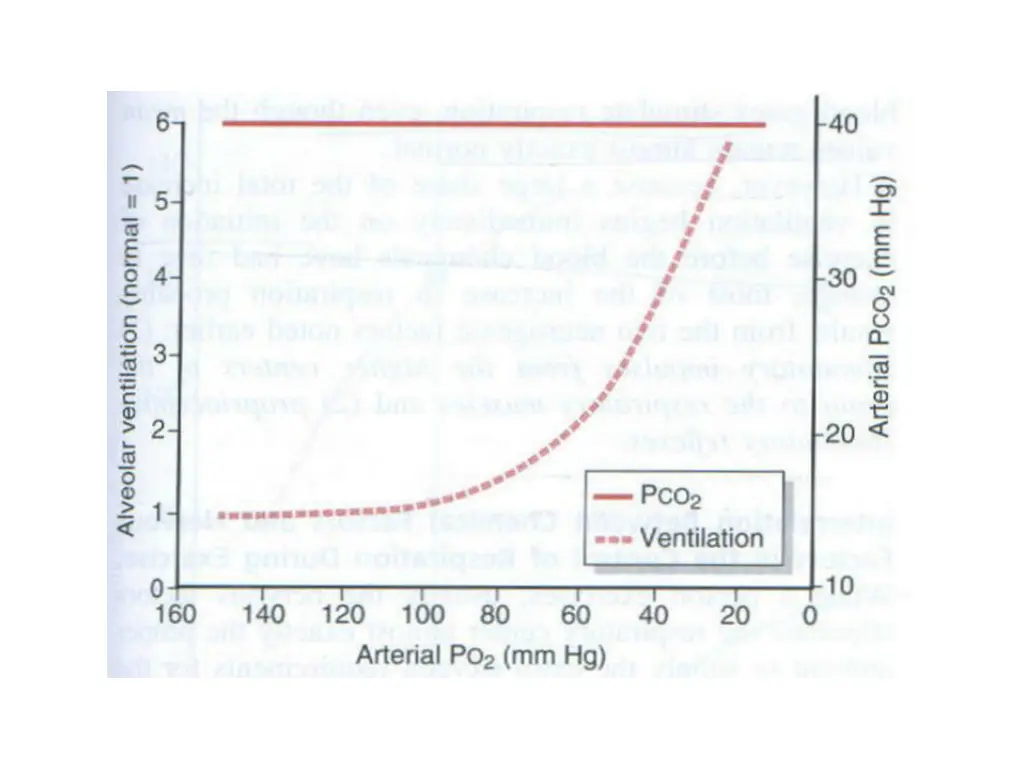
Hypoxia Inadequate oxygen supply to the cells and tissues of the body
Hypoxia-Types According to cause: Hypoxic Anaemic Stagnant Histoxic
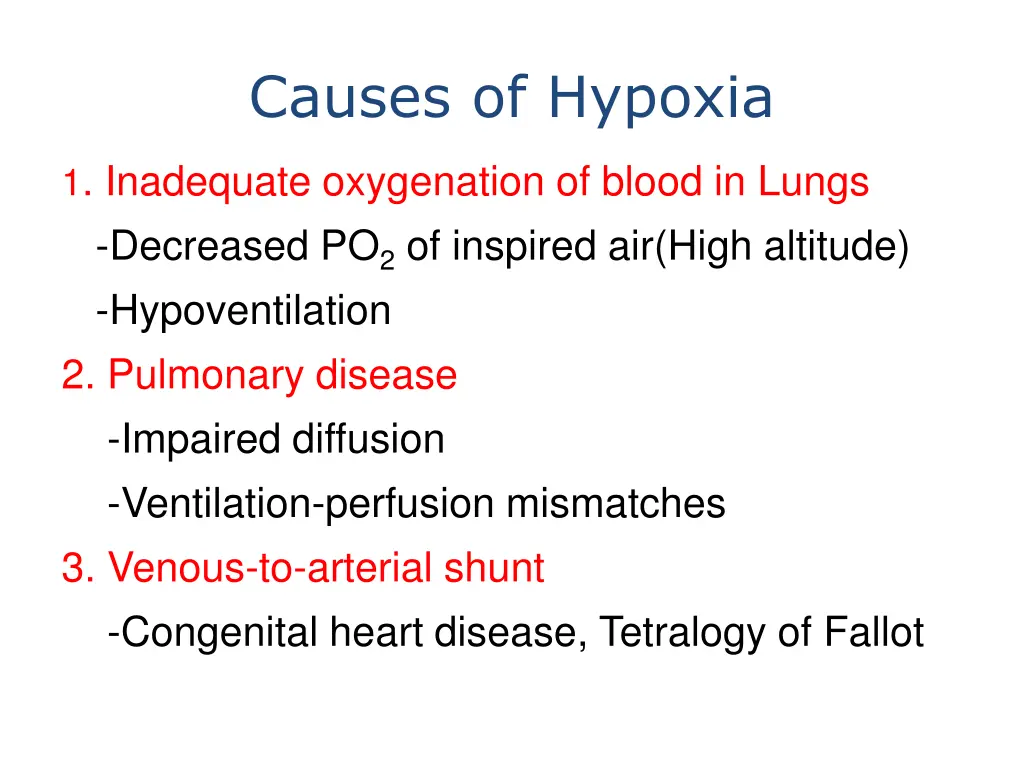
Causes of Hypoxia 1. Inadequate oxygenation of blood in Lungs -Decreased PO2of inspired air(High altitude) -Hypoventilation 2. Pulmonary disease -Impaired diffusion -Ventilation-perfusion mismatches 3. Venous-to-arterial shunt -Congenital heart disease, Tetralogy of Fallot
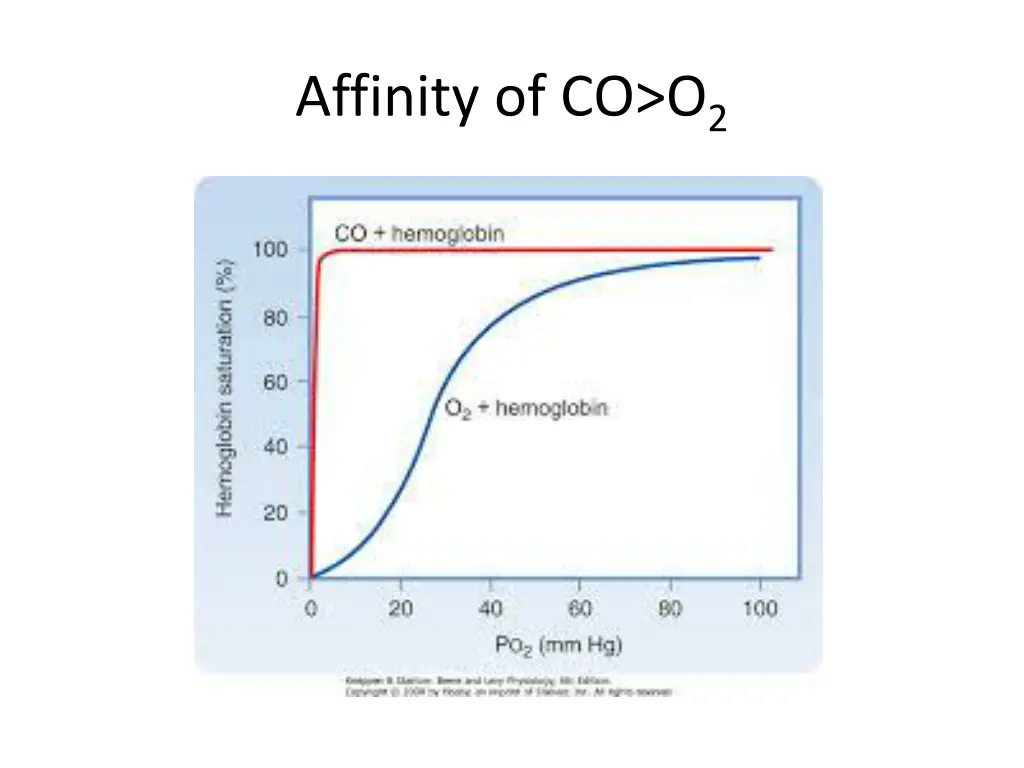
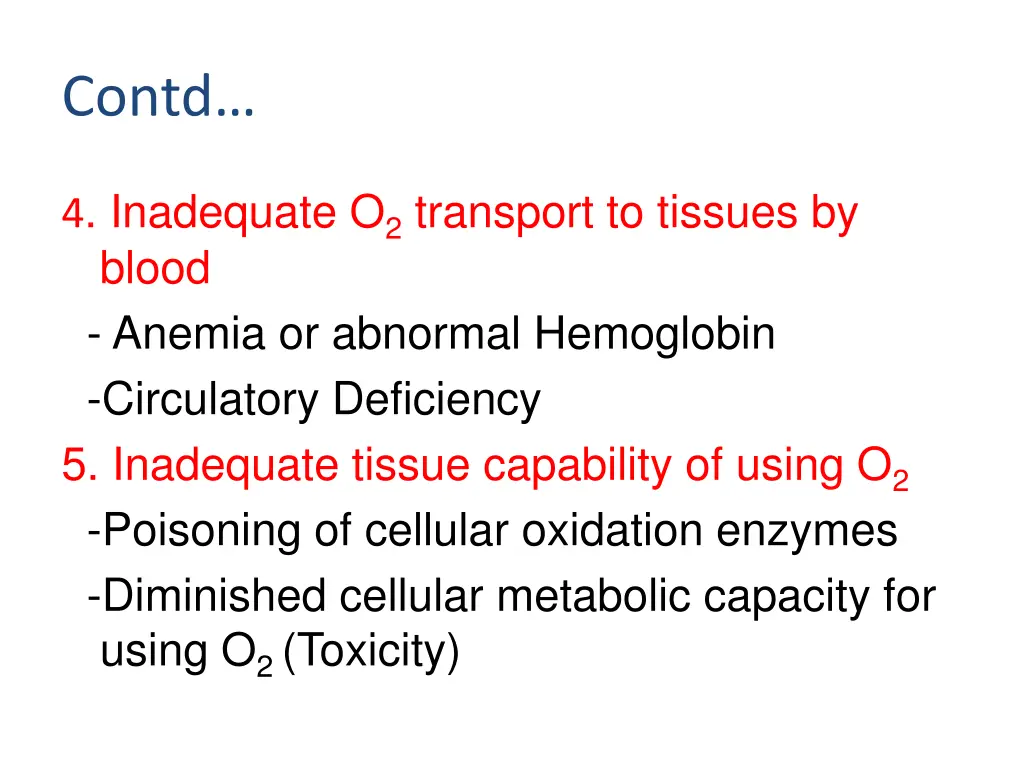
Contd 4. Inadequate O2transport to tissues by blood - Anemia or abnormal Hemoglobin -Circulatory Deficiency 5. Inadequate tissue capability of using O2 -Poisoning of cellular oxidation enzymes -Diminished cellular metabolic capacity for using O2 (Toxicity)
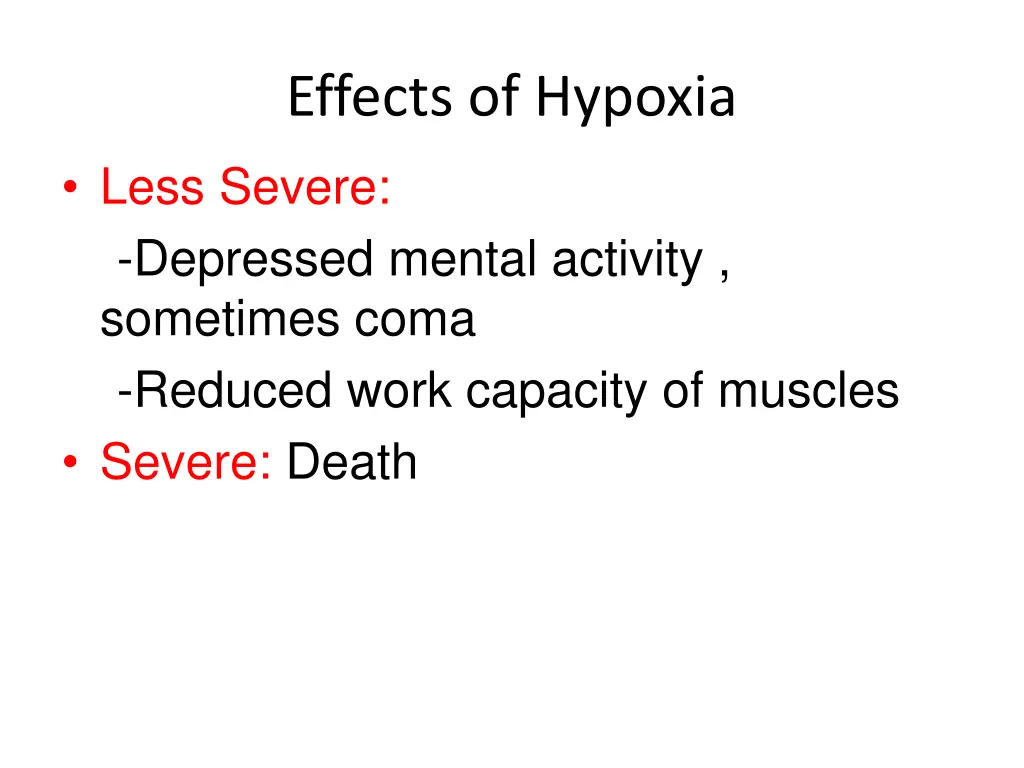
Effects of Hypoxia Less Severe: -Depressed mental activity , sometimes coma -Reduced work capacity of muscles Severe: Death
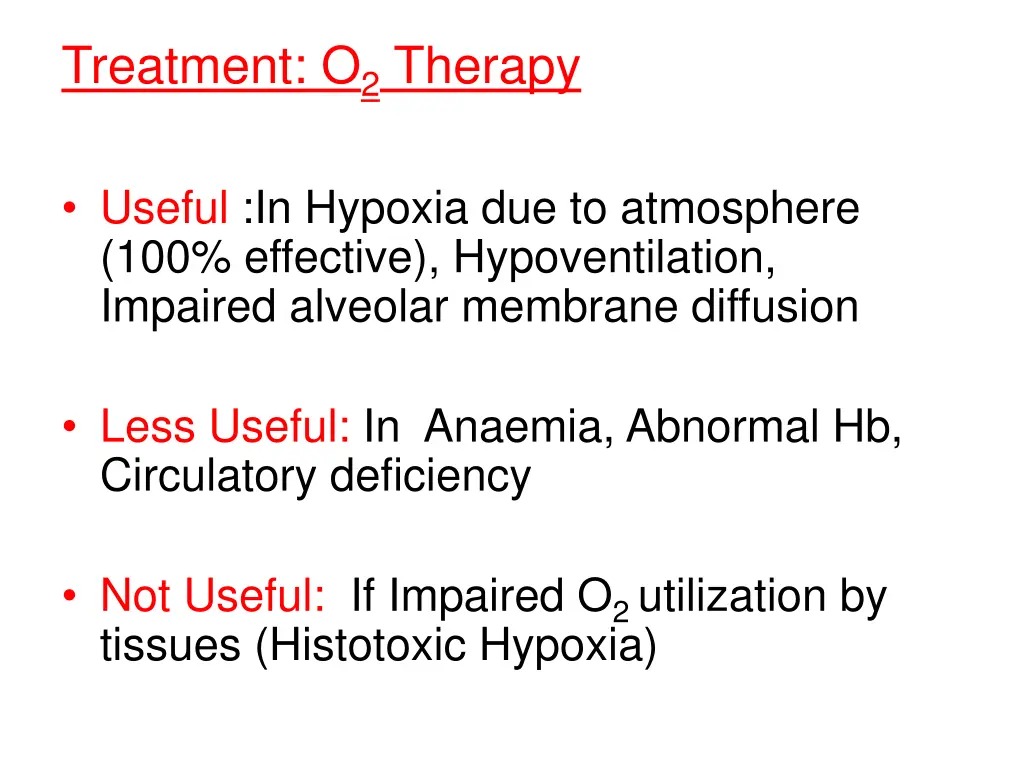
Treatment: O2Therapy Useful :In Hypoxia due to atmosphere (100% effective), Hypoventilation, Impaired alveolar membrane diffusion Less Useful: In Anaemia, Abnormal Hb, Circulatory deficiency Not Useful: If Impaired O2 utilization by tissues (Histotoxic Hypoxia)
References Guyton & Hall.Text book of Medical Physiology Ganong s Review of Medical Physiology Berne & Levy Physiology http://meded.ucsd.edu/ifp/jwest/resp_ phys/student_files.html
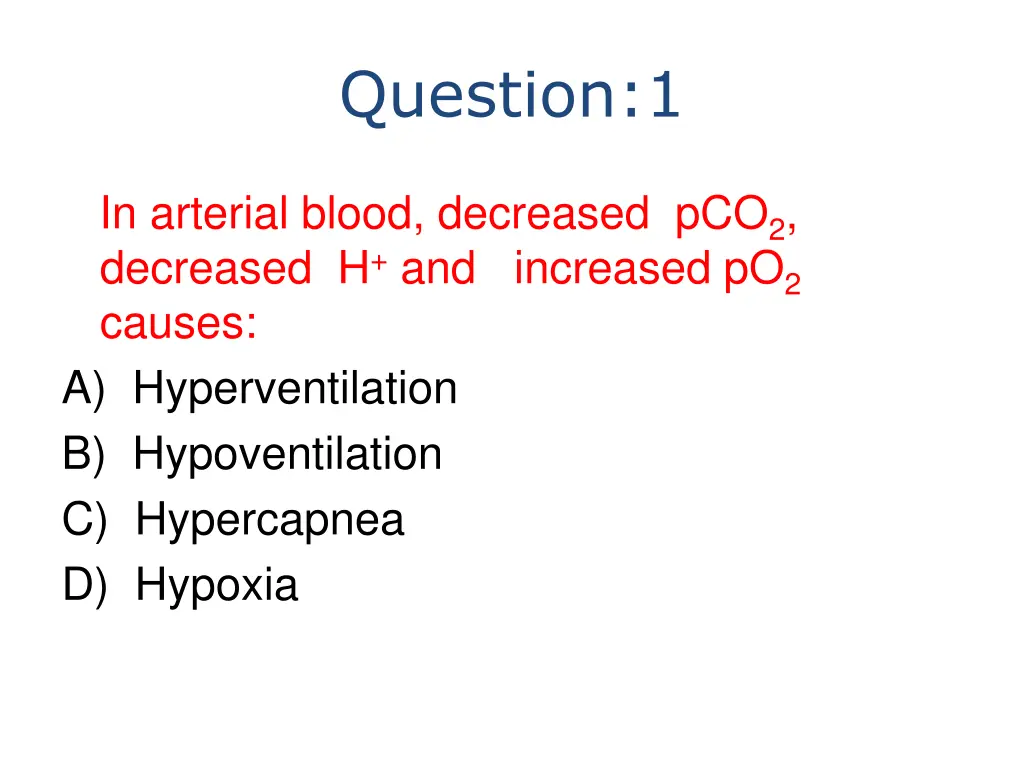
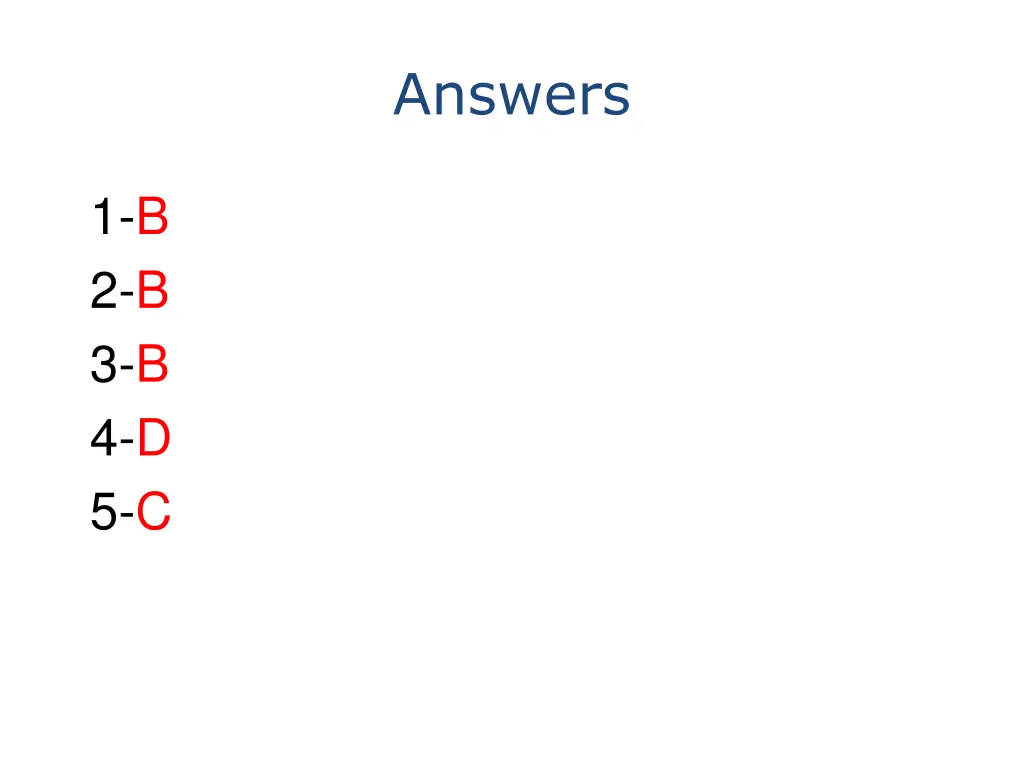
Question:1 In arterial blood, decreased pCO2, decreased H+and increased pO2 causes: A) Hyperventilation B) Hypoventilation C) Hypercapnea D) Hypoxia
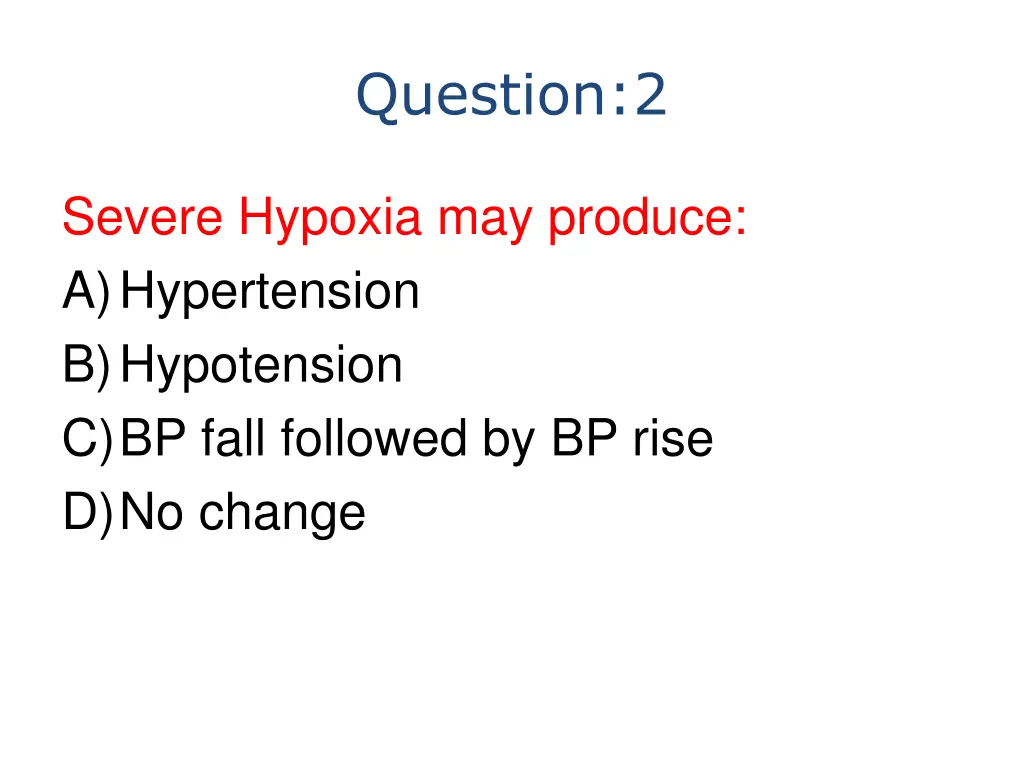
Question:2 Severe Hypoxia may produce: A)Hypertension B)Hypotension C)BP fall followed by BP rise D)No change
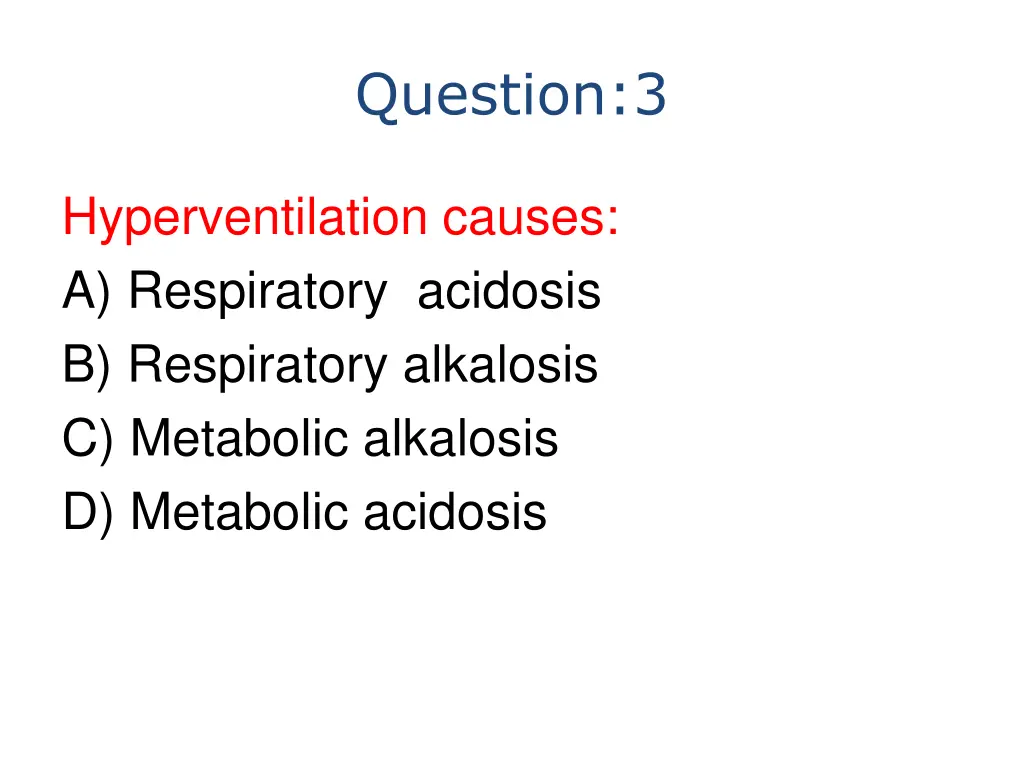
Question:3 Hyperventilation causes: A) Respiratory acidosis B) Respiratory alkalosis C) Metabolic alkalosis D) Metabolic acidosis
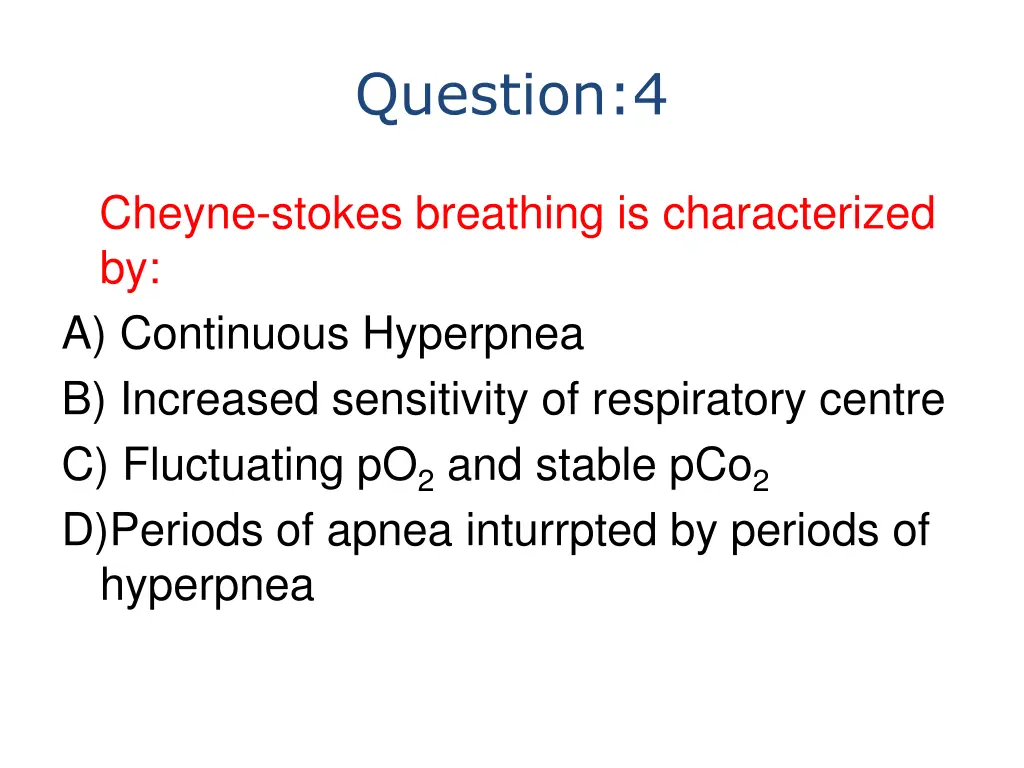
Question:4 Cheyne-stokes breathing is characterized by: A) Continuous Hyperpnea B) Increased sensitivity of respiratory centre C) Fluctuating pO2and stable pCo2 D)Periods of apnea inturrpted by periods of hyperpnea
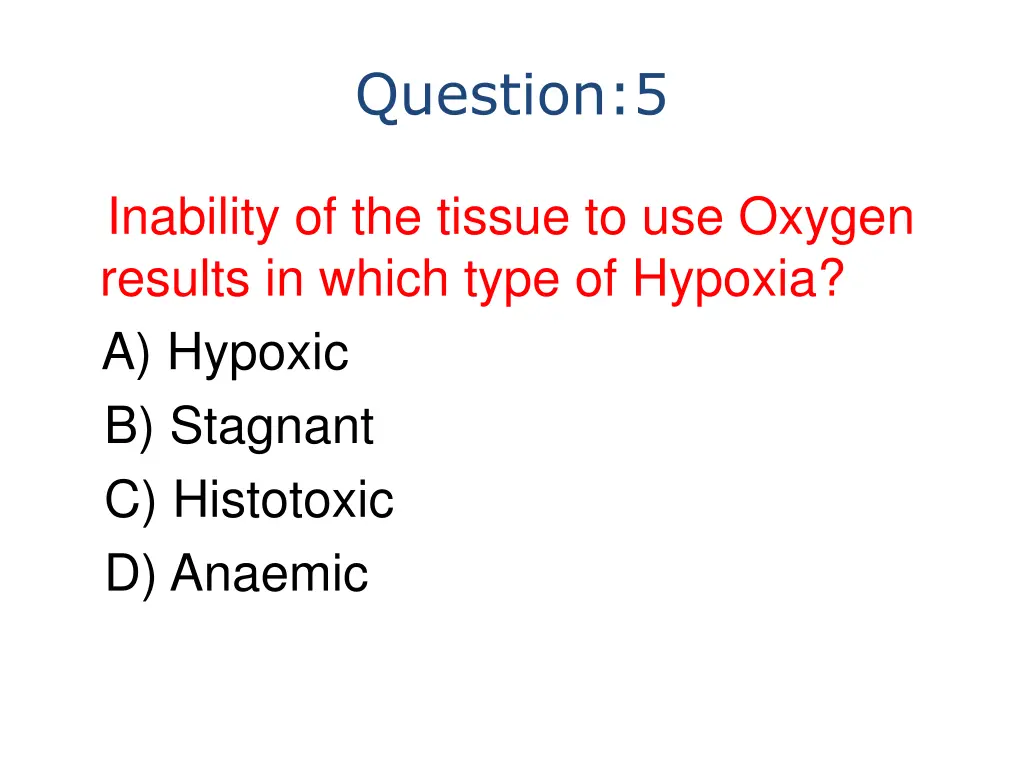
Question:5 Inability of the tissue to use Oxygen results in which type of Hypoxia? A) Hypoxic B) Stagnant C) Histotoxic D) Anaemic
Answers 1-B 2-B 3-B 4-D 5-C