RHETORICAL ANALYSIS
Analyze how rhetorical devices such as ethos, pathos, and logos are utilized in Martin Luther King Jr.'s "I Have a Dream" speech and Elie Wiesel's Nobel Peace Prize acceptance speech to strengthen their arguments. The process involves identifying specific devices, pinpointing their application within the text, and evaluating their effectiveness in supporting the authors' positions. Through structured analysis, explore the impact of ethos, pathos, and logos on enhancing the persuasive power of these renowned speeches.

Download Presentation

Please find below an Image/Link to download the presentation.
The content on the website is provided AS IS for your information and personal use only. It may not be sold, licensed, or shared on other websites without obtaining consent from the author.If you encounter any issues during the download, it is possible that the publisher has removed the file from their server.
You are allowed to download the files provided on this website for personal or commercial use, subject to the condition that they are used lawfully. All files are the property of their respective owners.
The content on the website is provided AS IS for your information and personal use only. It may not be sold, licensed, or shared on other websites without obtaining consent from the author.
E N D
Presentation Transcript
RHETORICAL ANALYSIS PARAGRAPH ENGLISH 9 PERRY HIGH SCHOOL
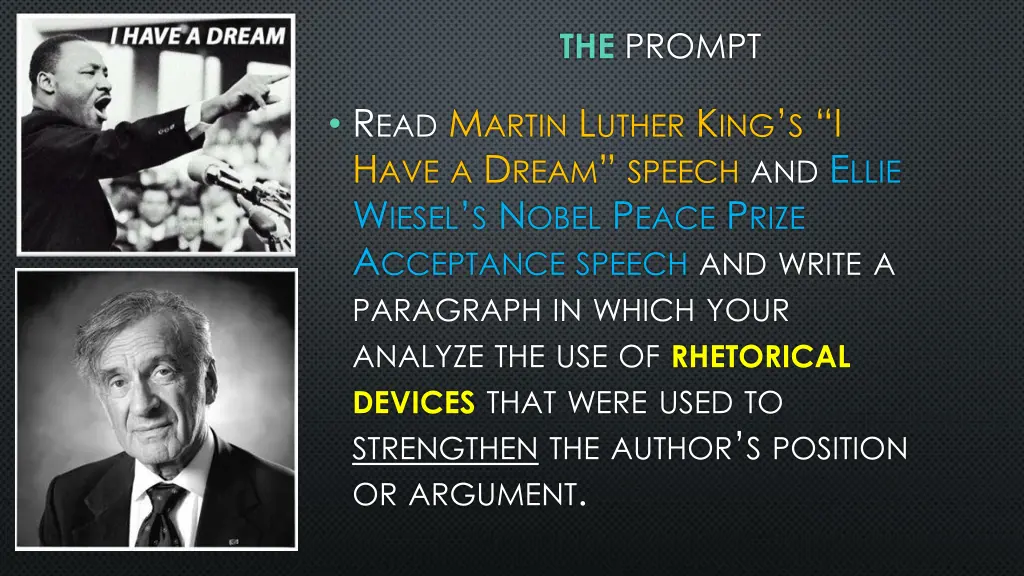
THE PROMPT READ MARTIN LUTHER KING S I HAVE A DREAM SPEECH AND ELLIE WIESEL S NOBEL PEACE PRIZE ACCEPTANCE SPEECH AND WRITE A PARAGRAPH IN WHICH YOUR ANALYZE THE USE OF RHETORICAL DEVICES THAT WERE USED TO STRENGTHEN THE AUTHOR S POSITION OR ARGUMENT.
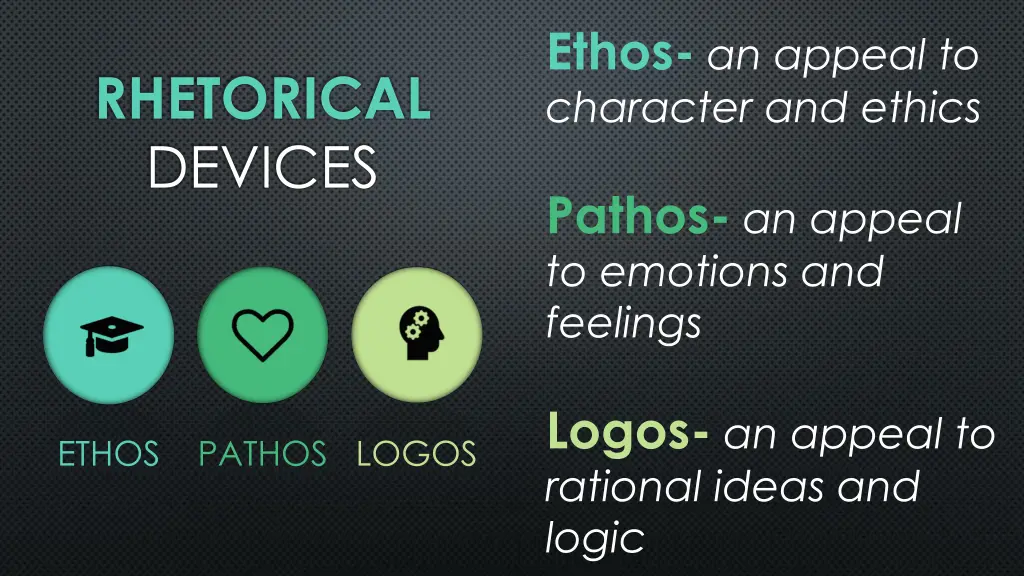
Ethos-an appeal to character and ethics RHETORICAL DEVICES Pathos-an appeal to emotions and feelings Logos-an appeal to rational ideas and logic ETHOS PATHOS LOGOS
REMEMBER SEE SETS? Statement (stating your position) S Evidence E Explanation E THIS IS FOR ARGUMENT!
What W Where W How H
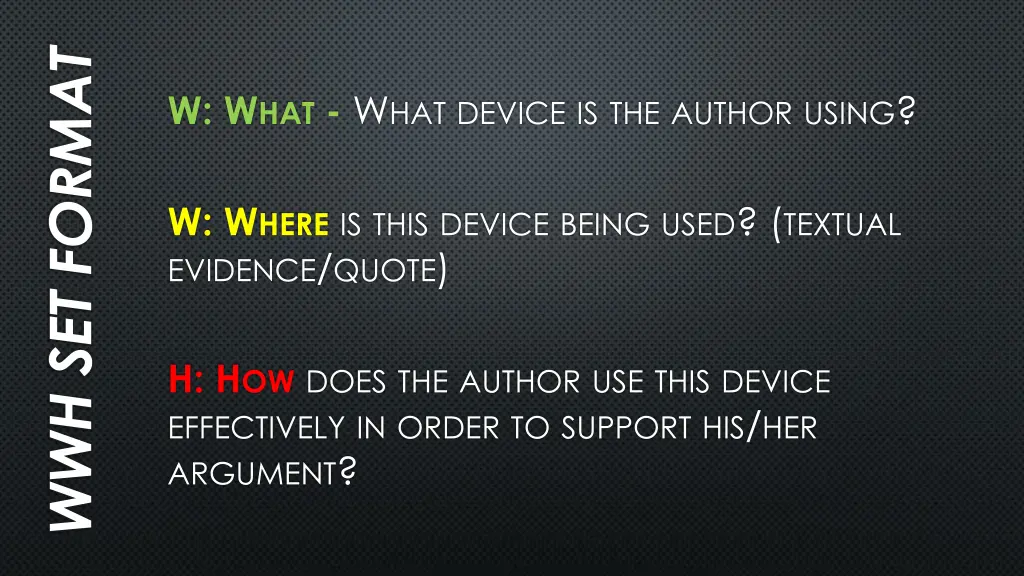
WWH SET FORMAT W: WHAT - WHATDEVICEISTHEAUTHORUSING? W: WHEREISTHISDEVICEBEINGUSED? (TEXTUAL EVIDENCE/QUOTE) H: HOWDOESTHEAUTHORUSETHISDEVICE EFFECTIVELYINORDERTOSUPPORTHIS/HER ARGUMENT?
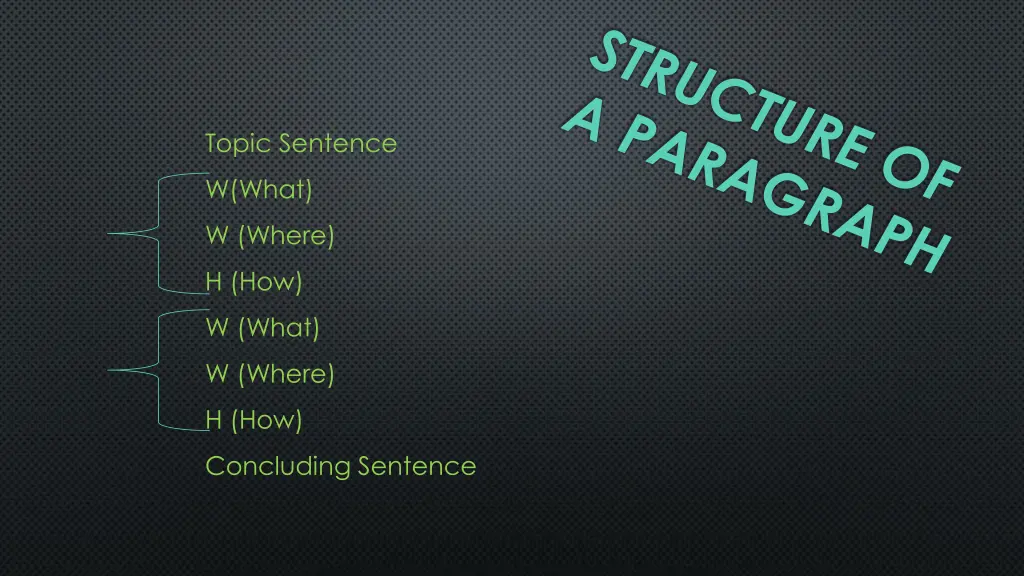
Topic Sentence W(What) W (Where) H (How) W (What) W (Where) H (How) Concluding Sentence
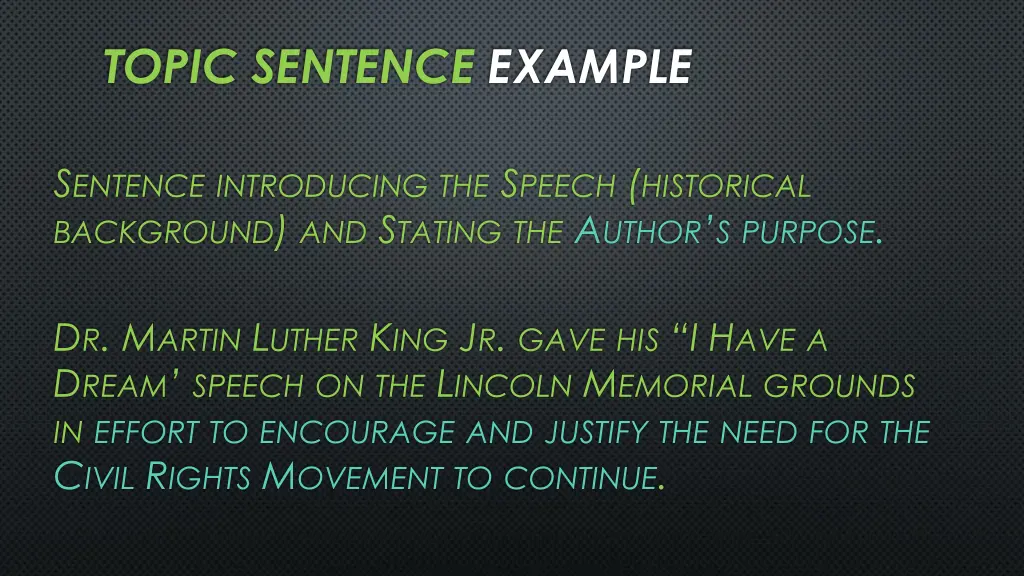
TOPIC SENTENCE EXAMPLE SENTENCEINTRODUCINGTHE SPEECH (HISTORICAL BACKGROUND) AND STATINGTHE AUTHOR SPURPOSE. DR. MARTIN LUTHER KING JR. GAVEHIS I HAVEA DREAM SPEECHONTHE LINCOLN MEMORIALGROUNDS INEFFORTTOENCOURAGEANDJUSTIFYTHENEEDFORTHE CIVIL RIGHTS MOVEMENTTOCONTINUE.
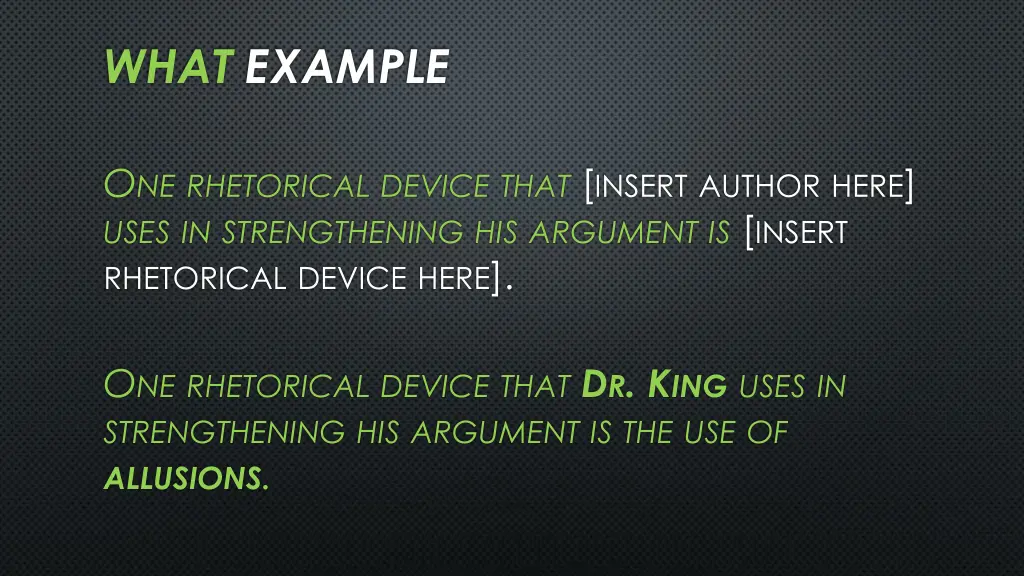
WHAT EXAMPLE ONERHETORICALDEVICETHAT[INSERTAUTHORHERE] USESINSTRENGTHENINGHISARGUMENTIS[INSERT RHETORICALDEVICEHERE]. ONERHETORICALDEVICETHATDR. KINGUSESIN STRENGTHENINGHISARGUMENTISTHEUSEOF ALLUSIONS.
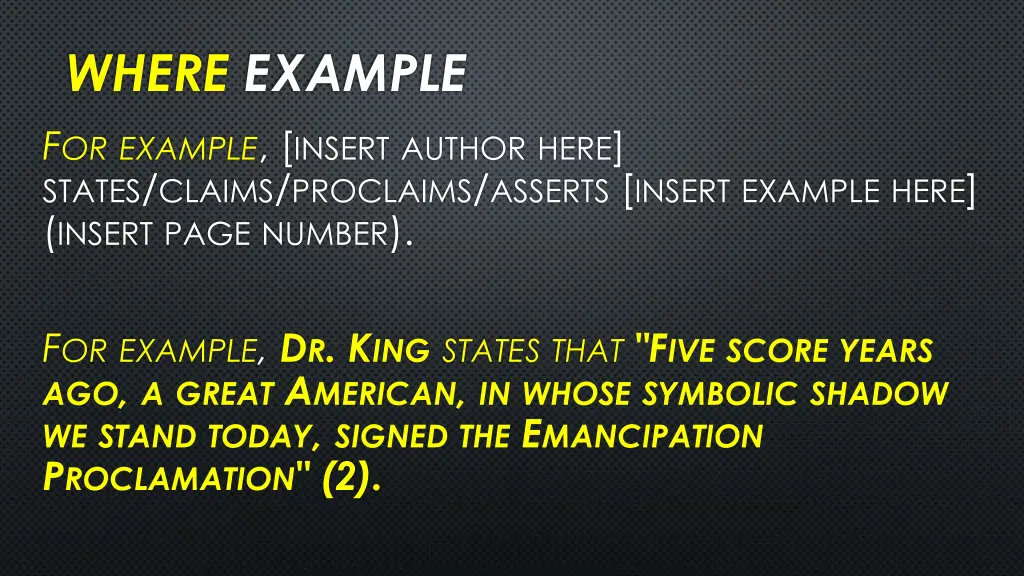
WHERE EXAMPLE FOREXAMPLE, [INSERTAUTHORHERE] STATES/CLAIMS/PROCLAIMS/ASSERTS[INSERTEXAMPLEHERE] (INSERTPAGENUMBER). FOREXAMPLE, DR. KINGSTATESTHAT"FIVESCOREYEARS AGO, AGREAT AMERICAN, INWHOSESYMBOLICSHADOW WESTANDTODAY, SIGNEDTHE EMANCIPATION PROCLAMATION" (2).
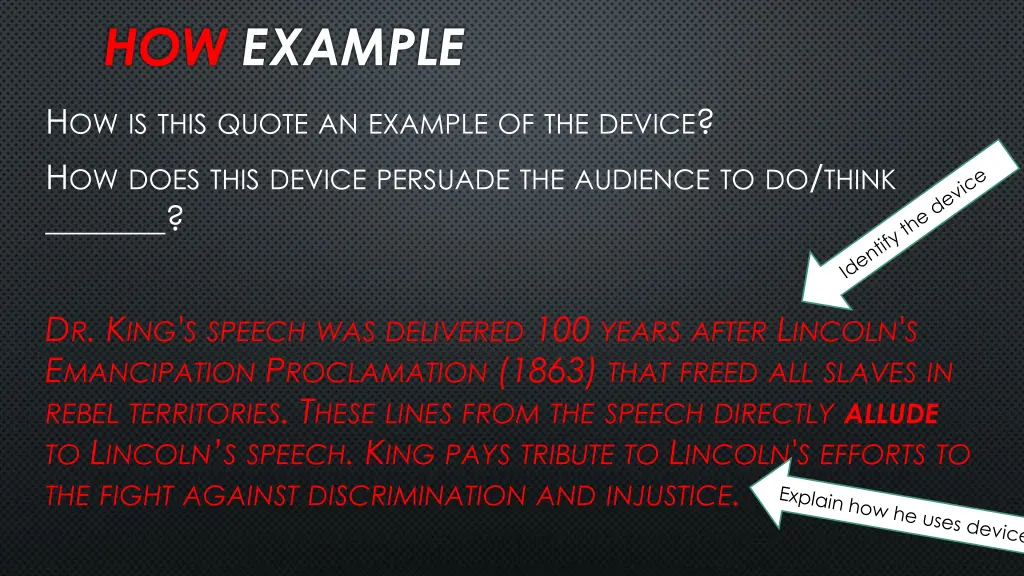
HOW EXAMPLE HOWISTHISQUOTEANEXAMPLEOFTHEDEVICE? HOWDOESTHISDEVICEPERSUADETHEAUDIENCETODO/THINK _______? DR. KING'SSPEECHWASDELIVERED 100 YEARSAFTER LINCOLN'S EMANCIPATION PROCLAMATION (1863) THATFREEDALLSLAVESIN REBELTERRITORIES. THESELINESFROMTHESPEECHDIRECTLYALLUDE TO LINCOLN SSPEECH. KINGPAYSTRIBUTETO LINCOLN'SEFFORTSTO THEFIGHTAGAINSTDISCRIMINATIONANDINJUSTICE.
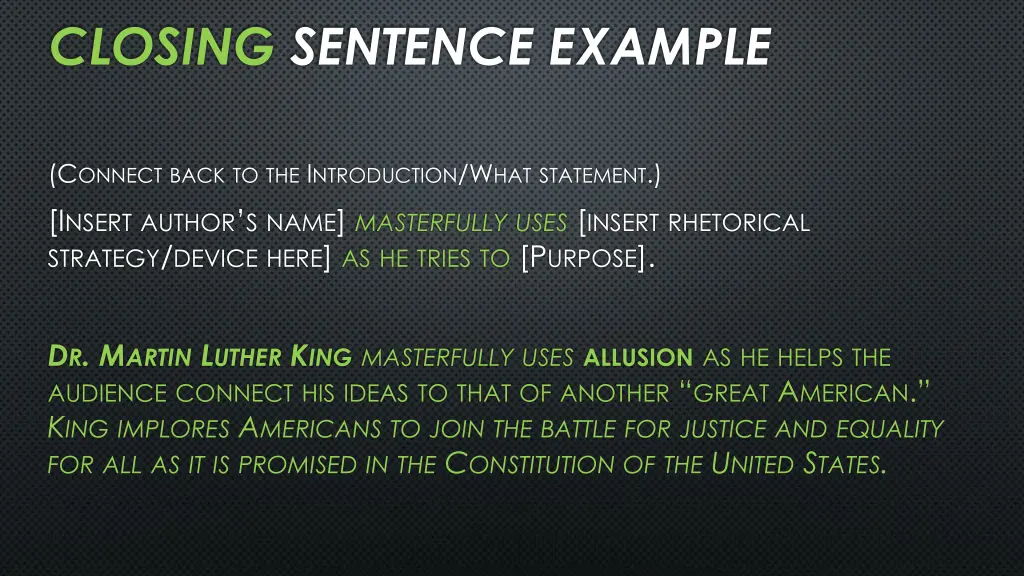
CLOSING SENTENCE EXAMPLE (CONNECTBACKTOTHE INTRODUCTION/WHATSTATEMENT.) [INSERTAUTHOR SNAME] MASTERFULLYUSES[INSERTRHETORICAL STRATEGY/DEVICEHERE] ASHETRIESTO [PURPOSE]. DR. MARTIN LUTHER KINGMASTERFULLYUSESALLUSIONASHEHELPSTHE AUDIENCECONNECTHISIDEASTOTHATOFANOTHER GREAT AMERICAN. KINGIMPLORES AMERICANSTOJOINTHEBATTLEFORJUSTICEANDEQUALITY FORALLASITISPROMISEDINTHE CONSTITUTIONOFTHE UNITED STATES.