Explore the migration trends in Rio de Janeiro, focusing on reasons for people migrating from rural to urban areas, push and pull factors, population impact, and the effects on the source country. Discover the challenges and dynamics of migration in one of Brazil's most iconic cities.
Please find below an Image/Link to download the presentation.
The content on the website is provided AS IS for your information and personal use only. It may not be sold, licensed, or shared on other websites without obtaining consent from the author. If you encounter any issues during the download, it is possible that the publisher has removed the file from their server.
You are allowed to download the files provided on this website for personal or commercial use, subject to the condition that they are used lawfully. All files are the property of their respective owners.
The content on the website is provided AS IS for your information and personal use only. It may not be sold, licensed, or shared on other websites without obtaining consent from the author.
Why people migrate People migrate from the rural areas of Rio into the urban areas of Rio de Janerio due to thee reasons below They move from shanty towns (e.g. Favelas) and poor paid jobs into the hopes of moving into better accommodation and higher paid jobs. This doesn t always happen as only the richer half of the population are able to live in the higher end of accommodation and dominate the higher paid jobs.
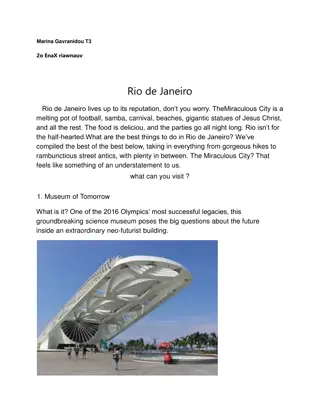
Information about Rio Rio was the capital of Brazil till 1960s Rio represents the second largest GDP (Gross Domestic product) in the country estimated about 140 billion reais. The estimated population is at 11 13.5 million It is the most visited city in the southern hemisphere its known for its natural settings. The average temperature is 23 C Portuguese is the official national language. Rio de janeiro is Brazil s primary tourist attraction and resort it receives the most visitors per year of any city in South America with 2.82 million international tourists a year.
The push factors of migration There are many push factors some are : Gang Crime Civil War Lack of Housing Poor living standards Lack of jobs
The pull factors of mirgation There are many pull factors some are: Good weather Nice scenery Cheap housing Good living standards for the rich Rich in culture
Impact of the population The population of Rio De Janerio became much higher after migration became more popular, the population had become so high that accommodation ran low and people had to make shanty towns with houses made of scrap metal and whatever they can find to build them. People from MEDCs are more likely to effect the population as they have more money and can buy the more expensive housing, leaving the habitants already living in Rio to live in the shanty towns. Older people migrating in (retirees) have to be looked after more than the younger habitants, this is costly for the destination country.
Source Country The rural areas of Rio are ran by the farms they own, when people leave these areas the farms being understaffed and therefore leaving the poor areas poorer. And they cannot afford their farms when they re lacking hands. Also, more men leave than women, leaving the women behind creates an unbalance of gender in rural areas.