Role of Railways in Intermodal Choices for Efficient Transportation
Explore the role of railways in facilitating efficient transportation choices, highlighting the evolution of transport technologies and demand characteristics. Understand the demand analysis, supply characteristics, and various approaches to freight transportation. Discover the interplay between economic cycles, technological advancements, and transportation investments.

Download Presentation

Please find below an Image/Link to download the presentation.
The content on the website is provided AS IS for your information and personal use only. It may not be sold, licensed, or shared on other websites without obtaining consent from the author. If you encounter any issues during the download, it is possible that the publisher has removed the file from their server.
You are allowed to download the files provided on this website for personal or commercial use, subject to the condition that they are used lawfully. All files are the property of their respective owners.
The content on the website is provided AS IS for your information and personal use only. It may not be sold, licensed, or shared on other websites without obtaining consent from the author.
E N D
Presentation Transcript
INTERMODAL CHOICES ROLE OF THE RAILWAYS BIMSTEC Pramod Uniyal Academic Advisor IRT NAIR Vadodara 16.9.14
A THOUGHT SINCE THE DAWN OF HUMAN ACTIVITY TO THIS DAY, QUICK AND SAFE TRANSPOTATION OF PEOPLE AND GOODS HAS BEEN A CONSTANT GOAL OF EVERY ORGANISATION
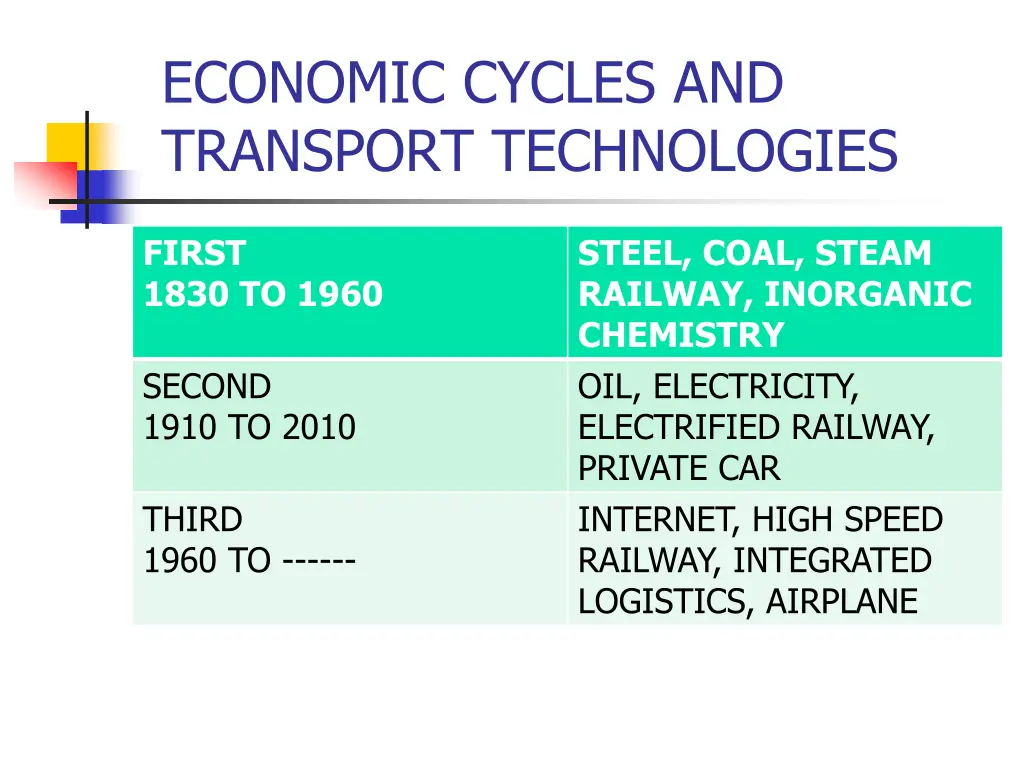
ECONOMIC CYCLES AND TRANSPORT TECHNOLOGIES FIRST 1830 TO 1960 STEEL, COAL, STEAM RAILWAY, INORGANIC CHEMISTRY OIL, ELECTRICITY, ELECTRIFIED RAILWAY, PRIVATE CAR INTERNET, HIGH SPEED RAILWAY, INTEGRATED LOGISTICS, AIRPLANE SECOND 1910 TO 2010 THIRD 1960 TO ------
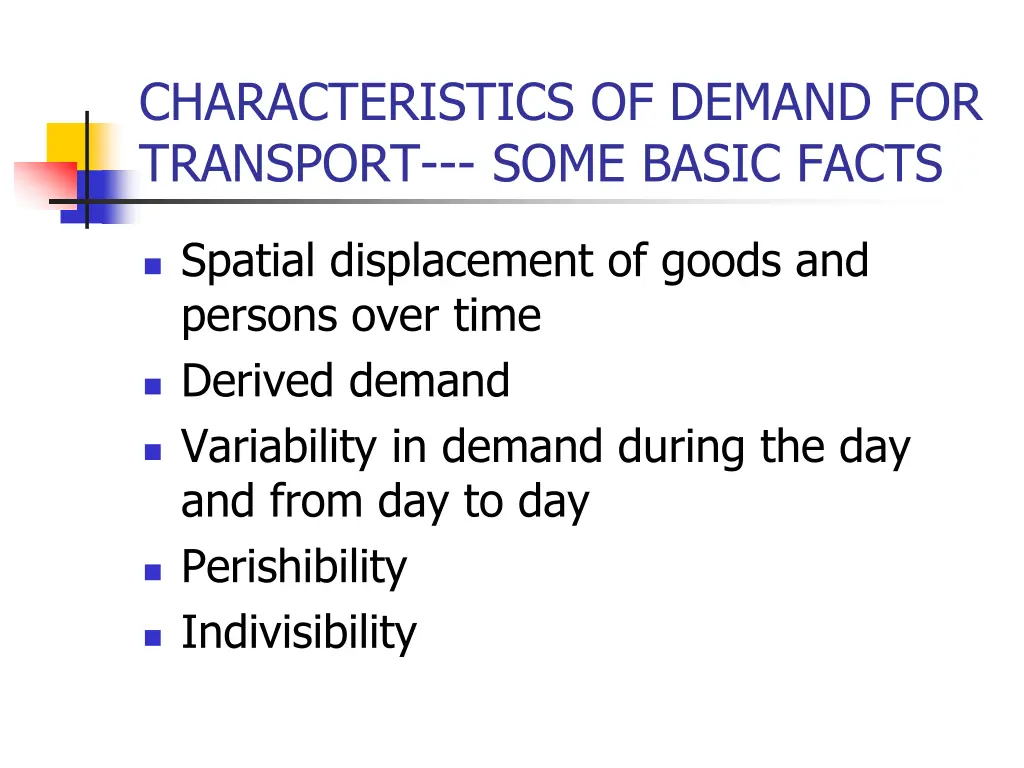
CHARACTERISTICS OF DEMAND FOR TRANSPORT--- SOME BASIC FACTS Spatial displacement of goods and persons over time Derived demand Variability in demand during the day and from day to day Perishibility Indivisibility
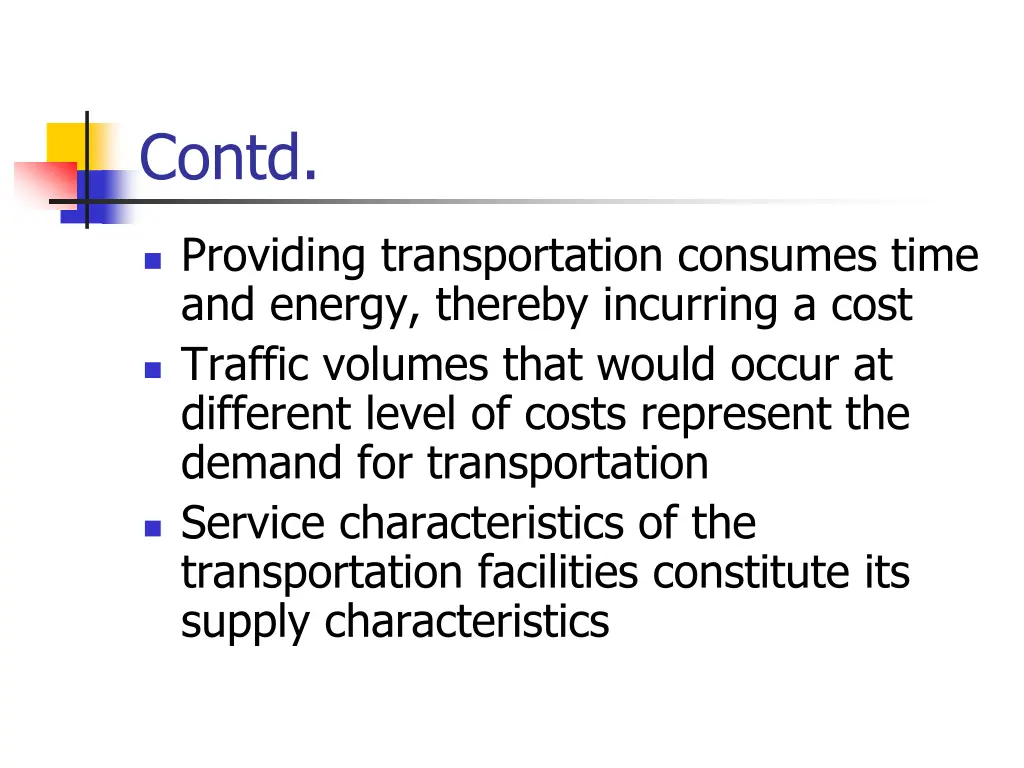
Contd. Providing transportation consumes time and energy, thereby incurring a cost Traffic volumes that would occur at different level of costs represent the demand for transportation Service characteristics of the transportation facilities constitute its supply characteristics
CONTD, Transportation demand analysis is the relationship between, i) traffic volumes ii) supply characteristics iii) socio economic activity trends Transportation investments are large and therefore projects have long gestation periods and have to be adequately factored in while analyzing demand vis- -vis its supply characteristics
DEMAND FOR FREIGHT--- THREE BASIC APPROACHES (a) Basic unit of analysis is the firm and transportation as one of the inputs into the production and marketing processes. Affected by:- (i) shipper s economic positivism of short term cost optimization (ii) technological positivism relationships between physical aspects of the transport system (e.g. speed, frequency) and physical aspects of the product (e.g. perishability, value weight ratio) (iii) perceptual approach the perceptions of members of shipper organizations, particularly transport managers
Contd (b) Aggregate in nature to explain the movement of commodities from areas of surpluses to deficits using gravity and optimization models
CONTD. (c) Macroeconomic, analyzing interrelations between sectors of economy using input- output model. Transportation being one of the sectors it is possible to analyze the transportation requirements of the other sectors and then to translate these into flows of commodities. This can also lend itself to multiregional demand analysis
PASSENGER DEMAND----BASIC DECISIONS Consumer has to decide, i) whether to make the trip ii) where to make the trip iii) when to make the trip iv) which mode to use v) what route to take
FORECASTING THE DEMAND Ability to understand the socio economic trends Define logically the exogenous factors constituting the demand model Specification of the functional form Short term easier Long term determined by the validity of the models as both ability to pay and the wisdom of paying transportation costs may undergo a radical change
CLASSIFICATION OF COSTS OPERATORS USERS SOCIAL
OPERATORS ALLOCATION joint/common INDIVISIBILITIES long/short term ECONOMIES
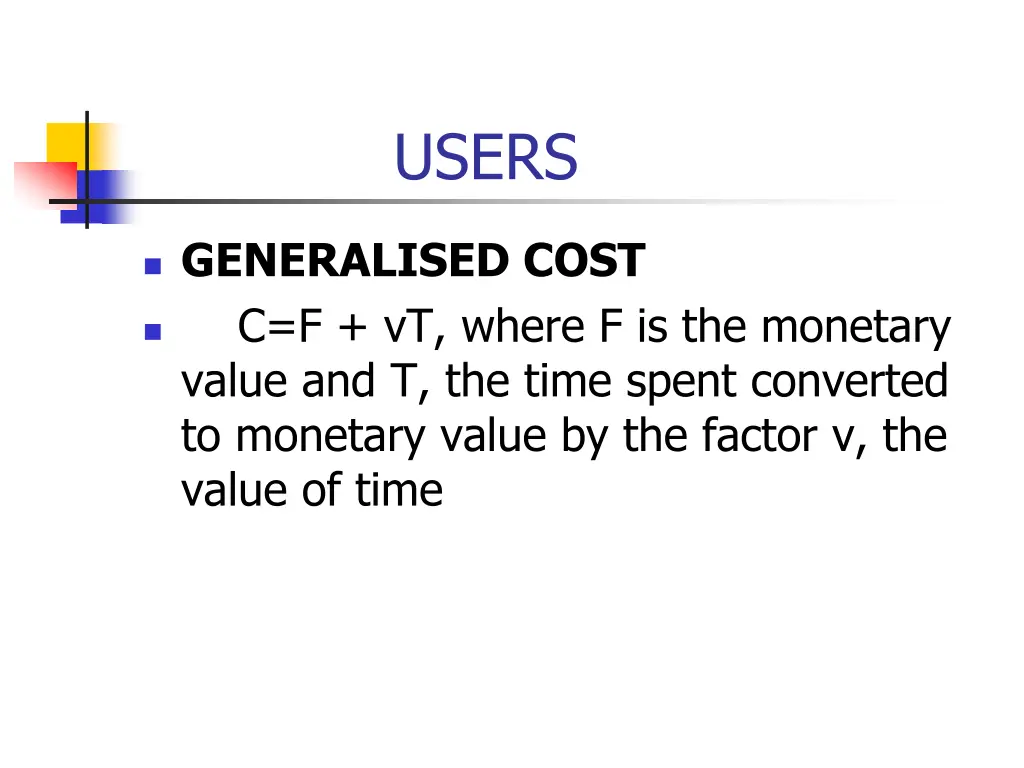
USERS GENERALISED COST C=F + vT, where F is the monetary value and T, the time spent converted to monetary value by the factor v, the value of time
SOCIAL COSTS RESOURCE COST opportunity costs allocative efficiency EXTERNAL COSTS congestion pollution safety
INTERDEPENDANCIES Unimodal Transport Intermodal Transport Multimodal Transport Logistics/Supply Chain Management Factors which may affect the intermodal choices are (i) Physical (ii) Social (iii) Historical (iv) Regulatory
PHYSICAL FACTORS LAND USE Problem of urbanization Problem of ribbon development Problem of Central Business District(CBD) - congestion pricing Growth of cities - suburban, conurbations Regional Development
Contd. SAFETY Economic loss Loss of image Increased costs Failure to meet targets
Contd.---Environment Question of noise pollution Question of air pollution Loss of value of property Increasing anxiety for use of facilities by a feeling of deprivation
SOCIAL FACTORS----ACCESSIBILITY Question of right to mobility Question of affordability Question of congestion leading to increased costs
Contd.-----SEVERITY Spoiling of the landscape Dividing communities Question of right of way conflicting with changing travel patterns of the population
HISTORICAL FACTORS---FINANCIAL VIABILITY Strategies for revenue generation Strategies for expenditure control Strategies for investment Tariff policy Capital output ratio
Contd.----FINANCING Federal or Budgetary Support Generation of Internal Resources Bilateral/Multilateral Aid Market Borrowings Alternate financing schemes Special Purpose Vehicles
Contd.---RESEARCH Commitment of resources, government or private Public versus private transport Use of IT
MODAL ASSIGNMENT---ALLOCATIVE EFFICIENCY Optimal use of resources Question of Public good Question of payment of user charges Question of marginal social cost versus marginal cost Question of subsidy----internal versus external Question of modal split
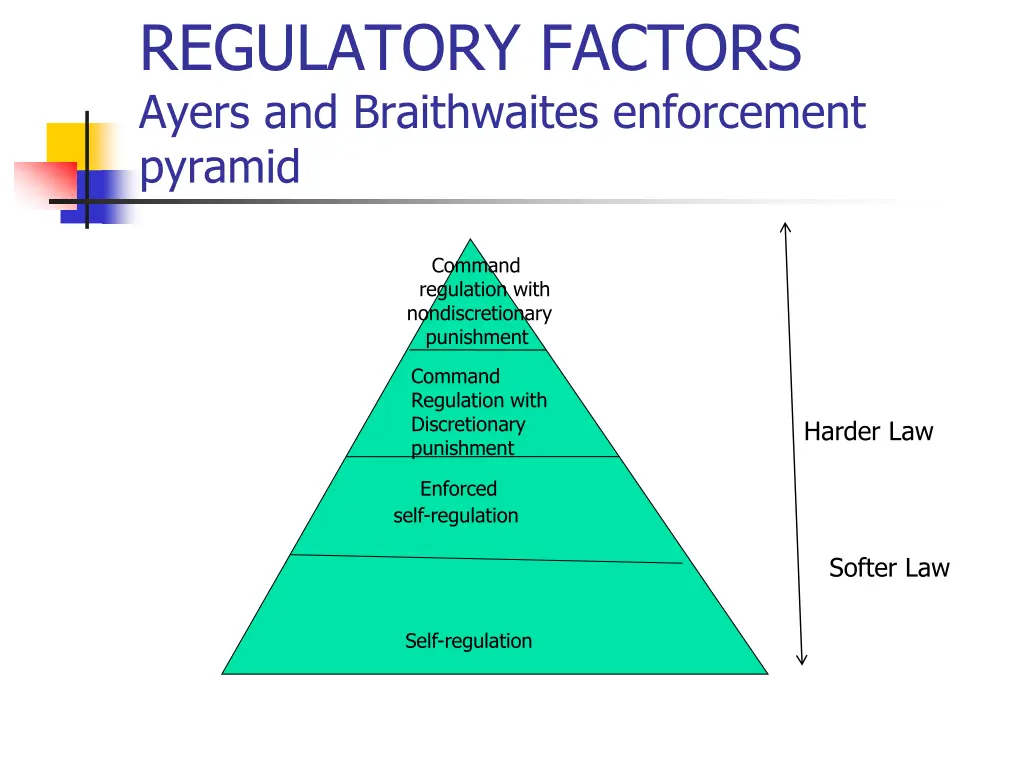
REGULATORY FACTORS Ayers and Braithwaites enforcement pyramid Command regulation with nondiscretionary punishment Command Regulation with Discretionary punishment Harder Law Enforced self-regulation Softer Law Self-regulation
ROLE OF THE RAILWAYS Increasing trade and commerce, the corollary of economic development, will necessarily require more and more socio-economic interactions both at domestic and international levels Increasing energy, land and social costs will make railways the most important factor in conceptualizing and designing intermodal transports
AFTERTHOUGHT It is almost impossible to exaggerate the profound impact of the railways. They transformed the agricultural economies, which had prevailed since mankind emerged from the caves, into the industrial age Blood , Iron & Gold How the Railway Transformed The World Christian Wolmar
ACKNOWLEDGEMENTS Demand for Transportation D Kanfini Transport Economics Stubbs C D Foster The Transport Problem Glaister Transport Economics Railway Management and Engineering