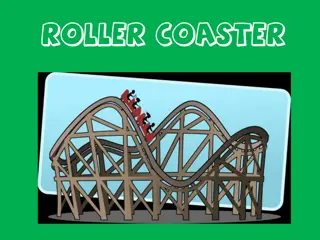
Roller Coaster Dynamics
Dive into the forces and energies at play during a roller coaster ride, from acceleration to potential energy. Explore Newton's laws and the thrilling physics behind the twists and turns of amusement park attractions.

Download Presentation

Please find below an Image/Link to download the presentation.
The content on the website is provided AS IS for your information and personal use only. It may not be sold, licensed, or shared on other websites without obtaining consent from the author.If you encounter any issues during the download, it is possible that the publisher has removed the file from their server.
You are allowed to download the files provided on this website for personal or commercial use, subject to the condition that they are used lawfully. All files are the property of their respective owners.
The content on the website is provided AS IS for your information and personal use only. It may not be sold, licensed, or shared on other websites without obtaining consent from the author.
E N D
Presentation Transcript
Score Team 1 0 Team 2 0 1 3 10 4 6 7 1 2 3 8 5 9
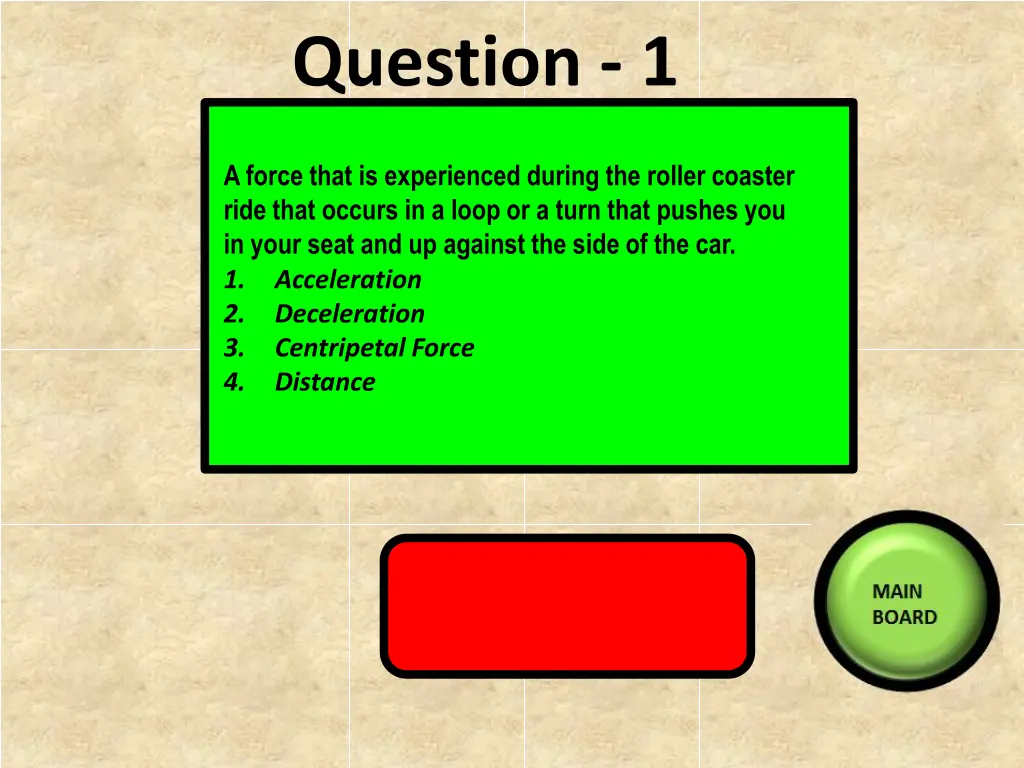
Question - 1 A force that is experienced during the roller coaster ride that occurs in a loop or a turn that pushes you in your seat and up against the side of the car. 1. Acceleration 2. Deceleration 3. Centripetal Force 4. Distance Centripetal Force
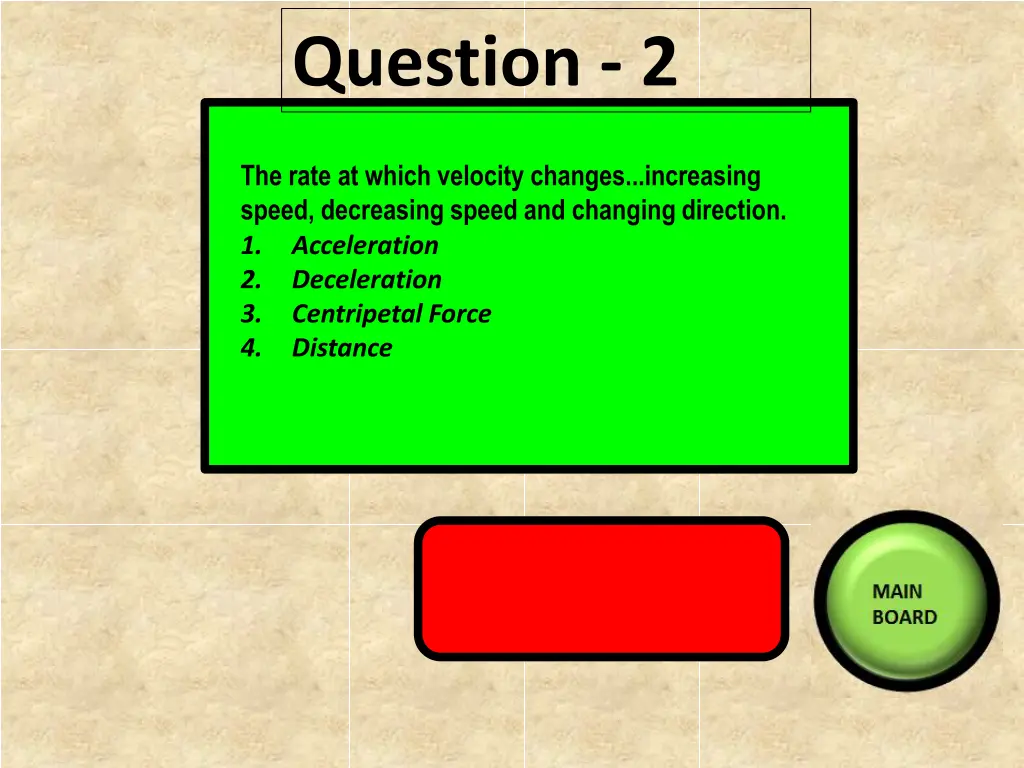
Question - 2 The rate at which velocity changes...increasing speed, decreasing speed and changing direction. 1. Acceleration 2. Deceleration 3. Centripetal Force 4. Distance Acceleration
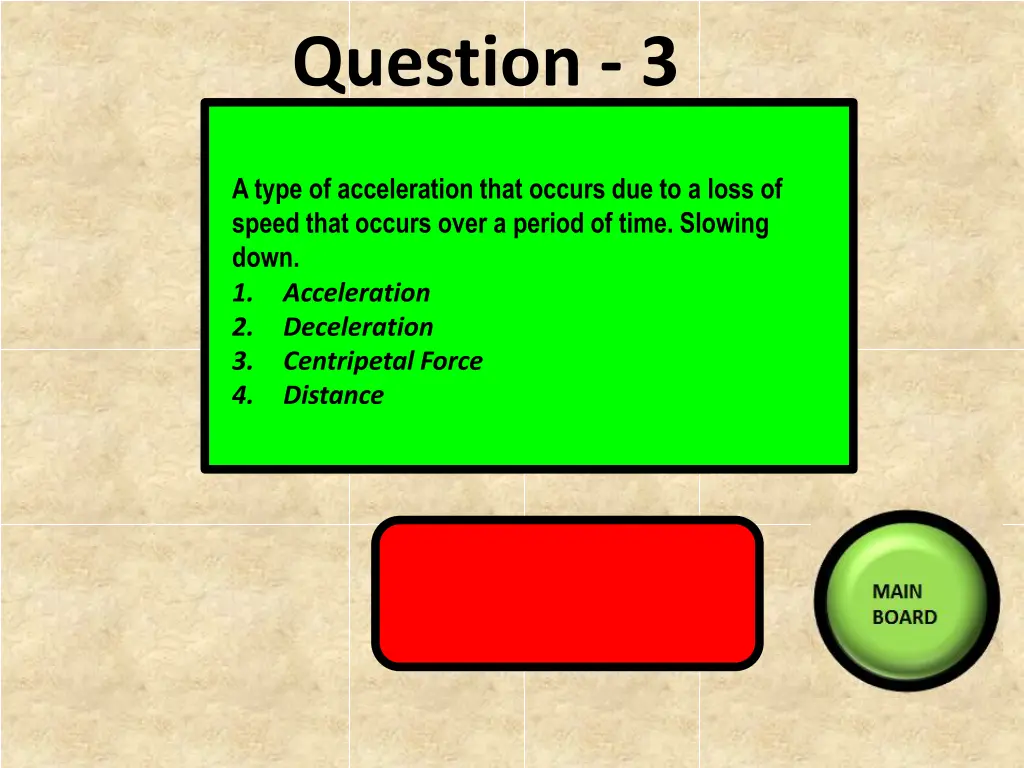
Question - 3 A type of acceleration that occurs due to a loss of speed that occurs over a period of time. Slowing down. 1. Acceleration 2. Deceleration 3. Centripetal Force 4. Distance Deceleration
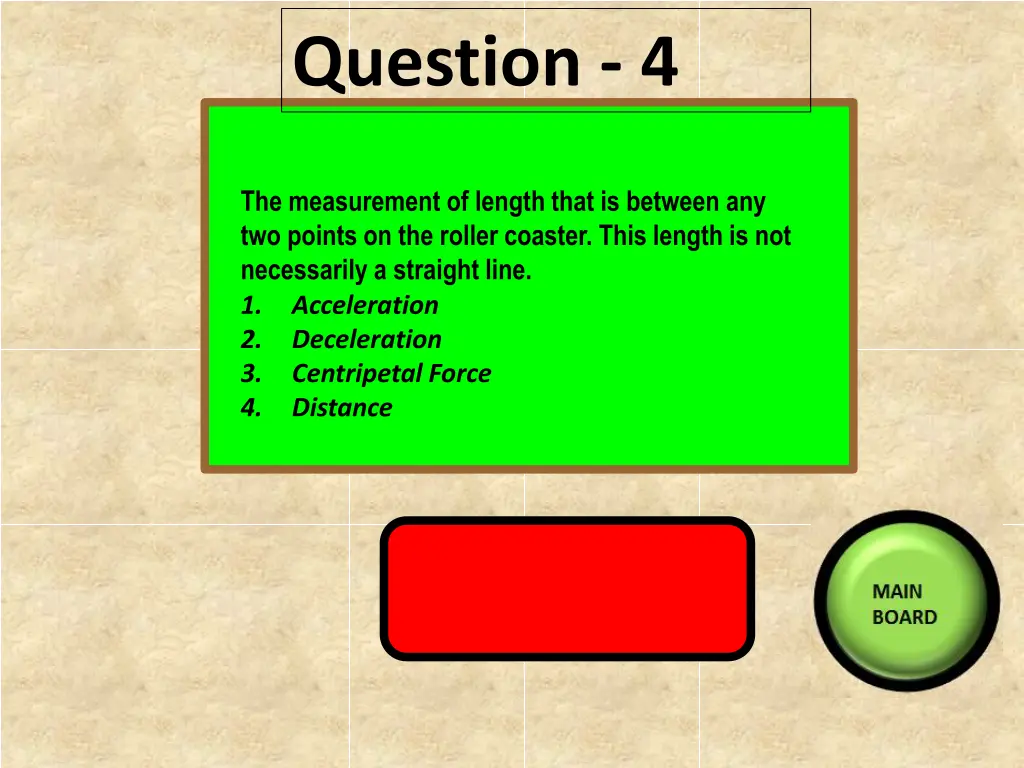
Question - 4 The measurement of length that is between any two points on the roller coaster. This length is not necessarily a straight line. 1. Acceleration 2. Deceleration 3. Centripetal Force 4. Distance Distance
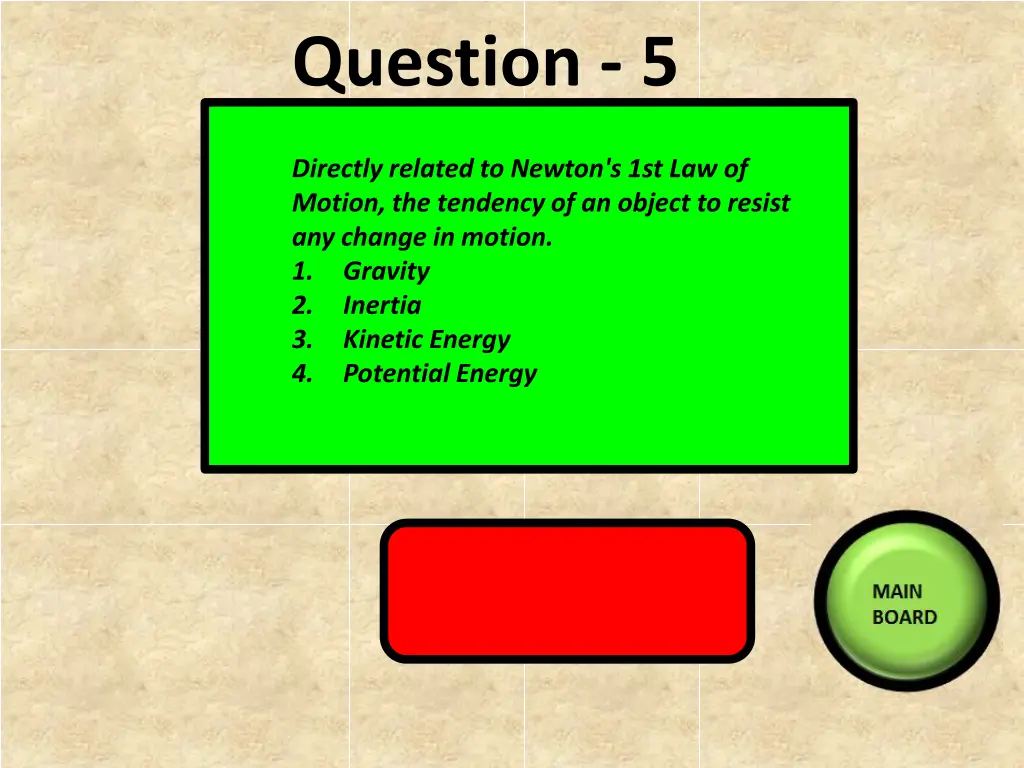
Question - 5 Directly related to Newton's 1st Law of Motion, the tendency of an object to resist any change in motion. 1. Gravity 2. Inertia 3. Kinetic Energy 4. Potential Energy Inertia
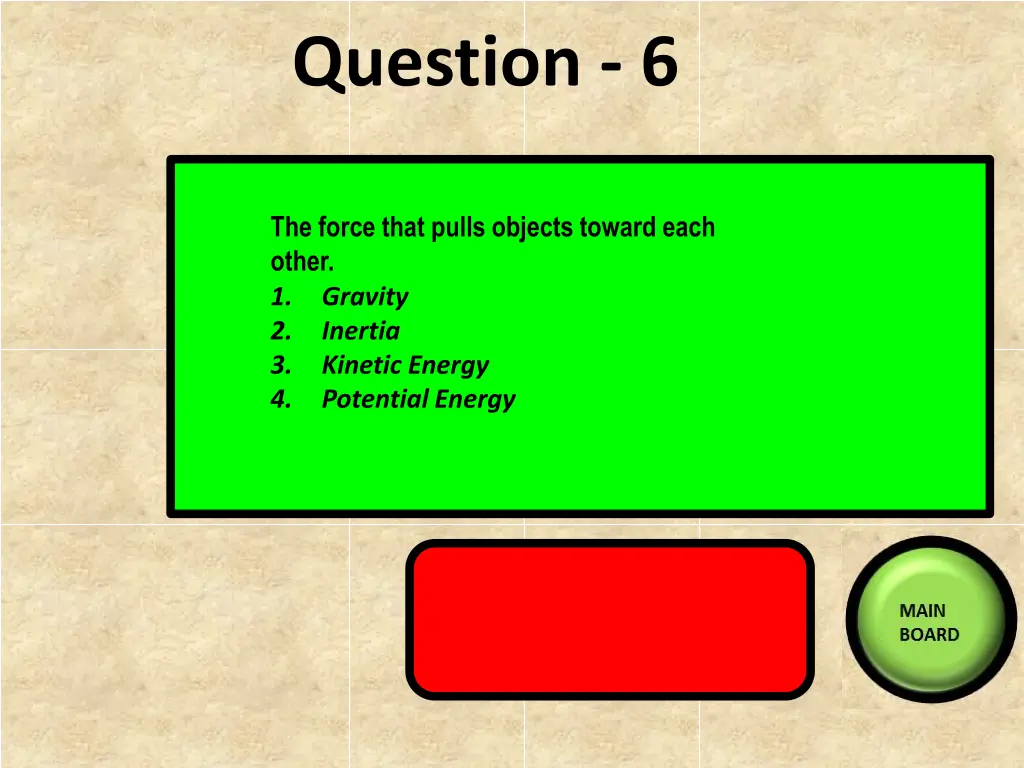
Question - 6 The force that pulls objects toward each other. 1. Gravity 2. Inertia 3. Kinetic Energy 4. Potential Energy Gravity
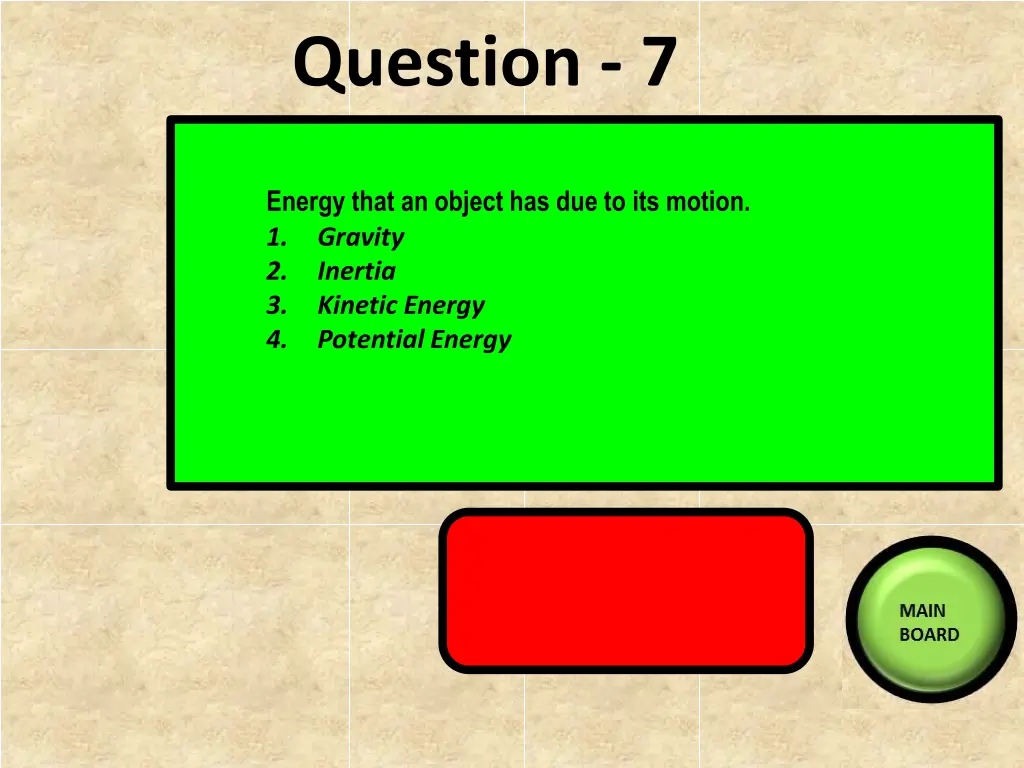
Question - 7 Energy that an object has due to its motion. 1. Gravity 2. Inertia 3. Kinetic Energy 4. Potential Energy Kinetic Energy
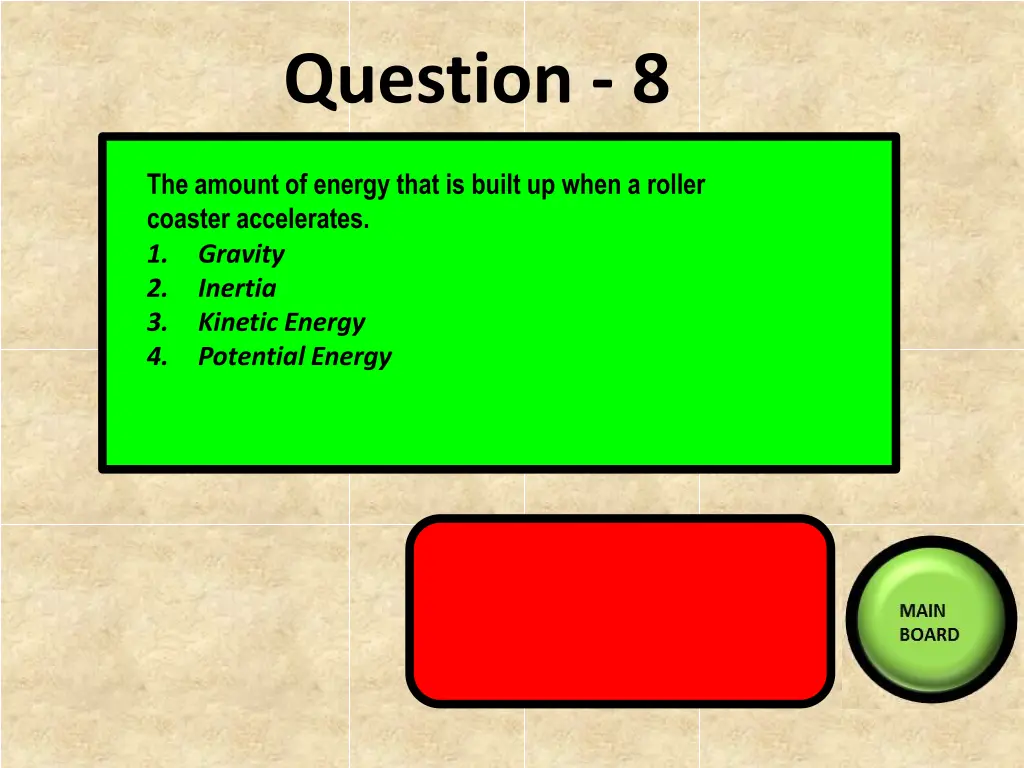
Question - 8 The amount of energy that is built up when a roller coaster accelerates. 1. Gravity 2. Inertia 3. Kinetic Energy 4. Potential Energy Momentum
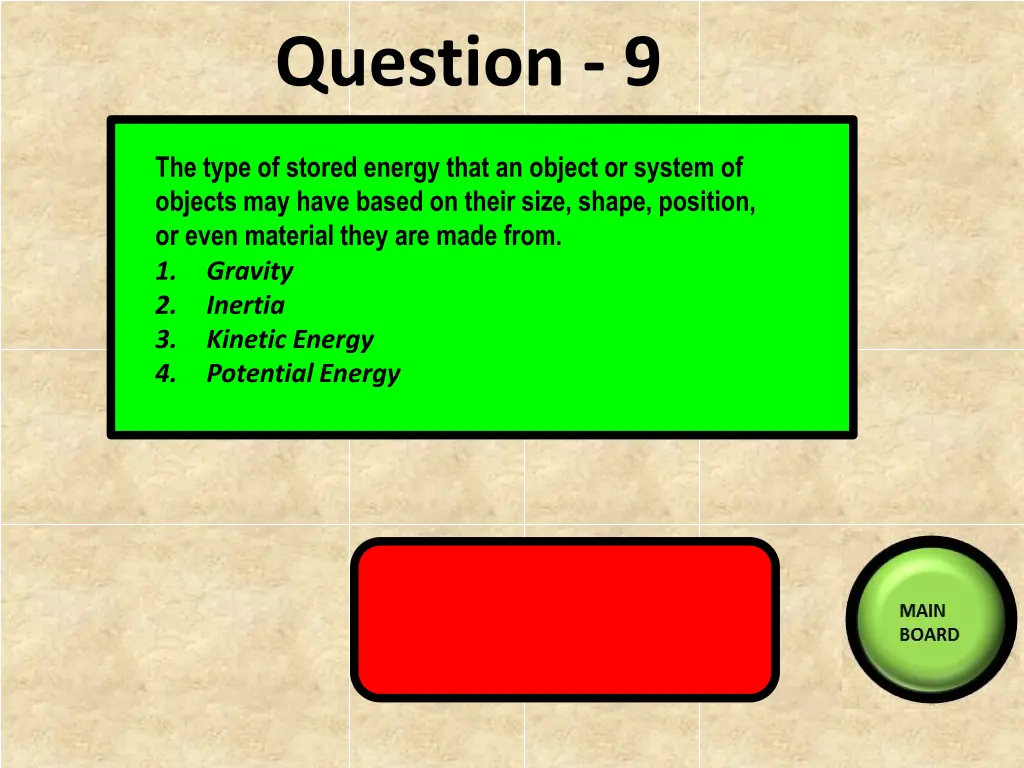
Question - 9 The type of stored energy that an object or system of objects may have based on their size, shape, position, or even material they are made from. 1. Gravity 2. Inertia 3. Kinetic Energy 4. Potential Energy Potential Energy
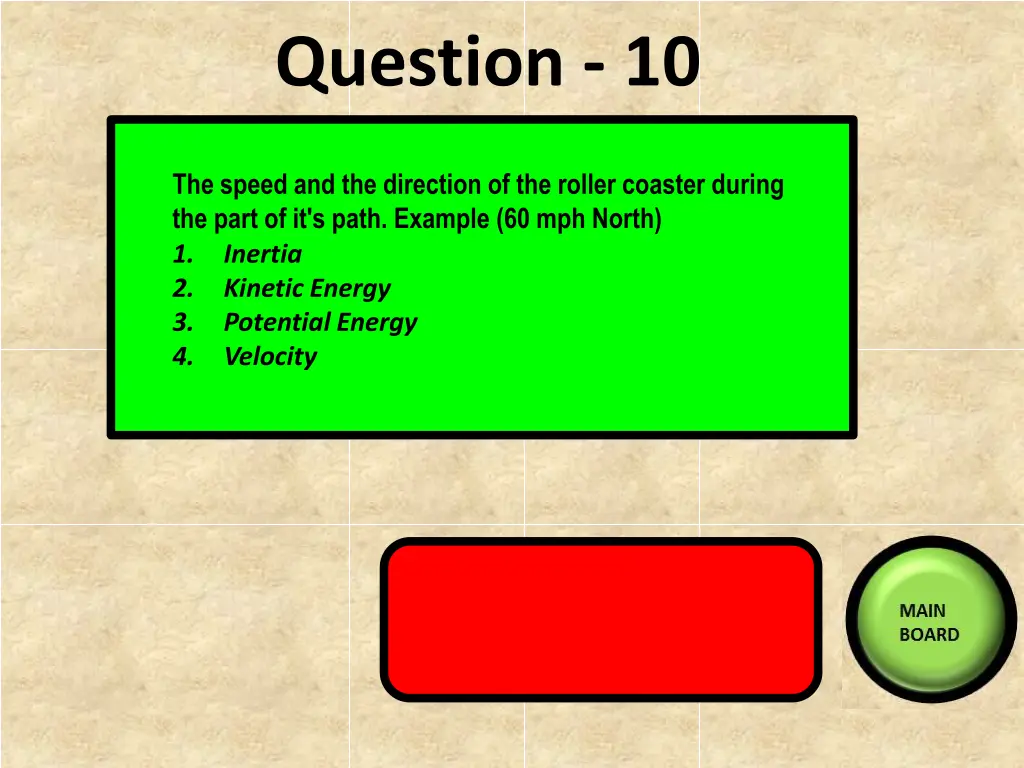
Question - 10 The speed and the direction of the roller coaster during the part of it's path. Example (60 mph North) 1. Inertia 2. Kinetic Energy 3. Potential Energy 4. Velocity Velocity