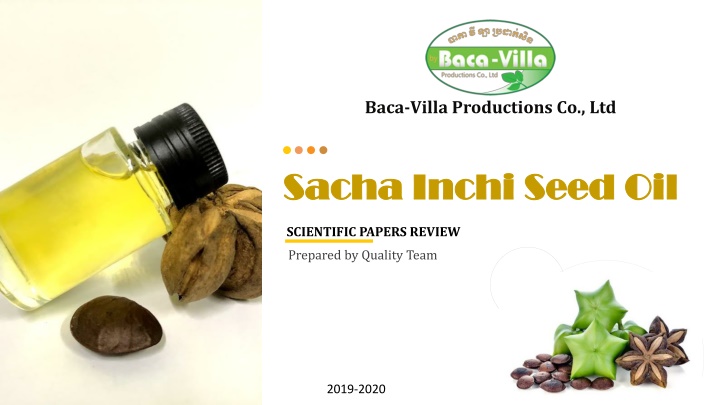
Sacha Inchi Seed Oil
Sacha Inchi, a plant with rich nutritional content, has gained attention as a source of oil high in unsaturated fatty acids. This review covers its chemical composition, health benefits, and applications, including details on fatty acids, proteins, vitamins, polyphenols, and minerals found in Sacha Inchi seed and oil. Explore the potential of Sacha Inchi as a novel and beneficial source of essential nutrients and antioxidants.

Download Presentation

Please find below an Image/Link to download the presentation.
The content on the website is provided AS IS for your information and personal use only. It may not be sold, licensed, or shared on other websites without obtaining consent from the author.If you encounter any issues during the download, it is possible that the publisher has removed the file from their server.
You are allowed to download the files provided on this website for personal or commercial use, subject to the condition that they are used lawfully. All files are the property of their respective owners.
The content on the website is provided AS IS for your information and personal use only. It may not be sold, licensed, or shared on other websites without obtaining consent from the author.
E N D
Presentation Transcript
Baca-Villa Productions Co., Ltd Sacha Sacha Inchi Inchi Seed Oil Seed Oil SCIENTIFIC PAPERS REVIEW Prepared by Quality Team 2019-2020
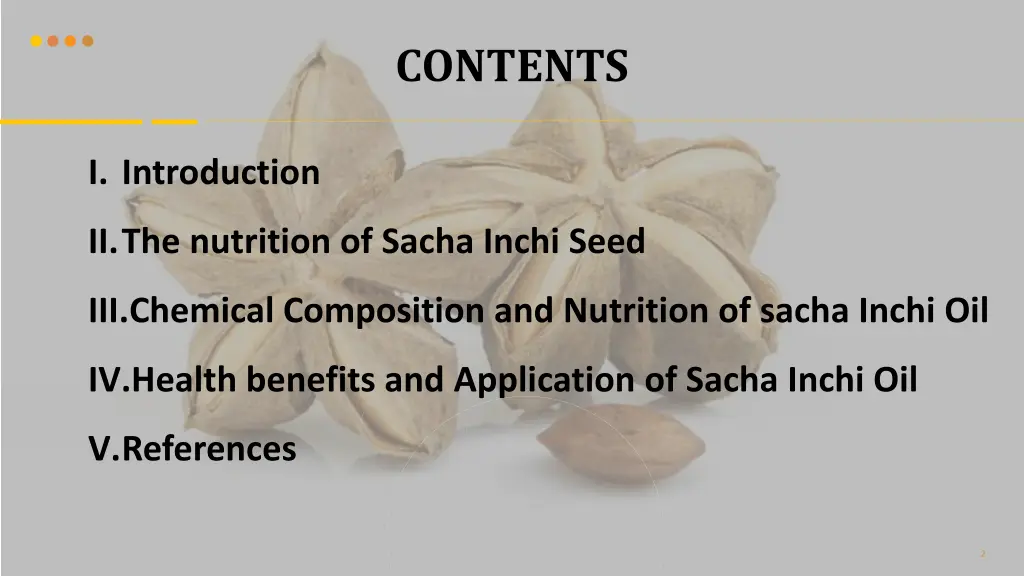
CONTENTS I. Introduction II.The nutrition of Sacha Inchi Seed III.Chemical Composition and Nutrition of sacha Inchi Oil IV.Health benefits and Application of Sacha Inchi Oil V.References 2
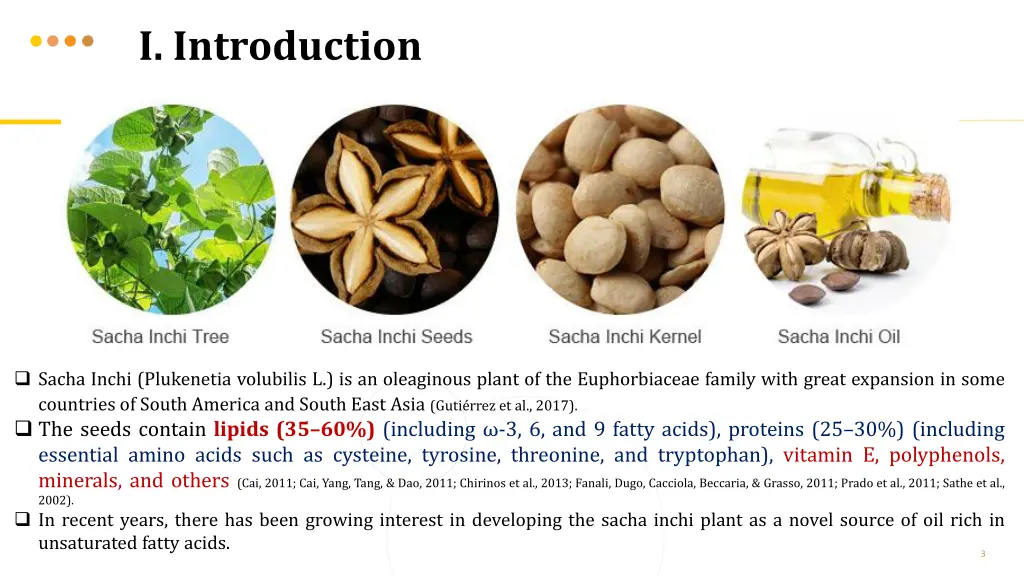
I. Introduction Sacha Inchi (Plukenetia volubilis L.) is an oleaginous plant of the Euphorbiaceae family with great expansion in some countries of South America and South East Asia(Guti rrez et al., 2017). The seeds contain lipids (35 60%) (including -3, 6, and 9 fatty acids), proteins (25 30%) (including essential amino acids such as cysteine, tyrosine, threonine, and tryptophan), vitamin E, polyphenols, minerals, and others (Cai, 2011; Cai, Yang, Tang, & Dao, 2011; Chirinos et al., 2013; Fanali, Dugo, Cacciola, Beccaria, & Grasso, 2011; Prado et al., 2011; Sathe et al., 2002). In recent years, there has been growing interest in developing the sacha inchi plant as a novel source of oil rich in unsaturated fatty acids. 3
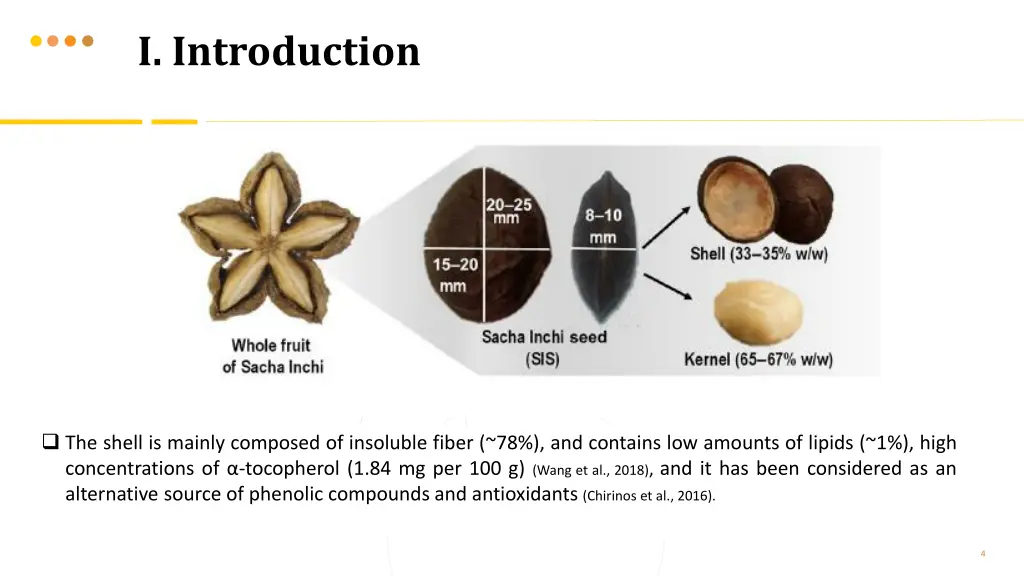
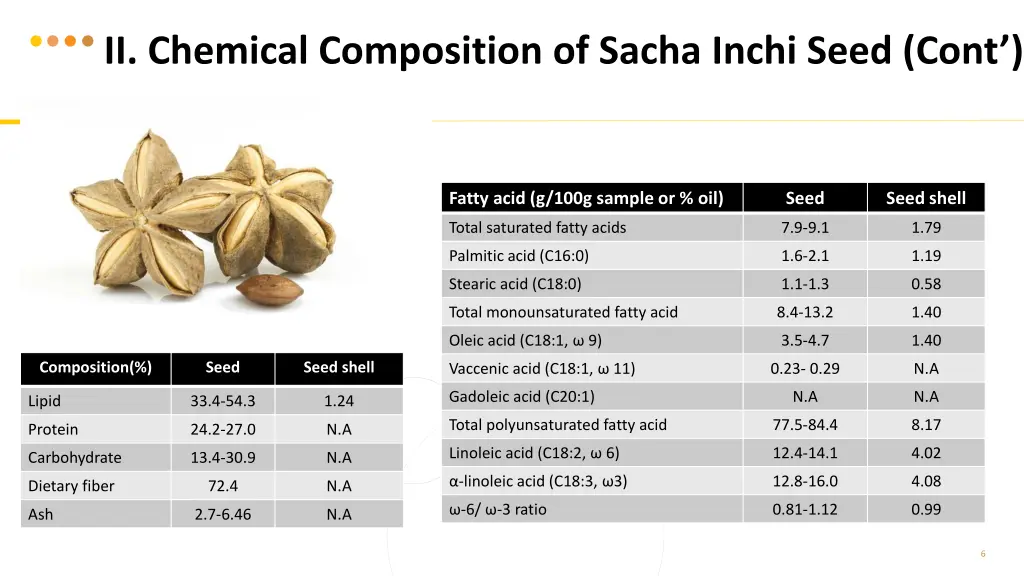
I. Introduction The shell is mainly composed of insoluble fiber (~78%), and contains low amounts of lipids (~1%), high concentrations of -tocopherol (1.84 mg per 100 g) (Wang et al., 2018), and it has been considered as an alternative source of phenolic compounds and antioxidants(Chirinos et al., 2016). 4
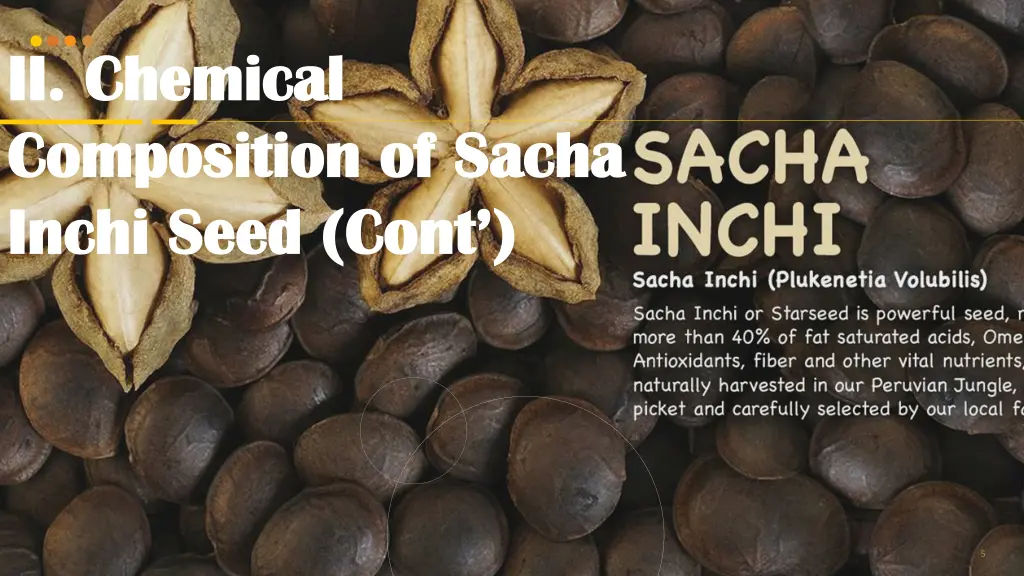
II. Chemical II. Chemical Composition of Sacha Composition of Sacha Inchi Inchi Seed ( Seed (Cont Cont ) ) 5
II. Chemical Composition of Sacha Inchi Seed (Cont) Fatty acid (g/100g sample or % oil) Seed Seed shell Total saturated fatty acids 7.9-9.1 1.79 Palmitic acid (C16:0) 1.6-2.1 1.19 Stearic acid (C18:0) 1.1-1.3 0.58 Total monounsaturated fatty acid 8.4-13.2 1.40 Oleic acid (C18:1, 9) 3.5-4.7 1.40 Composition(%) Seed Seed shell Vaccenic acid (C18:1, 11) 0.23- 0.29 N.A Gadoleic acid (C20:1) N.A N.A Lipid 33.4-54.3 1.24 Total polyunsaturated fatty acid 77.5-84.4 8.17 Protein 24.2-27.0 N.A Linoleic acid (C18:2, 6) 12.4-14.1 4.02 Carbohydrate 13.4-30.9 N.A -linoleic acid (C18:3, 3) 12.8-16.0 4.08 Dietary fiber 72.4 N.A -6/ -3 ratio 0.81-1.12 0.99 Ash 2.7-6.46 N.A 6
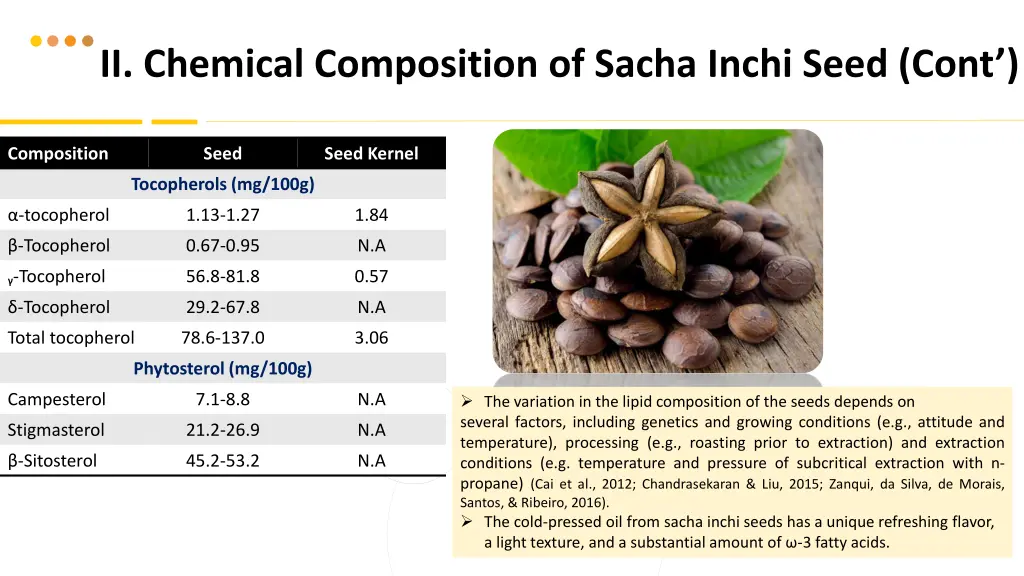
II. Chemical Composition of Sacha Inchi Seed (Cont) Composition Seed Seed Kernel Tocopherols (mg/100g) -tocopherol 1.13-1.27 1.84 -Tocopherol 0.67-0.95 N.A -Tocopherol 56.8-81.8 0.57 -Tocopherol 29.2-67.8 N.A Total tocopherol 78.6-137.0 3.06 Phytosterol (mg/100g) Campesterol 7.1-8.8 N.A The variation in the lipid composition of the seeds depends on several factors, including genetics and growing conditions (e.g., attitude and temperature), processing (e.g., roasting prior to extraction) and extraction conditions (e.g. temperature and pressure of subcritical extraction with n- propane) (Cai et al., 2012; Chandrasekaran & Liu, 2015; Zanqui, da Silva, de Morais, Santos, & Ribeiro, 2016). The cold-pressed oil from sacha inchi seeds has a unique refreshing flavor, a light texture, and a substantial amount of -3 fatty acids. Stigmasterol 21.2-26.9 N.A -Sitosterol 45.2-53.2 N.A 7
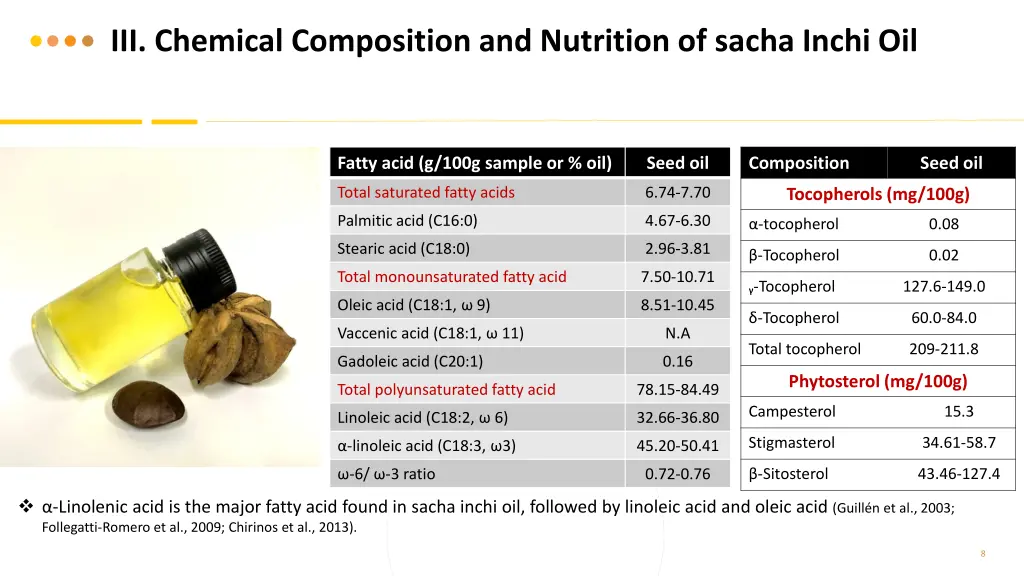
III. Chemical Composition and Nutrition of sacha Inchi Oil Fatty acid (g/100g sample or % oil) Seed oil Composition Seed oil Total saturated fatty acids 6.74-7.70 Tocopherols (mg/100g) Palmitic acid (C16:0) 4.67-6.30 -tocopherol 0.08 Stearic acid (C18:0) 2.96-3.81 -Tocopherol 0.02 Total monounsaturated fatty acid 7.50-10.71 -Tocopherol 127.6-149.0 Oleic acid (C18:1, 9) 8.51-10.45 -Tocopherol 60.0-84.0 Vaccenic acid (C18:1, 11) N.A Total tocopherol 209-211.8 Gadoleic acid (C20:1) 0.16 Phytosterol (mg/100g) Total polyunsaturated fatty acid 78.15-84.49 Campesterol 15.3 Linoleic acid (C18:2, 6) 32.66-36.80 Stigmasterol 34.61-58.7 -linoleic acid (C18:3, 3) 45.20-50.41 -Sitosterol 43.46-127.4 -6/ -3 ratio 0.72-0.76 -Linolenic acid is the major fatty acid found in sacha inchi oil, followed by linoleic acid and oleic acid (Guill n et al., 2003; Follegatti-Romero et al., 2009; Chirinos et al., 2013). 8
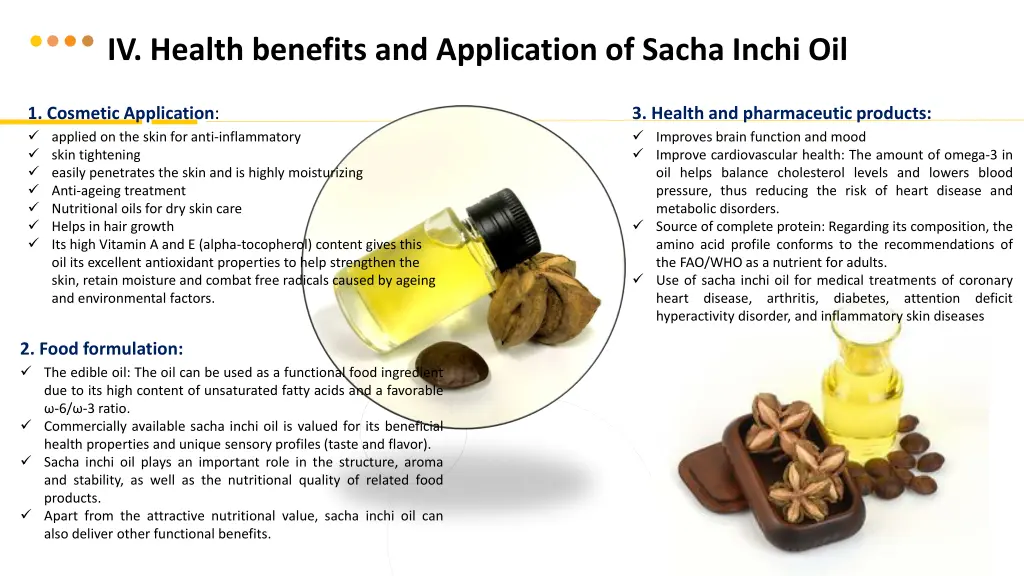
IV. Health benefits and Application of Sacha Inchi Oil 1. Cosmetic Application: applied on the skin for anti-inflammatory skin tightening easily penetrates the skin and is highly moisturizing Anti-ageing treatment Nutritional oils for dry skin care Helps in hair growth Its high Vitamin A and E (alpha-tocopherol) content gives this oil its excellent antioxidant properties to help strengthen the skin, retain moisture and combat free radicals caused by ageing and environmental factors. 3. Health and pharmaceutic products: Improves brain function and mood Improve cardiovascular health: The amount of omega-3 in oil helps balance cholesterol levels and lowers blood pressure, thus reducing the risk of heart disease and metabolic disorders. Source of complete protein: Regarding its composition, the amino acid profile conforms to the recommendations of the FAO/WHO as a nutrient for adults. Use of sacha inchi oil for medical treatments of coronary heart disease, arthritis, diabetes, attention deficit hyperactivity disorder, and inflammatory skin diseases 2. Food formulation: The edible oil: The oil can be used as a functional food ingredient due to its high content of unsaturated fatty acids and a favorable -6/ -3 ratio. Commercially available sacha inchi oil is valued for its beneficial health properties and unique sensory profiles (taste and flavor). Sacha inchi oil plays an important role in the structure, aroma and stability, as well as the nutritional quality of related food products. Apart from the attractive nutritional value, sacha inchi oil can also deliver other functional benefits. 9
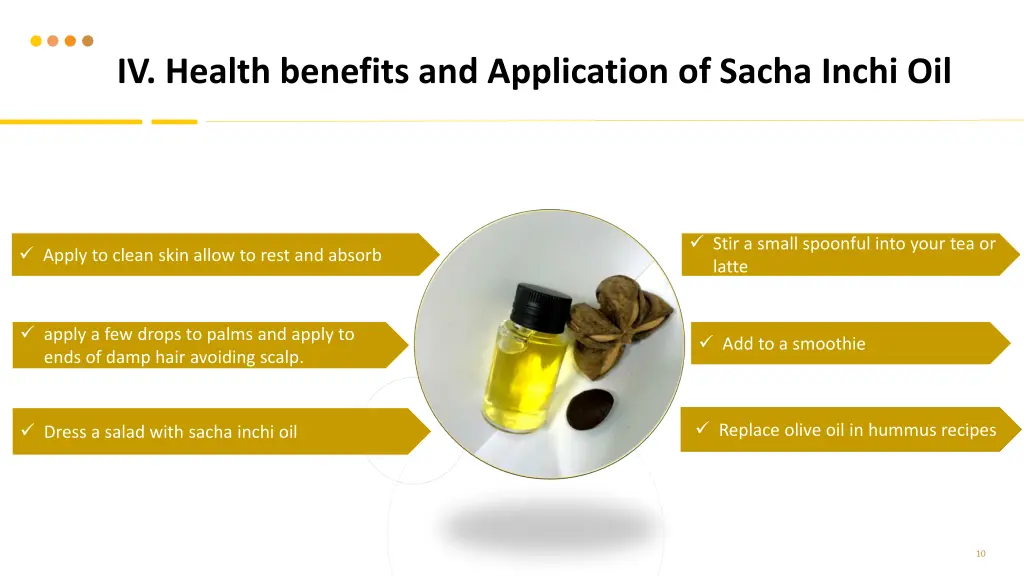
IV. Health benefits and Application of Sacha Inchi Oil Stir a small spoonful into your tea or latte Apply to clean skin allow to rest and absorb apply a few drops to palms and apply to ends of damp hair avoiding scalp. Add to a smoothie Replace olive oil in hummus recipes Dress a salad with sacha inchi oil 10
References References https://aocs.onlinelibrary.wiley.com/doi/abs/10.1002/aocs.12270 https://www.researchgate.net/publication/322932777_Identification_of_fatty_acids_in_sacha_inchi_oil_Cursive_plukenet ia_volubilis_l_from_ecuador https://www.researchgate.net/publication/324914977_Screw_press_extraction_of_Sacha_inchi_seeds_Oil_yield_and_its_ chemical_composition_and_antioxidant_properties https://www.researchgate.net/publication/325581632_Sacha_inchi_Plukenetia_volubilis_L_Nutritional_composition_biolo gical_activity_and_uses https://sanus-q.com/products/sacha-inchi-oil-capsules 11
Thank you Thank you 12