Sampling Methods in Statistical Analysis

Sampling is a crucial process in statistical analysis where observations are taken from a larger population to draw valid conclusions. Understanding the population, sample, and sampling frame is essential in research to ensure representativeness and validity of results. Defining the target population, selecting a suitable sampling method, and determining the sample size are key steps in sampling. A well-constructed sampling frame and careful consideration of factors influencing sample size are vital for accurate statistical analysis.

Download Presentation

Please find below an Image/Link to download the presentation.
The content on the website is provided AS IS for your information and personal use only. It may not be sold, licensed, or shared on other websites without obtaining consent from the author.If you encounter any issues during the download, it is possible that the publisher has removed the file from their server.
You are allowed to download the files provided on this website for personal or commercial use, subject to the condition that they are used lawfully. All files are the property of their respective owners.
The content on the website is provided AS IS for your information and personal use only. It may not be sold, licensed, or shared on other websites without obtaining consent from the author.
E N D
Presentation Transcript
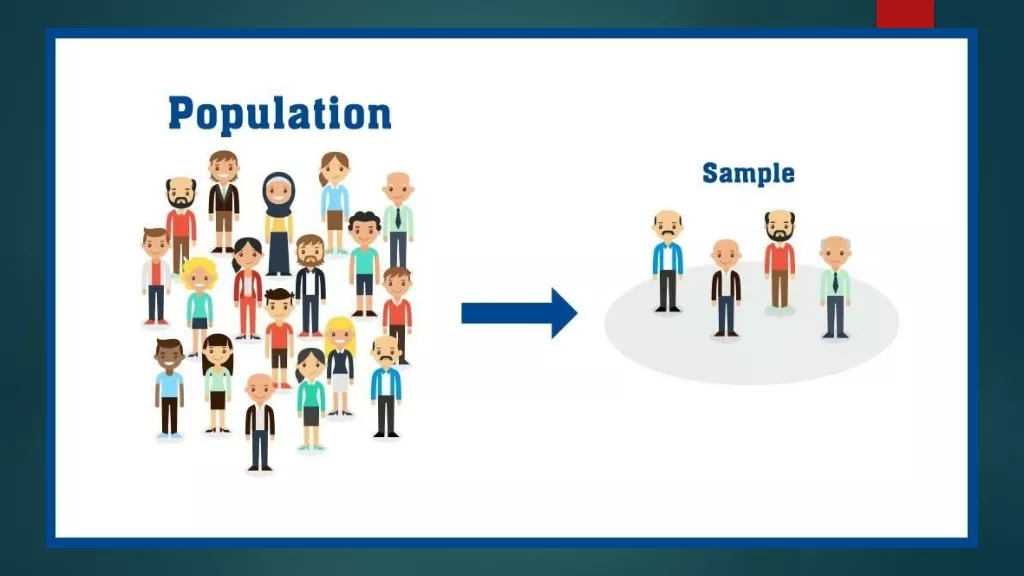
Sampling is a process used in statistical analysis in which a predetermined number of observations are taken from a larger population. When you conduct research about a group of people, it s rarely possible to collect data from every person in that group. Instead, you select a sample. The sample is the group of individuals who will actually participate in the research. To draw valid conclusions from your results, you have to carefully decide how you will select a sample that is representative of the group as a whole. This is called a sampling method.
First, you need to understand the difference between a population population of your research. The draw The will and a sample, and identify the target The population draw conclusions The sample will collect population is is the conclusions about sample is is the collect data the entire about. . the specific data from entire group group that that you you want want to to specific group from. . group of of individuals individuals that that you you
The population can be defined in terms of geographical location, age, income, or many other characteristics. It can be very broad or quite narrow: maybe you want to make inferences about the whole adult population customers of a certain company, patients with a specific health condition, or students in a single school. It is important to carefully define your target population according to the purpose and practicalities of your project. If geographically dispersed, it might be difficult to gain access to a representative sample. A lack of a representative sample affects the validity of your results, and can lead to several research biases, particularly sampling bias. of your country; maybe your research focuses on the population is very large, demographically mixed, and
The sampling frame is the actual list of individuals that the sample will be drawn from. Ideally, it should include the entire target population (and nobody who is not part of that population). Example: You are doing research on working conditions at a social media marketing company. Your population is all 1000 employees of the company. Your sampling frame is the company s HR database, which lists the names and contact details of every employee.
The number of individuals you should include in your sample depends on various factors, including the size and variability of the population and your research design. There are different sample size calculators and formulas depending on what you want to achieve with statistical analysis.
There are two primary types of sampling methods that you can use in your research: Probability make strong statistical inferences about the whole group. Non convenience or other criteria, allowing you to easily collect data. You should clearly explain how you selected your sample in the methodology section of your paper or thesis, as well as how you approached minimizing research bias in your work. Probability sampling sampling involves random selection, allowing you to Non- -probability probability sampling sampling involves non-random selection based on Probability Sampling Non-Probability Sampling
Simple Random sampling Systematic Random sampling Stratified Random sampling Cluster sampling
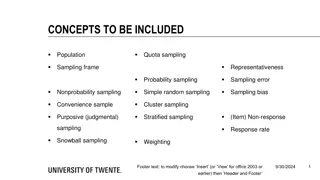
Convenience or accidental sampling Voluntary Response sampling Purposive (or Judgement) sampling Snow-ball sampling Quota sampling