Enhance your understanding of the Learning, Teaching, and Scholarship (LTS) career track with essential knowledge provided by PDR reviewers. Explore the link between PDR processes and key people processes, such as promotion criteria and probation. Learn why some colleagues struggle with promotion requirements and how PDR reviewers play a crucial role in addressing these challenges.
Please find below an Image/Link to download the presentation.
The content on the website is provided AS IS for your information and personal use only. It may not be sold, licensed, or shared on other websites without obtaining consent from the author. If you encounter any issues during the download, it is possible that the publisher has removed the file from their server.
You are allowed to download the files provided on this website for personal or commercial use, subject to the condition that they are used lawfully. All files are the property of their respective owners.
The content on the website is provided AS IS for your information and personal use only. It may not be sold, licensed, or shared on other websites without obtaining consent from the author.
Aim and Objectives of Workshop Aim In conjunction with the pre-recorded session from Professor Fischbacher-Smith, provide PDR reviewers with essential knowledge and understanding of the Learning Teaching and Scholarship (LTS) career track to underpin the delivery of a supportive, developmental and well-informed PDR for colleagues on the LTS track. Objectives To understand the background, context and requirements of the LTS track To increase awareness of the Academic Promotion criteria for LTS and understand what type of evidence is required to meet them, allowing reviewers to provide useful feedback and guidance during the PDR process and support reviewees to set objectives that align to the requirements of the track. To examine the function and interrelationship of some related processes (ECDP, Academic Promotion and Probation) To discuss some PDR best practice
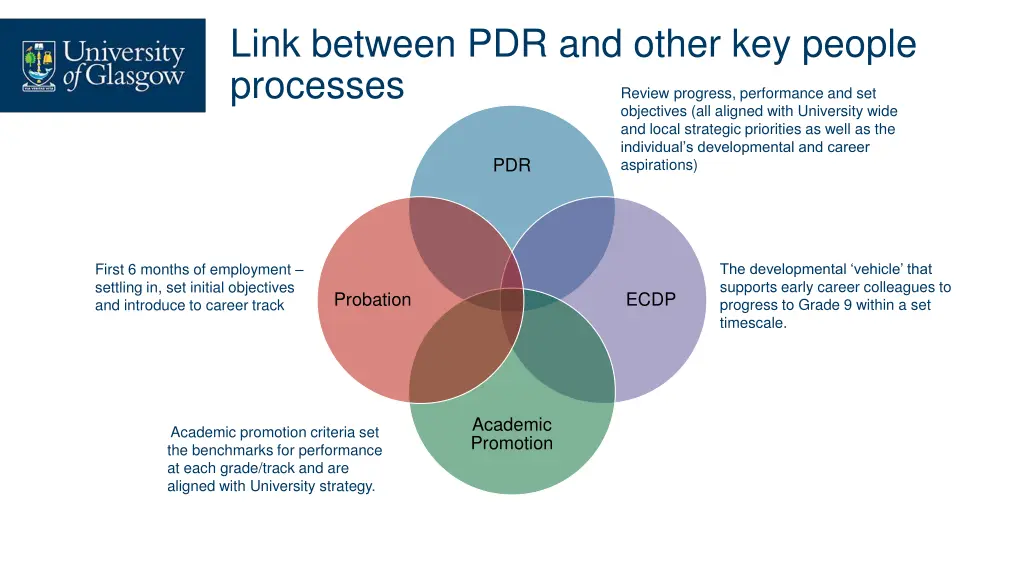
Link between PDR and other key people processes Review progress, performance and set objectives (all aligned with University wide and local strategic priorities as well as the individual s developmental and career aspirations) PDR First 6 months of employment settling in, set initial objectives and introduce to career track The developmental vehicle that supports early career colleagues to progress to Grade 9 within a set timescale. Probation ECDP Academic Promotion Academic promotion criteria set the benchmarks for performance at each grade/track and are aligned with University strategy.
What the promotions data tell us: LTS colleagues generally perform strongly in Learning & Teaching Practice (LTP) and Leadership, Management & Engagement (LME) Scholarship, Knowledge Exchange & Impact (SKEI) - for these criteria significantly fewer colleagues provide evidence which meets the standard required for promotion (all grades). Why might this be the case? Could there be a lack of understanding of the requirements? This is where the PDR reviewers come in. Esteem also has a lower success rate at promotion, which may be the knock-on effect of the lack of understanding of SKEI requirements.
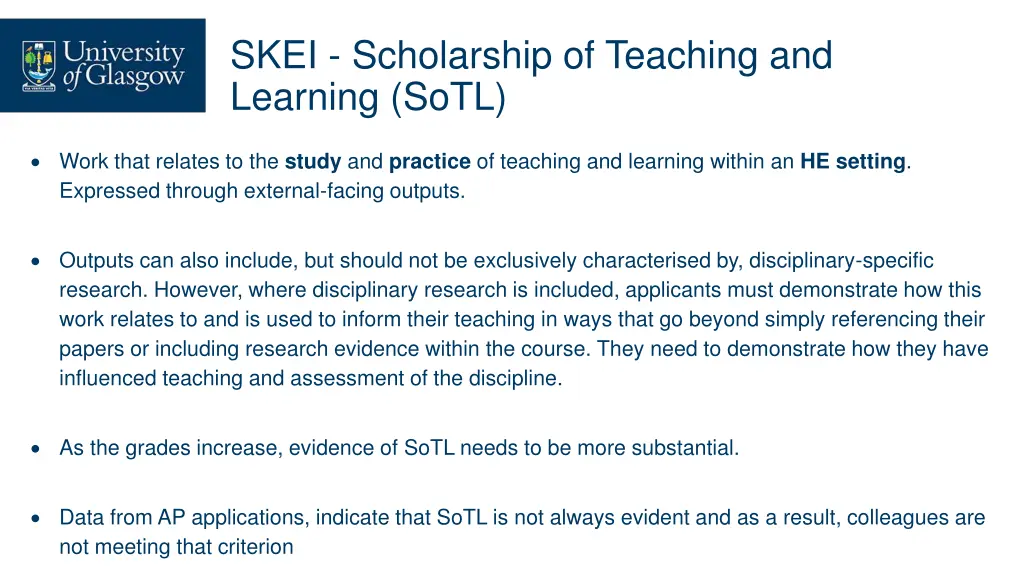
SKEI - Scholarship of Teaching and Learning (SoTL) Work that relates to the study and practice of teaching and learning within an HE setting. Expressed through external-facing outputs. Outputs can also include, but should not be exclusively characterised by, disciplinary-specific research. However, where disciplinary research is included, applicants must demonstrate how this work relates to and is used to inform their teaching in ways that go beyond simply referencing their papers or including research evidence within the course. They need to demonstrate how they have influenced teaching and assessment of the discipline. As the grades increase, evidence of SoTL needs to be more substantial. Data from AP applications, indicate that SoTL is not always evident and as a result, colleagues are not meeting that criterion
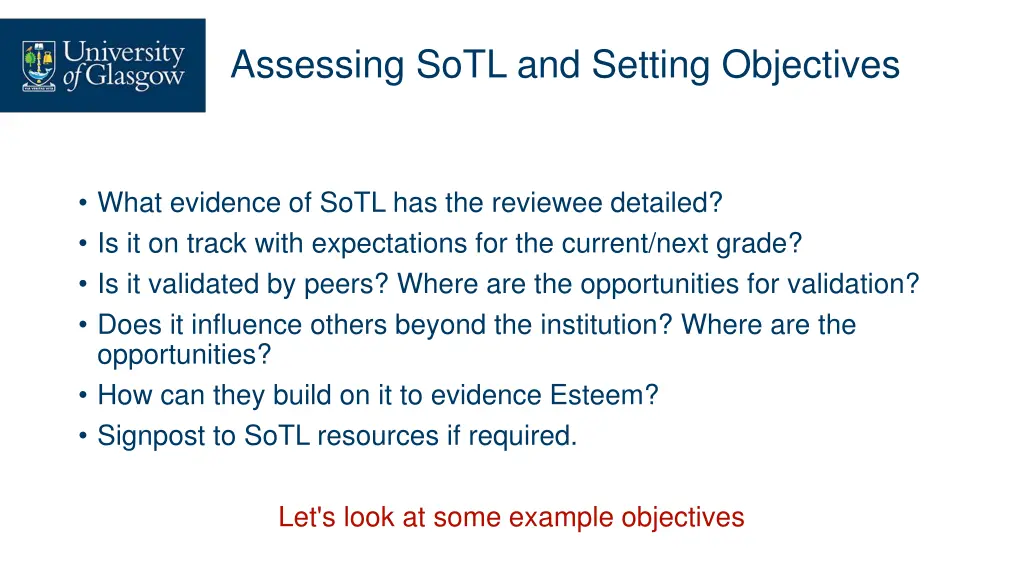
Assessing SoTL and Setting Objectives What evidence of SoTL has the reviewee detailed? Is it on track with expectations for the current/next grade? Is it validated by peers? Where are the opportunities for validation? Does it influence others beyond the institution? Where are the opportunities? How can they build on it to evidence Esteem? Signpost to SoTL resources if required. Let's look at some example objectives
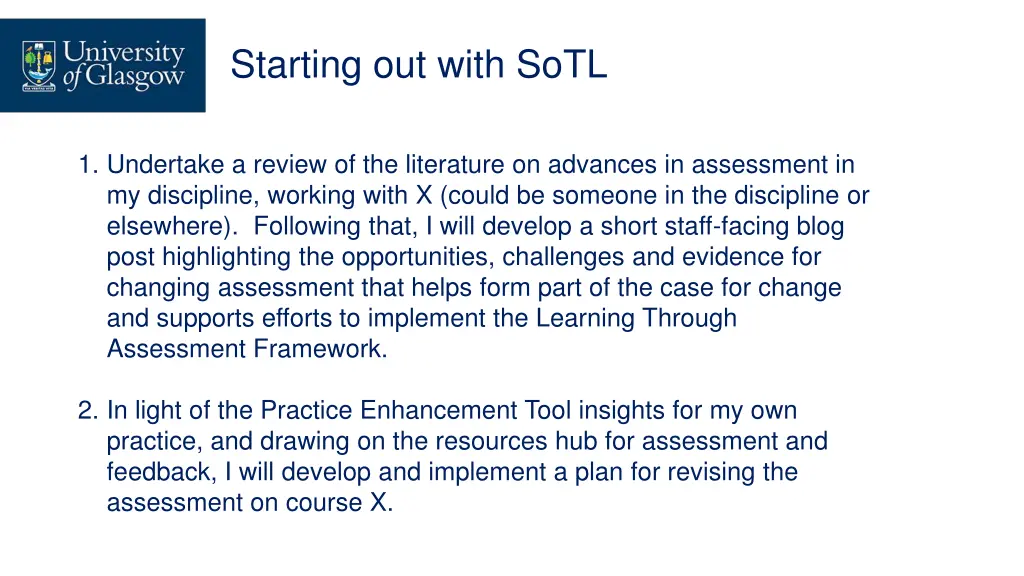
Starting out with SoTL 1. Undertake a review of the literature on advances in assessment in my discipline, working with X (could be someone in the discipline or elsewhere). Following that, I will develop a short staff-facing blog post highlighting the opportunities, challenges and evidence for changing assessment that helps form part of the case for change and supports efforts to implement the Learning Through Assessment Framework. 2. In light of the Practice Enhancement Tool insights for my own practice, and drawing on the resources hub for assessment and feedback, I will develop and implement a plan for revising the assessment on course X.
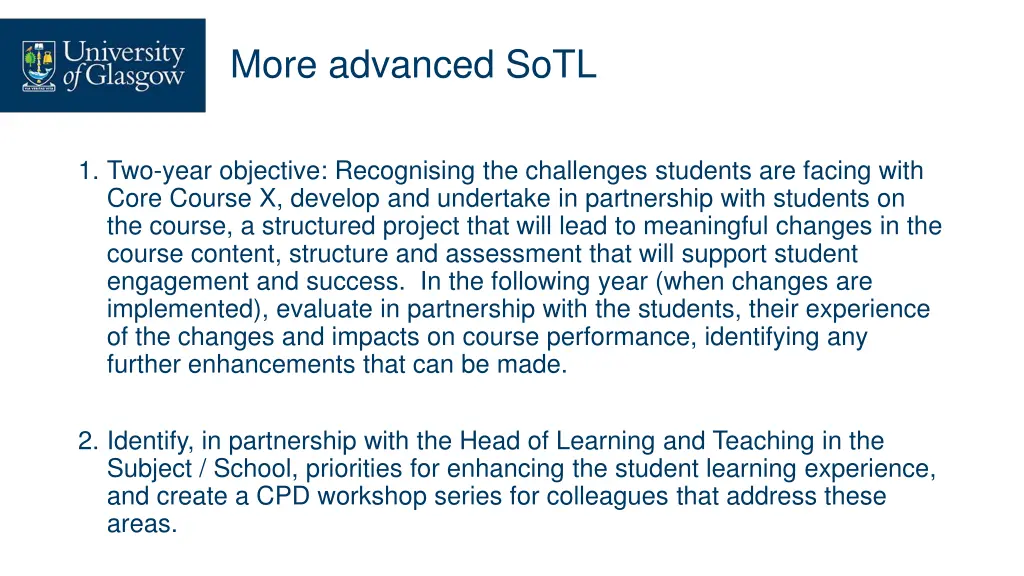
More advanced SoTL 1. Two-year objective: Recognising the challenges students are facing with Core Course X, develop and undertake in partnership with students on the course, a structured project that will lead to meaningful changes in the course content, structure and assessment that will support student engagement and success. In the following year (when changes are implemented), evaluate in partnership with the students, their experience of the changes and impacts on course performance, identifying any further enhancements that can be made. 2. Identify, in partnership with the Head of Learning and Teaching in the Subject / School, priorities for enhancing the student learning experience, and create a CPD workshop series for colleagues that address these areas.
Knowledge Exchange & Impact Contribution to knowledge transfer locally or national to professions or professional bodies, business or industry that demonstrably influences Higher Education. Contribution to partnerships, or the development of partnerships, with external organisations e.g. schools, education authorities and others involved in widening access and other forms of outreach. Engagement with activities, or contribution to outputs or activities associated with the public understanding, particularly through educational activities. Securing scholarships, supervision of PGR students and securing funding from internal or external sources.
Esteem Contributions to workshop and seminars for external bodies, increasing in frequency with progression through the grades. Reviewer role for discipline-specific or scholarship or learning and teaching related journals and/or external funding bodies. Contributions to external events that raise the profile of the University s educational activities such: professional bodies; university networks; professional networks Membership of editorial boards or similar for journals for books and/or reviewer role for external funding bodies
Possible sources of evidence When detailing your accomplishments and how they fit the criteria, it is important to be able to evidence them. Here are a few suggestions of where you might quote evidence from. Course evaluations Engagement with online environments NSS, PTES, PRES Impact of interventions How you use the research of your discipline and scholarship Consider features of PSF Collective endeavour and collaboration
The 'so what Encourage reviewees to articulate whatthe impact of their activities has been what difference has been made? It is not uncommon for promotion applications to list activities e.g. 'I've been Course Convenor for X course, Head of Subject and part of the Athena Swan Committee' but fail to provide further detail on what they achieved in those roles and what the impact of their work was. This makes it difficult for panels to assess as they are not always made up of subject specialists. PDR is the ideal opportunity to guide colleagues into thinking about: a) when setting objectives - what are they going to do, what do they want to accomplish, how will they be able to measure success and evidence it in the future (SMART) b) how they articulate their achievements in the last year. Getting used to writing in the level of detail that will be required for a promotion application
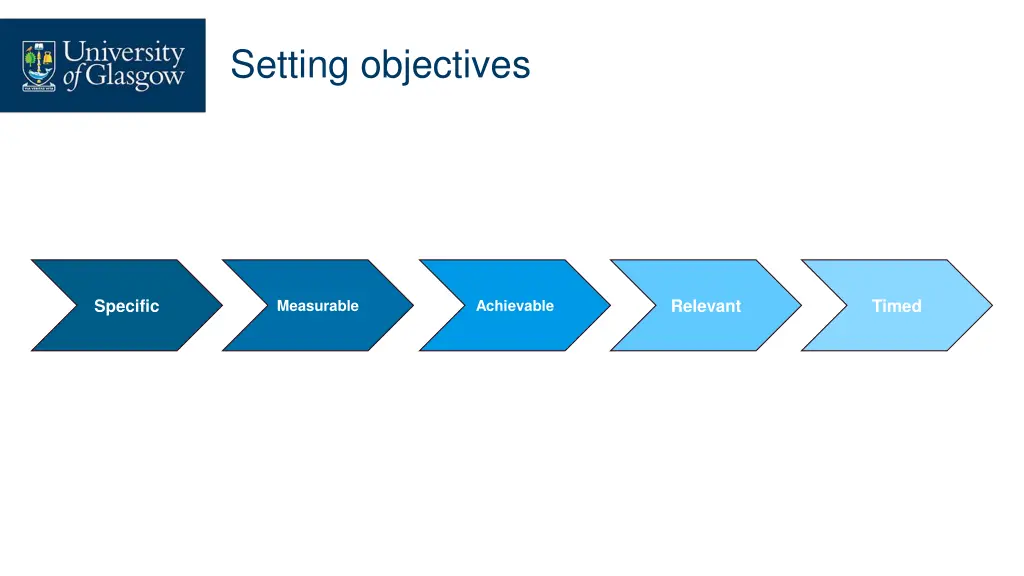
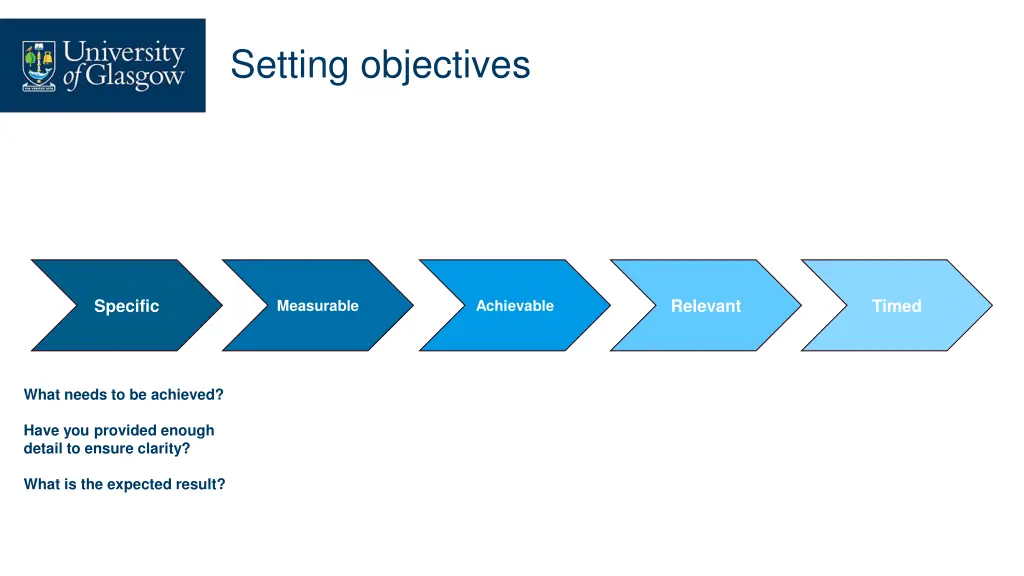
Setting objectives Specific Relevant Timed Measurable Achievable What needs to be achieved? Have you provided enough detail to ensure clarity? What is the expected result?
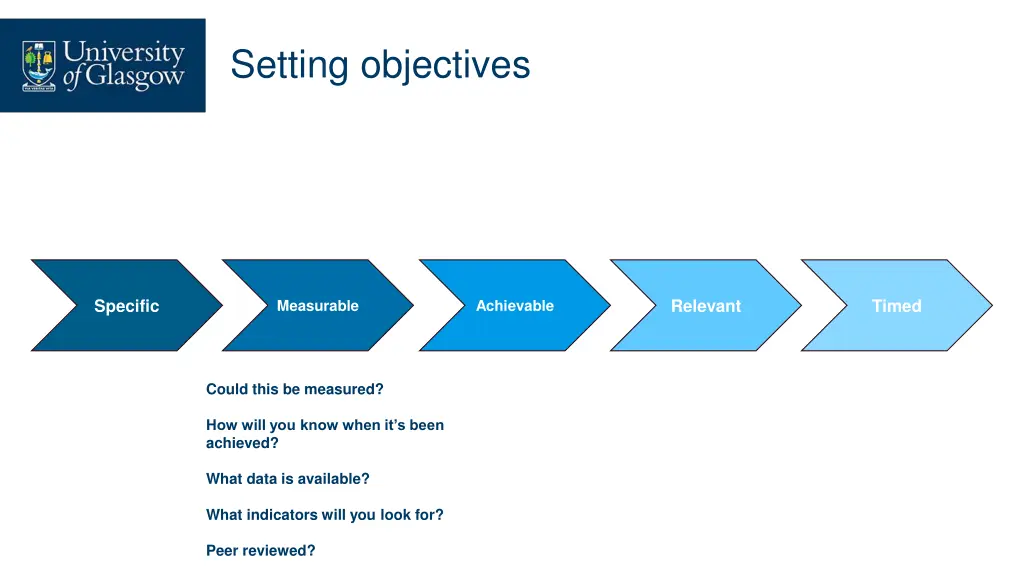
Setting objectives Specific Relevant Timed Measurable Achievable Could this be measured? How will you know when it s been achieved? What data is available? What indicators will you look for? Peer reviewed?
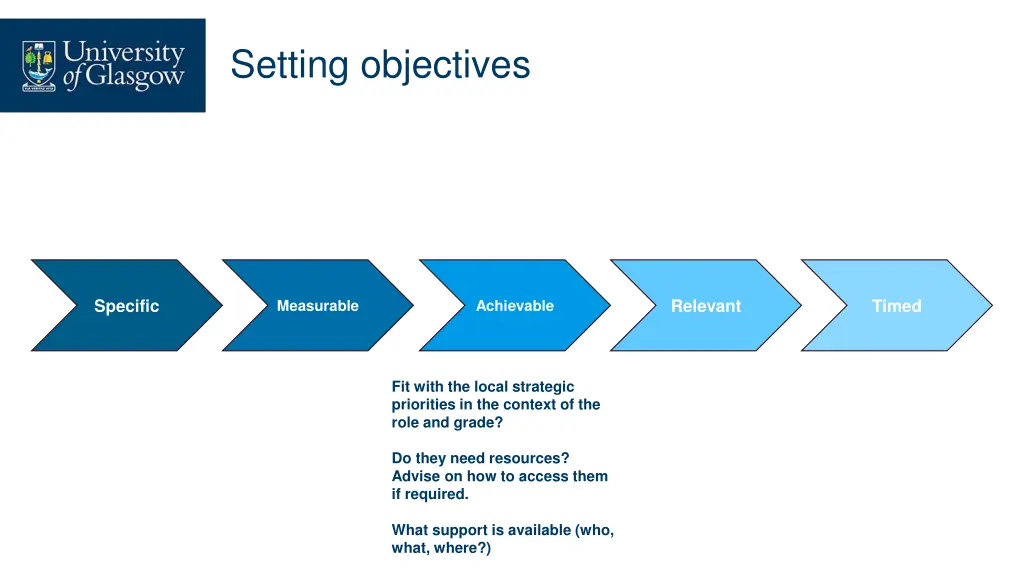
Setting objectives Specific Relevant Timed Measurable Achievable Fit with the local strategic priorities in the context of the role and grade? Do they need resources? Advise on how to access them if required. What support is available (who, what, where?)
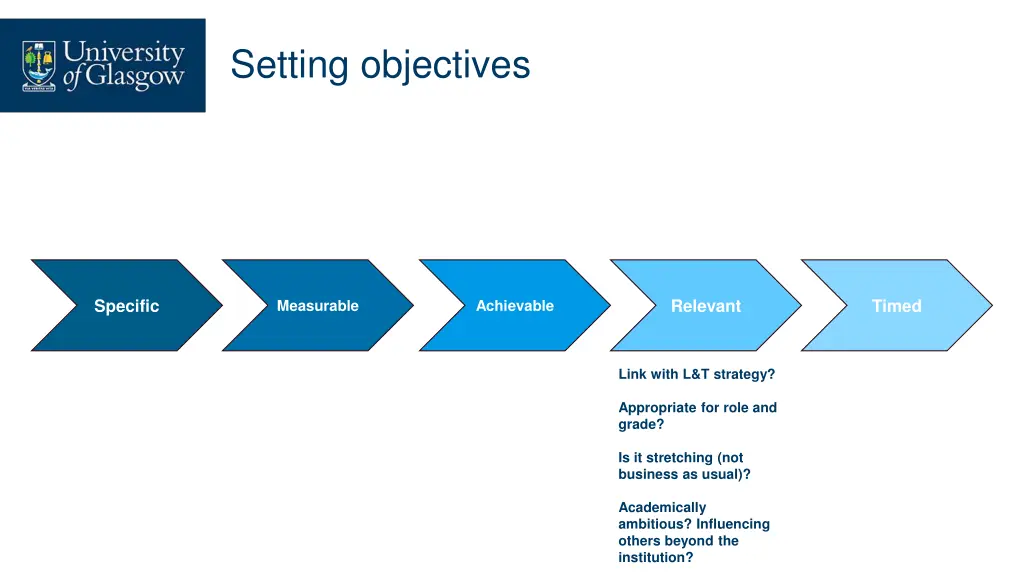
Setting objectives Specific Relevant Timed Measurable Achievable Link with L&T strategy? Appropriate for role and grade? Is it stretching (not business as usual)? Academically ambitious? Influencing others beyond the institution?
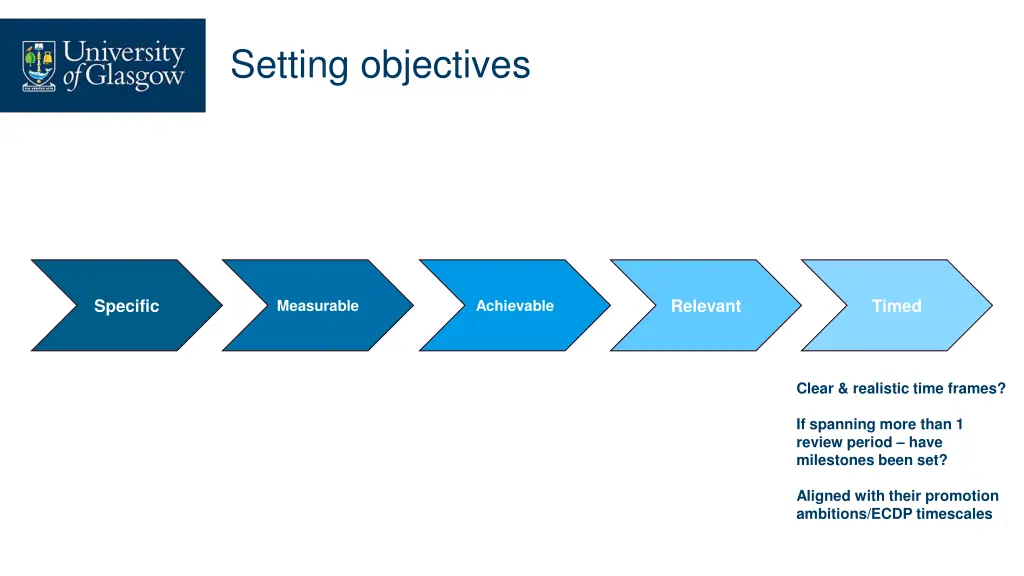
Setting objectives Specific Relevant Timed Measurable Achievable Clear & realistic time frames? If spanning more than 1 review period have milestones been set? Aligned with their promotion ambitions/ECDP timescales
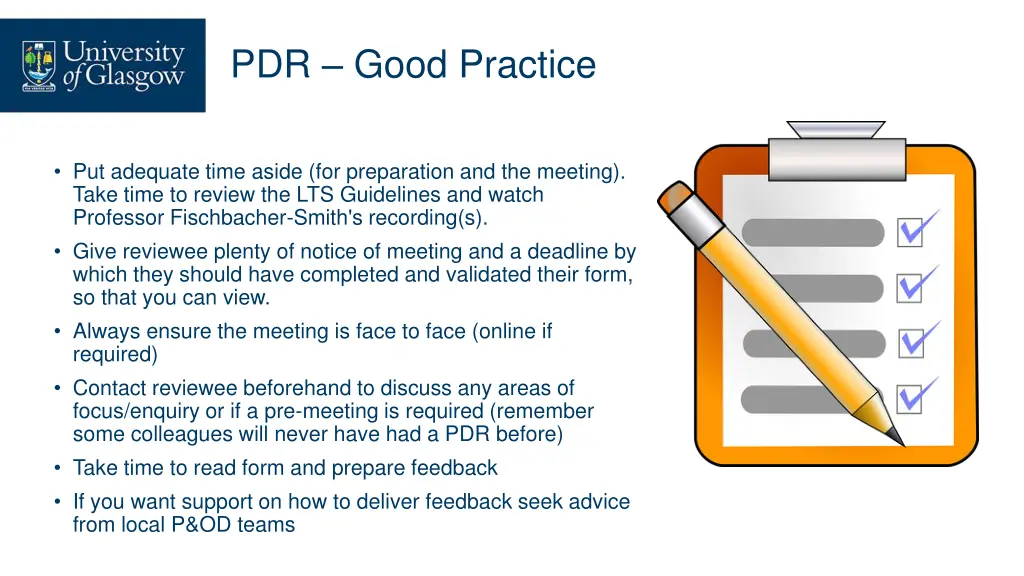
PDR Good Practice Put adequate time aside (for preparation and the meeting). Take time to review the LTS Guidelines and watch Professor Fischbacher-Smith's recording(s). Give reviewee plenty of notice of meeting and a deadline by which they should have completed and validated their form, so that you can view. Always ensure the meeting is face to face (online if required) Contact reviewee beforehand to discuss any areas of focus/enquiry or if a pre-meeting is required (remember some colleagues will never have had a PDR before) Take time to read form and prepare feedback If you want support on how to deliver feedback seek advice from local P&OD teams