Science - Key Elements and Perspectives
Explore the essence of science through varied perspectives, from defining its core elements to examining its role in investigating the natural world. Delve into discussions on the nature of science and different viewpoints from experts in the field, shedding light on the essence of scientific inquiry and understanding.

Download Presentation

Please find below an Image/Link to download the presentation.
The content on the website is provided AS IS for your information and personal use only. It may not be sold, licensed, or shared on other websites without obtaining consent from the author. If you encounter any issues during the download, it is possible that the publisher has removed the file from their server.
You are allowed to download the files provided on this website for personal or commercial use, subject to the condition that they are used lawfully. All files are the property of their respective owners.
The content on the website is provided AS IS for your information and personal use only. It may not be sold, licensed, or shared on other websites without obtaining consent from the author.
E N D
Presentation Transcript
1. Defining Science 2. Ways of Knowing Randy Bell Curry School of Education Edward Murphy Department of Astronomy University of Virginia University of Virginia
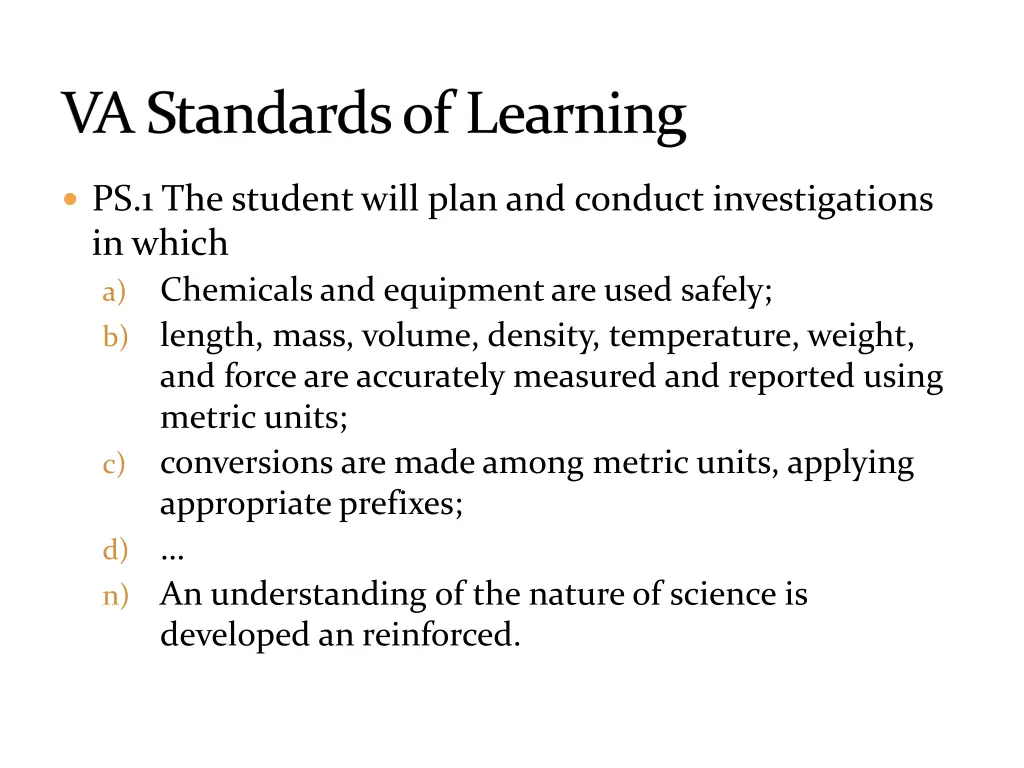
VA Standards of Learning PS.1 The student will plan and conduct investigations in which Chemicals and equipment are used safely; b) length, mass, volume, density, temperature, weight, and force are accurately measured and reported using metric units; conversions are made among metric units, applying appropriate prefixes; d) n) An understanding of the nature of science is developed an reinforced. a) c)
What is Science? In small groups: 1. Discuss key elements & 2. Develop brief definition
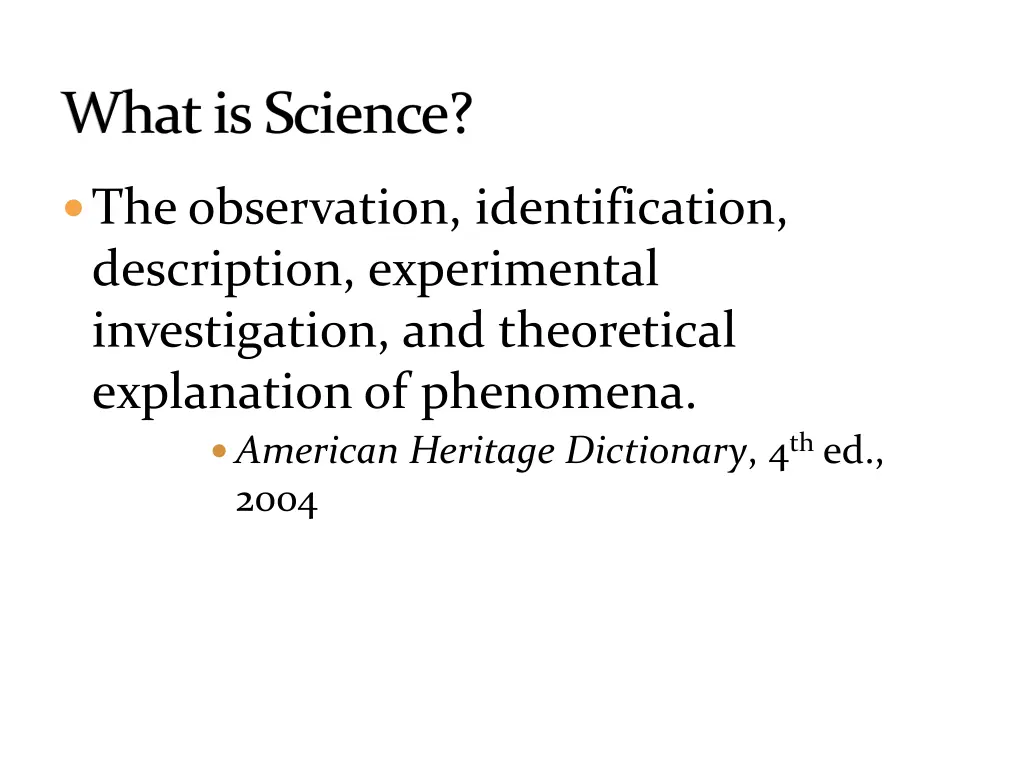
What is Science? The observation, identification, description, experimental investigation, and theoretical explanation of phenomena. American Heritage Dictionary, 4thed., 2004
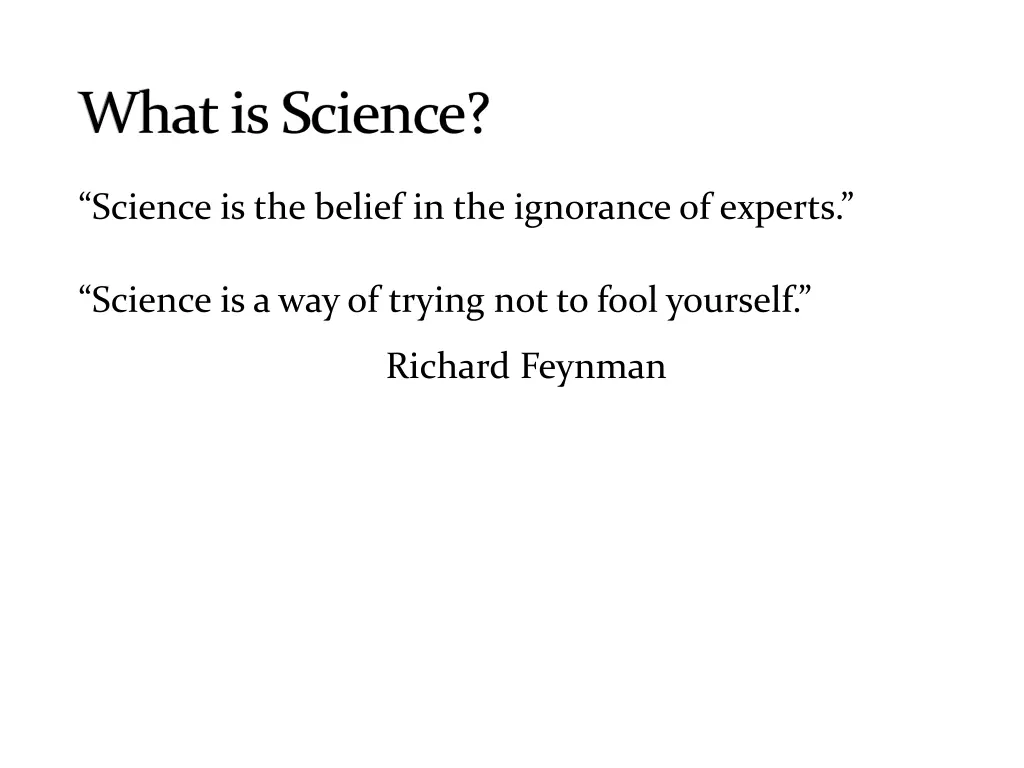
What is Science? Science is the belief in the ignorance of experts. Science is a way of trying not to fool yourself. Richard Feynman Richard Feynman Physicist Nobel Prize Winner
What is Science? Science is an internally consistent set of lies designed to explain away the universe. Art Beaucoup Paleobiologist
What is Science? We [scientists] wouldn t know truth if it jumped up and bit us in the ass. We re probably fairly good at recognizing what s false, and that s what science does on a day-to-day basis, but we can t claim to identify truth. Dr. Steven Holland University of Georgia Geologist
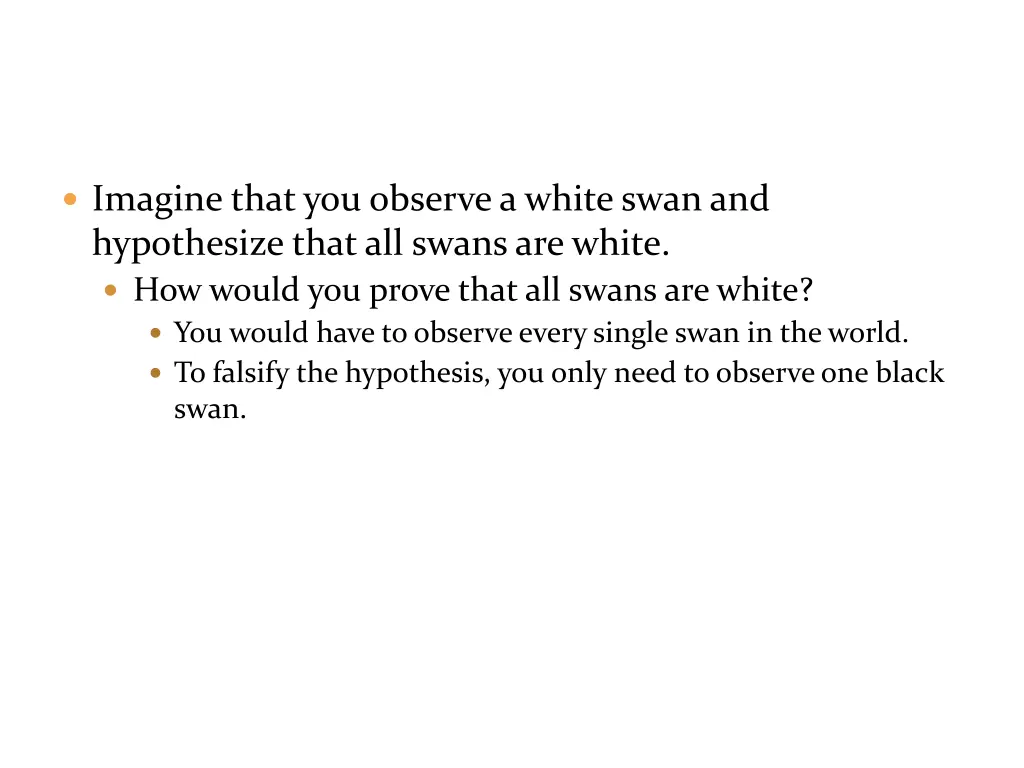
Imagine that you observe a white swan and hypothesize that all swans are white. How would you prove that all swans are white? You would have to observe every single swan in the world. To falsify the hypothesis, you only need to observe one black swan.
A politician, a teacher, and a scientist were traveling by train through Scotland when they saw a black sheep through the window of the train. Aha, said the politician with a smile, I see that Scottish sheep are black. Hmm, said the teacher, you mean that some Scottish sheep are black. No, said the scientist glumly, All we know is that there is a least one sheep in Scotland, and that at least one side of that one sheep is black.
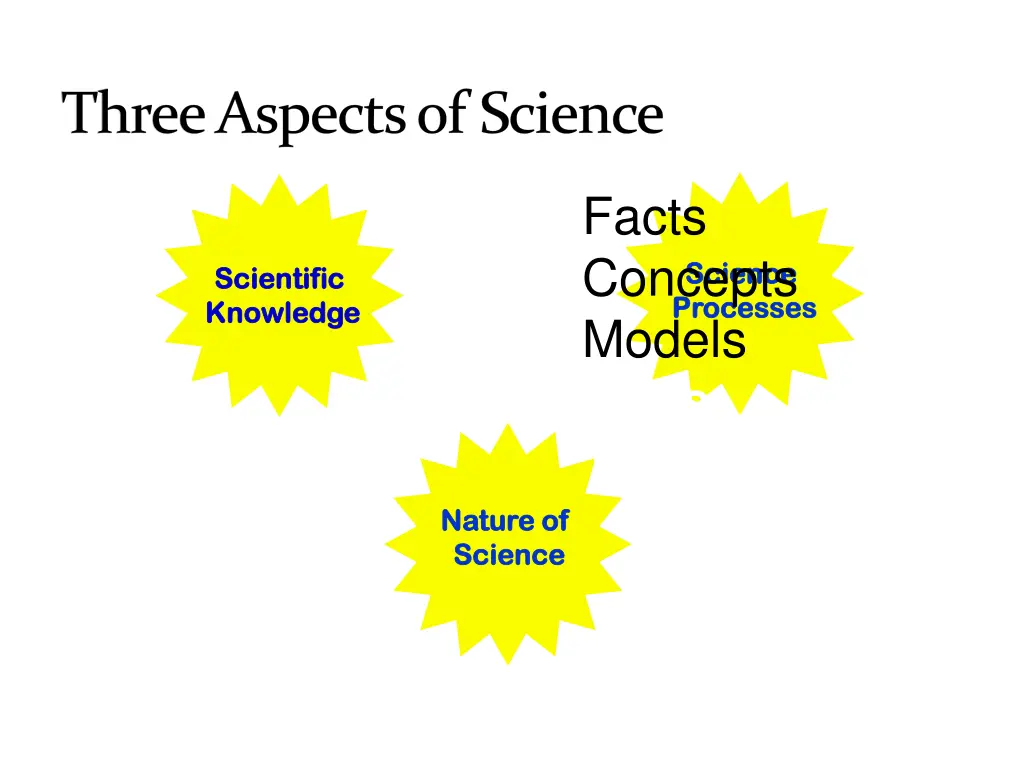
Three Aspects of Science Facts Concepts Models Laws Theories Science Science Processes Processes Scientific Scientific Knowledge Knowledge Nature of Nature of Science Science
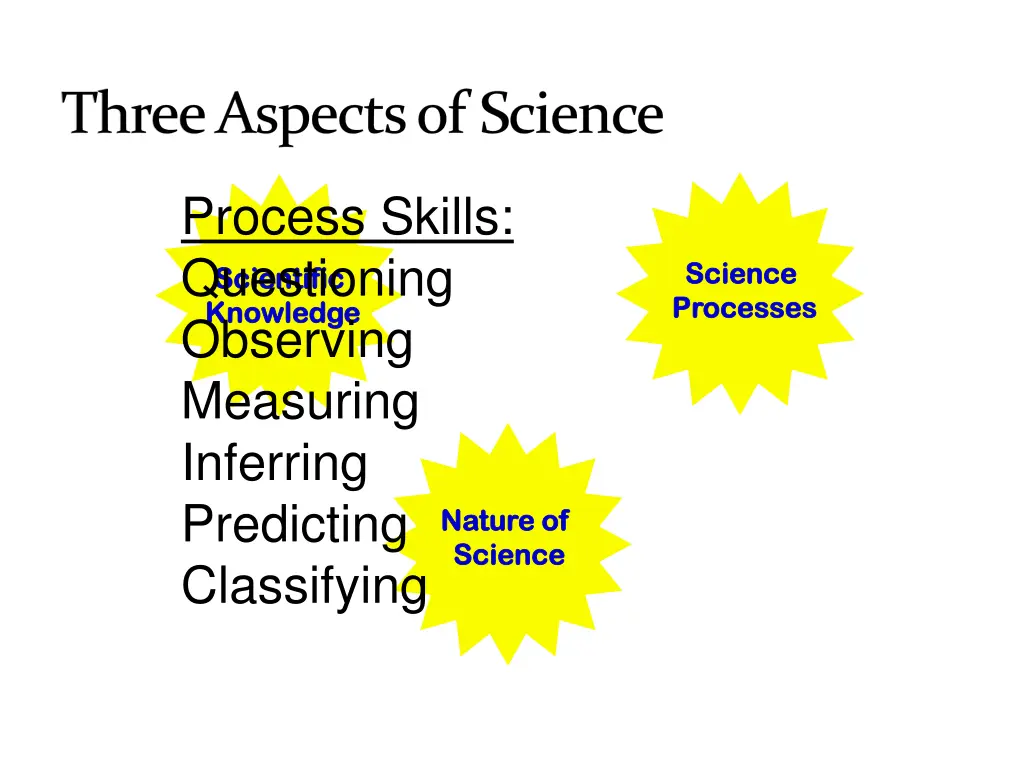
Three Aspects of Science Process Skills: Questioning Science Science Processes Processes Scientific Scientific Knowledge Knowledge Observing Measuring Inferring Predicting Classifying Nature of Nature of Science Science
Three Aspects of Science Science Science Processes Processes Scientific Scientific Knowledge Knowledge Science as a way of knowing. Nature of Nature of Science Science
Three Aspects of Science Science Science Processes Processes Scientific Scientific Knowledge Knowledge Nature of Nature of Science Science
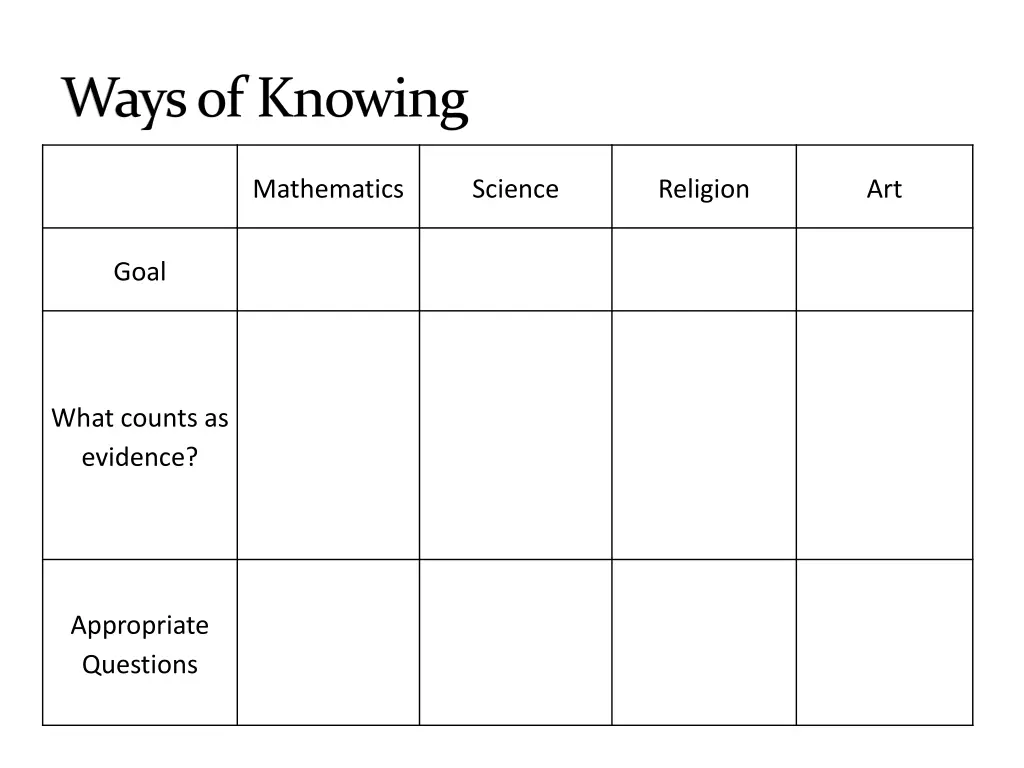
Ways of Knowing Mathematics Science Religion Art Goal What counts as evidence? Appropriate Questions
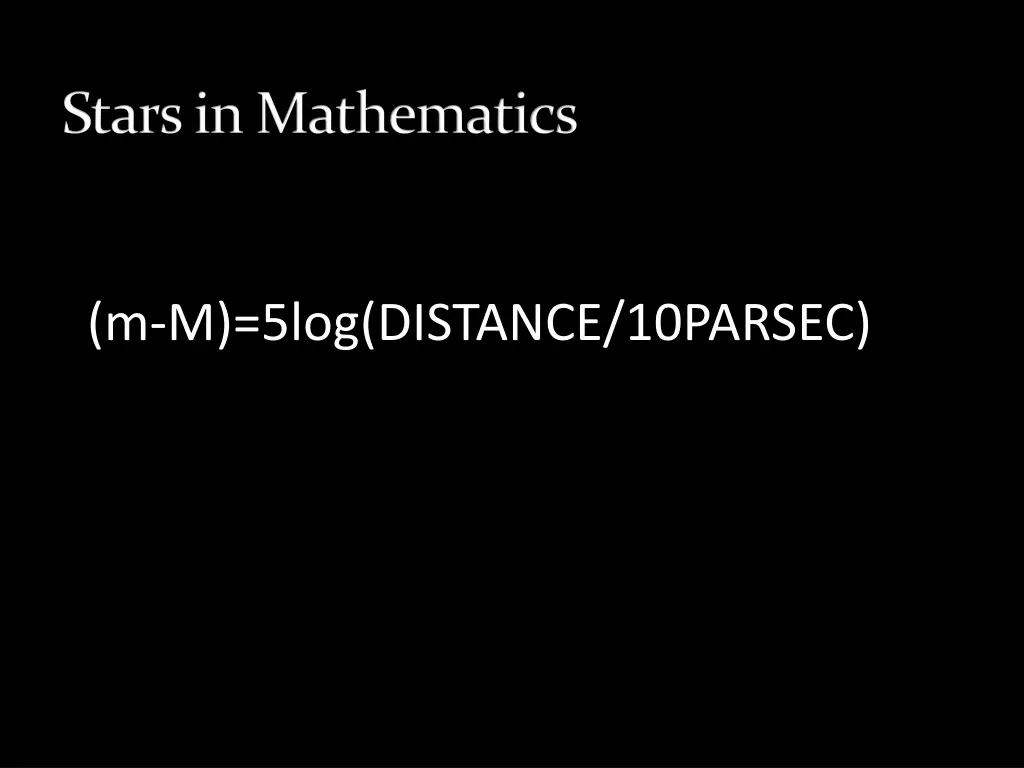
Stars in Mathematics (m-M)=5log(DISTANCE/10PARSEC)
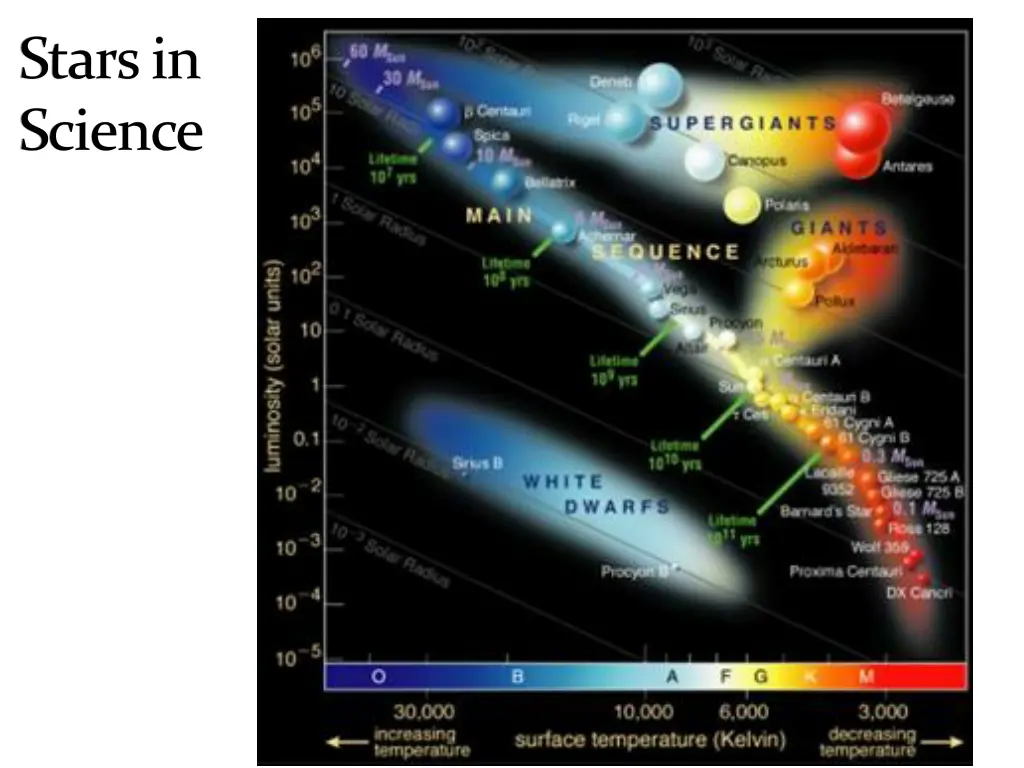
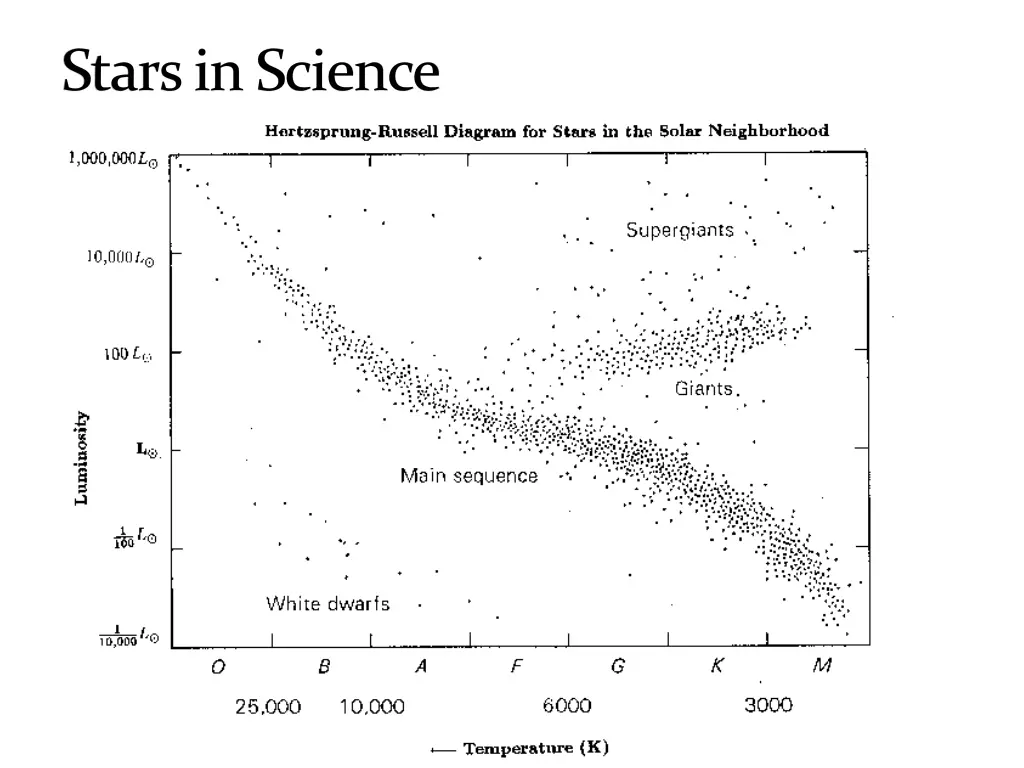
Stars in Science
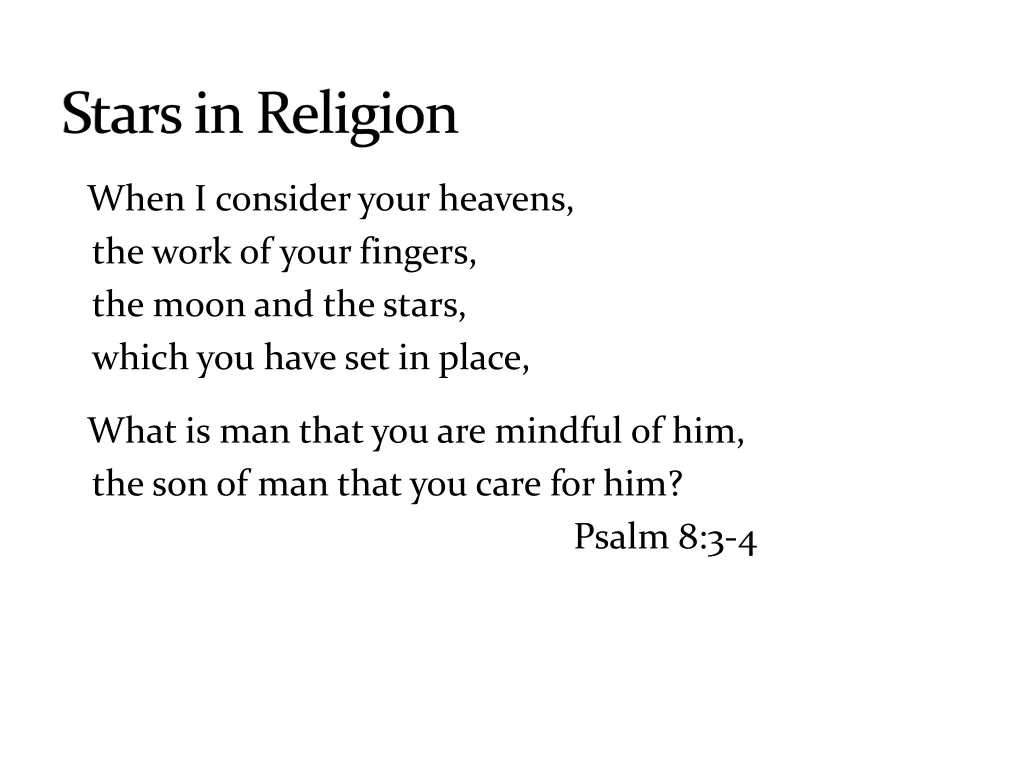
Stars in Religion When I consider your heavens, the work of your fingers, the moon and the stars, which you have set in place, What is man that you are mindful of him, the son of man that you care for him? Psalm 8:3-4
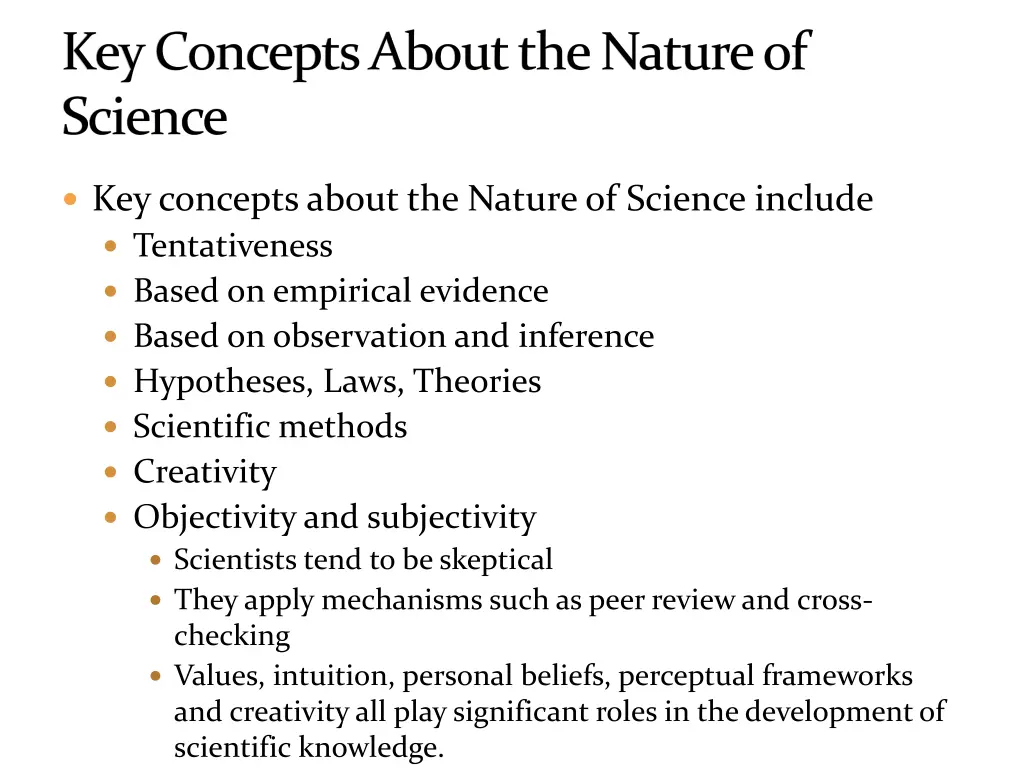
Key Concepts About the Nature of Science Key concepts about the Nature of Science include Tentativeness Based on empirical evidence Based on observation and inference Hypotheses, Laws, Theories Scientific methods Creativity Objectivity and subjectivity Scientists tend to be skeptical They apply mechanisms such as peer review and cross- checking Values, intuition, personal beliefs, perceptual frameworks and creativity all play significant roles in the development of scientific knowledge.
What is Science? Science alone of all the subjects contains within itself the lesson of the danger of belief in the infallibility of the greatest teachers in the preceding generation As a matter of fact, I can also define science another way: Science is the belief in the ignorance of experts. The first principle is that you must not fool yourself, and you are the easiest person to fool. Dr. Richard Feynman Noble Prize winning physicist The Pleasure of Finding Things Out
There is no philosophical high-road in science we are in a jungle and find our way by trial and error, building our roads as we proceed. We do not find sign- posts at cross-roads, but our own scouts erect them, to help the rest. Max Born (1882-1970) Noble Prize winning physicist
The fuel on which science runs is ignorance. Matt Ridley Genome: The Autobiography of a Species in 23 Chapters.
What is Science? The real purpose of the scientific method is to make sure that Nature hasn t misled you into thinking you know something you don t actually know. Robert Pirsig Zen and the Art of Motorcyle Maintenance
The fuel on which science runs is ignorance. Science is like a hungry furnace that must be fed logs from the forests of ignorance that surround us. In the process, the clearing that we call knowledge expands, but the more it expands, the longer its perimeter and the more ignorance comes into view A true scientist is bored by knowledge; it is the assault on ignorance that motivates him the mysteries that previous discoveries have revealed. The forest is more interesting than the clearing. Matt Ridley Genome: The Autobiography of a Species in 23 Chapters.
I think that we shall have to get accustomed to the idea that we must not look upon science as body of knowledge , but rather as a system of hypotheses, or as a system of guesses, or anticipations that in principle cannot be justified, but with which we work as long as they stand up to tests, and of which we are never justified in saying that we know they are true Karl Popper (1902-1994) The Logic of Scientific Discovery