The global seaweed extracts market was valued at USD 1.26 billion in 2024 and is expected to increase from USD 1.41 billion in 2025 to USD 3.44 billion by 2032, registering a CAGR of 13.60% during the forecast period.
Please find below an Image/Link to download the presentation.
The content on the website is provided AS IS for your information and personal use only. It may not be sold, licensed, or shared on other websites without obtaining consent from the author. If you encounter any issues during the download, it is possible that the publisher has removed the file from their server.
You are allowed to download the files provided on this website for personal or commercial use, subject to the condition that they are used lawfully. All files are the property of their respective owners.
The content on the website is provided AS IS for your information and personal use only. It may not be sold, licensed, or shared on other websites without obtaining consent from the author.
E N D
Presentation Transcript
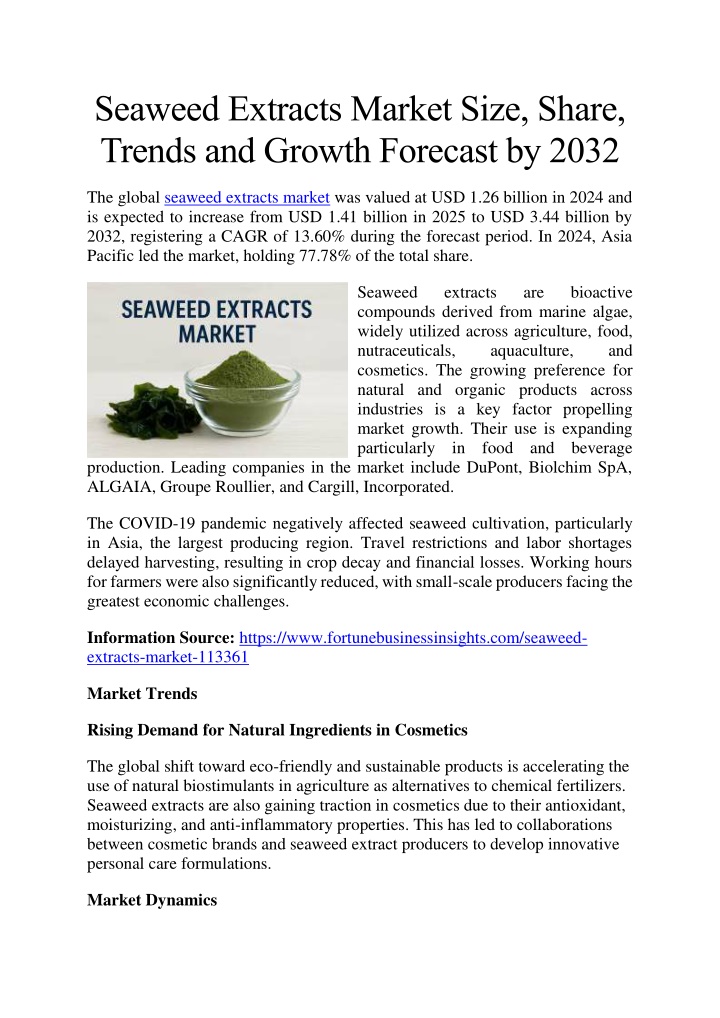
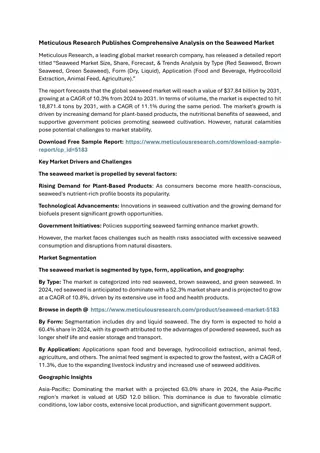
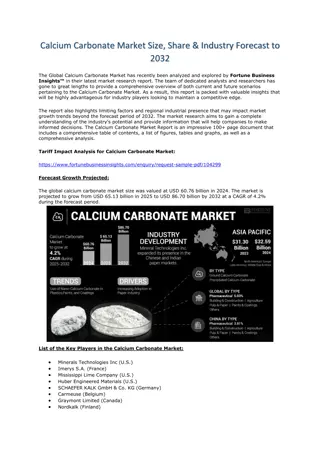
Seaweed Extracts Market Size, Share, Trends and Growth Forecast by 2032 The global seaweed extracts market was valued at USD 1.26 billion in 2024 and is expected to increase from USD 1.41 billion in 2025 to USD 3.44 billion by 2032, registering a CAGR of 13.60% during the forecast period. In 2024, Asia Pacific led the market, holding 77.78% of the total share. Seaweed compounds derived from marine algae, widely utilized across agriculture, food, nutraceuticals, aquaculture, cosmetics. The growing preference for natural and organic products across industries is a key factor propelling market growth. Their use is expanding particularly in food and beverage extracts are bioactive and production. Leading companies in the market include DuPont, Biolchim SpA, ALGAIA, Groupe Roullier, and Cargill, Incorporated. The COVID-19 pandemic negatively affected seaweed cultivation, particularly in Asia, the largest producing region. Travel restrictions and labor shortages delayed harvesting, resulting in crop decay and financial losses. Working hours for farmers were also significantly reduced, with small-scale producers facing the greatest economic challenges. Information Source: https://www.fortunebusinessinsights.com/seaweed- extracts-market-113361 Market Trends Rising Demand for Natural Ingredients in Cosmetics The global shift toward eco-friendly and sustainable products is accelerating the use of natural biostimulants in agriculture as alternatives to chemical fertilizers. Seaweed extracts are also gaining traction in cosmetics due to their antioxidant, moisturizing, and anti-inflammatory properties. This has led to collaborations between cosmetic brands and seaweed extract producers to develop innovative personal care formulations. Market Dynamics
The seaweed extracts market is driven by the increasing demand for advanced nutraceuticals, as seaweed has been traditionally consumed in Asian diets and medicines, strengthening its role in functional food and nutraceutical applications. Rising interest among health-conscious consumers is also fueling growth, as seaweed can be cultivated sustainably with relatively low input costs compared to conventional crops, making it an attractive option for healthy and eco-friendly products. However, the market faces restraints due to heavy reliance on Asian countries such as China, Indonesia, and South Korea, which dominate global production and concentrate extract processing in these regions, potentially limiting market diversification. At the same time, significant opportunities lie in the development of new seaweed-based products, as the growing prevalence of chronic diseases such as diabetes, cancer, and cardiovascular disorders is boosting demand for bioactive compounds like alginate, carrageenan, fucoidan, ulvan, agar, and laminarin, which are increasingly being utilized in pharmaceuticals, functional foods, and other applications. Segmentation Insights By source, red seaweed held the largest share due to its extensive use in extract manufacturing, while by form, the powder segment dominated the market for its economic feasibility and ease of use. In terms of application, nutraceuticals led the segment, driven by the rising incorporation of seaweed extracts in functional foods and beverages. Regional Overview The market is analyzed across North America, Europe, Asia Pacific, South America, and the Middle East & Africa. Asia Pacific continues to dominate owing to its strong production base and high consumption across industries. Competitive Landscape The seaweed extracts market is fragmented, with players emphasizing innovation, technological advancements, and collaborations with end-use industries to enhance ingredient functionality. Partnerships between producers and companies in cosmetics, agriculture, and nutraceuticals are strengthening product development and market presence. Key Companies Profiled: Acadian Seaplants Limited (Canada) Annie Chun (U.S.)
ALGAIA (France) Humate International (China) Biolchim SpA (Italy) Cargill, Incorporated (U.S.) Archer Daniels Midland Company (U.S.) CEAMSA (Spain) CP Kelco ApS (Denmark) DuPont (U.S.) Industry Developments April 2025: Bayer AG launched AnHai Long, a seaweed-based biostimulant in China, designed to improve soil health, enhance nutrient uptake, and reduce abiotic stress in plants. Report Coverage This report provides an in-depth assessment of the seaweed extracts market, including key trends, drivers, restraints, opportunities, regional analysis, and competitive dynamics. It also highlights major industry developments and company strategies shaping the global market.