Sectoral System of Innovation Overview
Differences in innovation across sectors are vast, encompassing characteristics, sources, involved actors, process boundaries, and activity organization. A comparison reveals striking disparities in actors, sources, institutions, and policies related to innovation in various sectors. Traditional sectoral studies emphasize the significance of knowledge bases, actors, relationships, and institutions in understanding sectoral innovation variances. The discourse on sectoral differences delves into previous literature and introduces the concept of sectoral systems of innovation.

Download Presentation

Please find below an Image/Link to download the presentation.
The content on the website is provided AS IS for your information and personal use only. It may not be sold, licensed, or shared on other websites without obtaining consent from the author.If you encounter any issues during the download, it is possible that the publisher has removed the file from their server.
You are allowed to download the files provided on this website for personal or commercial use, subject to the condition that they are used lawfully. All files are the property of their respective owners.
The content on the website is provided AS IS for your information and personal use only. It may not be sold, licensed, or shared on other websites without obtaining consent from the author.
E N D
Presentation Transcript
Innovation differs sectoral approach
Differences Innovation greatly differs across sectors in terms of: characteristics, sources, actors involved, the boundaries of the process, and the organization of innovative activities.
Comparison among.differences A comparison of actors, sources, institutions, and policies for innovation in different sectors (e.g. in pharmaceuticals and biotechnology, chemicals, software, computers, semiconductors, telecommunications, or machine tools) shows striking differences. The industrial economics approach pays a lot of attention to differences across sectors in: R&D intensity, market structure, the range of viable R&D strategies and R&D alliances, the intensity of the patent race, the effectiveness of patent protection, the role of competition policy and the extent of R&D support. But, while these are very important factors, they are not the only ones nor are they the most relevant for a full understanding of the differences in innovation across sectors.
Relevant issues Tradition of sectoral studies has clearly shown both that sectors differ in terms of: the knowledge base, the actors involved in innovation, the links and relationships among actors, and the relevant institutions These dimensions clearly matter for understanding and explaining innovation and its differences across sectors.
How discussing sectoral differences We will briefly discuss: the previous literature on differences across sectors in innovation (PART I) then propose the concept of sectoral systems of innovation (PART II). the basic building blocks of sectoral systems knowledge, technological domains, and sectoral boundaries actors, relationships and networks institutions Then, the dynamics and transformation of sectoral systems is examined. Finally, some policy implications and the challenges ahead are discussed.
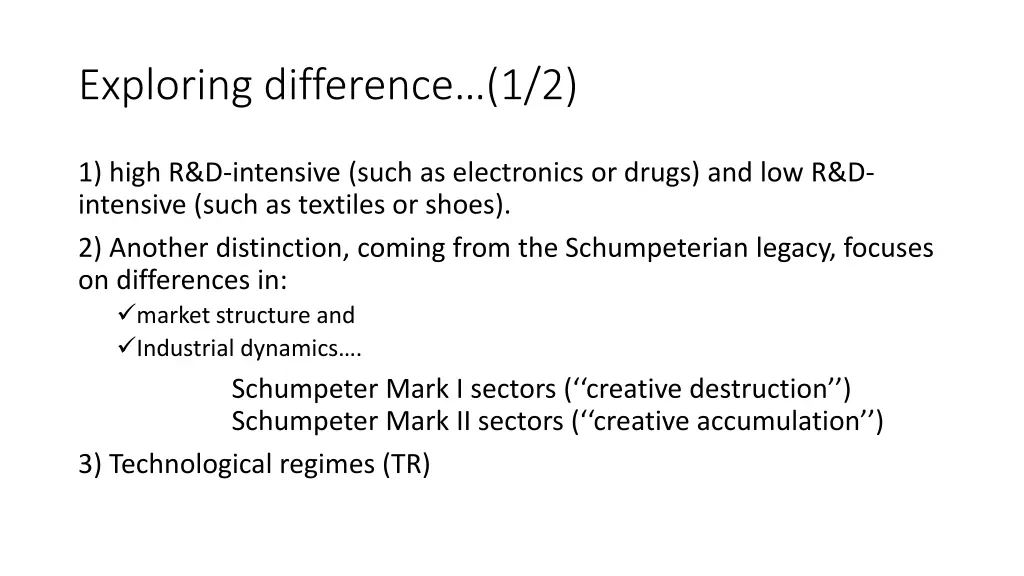
Exploring difference(1/2) 1) high R&D-intensive (such as electronics or drugs) and low R&D- intensive (such as textiles or shoes). 2) Another distinction, coming from the Schumpeterian legacy, focuses on differences in: market structure and Industrial dynamics . Schumpeter Mark I sectors ( creative destruction ) Schumpeter Mark II sectors ( creative accumulation ) 3) Technological regimes (TR)
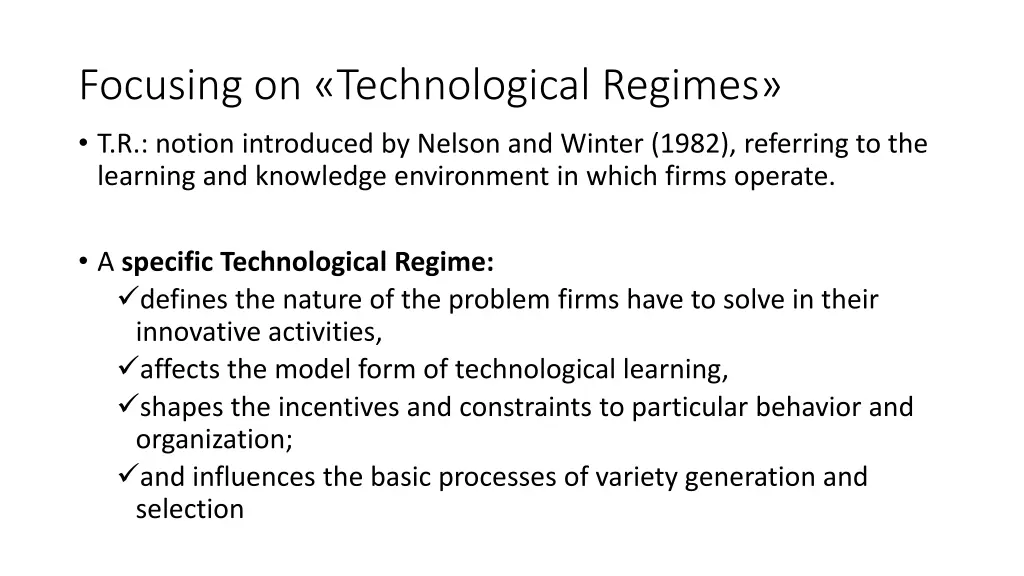
Focusing on Technological Regimes T.R.: notion introduced by Nelson and Winter (1982), referring to the learning and knowledge environment in which firms operate. A specific Technological Regime: defines the nature of the problem firms have to solve in their innovative activities, affects the model form of technological learning, shapes the incentives and constraints to particular behavior and organization; and influences the basic processes of variety generation and selection
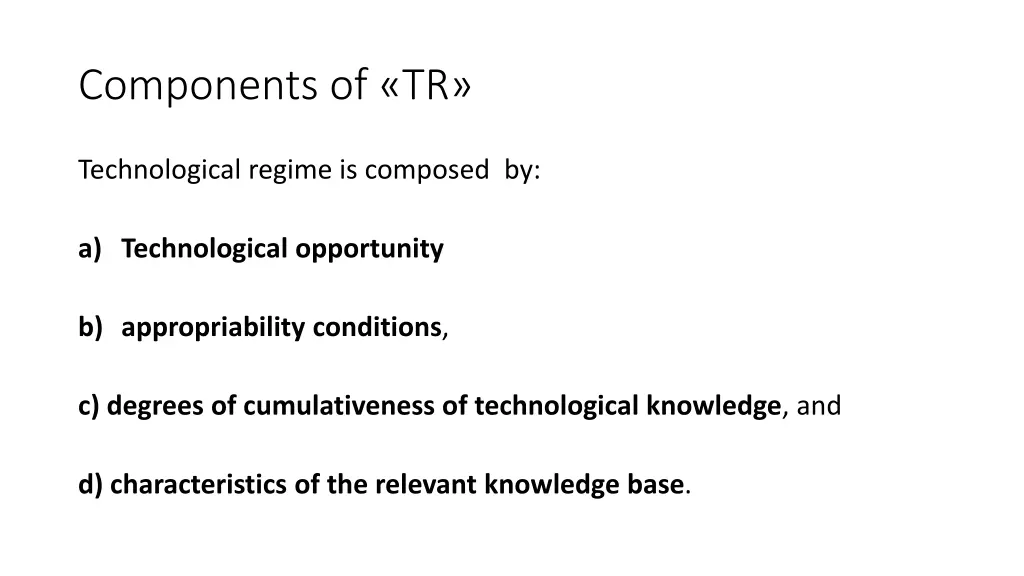
Components of TR Technological regime is composed by: a) Technological opportunity b) appropriability conditions, c) degrees of cumulativeness of technological knowledge, and d) characteristics of the relevant knowledge base.
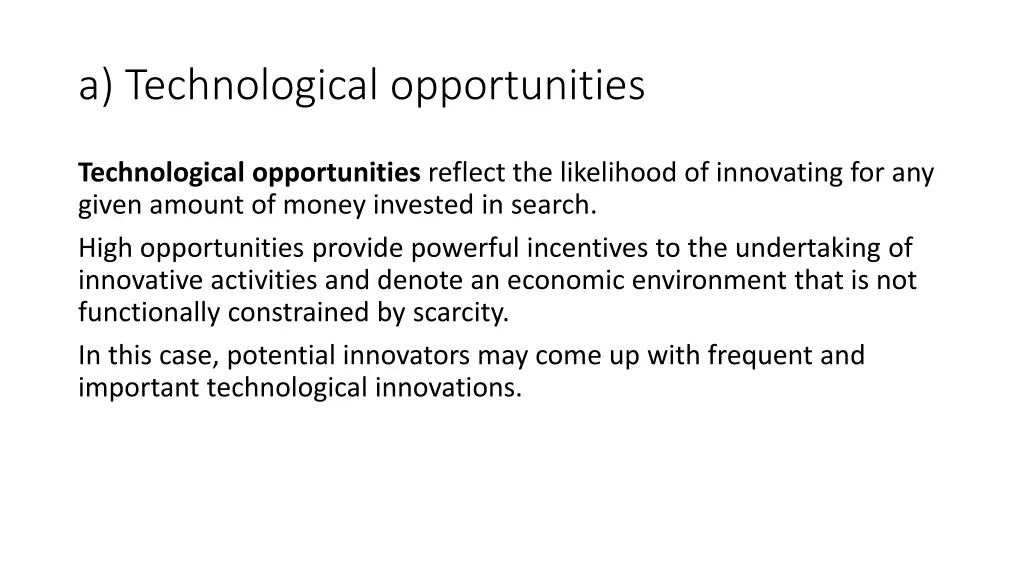
a) Technological opportunities Technological opportunities reflect the likelihood of innovating for any given amount of money invested in search. High opportunities provide powerful incentives to the undertaking of innovative activities and denote an economic environment that is not functionally constrained by scarcity. In this case, potential innovators may come up with frequent and important technological innovations.
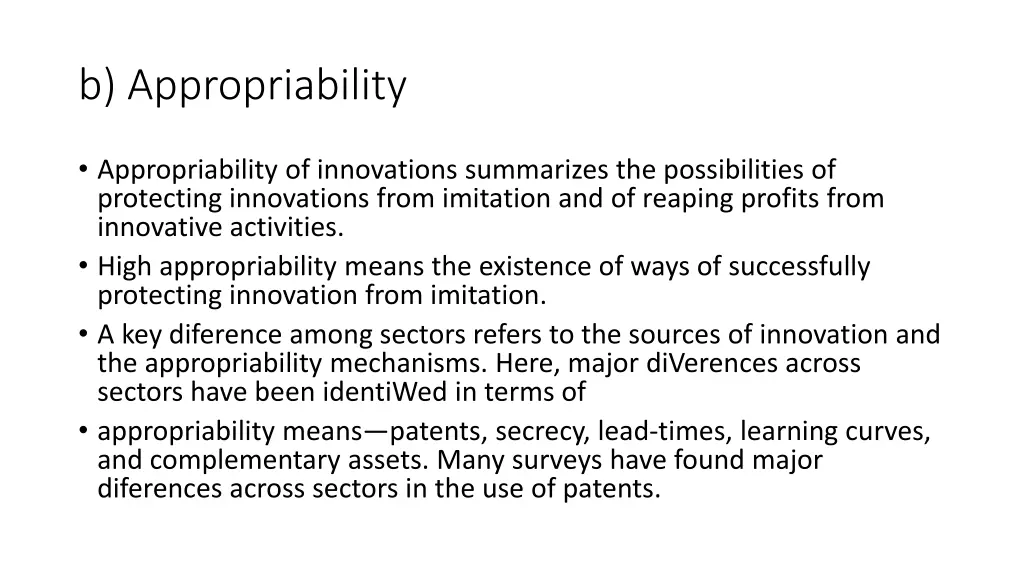
b) Appropriability Appropriability of innovations summarizes the possibilities of protecting innovations from imitation and of reaping profits from innovative activities. High appropriability means the existence of ways of successfully protecting innovation from imitation. A key diference among sectors refers to the sources of innovation and the appropriability mechanisms. Here, major diVerences across sectors have been identiWed in terms of appropriability means patents, secrecy, lead-times, learning curves, and complementary assets. Many surveys have found major diferences across sectors in the use of patents.
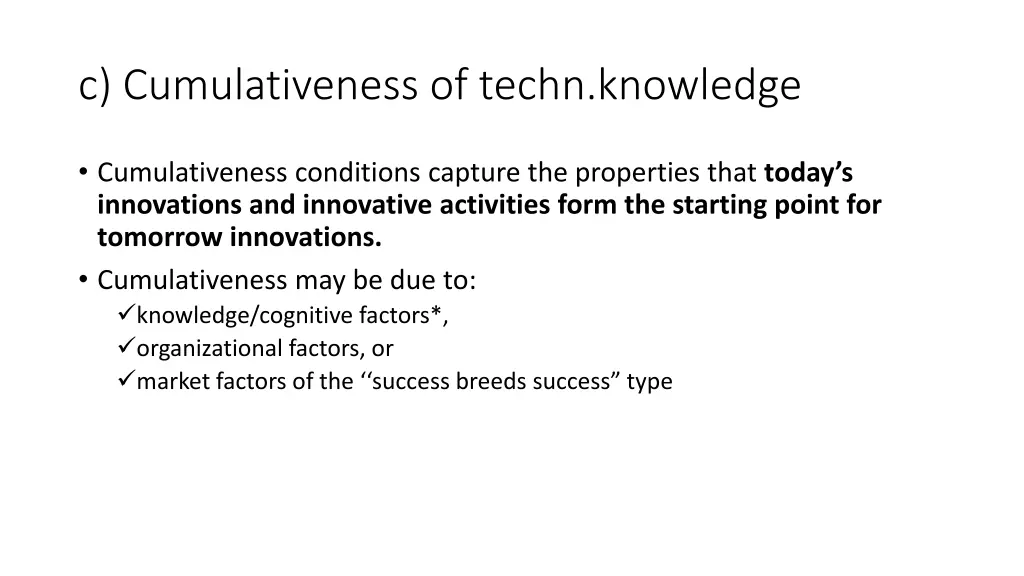
c) Cumulativeness of techn.knowledge Cumulativeness conditions capture the properties that today s innovations and innovative activities form the starting point for tomorrow innovations. Cumulativeness may be due to: knowledge/cognitive factors*, organizational factors, or market factors of the success breeds success type
d) knowledge base Technological knowledge involves various degrees of specifcity, tacitness, complementarity, and independence and may greatly differ across sectors and technologies (Winter 1987).
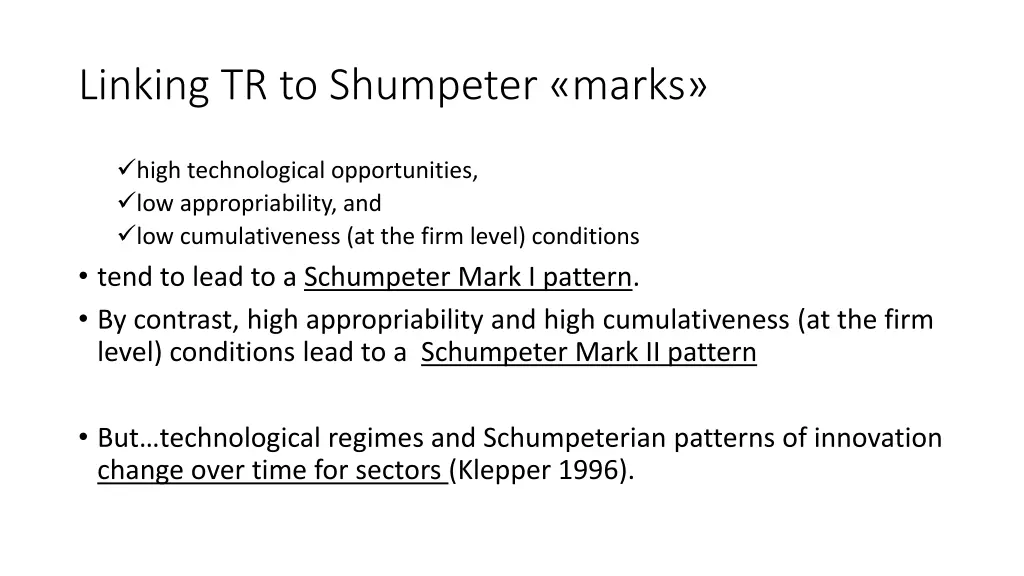
Linking TR to Shumpeter marks high technological opportunities, low appropriability, and low cumulativeness (at the firm level) conditions tend to lead to a Schumpeter Mark I pattern. By contrast, high appropriability and high cumulativeness (at the firm level) conditions lead to a Schumpeter Mark II pattern But technological regimes and Schumpeterian patterns of innovation change over time for sectors (Klepper 1996).
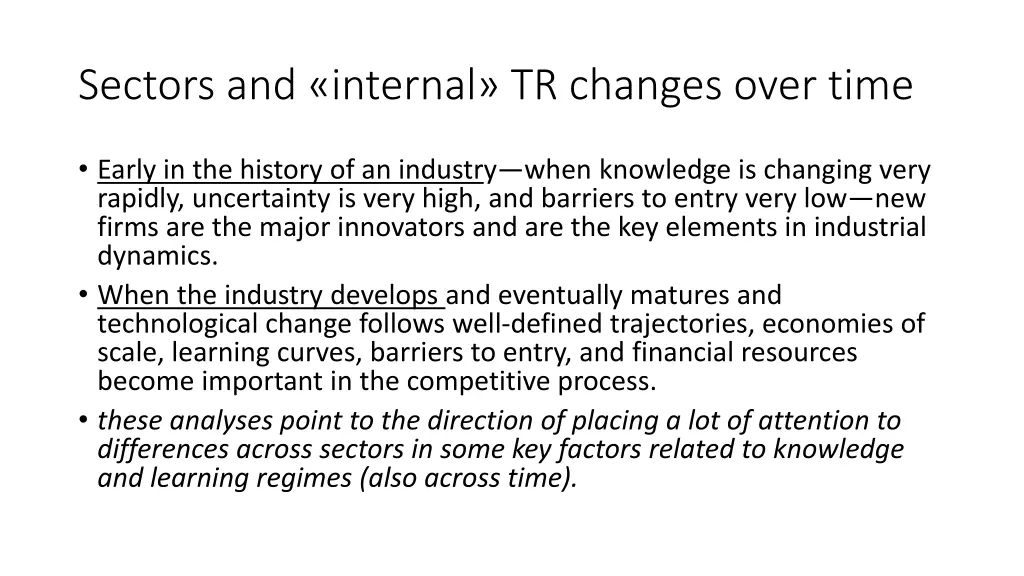
Sectors and internal TR changes over time Early in the history of an industry when knowledge is changing very rapidly, uncertainty is very high, and barriers to entry very low new firms are the major innovators and are the key elements in industrial dynamics. When the industry develops and eventually matures and technological change follows well-defined trajectories, economies of scale, learning curves, barriers to entry, and financial resources become important in the competitive process. these analyses point to the direction of placing a lot of attention to differences across sectors in some key factors related to knowledge and learning regimes (also across time).
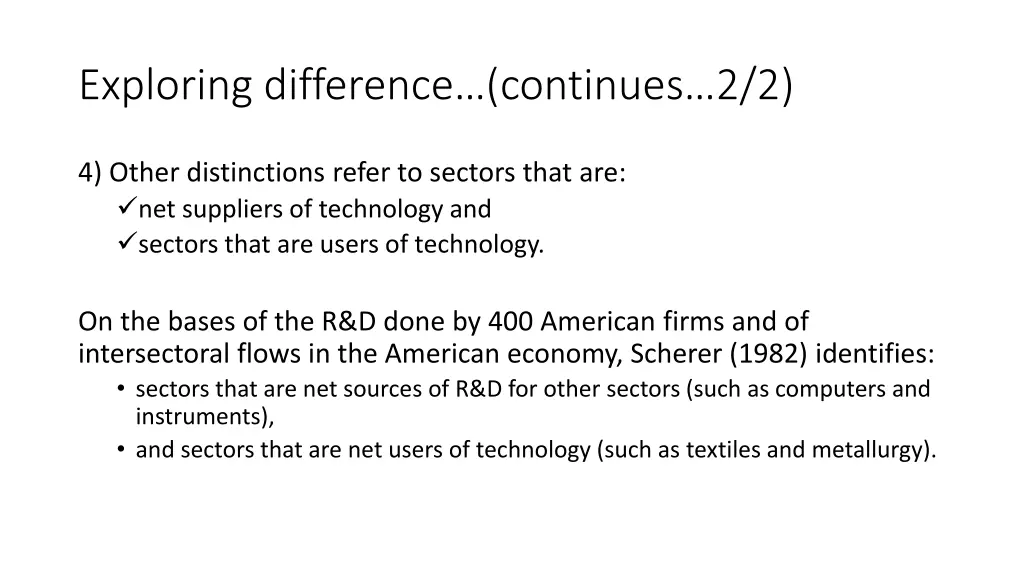
Exploring difference(continues2/2) 4) Other distinctions refer to sectors that are: net suppliers of technology and sectors that are users of technology. On the bases of the R&D done by 400 American firms and of intersectoral flows in the American economy, Scherer (1982) identifies: sectors that are net sources of R&D for other sectors (such as computers and instruments), and sectors that are net users of technology (such as textiles and metallurgy).
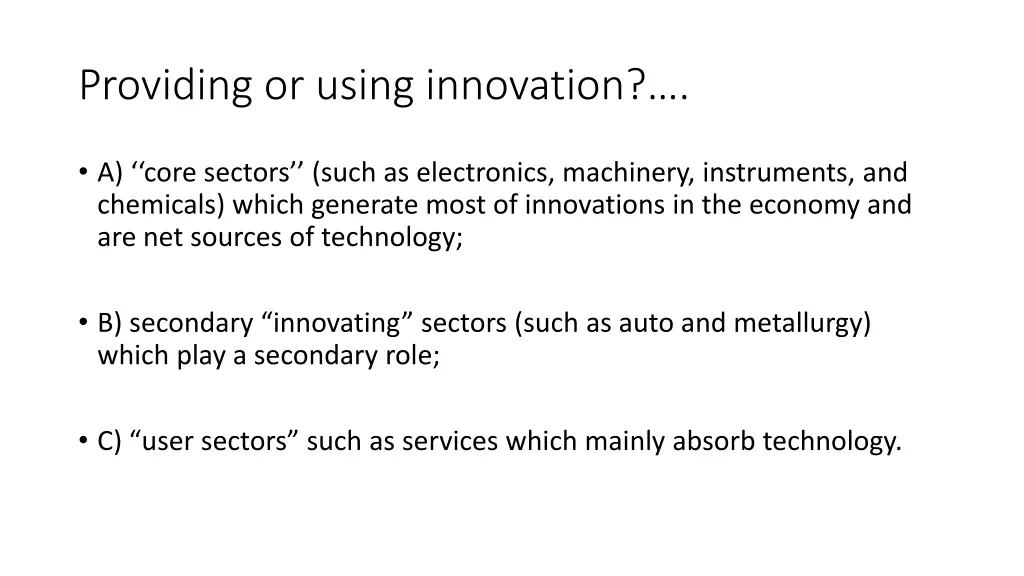
Providing or using innovation?. A) core sectors (such as electronics, machinery, instruments, and chemicals) which generate most of innovations in the economy and are net sources of technology; B) secondary innovating sectors (such as auto and metallurgy) which play a secondary role; C) user sectors such as services which mainly absorb technology.
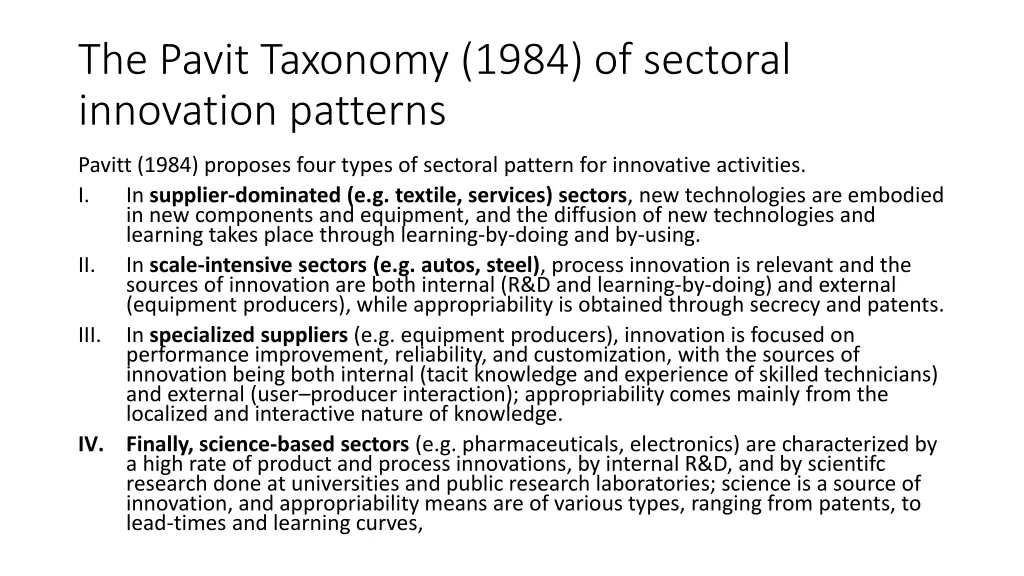
The Pavit Taxonomy (1984) of sectoral innovation patterns Pavitt (1984) proposes four types of sectoral pattern for innovative activities. I. In supplier-dominated (e.g. textile, services) sectors, new technologies are embodied in new components and equipment, and the diffusion of new technologies and learning takes place through learning-by-doing and by-using. II. In scale-intensive sectors (e.g. autos, steel), process innovation is relevant and the sources of innovation are both internal (R&D and learning-by-doing) and external (equipment producers), while appropriability is obtained through secrecy and patents. III. In specialized suppliers (e.g. equipment producers), innovation is focused on performance improvement, reliability, and customization, with the sources of innovation being both internal (tacit knowledge and experience of skilled technicians) and external (user producer interaction); appropriability comes mainly from the localized and interactive nature of knowledge. IV. Finally, science-based sectors (e.g. pharmaceuticals, electronics) are characterized by a high rate of product and process innovations, by internal R&D, and by scientifc research done at universities and public research laboratories; science is a source of innovation, and appropriability means are of various types, ranging from patents, to lead-times and learning curves,
What is a sector? A sector is a set of activities that are unified by some linked product groups for a given or emerging demand and which share some common knowledge. Firms in a sector have some commonalities and at the same time are heterogeneous. A multidimensional, integrated, and dynamic view of innovation in sectors is proposed, related to the framework of sectoral systems of innovation together with a methodology for the analysis and comparison of sectors.
SIS and Evolutionary Theory The theoretical and analytical approach of sectoral systems is grounded in the evolutionary theory. Evolutionary theory places a key emphasis on dynamics, innovation processes, and economic transformation. ..and on cognitive aspects such as beliefs, objectives, and expectations, which are in turn affected by previous learning and experience and by the environment in which agents act. A central place in the evolutionary approach is occupied by the processes of variety creation (in technologies, products, firms, and organizations), replication (that generates inertia and continuity in the system), and selection (that reduces variety in the economic system and discourages the inefficient or ineffective utilization of resources). Finally, for evolutionary theory, aggregate phenomena are emergent properties of far-from- equilibrium interactions and have a meta-stable nature. Here, the environment and conditions in which agents operate may drastically differ. Evolutionary theory stresses major differences in opportunities related to science and technologies.
The same holds for the knowledge base underpinning innovative activities, as well as for the institutional context. Thus the learning, behavior, and capabilities of agents are constrained and bounded by the technology, knowledge base, and institutional context. Heterogeneous firms facing similar technologies, searching around similar knowledge bases, undertaking similar production activities, and embedded in the same institutional setting, share some common behavioral and organizational traits and develop a similar range of learning patterns, behavior, and organizational forms. One last remark regards the aggregation issue regarding products, agents or functions. For example, sectoral systems may be examined broadly or narrowly (in terms of a small set of product groups).
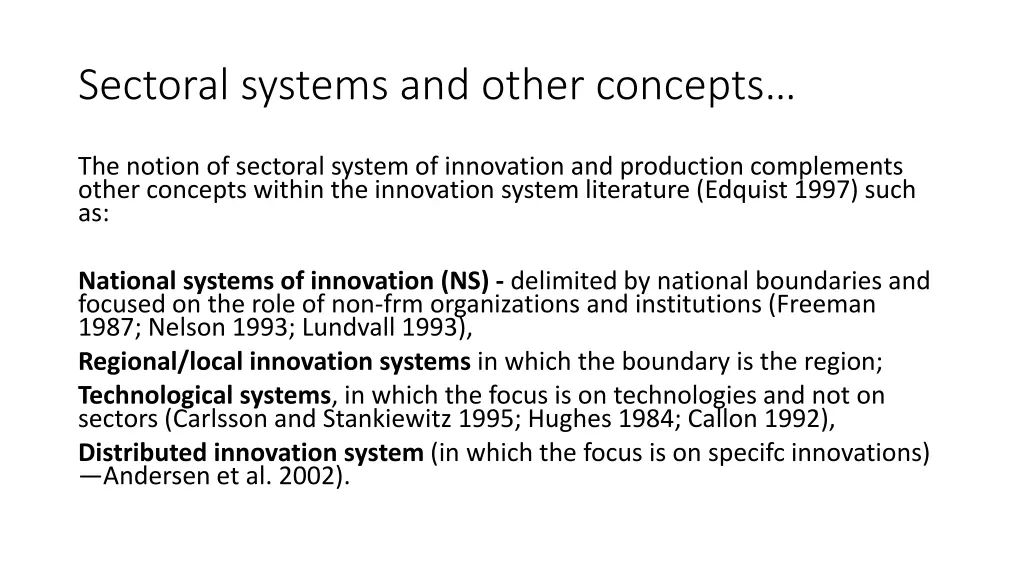
Sectoral systems and other concepts The notion of sectoral system of innovation and production complements other concepts within the innovation system literature (Edquist 1997) such as: National systems of innovation (NS) - delimited by national boundaries and focused on the role of non-frm organizations and institutions (Freeman 1987; Nelson 1993; Lundvall 1993), Regional/local innovation systems in which the boundary is the region; Technological systems, in which the focus is on technologies and not on sectors (Carlsson and Stankiewitz 1995; Hughes 1984; Callon 1992), Distributed innovation system (in which the focus is on specifc innovations) Andersen et al. 2002).
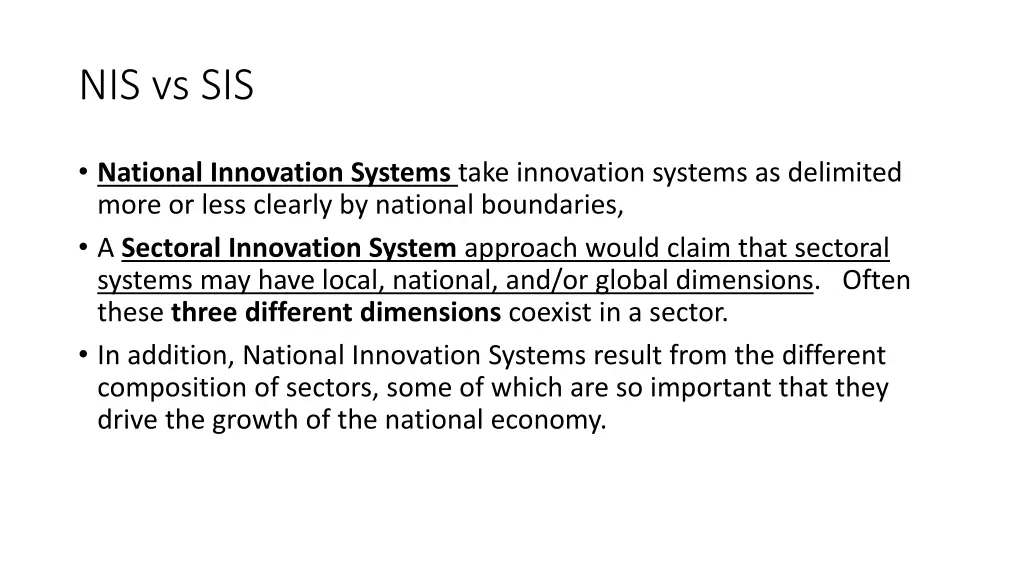
NIS vs SIS National Innovation Systems take innovation systems as delimited more or less clearly by national boundaries, A Sectoral Innovation System approach would claim that sectoral systems may have local, national, and/or global dimensions. Often these three different dimensions coexist in a sector. In addition, National Innovation Systems result from the different composition of sectors, some of which are so important that they drive the growth of the national economy.
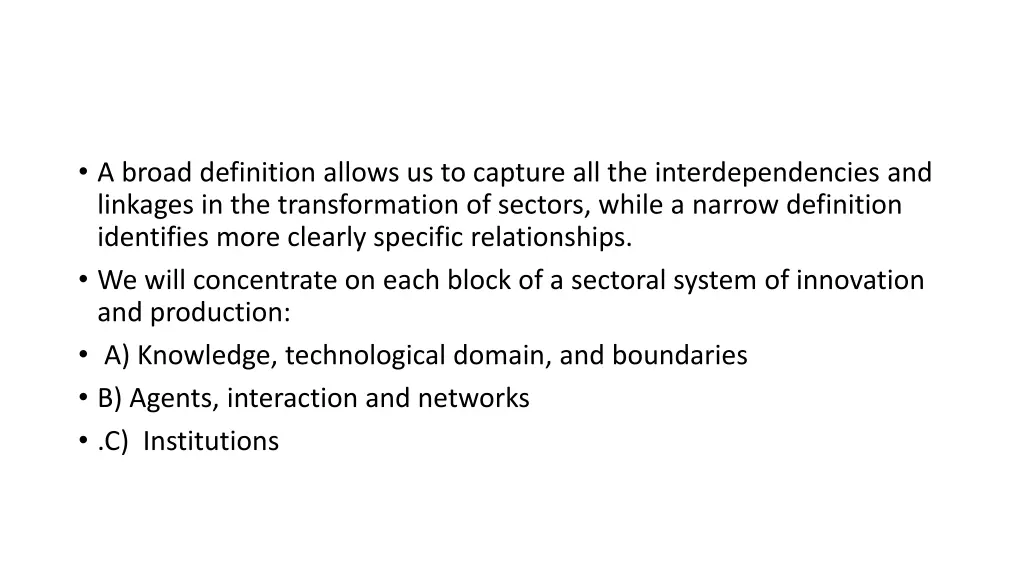
A broad definition allows us to capture all the interdependencies and linkages in the transformation of sectors, while a narrow definition identifies more clearly specific relationships. We will concentrate on each block of a sectoral system of innovation and production: A) Knowledge, technological domain, and boundaries B) Agents, interaction and networks .C) Institutions
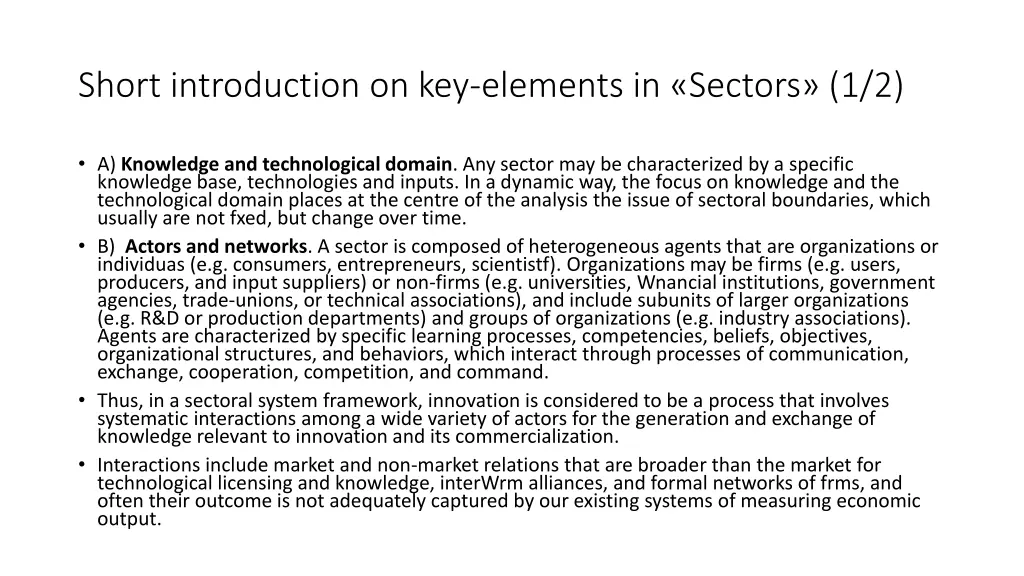
Short introduction on key-elements in Sectors (1/2) A) Knowledge and technological domain. Any sector may be characterized by a specific knowledge base, technologies and inputs. In a dynamic way, the focus on knowledge and the technological domain places at the centre of the analysis the issue of sectoral boundaries, which usually are not fxed, but change over time. B) Actors and networks. A sector is composed of heterogeneous agents that are organizations or individuas (e.g. consumers, entrepreneurs, scientistf). Organizations may be firms (e.g. users, producers, and input suppliers) or non-firms (e.g. universities, Wnancial institutions, government agencies, trade-unions, or technical associations), and include subunits of larger organizations (e.g. R&D or production departments) and groups of organizations (e.g. industry associations). Agents are characterized by specific learning processes, competencies, beliefs, objectives, organizational structures, and behaviors, which interact through processes of communication, exchange, cooperation, competition, and command. Thus, in a sectoral system framework, innovation is considered to be a process that involves systematic interactions among a wide variety of actors for the generation and exchange of knowledge relevant to innovation and its commercialization. Interactions include market and non-market relations that are broader than the market for technological licensing and knowledge, interWrm alliances, and formal networks of frms, and often their outcome is not adequately captured by our existing systems of measuring economic output.
A short introduction on key-elements in Sectors (2/2) C) Institutions. Agents cognition, actions, and interactions are shaped by institutions, which include norms, routines, common habits, established practices, rules, laws, standards, and so on. Institutions may range from ones that bind or impose enforcements on agents to ones that are created by the interaction among agents (such as contracts); from more binding to less binding; from formal to informal (such as patent laws or specific regulations vs. traditions and conventions). A lot of institutions are national (such as the patent system), while others are specific to sectors (such as sectoral labor markets or sector specific financial institutions).
A) Knowledge, A) Knowledge, technological sectoral sectoral boundaries boundaries technological domain and domain and Sectors and technologies differ greatly in terms of the knowledge base and learning processes related to innovation. Knowledge differs across sectors in terms of domains. 1. one knowledge domain refers to the specifc scientifc and technological fields at the base of innovative activities in a sector;. 2. while another k.d. comprises applications, users, and the demand for sectoral products.
Knowledge Based Economy and domains Discontinuity has taken place in the processes of knowledge accumulation and distribution with the emergence of the knowledge- based economy It has: redesigned existing sectoral boundaries, affected relationships among actors, reshaped the innovation process, and modifieed the links among sectors.
Knowing knowledge Accessibility, opportunity, cumulativeness are key dimensions of knowledge related to the notion of technological and learning regimes
Focusing on accessibility of knowledge Knowledge may have different degrees of accessibility gaining knowledge external to firms, internal or external to the sector. Greater accessibility internal to the sector implies lower appropriability: competitors may gain knowledge! Accessibility of knowledge that is external to the sector may be related to the levels and sources of scientifc and technological opportunities It may be developed internally or externally (e.g. universities).
Where opportunities come from The sources of technological opportunities differ markedly among sectors. 1. in some sectors opportunity conditions are related to major scientific breakthroughs in universities; 2. in others, opportunities to innovate may often come from advancements in R&D, equipment, and instrumentation; 3. while in still other sectors, external sources of knowledge (in terms of suppliers or users) may play a crucial role.
Knowledge and transformability Not all external knowledge may be easily used and transformed into new artifacts. If external knowledge is easily accessible, transformable into new artifacts and exposed to a lot of actors (such as customers or suppliers), then innovative entry may take place
Knowledge and its cumulativeness (1/2) Second, knowledge may be more or less cumulative, i.e. the degree by which the generation of new knowledge builds upon current knowledge. One can identify three different sources of cumulativeness. (1) Cognitive. The learning processes and past knowledge constrain current research, but also generate new questions and new knowledge. (2) The firm and its organizational capabilities. Organizational capabilities are firm-specific and generate knowledge which is highly path-dependent. They implicitly define what a firm learns and what it can hope to achieve in the future. (3) Feedbacks from the market, such as in the success-breeds-success process. Innovative success yields profits that can be reinvested in R&D, thereby increasing the probability to innovate again.
Knowledge and its cumulativeness (2/2) High cumulativeness implies an implicit mechanism leading to high appropriability of innovations. In the case of knowledge spillovers within an industry, it is also possible to observe cumulativeness at the sectoral level. Finally, cumulativeness at the technological and firm levels creates first mover advantages and generates high concentration.
The demand-side of sectoral dynamic (1/2) The boundaries of sectoral systems are affected by the knowledge base and technologies. However, the type and dynamics of demand represent a major factor in the processes of transformation of sectoral systems (see later!). Market links and complementarities are, of the static type (as are input output links). dynamic complementarities, (interdependencies and feedbacks, both at the demand and at the production levels).
The demand-side of sectoral dynamic (2/2) In a sectoral system, demand is not seen as an aggregate set of similar buyers or atomistic undifferentiated customers, but as composed of heterogeneous agents who interact in various ways with producers. Demand then becomes composed by individual consumers, firms, and public agencies, which are in turn characterized by knowledge, learning processes, and competences (and which are affected by social factors and institutions). The emergence and transformation of demand become then a very important part in the dynamics and evolution of sectoral systems. In addition, demand has often proven to be a major factor in the redefinition of the boundaries of a sectoral system,
Complementarity among artifacts/processese Dynamic complementarities among artifacts and activities are major sources of transformation and growth of sectoral systems, and may set in motion virtuous cycles of innovation and change. This could be related to the concept of filiera (supply chain)
Changing boundaries (with differences) The boundaries of sectoral systems may change more or less rapidly over time, as a consequence of: dynamic processes related to the transformation of knowledge, the evolution and convergence in demand, changes in competition and learning by firms. Great differences among sectors in the dimensions discussed above exist. Case study: pharmaceuticals vs machine tools.
Pharmaceutical In the Pharma industry, the knowledge base and the learning processes have greatly affected innovation and the organization of innovative activities. Even before the 80, explosion of R&D and, although few blockbusters were discovered in each period, nevertheless, each period enjoyed high growth. The advent of molecular biology since the 1980s led to a new learning regime based on molecular genetics and rDNA technology
Machine tools In machine tools, innovation has been mainly incremental and now is increasingly systemic. Knowledge about applications is (was) very important, and therefore user producer relationships as well as partnerships with customers are common. The knowledge base has been embodied in skilled personnel on the shop floor level (with applied technical qualification) and in design engineers (not necessarily with a university degree but with long-term employment in the company). Internal training (particularly apprenticeships) is quite relevant. In small firms, R&D is not done extensively and R&D cooperation is not common. Recently, the knowledge base has shifted from purely mechanical to mechanic, microelectronic and information intensive, with an increasing codification and an increasing use of formal R&D. Products have increasingly being modularized and standardized (more formal sources international markets). A key role is also played by information flows about components coming from producers of different technologies, such as lasers, materials, measurement, and control devices.
B) Actors and Networks B) Actors and Networks Sectoral systems are composed of heterogeneous actors. In general, a rich, multidisciplinary, and multisource knowledge base and rapid technological change implies a great heterogeneity of actors in most sectors. Within sectoral systems, heterogeneous agents are connected in various ways through market and non-market relationships. FIRM subjects NON FIRM subjects
Firm heterogeneity The extent of firm heterogeneity is the result of the opposing forces of variety creation, replication, and selection Firm heterogeneity is also affected by the characteristics of the knowledge base, specific experience and learning processes, and the working of dynamic complementarities. (Firm) actors also include users and suppliers who have different types of relationships with the innovating, producing, or selling firms. Users and suppliers are characterized by specific attributes, knowledge, and competencies, with more or less close relationships with producers (VonHippel 1988, Lundvall 1993).
Individuals Often the most appropriate units of analysis in specific sectoral systems are not necessarily firms but 1. individuals (such as the scientist who opens up a new biotechnology firm), 2. firms subunits (such as the R&D or the production department), and 3. groups of firms (such as industry consortia).
Non firm agents Other types of agents in a sectoral system are non-firm organizations such as: universities, financial organizations, government agencies, local authorities, and so on In various ways, they support innovation, technological diffusion, and production by firms, but again their role greatly differs among sectoral systems.
Universities and V.C. In several high technology sectors, universities play a key role in basic research and human capital formation In some sectors (e.g.biotechnology and software) they are also a source of start-ups and even innovation. Relationships between firms and non-firm organizations (such as universities and public research centers) have been a source of innovation and change in several sectoral systems: pharmaceuticals and biotechnology, information technology, and telecommunications have been relevant. In sectoral systems such as software or biotechnology pharmaceuticals, new actors such as venture capital companies have emerged over time.
Focusing on relationships and networking (1/2) The key role played by networks in a sectoral system leads to a meaning of the term sectoral structure different from the one used in industrial economics. In industrial economics, structure is related mainly to the concept of market structure and of vertical integration and diversification. In a sectoral system perspective, on the contrary, structure refers to links among artifacts and to relationships among agents: it is therefore far broader than the one based on exchange competition command.
Focusing on relationships and networking (2/2) Different types of relations, linked to different analytical cuts . First, traditional analyses of industrial organizations have examined agents as involved in processes of: exchange, competition, and command (such as vertical integration). In more recent analyses, processes of formal cooperation or informal interaction among firms (or subjects) have emerged: tacit or explicit collusion, hybrid governance forms, or formal R&D cooperation).
Cooperation and interaction (towards networks) Recent literature has analyzed firms with certain market power, suppliers or users facing opportunistic behavior or asset specificities in transaction, and firms with similar knowledge having appropriability and indivisibility problems in R&D. Finally, the evolutionary approach and the innovation systems literature have also paid a lot of attention to the wide range of formal and informal cooperation and interaction among firms. Thus, networks integrate complementarities in knowledge, capabilities, and specialization (e.g. firm-universities networks) trough webs of relationships among heterogeneous agents with different beliefs, goals, competencies, and behavior, and that these relationships affect agents actions. (They are rather stable over time).
Great differences among sectoral systems The types and structures of relationships and networks differ greatly from sectoral system to sectoral system, as a consequence of the features of the knowledge base, the relevant learning processes, the basic technologies, the characteristics of demand, the key links, and the dynamic complementarities. Cases Chemicals Computers Semiconductors Software