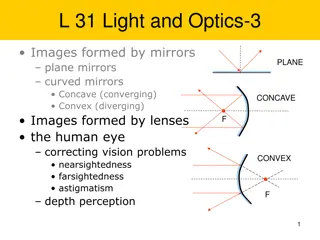
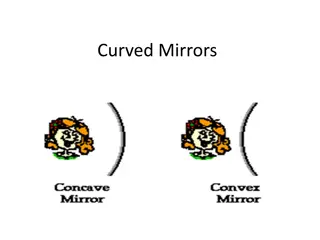
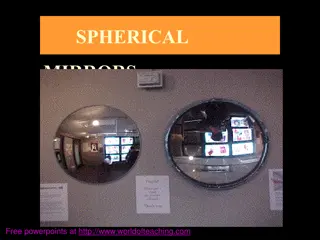
Seeing Things in Convex Mirrors
This resource covers the principles of convex mirrors, detailing the characteristics of rays and their behavior when interacting with the mirror surface. It explains how incident rays parallel to the principal axis reflect as if they passed through the focal point, the effects of rays moving toward the focus and center of curvature, and the reflection at the vertex. The notes serve as a comprehensive guide for understanding the fundamentals of image prediction in convex mirrors.

Download Presentation

Please find below an Image/Link to download the presentation.
The content on the website is provided AS IS for your information and personal use only. It may not be sold, licensed, or shared on other websites without obtaining consent from the author.If you encounter any issues during the download, it is possible that the publisher has removed the file from their server.
You are allowed to download the files provided on this website for personal or commercial use, subject to the condition that they are used lawfully. All files are the property of their respective owners.
The content on the website is provided AS IS for your information and personal use only. It may not be sold, licensed, or shared on other websites without obtaining consent from the author.
E N D
Presentation Transcript
Seeing Things inConvex Mirrors Open L8 Convex Mirrors - Student Notes
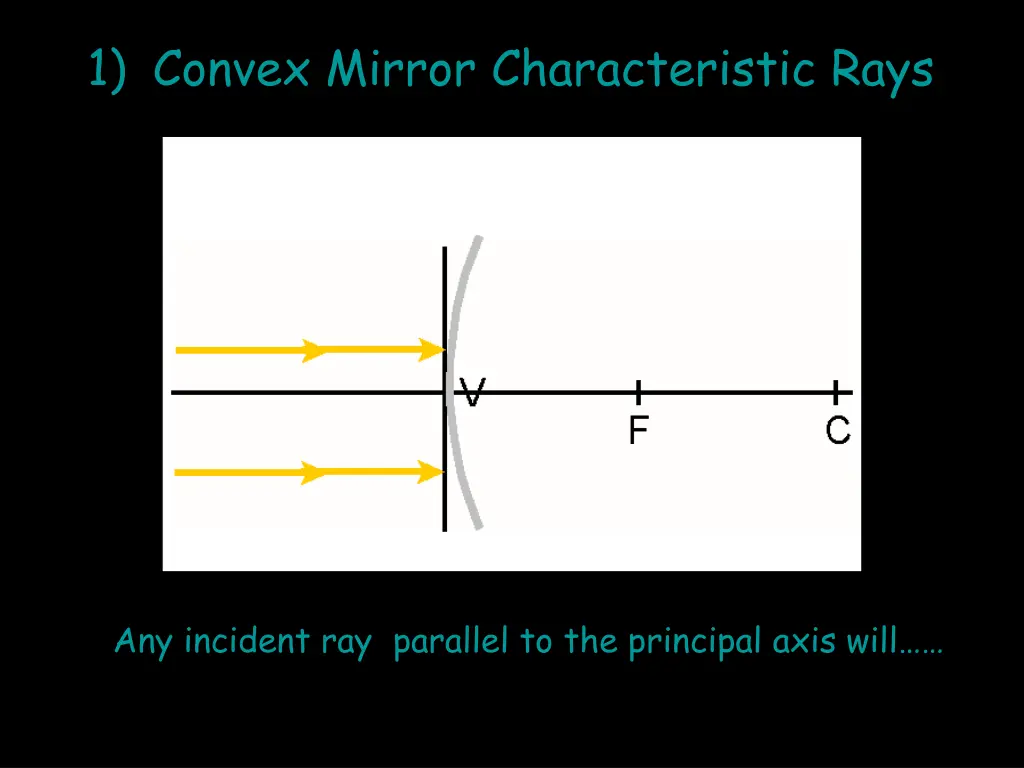
1) Convex Mirror Characteristic Rays Any incident ray parallel to the principal axis will
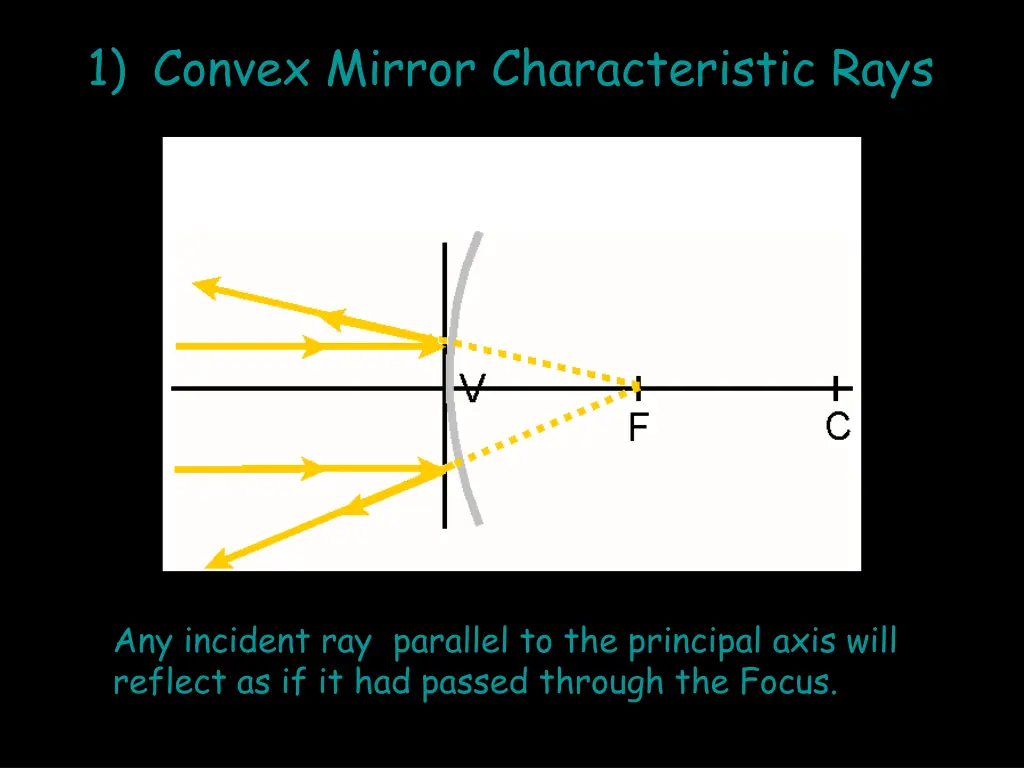
1) Convex Mirror Characteristic Rays Any incident ray parallel to the principal axis will reflect as if it had passed through the Focus.
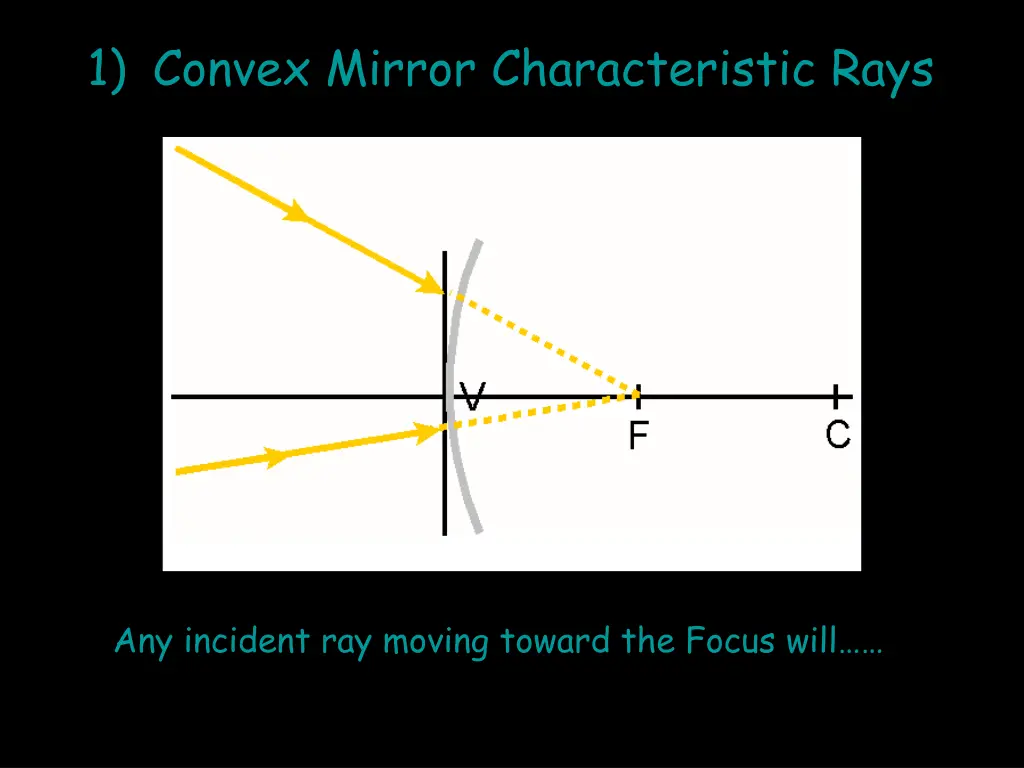
1) Convex Mirror Characteristic Rays Any incident ray moving toward the Focus will
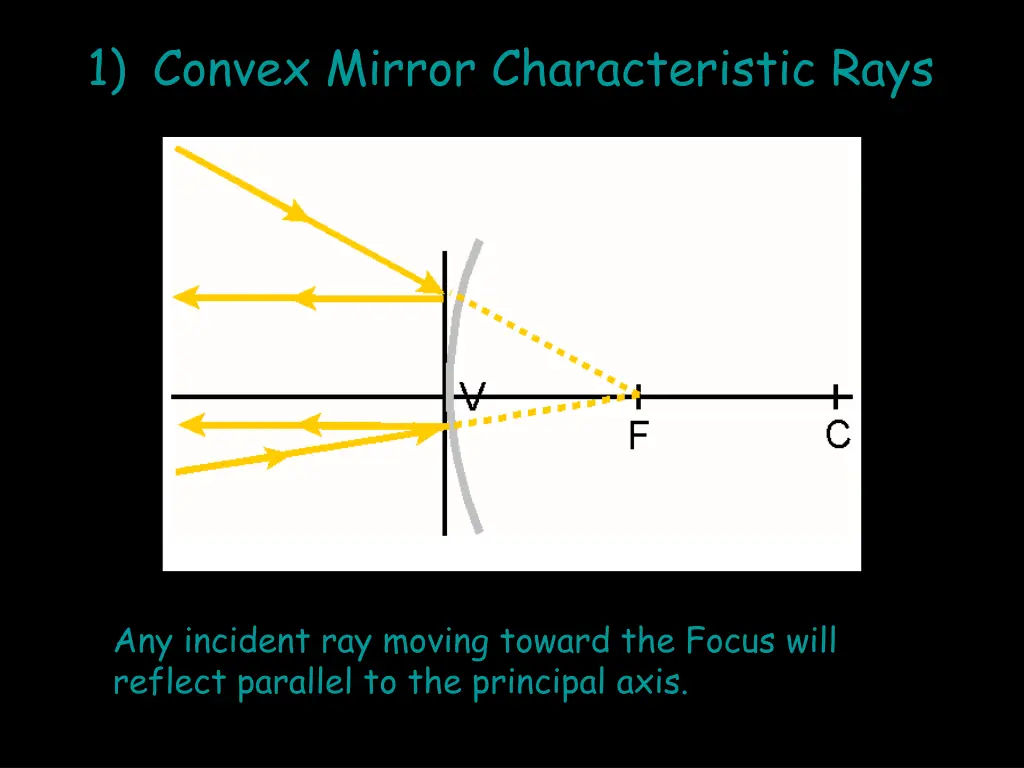
1) Convex Mirror Characteristic Rays Any incident ray moving toward the Focus will reflect parallel to the principal axis.
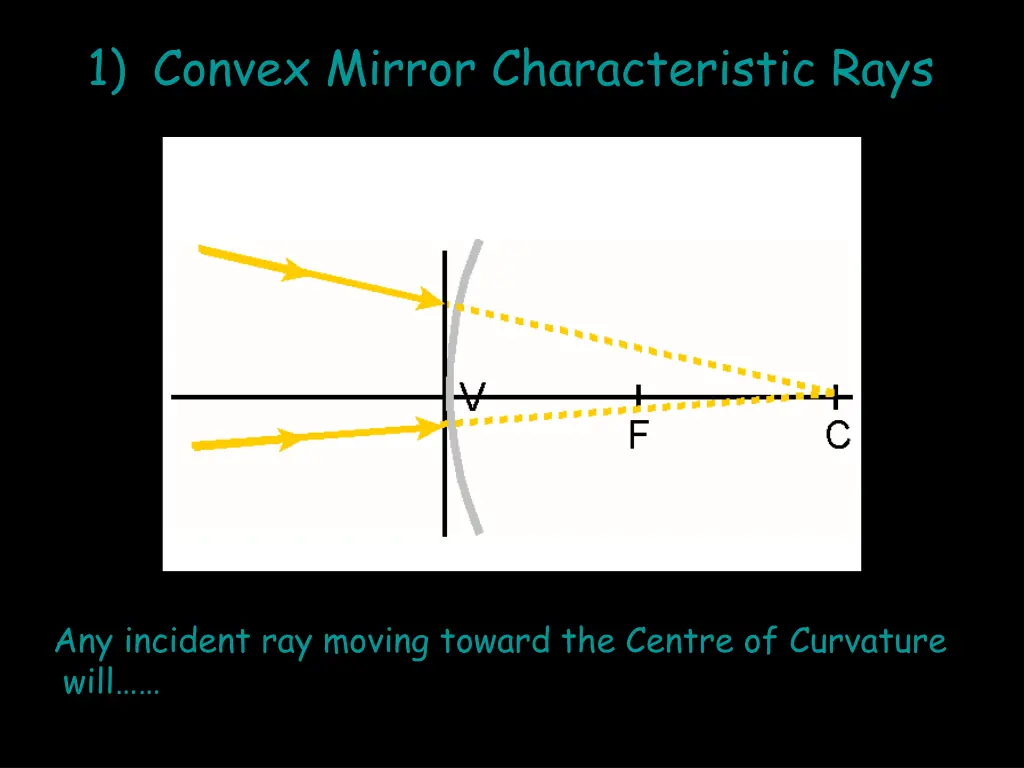
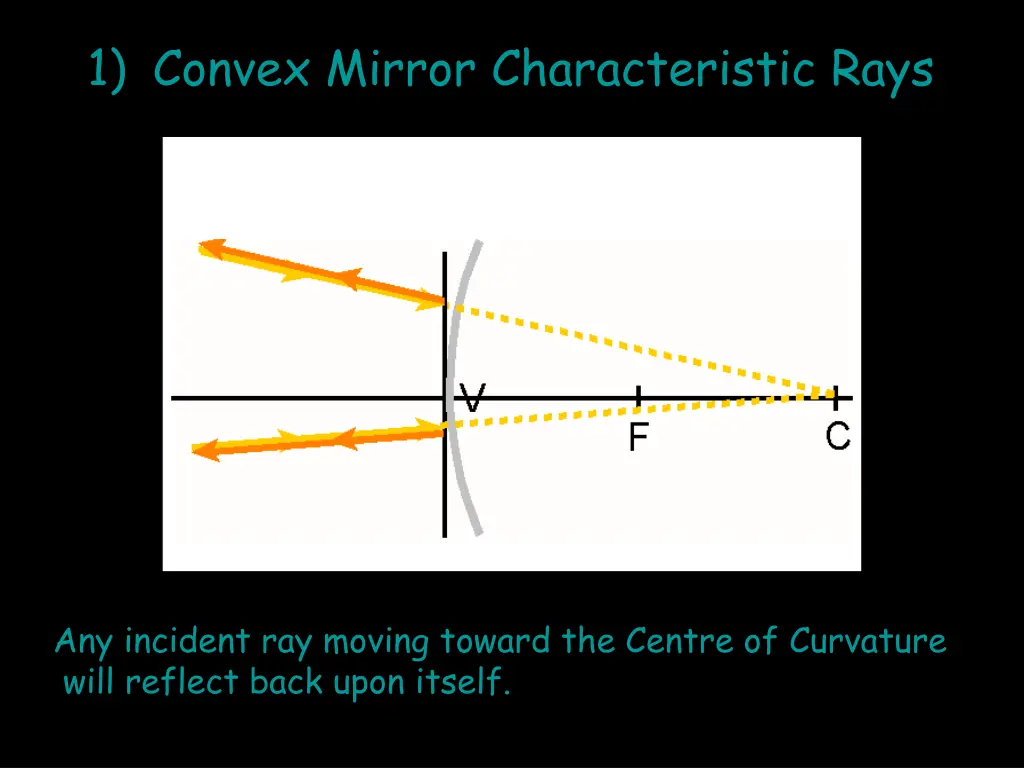
1) Convex Mirror Characteristic Rays Any incident ray moving toward the Centre of Curvature will
1) Convex Mirror Characteristic Rays Any incident ray moving toward the Centre of Curvature will reflect back upon itself.
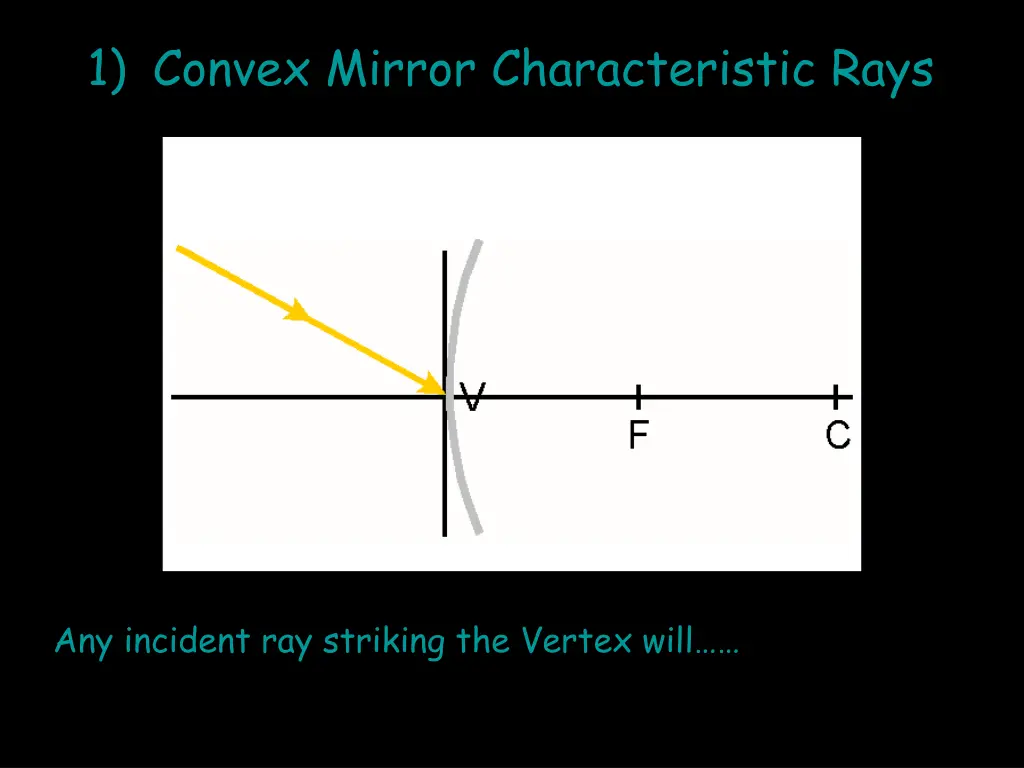
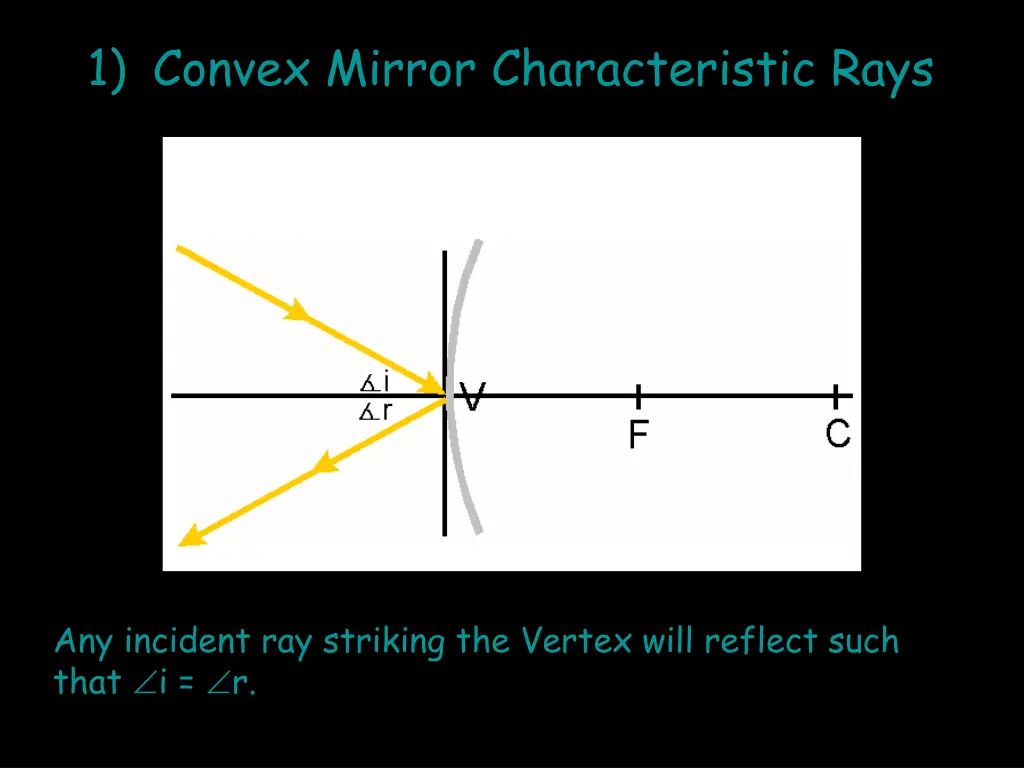
1) Convex Mirror Characteristic Rays Any incident ray striking the Vertex will
1) Convex Mirror Characteristic Rays Any incident ray striking the Vertex will reflect such that i = r.
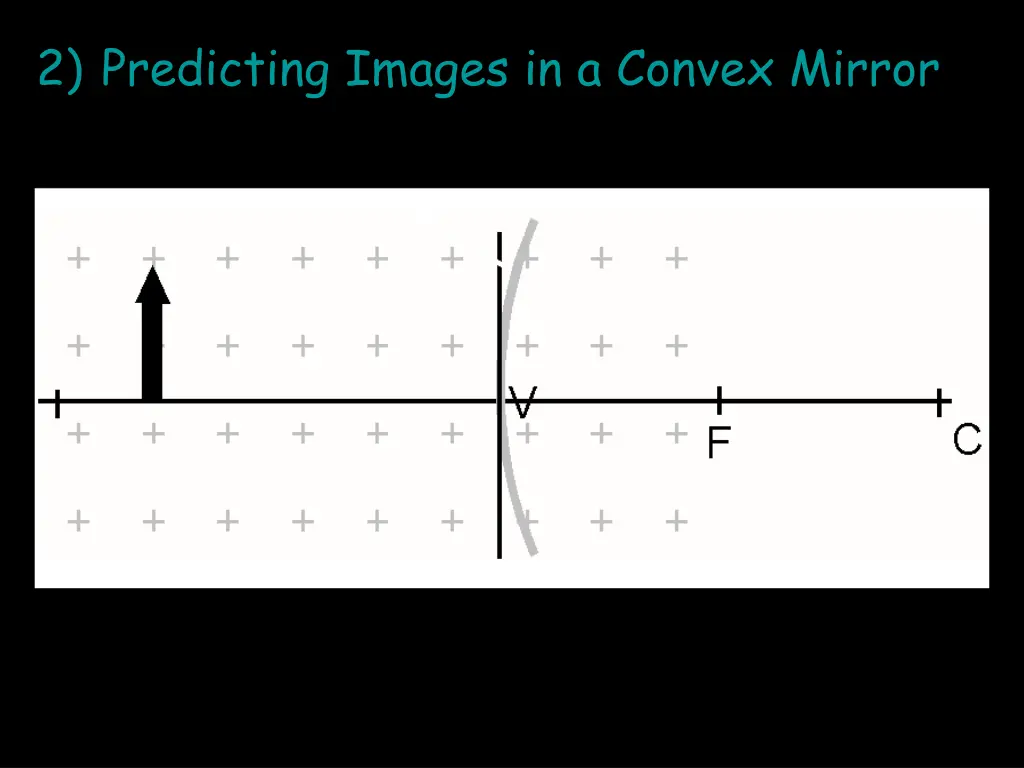
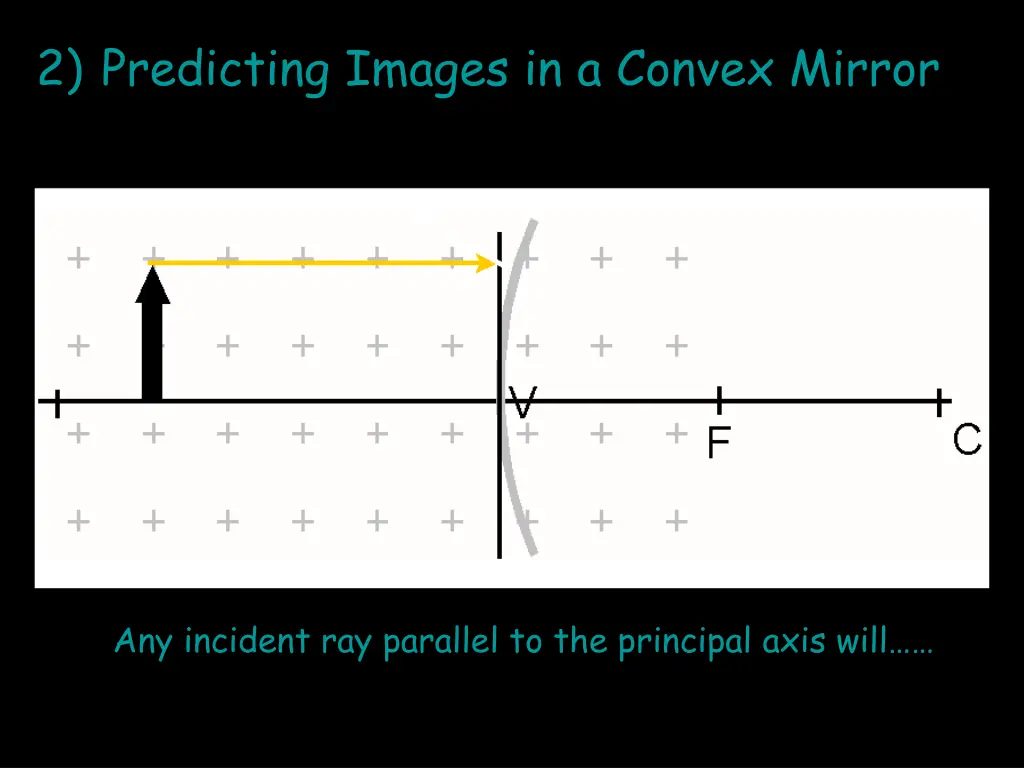
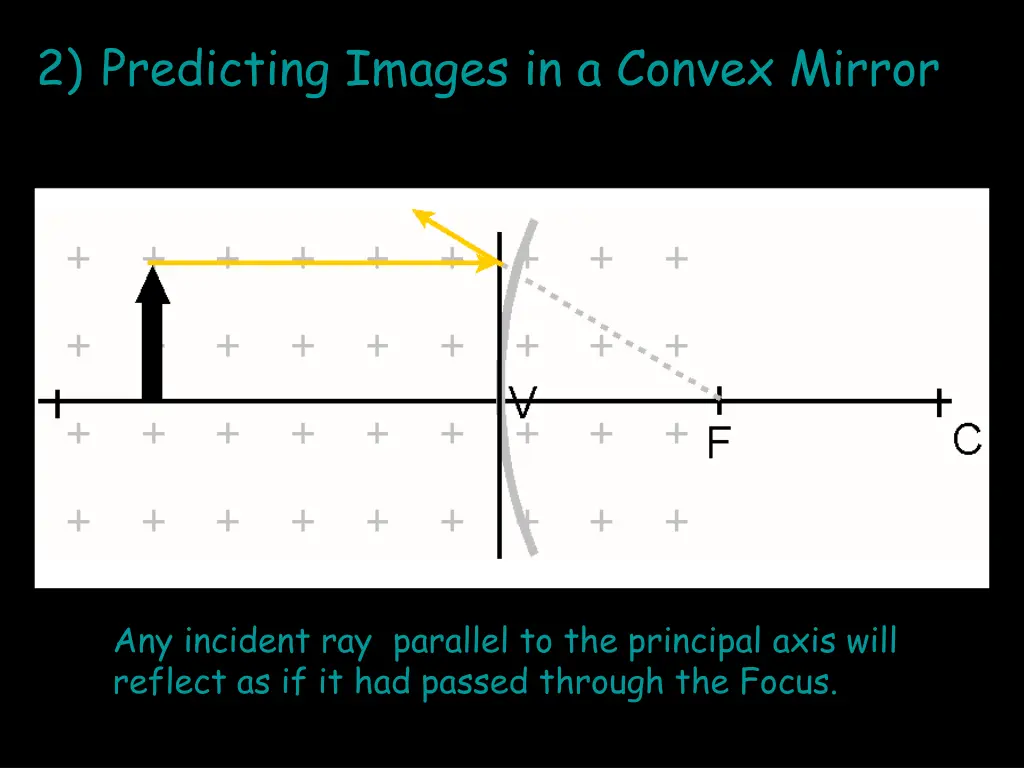
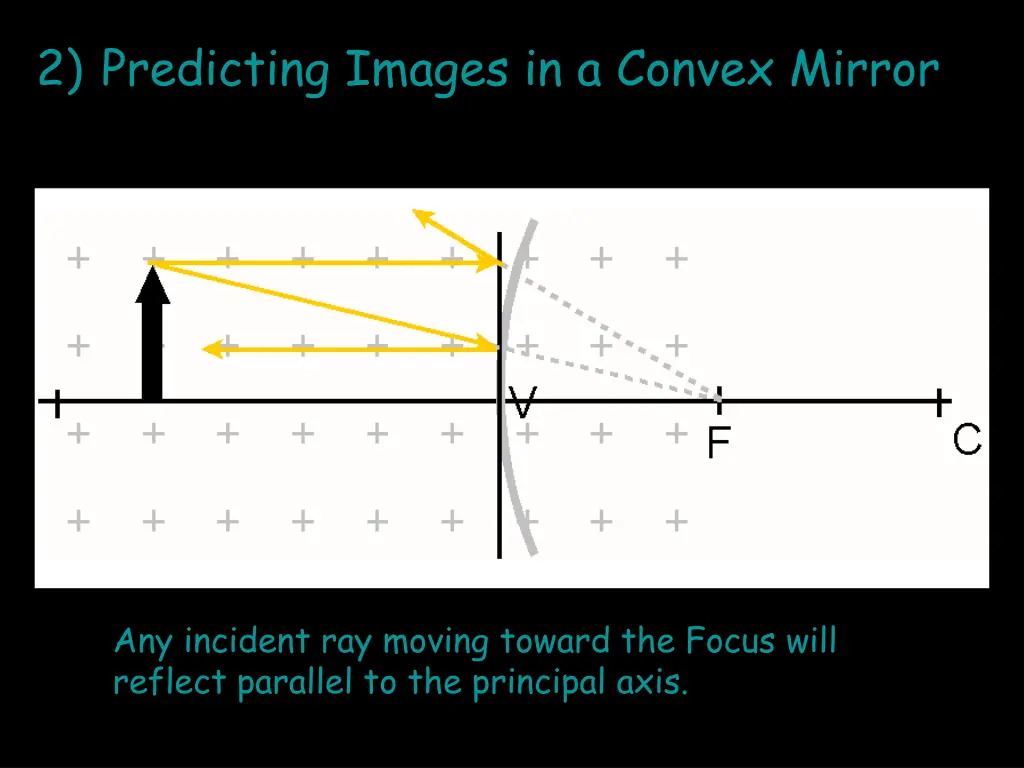
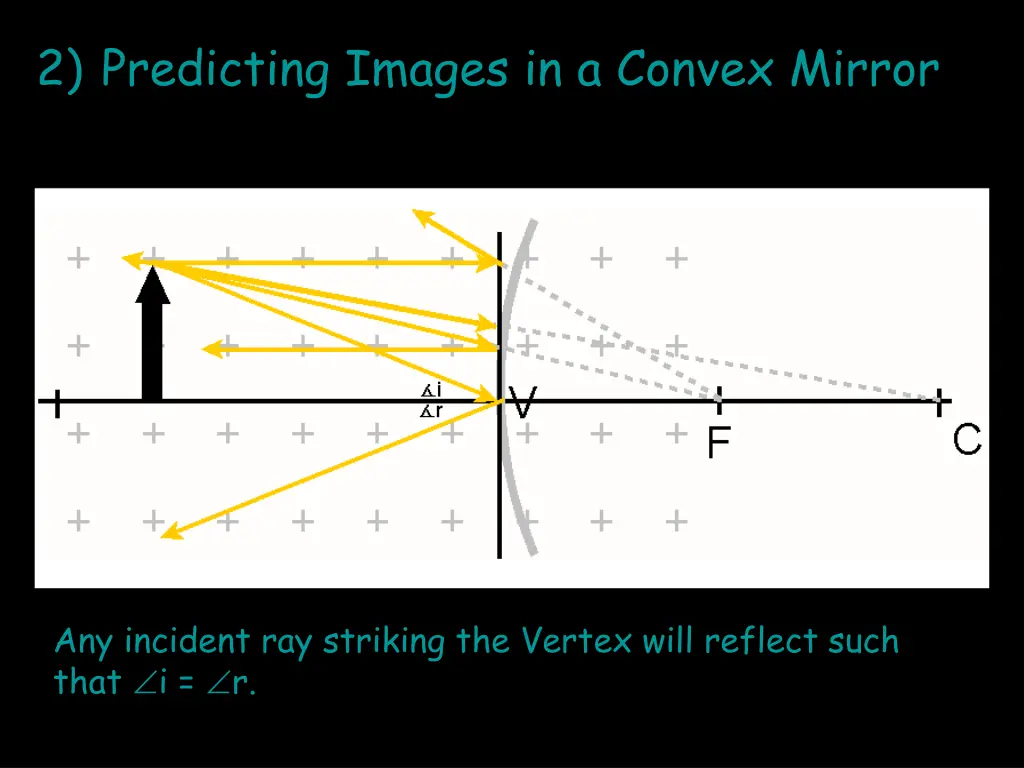
2) Predicting Images in a Convex Mirror Any incident ray parallel to the principal axis will
2) Predicting Images in a Convex Mirror Any incident ray parallel to the principal axis will reflect as if it had passed through the Focus.
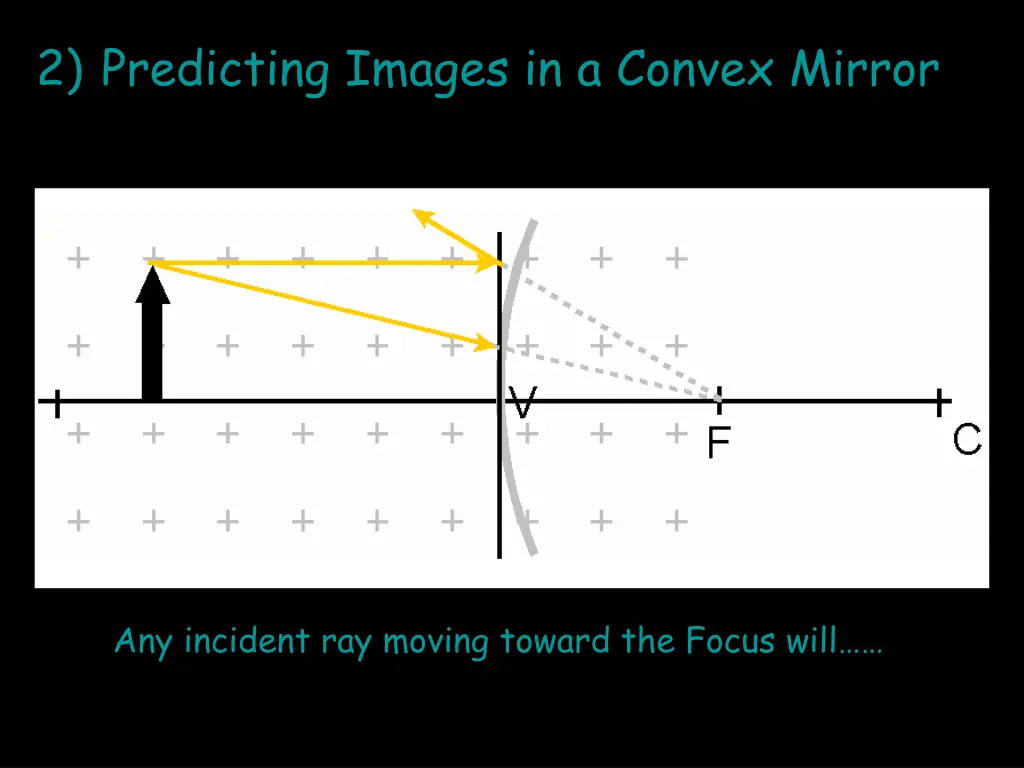
2) Predicting Images in a Convex Mirror Any incident ray moving toward the Focus will
2) Predicting Images in a Convex Mirror Any incident ray moving toward the Focus will reflect parallel to the principal axis.
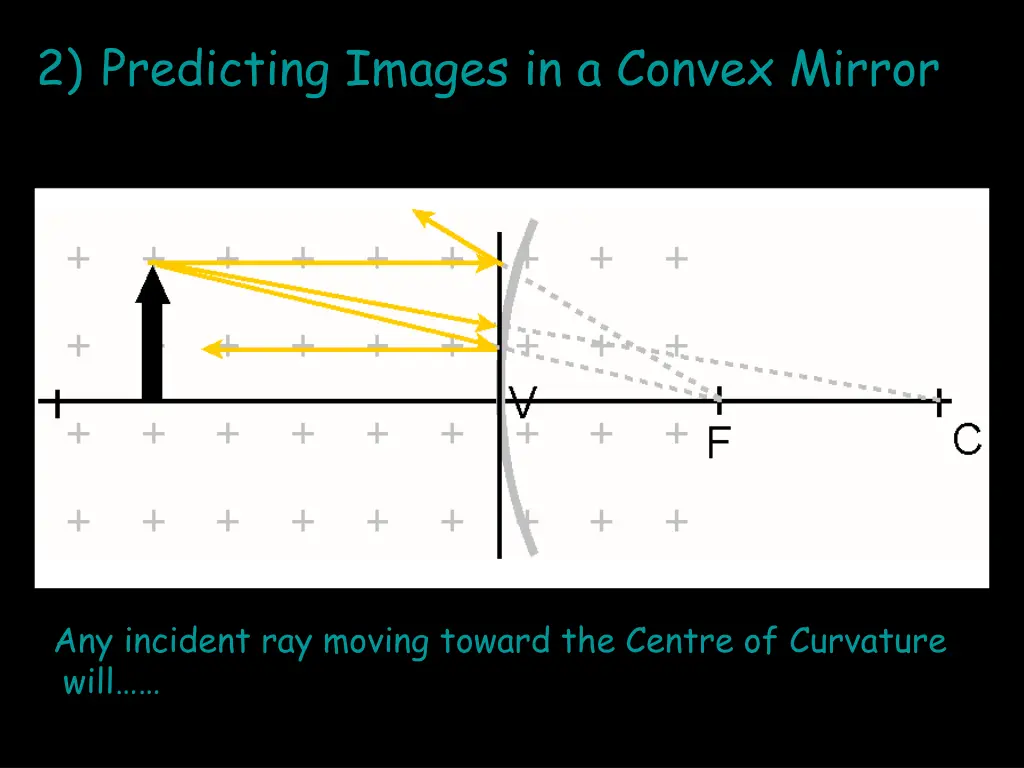
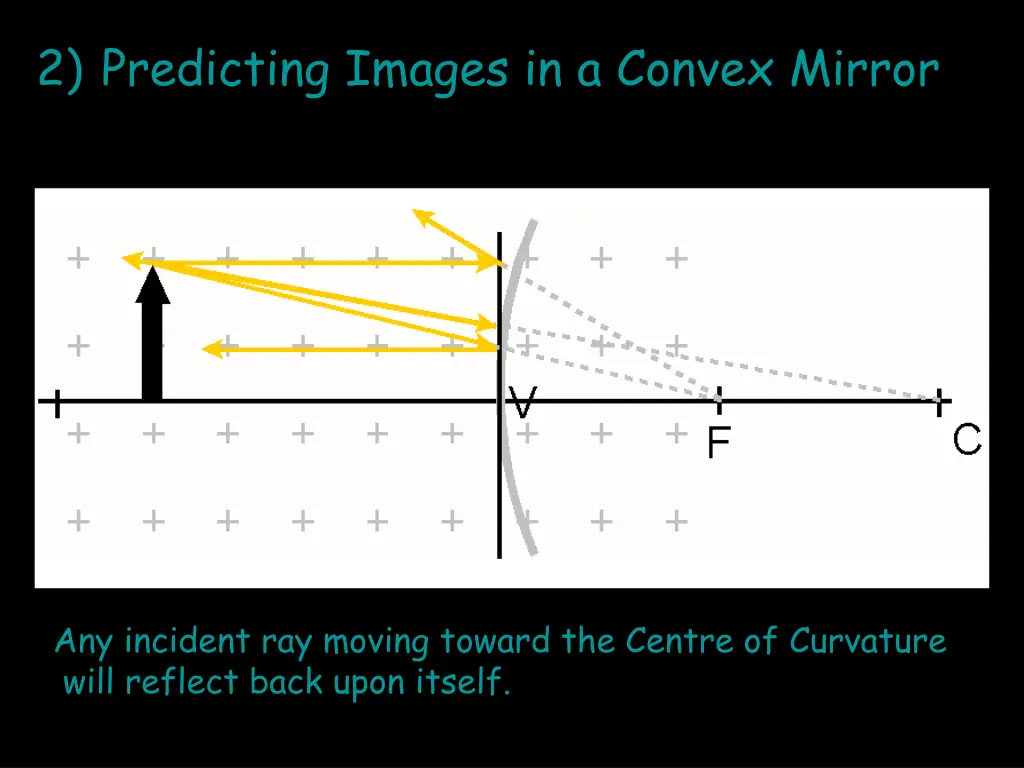
2) Predicting Images in a Convex Mirror Any incident ray moving toward the Centre of Curvature will
2) Predicting Images in a Convex Mirror Any incident ray moving toward the Centre of Curvature will reflect back upon itself.
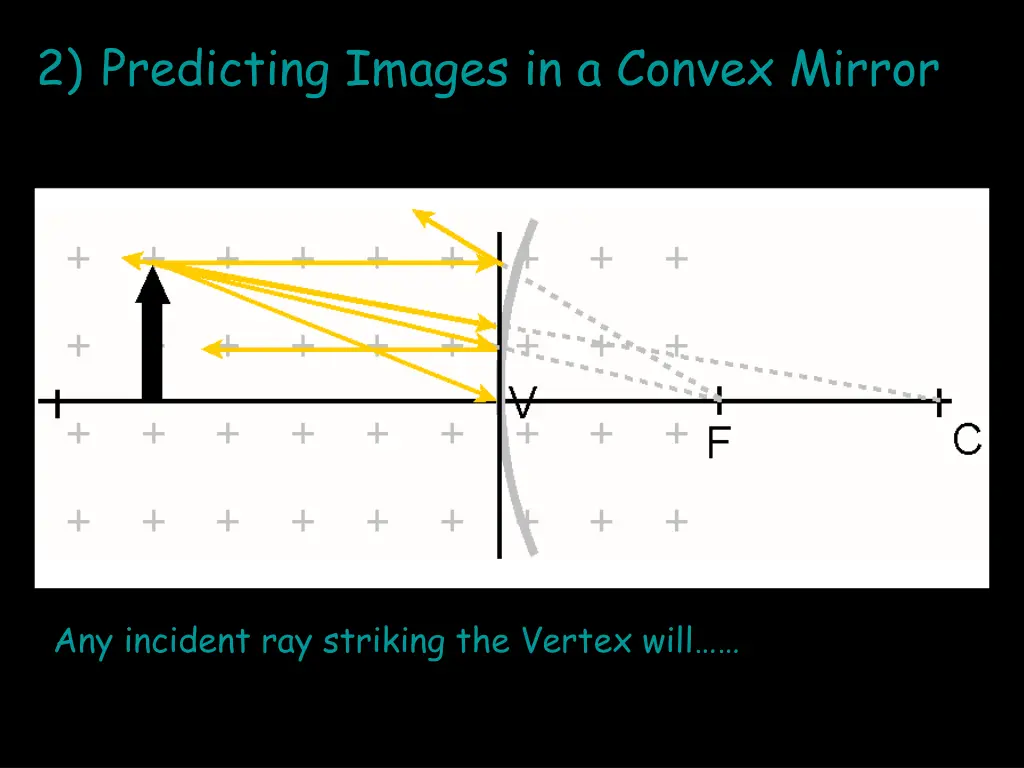
2) Predicting Images in a Convex Mirror Any incident ray striking the Vertex will
2) Predicting Images in a Convex Mirror Any incident ray striking the Vertex will reflect such that i = r.
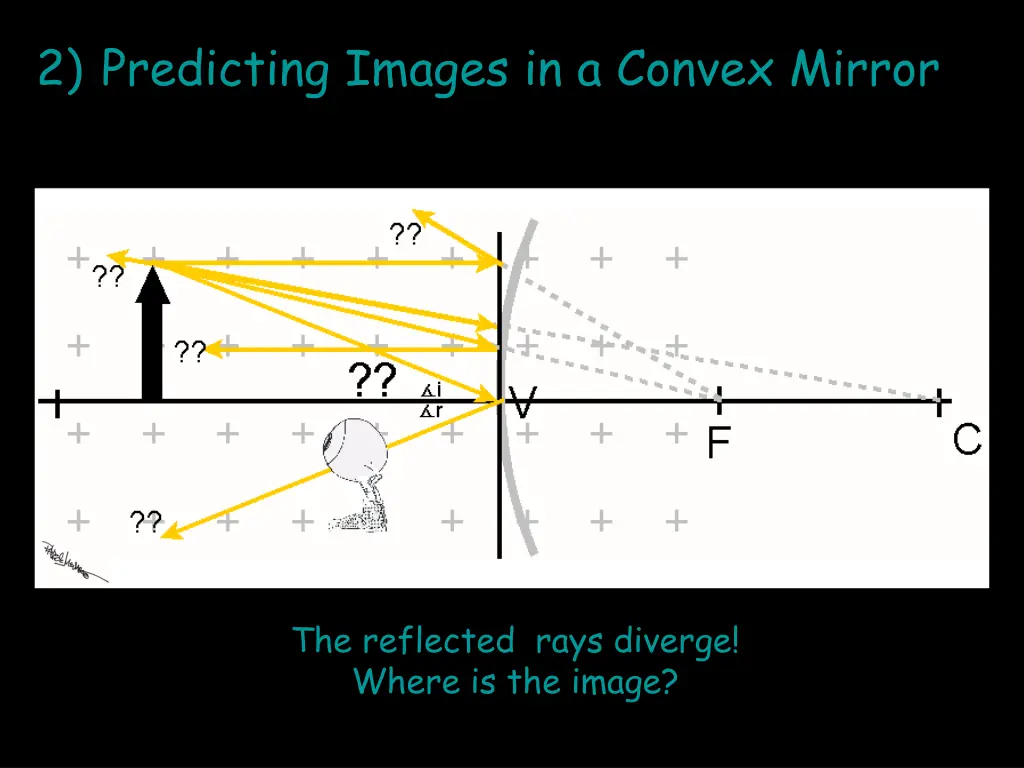
2) Predicting Images in a Convex Mirror The reflected rays diverge! Where is the image?
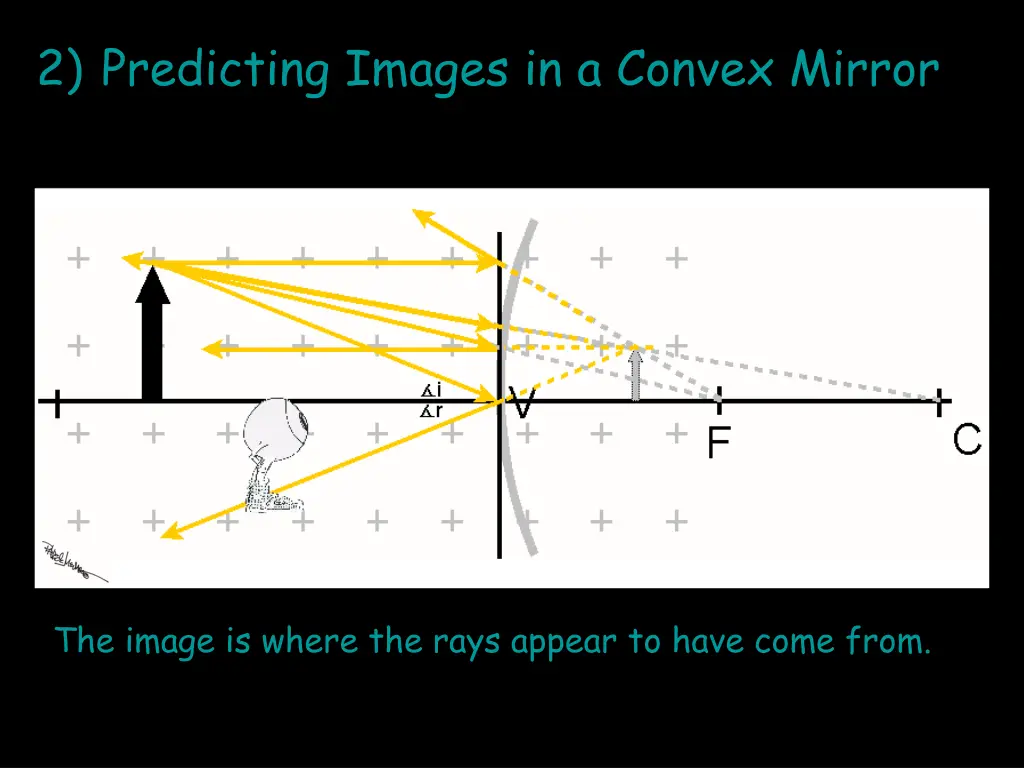
2) Predicting Images in a Convex Mirror The image is where the rays appear to have come from.
Predicting Images in a Convex Mirror Your Turn Continue with L8 Convex Mirrors - Student Notes and answer analysis questions.
Predicting Images in a Convex Mirror Answers to Analysis Follows.
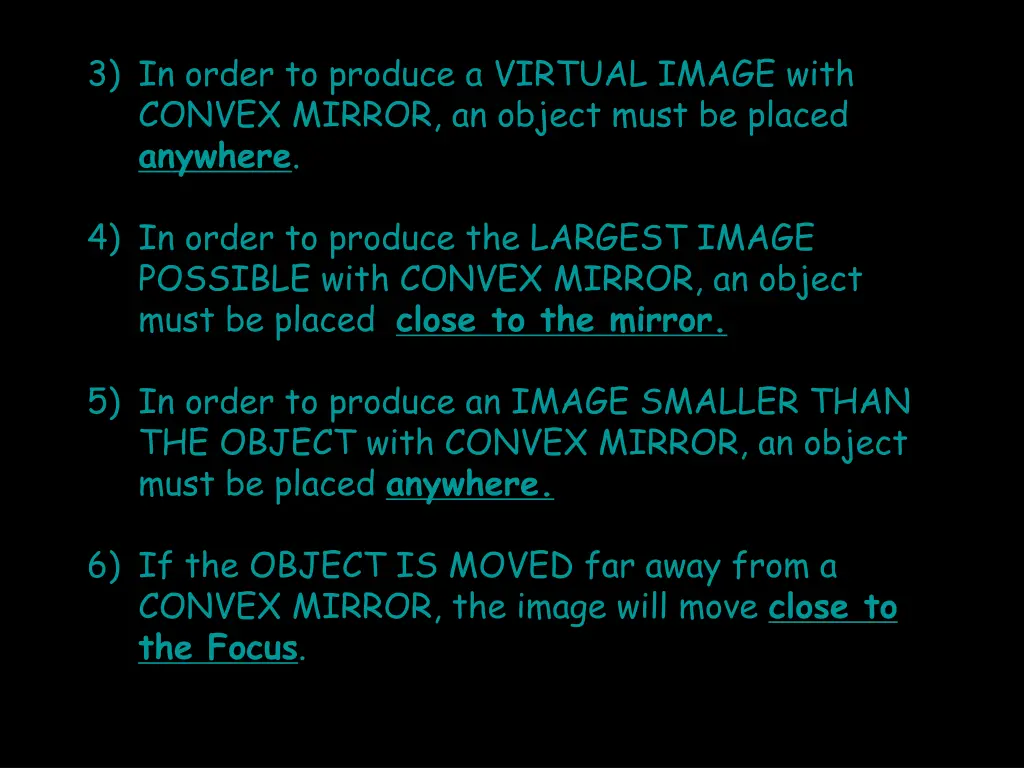
3) In order to produce a VIRTUAL IMAGE with CONVEX MIRROR, an object must be placed anywhere. 4) In order to produce the LARGEST IMAGE POSSIBLE with CONVEX MIRROR, an object must be placed close to the mirror. 5) In order to produce an IMAGE SMALLER THAN THE OBJECT with CONVEX MIRROR, an object must be placed anywhere. 6) If the OBJECT IS MOVED far away from a CONVEX MIRROR, the image will move close to the Focus.
Now that you are an expert, Check out the simulation. http://www.phy.ntnu.edu.tw/ntnujava/index.php?topic=48.0 Try to see it in your mind.