Self-Confidence and Its Influencing Factors
Explore the concept of self-confidence, its components, and how it influences consumer behavior. Discover the psychological, cultural, social, personal, and economic factors that shape self-confidence, impacting individuals' perceptions and choices in various contexts.

Download Presentation

Please find below an Image/Link to download the presentation.
The content on the website is provided AS IS for your information and personal use only. It may not be sold, licensed, or shared on other websites without obtaining consent from the author. If you encounter any issues during the download, it is possible that the publisher has removed the file from their server.
You are allowed to download the files provided on this website for personal or commercial use, subject to the condition that they are used lawfully. All files are the property of their respective owners.
The content on the website is provided AS IS for your information and personal use only. It may not be sold, licensed, or shared on other websites without obtaining consent from the author.
E N D
Presentation Transcript
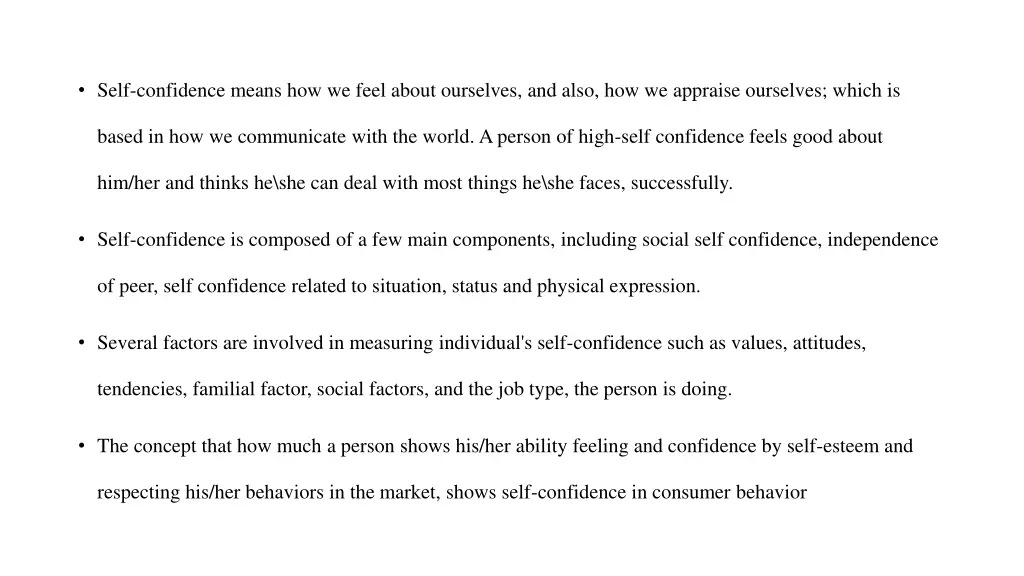
Self-confidence means how we feel about ourselves, and also, how we appraise ourselves; which is based in how we communicate with the world. A person of high-self confidence feels good about him/her and thinks he\she can deal with most things he\she faces, successfully. Self-confidence is composed of a few main components, including social self confidence, independence of peer, self confidence related to situation, status and physical expression. Several factors are involved in measuring individual's self-confidence such as values, attitudes, tendencies, familial factor, social factors, and the job type, the person is doing. The concept that how much a person shows his/her ability feeling and confidence by self-esteem and respecting his/her behaviors in the market, shows self-confidence in consumer behavior
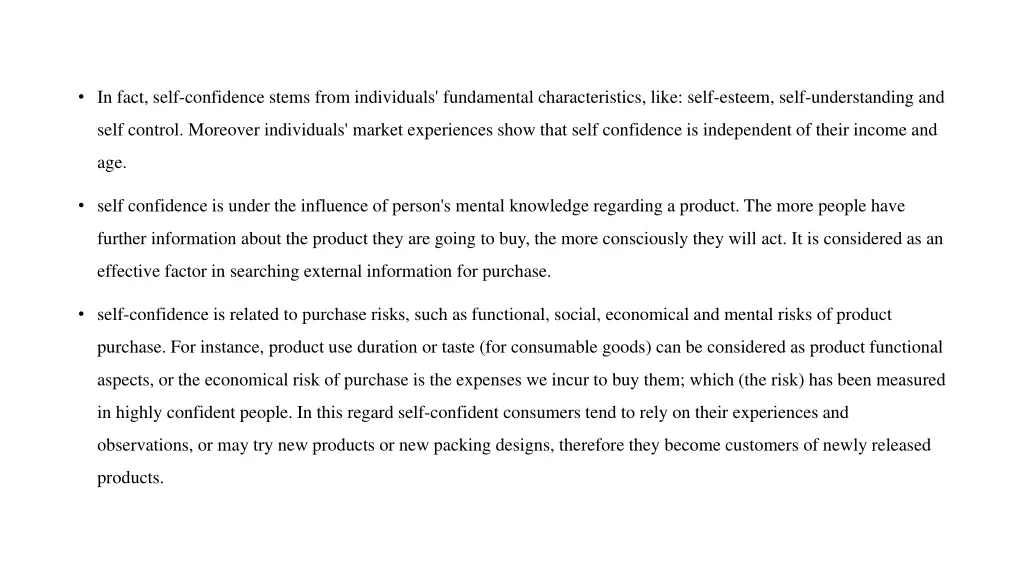
In fact, self-confidence stems from individuals' fundamental characteristics, like: self-esteem, self-understanding and self control. Moreover individuals' market experiences show that self confidence is independent of their income and age. self confidence is under the influence of person's mental knowledge regarding a product. The more people have further information about the product they are going to buy, the more consciously they will act. It is considered as an effective factor in searching external information for purchase. self-confidence is related to purchase risks, such as functional, social, economical and mental risks of product purchase. For instance, product use duration or taste (for consumable goods) can be considered as product functional aspects, or the economical risk of purchase is the expenses we incur to buy them; which (the risk) has been measured in highly confident people. In this regard self-confident consumers tend to rely on their experiences and observations, or may try new products or new packing designs, therefore they become customers of newly released products.
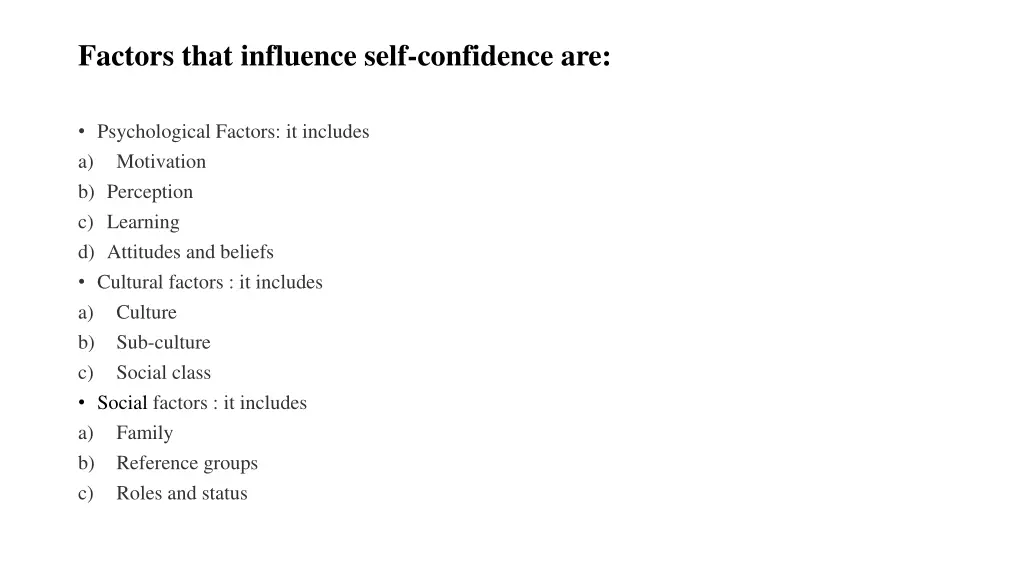
Factors that influence self-confidence are: Psychological Factors: it includes a) Motivation b) Perception c) Learning d) Attitudes and beliefs Cultural factors : it includes a) Culture b) Sub-culture c) Social class Social factors : it includes a) Family b) Reference groups c) Roles and status
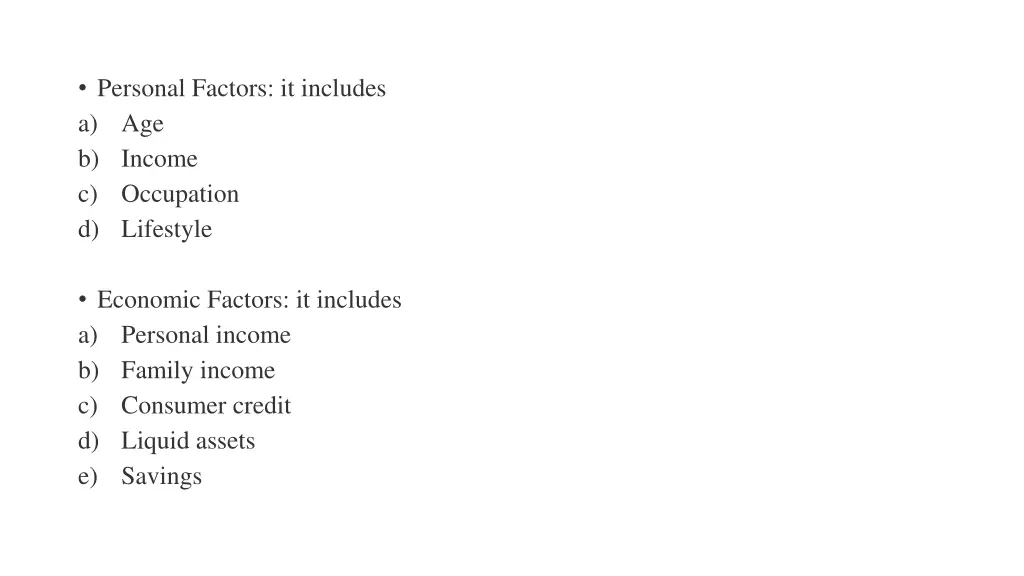
Personal Factors: it includes a) Age b) Income c) Occupation d) Lifestyle Economic Factors: it includes a) Personal income b) Family income c) Consumer credit d) Liquid assets e) Savings