Self-Sustaining Spectrometer Design for Environmental Analysis
Explore the innovative design of a self-sustaining spectrometer for environmental analysis, including requirements, concept, constraints, and environmental sensors. The project aims to deliver hyperspectral responsivity, seamless integration with a custom PCB, and off-grid functionality for up to five days. Environmental sensors measure barometric pressure, temperature, and humidity, providing valuable data variations. Follow the journey of creating a remote-deployable device with an emphasis on sustainability and user-friendly interface.

Download Presentation

Please find below an Image/Link to download the presentation.
The content on the website is provided AS IS for your information and personal use only. It may not be sold, licensed, or shared on other websites without obtaining consent from the author. If you encounter any issues during the download, it is possible that the publisher has removed the file from their server.
You are allowed to download the files provided on this website for personal or commercial use, subject to the condition that they are used lawfully. All files are the property of their respective owners.
The content on the website is provided AS IS for your information and personal use only. It may not be sold, licensed, or shared on other websites without obtaining consent from the author.
E N D
Presentation Transcript
tEEm Radiance Presented By: Manolo Ortiz Hayden OReilly Benjamin Reed
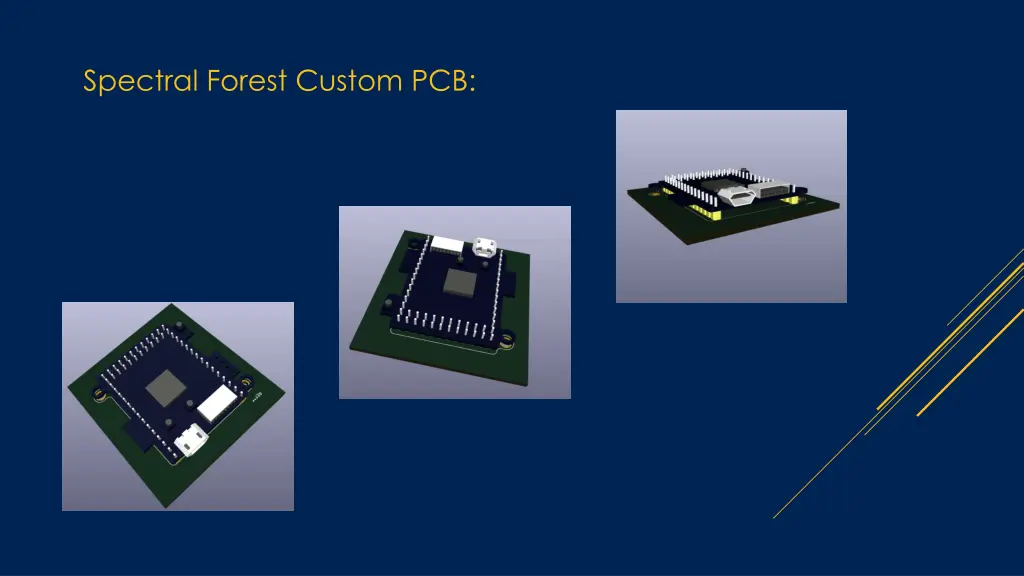
Spectral Forest Motivation Spectra that are absorbed or rejected by the forest. CO2 absorption. Health of the forest. There are a plethora of uses for NIR and SWIR spectroscopy. Create remote-deployable self-sustaining spectrometer.
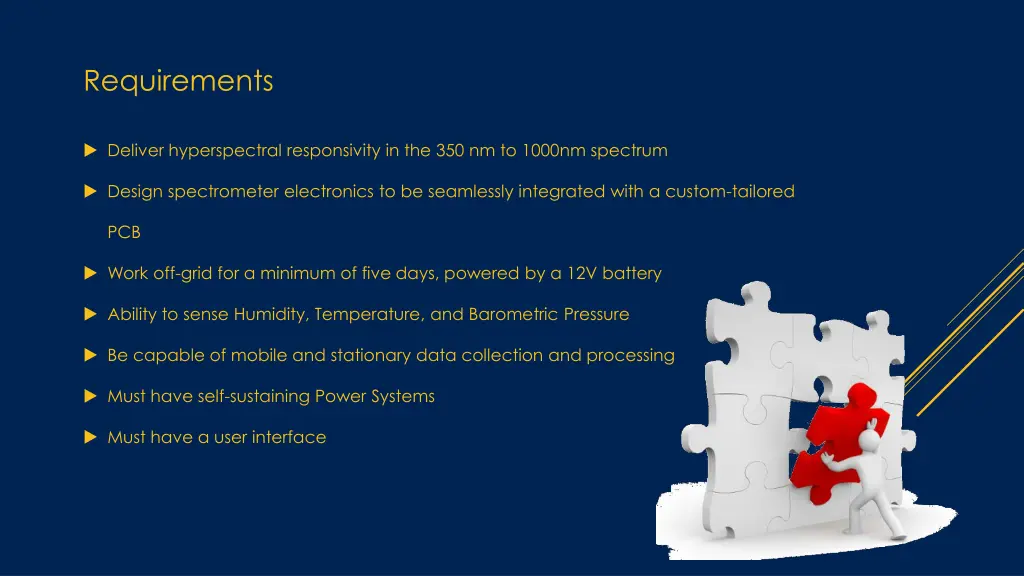
Requirements Deliver hyperspectral responsivity in the 350 nm to 1000nm spectrum Design spectrometer electronics to be seamlessly integrated with a custom-tailored PCB Work off-grid for a minimum of five days, powered by a 12V battery Ability to sense Humidity, Temperature, and Barometric Pressure Be capable of mobile and stationary data collection and processing Must have self-sustaining Power Systems Must have a user interface
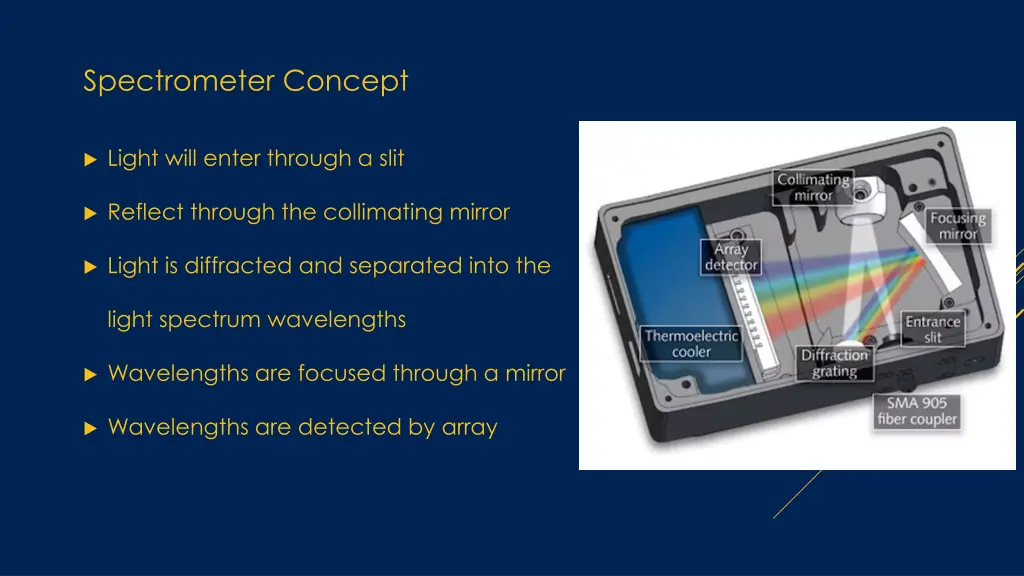
Spectrometer Concept Light will enter through a slit Reflect through the collimating mirror Light is diffracted and separated into the light spectrum wavelengths Wavelengths are focused through a mirror Wavelengths are detected by array
Constraints Budget Size Power usage Frequency interference Weight Battery
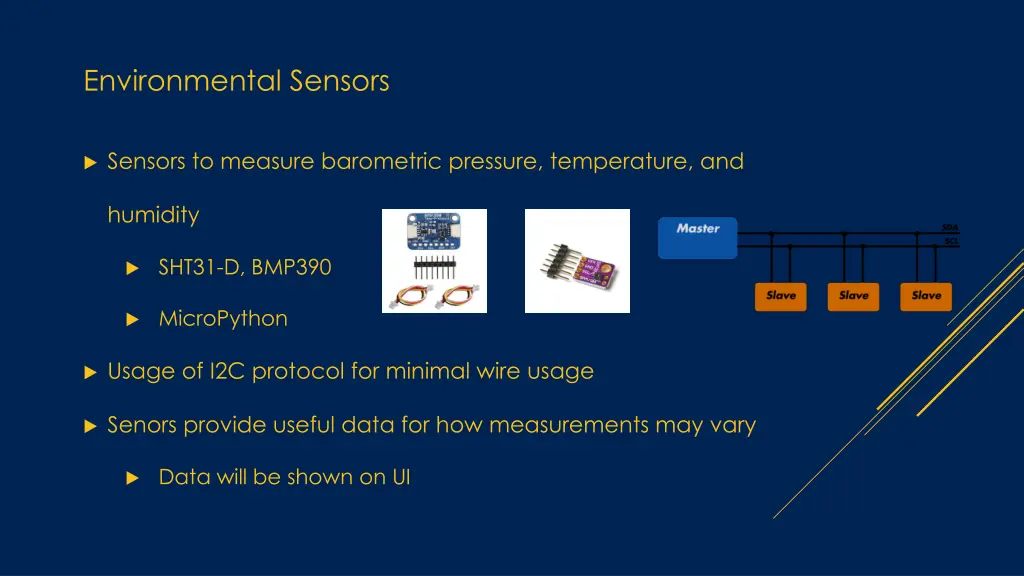
Environmental Sensors Sensors to measure barometric pressure, temperature, and humidity SHT31-D, BMP390 MicroPython Usage of I2C protocol for minimal wire usage Senors provide useful data for how measurements may vary Data will be shown on UI