Service Users Rights in Action Campaign
This campaign is led by a coalition of Drug Service Users, Service User Representatives, and Community Activists advocating for human rights in healthcare. It addresses key issues like urine sampling, lack of meaningful reviews, and treatment choices, aiming to ensure the right to adequate health as per international agreements.

Download Presentation

Please find below an Image/Link to download the presentation.
The content on the website is provided AS IS for your information and personal use only. It may not be sold, licensed, or shared on other websites without obtaining consent from the author.If you encounter any issues during the download, it is possible that the publisher has removed the file from their server.
You are allowed to download the files provided on this website for personal or commercial use, subject to the condition that they are used lawfully. All files are the property of their respective owners.
The content on the website is provided AS IS for your information and personal use only. It may not be sold, licensed, or shared on other websites without obtaining consent from the author.
E N D
Presentation Transcript
Service Users Rights in Action
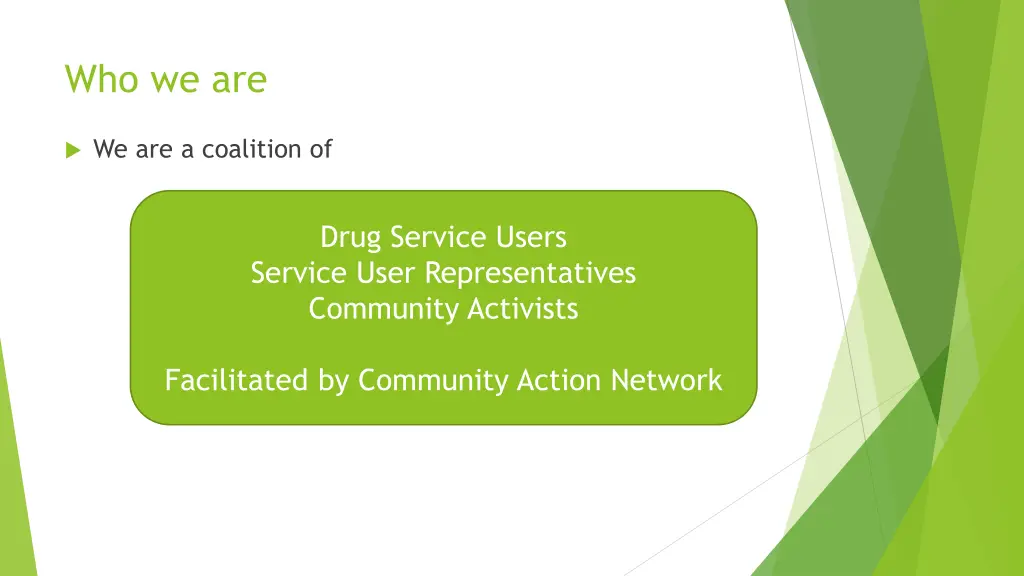
Who we are We are a coalition of Drug Service Users Service User Representatives Community Activists Facilitated by Community Action Network
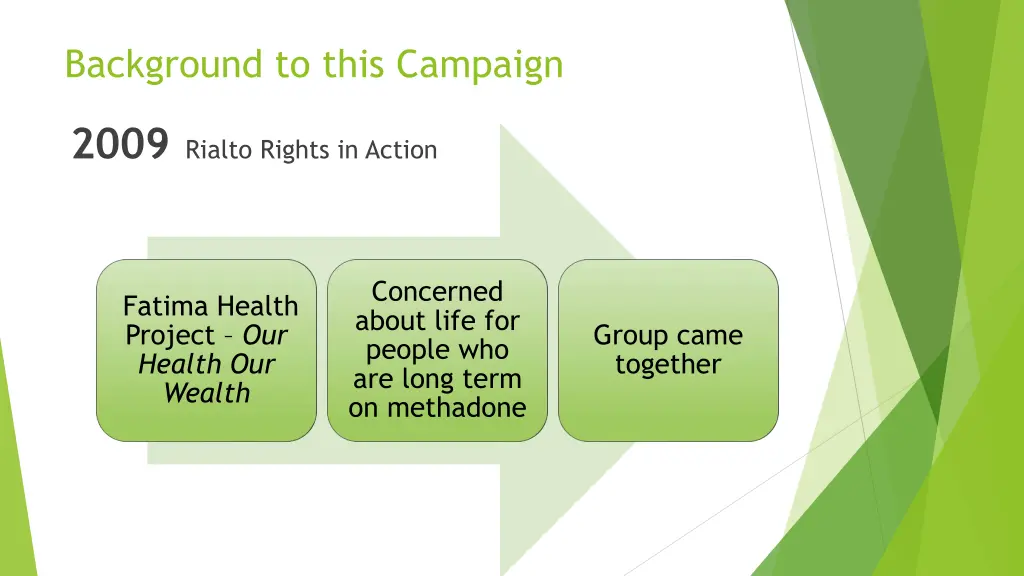
Background to this Campaign 2009Rialto Rights in Action Concerned about life for people who are long term on methadone Fatima Health Project Our Health Our Wealth Group came together
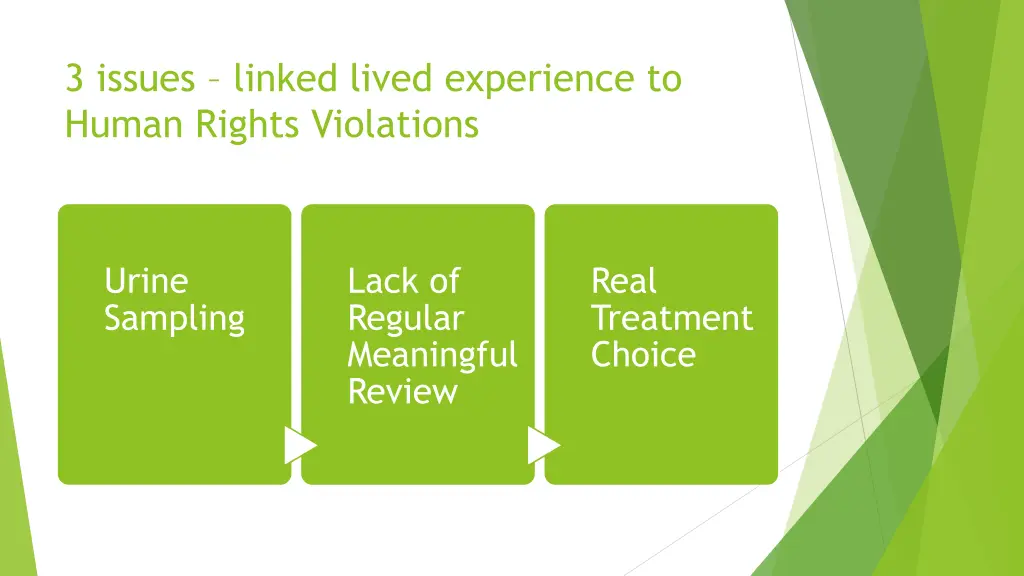
3 issues linked lived experience to Human Rights Violations Urine Sampling Lack of Regular Meaningful Review Real Treatment Choice
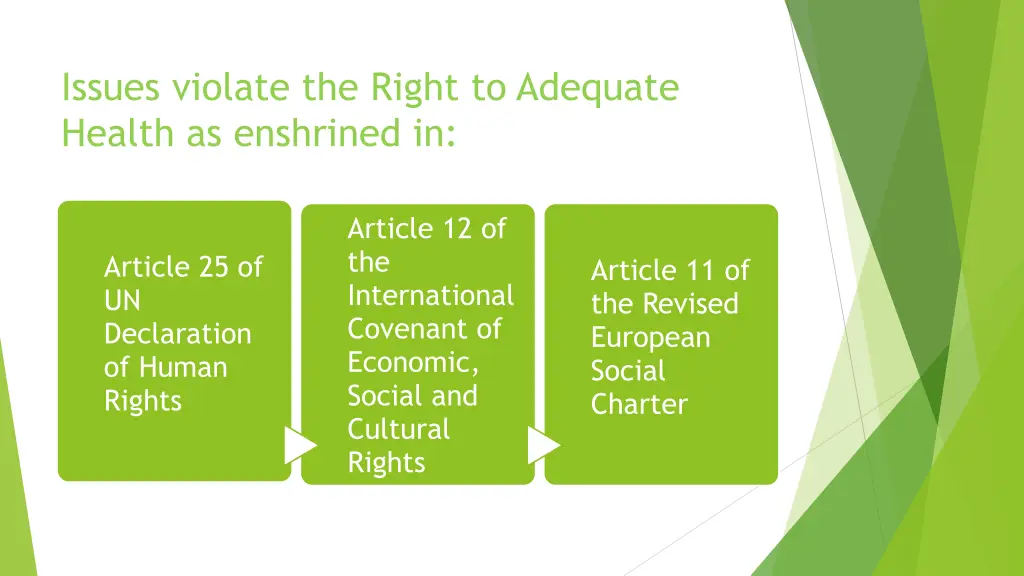
Issues violate the Right to Adequate Health as enshrined in: Article 12 of the International Covenant of Economic, Social and Cultural Rights Article 25 of UN Declaration of Human Rights Article 11 of the Revised European Social Charter
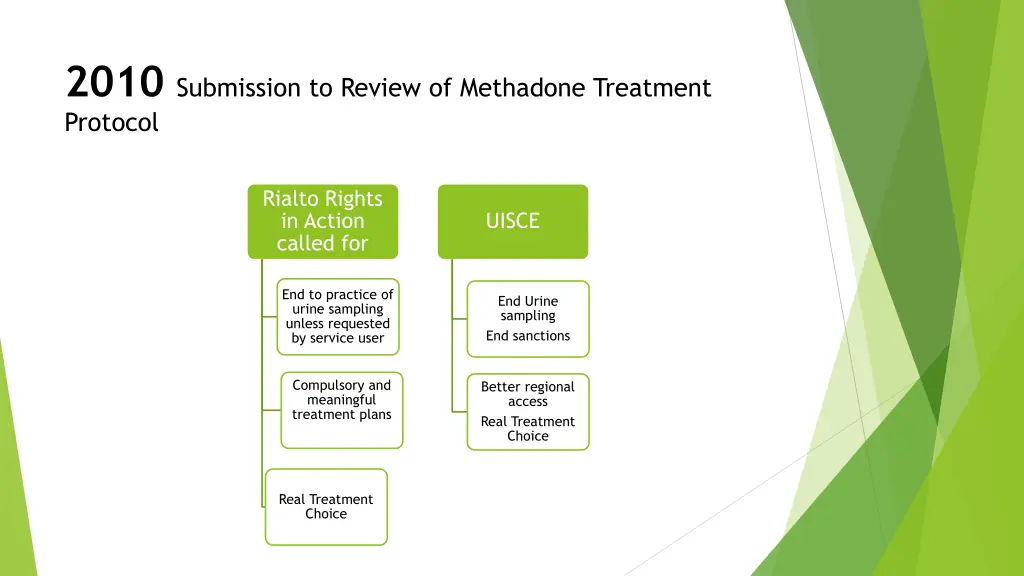
2010Submission to Review of Methadone Treatment Protocol Rialto Rights in Action called for UISCE End to practice of urine sampling unless requested by service user End Urine sampling End sanctions Compulsory and meaningful treatment plans Better regional access Real Treatment Choice Real Treatment Choice
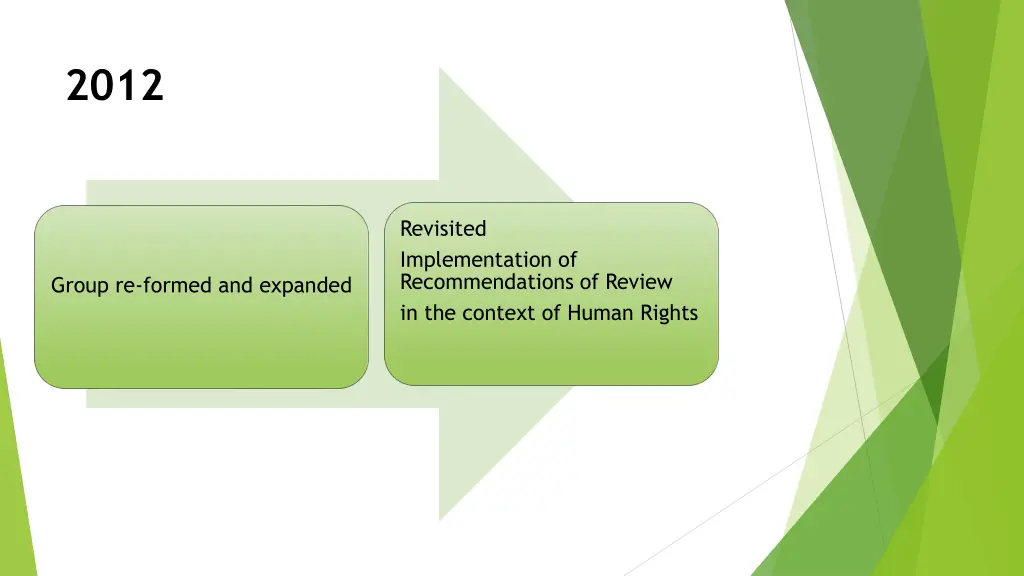
2012 Revisited Implementation of Recommendations of Review in the context of Human Rights Group re-formed and expanded
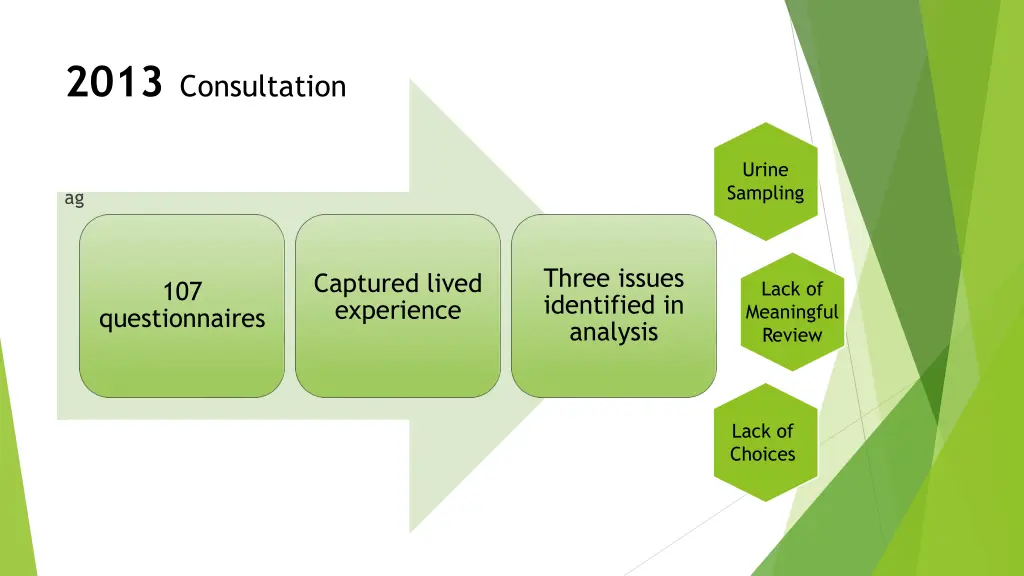
2013 Consultation Urine Sampling ag Three issues identified in analysis Captured lived experience 107 Lack of Meaningful Review questionnaires Lack of Choices
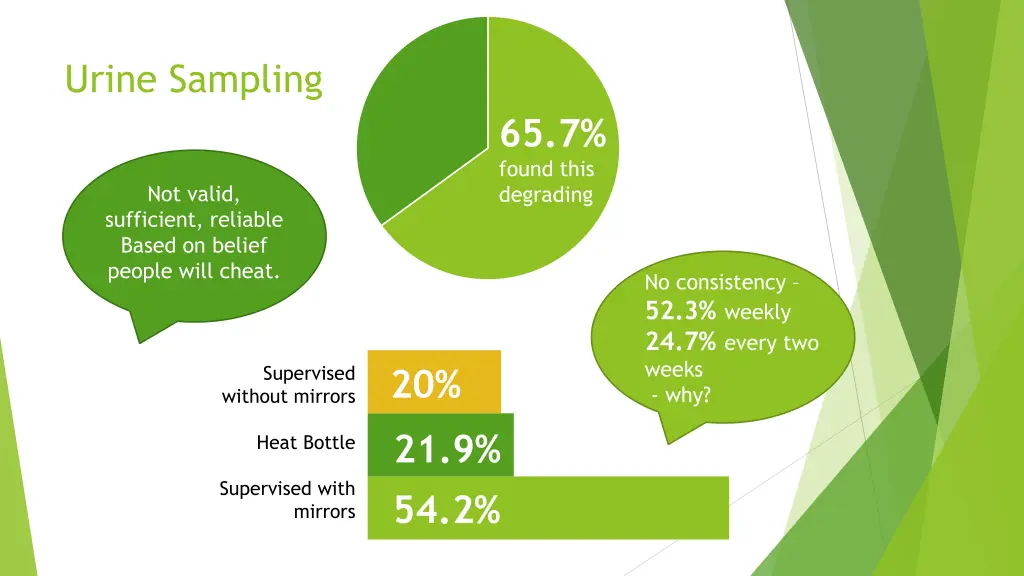
Urine Sampling 65.7% found this degrading Not valid, sufficient, reliable Based on belief people will cheat. No consistency 52.3% weekly 24.7% every two weeks - why? 20% Supervised without mirrors 21.9% 54.2% Heat Bottle Supervised with mirrors
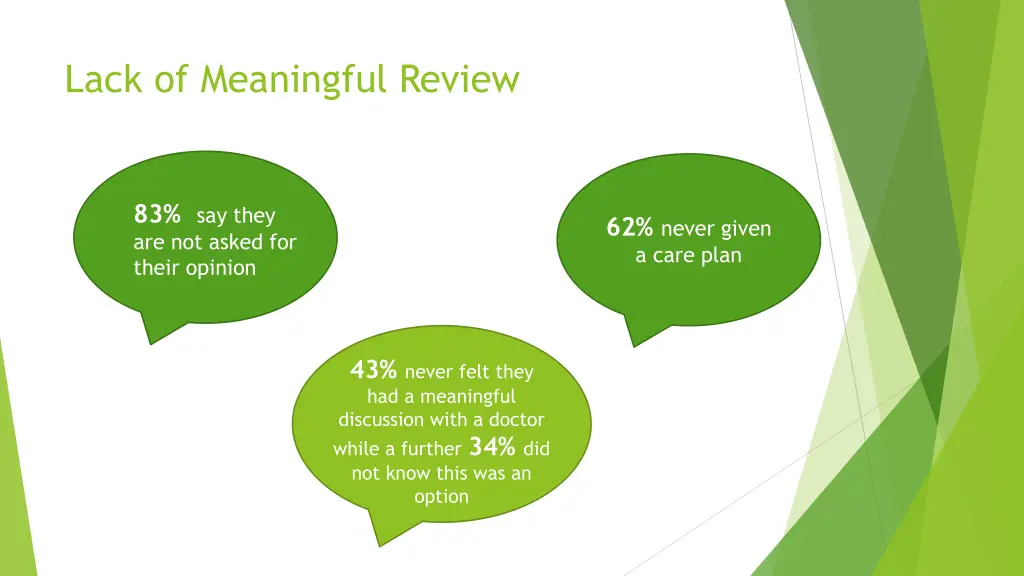
Lack of Meaningful Review 83% say they are not asked for their opinion 62% never given a care plan 43% never felt they had a meaningful discussion with a doctor while a further 34% did not know this was an option
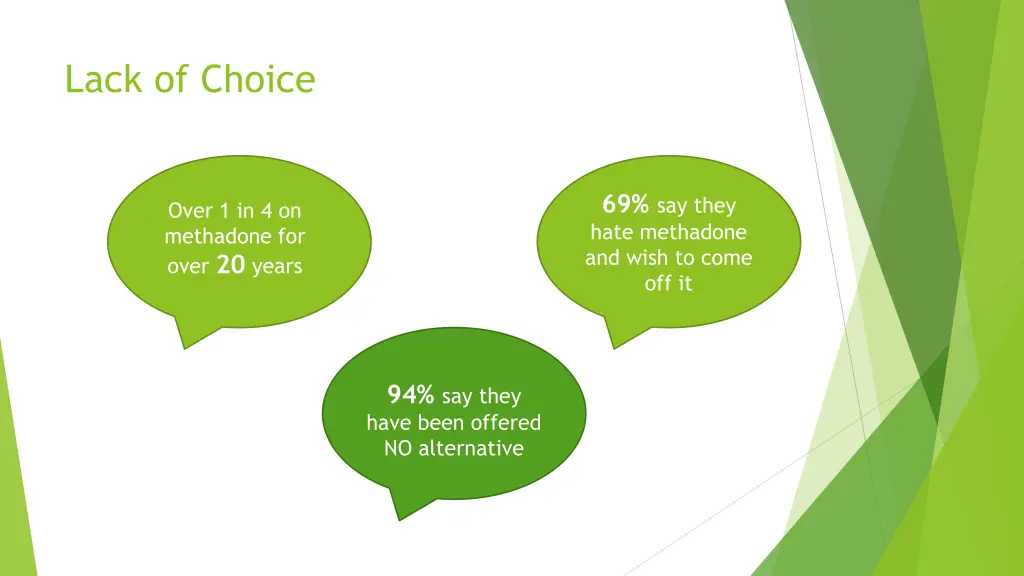
Lack of Choice 69% say they hate methadone and wish to come off it Over 1 in 4 on methadone for over 20 years 94% say they have been offered NO alternative
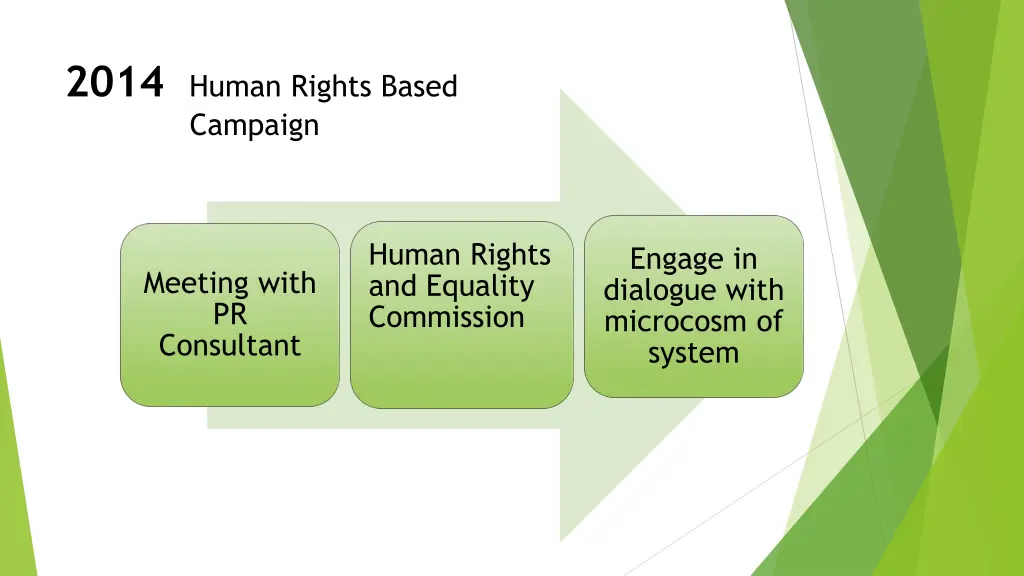
2014 Human Rights Based Campaign Human Rights and Equality Commission Engage in dialogue with microcosm of system Meeting with PR Consultant
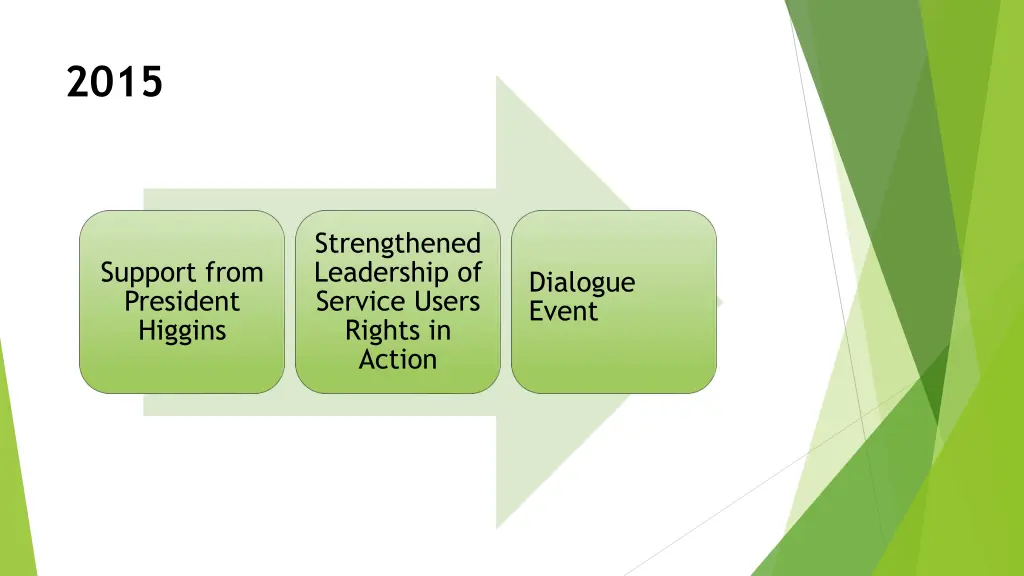
2015 Strengthened Leadership of Service Users Rights in Action Support from President Higgins Dialogue Event
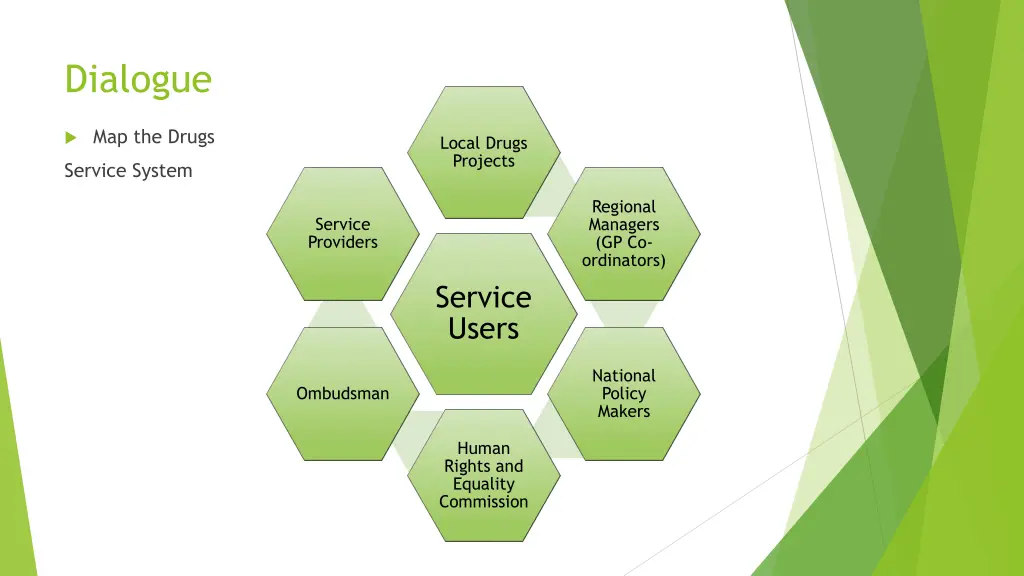
Dialogue Map the Drugs Local Drugs Projects Service System Regional Managers (GP Co- ordinators) Service Providers Service Users National Policy Makers Ombudsman Human Rights and Equality Commission
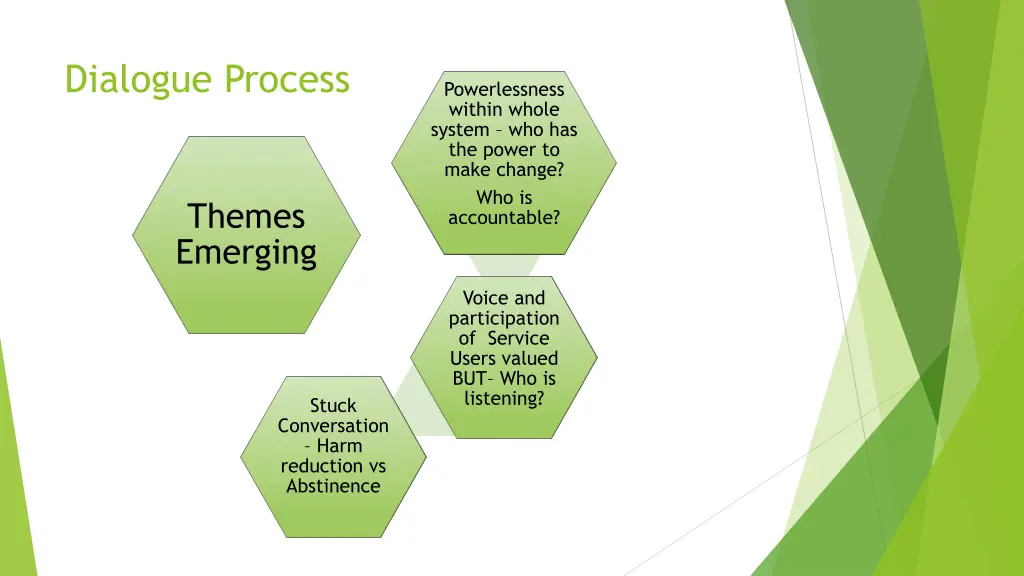
Dialogue Process Powerlessness within whole system who has the power to make change? Who is accountable? Themes Emerging Voice and participation of Service Users valued BUT Who is listening? Stuck Conversation Harm reduction vs Abstinence
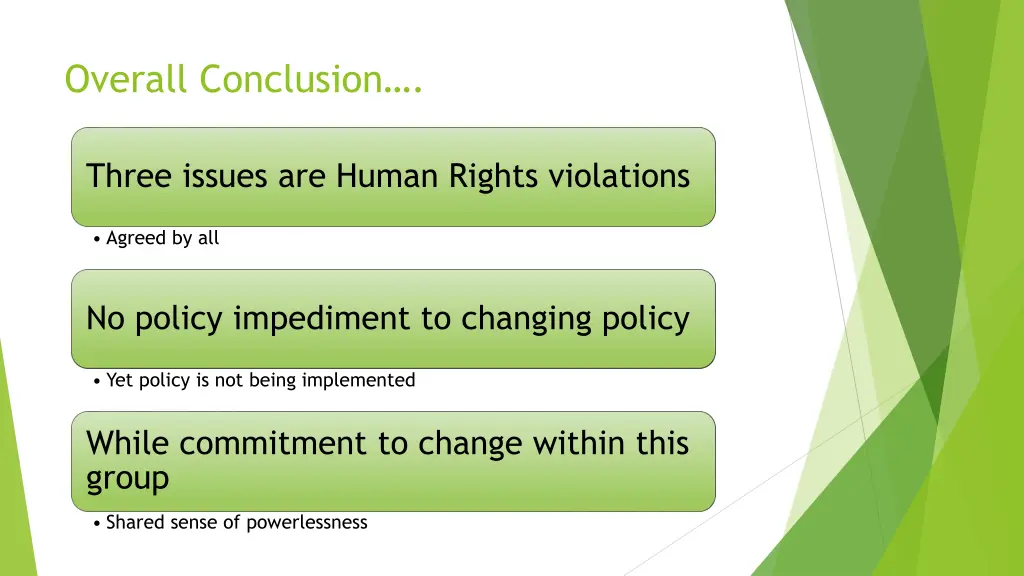
Overall Conclusion. Three issues are Human Rights violations Agreed by all No policy impediment to changing policy Yet policy is not being implemented While commitment to change within this group Shared sense of powerlessness
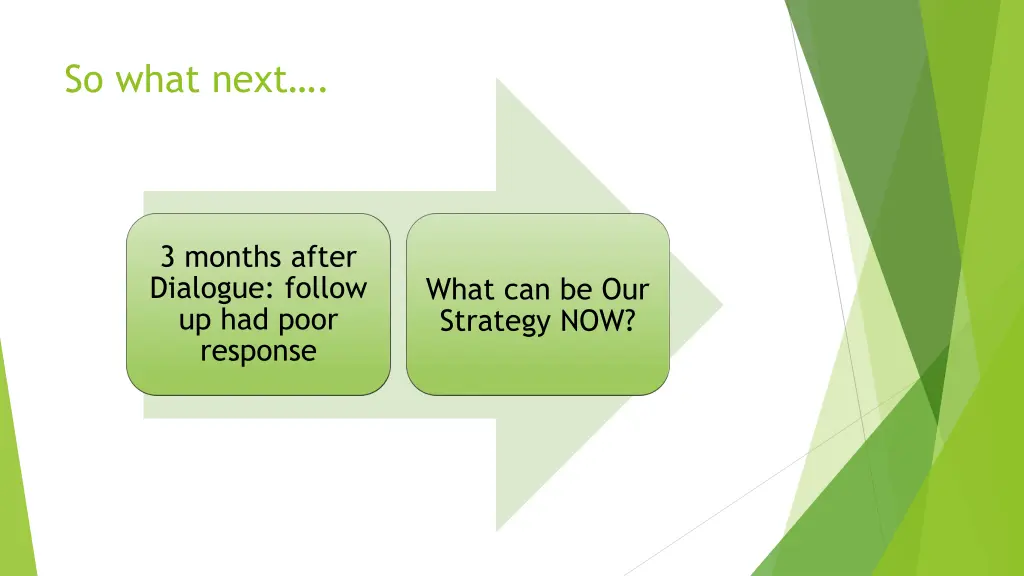
So what next. 3 months after Dialogue: follow up had poor response What can be Our Strategy NOW?
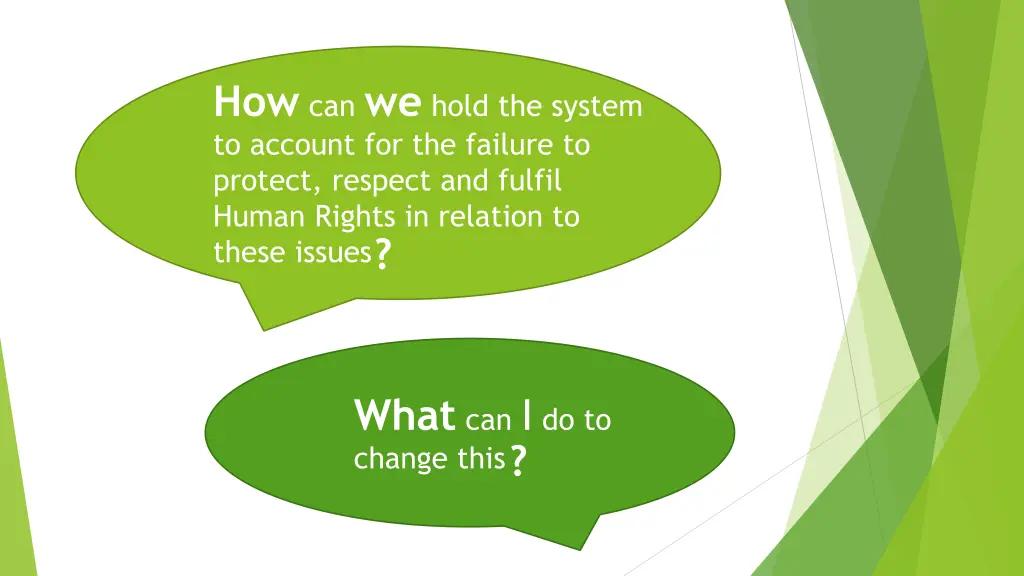
How can we hold the system to account for the failure to protect, respect and fulfil Human Rights in relation to these issues ? What can I do to change this ?